Kathmandu
Sunday, July 12, 2026





Innumerable factions undermine the monarchists' ambition to restore the crown

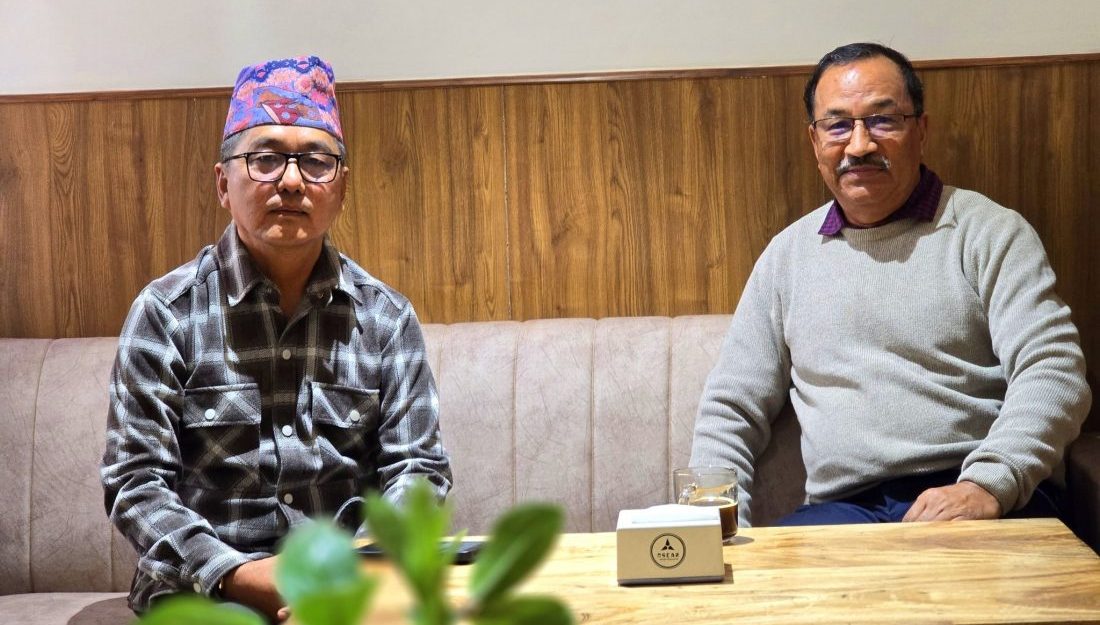
KATHMANDU: On November 11, a significant parley was conducted between key figures of the pro-monarchy protest: Rajendra Lingden, the incumbent Chair of the Rastriya Prajatantra Party (RPP), and Kamal Thapa, the chair and former Home Minister who presides over the Rastriya Prajatantra Party-Nepal (RPP-Nepal). The central objective of this high-level deliberation was to orchestrate a formal coalescence between the respective political entities, underpinned by their shared foundational principles and ideological congruence.
Concurrently, as unification discussions advance externally, internal factions and sub-factions within the RPP are orchestrating distinct maneuvers in contravention of Chairman Lingden’s initiatives. The pattern of coalescence and fragmentation is an enduring malady afflicting the RPP. It is salient to recall that Thapa, currently seeking rapprochement, had himself only recently precipitated a schism from the RPP. This fission occurred following his decisive defeat at the general convention four years prior. Specifically, in the RPP election concluded on December 5, 2021, Lingden clinched the chairmanship, besting Thapa by a margin of 227 votes. This electoral outcome not only bifurcated the RPP into two competing camps but ultimately resulted in the party’s formal fracture. Subsequent to his resignation after the general convention loss, Thapa inaugurated a new political entity, RPP-Nepal, on February 19, 2022, assuming its chairmanship.
Currently, Thapa-led RPP-Nepal is in a weak position. Even within this small party, dissatisfaction is equally high. There is intense dissatisfaction within the party after Thapa appointed Rajarama Bartaula, a close associate, as General Secretary. Many leaders have become inactive.
Meanwhile, internal strife is raging in the Lingden-led RPP. There are numerous factions within the party. The interesting thing is that Chairman Lingden himself is running a faction. This includes Chairman Lingden, along with Vice-Chairmen Hem Jung Gurung, Roshan Karki, Dhruba Bahadur Pradhan, and Buddhiman Tamang; General Secretary Prahlad Gurung; Central Party Committee member Bina Lama; and other leaders. Similarly, Province Chairmen Bharat Giri (Madhes), Pancharam Gurung (Gandaki), and Dharmaraj Joshi (Sudurpaschim) are in favor of Lingden.
Other Central Party Committee members are unhappy, alleging that instead of uniting everyone in the party, Lingden holds separate meetings for his faction. On August 7, the Lingden faction held a separate meeting in Battisputali. The meeting decided to take strict action against those who oppose Chairman Lingden.
Veteran leaders who helped Lingden become chairman are now dissatisfied with him. They are unhappy after Lingden took action against the party’s Disciplinary Committee Coordinator Nawaraj Subedi, Vice-Chairman Shyam Sundar Giri, General Secretary Dhawal Shamsher Rana, and Spokesperson Sagun Lawati, among others. Likewise, former Chairman Prakash Chandra Lohani, Vice-Chairmen Bikram Pandey and Dil Bikash Raj Bhandari, General Secretary Kunti Shahi, Working Committee members Arjun Rai and Hari Bahadur Basnet, and Central Party Committee member Jagat Gauchan, among others, are also disgruntled with Chairman Lingden.
There is a separate faction of those dissatisfied with Lingden’s working style, which is led by Dhawal Shamsher. This group has also been holding separate meetings and gatherings. Province Chairmen Bikram Bahadur Thapa (Bagmati), Pradip Uday (Lumbini), and Deep Bahadur Shahi (Karnali) are also in Dhawal Shamsher’s faction.
The Lingden and Dhawal factions are not only visible in the main party but also in its sister organizations. The convention of the RPP’s sister organization, the Rastriya Prajatantrik Yuwa Sangathan, had to be postponed on August 13 after youth from the two factions exchanged blows. Before that, Chhatra Kathayat, Lingden’s personal secretary, had struck Raju Gaire, a youth leader of the Dhawal faction, with a helmet. Physical attacks at the cadre level clearly show the extent of the RPP’s dispute.
There is another group within the RPP led by former Chairman Pashupati Shamsher Rana. Although Rana does not openly engage in factional activities, his group, which is considered to be on the moderate line, is deemed strong. Recently, this group has been preparing to form a new party. The group plans to begin the process of forming a party after mid-December.
The names of 40 people who joined the RPP along with Rabindra Mishra have not been registered with the Election Commission yet. Mishra is also not satisfied with Chairman Lingden. Those brought into the RPP by Mishra are also already divided into various factions. Although the general convention should be held before mid-December, the RPP, embroiled in internal disputes, has not yet been able to hold district conventions except in Jhapa and Humla. Therefore, the date of the general convention is uncertain.
These are not the only groups; the RPP has small factions led by different leaders. The current RPP was formed by uniting leaders from various parties and factions. Therefore, even though it appears as one from the outside, the RPP has groups aligned with almost every leader inside. When Chairman Lingden himself acts as the leader of a faction instead of playing a role in calming internal dissatisfaction, not only is the factionalism visible, but there is also an equal possibility of the RPP splitting at any time. However, Chairman Lingden claims that no one has the power to split the RPP. He says, “In the past, there was a tendency to split the party as soon as there was dissatisfaction. Some remnants of that remain, but now no one has the power to split the party as before.”
Kishor Bahadur Karki, former spokesperson and elected Central Party Committee member of the RPP, who resigned on July 31 from his general membership due to dissatisfaction with the leadership, says, “We tried hard to unite these groups because they had the same demand and the same campaign, but we could not unite them due to the tendency of everyone wanting to be the biggest and not recognizing others as leaders. I resigned when this tendency did not improve.”
Central Party Committee member Govinda Raj Khaniya, who has written the history of the RPP, says that since the beginning, leaders in the RPP have been focused on who would become chairman rather than the agenda, which has made the leaders strong and the party weak. He says, “Even now, the general convention is approaching, and the dispute has emerged in the RPP at this time. If there is credible leadership, the RPP can rise again; otherwise, the party is certain to become weaker as the cycle of uniting and splitting continues.”
History marked by splits
The RPP, which emerged as a royalist political force, began to split from its very establishment. After the People’s Movement of 1990, the non-party Panchayat system collapsed, and democracy was restored. Political parties became active. At this time, former Panchas (Panchayat system supporters) who had just lost power formed a political party at the behest of the palace: the Rastriya Prajatantra Party. Powerful contemporary leaders, including Surya Bahadur Thapa, Kirti Nidhi Bista, Lokendra Bahadur Chand, and Pashupati Shamsher Rana, united to form the party. However, a dispute arose between Thapa and Chand over who would become the party chairman. At that time, Thapa was considered close to India, and Chand was considered close to the Palace.
According to the founding leaders of the RPP, preparations were initially made to form the party under the leadership of former Prime Minister Matrika Prasad Koirala, but it was not possible due to disputes among the leaders themselves. Since the leaders refused to recognize each other as leaders, the party split before it could properly unite. On May 29, 1990, ‘RPP (Thapa)’ under the leadership of Thapa and ‘RPP (Chand)’ under the leadership of Lokendra Bahadur Chand were announced on the same day. In the parliamentary election held on May 12, 1991, RPP (Chand) won three seats, and RPP (Thapa) won one seat out of 205 seats. Since it split at the beginning, the RPP could not get good results in the election, nor did the cadres from the Panchayat background trust it. They joined the Nepali Congress.
After suffering an embarrassing defeat in the first election, both parties united in 1992. After the unity convention in the fiscal year 1993/94, Surya Bahadur Thapa became the chairman. The name of the unified party was kept as Rastriya Prajatantra Party, and its election symbol was the plow.
Due to the intense internal strife within the Nepali Congress, the then Prime Minister Girija Prasad Koirala dissolved the Parliament on July 10, 1994, and held a midterm election on November 15 of the same year. The united RPP won 20 seats in that election and succeeded in becoming the third-largest party. However, this success did not last long. This very success became the cause of the RPP’s split. Although it appeared powerful after the unity, the leaders were not unified internally. Chand won the parliamentary party leadership, defeating Chairman Thapa.
In the 1994 midterm election, the CPN (UML) became the largest party, winning 88 seats, and the Nepali Congress became the second largest party, winning 83 seats. No party secured the 103 seats needed to form a government. As no party achieved a clear majority in the midterm election, it was not possible to form a single-party government. Since neither the Nepali Congress nor the CPN (UML) could form a single government, the RPP, which emerged as the third largest party, became the decisive force. There were also two opinions within the RPP on whether to support the Nepali Congress or the CPN (UML).
On November 30, 1994, a minority government was formed under the prime ministership of Manmohan Adhikari of the CPN (UML). However, it collapsed in just nine months. The RPP also played a role in toppling the government. Surya Bahadur Thapa, Chairman of the RPP, was also active in bringing a no-confidence motion against the CPN (UML) government. With his support, Sher Bahadur Deuba of the Nepali Congress became Prime Minister for the first time on September 12, 1995.
Chand’s group became dissatisfied, alleging that Thapa, the RPP chairman, had acted arbitrarily in recommending ministers in the Nepali Congress-led government. The internal dispute within the RPP affected the government. The Chand group of the RPP supported the CPN (UML), which was looking for an excuse to topple the Deuba government. The CPN (UML) formed a coalition with the RPP, making Chand the Prime Minister on March 12, 1997. The Thapa faction of the RPP, disgruntled by this, allied with the Nepali Congress. The Nepali Congress, which was annoyed after the CPN (UML) made Chand the prime minister to topple the Deuba government, also supported Thapa.
Surya Bahadur Thapa became prime minister with the help of the Nepali Congress on October 6, 1997. Thus, the Thapa faction of the RPP became close to the Nepali Congress, and the Chand faction became close to the CPN (UML). A dispute erupted in the RPP over Prime Minister Thapa’s recommendation to the Palace to dissolve Parliament. Citing that as the reason, Chand split the party and formed RPP.
In the general election of 1999, the Thapa-led RPP won 11 seats, while RPP (Chand) could not win even one seat. After that, Chand returned to the Thapa-led RPP. Even though Chand returned, RPP (Chand) continued under the leadership of Rajeshwor Devkota. Later, Devkota changed the party’s name to RPP (Rashtrawadi).
In the convention of 2002, Pashupati Shamsher Rana was elected as the Chairman of the RPP. After King Gyanendra Shah took power by removing the then Prime Minister Deuba on October 4 of the same year, he appointed Chand as Prime Minister on October 11. This event again created a rift in the RPP. Chand supported the king’s move, while Thapa appeared in opposition.
After Chand resigned on May 30, 2003, King Gyanendra made Thapa the prime minister. Alleging that the cost of living had increased under Thapa’s premiership, Chand and Pashupati Shamsher took to the streets, ringing bells in protest. As the dispute within the RPP intensified, the party split again in the fiscal year 2004/05. Surya Bahadur Thapa, Prakash Chandra Lohani, and other leaders left the RPP and formed the Rastriya Janshakti Party.
Even after that, the strife within the RPP did not subside. A dispute arose between Chairman Rana and Kamal Thapa, who was the Home Minister during the king’s rule. Thapa removed Rana from the chairmanship. Rana went to court against this. The court reinstated Rana as the chairman. After that, Thapa split the RPP and formed RPP Nepal.
RPP Nepal participated in the local body election held by the King on February 7, 2006, while other parties, including the RPP, boycotted it. Thapa, who was in power, brought Rajeshwor Devkota, who had formed RPP (Rashtrawadi), into RPP Nepal. Later, Devkota returned to the RPP.
After the political change of 2006, a federal democratic republic was established in the country. The political agendas of the three parties formed from the successive splintering of the RPP, RPP Nepal, and Rastriya Janshakti Party also began to differ according to the changed political situation.
Thapa’s RPP Nepal appeared to be against the new political change. It rejected secularism, federalism, and the republic and put forward the agenda of a Hindu kingdom along with local self-governance. RPP and Janshakti Party, however, accepted the agenda of the political mainstream. All three parties formed from the RPP participated in the first Constituent Assembly election in 2008. However, they did not achieve good results. Out of 601 seats, the RPP won eight, RPP Nepal won four, and the Janshakti Party won three seats. Rana, the Chairman of the RPP, lost an election for the first time in 25 years.
Faced with defeat due to division, the leaders were forced to unite again. Unity between the RPP and the RJP took place in the fiscal year 2012/13. A dispute arose over who would be the chairman in the general convention held in the fiscal year 2013/14. Following that, an agreement was reached between Surya Bahadur Thapa, Lokendra Bahadur Chand, Pashupati Shamsher Rana, and Prakash Chandra Lohani to lead the party in rotation according to a cyclic system. Subsequently, in the second Constituent Assembly election held in 2013, the RPP won three seats in the direct system and 10 in the proportional representation system, totaling 13 seats. RPP Nepal, which was opposing federalism, the republic, and secularism, could not win a single seat in the direct system but secured 24 seats in the proportional representation system and one nominated seat, achieving a total of 25 seats and becoming the fourth largest party.
Immediately after the election, a hassle arose in the RPP regarding the chairmanship under the cyclic system. Thapa resigned from the party chairmanship and helped make Rana the chairman. However, the dispute intensified after Chand claimed he was the chairman.
In RPP Nepal, there was a dispute over the selection of proportional representation Constituent Assembly members. Subsequently, Keshar Bahadur Bista resigned, and leaders including Padma Sundar Lawati became dissatisfied.
After the death of Surya Bahadur Thapa in 2072 (2015/2016), his son Sunil Kumar Thapa left Pashupati Shamsher Rana’s side and joined Chand. In the fiscal year 2016/17, an agreement was reached between the two RPPs to unite and form a Hindu party, make Rana the National Chairman and Kamal Thapa the Party Chairman, and announce party unity in August. However, the party unity could not be achieved after the RPP voted in favor of the Pushpa Kamal Dahal-led government in August, and RPP Nepal voted against it. The RPP joined the government, while RPP Nepal remained in opposition.
Subsequently, in mid-November, Rana, Chairman of the RPP, and Thapa, Chairman of RPP Nepal, issued a press statement announcing unity would be declared in the last week of November of the same year. In the Unity general convention held in February 2017 of the same year, Thapa was announced as the chairman, and an agreement was reached to keep the plow as the election symbol and the flag featuring a cow. The Rana faction was dissatisfied with this. Senior party leader Prakash Chandra Lohani left the party, expressing dissatisfaction with the chairman’s working style. On the other hand, Thapa, who had previously voted against the government, himself joined the government.
Before the first phase of the local-level election in 2017, the RPP announced its withdrawal from the government. The RPP, which went into the election amidst internal disputes, did not achieve good results. As the dispute intensified, RPP (Prajatantrik), led by Pashupati Shamsher Rana, was registered with the Election Commission on August 23, 2017. After unity with the Rastriya Prajatantra Party (Rashtrabadi) on January 31, 2019, it became RPP (Samyukta).
Around 2018/2019, the process of unity between the two RPPs started again. When the RPP and RPP (Samyukta) united on March 11, 2020, Chairmen Kamal Thapa, Pashupati Shamsher, and Prakash Chandra Lohani took an oath on the Gita, saying, “I will not let the RPP split.”
However, less than a year after taking such an oath, Thapa announced a new party, the RPP-Nepal, from the same stage at the Rastriya Sabhagriha on February 19, 2022. His argument at that time was, “I did not split the RPP because I took an oath on the Gita; I registered a different party.”
In the convention held on December 5, 2021, Lingden defeated Thapa to become chairman, Bikram Pandey became senior vice-chairman, Roshan Karki became vice-chairman, Dhawal Shamsher Rana became open general secretary, and Kunti Devi Shahi became women’s general secretary. However, most of the office-bearers are currently dissatisfied with Lingden. As dissatisfaction is growing within the RPP itself, how fruitful the effort to unite with RPP Nepal will be is uncertain.
Khaniya, who wrote the history of the RPP, states that although the individualistic leaders from the Panchayat era united as a party after the restoration of democracy, they could not work as a ‘team.’ Furthermore, the lack of emotional unity among leaders and cadres who came from the Congress and Communist parties from the beginning is still visible. He says, “After 1990, there was a thought that the nationalist forces would unite, but due to personal interests and external influence, the tendency to form factions and split the party started from the establishment. The situation of the leaders is similar even now. There seems to be no room for improvement until a leadership capable of uniting everyone emerges.”
Amrit Kumar Shrestha, an associate professor at Tribhuvan University, says that royalist groups like the RPP cannot unite because the absence of a clear ideology allows individualistic tendencies to dominate. He says, “Royalists do not have a clear ideology. Parties, groups, or movements without an ideology are not sustainable. As individualism dominates over ideology, the cycle of splitting and uniting will continue.”
Various Royalist factions
To understand the royalist tendency to quickly unite and split, one can observe the latest royalist movement.
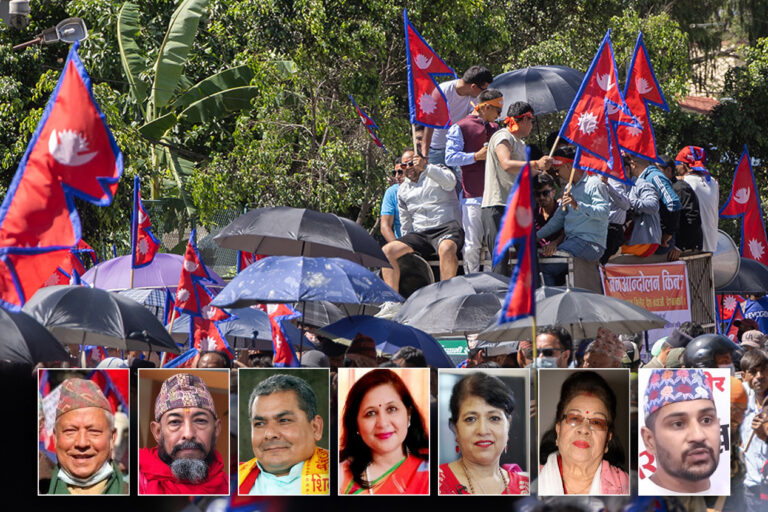
After former King Gyanendra Shah returned to Kathmandu from Pokhara on March 9, 2025, and thousands of people gave him a grand welcome at Tribhuvan Airport, the royalists were highly encouraged. The dormant royalist parties and groups united and announced a movement to restore the monarchy. Initially, Durga Prasai announced a decisive movement starting from March 28 through social media on March 15. A week after he announced the movement, the ‘Joint People’s Movement Committee for the Restoration of Monarchy,’ coordinated by the 86-year-old former Panch Nawaraj Subedi, also called on royalists, Hindu-kingdom supporters, and anti-federalists to participate in the protest on March 28.
Various pro-monarchy and pro-Hindu nation groups participated in this committee. Pro-monarchy groups united during the movement. Although it appeared that many pro-monarchy groups had united, in reality, there was no emotional unity among the royalists in that movement. As a result, the movement became disorganized and anarchic.
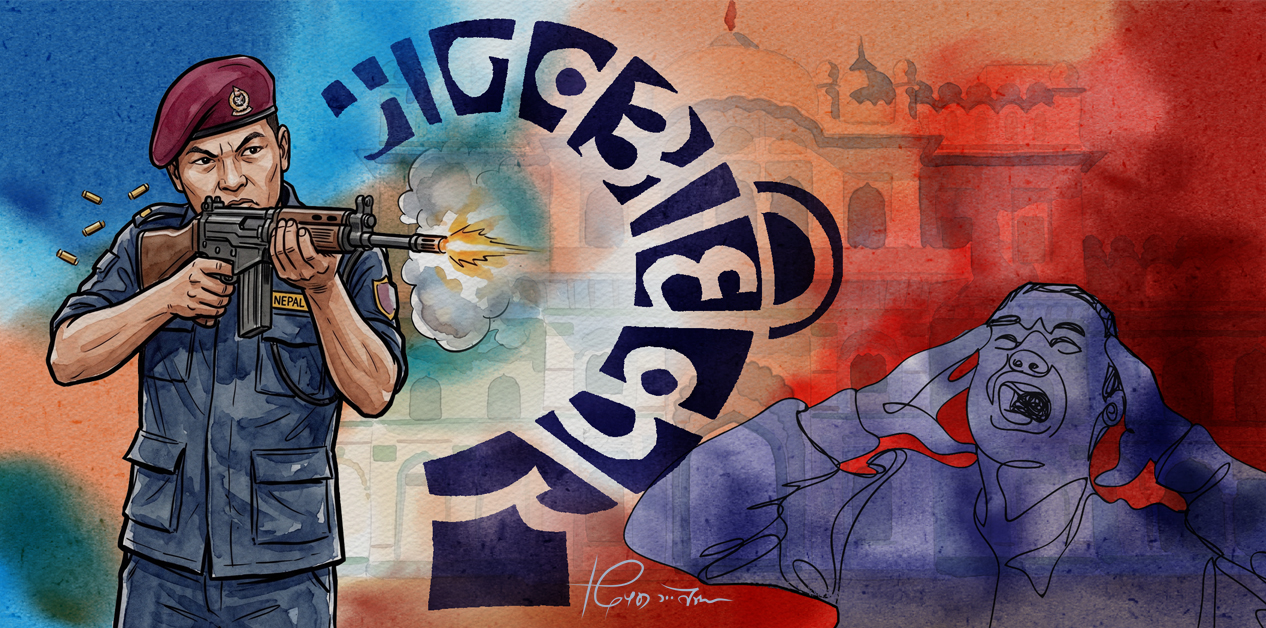
During the protest on March 28, incidents of arson, looting, clashes, and gunfire occurred. Two people died, and more than 20 were injured, with significant damage to physical property.
During this time, Prasai, who was designated as the commander of the movement, and RPP leaders including Dhawal Shamsher and Rabindra Mishra were arrested. However, Lingden, the Chairman of the RPP, and Thapa, the Chairman of RPP Nepal, who have long advocated for the monarchy, were not seen in the forefront of this movement. Since the RPP leaders did not recognize each other, the responsibility of leading the movement was given to former Panch Subedi. Leaders were confused about who should lead the movement. RPP leaders themselves accuse key leaders, including Lingden, of playing a role in making the March 28 movement unsuccessful.
After the March 28 incident, the remaining royalist organizations also united. On May 8, 2025, holding a press conference, the Joint People’s Movement Committee announced an indefinite movement starting from May 29. During this time, Lingden, the Chairman of the RPP; Thapa, the Chairman of RPP-Nepal; Subedi, the coordinator of the committee; and Keshar Bahadur Bista of Rastriya Shakti Nepal, among other royalist leaders, appeared on the same stage. According to their announcement, 45 pro-monarchy parties and groups participated in the May 29 movement.
Even such an unprecedented unity of royalists could not last long. The movement, which was called indefinite, subsided before the fourth day. After Thapa, Chairman of RPP Nepal, and Deepak Bahadur Singh, an RPP leader, were arrested on June 2, Lingden, the Chairman of the RPP, announced a shutdown of the Kathmandu Valley starting the next day. However, after Thapa and Singh were released in the evening, Chairman Lingden wrote on social media, “The RPP is against unpopular programs like shutdowns and strikes.”
The movement, which was said to involve 45 groups, was deserted by the fifth day. Bad blood increased among the leaders of the groups involved in the movement. As the movement subsided, they had to announce the postponement of the movement, citing the ‘rainy season’ as the reason. According to the RPP leaders themselves, the participants in the movement decreased because there was no unity among the royalist groups, and they had to postpone it by blaming the rain.
It does not take long for royalists to unite and split. Such incidents of unity and splitting are not new to them. In the latest movement, too, they united easily and split just as easily. During the movement, royalist parties and groups like the RPP, RPP Nepal, Keshar Bahadur Bista’s Rastriya Shakti Nepal, Jagman Gurung’s Nepal Prajnik Manch, Prasai’s Maha Abhiyan, the Vishwa Hindu Mahasangh chaired by Asmita Bhandari, the Santosh Rajawadi-led ATF (Anytime Force), the Anil Basnet-chaired Shiv Sena Nepal, the Rama Singh-led Nagarik Bachau Mahasangram, and the Mira Rana-led Rastra Rakshartha Ekata Abhiyan united, but they have now fallen apart. These groups have been silent after the Gen Z protest.
The campaigns advocating for the monarchy and a Hindu nation are not only formal parties and groups but also campaigns led by individuals and groups of two or four people. According to Kishor Bahadur Karki, a former Central Party Committee member of the RPP, the number of groups supporting the monarchy and a Hindu nation reached up to 147 during the movement. However, the whereabouts of those groups are now unknown, and internal strife is raging within parties like the RPP, which advocate for the monarchy. A Central Party Committee member of the RPP who recently met former King Gyanendra says, “The Palace has understood that those who led the movement earlier cannot succeed. The Palace does not trust the RPP or any other group and is looking for a new charioteer.”
Amrit Kumar Shrestha, who meticulously scrutinized the royalist resurgence, attributes the movement’s failure to its inherent disorganization and chaotic execution. His incisive analysis posits, “A mobilization effort predicated purely on impulse lacks sustained viability. The royalists, perpetually afflicted by leadership instability and factional fragmentation stemming from profound mutual distrust, have been rendered politically irrelevant following the Gen Z protest. Consequently, the prospect of their movement attaining success is now acutely remote.”