Kathmandu
Tuesday, July 21, 2026





The 91 completed structures complicate the investigation into the illegal sale of the property

KATHMANDU: The Commission for the Investigation of Abuse of Authority (CIAA) has initiated the collection of documents pertaining to the sale of land belonging to Trishakti Cement Company in Khopasi, located in ward 9 of Panauti Municipality, Kavre. The Commission has, in turn, mandated the Ministry of Land Management, Cooperatives, and Poverty Alleviation and the Department of Land Management and Archive to immediately remit all relevant records concerning Trishakti Cement’s land.
The CIAA announced that it has initiated a comprehensive collection of documents delineating the progression of the land sale approval. These records include the initial application submitted to the Land Revenue Office, the official decision records from the Department and the Ministry, the subsequent application and recommendation forwarded to the Council of Ministers, and the final decision records issued by the Council of Ministers itself.
“Instructions have been given to send the documents detailing what decisions were made when permission was granted to release and sell Trishakti Cement’s land that was above the land ceiling limit; a letter has been sent,” said a high-ranking CIAA official. “The concerned bodies have not yet sent the documents; we are urging them to send them as quickly as possible.”
Both the ministry and the department have informed the CIAA that they are searching for the related requested documents.
Yubraj Aryal, Information Officer at the Ministry of Land Management, stated that he could not disclose information related to the CIAA’s letter. “If you need information, submit an application; only then can information be disclosed,” he said.
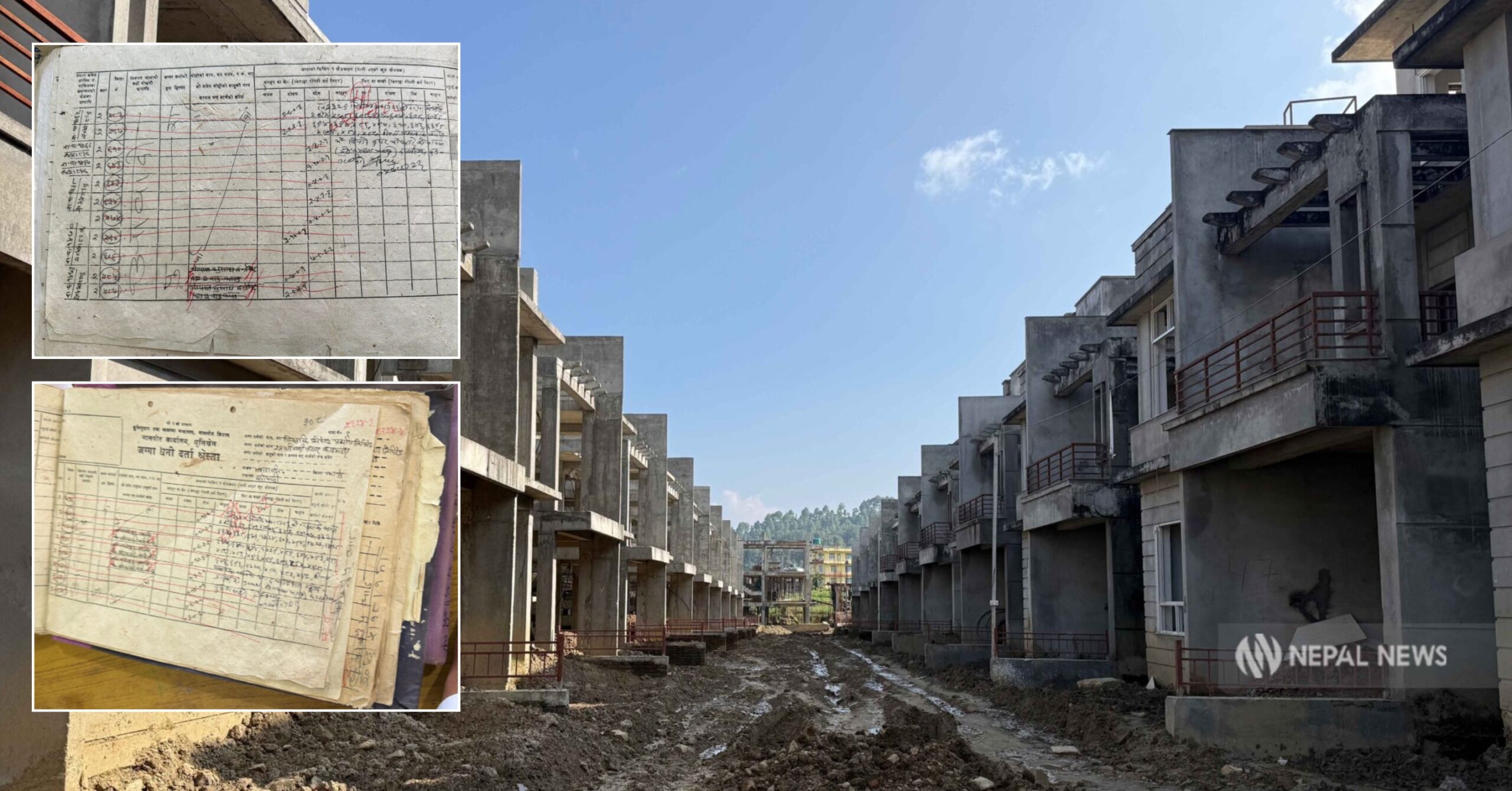
The CIAA, which officially launched its investigation into the Trishakti Cement land case, wrote to the Land Revenue Office in Kavre on November 27 requesting the land be frozen. Notably, the Land Revenue Office had already placed a freeze on the disputed land on October 29. Following the securing of the land asset, the CIAA proceeded to write formal letters to the concerned department and ministry to initiate the collection of all related documents.
In the fiscal year 1998/99, the then Council of Ministers authorized the release and sale of 58838.13 square (115 ropani, 10 aana, and 2 paisa) meters of Trishakti Cement’s land located in Khopasi.
CIAA Spokesperson Rajendra Kumar Paudel stated that since the matter is under investigation, details cannot be disclosed just yet.
The CIAA has requested all policy decisions made in the fiscal years 1998/99, 2000/01, and 2009/10 from the Department and the Ministry regarding this particular case. “The release of Trishakti Cement’s land above the ceiling limit and the permission to sell appear to have been granted by the Council of Ministers in the fiscal year 1998/99. The land appears to have been sold in the fiscal year 2000/01 based on that decision,” the official said. “The transaction does not appear to have been legal when the land was sold.” According to him, policy decisions appear to have been repeatedly sought to sell the remaining frozen land as well.
In the fiscal year 1998/99, the then Council of Ministers authorized the release and sale of 58838.13 square (115 ropani, 10 aana, and 2 paisa) meters of Trishakti Cement’s land located in Khopasi. Subsequently, following this governmental decision, Trishakti Cement in Dillibazar illegally divested the property in the fiscal year 2000/01. The land was transferred to industrialist Binod Chaudhary, his brother Arun Chaudhary, and Chandbagh School, an institution operated by the Chaudhary Group (CG) itself.
According to CIAA officials, a detailed investigation into this case has now been launched. In this process, documents pertaining to policy decisions are being meticulously sought following the freezing of the land. Work is currently underway to identify all individuals who were involved in the Land Release Recommendation Committee at the Ministry and Department. The official further stated that the identification process has commenced for the entire chain of command, including the person who presented the matter to the Council of Ministers, other responsible individuals of the then government, the Prime Minister, and the Chief Secretaries.
Trishakti Cement had purchased 108868.82 square meters (214 ropani) of land in Khopasi in ward 9 and Balthali in ward 11 of Panauti Municipality between the fiscal years 1990/91 and 1992/93 to establish an industry.
The official further stated that deliberations are currently underway regarding the methodology for bringing the families of some individuals and decision-makers, who may have passed away, into the purview of the inquiry. “After reviewing the decision documents, we will identify the individuals involved, and then statements will begin,” he said.
Trishakti Cement had purchased 108868.82 square meters (214 ropani) of land in Khopasi in ward 9 and Balthali in ward 11 of Panauti Municipality between the fiscal years 1990/91 and 1992/93 for the purpose of establishing an industry. Out of that, Trishakti sold 58838.13 square meters of land in Khopasi to CG and others.
The decision to allow Trishakti’s land to be released and sold was made by the Council of Ministers meeting on August 6, 1998. Girija Prasad Koirala was the prime minister, and Chiranjibi Wagle was the land reform minister in that Council of Ministers. The Council of Ministers granted permission to sell the Khopasi land on the condition that other land would be purchased within two years. However, Trishakti did not purchase land elsewhere within two years; instead, it sold the land to CG on December 8, 2000.
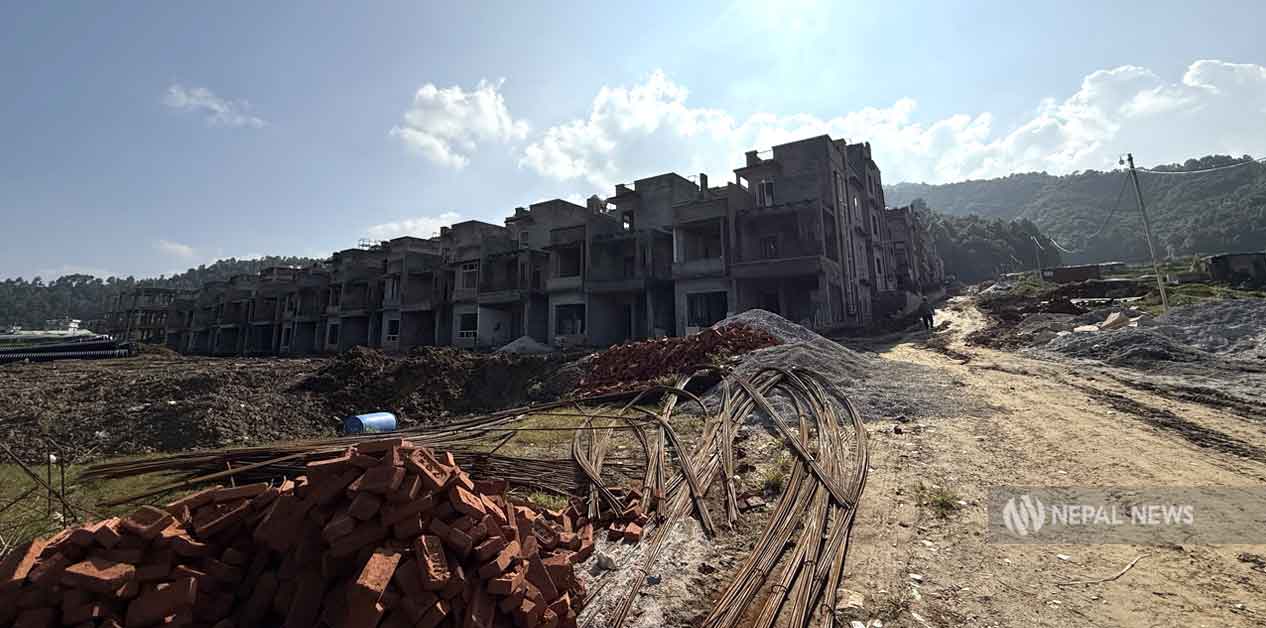
CG Holdings’ new housing project in Khopasi, Panauti, built on the disputed land formerly held by Trishakti Cement. Photo: Khila Nath Dhakal/Nepal News
CG Holdings is currently building housing on the same land. CG Holdings started building housing on that land in the fiscal year 2021/22. There is a plan to build 220 houses there. At least 91 houses have already been built, and 31 houses have been booked.
The Eighth Amendment to the Land Act, 1964, enacted in 2020, stipulates that corporations may be authorized to retain acreage exceeding the statutory ceiling limit, provided they obtain government sanction for such limited and specific endeavors as establishing industries. Industries, establishments, companies, projects, educational institutions, or any other organizations that acquire land exceeding the ceiling limit are only allowed to use it for the purpose for which it was obtained. The Act states that such land cannot be sold, distributed, transferred in any way, or exchanged by the concerned industry, establishment, company, project, educational institution, or any other organization to anyone. The Act provides that land illegally bought and sold shall be confiscated by the government.
CG Holdings started building housing on that land in the fiscal year 2021/22. There is a plan to build 220 houses there. At least 91 houses have already been built, and 31 houses have been booked.
However, if an industry, establishment, company, or organization is dissolved or goes into liquidation for any reason, it may be sold with the government’s approval, subject to the Act, for the purpose of settling the organization’s liabilities. But it can only be sold to an industry, establishment, or company with a similar objective, not to an individual.
The 49855.82 square meters of Trishakti’s land in Balthali has not been sold yet. There were minister-level decisions to release that land in the fiscal years 2000/01 and 2009/10.
In the fiscal year 2000/01, State Minister for Land Reform Ojha, and in the fiscal year 2009/10, Minister for Land Reform Dambar Shrestha, made minister-level decisions to release and sell that land as well.
According to the CIAA official, a complaint was filed somewhere around last May/June this year alleging that Trishakti sold the land in the same manner as the Patanjali Yog Peeth case. A complaint about the Trishakti Cement land was filed with the CIAA after a lawsuit was filed against 93 people, including former Prime Minister Madhav Kumar Nepal, in the Patanjali land scam case.