Kathmandu
Sunday, July 26, 2026





The 'Free Visa, Free Ticket' policy benefit exists only on paper, unused by migrant workers
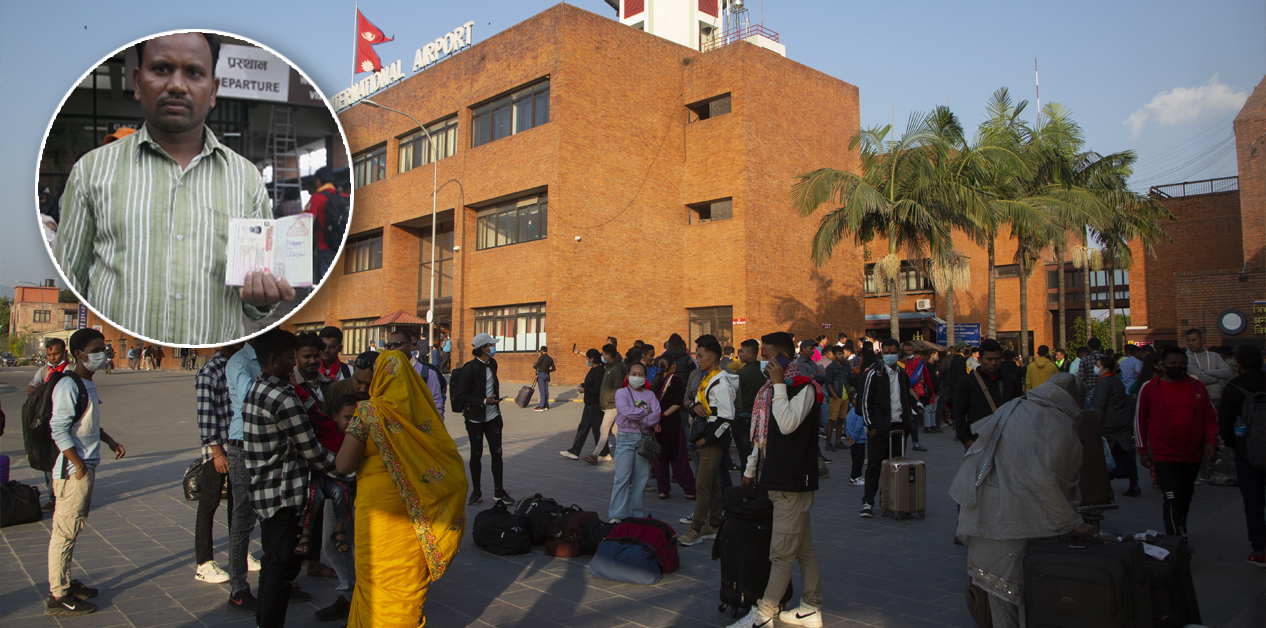
KATHMANDU: The ‘Free Visa, Free Ticket’ policy, intended for migrant workers seeking foreign employment, has been a government mandate for at least 10 years. Despite this lengthy commitment, the facility remains largely nominal; workers have been unable to access the promised benefit and continue to depart for employment abroad by paying unauthorized, substantially hefty fees.
In June 2014, the then Minister of State and Minister for Labor, Tek Bahadur Gurung, mandated the ‘Free Visa, Free Ticket’ system for Malaysia and six Gulf nations. Implementation was subsequently retarded by one year due to staunch opposition from business operators, finally taking effect in the fiscal year 2015/16. This arrangement was officially justified at the time as a measure designed for worker mitigation and relief.
The ministerial-level decision states that the employer company must bear the cost of the visa and air ticket for workers going for foreign employment. The policy provision is that the person seeking employment only needs to pay the manpower company Rs 10,000 as a service charge. However, no worker has gone for foreign employment at such a low cost. Apart from the fee charged by foreign employment business operators, the state also collects money from workers under various headings. Even with the ‘Free Visa, Free Ticket’ facility, workers must spend at least Rs 20,895 when going for foreign employment.
Workers must pay Rs 1,500 for the Welfare Fund when obtaining the labor permit for foreign employment. This amount is deposited into the Foreign Employment Board’s account. Similarly, Rs 2,595 must be paid for the Social Security Fund. Workers must also pay the insurance amount themselves. Under this, a worker below 35 years of age must pay a premium of Rs 3,700, and those older must pay Rs 4,900. This amount is paid for term life insurance.
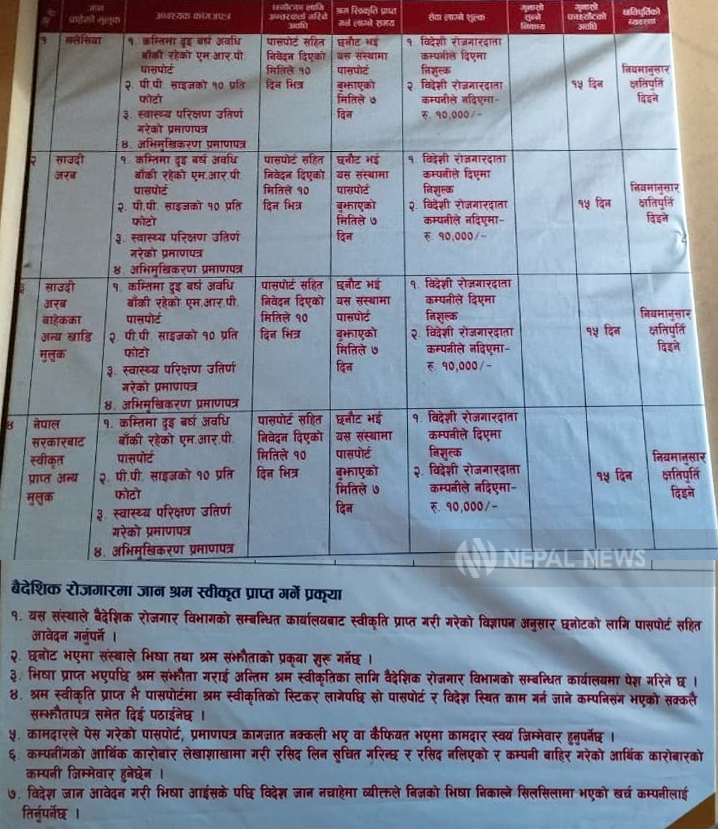
A typical service chart of a manpower agency located in Kathmandu
In fact, when Dol Prasad Aryal was the Minister of Labor, Employment, and Social Security, he attempted to abolish the requirement for a labor permit altogether. His argument at the time was, ‘Workers should not be subjected to unnecessary hassle by having a labor permit system that is only required at Nepal’s airports.’ However, the hassle of obtaining a labor permit persists even now.
Workers also have to spend money on medical examinations. There is a provision that health checks must be done at private health institutions. For this, those health institutions obtain permission from the companies in the destination country where the worker is going. Rs 9,500 must be paid for the health examination.
There is a provision to take orientation classes before going for foreign employment. Private organizations operate classes for this. The fee for this orientation is usually Rs 2,100. Workers going to Bahrain must also get a meningitis vaccine, and a lump sum of Rs 3,500 must be paid for that.
On Tuesday, Jaljal Recruitment Company in Kathmandu, Tokha, published an advertisement for employment opportunities in Qatar. The advertisement states that there are employment opportunities for at least 10 laborers, with a monthly salary of QAR 1,000, which is around Rs 39,641 in recent times. A worker going to earn a monthly Rs 39,000 must spend at least Rs 20,000, excluding the amount paid to the foreign employment company. Jaljal Recruitment stated that the worker themselves must bear the cost of the medical examination done in Nepal, term life insurance, the Social Security Fund, the orientation fee, and the Welfare Fund contribution.
Illusory ‘free visa, free ticket’
Even though the government policy includes the provision of a free visa and a free ticket, workers have not benefited from it. No manpower company provides this facility. Although they state in advertisements that the employer company will cover the visa fee and air ticket, they still collect the money from the workers. However, they create documents stating that they did not collect any money from the workers.
Nepal News has obtained a sample of such a commitment document that manpower companies make workers sign. It states, “It is true and correct that I am going for foreign employment at a zero cost (free visa, free ticket) to the company. According to the company’s rules, the company will provide the return air ticket only after the completion of the second year of employment. I have not paid or will not pay any money to anyone to go to the company. I am signing and stamping this document in full awareness and voluntarily consenting to the mentioned terms and conditions.” The document also bears the worker’s thumbprint and signature.
With insufficient employment opportunities in the country, youth are forced to go abroad, even if it means paying large sums of money illegally. According to the Department of Foreign Employment, the number of people taking new labor permits for foreign employment until October 17 of the current fiscal year 2025/26 is 123,459. The number of people taking re-entry labor permits after returning from abroad is 77,257.
According to this data from the Department, more than 41,000 youth go abroad for employment every month. The majority of these go to the Gulf countries. Nepalis earn around a minimum monthly Rs 40,000 in those countries.
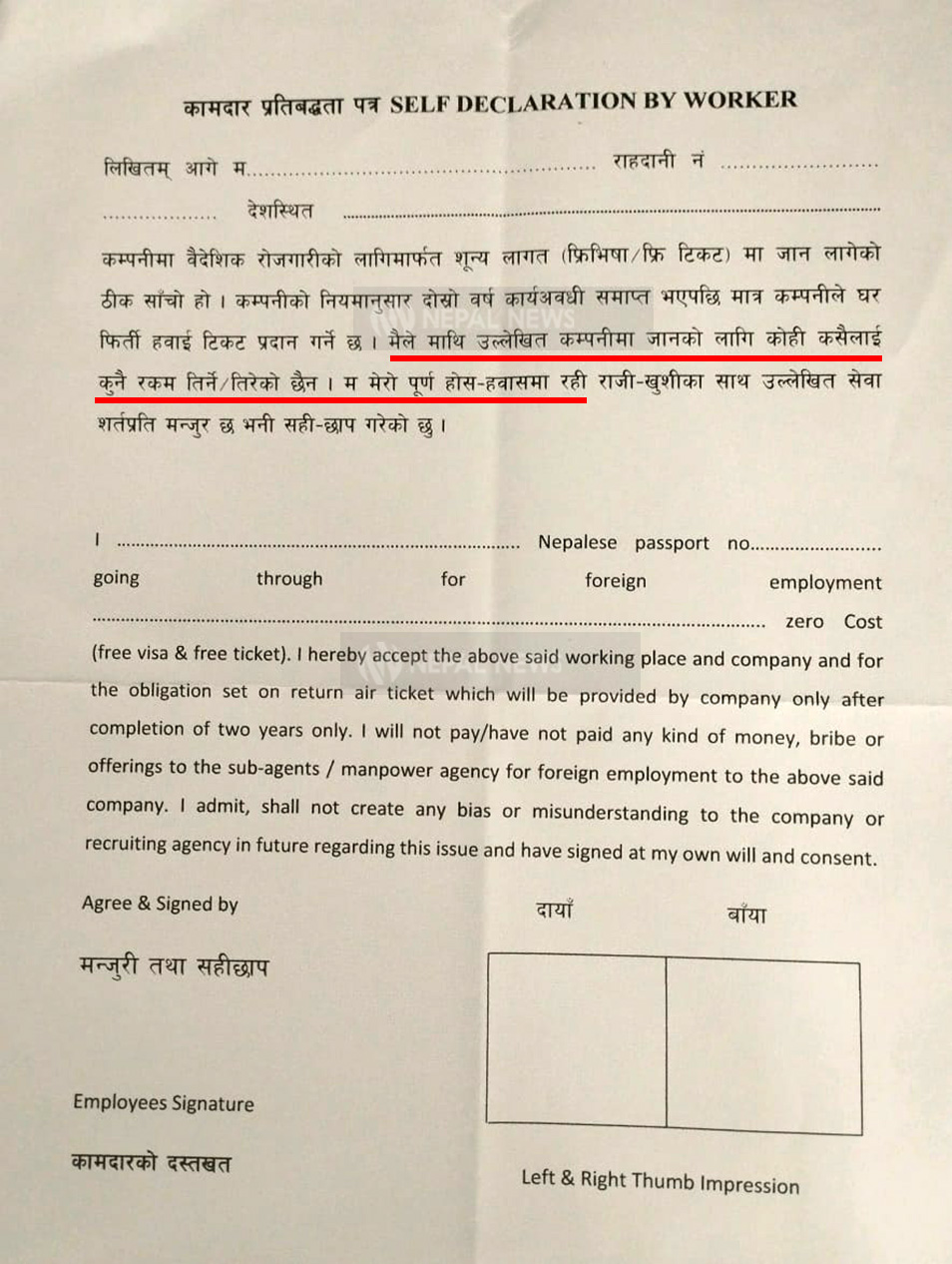
A self declaration letter mandated by manpower agencies, which formally attests that service seeking workers paid no charges.
Thus, those going for minimum-wage employment are forced to pay fees under various pretexts. The government has not focused much on reducing the cost of going abroad by reducing the fees workers pay. Rather, Sharat Singh Bhandari, the Minister of Labor, Employment, and Social Security before the Gen Z protest, attempted to increase the fees.
Based on Bhandari’s decision, the health examination fee paid by workers was recently increased. The health examination fee, which was previously Rs 6,500, was increased to Rs 9,500. Additionally, Bhandari was preparing to increase the service charge taken by manpower companies from Rs 10,000.
Manpower business operators say it is impossible to send workers abroad at zero cost. Bhuwan Gurung, president of the Nepal Association of Foreign Employment Agencies, says, “The free visa, free ticket policy has been criticized as being impractical. It has been nothing but an election agenda. We have repeatedly suggested that it should be improved.”
Nepali workers pay a minimum of Rs 150,000 to Rs 300,000 to go for foreign employment in Malaysia and the Gulf countries. Some of this money is taken by the manpower company’s agents, and the rest is taken by the manpower company. Business operators say that if a legal provision were made allowing them to charge Rs 35,000 per worker as a service fee, the business would become transparent, and workers would not be defrauded.
Gurung further adds, “We have repeatedly told the government to study the practices of countries that compete with Nepal in sending workers abroad and implement a similar system in Nepal. However, no one has paid attention to implementing that kind of system.”
According to Gurung, in countries like Sri Lanka, India, and the Philippines, manpower companies collect service fees directly from the workers.
Similar fees in G2G
Not only in the Gulf countries, but the government also charges excessive fees even when sending workers through Government-to-Government (G2G) agreements with other countries.
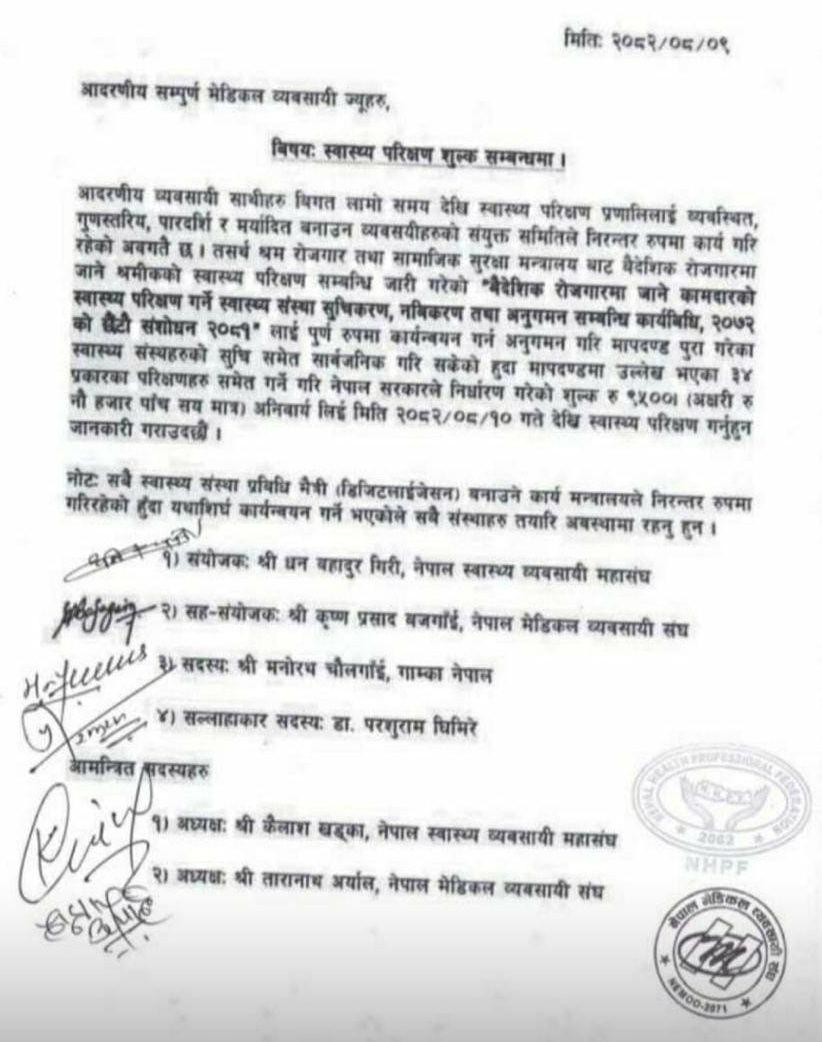
Nepal Medical Association Regarding Health Examination Procedures for Migrant Workers
Currently, the government is sending workers to Korea and Israel through the G2G process. The Nepal government completes all procedures and sends the workers to Korea or Israel, and the respective country’s government is responsible for the worker’s salary and security once they arrive. Even when going through a process completed by government employees who receive government facilities, workers still pay more than Rs 100,000.
The government, which implemented ‘Free Visa, Free Ticket’ for private sector business operators in foreign employment, has been unable to provide free service when sending workers to Korea. A separate government office called the EPS Korea Section under the Department of Foreign Employment is operational for sending workers to Korea.
According to Raj Kishor Sah, Information Officer of the EPS Korea Section, Nepal, workers wishing to go to Korea must pay USD 28 for the Korean language test fee. Similarly, USD 5 is required for the job application fee, USD 63 for pre-employment training, and USD 46.20 must be paid to the government for office operating expenses. Besides this, Rs 7,300 is also required for medical examination, Rs 8,100 for the visa fee, and Rs 2,500 for the Welfare Fund. At least Rs 2,596 must be paid to the Social Security Fund, and Rs 54,990 must be spent on the air ticket.
Excluding Korea, Israel, Malaysia, and the Gulf countries, European countries are now an attractive destination for Nepali employment. The number of youth going to countries like Portugal, Finland, Denmark, Malta, and Romania is increasing. The majority of those going to these countries go through personal efforts and connections. Some manpower companies also send workers to those countries. Besides this, some educational consultancy companies also send workers to those countries. The government has neither brought the institutions sending workers to Europe under its regulatory framework, nor does the government take responsibility for the workers who have gone to those countries.
Nepalis going to work in European countries do not obtain labor permits from the official body of the Nepal government. Although some manpower companies send Nepalis as workers to European countries, the government considers them to have gone for employment through personal efforts and connections. Workers pay manpower companies a minimum of Rs 900,000 to Rs 1.5 million to go for employment in various European countries. However, manpower companies are not responsible if the workers who have gone to those countries do not receive work or salary.
Pitambar Ghimire, Joint Secretary and Spokesperson of the Ministry of Labor, Employment, and Social Security, said that efforts are continuously being made to improve the irregularities in the foreign employment sector.
“The Ministry has conducted studies at various times and sought opinions from experts to systematize the process of sending people for foreign employment. Discussions are underway to make this sector systematic and reliable,” said Ghimire.
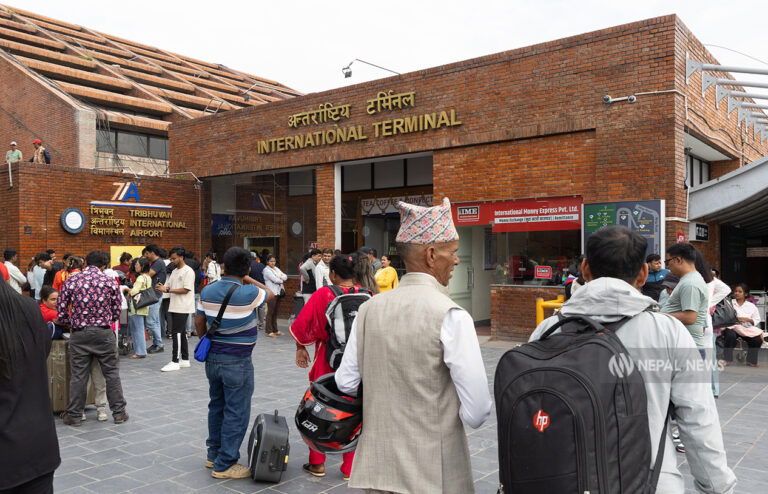
International Terminal of Tribhuvan International Airport. Photo: Bikram Rai/Nepal News