Kathmandu
Saturday, June 6, 2026





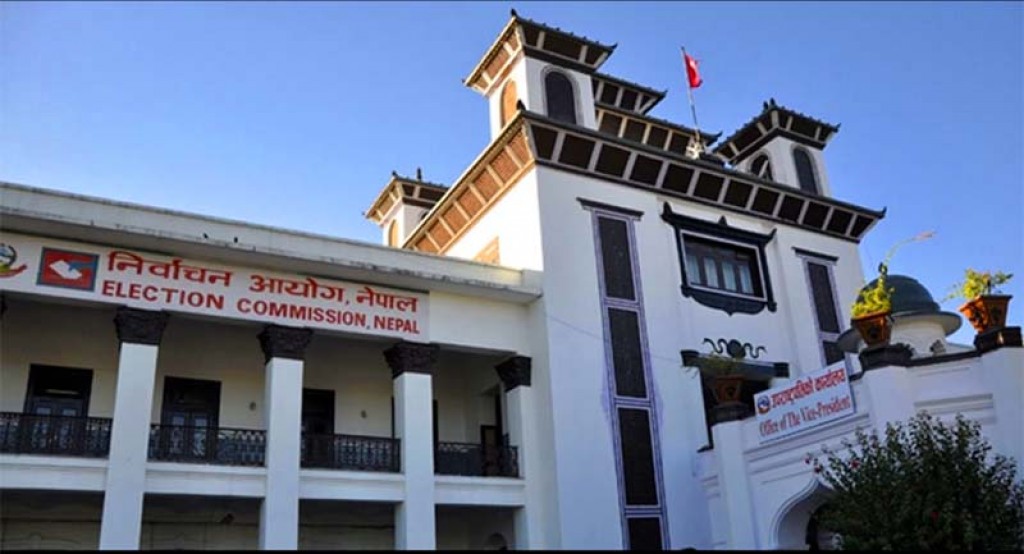
KATHMANDU: The Election Commission (EC) has issued 20-point directive to the political parties in view of the election to the House of Representatives (HoR) member scheduled for 5 March 2026.
Likewise, the EC has set the date of the National Assembly (NA) election for coming December 26.
Commission’s Assistant Spokesperson Prakash Neupane informed that necessary directives were given to the political parties registered at the EC as per the Political Party Act, 2073 (Clause 57) to maintain good governance while keeping inclusive proportional representation in the election.
In order to ensure inclusive proportional representation in the election system, each political party has to guarantee representation of women candidates in a way that one third is not overlooked, and nominate candidates to ensure gender and inclusive representation is maintained while presenting candidacies towards first-past-the-post.
Likewise, the political parties are obligated to arrange candidacy nomination to ensure gender and inclusive representation for effective implementation of the policy to level up 40 percent women representation in the parliament by 2030 in consideration of the Sustainable Development Goals (SDGs).
While conducting election related activities, the political parties are not allowed to engage in any actions that would undermine mutual harmony being adherent to the Nepal Constitution and respectful to the diverse castes and ethnicities, communities, gender, religions, languages, regions and cultures.
To make the polling stations and centres gender and disable-friendly, the EC has asked the political parties to extend cooperation to that end and necessarily address the gender and social inclusion arrangements in their political documents, including election manifesto.
Inclusive proportional representation principle should be adhered in a way to keep at least one third women and represent Nepal’s social diversities while nominating candidates to the posts, excluding the posts reserved for women, Dalit and minority communities.
The political parties should also ensure participation of women, inclusive groups and target sections at the programmes, including training, workshop, seminar, discussion and interaction.
During election campaigns, it is prohibited to directly or indirectly intimidate, defame, insult, discourse, attempt character assassination, or show discriminatory actions against women, children, person with disabilities, inclusive groups or any other candidates.
The commission’s directive has stated that the political parties must ensure that language used on social media does not impart false, misleading and malicious information that could negatively impact the feelings of womena and indigenous nationalities.
Likewise, the political parties are obliged to make necessary arrangements to inform voters about gender and inclusivity in elections, the importance of the election, and voting process during poll campaigns. The political parties’ office-bearers, members and workers should comply with the election code of ethics.
As per the directive, the political parties should make arrangements to ensure that children are not used during political activities.
Likewise, parties are not allowed to carry out undemocratic acts such as obstructing, restricting and forcing another party not to do their election-related activities.
![Kathmandu welcomes Indian choreographer Terence Lewis ahead of dance finale [Photo feature]](https://english.nepalnews.com/wp-content/uploads/2026/06/Terence-lewis-in-Nepal_NPL5.jpg)