Kathmandu
Monday, June 15, 2026





CPN (UML) Chairman Oli has become synonymous with being an undemocratic, illiberal, intolerant, and arrogant figure in both party and national politics
KATHMANDU: On September 3, to celebrate the 80th anniversary of its victory in the war against Japan, China hosted a special Victory Day Parade in Beijing’s Tiananmen Square. Russian President Vladimir Putin, North Korean Supreme Leader Kim Jong Un, and Nepali Prime Minister KP Sharma Oli, alongside dignitaries from various countries, were invited to this strategic event designed to showcase China’s military power to the world.
A publicly available photograph from the military parade captures an interesting scene of Putin, Kim, and Chinese President Xi Jinping walking in a single line, with Oli positioned directly behind Kim. Oli’s presence alongside the Chinese, Russian, and North Korean leaders at the parade was meaningful in itself. During the visit, Oli not only held talks with Xi but also with Putin, even extending an invitation for Putin to visit Nepal.
Coincidentally, an emboldened Oli, after hobnobbing with the world’s powerful non-democratic leaders, returned to Kathmandu and, on the very next day, September 4, banned 26 social media platforms. Emulating the authoritarian rulers of China, Russia, and North Korea, he appeared intent on stifling citizens’ freedom of expression.
Unfortunately for Oli, just seven days after returning from Beijing, he was forced to vacate the Prime Minister’s residence in Baluwatar. The Gen Z protest on September 8 and 9 was primarily focused against the Oli government’s move to shut down social media. During the protest, 76 people lost their lives, including 54 due to government suppression and 32 due to arson. The Parliament building, Singha Durbar, and the President’s office, along with other critical physical infrastructure across the country, were turned into ruins due to arson and vandalism. Never before in the country’s history, in such a short period and under any prime minister, had there been such extensive loss of life and property.

KP Sharma Oli attending the China Victory Day Parade 2025
However, Oli has neither taken moral responsibility nor admitted fault for the irreparable damage that occurred during his tenure. Instead, he persists in expressing bitter resentment against the Gen Z protest, against the government that came to power as a result of that protest, and against the political change that followed. Oli has steadfastly refused to provide testimony to the commission formed to investigate the events of the protests.
Unrepentant Oli: Still unchanged
Even out of power, Oli’s arrogant style, which sees himself as the ultimate authority, has not changed. Eleven years ago, when he first became the party chairman at the 9th General Convention of the Communist Party of Nepal (Unified Marxist-Leninist), abbreviated CPN (UML), KP Sharma Oli passed a significant proposal: a 70-year age limit for executive posts and a restriction preventing candidates from serving more than two terms.
Oli introduced this proposal for an age limit and two-term restriction specifically to block senior leaders Madhav Kumar Nepal and Bam Dev Gautam from the leadership. However, realizing this provision would obstruct his own ambition, he declared it nullified through a Secretariat meeting on July 18. Due to this reversal of the statute, the path is now clear for him to be elected party chairman for a third time at the 11th General Convention starting tomorrow.
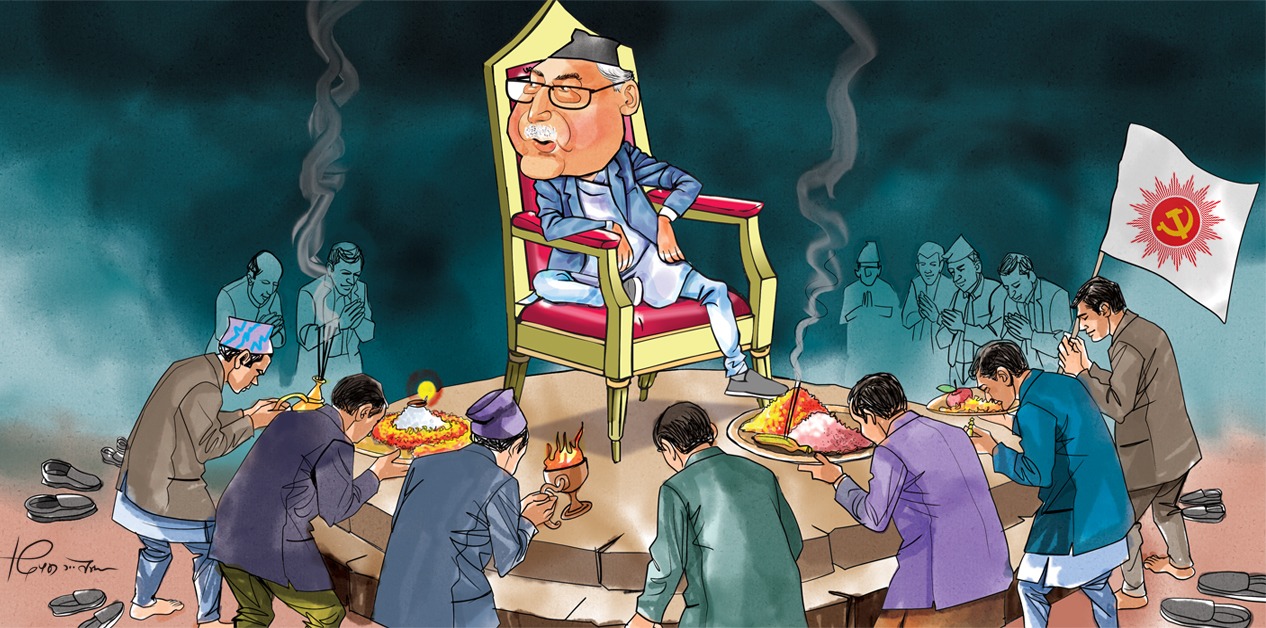
Oli seems like a Shree 3 Maharaja (the official title for the prime ministers of Nepal during the autocratic Rana Dynasty) of the CPN (UML) when you look at his tendency to disregard party rules, run the party through fiat and command, and overturn convention decisions.
Oli is 74 years old. However, he has openly expressed his desire to lead the CPN (UML) for life. Somewhere around mid-March to mid-April 2024 in Pokhara, he stated, “Some might wish that if only Oli weren’t here at the position, they think they could do this or that by themselves, but fortunately my hair is starting to grow back. My mustache is also turning black. Therefore, others should not hope for 20 years of me leaving.” If Oli’s words come true, he will remain the party chief until he is 92 years old, which would set another record for the CPN (UML).
Oli, who set records for serving as prime minister four times and party chairman for two terms within a single decade, has not been able to prove himself successful in either role. His working style was consistently characterized by enjoying political maneuvering and power games while in office. None of the CPN (UML) party chiefs before him, such as Manmohan Adhikari, Madhav Kumar Nepal, and Jhala Nath Khanal, got the opportunity to serve a second term as prime minister. They also did not lead a government for as long a tenure or with the strength that Oli did. Whether during Oli’s tenure or those before him, the CPN (UML) has never secured a single majority. Nevertheless, to attain power, Oli has entered into power-sharing agreements with almost every parliamentary party, including the CPN (Maoist Center), Nepali Congress, Rastriya Prajatantra Party, Rastriya Swatantra Party, and Madhesh-based parties. It was his alliance with the Nepali Congress and CPN (Maoist Center) that paved the way for Oli to become a prime minister with a two-thirds majority twice.
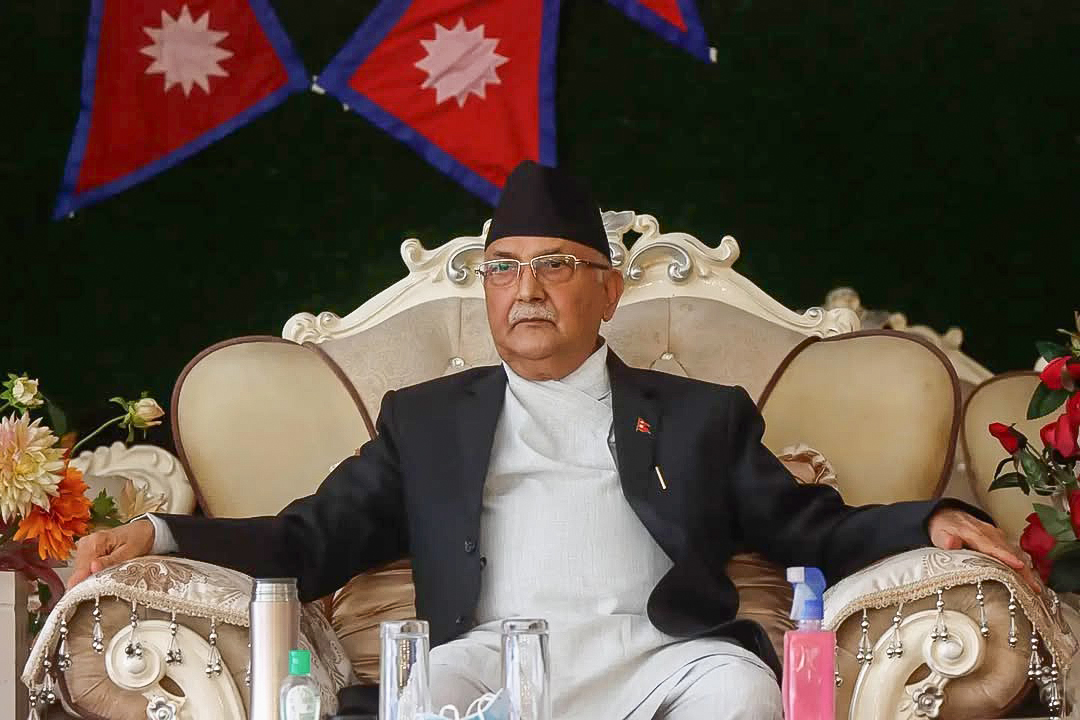
KP Sharma Oli
Not only in achieving power but also in exiting it, Oli has left behind a poor ‘record’ in Nepali politics. For instance, no prime minister other than Oli had to leave Baluwatar immediately after resigning by helicopter. Oli was forced to leave the government residence on September 9 after the Prime Minister’s residence was besieged during the Gen Z protest. “Oli has extreme obstinacy, vendetta, authoritarianism, and dictatorial tendencies. He has become a Maharaja (Great King) within the CPN (UML) party,” says Shyam Shrestha, a leftist political analyst. “He could have been killed in the Gen Z protest, but he survived, but he still hasn’t changed. He will not change in this lifetime; rather, he will drown.”
Along with his vulgar speech, Oli’s leadership style is also different from other leaders. He sits on a higher seat and chair than others during events. He delivers speeches sitting down in parliament and public forums. He speaks but rarely listens to others. Oli leaves no stone unturned to punish critics and opponents but immediately rewards those who flatter and praise him.
‘Great King Oli’
The monarchy was abolished from the country on May 28, 2008. Back then Gyanendra Shah became the former king. However, at present, it is not Marx, Lenin, or the People’s Multiparty Democracy that runs the CPN (UML), but merely Oli-cracy (ways of KP Sharma Oli), and Oli has become a ‘Maharaja.’ “Oli seems like a Shree 3 Maharaja (the official title for the prime ministers of Nepal during the autocratic Rana Dynasty) of the CPN (UML) when you look at his tendency to disregard party rules, run the party through fiat and command, and overturn convention decisions. The CPN (UML) runs on Oli’s command; no one else has a say in it without his will,” says Prakash Bahadur Shah of Bajhang, who recently left the CPN (UML) to join the Nepali Communist Party due to Oli’s excesses. “The CPN (UML) is no longer what it used to be.”
The two-thirds majority government formed after the unification of the CPN (UML) and CPN (Maoist Center), now the Nepal Communist Party, did not survive because of him. After the 2017 general election, he became the head of a two-thirds majority government. However, during that period, he dissolved the House of Representatives twice. He could not sustain the unity between the CPN (UML) and the CPN (Maoist Center).
The court overturned Oli’s decision to dissolve the Parliament twice. Yet, Oli did not admit his mistake in violating the Constitution; instead, he misinterpreted the court’s order. Even more ironically, the same Oli has now approached the Supreme Court demanding the reinstatement of the House of Representatives dissolved after the Gen Z protest. “Oli, who lacks political morality, integrity, and principles, appears ready to do anything to secure power and position for himself,” says analyst Shrestha.
After the 2017 general election, Oli became the head of a two-thirds majority government. However, during that period, he dissolved the House of Representatives twice.
Radha Krishna Mainali, a former CPN (UML) leader and ex-minister who spent 12 years in the same cell with Oli during Oli’s 14-year-long imprisonment during the Panchayat era, says, “If others would agree, Oli would have declared himself king. In 11 years, he has transformed himself into a dictatorial, autocratic, and anti-democratic ruler in both state and party power.”
Devaluation of the two-thirds majority
In the current mixed electoral system, where a single-party majority is difficult to achieve, Oli received the rare opportunity to become Prime Minister with a two-thirds majority twice: first with the Nepal Communist Party’s two-thirds majority, and later with the joint Nepali Congress-CPN (UML) coalition’s two-thirds majority. However, he failed to utilize this mandate for development, good governance, and service delivery.
In 2017, Oli became the prime minister on the condition that he would hand over the premiership to the other Nepal Communist Party co-chair, Pushpa Kamal Dahal ‘Prachanda,’ after half the term. However, instead of implementing the prior agreement, he dissolved the House of Representatives due to internal conflict. This time, due to the Gen Z protest, he could not hand over power to Sher Bahadur Deuba, the Nepali Congress President, as per the previous agreement. Nevertheless, some Nepali Congress members themselves doubted that Oli would easily hand over the government to Deuba.

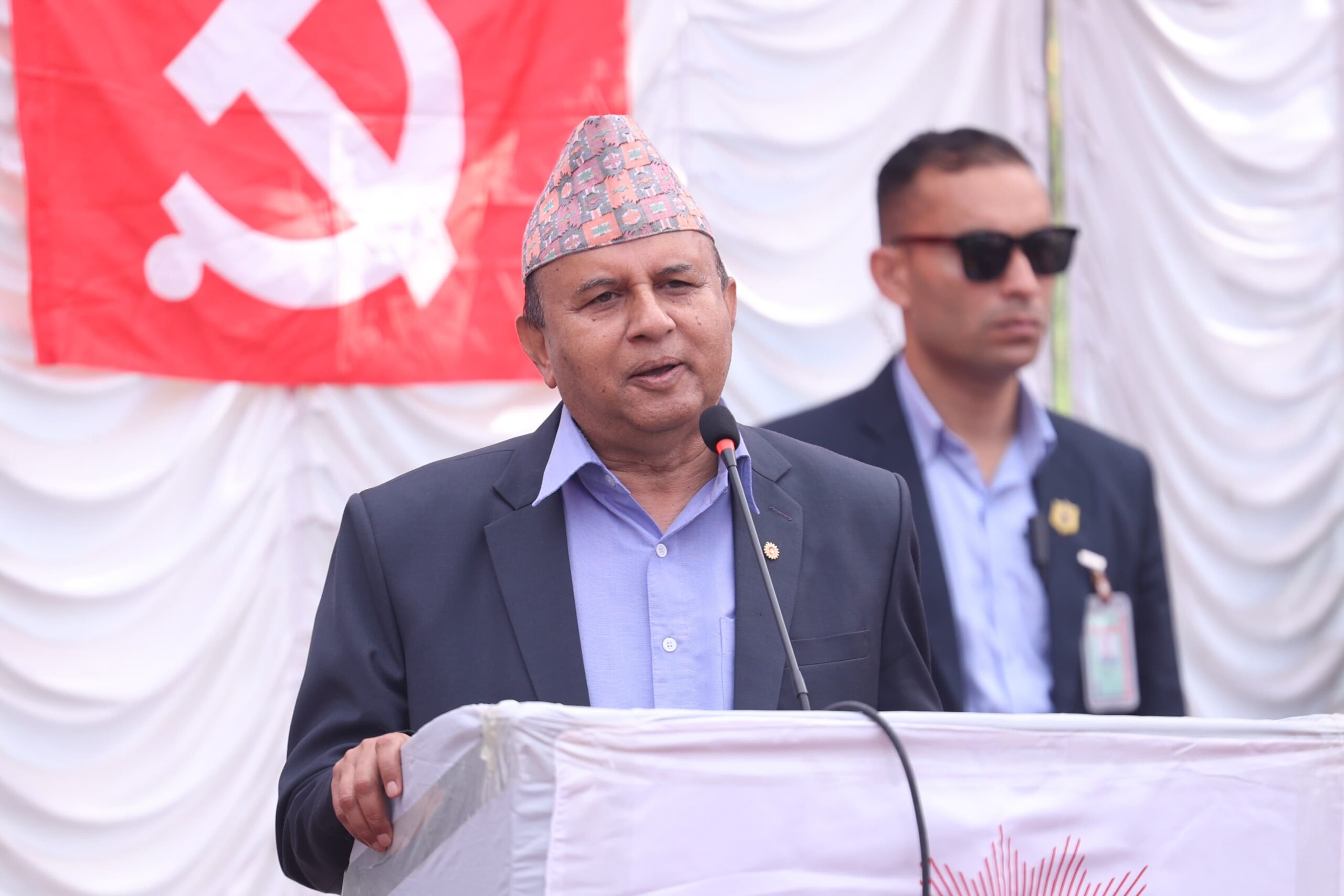
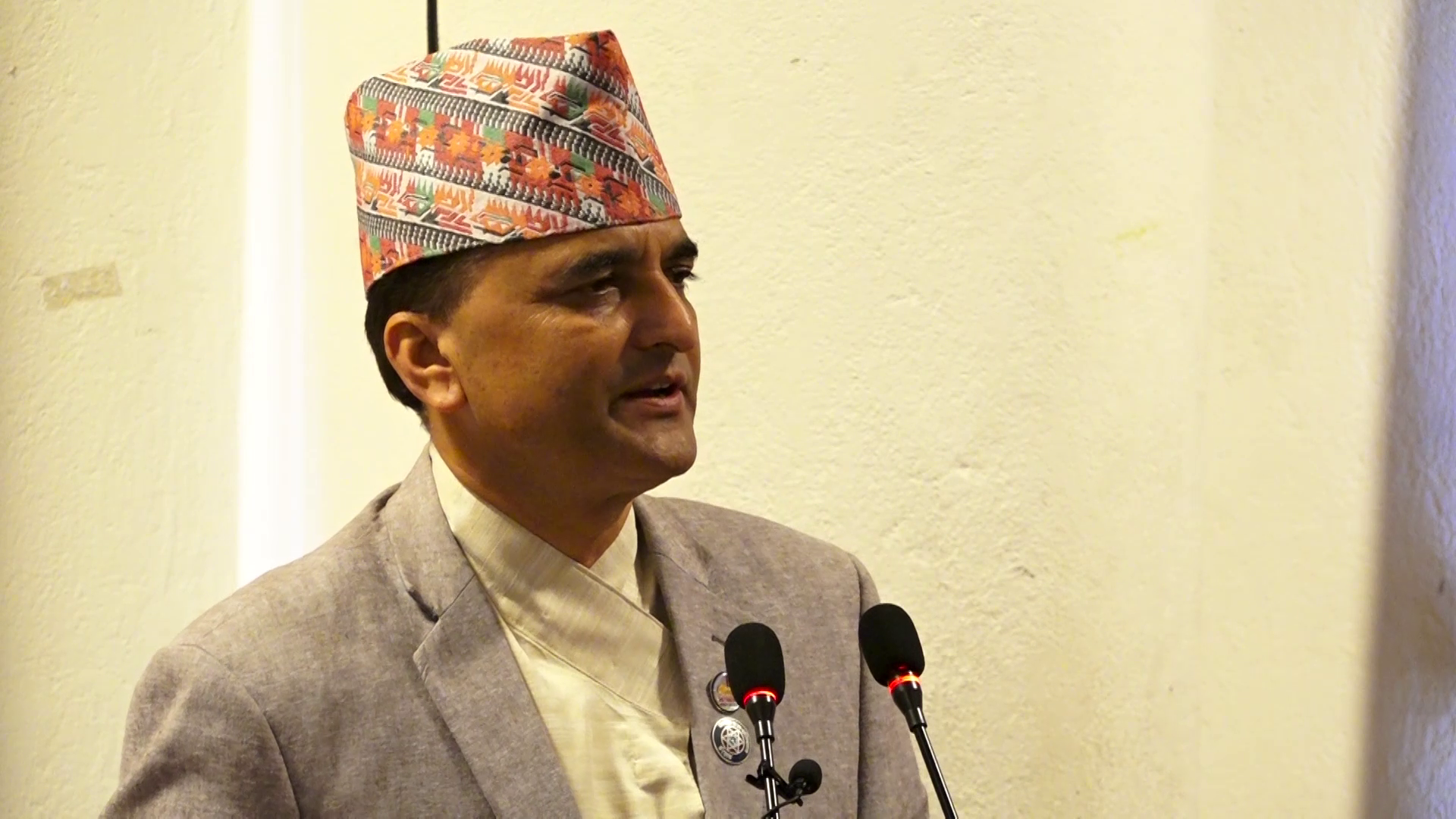
Oli during the inter-dialogue program on November 7
Oli’s departure from power was disgraceful on both occasions, the first time by a court order and the second time by the force of the Gen Z protest. Analyst Shyam Shrestha adds, “Oli’s own obstinacy led to the collapse of the two-thirds majority government twice and the dissolution of parliament twice. The unity of the Nepal Communist Party did not last because of him. Therefore, Oli is a villain for the country.”
Oli’s counterproductive actions as head of government and party have ridiculed the CPN (UML)’s guiding principle of People’s Multiparty Democracy. “Oli is the reason the CPN (UML) is now on the path to extinction,” Shrestha adds.
Critics on the anvil
Oli won the chairmanship of the party by defeating Madhav Kumar Nepal by a narrow margin (44 votes) at the party’s 9th General Convention, held from July 3 to July 17, 2014. He was defeated for the chairmanship by Jhala Nath Khanal at the 8th General Convention.
Perhaps because he was always the leader of only one faction before becoming chairman, Oli has always been intolerant of differing opinions. After assuming party leadership, he became an autocrat, systematically marginalizing old critics and rivals.
Bhim Bahadur Rawal, who contested the party chairmanship at the 10th General Convention, was insulted by Oli right at the convention venue in Chitwan. Because Rawal dared to compete against him, Oli gave him no responsibilities in the party. In contrast, Oli himself was given the responsibility of standing committee member even after being defeated at the Butwal Convention. Recently, Rawal has joined the Nepali Communist Party. “Oli considers himself the wisest and most knowledgeable leader in the world. Afflicted by an inferiority complex since childhood, he tries to oppress and look down upon everyone,” comments former Minister Mainali.
Ghanshyam Bhusal, a deputy general secretary and a sharp critic of Oli in the party, was defeated for the vice-chairmanship at the 10th General Convention and was consequently given no party responsibility by Oli. Furthermore, after being denied a ticket for the House of Representatives in the 2022 election, he was forced to contest as an independent. Defeated in the election, Bhusal then joined the CPN (Unified Socialist) and became its general secretary. However, after the CPN (Unified Socialist) merged into the Nepali Communist Party a while ago, Bhusal is now campaigning to establish a separate leftist force.
Oli even suspended Standing Committee member Binda Pandey and Central Committee member Usha Kiran Timilsina from the party for a period this year, allegedly for speaking out against accepting land donated by businessman Min Bahadur Gurung to build the CPN (UML) headquarters. Khanal, who defeated Oli at the 8th General Convention; Madhav Kumar Nepal, who was defeated by Oli at the 9th General Convention; and leader Bam Dev Gautam have all joined the Nepali Communist Party.
In 1998, the CPN (UML) split at the 6th General Convention in Nepalgunj to form the CPN (Marxist-Leninist). Radha Krishna Mainali recalls that Oli played an active role in expelling him, Mohan Chandra Adhikari, and CP Mainali from the CPN (UML) at that time. “Oli was more zealous than Madhav Kumar Nepal in pushing us out. Eventually, we left the CPN (UML) and formed the CPN (ML),” Mainali says.
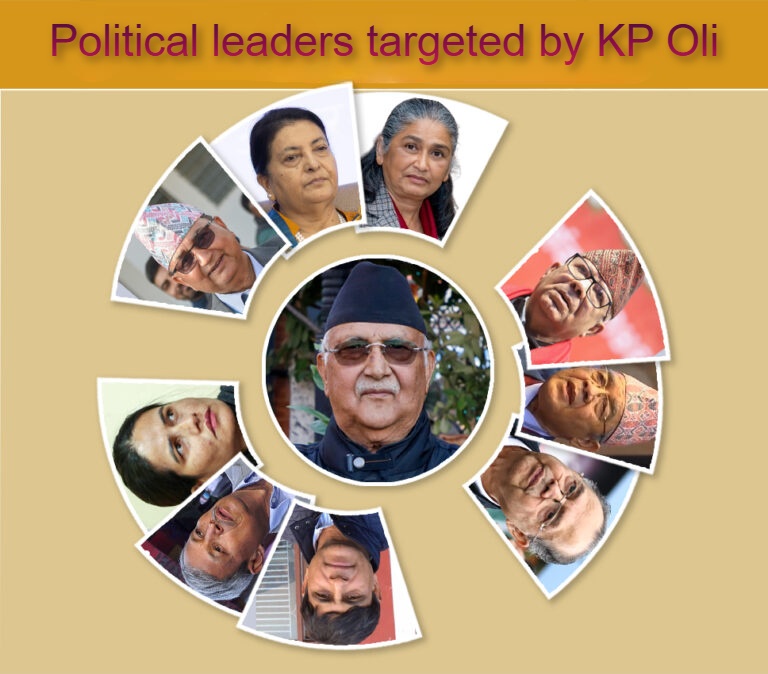
Pokharel: The new target
Of the 10 Standing Committee members elected at the UML’s 8th General Convention, only Bishnu Paudel and Shankar Pokharel remain with Oli. Ishwar Pokharel, who was elected general secretary when Khanal was chairman, is now gearing up to challenge Oli for the chairmanship. Pokharel is supported by Yuba Raj Gyawali, Ashta Laxmi Shakya, Surendra Pandey (vice-chairpersons), Gokarna Bista, and Yogesh Bhattarai (secretaries), among the 18 office-bearers of the CPN (UML). However, Oli and his team have already warned that they will turn Pokharel into another ‘Bhim Rawal’ before the convention. After learning of Pokharel’s opposition, Oli eliminated the post of senior vice-chairman from the party statute entirely.
Pokharel was among those who helped Oli become chairman at the 9th General Convention. Since then, he has consistently supported Oli. However, he became Oli’s target after publicly speaking in favor of former President Bidya Devi Bhandari rejoining the party.
In his concept paper prepared for the party’s General Convention starting tomorrow, Pokharel directly criticized Oli’s style of leadership. “The issue of leadership handover in the party remains a problem. The absence of a voluntary retirement system in the party, the lack of fixed age or executive term limits, and the lack of a mandatory provision for leadership handover have led to a situation where the person in leadership stays for a long time (sometimes for life) and makes various desired/undesired efforts to cling to power, while those aspiring to the post also resort to legal/illegal means,” he wrote.
“Oli destroys anyone who challenges him, no matter how close they are. At one point, no one was as close to Oli as Bidya, but now that she has challenged him, she is in his sights,” Mainali says.
Before Pokharel, former President Bidya Devi Bhandari was challenging Oli’s leadership style. Bhandari, who served two terms as president at Oli’s proposal, announced her return to active politics in the CPN (UML) last June after retiring from Shital Niwas (the President’s Office). Bhandari claimed to have renewed her party membership to contest the chairmanship against Oli at the convention.
Following the Dasdhunga accident on May 16, 1993, which resulted in the deaths of CPN (UML)’s then General Secretary Madan Bhandari and organization department chief Jiban Raj Ashrit, Oli and Bhandari were continuously together. Their mutual roles are considered crucial in each other’s political rise. However, when Bhandari announced her candidacy for the CPN (UML) chairmanship, Oli became enraged and had Bhandari’s reportedly renewed organized membership revoked. Since then, the constitutional path for Bhandari’s return to the CPN (UML) has been blocked, and the Oli-Bhandari relationship has stalled.
An angry Bhandari has given a ‘counter’ through Pokharel’s candidacy. “Oli destroys anyone who challenges him, no matter how close they are. At one point, no one was as close to Oli as Bidya, but now that she has challenged him, she is in his sights,” Mainali says. Bhandari, who became president at Oli’s insistence, also gave unconditional support to his unconstitutional moves after the 2017 election. This is why questions were raised about Bhandari’s role as president.
The first General Convention of the CPN (UML), formed after the unification of the CPN (Marxist) led by Manmohan Adhikari and the CPN (ML) led by Madan Bhandari, took place in 1991. Although it was the first convention since the CPN (UML)’s formation, the party refers to it as the 5th General Convention. Since then, the CPN (UML) has held five conventions. The 11th General Convention, starting tomorrow, will be inaugurated by party Chairman KP Sharma Oli in Sallaghari, Bhaktapur.
Interestingly, this CPN (UML) convention will be the shortest ever. It will be inaugurated on December 13 (Saturday), with closed sessions held on the 14th and 15th. “This time, I will address the convention unilaterally. My inaugural speech will come, and there will be no discussion on it either,” Oli said at a program organized by the party’s Central Education and Human Resource Department on November 7.
If things proceed this way, the convention will conclude by ratifying Oli’s proposal and re-electing him as chairman. However, Oli’s individualistic style and tendency are facing a challenge from within the party. The fact that nearly half of the organized members did not participate in the voting for the selection of convention representatives is a danger sound for the CPN (UML)’s internal life. Oli has ignored this silent rebellion by a significant number of committed members across the country. This will not only damage the CPN (UML) but will also bring no benefit to Oli.