Kathmandu
Saturday, June 13, 2026






KATHMANDU: Nepal News presents today’s snapshot of Nepal’s economic activities. Get quick updates on major market movements, policy shifts, and financial developments shaping the economy of Nepal. Here are the key economic highlights for today:
Real Estate Revenue Surges to Rs 4.848 Billion
Following the government’s decision to ease land plotting, the real estate market saw a significant rebound from November 17 to December 15, collecting Rs 4.848 billion in revenue. Data from the Department of Land Management and Archive shows 51,632 transactions occurred during the month, a sharp increase from the Rs 2.74 billion collected from October 18 to November 16. The Third Amendment to the Land Use Regulation 2025 successfully reopened land fragmentation across over 500 local units. While revenue surged, easing banking loan policies could further double the current transaction volume.
SEBON Delay Halts Rs 2.30 Billion Tourism Sector IPOs
Due to delays at the Securities Board of Nepal (SEBON), Initial Public Offerings (IPO) for seven companies in the hotel and tourism sector, valued at Rs 2.30 billion, remain stalled. These companies, including Apex Hospitality, Hotel Forest Inn, and Moulakalika Cable Car, have applied to issue a combined 23 million and 43,130 units of shares. Currently, only seven tourism companies are listed on the Nepal Stock Exchange (NEPSE). Experts note that while investor interest is high, SEBON needs clear criteria for which hotel tiers can go public. Notable upcoming projects include Barahi Sedi Limited, constructing a five-star hotel in Pokhara at a cost of Rs 6 billion.
Energy Investors Concerned Over Demands for Free Shares
Investors in the energy sector are increasingly frustrated by demands from Gen Z groups and locals for free shares and additional royalties. Despite legally providing 10 percent shares and required royalties, developers face project blockades. Independent Power Producers’ Association, Nepal (IPPAN) President Ganesh Karki noted that illegal demands for free equity are discouraging private investment. Recently, the 45 MW Bhote Koshi project was halted for 32 days until an agreement was reached to provide 10 percent shares at a par value of Rs 100. IPPAN has urged the government to establish a dedicated security force for hydropower projects and ensure law and order to protect the nation’s energy infrastructure.
National Planning Commission Amends Grant Procedures
The National Planning Commission has approved the first amendment to the procedures for Federal Special and Complementary Grants. Following the update, the Commission has invited provincial and local units to submit proposals for projects and programs via the electronic reporting system by the end of February 12, 2026. This amendment aims to balance social, economic, and physical infrastructure development while empowering sub-national governments under the Intergovernmental Fiscal Arrangement Act, 2017. Projects must have a maximum completion timeline of three years. For special grants, the cost limits range from Rs 2.5 million to Rs 50 million for local levels and Rs 50 million to Rs 100 million for provinces.
Asset Management Company Act Delayed by Political Uncertainty
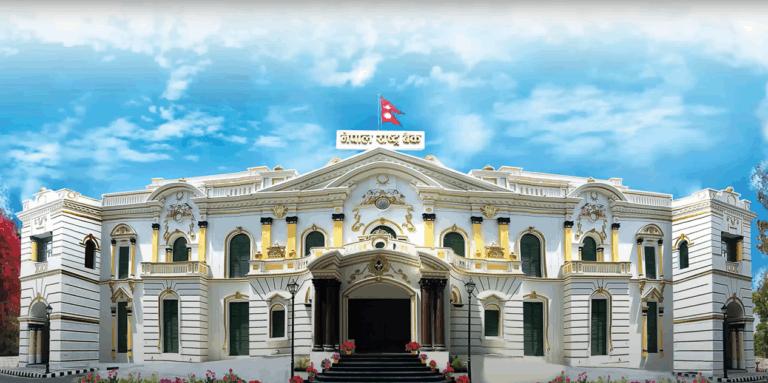
The Nepal Rastra Bank (NRB) has finalized a draft for the Asset Management Company (AMC) Act to manage non-performing assets of banks. According to the Assets and Service Management Department of NRB, the draft is ready for board approval before heading to the Ministry of Finance and Parliament. However, the dissolution of Parliament following the Gen Z protests and the announcement of elections for March 5, 2026, have created uncertainty. While the AMC has been a decade-long demand to handle bad loans now exceeding 5 percent on average, the current political crisis may push its implementation beyond the next fiscal year. The company is intended to help banks liquidate unsold properties and improve liquidity.
Government to Provide Monthly Stipends to Gen Z Protest Victims
The government has introduced a relief procedure to provide monthly subsistence allowances to individuals injured during the Gen Z protests on September 8 and 9. Officials of the Health Ministry stated that victims are categorized into four levels. While those with minor injuries receive no cash, medium-level victims will get Rs 4,000 per month, seriously injured individuals Rs 9,000, and those with extreme injuries Rs 18,000 monthly. So far, 183 people in Kathmandu, Kaski, and Chitwan have been verified, with 18 categorized as extreme. A total of 2,522 injuries were reported across 74 health institutions.
Air Pollution Costs South Asia 10 Percent of GDP Annually
A World Bank report titled “A Breath of Change” reveals that air pollution causes 1 million premature deaths annually in South Asia, affecting nearly one billion people. The study estimates that toxic air results in an economic loss equivalent to 10 percent of the region’s total GDP. Key pollution sources include solid fuel for cooking, industrial emissions without filters, and crop residue burning. The report urges Nepal, India, Pakistan, Bhutan, and Bangladesh to coordinate on cleaner technologies, such as electric cooking and improved waste management. Senior Environmental Economist Martin Heger emphasized that coordinated regional action and reliable data are essential to saving lives and ensuring economic growth.
Insurance Claims for Disaster Relief Reach Rs 111.5 Million
The Nepal Insurance Authority has disbursed Rs 111.5 million in settlements following the devastating floods and landslides that have occurred since July 2. Out of 790 preliminary claims totaling Rs 4.182 billion, only 96 claims have been settled so far. Property insurance saw the highest volume with claims worth Rs 3.583 billion, of which Rs 96.4 million has been paid. Other settlements include Rs 12 million for private motor insurance and Rs 1.9 million for agriculture and crops. The Nepal Insurance Authority confirmed that the remaining claims are still under evaluation.
Government to Build Digital Toll Gates on 22 Highways
The Road Board Nepal has initiated plans to construct digital toll gates across 22 national highways to collect road fees. The system aims to replace manual collection methods, which often lead to corruption and safety issues. The first digital gate is already operational on the Bhairahawa-Bhumahi road, charging Rs 30 for large vehicles and Rs 20 for small ones. Each automated gate costs approximately Rs 50 million. Key locations include the Nagdhunga Tunnel, Narayanghat-Butwal, and Muglin-Pokhara sections. The revenue collected will be deposited directly into the board’s central account to fund road maintenance and bridge reconstruction.
Sudurpaschim Capital Expenditure Plummets to Rs 430.1 Million
The Sudurpaschim Province government’s capital expenditure has dropped significantly, reaching only Rs 430.1 million in the first five months of the fiscal year 2025/26. This represents just 2 percent of the total Rs 19.83 billion capital budget, a sharp decline from the 7 percent spent during the same period last year. The Gen Z protests led to the burning of ministry offices and vital documents, delaying budget authorization. While infrastructure tenders are underway, total provincial spending stands at only Rs 2.536 billion.
Karnali Government Struggles with Low Capital Expenditure of 3.26 Percent
The Karnali Province government has faced significant delays following the Gen Z protests, spending only 7.2 percent of its Rs 32.99 billion budget in the first five months of the fiscal year. Capital expenditure is particularly low at just Rs 651.1 million, or 3.26 percent. The sluggishness of coordination issues with the federal government and weakened employee morale. Additionally, the Karnali Provincial Assembly remains closed after 38 structures were damaged during protests, leaving the legislative body without a meeting hall for over four months.
Karnali Government Allocates Rs 160 Million for Dunai Bazaar
The Karnali Province government has allocated Rs 160 million to transform Dunai, the district headquarters of Dolpa, into a well-managed urban center. The project focuses on riverbank management, drainage, and road expansion. Specifically, Rs 40 million has been released for the current fiscal year to upgrade internal roads and link the new Bailey bridge to the hospital. The plan includes widening the narrow tracks leading to the bus park and helipad while ensuring that sewage is no longer drained directly into the Bheri River, addressing long-standing local grievances.
Rural Tourism Training Starts in Remote Local Unit of Gorkha
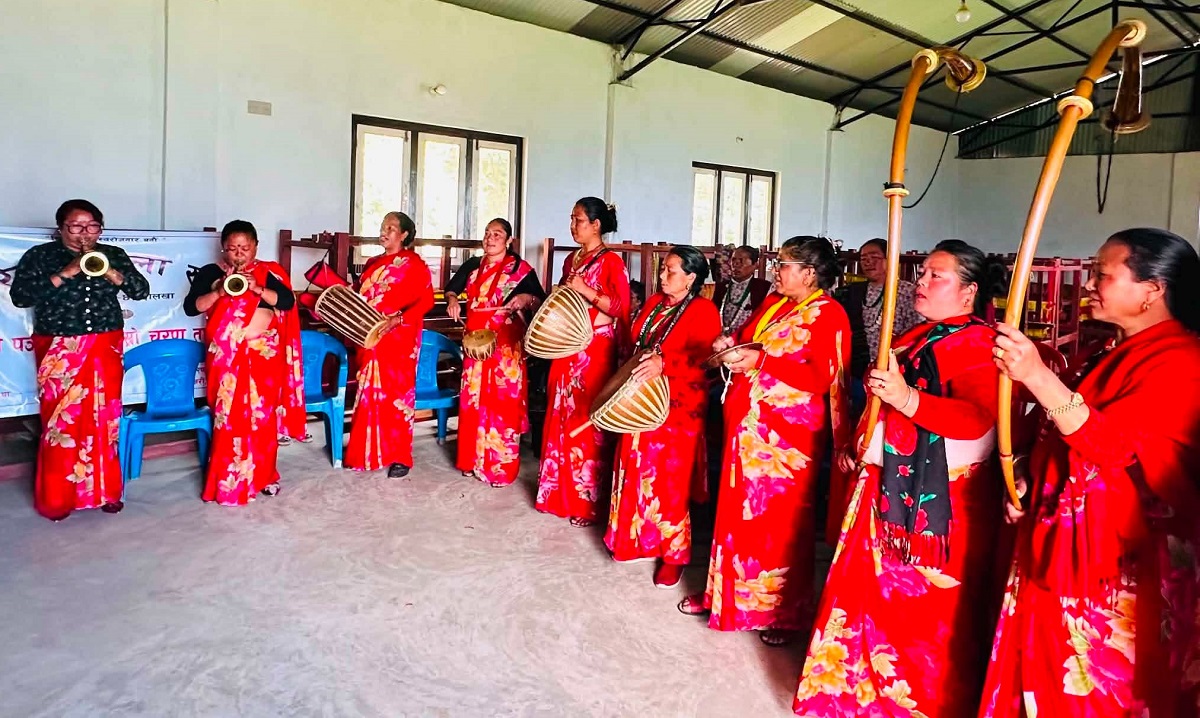
Ajirkot Rural Municipality in Gorkha has launched a five-day training program on hospitality, homestay, and lodge management to promote rural tourism. Organized in collaboration with the Nepal Tourism Board, UNDP, and TAAN, the training targets local youth to reduce foreign migration and strengthen the local economy. The initiative aims to equip locals with professional skills in food quality, sanitation, and tourist engagement. Ajirkot is gaining popularity for its natural beauty and cultural heritage, attracting internal tourists from Chitwan and Dhading. The program intends to transform the area into a sustainable and high-quality tourism destination.
National Industrial Exhibition Begins in Butwal to Boost Economy
Finance Minister Rameshore Khanal inaugurated the National Industrial Exhibition in Butwal on Thursday, emphasizing that political stability is crucial for improving economic indicators. He noted that despite a rise in foreign exchange and capital reserves, the investment climate remains a challenge. Organized by the Rupandehi Industry Association, the exhibition features 500 domestic industries and will run until January 1, 2026. Local leaders, including Mayor Khelraj Pandey, urged the federal government to better coordinate development plans with local units, noting that significant budgets were previously returned due to a lack of alignment.
India-Nepal Tourism Meet in Pokhara Focuses on Cross-Border Circuits
Pokhara hosted the second India-Nepal Tourism Meet on Thursday, focusing on strengthening ties between Uttar Pradesh and Gandaki Province. Gandaki Chief Minister Surendra Raj Pandey highlighted Pokhara and Muktinath as primary destinations for Indian visitors. Rakesh Pandey, Deputy Chief of Mission at the Indian Embassy, emphasized that India remains Nepal’s largest source of tourists and stressed the importance of religious and cultural circuits. The event included a business session with 70 delegates discussing wildlife tourism and adventure travel. This collaboration aims to boost land-route tourism and utilize the growing connectivity between the neighboring regions.
3-Member Committee Formed to Probe Reliance Spinning Mills IPO
The Securities Board of Nepal (SEBON) has formed a three-member committee to investigate the Initial Public Offering (IPO) of Reliance Spinning Mills following directives from the Ministry of Finance. Led by Binod Kumar Ghimire, the committee includes Anand Raj Sharma Wagle and Pitambar Bhandari. Despite the probe into media reports regarding the company, SEBON spokesperson Tolakanta Neupane stated that the IPO issuance, scheduled for Sunday, will proceed as planned. The board noted that it cannot halt the process at this stage due to an existing court order mandating the continuation of the share issuance.
Suryodaya Womi Microfinance to Skip Dividend Distribution
Suryodaya Womi Microfinance Financial Institution has decided not to distribute any dividends to its shareholders from the profits of the last fiscal year. The decision was made during a board of directors meeting. Following this resolution, the institution has moved to send its financial statements to the NRB for final approval. This move highlights the cautious approach taken by some microfinance institutions amid changing regulatory environments and economic pressures. Shareholders will not receive any bonus shares or cash payouts for this period as the company focuses on strengthening its internal financial position and meeting central bank requirements.
Prime Commercial Bank Declares Rs 1.63 Billion Dividend
Prime Commercial Bank has announced an 8.421 percent dividend for its shareholders from the accumulated profits of the last fiscal year. The bank’s board of directors decided to provide an 8 percent bonus share and a 0.421 percent cash dividend for tax purposes. The total dividend payout is valued at Rs 1.63 billion. This proposal is subject to approval from the upcoming Annual General Meeting. Currently, the bank’s shares are trading at Rs 248.40 per unit. This move reflects the bank’s commitment to sharing profits with its investors despite the challenging economic environment in the banking sector.
Sagarmatha Lumbini Insurance Announces 15 Percent Cash Dividend
The Board of Directors of Sagarmatha Lumbini Insurance has proposed a 15 percent cash dividend for its shareholders from the profits of the last fiscal year. This dividend is based on the company’s currently maintained paid-up capital. The proposed distribution is subject to approval from the Nepal Insurance Authority and must be ratified by the company’s upcoming Annual General Meeting (AGM) before being disbursed. This announcement follows the company’s financial performance review and reflects its commitment to providing returns to its investors in the non-life insurance sector.
Gold Price Drops by Rs 2,000
The Federation of Nepal Gold and Silver Dealers’ Association reported a significant decline in precious metal prices on Friday. The price of gold dropped by Rs 2,000, bringing the trading rate to Rs 258,400 per tola (11.66 grams). Similarly, silver prices fell by Rs 75, settling at Rs 4,005 per tola. In the international market, gold was traded at USD 4,324 per ounce on the same day. This domestic price correction reflects global market fluctuations and provides some relief to local consumers following a period of high volatility in the bullion market.
![Doctors protest at Maitighar, demand fair pay and labor rights for young medics [Photo feature]](https://english.nepalnews.com/wp-content/uploads/2026/06/Doctor-Protest_-1858-scaled-1.jpg)