Kathmandu
Sunday, July 12, 2026





A void in election preparations and the continued absence of effective public service and governance
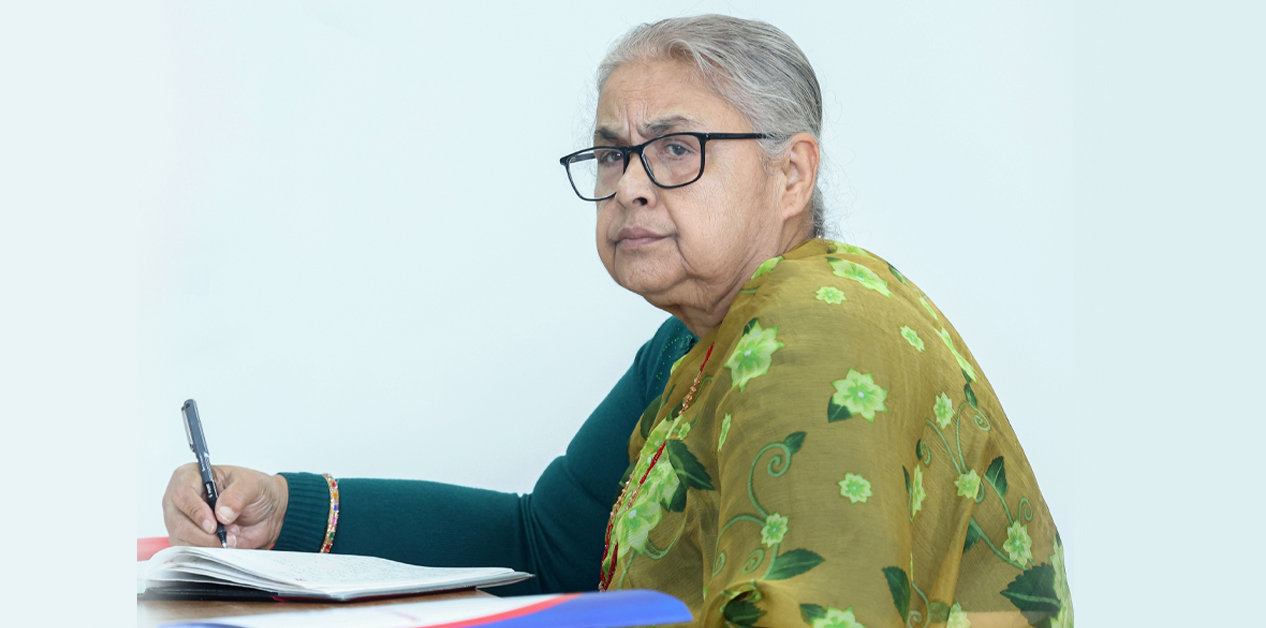
KATHMANDU: The interim government, led by former Chief Justice Sushila Karki and established through the momentum of the Gen Z protest, reached its 100-day milestone yesterday. This initial 100-day window is traditionally regarded as a ‘honeymoon period’ for any government. It represents a critical juncture for an administration to initiate substantive initiatives and provide the public with tangible signs of hope. It must be noted, however, that this interim government is not intended for a full five-year term.
This government, formed with the mandate to hold the House of Representatives elections on March 5, 2026, could not show itself to be much different from previous governments in terms of good governance and service delivery in 100 days. Nevertheless, the Karki government has not become discredited in 100 days.
“Historical precedents show that previous governments typically became tainted within a mere six months of taking office. While this current administration has managed to avoid such criticism, it has simultaneously failed to deliver results that align with the height of public expectations,” said political science professor Krishna Pokharel.
A main demand of the Gen Z protest of September 8 and 9 was good governance. The government led by CPN (UML) Chairman KP Sharma Oli was ousted by the movement, and the government led by Karki was formed according to the demand of Gen Z.
The government led by Karki was expected to create an environment for the House of Representatives elections scheduled for March 5, 2026, and prepare the foundation for good governance. However, in 100 days, it has not only failed to create an atmosphere of trust and guarantee security for the election, but the government has also failed to maintain good governance and make public service delivery effective.
The activism of Finance Minister Rameshore Khanal, who is also a former administrator, and Kulman Ghising, who has been given the responsibility of the Ministry of Physical Infrastructure and Transport, Energy, Water Resources and Irrigation, and Urban Development, has saved the government’s prestige.
Former judge Anil Kumar Sinha is handling the Ministry of Law, Industry, Commerce, and Tourism. However, those ministries do not seem to have done work that leaves a long-term impact beyond sustaining daily administration.
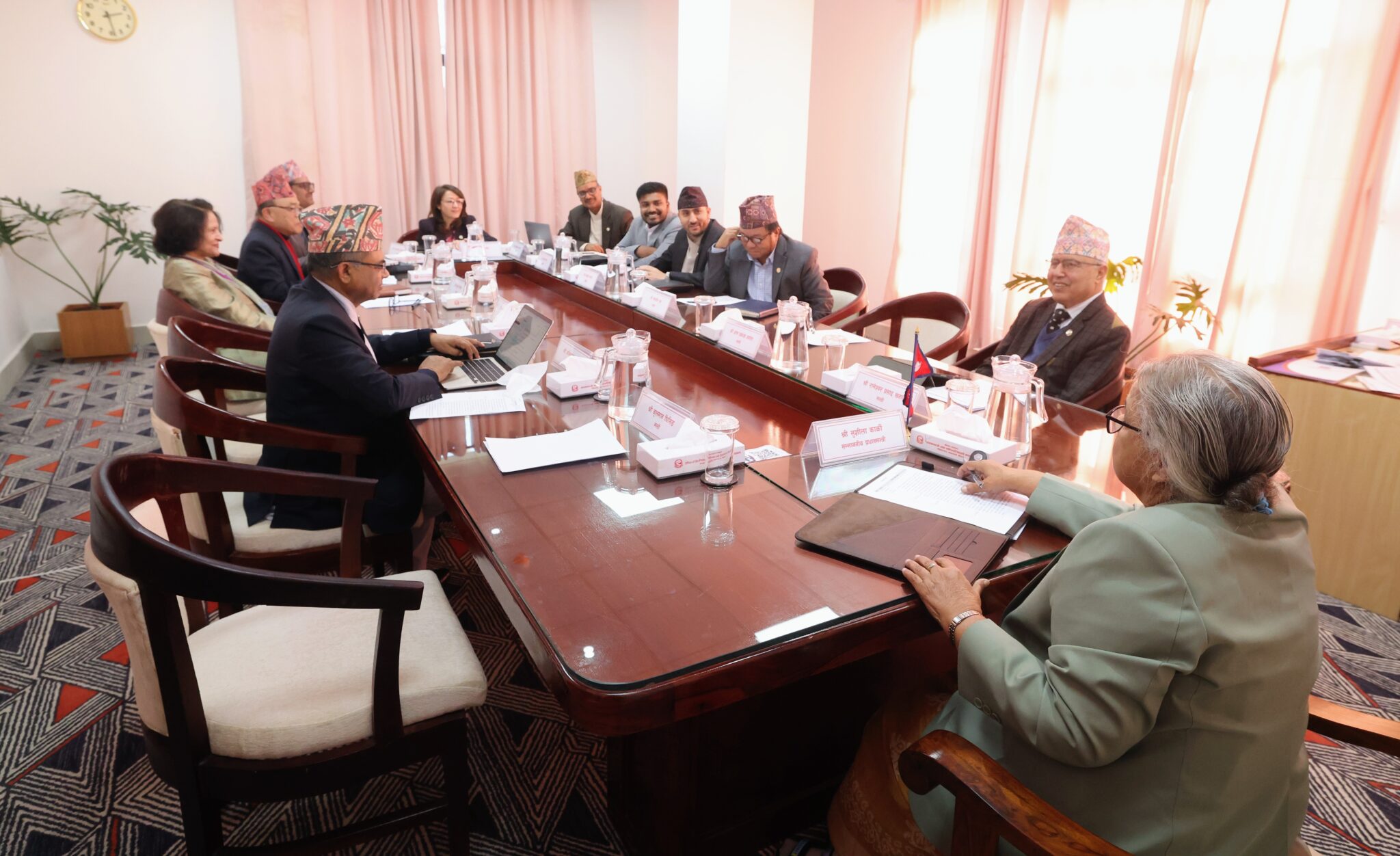
The Cabinet of PM Karki. Photo Courtesy: PM’s Secretariat
On this front, Minister for Communication and Information Technology Jagadish Kharel has similarly struggled to implement any initiatives of long-term importance. Minister for Youth and Sports Bablu Gupta has finalized the schedule for the Tenth National Games for February 13 to 19, 2026. However, considerable skepticism remains regarding whether the competition can truly be executed within such a constrained timeframe.
Prime Minister Karki expanded the government for the fourth time on December 12. With the addition of four ministers recently, the Council of Ministers has become 14-membered. Having previously stated that she would not form a Council of Ministers of more than 11 people, she has increased the number of ministers contrary to her own previous announcement.
Constitutional expert Bhimarjun Acharya characterizes the administration’s progress as functioning in slow motion. He observes that even though the government has advanced at a snail’s pace, it has largely evaded public censure; many view its sluggishness as a byproduct of the turbulent circumstances from which it emerged. This prevailing sense of public sympathy currently serves as a strategic advantage for the government, Acharya further adds.
There was a general expectation that the performance of the government formed on the strength of the Gen Z protest, which raised the issue of good governance, would be oriented towards good governance. However, that expectation could not hold even in the appointment of ministers.
A situation arose where names had to be withdrawn at the last moment after individuals recommended to the President’s Office for ministerial appointments became controversial and faced widespread criticism. While expanding the Council of Ministers for the third time on October 26, Prime Minister Karki had recommended Sangeeta Mishra Kaushal, the additional secretary of the Ministry of Health and Population, as the Health Minister. Her name had to be withdrawn after the fact surfaced that the Commission for the Investigation of Abuse of Authority was investigating her.
Similarly, the name of Khagendra Sunar, who was recommended as the Minister for Labor, Employment, and Social Security at that time, was also cut at the last moment. He could not become a minister after the fact that he was on the police’s fugitive list was made public.
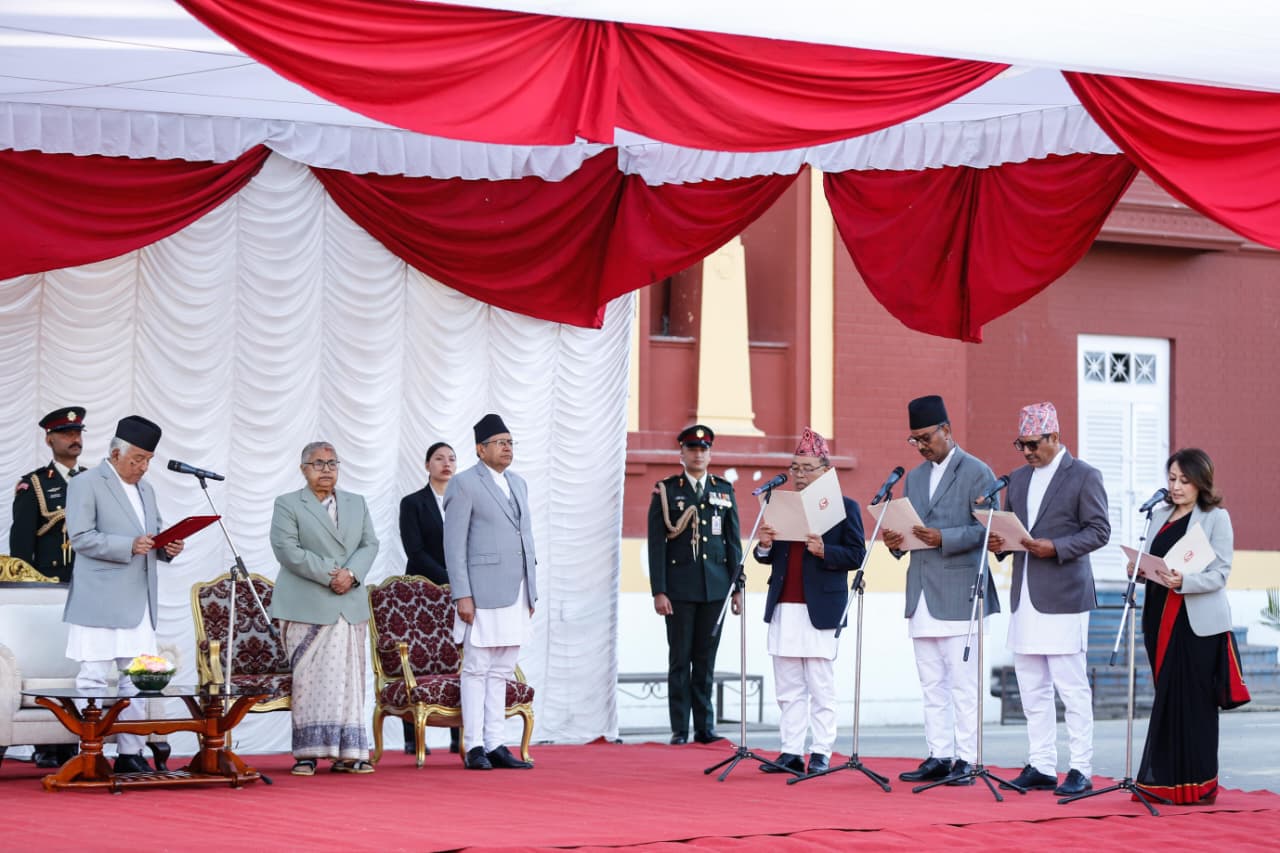
Ministers taking oath during the fourth cabinet expansion. Photo Courtesy: PM’s Secretariat
Activist Ganapatilal Shrestha refused to become a minister at the last moment. Shrestha refused to become a minister, saying that Prime Minister Karki had initially promised to give him the Ministry of Culture, Tourism, and Civil Aviation but moved him to the Ministry of Land Reform at the end. At that time, Prime Minister Karki’s immaturity was seen in the selection and recommendation of ministers.
Karki could also not remain free from criticism in the appointment and operation of members of the Prime Minister’s Secretariat. Her private secretary, Adarsh Kumar Shrestha, had secured appointments for his family members and relatives in the Secretariat. After protests regarding that, Prime Minister Karki removed the individuals whom Shrestha had gotten appointed to the Secretariat, but she is still protecting Shrestha. Currently, the Prime Minister’s Secretariat is only six-membered.
The government, which received the mandate for elections and good governance, has not been able to stand firm in its assigned responsibilities. Because of this, even the expectations of the protesting side have not been met. Due to which, the civil government formed in special circumstances appears to be in a state of confusion. Political analyst Pokharel, however, considers it natural for the government to appear somewhat confused. “This government was formed for crisis management. They did not come into government having already made plans saying, “I will do this and that work,” so some confusion is natural, he says.
The foundation of good governance was never built
An interim government does not have the moral authority to make decisions on matters that have a long-term impact on the nation. However, since this government was formed in search of good governance, it can do plenty of work to make administrative services sleek and prepare the foundations of good governance in the government system. Nevertheless, saying that there is no role or condition to amend laws, the current government has done no visible work in administrative reform.
On September 16, a meeting of secretaries decided to submit a proposal to the Council of Ministers by October 6 to cut 20 percent of employees in offices under the federal government. Since then, there has been no progress on this matter. The then Chief Secretary Ek Narayan Aryal, who got such a decision made, has already retired.
Not only that, but the government born from the issue of good governance has not made public the property details of the members of the Council of Ministers even after three months have passed. The government has not made property details public based on Sub-section 3 of Section 31 (A) of the Commission for the Investigation of Abuse of Authority Act, 1991. There is a provision in the said section that the property details submitted by a person holding a public office shall be kept confidential.
Constitutional expert Acharya says, “It is not a small matter that a government formed on the slogan of good governance does not make the property details of the members of the Council of Ministers public. This government should have been able to become a role model. It is not right to do nothing just by saying limited time and specific agenda. The mandate of the movement is not just the formation of one government after another.”
Since there is no House of Representatives, the current government cannot amend laws. The President has already made it clear that no ordinances other than for election purposes will be issued. That being the case, the current government also does not have the option to amend laws through ordinances. However, to make public services sleek and effective, the government can timely refine various regulations, directives, procedures, and standards. The government has not paid much attention to that.
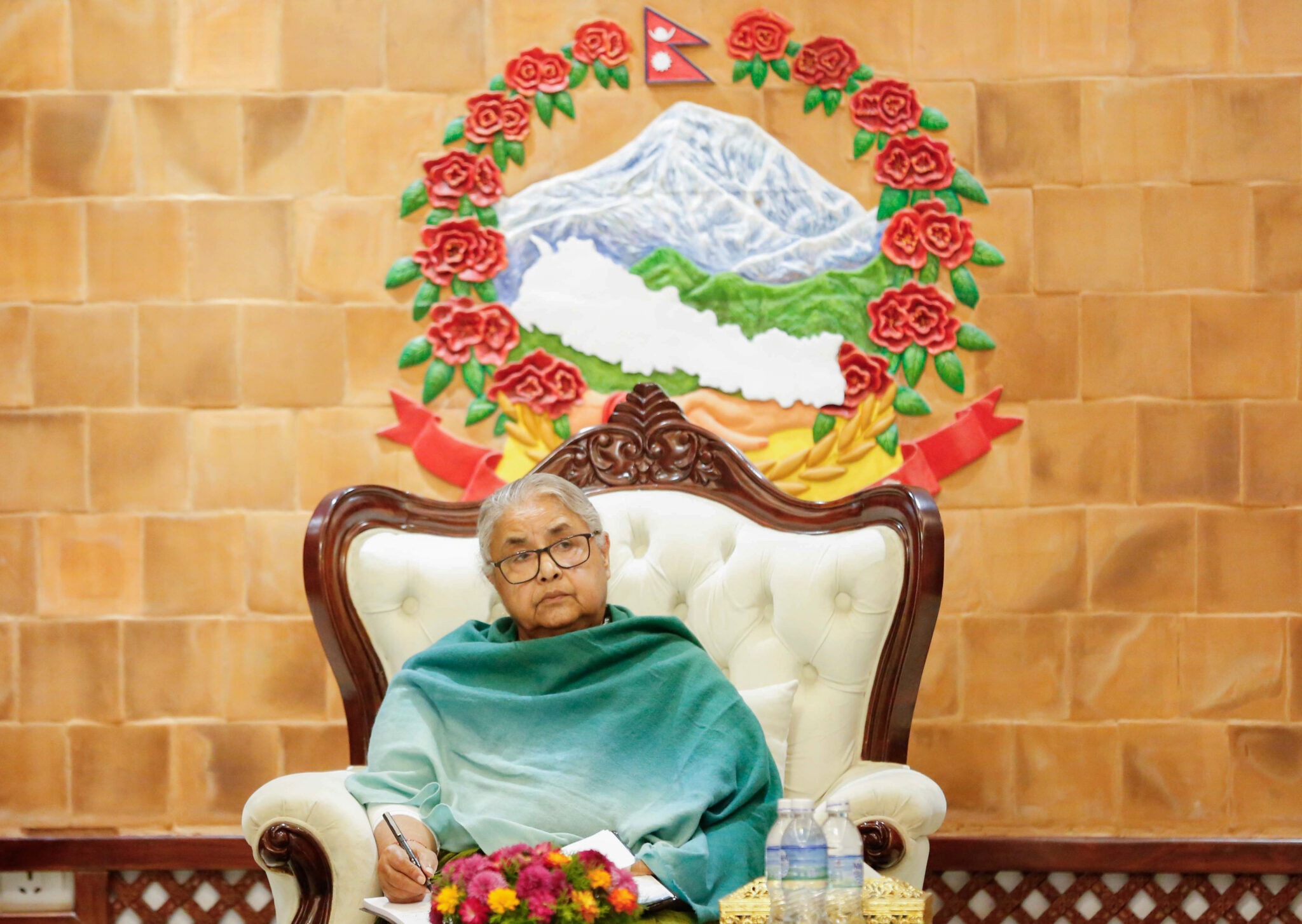
PM Karki during a multi stakeholder meeting involving political and security leadership. Photo Courtesy: PM’s Secretariat
Another constitutional expert, Bipin Adhikari, says, “The current administration has yet to demonstrate any exemplary initiatives or substantive breakthroughs that would validate its commitment to good governance.”
The question of security
After the Gen Z protest, there is interest and concern everywhere regarding the security arrangement. In the name of the revolution, only vandalism, looting, and arson took place from government structures to private residences and commercial establishments. Even the Federal Parliament building, Singha Durbar, and the Supreme Court were engulfed in flames. Weapons were looted from police offices, while 14,554 prisoners escaped from prisons across the country. Since the full cache of looted weaponry remains unrecovered and 4,315 of the escaped convicts have yet to be returned to custody, a profound sense of trepidation continues to permeate society.
There was a widespread demand to take action against those involved in vandalism and arson of government and private property. However, the government itself appeared confused at first about how to proceed in this matter. The Ministry of Home Affairs published a notice saying that the High-Level Commission of Inquiry, formed to investigate the events of the movement on September 8 and 9 and recommend action against the guilty, would look into the persons involved in vandalism and arson. However, the Commission also issued a notice saying that it is not necessary to wait for the Commission’s report to take action on matters of criminal charges.
After the Gen Z protest, concerns were being expressed from all levels about the low morale and confidence of the police and the fact that all looted weapons had not been returned, leading to a lack of security guarantee. It was necessary for the election government to make political parties and citizens feel secure to provide confidence for the election. However, the government did not take any special initiative to raise the morale of the police. The government has not been able to find secret information about the looted weapons. Investigating and taking action against those who infiltrated in the name of the revolution did not fall under the government’s priority.
Constitutional expert Acharya says the government has not been able to provide a guarantee of security in 100 days. He says, “The government should have been ruthless and maintained law and order regarding the movement of September 8 and 9. The government’s role was also necessary to shatter the mentality that the government system can be captured as soon as a few thousand people gather, but work has not happened on that.” He says that the situation where a few thousand people can bring about a coup by using force should not be given legitimacy.
Since the full cache of looted weaponry remains unrecovered and 4,315 of the escaped convicts have yet to be returned to custody, a profound sense of trepidation continues to permeate society
Election preparation
Regarding the main task, which is the preparation for the election, the government is working responsibly. However, the doubt about whether the election will happen on the fixed date or not has not been cleared. In consultation with the government, the Election Commission has published the election schedule and moved work forward accordingly. According to the Commission’s Information Officer Suman Ghimire, preparations are underway to publish the final voter list by December 27.
The government has managed the necessary resources for the election. It has also tried to create an environment for the election by communicating with political parties. Political analyst Pokharel does not consider this sufficient. He says, “The government is preparing for the election, but it is not as expected. It is the political parties that create the election atmosphere, and the government has not done enough work to take them into confidence.” Constitutional expert Acharya also analyzes that even though the government is constantly chanting about the election, it has not been able to create the environment. “In the context of election preparation, the government seems confused. A credible environment for the election has not yet been built,” he says. “The government has also not been able to convince stakeholders about the work it has done.”
Writer and analyst Narayan Dhakal, however, sees that the government is serious about its objective. “The Prime Minister’s character does not appear to be one of remaining in power. The government seems serious towards its primary task of holding the election. The government is creating an election atmosphere by not attacking and excluding parties,” he says.
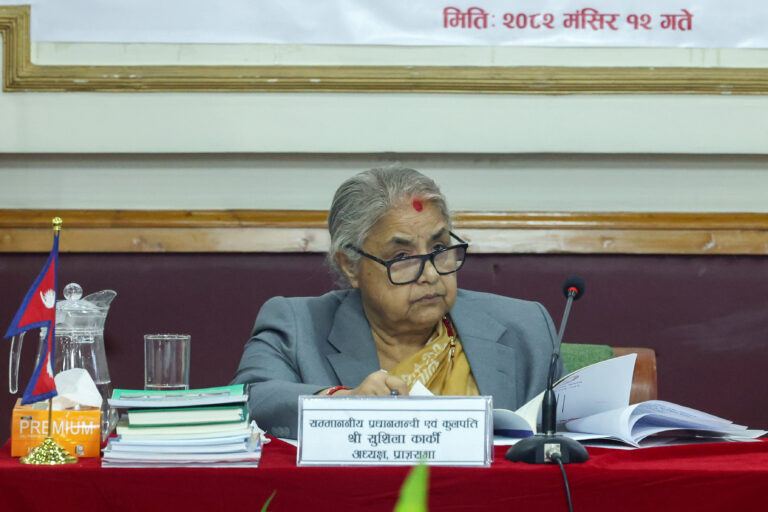
PM Sushila Karki
The election itself will strengthen the track of the Constitution, which was shaken by the Gen Z protest. An elected parliament and government are also necessary for the preservation and promotion of the federal democratic system. Therefore, common citizens have expected that the election will happen on the scheduled date. Constitutional expert Bipin Adhikari says, “Citizens have supported the government in a firm and gentle manner in the hope of the election. The work of the Election Commission has also given a hint that the election will happen on the scheduled date. The government should pay attention to further increasing this trust.”
No voting rights for migrants
The current government had stated that it would make arrangements so that Nepali citizens living abroad could also vote in the upcoming election. On September 18, Home Minister Om Prakash Aryal had told the media at the Ministry of Home Affairs, ‘There is a feeling that Nepalis living abroad must be allowed to vote, at least under the proportional election system. It has been a long time since the Supreme Court gave the order. This must be made possible. My effort is to include everyone as much as possible. Even if there is a technical problem in some countries, my effort is to make it possible wherever it can be done.’
However, when only 74 days were left for the election date, the government could not make the legal arrangement to give voting rights to Nepalis living abroad. Commission Information Officer Ghimire says, “In the absence of a law, there is no condition for Nepalis living abroad to vote in this election.”
Not only that, but the government formed on the strength of the youth’s protest did not even dare to amend the law related to political parties. Arrangements could have been made to ensure that more and more youth are elected in the upcoming election. To make the election less expensive and more effective, the law related to the election could also have been amended through an ordinance. Constitutional expert Adhikari says, “The government did not pay any attention towards engaging more youth in the election by amending the law related to political parties, even if through an ordinance.”
The doubts regarding the government have still not been cleared by the work of the 100 days of the Council of Ministers led by Karki, who was selected by the youth through voting for the Prime Minister on the social media platform called Discord.
Political analyst Arun Kumar Subedi says, “The government’s task is only complete once it holds elections by taking major political parties into confidence. Otherwise, politics will certainly fall into a vicious cycle of confusion, leading the country toward a constitutional vacuum.”