Kathmandu
Saturday, June 13, 2026





Growing mental problems in the young have emerged as a great risk to the well-being of the country
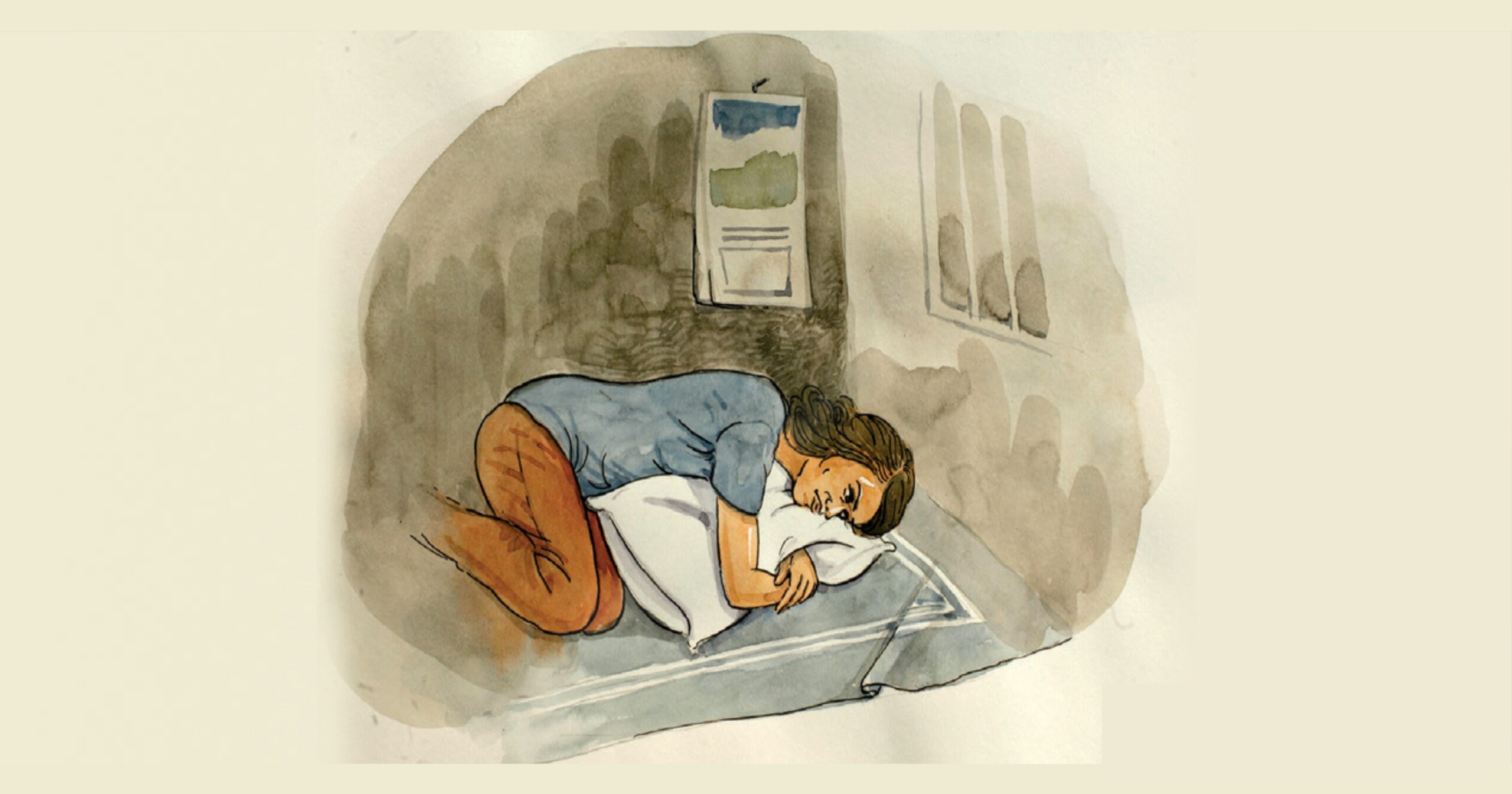
KATHAMNDU: This very year, a 16-year-old girl from Kathmandu met a 22-year-old man on social media. After that, they started talking for hours. One day, the man asked the girl to appear naked on a video call. She did not agree. After the man tricked her by saying that they would get married later, the girl agreed. The man recorded the naked video of the girl. Then, using that same video, he repeatedly sexually abused the girl. When she did not agree, the man created a fake account and uploaded the video on the Internet.
The girl, who could not tell anyone about her condition, became mentally deranged. In the meantime, she also tried to harm herself. However, she survived. Only then did her parents come to know about her daughter’s condition. She is currently undergoing treatment under the supervision of a psychiatrist.
Last August, a 14-year-old girl from Kathmandu cut her own hand after her parents refused to let her use her mobile phone. It was known only after she was taken to the hospital that she was suffering from mental health problems. Both her parents work, she is alone at home most of the time, and she is under pressure from her studies. She was referred to a psychiatrist after it was discovered that she was suffering from depression.
Although only two cases are mentioned here, available statistics show that mental health problems among adolescents in Nepal are rising alarmingly.
The National Mental Health Survey published by the Nepal Health Research Council in 2020 revealed that 5.2 percent of adolescents in the 13-17 age group in the country have mental health problems.
A survey conducted by the Council among 5,888 adolescents from all seven provinces found that 2.8 percent of adolescents were affected the most by drug addiction and stress. The survey also states that 3.9 percent of adolescents suffering from mental health problems said that they had thoughts of suicide. The highest prevalence of mental health problems was observed in the age group of 16 and 17. Some 7.7 and 6.6 percent of these age groups, respectively, suffered from such problems. Adolescent girls (5.3 percent) were more affected by mental health problems than adolescent boys (five percent).
At the provincial level, Koshi Province had 11.4 percent of adolescents with mental health problems, double that of other provinces. After Koshi, Lumbini Province had 6.1 percent, Gandaki Province had 5.1 percent, Karnali Province had 4.9 percent, Bagmati Province had 4.4 percent, SudurpaschimProvince had 3.9 percent, and MadheshProvince had 1.7 percent of such adolescents.
According to Dr Kedar Marhatta, a mental health expert at the World Health Organization (WHO), 18 percent of children between the ages of 6 and 18 in the world have some kind of mental health problem. A WHO report published in 2021 stated that suicide is the fourth leading cause of death in the world among 15-29 years old. The report states that one in seven adolescents experiences some kind of mental health problem, and half of them have problems that start before the age of 14 and persist for a long time.
At the provincial level, Koshi Province had 11.4 percent of adolescents with mental health problems, double that of other provinces.
According to Nepal Police data, as many as 71,106 people have lost their lives due to suicide in the last 12 years across the country. In the fiscal year 2013/14, the number of suicides was 4,504, while in fiscal year 2024/25, this number reached 7,050. In this fiscal year so far, as many as 931 adolescents have committed suicide, of which 592 were adolescent girls.
Pressure and stress
WHO mental health expert Marahatta says that mental health problems have increased in children and adolescents due to bullying in schools, pressure of studies, and family situations. “This can be controlled in time if public awareness programs about mental health are conducted right from the school,” he says.
Psychiatrist Dr Rishabh Koirala says that pressure and fear towards studies and ‘career’ are intense among today’s adolescents. “In addition to this, family conflicts, smartphone addiction, social media and abuse by relatives are also ruining the current generation,” he says. Stating that children from single-parent families with only one child are more likely to suffer from mental health problems than those with at least two children and living in joint families, Koirala says, “Single children do not even have friends to play with during their childhood. When they reach adolescence, they are pressured by the many expectations of their parents and start harming themselves.”
Psychological counselorBandita Nepal says that 70 percent of the adolescents who come to her with mental health problems come for counseling only after they have attempted suicide. “Today’s adolescents are hiding their problems due to fear and shame from society,” she says, “But, parents are not aware of it.”
The National Mental Health Survey found that only 40.1 percent of adults with mental health problems talk to someone about their problems. And only 21.1 percent seek regular treatment. They resort to receiving the “services” of religious leaders and shamans rather than approaching psychiatrists and psycho-social counselors for treatment.
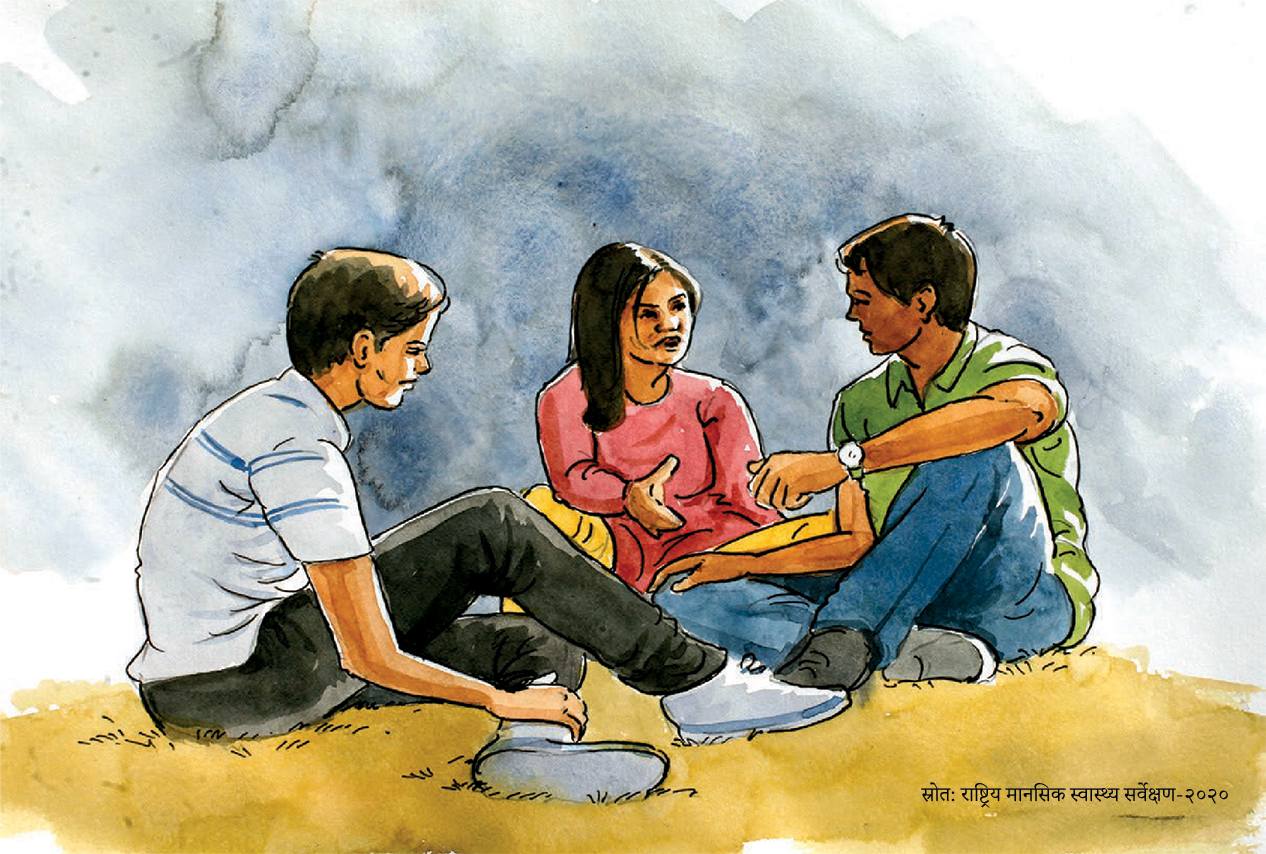
“The belief that they have no problem, that they will get better on their own, and the fear of being considered crazy, and shame are the main obstacles to treatment,” says Dr. Koirala.
Expectations from the new government
Although mental health problems among adolescents are alarming, the state does not seem to be taking it seriously even as the constitution itself has made provision for free and equal access to basic health services from the state for every citizen under the right to health.
Sub-section 4 (e) of Section 3 of the Public Health Service Act, 2018 includes mental health services in the list of basic health services. Schedules 1 and 2 of the Public Health Service Regulations, 2020 also provide for the inclusion of mental health problems in basic and emergency health services, respectively, and provide them at the federal, provincial and local levels. However, this provision is limited to paper, not in practice.
Public health expert Dr Sharad Wanta says that it is ironic that no plan has been made for this generation even though the 2011Census had determined that the number of youths in the country would increase. “That is why a large part of today’s Nepali youth generation suffers from some kind of mental problem,” says Wanta, “This threatens to collapse the country’s social, economic and political situation.”
The National Mental Health Survey, along with its report, recommended integrating mental health into all policies and programs related to health, education, employment and social welfare. The survey pointed out that a special campaign is needed to include mental health services in regular health services, non-specialist health workers should be trained and social stigma should be removed. However, this suggestion from five years ago has not been implemented yet.
Dr Poma Thapa, head of the Non-Communicable and Mental Diseases Division under the Department of Health Services, says that only one percent of the total health budget is spent on mental health, which is why not much work has been done in priority areas such as adolescents. Stating that the government has been asked to set up a separate mental health wing, not under non-communicable diseases, she says, “It is true that mental health was not a priority for the previous governments. However, now there has been increased interest in all sectors.”
Health Minister Dr Sudha Gautam says that the current government has prioritized mental health as much as physical health. “For the time being, the government is preparing to increase the number of trained psychologists,” says Gautam, “We are engaged in serious consultations to see what more can be done.”
The Ministry of Health, through the National Health Education, Information and Communication Center, has launched a three-month ‘Mental Health Awareness Campaign’ nationwide from December 10. Inaugurating the campaign, Minister Gautam said that the current situation has emerged due to the previous governments’ low budget allocation for mental health.
“The ministry is aware of the increase in mental health problems among children. That is why this campaign is also for schools,” says Upendra Dhungana, senior public health administrator at the Center.
In fact, on the day she was sworn in as the health and population minister, Gautam had said that she would arrange for psychological counseling for the injured and the families of the deceased in the Gen Zrevolt. “The awareness program has been conducted by prioritizing mental health as per the minister’s plan,” says the ministry Spokesperson Dr Prakash Budhathoki.