Kathmandu
Monday, July 13, 2026





Balen has secured the support of RSP for his prime ministerial bid but this alone may not be enough and he might need the backing of at least all major “new and alternative” forces
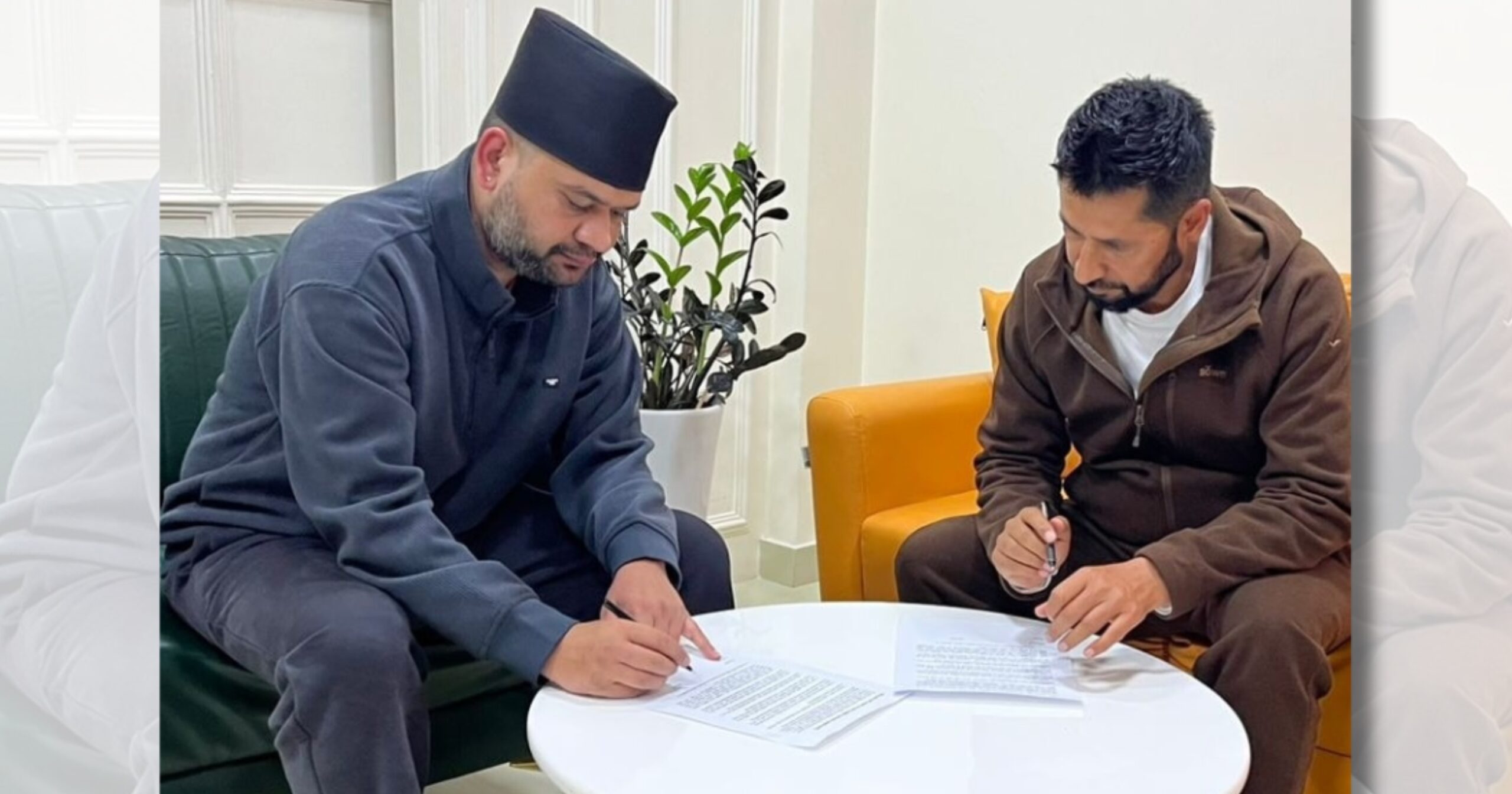
KATHMANDU: With the signing of a seven-point agreement between Rastriya Swatantra Party (RSP) Chairman Rabi Lamichhane and Kathmandu Mayor Balendra Shah, popularly known as Balen, early Sunday morning, Nepal’s political course has apparently taken a new turn ahead of the general elections slated for March 5 next year.
Earlier, because a consensus eluded the so-called new and alternative political forces in the country, at least four candidates for the post of Prime Minister were being projected from these forces – Balen, RSP Chairman Rabi Lamichhane, current energy minister and Ujyalo Nepal Party leader Kulman Ghising, and Shram Sanskriti Party (SSP) leader and Dharan Mayor Harka Sampang.
However, Rabi is no longer in the prime ministerial race as Mayor Balen will be the RSP’s candidate for the post. Following a marathon meeting that started on Saturday evening and concluded at 4 AM today, the RSP has agreed to go for the upcoming polls by declaring Balen as its candidate for the post of prime minister.
Similarly, Lamichhane will continue as the chairman of the party whose present name – Rastriya Swatantra Party (RSP) and election symbol – ghanti (bell) – have been retained, according to the agreement signed by Rabi and Balen.

Harka Sampang/ File photo
Among the other aspirants for the post of prime minister, Harka Sampang had expressed his deep desire to become the prime minister of the interim government right after the Gen Z revolt. He had even come to Kathmandu all the way from Dharan and openly lobbied for the position, childishly insisting – “Make me the prime minister!” He had returned to Dharan “greatly disappointed” after it became evident that former chief justice Sushila Karki would head the interim administration.
Mayor Balen, who had turned down the offer to lead the interim government, had lately been making visible and deliberate efforts in this direction. To this end, he held a series of marathon meetings with other leaders and public figures who are described as “alternative or new forces”, almost the whole of last week.
Although Rabi is now out of the prime ministerial race, Kulman, perhaps still harbors the ambition of becoming Nepal’s chief executive even if he has not yet stated his intentions openly.
A ‘super-active’ Balen
Visible and deliberate efforts to hammer out a deal between the RSP and Balen started last Monday. In fact, Balen was seen super-active the past whole week, beginning the week with a long meeting with RSP Chairman Lamichhane, who was recently released from judicial custody on bail, in Kathmandu’s Kamalpokhari.
Seven people, including Balen and Rabi, sat on opposite sides of a table for seven long hours inside a digital studio better known for creative production than political intrigue. Balen spent five of those hours in a one-on-one meeting with Rabi, behind closed doors.
Organised at the office of former RSP lawmaker Asim Shah and facilitated in part by filmmaker Nischal Basnet, the meeting was the ‘ice-breaker’ between Balen and Rabi and came after nearly three months of behind-the-scenes coordination between Balen’s secretariat and RSP leaders. Spontaneous, much less an accident, it was not.
It was, according to leaders familiar with the process, a meeting deliberately timed after Rabi’s release from custody – long anticipated as a political reset point.
Taking place away from the cameras and formal statements, this encounter marked much more than a personal reconciliation after almost two years of political distance. Before this, Balen and Rabi had last met in Singha Durbar when Rabi was the Deputy Prime Minister and Home Minister and Balen had gone to meet him, seeking support to remove the illegal squatters in the capital city.
Nevertheless, the agreement between the RSP and Balen has signaled that Nepal’s fractured “new forces,” born from public anger, governance failures, brazen display of nepotism and favoritism by the politicians of the old parties, and the Gen Z revolt, have moved forward on the path to cautiously explore unity before the upcoming general elections.
At stake is nothing less than the future balance of power in Nepal.
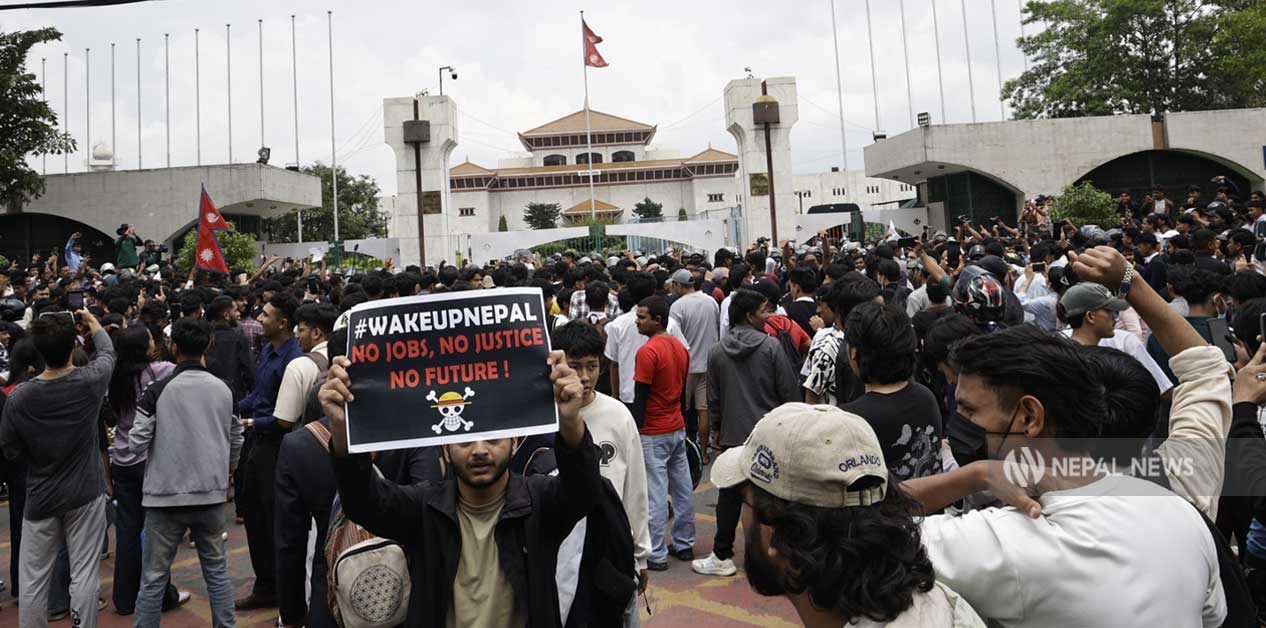
Youth protesting in front of the Parliament building on the first day of the Gen Z movement on September 8. Photo: Bikram Rai/Nepal News
It is worth-noting here that Balen who had refused to become the prime minister after the Gen Z revolt is now getting ready for it. His name was loudly floated as a consensus interim prime minister when the Gen Z revolt forced the collapse of the previous government led by CPN (UML) Chairman KP Sharma Oli, and Nepal slid into a dangerous political vacuum. Protest leaders wanted Balen to take up the role of the country’s chief executive, the streets trusted him, and the establishment feared him.
But Balen said ‘nay’.
Instead of taking the ‘shortcut’ to Baluwatar, he suggested a contentious road map: dissolve parliament, head for fresh elections, and manage the transition through the institutions. He even went to the extent of suggesting that the Gen Z leaders engage in talks with the Nepali Army to stabilize the situation. Acting on that proposal, former chief justice Sushila Karki was eventually installed as the interim prime minister.
That refusal has since become central to Balen’s political narrative and a source of quiet legitimacy among his supporters.
However, of late, in his recent meetings with the popular figures of society, he has been telling them that “these meetings would have taken place in Baluwatar, if I had so wished. I could have taken the shortcut. But I didn’t.” He also confides this to those few close to him.
Now, some three and a half months later, Balen is doing the opposite of improvisation. He is planning—methodically, intensely, and with ambition that is no longer hidden. The same man who rejected interim power is now positioning himself as a contender for elected prime minister after the next polls, thinking, perhaps, that electoral legitimacy can anchor lasting change.
The agreement that has shaken assumptions
The latest dialogue between Balen and Rabi which culminated into today’s seven-point agreement broke months of speculations that the two “popular alternative leaders” in Nepal couldn’t sit together, especially after their meeting in Singha Durbar where Rabi had turned down Balen’s request for help in removing illegal land squatters from Kathmandu’s river banks and other public lands.
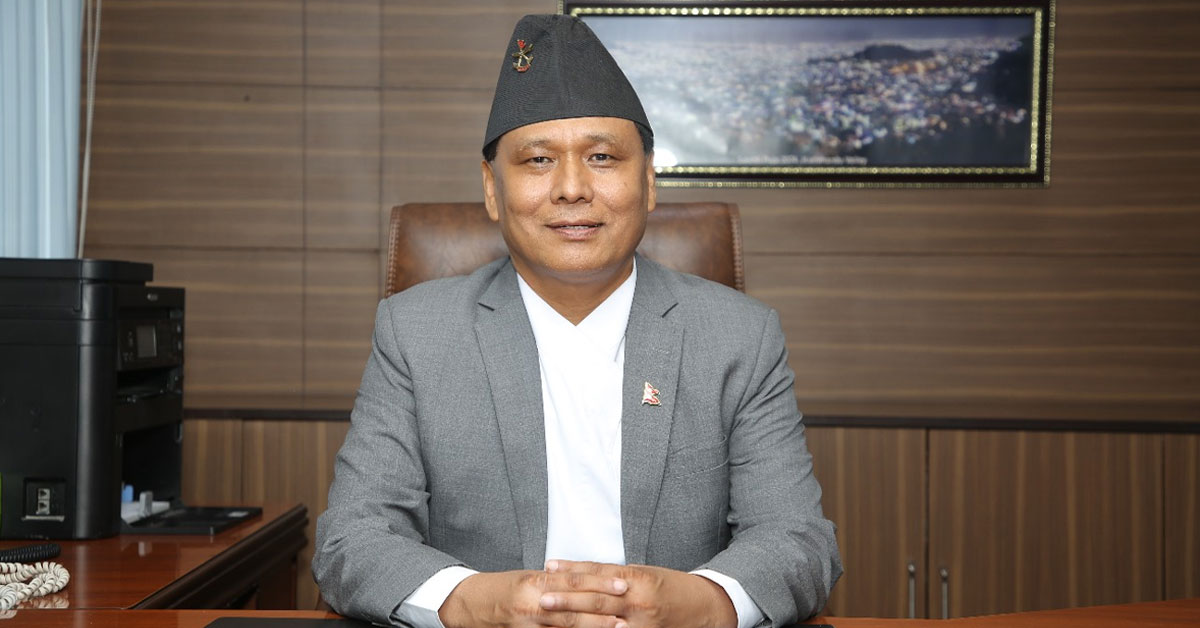
Kulman Ghising/ File photo
They did, so far, what many leaders close to the talks term “sustained efforts of invisible forces” to keep them apart. Those wary of a convergence between Balen, Rabi, and figures like Energy Minister Kulman Ghising have, according to insiders, tried framing such meetings as “power bargaining and position-sharing even before the outcomes existed.”
For Nepali politics, where a meeting between two political leaders drags hundreds of their cadres and supporters along, the meeting between Balen and Rabi itself was unusually intimate. The direct one-on-one talk between Balen and Rabi and the negotiations that followed with the participation of key RSP figures and Balen’s core team members finally “bore fruit”.
For Nepal’s old parties, it is, no doubt, a chilling image.
A marathon of meetings
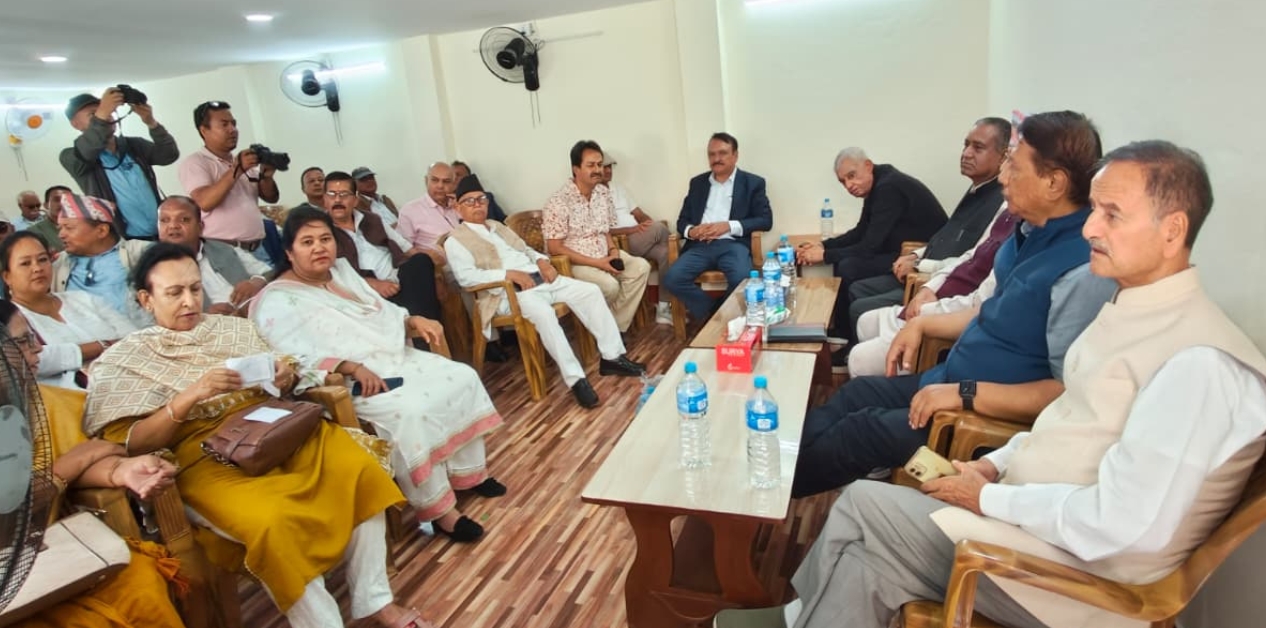
Sunday’s seven-point agreement is not the result of a singular exercise. It was part of an extraordinary burst of political activity by Balen. In the last week, he met Rabi again and again, and engaged in discussions with over 50 persons: politicians, activists, doctors, artists, journalists, business figures, and leaders of Gen Z. Many of these meetings were held at the Lalitpur residence of his adviser Kumar Ben in Kupandole, virtually turning a private home into a nerve center of alternative politics.
Among those Balen has met, besides Rabi, include Energy Minister Kulman Ghising (Ujyaalo Nepal Party), former PM Baburam Bhattarai, Nepali Congress leaders Sunil Sharma and Dr Chandra Bhandari, RPP leader Gyanendra Shahi, former independent MP Amresh Kumar Singh, Janamat Party chair CK Raut, Nagarik Unmukti Party patron Resham Chaudhary, doctors like Dr Bhagwan Koirala, artists and opinion shapers like Nischal Basnet, journalists, media executives, and Gen Z activists like Rakshya Bam and Sagar Dhakal.
Balen is not just networking; he’s mapping political possibilities, identifying allies, skeptics, bridge-builders, and potential spoilers, while also gauging how far dissatisfaction within the old parties can be converted into an alternative coalition.
However, Balen’s preference is evident: unity, or at least a coordinated electoral front, of the so-called new and alternative forces.
The RSP and Balen’s team have already achieved initial success in this regard by striking a seven-point deal. Now it remains to be seen whether Kulman’s Ujyaalo Nepal Party and Harka Sampang’s Shram Sanskriti Party, too, will be taken on board.
However, because Sampang has in recent days been very public about his criticism of both Balen and Ghising, even going to the extent of calling them “foreign puppets”, a single merged party of the so-called new and alternative force, seems ever more unlikely.
The unity between the RSP and Balen has been possible by overcoming a number of challenges. Mainly, leadership was the biggest problem. Who will head the merged party? Who will become the prime minister after the polls? Whose party name will continue? Whose election symbol will be retained? How will the proportional seats be divided?
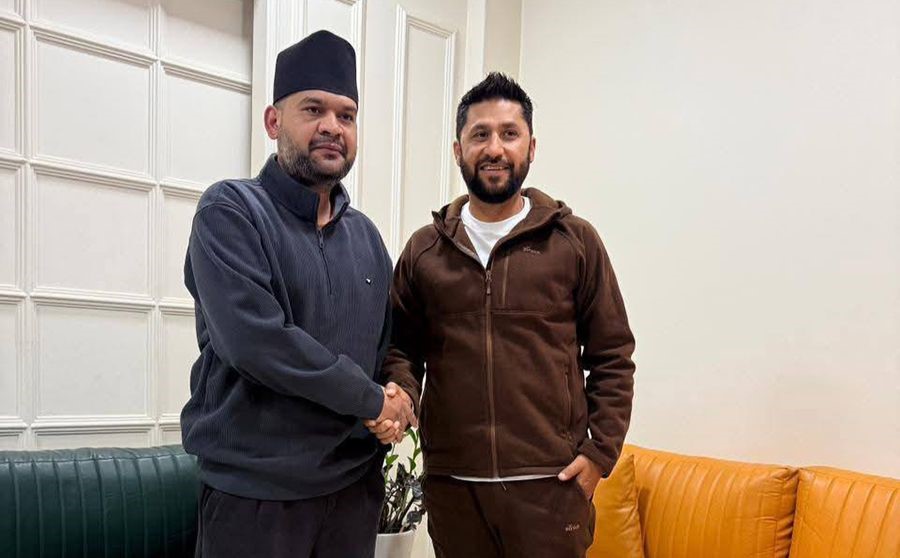
Rabi Lamichhane and Balendra Shah
With Sunday’s agreement, both the RSP and Balen have apparently found mutually-agreeable answers to these tricky questions and have decided to move forward united.
Most sensitive of all was the question of who will become the next prime minister. With Rabi finally agreeing to accept Balen as the RSP’s prime ministerial candidate in the upcoming elections, they will now explore whether Kulman’s Ujyaalo Nepal Party, too, can be taken on board.
Old parties’ greatest fear
The recent efforts towards forging unity or forming an alliance among the new forces ahead of the upcoming elections are a disturbing development for Nepal’s traditional parties like the Nepali Congress, UML, and Maoists. Their prime fear is not a single leader, but convergence.
Leaders close to the talks say efforts are already underway to discredit the unity among alternative forces by framing it as power bargaining, leaking selective narratives, and deepening mistrust among new actors.
Why?
Because a united front of new forces can draw an overwhelming support from urban voters, youth, disillusioned cadres, and social activists and thereby wipe out old parties in several constituencies. But fragmented, the new forces risk splitting the popular vote and handing victory back to the establishment.
Today, almost all politicians know that no other force will ever work without the support of Gen Z. This should be why Balen has been meeting repeatedly with the leaders and activists of Gen Z, imploring them to unite.

Rakshya Bam/ file photo
Gen Z leader Rakshya Bam’s team has already shown its hand, saying it will cooperate with Balen if he formally enters electoral politics. Other Bibeksheel Sajha leaders like Milan Pandey will also join his side. But even within the Gen Z circle, unity remains a far cry. Figures like Sudan Gurung remain ambiguous, accordingly trusted by none completely, as well as rejected by none outright.
Also, there is a “Gen Z alliance for monarchy” which apparently does not support Balen or any other politician who does not accept the idea of reinstating “some form of monarchy in Nepal”.
The core dilemma
Now, the story of Nepal’s “new and alternative forces” rests on one dilemma: without “complete unity”, they perhaps cannot defeat the old forces; with forced unity, they might implode from inside.
In that sense, Balen, after securing the RSP’s support to his prime ministerial bid, is trying to move along this narrow bridge—no shortcuts, no symbolic power, but unceasing preparation for electoral legitimacy.
The RSP and Rabi Lamichhane have already aligned their ambitions with those of Balen, apparently forging a common strategy.
However, his critics have already been asserting that Balen should own up the responsibility for the huge loss of life and massive destruction of private and public property during the Gen Z protests. Some of them have even gone to the extent of calling him “Lucifer”, but Balen has responded by keeping his lips tight, at least on this matter.
Despite all this, there is no doubt that Balen is still very popular, perhaps more popular than any name mentioned in this article.
But it goes without saying that he is certainly not as popular as he was when he had won Kathmandu’s mayoral race.
Balen, who won the mayoral election, singing “gariba ko chameli bolidine kohi chhaina (there is no one to speak for the poor) apparently does not enjoy the same level of support from a certain section of society after his drive against land squatters, street vendors and other groups with comparatively impoverished or weak financial backgrounds. His popularity has suffered also after the Gen Z protests.
Therefore, Balen’s dream to become Nepal’s next prime minister clearly hinges on how successful he becomes in roping in the support of all major new and alternative forces.
If he succeeds, he will have an easy path ahead. The failure to do so would not just be a personal failure; it could leave the future open to Nepal’s old parties, who have been written off repeatedly during the course of time, yet who have always managed to survive.
Securing the support of RSP, which had won 21 seats in the 2022 elections within about six months of being formed and without a nationwide organizational structure, is very important for Balen. However, as things stand, he will do well to gather the support of most – if not all – of the so-called new and alternative political forces of Nepal.