Kathmandu
Sunday, June 7, 2026





TOKYO: Japan is preparing for a likely snap election next month after Prime Minister Sanae Takaichi made clear her intention to dissolve the lower house of parliament.
But why now, and what might a vote reportedly set for February 8 mean for the country?
– Why now? –
Officials from the ruling coalition said they had been notified of the premier’s decision to call a vote soon after a parliamentary session begins next week.
Riding high in the opinion polls, Takaichi wants to turn her momentum into a stronger grip on parliament and make it easier to push through her ambitious policy agenda including “proactive” fiscal spending and boosting the defence budget.
Takaichi became Japan’s first woman prime minister in October, after the ruling coalition led by her Liberal Democratic Party (LDP) lost its majority in both chambers of parliament under her predecessor Shigeru Ishiba.
The LDP and its new coalition partner the Japan Innovation Party now have a slim majority in the powerful lower house, but the ruling bloc remains a minority in the upper house.
“She wants to strengthen her political base,” Sadafumi Kawato, professor emeritus at the University of Tokyo, told AFP.
“If the LDP can get a majority by itself in the lower house, that’ll help her pursue policies” without concessions to other parties.”
– What about China? –
Solidifying political power through an election will also “give her more leverage in dealing with China, showing that she will stay in office for a long time as a stable administration”, Kawato said.
Tokyo’s ties with Beijing have deteriorated since Takaichi suggested in November that Japan could intervene militarily if China ever launched an attack on Taiwan, the self-ruled island Beijing claims as part of its territory.
China recently announced a broad ban on the export to Japan of “dual-use” goods with potential military applications, and has reportedly been choking off exports of rare-earth products crucial for making everything from electric cars to missiles.
However, Mikitaka Masuyama, dean of the National Graduate Institute for Policy Studies, warned that if she wins, China could further intensify pressure on Takaichi.
Beijing may want to send voters “the message that supporting a hawkish leader could lead to pain” through more trade controls or other means.
– Can Takaichi win? –
Victory is far from guaranteed, given the LDP’s low public support, which opinion polls put at around 30 percent.
Many of her supporters are swing voters who could change their minds any time, analysts say, especially as the effects of her economic policies — including a massive stimulus package — have yet to kick in.
Those voters “vaguely hope she will do something new, change something, but can quickly get disappointed”, Masuyama told AFP.
“Young voters especially may pin their hopes on her due to worries about their future, given Japan’s sluggish economy,” he said.
– Is the opposition a threat?
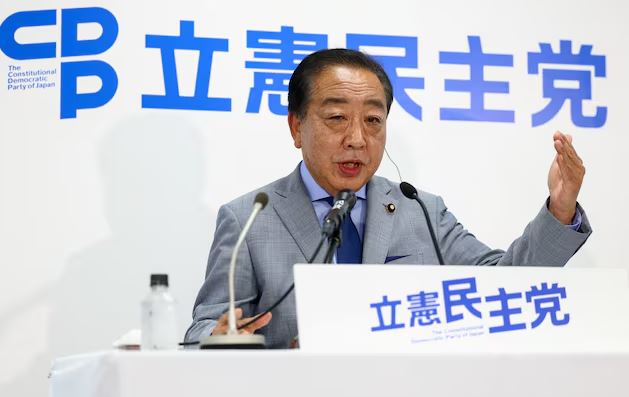
The LDP’s former long-term coalition partner Komeito and the leading opposition Constitutional Democratic Party of Japan (CDP) have agreed to join forces, hoping their alliance can draw swing voters.
“We have agreed to form a new party to jointly fight,” CDP chief Yoshihiko Noda said Thursday.
The Komeito party ended its 26-year relationship with the LDP last year, citing the LDP’s failure to tighten party funding rules following a damaging slush fund scandal.
The partnership was also unnerved by Takaichi’s previous harsh rhetoric on China and her regular visits to a Tokyo shrine that honours Japan’s war dead, including war criminals.
“If swing voters are convinced that the Komeito-CDP bloc can be trustworthy and vote for them, the general election could be a close battle,” Masuyama said.
But, he added, “this is a scenario of low possibility.”
– Could Takaichi step down?
“If she is defeated, with the LDP losing seats, it would be natural that voices from within the party call for her to step down,” Masuyama said.
That happened to her predecessor Ishiba in September after the LDP lost seats in two separate national elections.
“LDP lawmakers won’t hesitate in replacing their leaders if they are defeated in elections,” Masuyama said.