Kathmandu
Thursday, June 18, 2026





Lumbini Province has witnessed a rush of party-switching ahead of the House of Representatives election slated for March 5
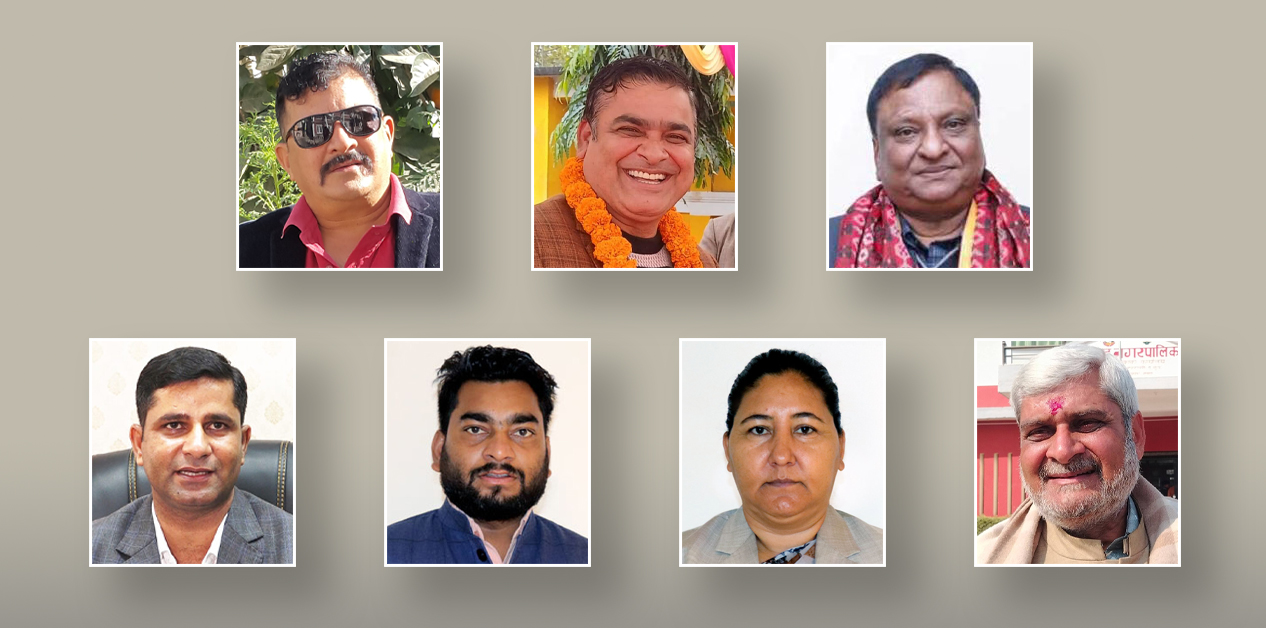
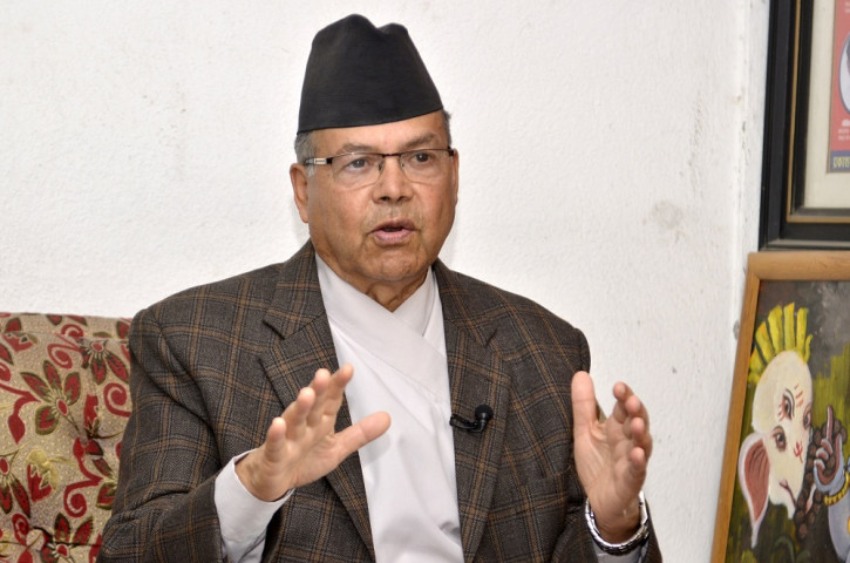
BUTWAL: Until just two days before the deadline for filing nominations for the upcoming House of Representatives (HoR) election, former minister Mohammad Ishtiyaq Rayi was the general secretary of the Janata Samajwadi Party (JSP). However, overnight on January 18, he joined the CPN (UML). He has now become a UML candidate from Banke–2 in the HoR election scheduled for March 5.
Ishtiyaq began his political career in 1996 (2053 BS) with the Rastriya Prajatantra Party. During the 2006 People’s Movement (2062/63 BS), he joined the then Madheshi Jana Adhikar Forum led by Upendra Yadav. Within the Forum, he rose from central committee member to secretariat member and became a central secretary within two years.
In the first Constituent Assembly election of 2008 (2064 BS), he was elected from Banke–2 as a Forum candidate. In 2011 (2068 BS), he became Minister for Labor and Transport Management. He lost the Constituent Assembly election in 2013 (2070 BS). He won the House of Representatives election in 2017 (2074 BS) but was defeated again in the 2022 (2079 BS) election.
A three-time minister, Ishtiyaq surprised JSP leaders and cadres by switching to UML just two days before nomination day and securing the Banke–2 ticket. With many leaders failing to secure tickets from their original parties, a clear trend of party-switching has emerged.
Ishtiyaq is not alone in changing parties at election time. In Lumbini Province, even senior party office-bearers and provincial assembly members have switched parties for the upcoming election.
Former Nepali Congress (NC) lawmaker Pramod Yadav also aspired to contest again from his party. When it became clear that he would not receive a ticket from the NC, Yadav joined the UML and became a candidate from Rupandehi–4. He received the UML ticket only a few hours before filing his nomination.
Nepali Congress Lumbini Province General Secretary Bikram Khanal quit the party on the eve of the election and became a candidate from Nawalparasi (Bardaghat–Susta West)–1 under the Rastriya Swatantra Party (RSP). In the 2022 election, he had been dissatisfied after businessman Binod Chaudhary received the NC ticket in that constituency. Accusing him of working against the party’s official candidate, NC had taken disciplinary action against him. Although the action was later withdrawn, he did not remain in the party and instead joined RSP at election time.
Khanal says he left NC due to long-standing factionalism. “They stopped listening to those engaged in grassroots politics in the district and began prioritizing others. This was unacceptable to the local people as well, and I am representing that sentiment,” he says.
Former Nepal Police SSP Bikram Singh Thapa, who had long been active in NC politics, has also joined the RSP. He is contesting from Kapilvastu–2. In the 2022 provincial assembly election, he had contested from NC in Kapilvastu Constituency No. 2 (Provincial A) and lost by a margin of 522 votes.
Lumbini Provincial Assembly member Kanhaiya Baniya of the Loktantrik Samajwadi Party resigned both his assembly seat and party membership to contest the federal parliament. After joining the RSP, he has become a candidate from Rupandehi–4.
Rastriya Prajatantra Party leader Prakash Rajouriya has also joined the RSP and is contesting from Kapilvastu–3.
Veteran NC leader from Kapilvastu and former provincial assembly member Birendra Kanodia also switched parties just before the election. Aspiring to contest from Kapilvastu–3, he said his chances of getting a ticket diminished after a leadership change within NC, prompting him to join the UML. He is now a UML candidate from Kapilvastu–3.
Lumbini Provincial Assembly member Krishna KC resigned both her provincial assembly position and the Nepali Communist Party (NCP) to contest from Banke–1 under the Progressive Democratic Party. She says she left because the party began operating on the orders of specific individuals rather than principles and policies. “I have rebelled before as well,” she says.
Switching parties in the name of rebellion while seeking opportunity is not new. In previous elections too, the list of leaders who switched parties for electoral advantage, especially in Terai-centered constituencies and Madhesh-based parties in Lumbini Province, was long.
In the 2022 provincial assembly election, Sahas Ram Yadav was set to contest from Kapilvastu–1 (B) as a JSP candidate. Although his ticket under the UML–JSP alliance was confirmed, he joined NC on the day of nomination filing. He eventually lost the election to Madhusudan Chaudhary, the candidate of the UML–JSP alliance.
In the same provincial election, Devaraj Bharti left NC and contested from Kapilvastu–3 (A) under the Janamat Party.
In the 2022 HoR election, after being denied a UML ticket in Dang–1, former lawmaker Ganga Tharu joined the Hamro Nepali Party and contested as a candidate. Similarly, when denied a ticket, NC district committee member Devaraj Pathak joined the RSP and contested from Dang–1. He is now the Lumbini Province chair of the RSP.
Another leader from Dang, Surendra Chaudhary, who had moved from Baburam Bhattarai’s Naya Shakti Party to the JSP, contested the 2022 House election under the Rastriya Unmukti Party after being denied a ticket by his party.
Just six months after the formation of the Rastriya Janata Party (RJP), its senior vice-chair Hridayesh Tripathi contested the 2013 Constituent Assembly election from the UML. He lost from the then Nawalparasi Constituency No. 6.
Tripathi had switched parties even before that. In 2008, he left the Nepal Sadbhawana Party (Anandi Devi faction) and joined the Terai Madhesh Loktantrik Party (TMLP). He played a key role in forming the RJP, a merger of six parties including the TMLP.
Tripathi, who won the general elections of 1991, 1994, and 1999, as well as the 2008 Constituent Assembly election, lost the 2022 HoR election from Nawalparasi West–1 to NC candidate Binod Chaudhary. In the upcoming House election, he is contesting as a JSP candidate.
Abhishek Pratap SHah of Kapilvastu is also among the frequent party-switchers. While serving as deputy general secretary of the Federal Socialist Forum, he joined NC ahead of the 2017 parliamentary election. He had won the first Constituent Assembly election in 2008 from Kapilvastu–5. This time, Shah has filed his candidacy from Kapilvastu–3 under NC.
In the 2017 House election, TMLP leader Brijesh Kumar Gupta contested from Kapilvastu–2 using the “sun” election symbol. TMLP joint–general secretary Ishwardayal Mishra also contested from Kapilvastu–3 with the same symbol. This time, after being denied a UML ticket, Gupta joined the Nepali Communist Party and is contesting again from Kapilvastu–2.
Analysts describe the tendency of leaders to switch parties on the eve of elections as a sign of ideological and principled bankruptcy. Political analyst Somat Ghimire says political parties have abandoned ideology, policy, and integrity. “Political parties gave up their principles, policies, and values. Just as parties abandoned loyalty, candidates did the same. The behavior of parties and party-switching individuals matches,” he says.
He adds that the practice of party-switching leaders represents an extreme distortion of parliamentary politics and ultimately becomes a burden borne by the people.