Kathmandu
Thursday, June 18, 2026





Unusual growth in election expenses is straining public finances and affecting development budgets
KATHMANDU: After the political change of 1990, the government spent Rs 110 million on the first House of Representatives election held in 1991. Since then, the government has conducted seven parliamentary elections, including polls for both the House of Representatives and the Constituent Assembly. The country is now heading into its eighth parliamentary election. For the House of Representatives election scheduled for March 5, the government has allocated a total budget of Rs 19.11 billion.
A comparison between the 1991 election and the upcoming polls shows that election-related spending has multiplied by a factor of 173 over the past 34 years. Such a dramatic escalation in government expenditure within just three decades of the introduction of House of Representatives elections underscores how excessive election costs have become.
From 1991 to 2000, government election spending increased moderately. Until then, election expenses were in the millions. However, elections held after the 2006 Second People’s Movement have become highly expensive. Elections that previously cost millions have now reached billions.
According to the book Election Cost in Nepal by former Chief Election Commissioner Ayodhee Prasad Yadav, at least Rs 110 million was spent in the 1991 House of Representatives election. Subsequently, Rs 240 million was spent in the 1994 election and Rs 360 million in the 1999 election.
The 2006 Second People’s Movement ended the more than 200-year-old monarchy, and the country entered a democratic republic. The elections held for citizens to choose their representatives have become increasingly costly. In the first Constituent Assembly election held in 2008, some Rs 2.965 billion was spent. After the first Constituent Assembly failed to issue a new constitution, the Election Commission’s report mentions that Rs 5.988 billion was spent in the second Constituent Assembly election held in 2013.
In 2017, the current expenditures of the Election Commission, regional and district offices totaled some Rs 8.986 billion. Out of this, the commission’s report states that Rs 7.801 billion was spent solely from internal sources for the 2017 House of Representatives and Provincial Assembly elections.
The government has allocated Rs 19.11 billion for the March 5 election. Out of this, Rs 10.39 billion has been set aside for the Ministry of Home Affairs, at least Rs 6.73 billion for the Commission, and Rs 1.99 billion for the Ministry of Defense.
In 2022, while a total budget of Rs 18.5 billion was allocated for the election, a total of Rs 16.5 billion was actually spent. According to the Commission’s Annual Report of the fiscal year 2022/23, a budget of Rs 8.5 billion was allocated for the Commission for the 2022 House of Representatives and Provincial Assembly elections.
Of that amount, some Rs 1.762 billion was spent by the Election Commission, some Rs 572.1 million by election offices, and Rs 4.103 billion by the offices of the election officers. Similarly, a total of Rs 6.556 billion was released, including Rs 19 million from the Ministry of Information and Technology and Rs 100 million from the Ministry of Home Affairs for the election.
Likewise, for the 2022 National Assembly member by-election, the Commission spent some Rs 5.9 million, the election office Rs 588,000, and the election officer’s office Rs 603,000, totaling Rs 6.6 million.
Similarly, for the 2022 presidential and vice-presidential by-elections, the commission spent Rs 6.6 million, the election office Rs 499,000, and the election officer’s office some Rs 1 million, totaling Rs 8.2 million.
At that time, the Ministry of Home Affairs received Rs 8.35 billion, and the Ministry of Defense received Rs 977.6 million. All these totaled Rs 15.982 billion, and when adding other miscellaneous expenses, the total reached Rs 16.5 billion.
The government has allocated Rs 19.11 billion for the March 5 election. Out of this, Rs 10.39 billion has been set aside for the Ministry of Home Affairs, at least Rs 6.73 billion for the Commission, and Rs 1.99 billion for the Ministry of Defense. The government diverted this amount to the election on September 21, 2025, by cutting expenses from various ministries. The government had frozen a budget of Rs 120 billion by cutting funds allocated for small-scale projects from the current fiscal year’s budget. That same amount is now being used for election expenses.
Based on the Commission’s spending during the first Constituent Assembly election in 2008 and its by-elections over a two-year interval, the cost per voter was Rs 279. Similarly, in 2013, it was Rs 986 per voter, but in 2017, this total expenditure for the three tiers of elections increased to reach up to Rs 4,000 per voter.
This is only the expenditure incurred by the government. Beyond this, there is no formal account of the expenses incurred by candidates and parties during elections. It is often discussed that a single candidate for the House of Representatives spends between Rs 50 million and Rs 100 million.
Rampant candidate expenses
The Election Commission prescribes clear ceilings on how much a candidate may spend during an election. For the March 5 polls, separate limits have been set for accessible and remote districts. Candidates contesting in Kathmandu’s five constituencies are allowed to spend up to Rs 2.5 million. In 52 constituencies, the ceiling is Rs 3.1 million, while candidates in 26 constituencies may spend as much as Rs 3.3 million.
A limit has been set where candidates in 65 constituencies can spend a maximum of Rs 2.9 million, and candidates in 17 constituencies can spend up to Rs 2.7 million. Although the Commission sets such spending limits in every election, candidates often spend much more than this. Leaders who have participated in past elections have expressed concern at various times that since election expenses have increased excessively, citizens with average economic status are unable to stand for election.
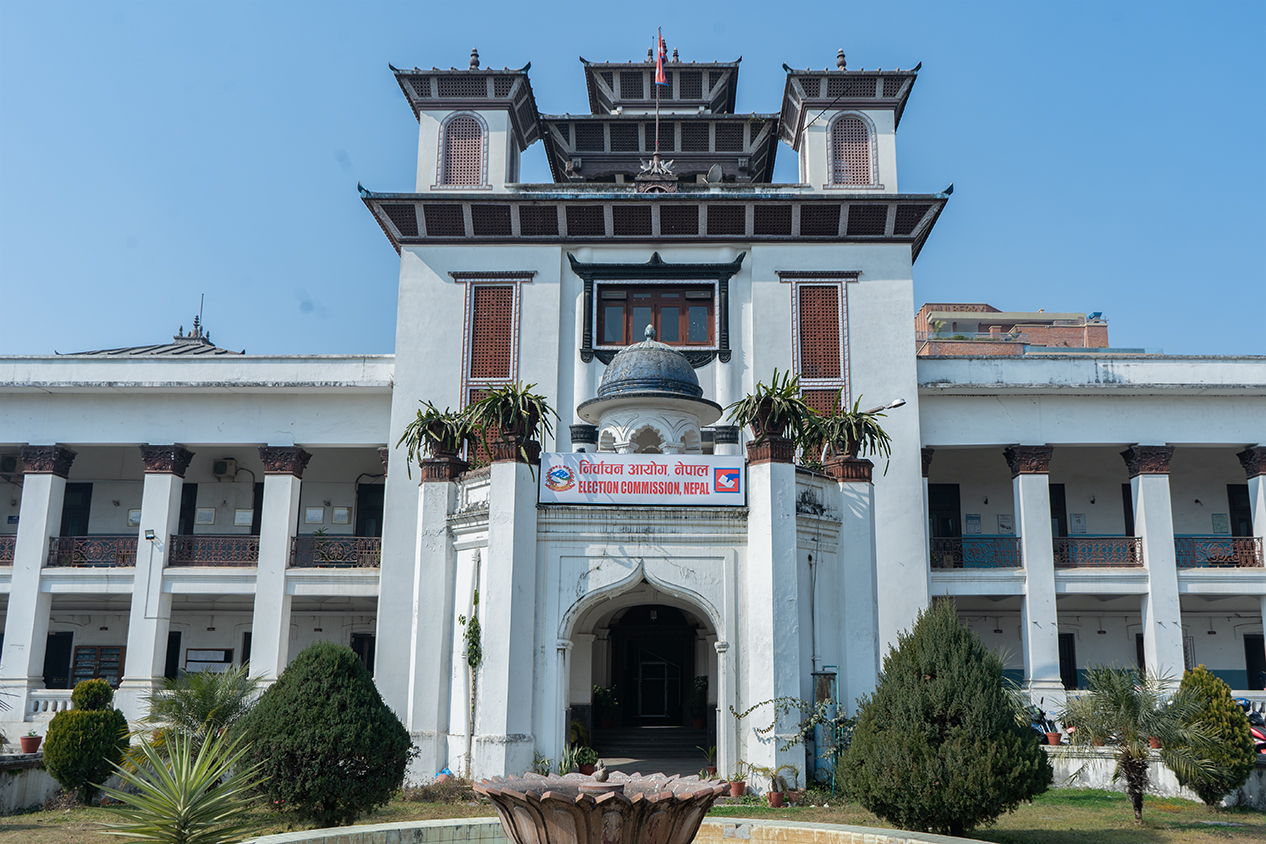
Election Commission. Photo: Bikram Rai
According to a study by The Asia Foundation, candidates and parties alone spent Rs 50.98 billion in the 2017 local-level elections. Similarly, in the provincial and federal parliamentary elections of the same year, candidates, parties, and their supporters spent Rs 45.45 billion. When adding the expenses of parties, candidates, their supporters, and the government for all three levels of elections, a total of Rs 131.63 billion was spent in 2017. This is only the expenditure incurred during the election period.
In an article titled “Political Finance Management: Opportunity for Electoral Reform” published in the Policy Research Institute’s journal Nepal Public Policy Review (Volume 1, 2021), former Chief Election Commissioner Bhojraj Pokharel wrote, “Elections are becoming expensive for the government, parties, and candidates alike. The unnatural increase in spending everywhere is a matter of concern.” Pokharel argues that unlimited spending invites numerous malpractices.
In the analysis of former Chief Election Commissioner Ayodhee Prasad Yadav, the government’s expenditure per voter in every House of Representatives election is also increasing. While Rs 9.83 was spent per voter in 1991, it increased to Rs 19.83 in 1994 and further increased to Rs 26.68 in the year 1999.
Based on the Commission’s spending during the first Constituent Assembly election in 2008 and its by-elections over a two-year interval, the cost per voter was Rs 279. Similarly, in 2013, it was Rs 986 per voter, but in 2017, this total expenditure for the three tiers of elections increased to reach up to Rs 4,000 per voter.
Former Chief Election Commissioner Yadav says it is a matter of concern that every House of Representatives election is becoming more expensive. “Spending by both candidates and the government has risen with every election. To rein in escalating electoral costs, reform must begin at the government level, setting the standard for fiscal discipline in the electoral process,” Yadav further added.
How can spending be curbed?
When government election spending increases unnaturally, it places pressure not only on the state treasury but also on the development-oriented capital budget. For the upcoming election on March 5, funds have been cut from projects already included in the budget.
Similarly, when candidates and parties spend uncontrollably, it can lead to social malpractices. They can influence voters. Therefore, former Chief Commissioner Yadav argues that election spending must be reduced. He believes the state should start by reducing its own expenses before trying to control parties and candidates. He says, “If the state itself works to reduce costs, parties and candidates will also be forced to do so.”
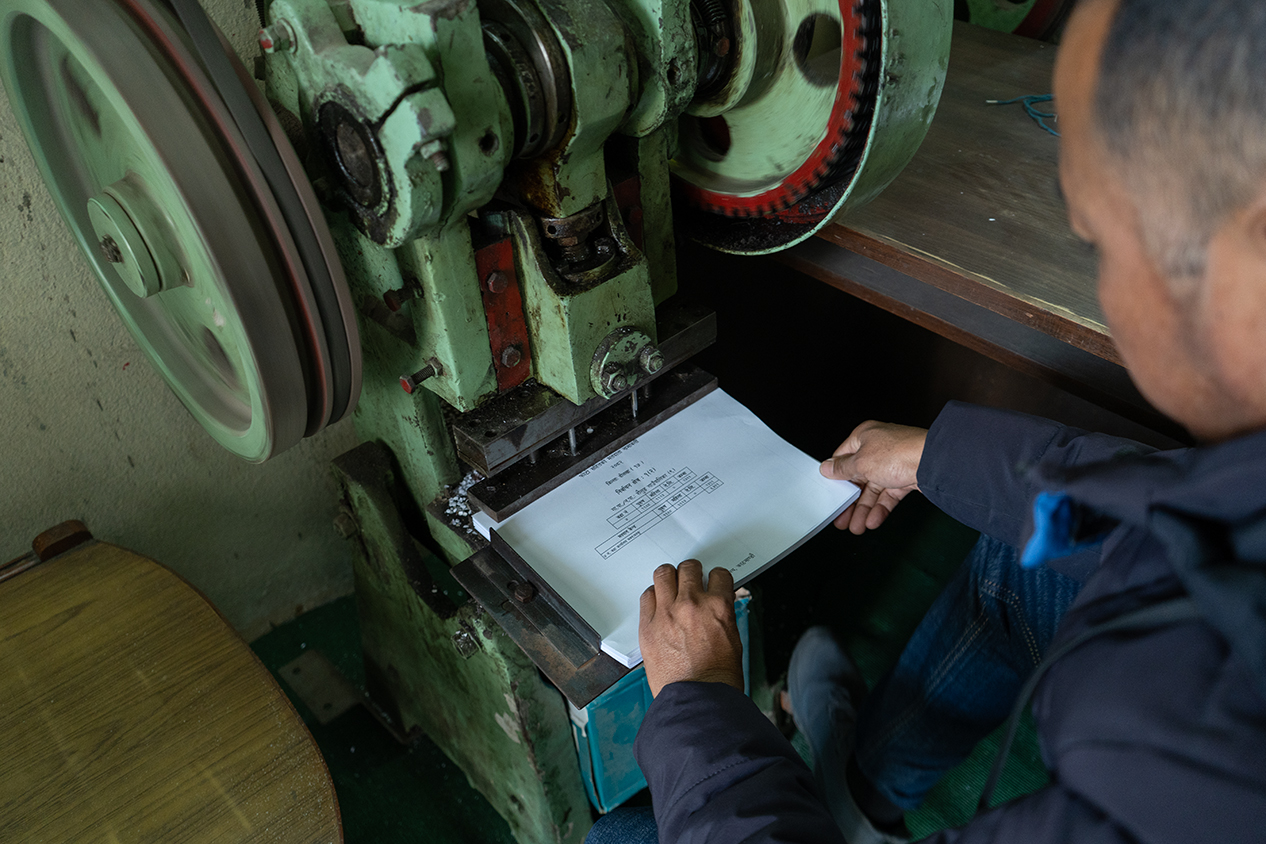
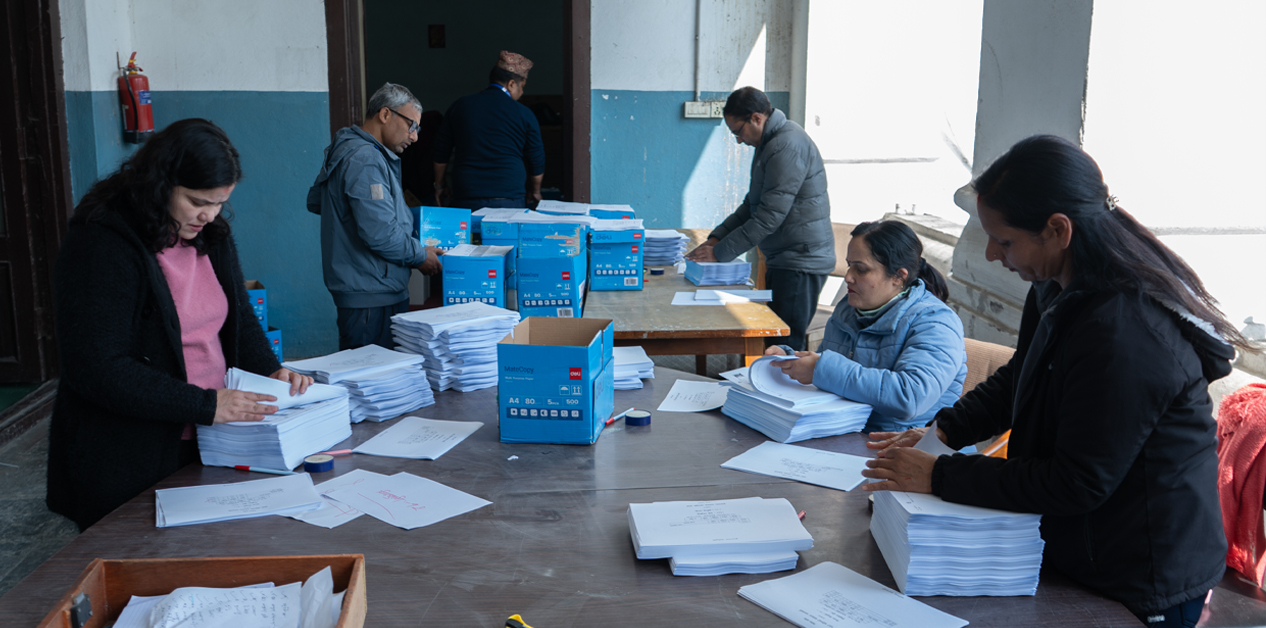
Ballots being printed for the polls. Photo: Bikram Rai
The “Electoral Integrity Project,” which measures the fairness and credibility of elections worldwide, considers election spending as a basis for electoral integrity. Former Chief Election Commissioner Pokharel says that in our country, the pace of increase in election security costs is higher than election management costs. He suggests that to reduce election spending, the electoral system itself must be reformed. Noting that the candidate-centered majority system has increased costs, Pokharel wrote, “The current electoral system is also responsible for increasing costs.”
To control expenses, Pokharel suggests making provincial and federal parliaments party-centered, and options under this could include a fully proportional or multi-member constituency system. If it is not possible to change the system immediately, he says expenses could be reduced by making direct candidacies proportional or maintaining a single ballot paper for both systems.
Additionally, to control costs, Pokharel has suggested that instead of holding elections unexpectedly, the election date could be fixed in law, parties could be made responsible for reducing election security costs, and the tradition of hiring temporary election police should be ended.
Former Chief Election Commissioner Yadav also says there are many areas where unnecessary election expenses can be reduced. He believes the government must think about this to actually find solutions.
Pokharel says that when political finance management weakens, public disillusionment grows toward political parties and the overall electoral system, which are the main pillars of democracy. Noting that questions are raised about the future of the political system and the electoral system itself due to such weaknesses of the government, Pokharel wrote, “To effectively manage spiraling election costs, the Commission must look to global models while taking the first decisive steps toward internal reform.”