Kathmandu
Thursday, June 18, 2026





The Government of Nepal have shown eagerness to collect revenue but has exhibited carelessness in management
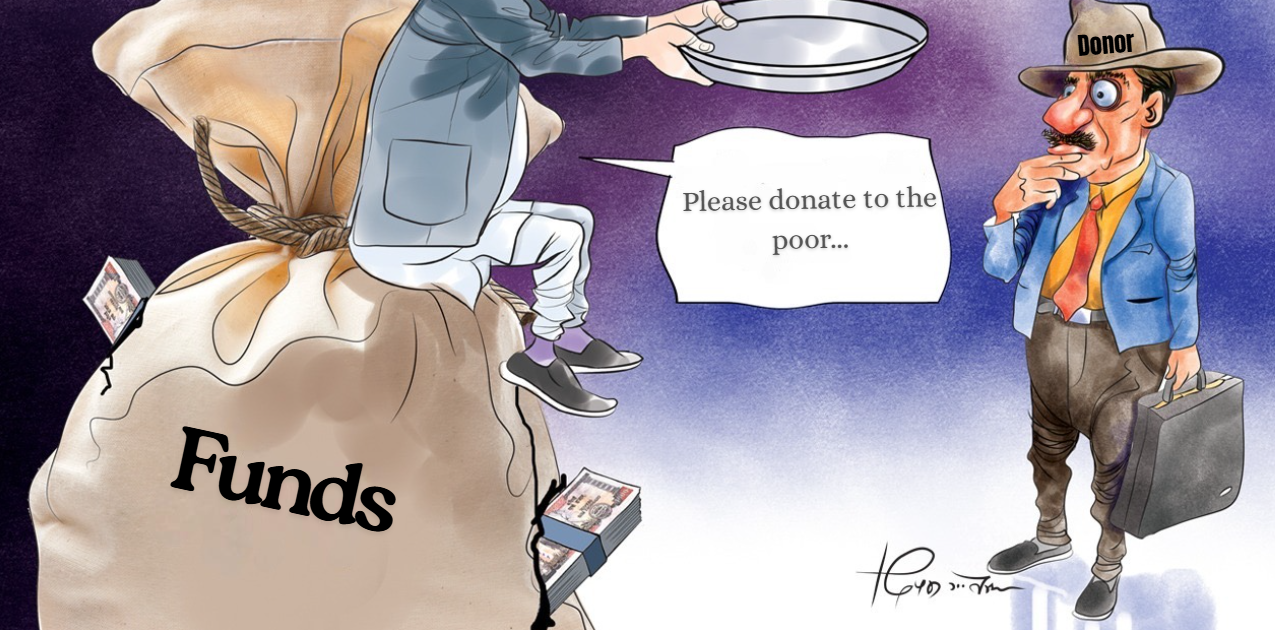
After the government dissolved illegally operated funds at the Securities Board of Nepal (SEBON), employees of the board staged protests last November. Earlier, the Commission for the Investigation of Abuse of Authority (CIAA) had formally written to the Ministry of Finance, drawing attention to the fact that the Employee Welfare Fund and Employee Security Fund at SEBON were being operated in violation of the law and that no action had been taken against them.
Following the CIAA’s letter, on 18 September 2025, the Ministry of Finance informed the board through a letter that it had decided to abolish those funds. When the services and benefits that employees had been receiving from these funds were set to be discontinued, SEBON employees launched protests. The two funds, which had been in operation for 11 years, together held a balance of over Rs 1.87 billion.
The CIAA stated that since SEBON employees had been illegally operating these funds and enjoying benefits for 11 years, the benefits received should be recovered from the employees. In its letter to the Ministry of Finance, the CIAA said: “If, without the consent of the Ministry of Finance, the Government of Nepal and public institutions deposit a portion of revenue that should be credited to the state treasury into welfare funds—allowing employees to receive abnormal benefits without any legal basis or standards—then the ministry must seriously consider what kind of negative impact this could have on the economy in the future.”
After the CIAA raised concerns and conducted investigations, the illegally operated funds at SEBON were shut down. However, the government itself does not have precise information on how many such funds are operating in other government bodies. Even the Financial Comptroller General Office (FCGO), which maintains records of government income and expenditure, is unaware of how much money is held in which funds across the country.
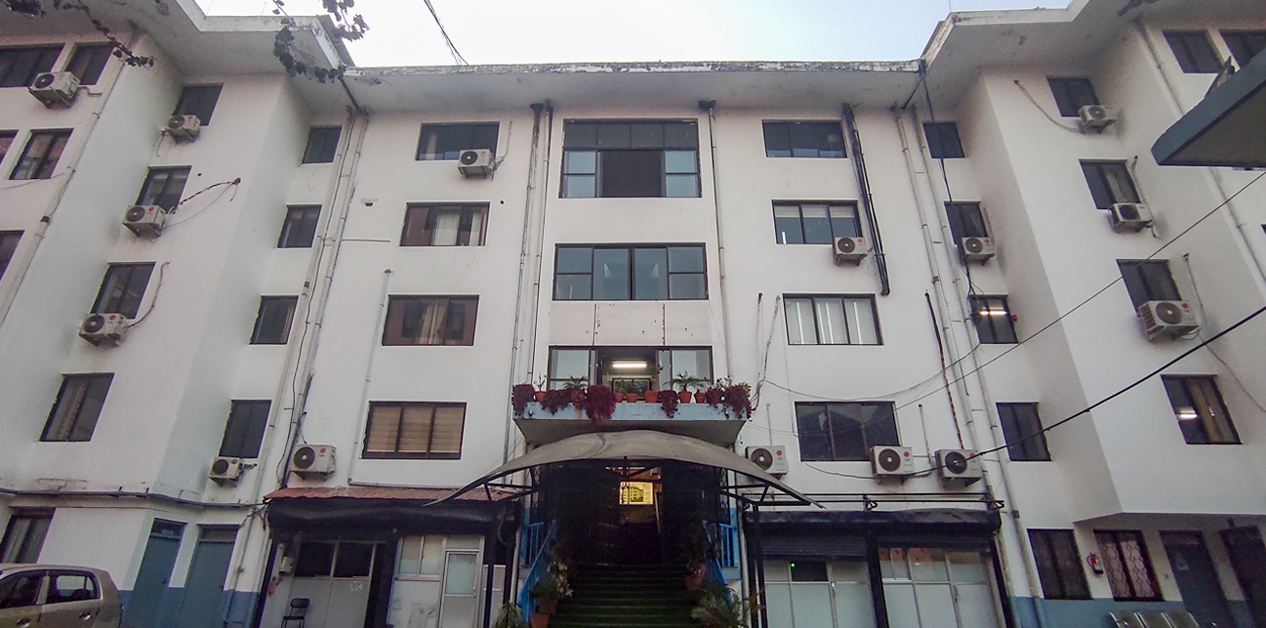
Financial Comptroller General Office
Similar types of funds exist in the Ministry of Federal Affairs and General Administration, the Ministry of Communications and Information Technology, and the Ministry of Agriculture and Livestock Development. Funds such as Employee Welfare Funds, Retirement Funds, Gratuity Funds, and Loan Funds are being operated in various government institutions. Through a “mapping” exercise conducted in the previous fiscal year, the FCGO identified 139 such funds across government bodies nationwide. However, it does not have confirmed details of how much money is held in these funds.
Deputy Financial Comptroller General Yamuna Pradhan says, “We do not yet have consolidated details of all the funds. Only in the last fiscal year did we begin mapping to prepare preliminary information on where such funds exist. The actual details of how much money is in those funds have not yet been finalized.”
Because the government lacks precise information about these funds, many of them remain unused. Some funds are also being used as sources of additional benefits for government employees.
In the budget for fiscal year 2022/23, the Ministry of Finance announced that it would consolidate scattered funds under ministries and agencies of the Government of Nepal and abolish funds deemed unnecessary. To implement this announcement, the FCGO sent letters to other ministries requesting details. It sought information on funds formed and operated under the Development Committee Act, 2013, funds established by government decisions, funds created through special legislation, and other similar entities. However, this work has not yet been completed.
In the consolidated financial statement for fiscal year 2024/25, submitted by Financial Comptroller General Shova Kanta Poudel to Finance Minister Rameshwar Khanal on 29 December 2025, it states: “Extra-budgetary entities have been mapped and integrated into the financial statements in accordance with approved standards. Based on details received from entities, the statements will be refined in the coming years.”
Extra-budgetary entities refer to institutions that operate outside the government’s budget system. Their accounts have not yet been systematically managed in a way that allows the government to obtain consolidated data. According to FCGO officials, only from fiscal year 2024/25 have non-budgetary entities begun to be mentioned in the consolidated financial statements.
According to the consolidated financial statement prepared by the FCGO, as of the end of fiscal year 2024/25, funds included in the budget system held a balance of Rs 148.35 billion. Of this, Rs 109.90 billion was held by federal government bodies, and Rs 17.67 billion by provincial governments. Similarly, funds operated by local governments held Rs 20.77 billion as of the end of mid-July 2025.
Non-budgetary funds mapped by the FCGO but not included in the government’s budget system hold a balance of Rs 84.80 billion. Of this, Rs 83.65 billion is at the federal level, and Rs 1.15 billion at the provincial level.
Including both budgetary and non-budgetary funds, the total amount held across various funds stands at Rs 233.15 billion 980 thousand 827 rupees. This amount is equivalent to 12 percent of the federal government’s budget for fiscal year 2025/26.
What types of funds, and how much money?
The government has created various funds at different times for different purposes.
During the Gen-Z movement, the government established the Physical Infrastructure Reconstruction Fund to rebuild damaged structures. According to Joint Secretary Tanka Prasad Pandey of the Ministry of Finance, contributions from the public and private sectors had deposited Rs 140.7 million into the fund as 16 January 2026.
In fiscal year 20129/20, to control the COVID-19 pandemic, the government established the Coronavirus Infection Prevention, Control, and Treatment Fund, which currently has a balance of Rs 228.21 million.
The Prime Minister’s Relief Fund holds a balance of Rs 2.07 billion, while the Natural Disaster Rescue and Relief Fund holds Rs 4.26 billion, according to FCGO data.
Since fiscal year 2008/09, the government has been collecting a pollution control fee on the sale of petrol and diesel. Initially collected at 50 paisa per liter, the fee was increased to Rs 1.50 per liter starting in fiscal year 2019/20. This fee was introduced with the intention of creating a separate fund for air pollution control. Over the past 18 years, a total of Rs 26.86 billion has been collected from consumers through this charge.
Not only that, the government placed a heavy burden on consumers by deciding to construct the 1,200-megawatt Budhi Gandaki Hydropower Project entirely through domestic investment. Starting from fiscal year 2016/17, it began collecting a tax of five rupees per liter on fuel. From 2076 BS (2019/20) onward, this levy was renamed the “Infrastructure Development Tax,” and the rate was increased to ten rupees per liter. However, there was no certainty as to whether all the money collected in this manner would actually be spent on the construction of Budhi Gandaki.
In November 2023, a Cabinet meeting decided that out of the ten rupees collected per liter from fuel, five rupees would be allocated to the Budhi Gandaki project. Since then, five rupees from the fuel tax collected have been provided to the Budhi Gandaki Hydropower Project. However, the remaining five rupees has not been spent for its designated purpose.
Funds continue to be created ministry by ministry, only to remain inactive. Among non-budgetary funds, the largest amount is held by the Ministry of Education, Science, and Technology. According to data from the FCGO, the education ministry has non-budgetary funds under 22 different headings. These include the University Grants Fund, endowment funds, interest income, and funds that collect assistance received from various individuals and institutions.
Under the Ministry of Physical Infrastructure and Transport, the Road Board Nepal regularly collects and spends funds. In fiscal year 2024/25 alone, the Road Board earned Rs 1.567 million in revenue. Including the previous year’s balance, the fund reached Rs 41.2 million; after expenditures of Rs 1.432 million, the remaining balance stands at Rs 39.7 million.
The Employee Retirement Fund of the Ministry of Communications and Information Technology has a balance of Rs 11.731 million. The same ministry also operates an Employee Welfare (Loan) Fund, which holds Rs 4.227 million.
There are 18 institutions under the Ministry of Culture, Tourism, and Civil Aviation that operate non-budgetary funds. The funds under their control collectively hold a balance of over Rs 4.79 billion.
The Victim Relief Fund managed by the Supreme Court has a balance of Rs 150 million. This fund is used to provide assistance to individuals who are unable to participate in judicial proceedings due to financial hardship.
Most of these scattered funds remain inactive. In other words, the money in these funds is largely unused. Meanwhile, the government continues to finance its expenditures through internal and external borrowing. As a result, the government’s liabilities increase every year. Pointing to this contradiction, economist Keshav Acharya says, “It is not appropriate for the government to be unaware of funds that exist within its own institutions while borrowing money to meet expenditures. The practice of collecting money but failing to keep proper records is fundamentally flawed.”
According to Ravi Chandra Aryal, Deputy Financial Comptroller General at the FCGO, procedures for operating and managing these funds have been drafted and submitted to the Ministry of Finance for approval. He says, “In accordance with the Financial Procedures and Fiscal Responsibility Act and its regulations, records of government expenditures are being maintained. We have prepared procedures to systematize funds that were created at different times for different purposes and have sent them to the Ministry of Finance for approval.”
Former member of the National Planning Commission and economist Chandramani Adhikari says that creating numerous funds under different headings is unnecessary. He states, “Existing funds should be brought under the revenue account and properly managed. These funds exist because the capacity to prepare budgets, spend funds, and effectively regulate expenditures is weak. They must be systematized.”
How should they be systematized? His suggestion is: “A system should be developed to present details to Parliament on where funds exist, what types of funds they are, and how much income and expenditure they have. Only then can non-budgetary funds be properly managed.”
One purpose, spending elsewhere
Although the government has collected over Rs 26.86 billion since fiscal year 2008/09 from petrol and diesel sales with the stated purpose of establishing a separate fund for air pollution control, the money has not been spent on the intended purpose. The government has not mobilized these funds for pollution control. After realizing that the revenue could serve as a significant income source, the government has, in recent years, begun depositing this income into the general revenue account. As a result, the funds have been spent through the regular budget process.
Because the government has done virtually nothing to control air pollution, toxic air has had severe impacts on public health. Respiratory and eye-related illnesses are increasing due to air pollution. Every year, for six months starting from the onset of winter, Nepalis are forced to breathe more polluted air than during other times of the year. Kathmandu Valley, in particular, consistently ranks among the world’s ten most polluted cities each year.
According to a study report on Nepal’s air quality status released by the World Bank last July, air pollution is the leading cause of premature death in Nepal. The State of Global Air 2025 report shows that more than 41,000 Nepalis die each year due to air pollution.
Since fiscal year 2016/17, the government has collected more than Rs 200 billion in taxes on fuel for infrastructure development. However, this revenue too has been absorbed into the general revenue account and spent through the budget. As a result, it has not been utilized according to its stated purpose.
Economist Acharya says that failing to mobilize fund revenues in line with their objectives reflects government irresponsibility. He states, “There is no policy clarity in the government regarding the operation of funds. In Nepal, excise duty was imposed on cigarettes to establish a fund for organized and effective cancer treatment. But the money collected from that tax is kept under the revenue heading and spent through the budget system. Spending money raised for one purpose under another heading is not appropriate.”
The Rural Telecommunications Development Fund under the Nepal Telecommunications Authority holds a balance of over Rs 14.96 billion. This fund was established by the Authority in accordance with Section 30(4) of the Telecommunications Act, 1997, for the development, expansion, and operation of telecommunications services in rural areas. Telecommunications service providers are legally required to deposit two percent of their annual income into this fund. However, the money has not been effectively mobilized for telecom service expansion and infrastructure development.
Well-managed funds
Among non-budgetary funds, three are being operated in a relatively well-managed manner: the Employees Provident Fund, the Citizen Investment Trust, and the Social Security Fund.
According to the Employees Provident Fund’s annual report for fiscal year 2023/24, total savings in the fund have reached Rs 570 billion. Of this, Rs 518 billion is in the Provident Fund and R 11 billion is in the Pension Fund. The Employees Provident Fund has been investing in various infrastructure projects in the form of loans and equity.
Similarly, as of the end of mid-October 2025, total savings collected by the Citizen Investment Trust had reached Rs 296.89 billion. The Trust earns profits by investing these funds in various projects and institutions. According to its annual report, a total of Rs 305.19 billion had been invested by the end of mid-October 2025 from the Trust’s share capital, reserves, and funds collected under various programs.
Including accrued interest, loans provided by the Citizen Investment Trust and the Employees Provident Fund to Nepal Airlines Corporation have reached Rs 52.46 billion.
According to Executive Director Kabiraj Adhikari, the Social Security Fund—established in 2018—has accumulated over Rs 94.09 billion to date. However, this fund’s money has not yet been invested in a result-oriented manner. Currently, the fund deposits its money in fixed accounts at various banks and earns interest.