Kathmandu
Monday, June 22, 2026





On the question of China, Jawaharlal Nehru wanted India and Nepal to maintain an identical outlook. That is why he pressured Nepal’s visiting Prime Minister, BP Koirala, not to go to China.
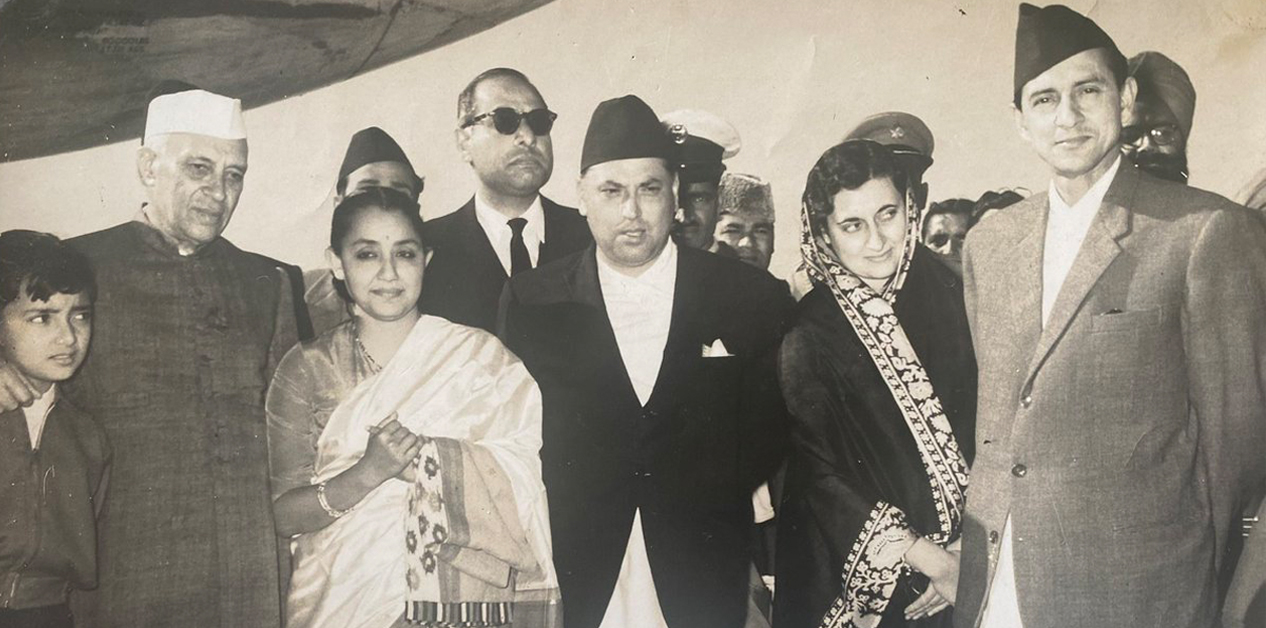
“You said some very good things about me. This is something only one brother can say to another. I am deeply grateful to you. But you must forgive me if I address you as a younger brother. I have great affection for you, and equal respect. I have high hopes from you. There is a good difference in our ages. You have ample time to serve your country and uplift the lives of your people. You have a golden opportunity, and I am fully confident that you will make full use of it—and that it will benefit not only Nepal but our country as well.”
27 January 1960
These were the words spoken by Indian Prime Minister Jawaharlal Nehru at Rashtrapati Bhavan while bidding farewell to Nepal’s first democratically elected prime minister, Bishweshwar Prasad (BP) Koirala. After completing his formal speech in English, Nehru delivered this address in Hindi, which left the entire atmosphere at Rashtrapati Bhavan deeply emotional.
This speech stood in sharp contrast to Nehru’s position in 1952, when—after the fall of Mohan Shumsher Rana’s government—he had pressured King Tribhuvan not to appoint BP Koirala as prime minister.
Moreover, during BP’s first visit to India from 17-31 January 1960, shortly after his appointment, differences of opinion emerged between the two prime ministers on several issues—most notably regarding BP’s possible visit to China.
Less than 15 days after BP was appointed prime minister, Nehru himself visited Nepal. At a time when China–India border tensions were escalating, Nehru wanted to draw Nepal into India’s camp against China. More than that, he was keen to expand the influence of the then Soviet Union in Nepal as a means of encircling China. By then, ideological rifts between Chinese President Mao Zedong and Soviet Premier Nikita Khrushchev had already begun to surface.
However, BP outright rejected Nehru’s proposal. Nehru had come to Nepal seeking a military agreement in the context of India’s border dispute with China, but when his intentions were not fulfilled, an emboldened China invited BP to visit Beijing in the third month after he became prime minister.
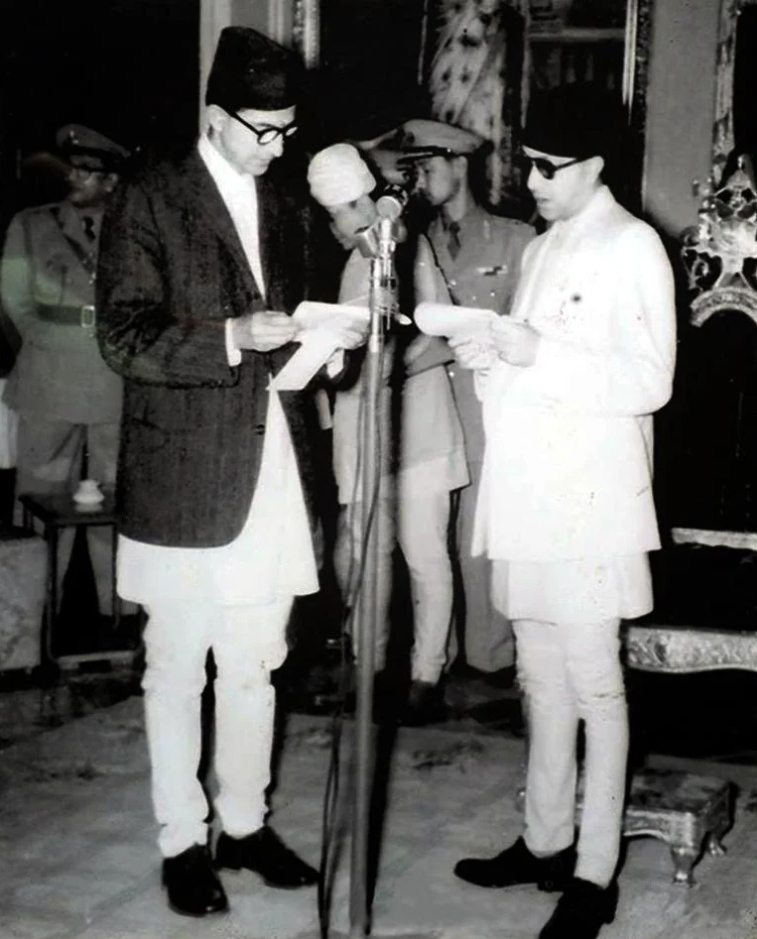
King Mahendra administering the oath of office to the first elected Prime Minister, BP Koirala
Having lived and practiced politics in India, and being well acquainted with the Indian mindset, BP felt a certain degree of confidence toward his southern neighbor. But he was unfamiliar with China’s approach. At the same time, he was equally alert to the possibility that China’s growing influence in Tibet could have repercussions for Nepal. To understand China’s intentions toward Nepal firsthand, he wanted to visit the northern neighbor first.
But Nehru exerted such intense pressure that BP was ultimately compelled to begin his first foreign visit with India.
Invited as the chief guest for India’s 10th Republic Day celebrations, BP entered India on January 26, 1960 via Patna, Bihar, traveling through the Nepal–India border dispute area of Bhainsalotan to Khatima, Phoolbagh, Agra, Pune, Bangalore, and Mysore, before arriving in New Delhi on 24 January.
He received a grand welcome in Delhi. Nehru left no stone unturned in trying to please BP. By then, seven months had passed since BP’s appointment as prime minister. During this period, Indian media—particularly encouraged by Nehru—had been making repeated efforts to provoke Nepal against China.
After Nehru returned to India on 13 June 1959, following his visit to Nepal, Indian media outlets began publishing a flurry of reports claiming that China’s expansionist policies had already led to the occupation of large swathes of Nepali territory.
Addressing Nepal’s parliament on 1 October 1959,BP stated, “The Nepal–Tibet border has already been delineated, except for a few areas.”
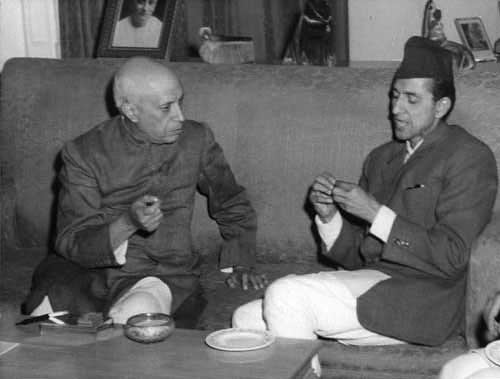
BP with his Indian counterpart Jawaharlal Nehru during his visit to India in 2016
As pressure mounted from all sides, he issued another statement on October 4, saying: “Nepal’s foreign policy is neutral. Just as between the United States and the Soviet Union during the Cold War, our policy is neutral in China–India relations as well.”
When Indian journalists questioned him about the growing presence of the Chinese army in Tibet, he replied: “We believe that the Chinese army will not cross into Nepali territory. Therefore, I do not feel that additional guarantees are necessary.”
To further provoke Nepal, Nehru made a statement in the Indian Lok Sabha on 27 June 1959, declaring: “India will consider an attack on Nepal or Bhutan as an attack on itself.”
This statement poured fuel on the fire in Nepal. Opposition forces—acting at the behest of the royal palace—were already actively spreading propaganda that BP had secretly signed a “military agreement” with India. Nehru’s statement provided ample fodder to further undermine BP.
Mocking Nehru’s words, BP described them as merely an “expression of friendship.” He explained that the statement should be understood in the sense that if China attacked Nepal and Nepal sought assistance, India would be prepared to provide whatever help it could.
However, as pressure continued to intensify, BP convened a press conference on 29 November 1959 to clarify Nehru’s remarks: “As a sovereign and independent nation, we are fully capable of determining our internal and external policies based on our own judgment and capacity.”
At the time, Indian media frequently published reports calling for an increased Indian military presence in Nepal to curb Chinese activities. Nepali newspapers, on the other hand, strongly condemned the notion that “the Indian army would become Nepal’s shield.”
Amid this tug-of-war, BP’s visit to India took place. The most striking moment unfolded at Hyderabad House, during a politically sensitive meeting between BP and Nehru. As the discussion progressed, BP’s face suddenly turned red.
Kumar Mani Dixit, now deceased, who accompanied BP on the visit, recalled in a 2010 (2067 BS) interview with Nagarik daily: “As Nehru and BP talked, I saw BP’s face gradually turning red. I was surprised. BP, who always wore a bright smile and laughed easily—why did his expression change like that?”
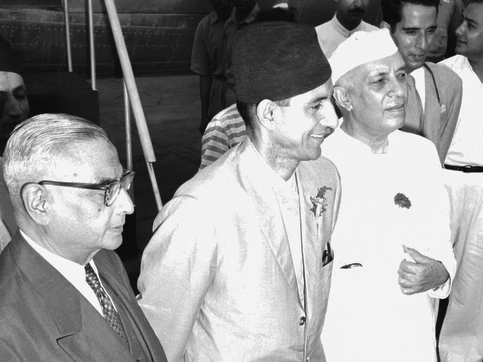
Jawaharlal Nehru welcoming Nepali Prime Minister BP Koirala during his visit to India in 2016
He continued: “After Nehru left, I asked BP, ‘Why did your face suddenly turn red?’ He replied, ‘Look, he’s telling me not to go to China.’”
At Hyderabad House, Nehru had pressured BP not to visit China. But BP refused to comply. He immediately responded to Nehru: “Please do not interfere in such matters.”
For Kumar Mani, who had witnessed the exchange firsthand, Nehru’s farewell speech about BP later seemed truly astonishing.
Politically, BP’s visit to India proved beneficial for Nepal in several respects. The 1950 Nepal–India “Trade and Commerce” agreement had expired, and it was renegotiated in a manner far more favorable to Nepal. India agreed to allow Nepal to conduct trade with third countries. The Indian government also decided to provide an additional Rs 140 million for Nepal’s development.
Even during this visit, Nehru made strenuous efforts to place Nepal within the Soviet sphere of influence as a counterweight to China. He held a two-hour-and-ten-minute confidential meeting with Prime Minister BP Koirala and Home Minister Surya Prasad Upadhyay. But BP did not agree with Nehru’s thinking.
Throughout the visit, BP openly praised Nehru’s personality and his role in helping establish democracy in Nepal. However, he categorically rejected any pressure for Nepal to live under India’s security umbrella.
Before returning home, in an interview with Indian journalists in Chandigarh on 31 January 1960, BP stated: “There is no need for joint military activities between Nepal and India. For two very close neighboring nations like Nepal and India, talk of a military alliance is not only unnecessary—it is downright harmful.”