Kathmandu
Saturday, June 6, 2026





Former Deputy Inspector General (DIG) of Nepal Police, Hemanta Malla Thakuri says: “It cannot be said that the situation is under control”
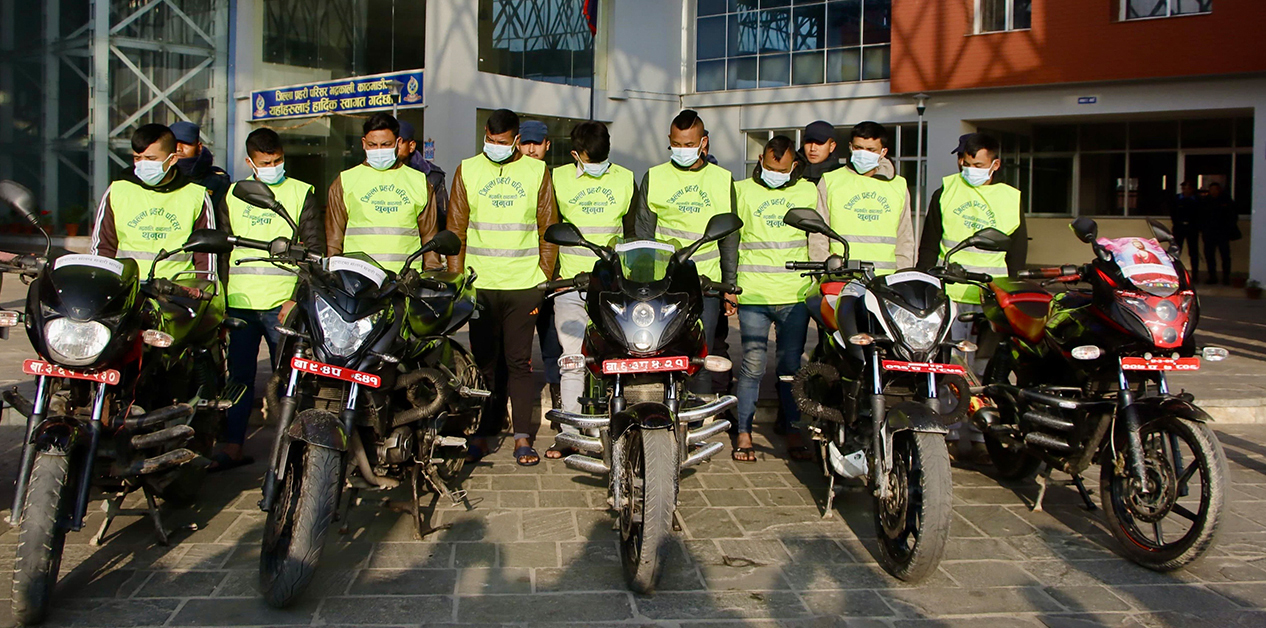
KATHMANDU: At 12:15 a.m. on the night of 29 January 2026, the sound of gunfire echoed through Mulpani, Ward No. 6 of Kageshwari Manohara Municipality. While the settlement was asleep, police fired shots targeting an organized robbery gang that had been terrorizing the capital for the past three months.
The person who was shot was 23-year-old Binay Tamang. He had escaped from police custody at Maharajgunj Circle during the Gen-Z revolt. After that, he was not just a fugitive accused but had become a frequently heard name in robbery and dacoity incidents taking place across the capital.
Originally from Bhumlu Rural Municipality–3, Kavrepalanchok, and currently residing in Kageshwari Manohara–6, Tamang had been arrested in 2022 for theft and later released. However, in the Nepali month of Bhadra last year (mid-August to mid-September 2024), he was arrested again in a robbery case. According to police, after escaping, he formed his own gang. Carrying out robberies at night using cars and motorcycles became the gang’s routine.
According to Kathmandu District Police Complex Spokesperson and Superintendent of Police (SP) Pawan Kumar Bhattarai, the gang led by Tamang was active from 10 p.m. to 2:30 a.m. in areas including Swayambhu, Bauddha, Gaushala, Lainchaur, Budhanilkantha, Kapan, Koteshwor, and Mulpani. They looted mobile phones, cash, gold, and silver—whatever they could find.
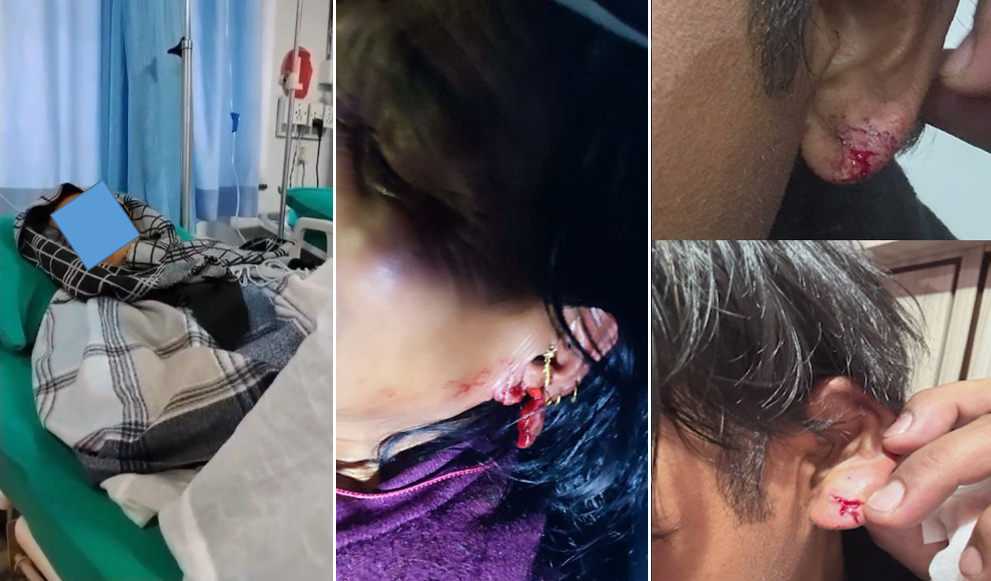
Robbers from Binay Tamang’s gang, who escaped from custody during the GenZ movement, used to snatch jewelry from people’s ears and necks. Photo: Nepal Police
To capture the gang, police prepared a nighttime operation. Following intelligence inputs, police finally encountered the gang on the night of January 29 in Mulpani. Tamang was shot in the leg. He, along with 10 others, was arrested.
“Police fired shots to bring them under control after the group attacked the police during the arrest,” SP Bhattarai said.
The Tamang-led gang snatched gold ornaments from people’s necks and ears and also looted cash. According to police, while pulling off gold earrings, the earlobes of three people were torn. One woman had to be hospitalized after her nose ring was forcefully pulled. Several victims were found to have injuries on their faces and necks.
For the robberies, the gang had rented one taxi and one car, and also used five motorcycles.
Investigations show that since the Gen-Z revolt, the gang was involved in 22 incidents in Kathmandu. In those incidents, gold ornaments and cash worth approximately Rs 4.8 million were looted. So far, 27 victims have contacted the police.
“Eighteen formal complaints have been filed against them. Other victims are still coming forward,” SP Bhattarai said.
From robbery to murder: Police ‘sweep operation’
Prisoners who escaped from jails during the Gen-Z revolt have not only been involved in robberies but also in heinous crimes. Two murder cases involving fugitives from Nakkhu Prison have made the security challenge more serious.
One such fugitive, Akash Magar, had escaped from Nakkhu Prison on September 9, 2025 during the Gen-Z revolt. After being sentenced to five years in prison in a drug-related case, he escaped and later murdered his own friend. He was arrested from Rolpa on 22 December 2025 and has since been sent back to prison.
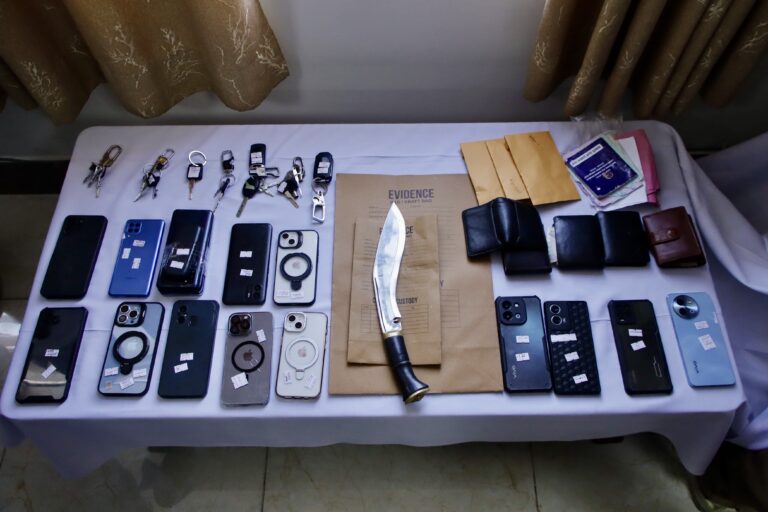
Items seized from Binay Tamang’s gang, who was arrested on 29 Jan. Photo: Nepal Photo Library
On 21 September 2025, the body of 31-year-old Manisha Ghyawa Tamang of Panauti Municipality–12, Kavrepalanchok, was found. Her body was discovered buried in a pit dug in a barren field about 150 meters away from her home.
According to Kavre SP Komal Shah, Manisha was murdered by her own husband, 33-year-old Santa Bahadur Tamang. Santa Bahadur had also escaped from Nakkhu Prison on 10 September 2025. He had been serving a three-year sentence in a rape case. After escaping, he returned home, and during a dispute with his wife over the matter, he killed her. He has also been sent back to prison.
Over 4,400 prisoners still at large nationwide
During the Gen-Z revolt, 14,559 prisoners escaped from 28 prisons across the country. The Ministry of Home Affairs and the Department of Prison Management had called on the fugitives to return by 6 October 2025.
According to the department, 10,145 prisoners have since returned to prison. However, 4,404 prisoners are still outside jail. Department Spokesperson Chomendra Neupane said that some returned voluntarily, while others were arrested and handed over by police.
“The fact that such a large number of prisoners are still outside prison is a matter of concern,” he said.
An incident has also been uncovered in which even a juvenile fugitive from prison was involved in motorcycle theft. According to Police Headquarters, such incidents have occurred in Sunsari, Udayapur, Jhapa, Mahottari, Kavrepalanchok, Kathmandu, Kaski, Dang, and Kailali.
According to police data, two fugitives have committed murder, while one has committed attempted murder.
“Once outside prison, they have been found involved in crimes ranging from vehicle theft to murder and drug trafficking,” said Central Police Spokesperson and Deputy Inspector General (DIG) Abhi Narayan Kafle.
Police Headquarters has launched a ‘Sweep Operation’ to arrest fugitive prisoners. “Police offices across the country are engaged in campaigns to arrest fugitives. They are on notice and will gradually be arrested,” Kafle said.
“It cannot be claimed by security agencies that the situation is under control at this moment. Every fugitive prisoner is a potential crime risk,” said former Deputy Inspector General of Police Hemant Malla Thakuri. “Conducting operations without intelligence is like fishing in muddy water. Investment must be made in intelligence gathering. During the Gen-Z rebellion, the security apparatus failed precisely due to a lack of intelligence.”
Police have not been able to provide an exact figure of weapons that were looted or went missing during the Gen-Z revolt. However, they claim that 745 weapons have been recovered so far.
According to Thakuri, these weapons and fugitive prisoners pose a high risk of being used during elections. “When police are busy preparing for election security, they may seize the opportunity,” he said. “Effective mechanisms for risk classification and tracking fugitives are necessary. Otherwise, incidents caused by fugitives can recur at any time.”