Kathmandu
Sunday, July 12, 2026





The national flag-carrier has failed to utilize flight capacity due to weak management and aimless strategy
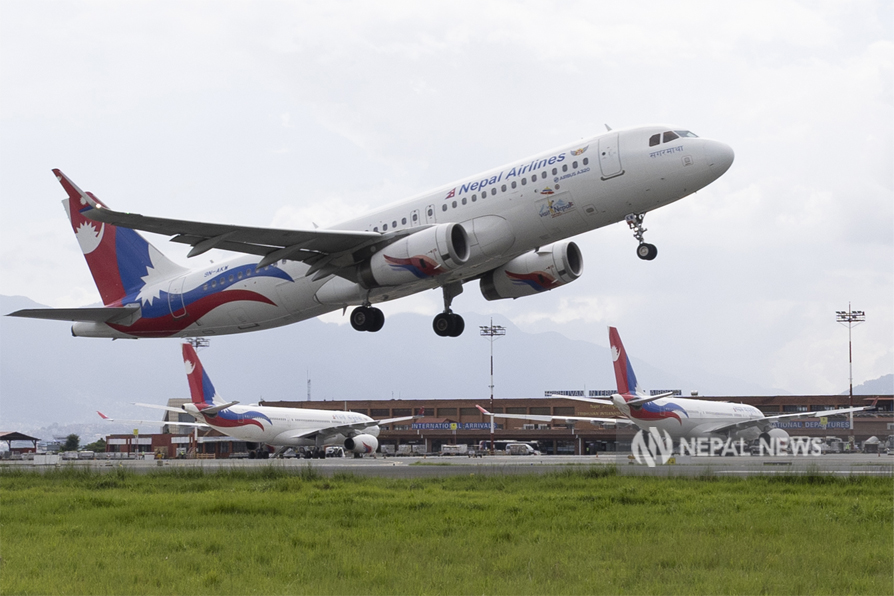
KATHMANDU: On 1 January 2026, an Airbus A330 wide-body aircraft of Nepal Airlines Corporation (NAC), with the call sign ALZ, flew from Narita Airport in Japan to Kathmandu. After flying for eight hours and forty minutes and landing in Kathmandu, the aircraft was parked at Tribhuvan International Airport—because it had no further destination scheduled that day.
The same aircraft operated a Dubai–Kathmandu flight on 4 January and was again parked after arrival. In other words, the total flight time that day was only three hours and forty-five minutes.
The situation is similar for the other wide-body aircraft. The second Airbus A330, with the call sign ALY, flew Doha–Kathmandu and Kathmandu–Dubai on 5 January and stayed overnight in Dubai. That day, the aircraft flew for only nine hours and twenty minutes in total.
An analysis of NAC’s flight schedule shows that neither of the two A330 wide-body aircraft (each with a seating capacity of 274) flies more than an average of eight hours a day. However, this aircraft can be operated for up to 20 hours daily. Even after allocating six hours for routine maintenance and flight preparation, an A330 can still be flown up to 18 hours a day. Despite this, the corporation is using only about 40 percent of the wide-body aircraft’s capacity.
According to NAC’s internal calculations, the two A330 aircraft generate a total annual revenue of Rs 12 billion.
If daily flight hours could be increased to 16 hours, revenue would naturally increase. Despite the clear financial benefit, why has NAC been unable to operate the A330 aircraft at full capacity?
NAC Spokesperson Archana Khadka cites the lack of new destinations as the reason. She says, “Operating an aircraft at full daily capacity means adding new destinations. If we could add South Korea alone, the A330 could be flown up to 15 hours a day.”
Plans to begin flights to South Korea were made two years ago, but they have remained only on paper.
Currently, Narita (Japan) is the longest-haul destination served by NAC’s wide-body aircraft. Besides Narita, the A330 flies to Doha, Dubai, and Delhi. NAC currently operates flights to 12 international destinations: Kathmandu, Dubai, Doha, Riyadh, Delhi, Mumbai, Bengaluru, Guangzhou, Hong Kong, Bangkok, Kuala Lumpur, and Narita.
Due to a lack of competitive management and a clear strategic vision, NAC’s aircraft are not being operated according to their capacity, leading to revenue losses. The direct beneficiaries of this situation are foreign and private airlines.
A total of 30 airlines—27 foreign and three Nepali—operate international flights to and from Nepal. They fly from Nepal to 28 destinations: eight in South Asia, seven in the Gulf region, four in Southeast Asia, eight in East Asia, and one in Europe. Their revenues continue to grow. In 2024 alone, foreign and private airlines earned a total of Rs 150 billion from Nepal.
Former NAC pilot and former general manager Kul Bahadur Limbu claims, “When I was Managing Director, the Boeing 757 flew 18 to 20 hours a day—I myself was the pilot. Everyone from the corporation to the government knows the solution. It appears that instead of making profits by flying NAC aircraft more, everyone is indirectly focused on ensuring profits for private airlines.”
This market situation has raised serious questions not only about capacity utilization but also about the commercial use of wide-body aircraft purchased with public investment.
Another former general manager, Sugat Ratna Kansakar, also says that the A330 wide-body aircraft are flying far below their daily capacity. Claiming that the wide-body aircraft flew up to 12 hours a day during his tenure, he says, “Flying only eight hours a day is extremely low. At such low utilization, it becomes difficult even to repay the loan and interest taken to purchase the aircraft.”
According to NAC’s business plan, daily operation of 16 hours had been planned and approved even before purchasing the aircraft. The business plan for operating two wide-body aircraft was approved on 24 September 2016. According to the approved schedule, flights to Japan, Saudi Arabia, Guangzhou (China), and South Korea were to begin by March–April 2019 (Chaitra 2075). However, flights to South Korea have not started yet.
Flights to Narita began on March 2, 2020. Flights to Guangzhou began only on 27 September 2025. NAC currently operates three flights per week to Guangzhou.
Same situation for narrow-body aircraft
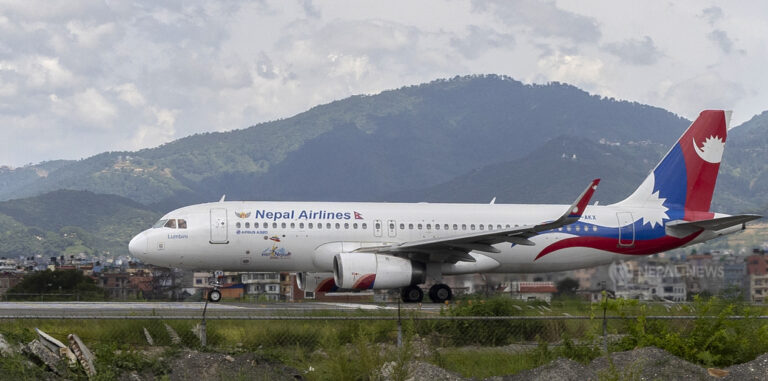
NAC has two Airbus A320 narrow-body aircraft, each with a daily flight capacity of 16 hours. Of these, one aircraft flies about 11.5 hours a day, while the other flies only seven hours a day.
According to the schedule provided by NAC, one A320 (AKX) flies 80 hours per week, while the other (AKW) flies only 48 hours per week. These aircraft mostly operate on routes to Delhi, Kuala Lumpur, Hong Kong, and Mumbai. According to NAC’s balance sheet, the two A320 aircraft generate around Rs 6 billion in annual revenue.
The main reason the A320 aircraft are not flown at full capacity is also the lack of new destinations. However, even on existing routes, insufficient marketing and promotion have resulted in low demand.
For example, NAC operates three flights per week to Hong Kong, yet about 60 percent of the seats remain empty. In the entire Nepali month of Mangsir (mid-Nov to mid-Dec 2025), NAC carried only 1,148 passengers on 24 round-trip flights on the Kathmandu–Hong Kong–Kathmandu route. If a narrow-body aircraft with a seating capacity of 158 had been filled, those 24 flights should have carried 3,792 passengers. This data shows that more than half the seats were empty on flights to and from Hong Kong in Mangsir.
Nepal Airlines Corporation/Nepalnews/File photo
There is potential for narrow-body aircraft to increase flights to Qatar, Dubai, Saudi Arabia, and India—countries that are major labor destinations with high passenger demand.
“Discussions are ongoing within management on how to increase flights to labor-destination countries,” Spokesperson Khadka says. “We are consulting with the government.”
Nepal already has air service agreements with 11 Indian cities, but NAC currently flies only to Delhi, Mumbai, and Bengaluru.
Fewer flights even in approved schedules
Evidence that NAC’s aircraft are not flying at full capacity can be seen in the flight schedules submitted to the Civil Aviation Authority of Nepal (CAAN) for approval. Every airline must submit its flight schedule for the next six months for approval.
NAC has four Airbus aircraft: two A320s and two A330s. According to CAAN Spokesperson Gyanendra Bhul, NAC has received approval for its six-month flight schedule from 26 October 2025 to 28 March 2026. This schedule shows a total of 372 flights by all four aircraft over six months, covering 12 destinations. According to this data, NAC aircraft fly to each destination an average of only 15 times per month.
NAC’s main domestic competitor, Himalaya Airlines, has two A320 and two A319 aircraft with seating capacities of 144 and 180. Himalaya Airlines operates 416 flights over six months to 11 destinations.
During the same period, Qatar Airways operates 224 flights on the single Doha–Kathmandu route. Five different Qatar Airways aircraft—with seating capacities of 144, 260, 305, 311, and 267—operate on this route. Air India operates three types of aircraft with seating capacities of 164, 180, and 188, completing 336 Delhi–Kathmandu–Delhi flights over six months.
NAC Spokesperson Khadka argues that increasing flight hours and frequency would affect maintenance schedules.
“The flight hours of the A320 are satisfactory; the A330 flies less,” she says. “NAC has fewer aircraft, and it cannot choose to fly only on profitable routes.”
However, this argument is contradicted by Himalaya Airlines, which has the same number of aircraft as NAC yet operates 44 more flights over the same six-month period.
Weak prospects for improvement
According to the 60th Annual Report (FY 2021/22) of the Office of the Auditor General, 48 percent of NAC’s international flights were not operated. In that year, NAC had set a target of 2,873 international flights but operated only 1,489.
Due to failure to achieve expected revenue, NAC has been unable to repay loan installments—both principal and interest—taken from the Employees Provident Fund and the Citizen Investment Trust, for which the government had provided guarantees.
To purchase one A320 aircraft, the government borrowed Rs 10.49 billion from the Employees Provident Fund on 17 June 2013.
Similarly, to purchase two A330 wide-body aircraft, loans totaling Rs 24 billion (Rs 12 billion each) were taken in 2017 from the Provident Fund and the Citizen Investment Trust.
Because NAC failed to implement its business plan, it has been unable to repay these loans. For example, under the loan agreement for the A330 aircraft, NAC failed to pay two installments in FY 2018/19 and one installment in FY 2019/20. Due to non-payment, interest and penalties amounting to Rs 1.8174 billion have been capitalized, increasing the financial burden. Audits for fiscal years 2023 and 2024 (2080 BS and 2081 BS) are still pending.
The Auditor General’s report states: “This indicates that the corporation has failed to generate income as per its business plan, has not been able to identify and operate additional routes according to the full capacity of wide-body aircraft, and has not effectively carried out aircraft operation and management.”
More than three years have passed since the release of that report, yet no improvement in capacity utilization is visible. The prospects for immediate improvement also appear weak.