Kathmandu
Sunday, July 12, 2026





In the past, only 17 megawatts of electricity were supplied to nine districts of Karnali. Now, up to 200 megawatts of electricity will be available
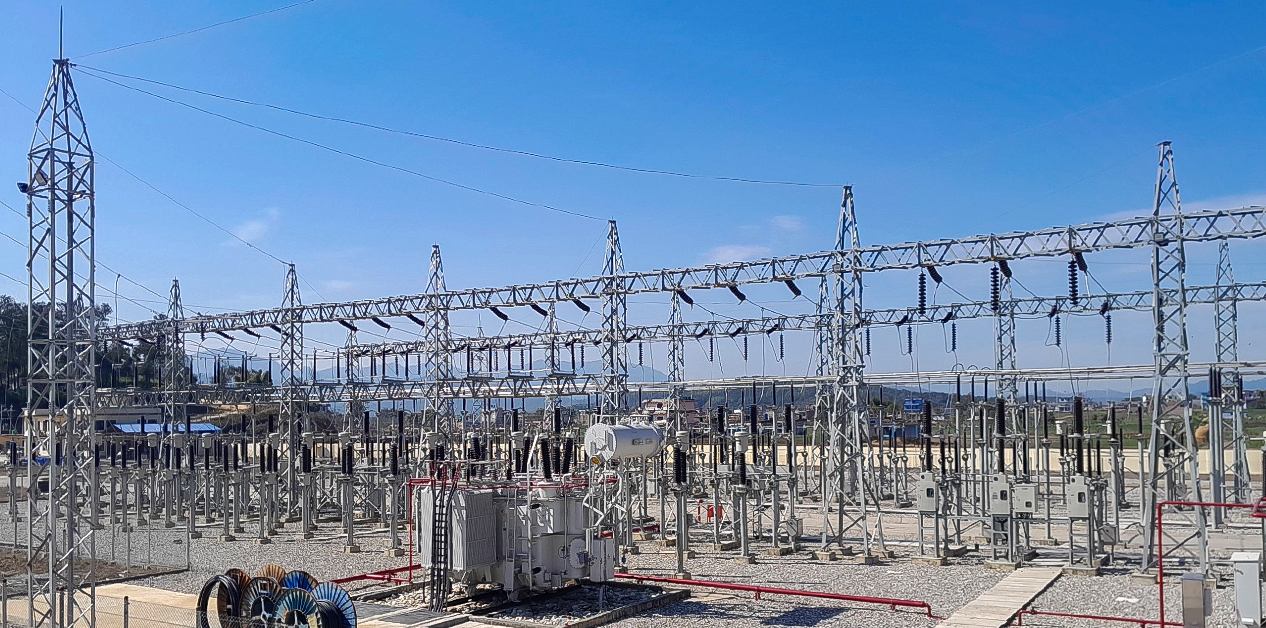
With the completion of the Kohalpur–Surkhet 132 kVA electricity transmission line, the people of Karnali will now be able to use significantly more electricity. Previously, residents of nine districts of Karnali Province received only 17 megawatts of power, but now they will have access to up to 200 megawatts. This development has brought a new spark of hope to the eyes of local residents. “We had been suffering for nearly four decades due to the old Kohalpur–Surkhet 33 kVA transmission line. After the 132 kVA transmission line was connected, we finally felt relief,” says Birendranagar-based Tarka Bahadur Shahi, provincial president of the Hotel Entrepreneurs Association.
The construction of the substation at Subbakuna in Surkhet was completed on 1 February 2026. “During the dry and hot seasons, we were forced to stock fuel for generators. We were constantly troubled by frequent power cuts,” he says. “Now, with the operation of the high-capacity transmission line, we will receive sufficient electricity.”
The Kohalpur–Surkhet 33 kVA transmission line, which had been supplying electricity to most districts of Karnali, was built in 2045 BS (1988/89 AD). When a visit by then-King Birendra to Surkhet was scheduled, electricity lines were hastily installed in Surkhet using small city poles.
Previously, electricity supply was limited to the Surkhet Valley, and other districts were not electrified. Birendranagar also had a low population density at the time, and the 33 kVA line was sufficient to meet demand. However, as electricity distribution gradually expanded to the hilly districts of Karnali, power shortages began to occur.
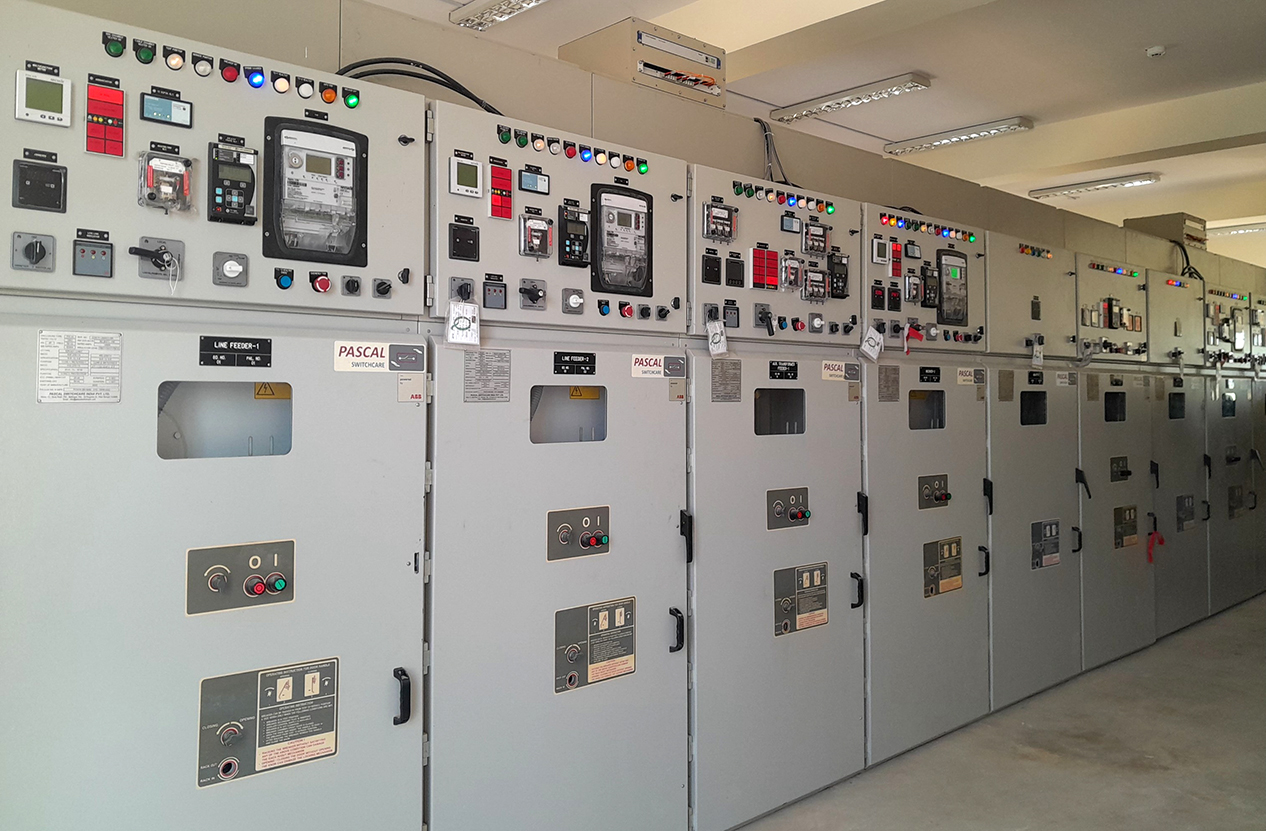
Equipment at the Surkhet substation under the Kohalpur–Surkhet 132 kV electricity transmission line.
Most sections of the 33 kVA transmission line from Kohalpur to Surkhet passed through a national park. As a result, falling tree branches during rain and wind frequently disrupted the line. Now, however, the newly operational 132 kVA transmission line supplies 200 megawatts of electricity to Surkhet, eliminating the long-standing problem of low voltage. Engineer Hitesh Jaiswal, involved in the Kohalpur–Surkhet 132 kVA transmission line project, says, “Previously, consumers were receiving only 25–26 volts, but now they will receive 32–33 volts.”
A project that took six years
Had the Kohalpur–Surkhet 132 kVA transmission line project been completed as per the original contract, it would have been finished within four years. The contract was signed in the Nepali month of Bhadra 2077 BS (mid-August to mid-September 2020). According to the agreement, the Indian construction company RS Infra-Project was supposed to complete and hand over the project by Bhadra 2079 BS (August/September 2022). However, disputes related to tree felling in Bardiya National Park and land acquisition caused delays, resulting in the project being completed three and a half years late.
Although the transmission line construction was delayed, Nepal Hydro Limited, which was responsible for building the substation in Birendranagar, completed its work on time. All transformers were installed at the substation by the Nepali month of Magh 2081 BS (mid-January to mid-February 2025). “According to the DPR, 8,000 trees were supposed to be cut within the project area. By the time the contract was finalized, an additional 6,000 trees had to be cut. Getting cabinet approval for cutting a total of 14,000 trees was extremely difficult,” says Project Chief Rabi Kumar Chaudhary.
Earlier, private landowners within the transmission line corridor refused to accept compensation at government rates, creating further complications. Land disputes arose mainly at four locations between Kohalpur and Birendranagar: Baniyabhar and Gabhar in Banke, and Chhinchu and Birendranagar in Surkhet. While disputes in Surkhet were resolved relatively easily, locals in Banke took the matter to court. Construction resumed only after the court ordered facilitation of the project without obstruction. “During the six-year period, we faced challenges such as the COVID-19 pandemic, land acquisition issues, and tree felling hurdles. Despite all this, we are happy to have successfully completed the transmission line,” Chaudhary says.
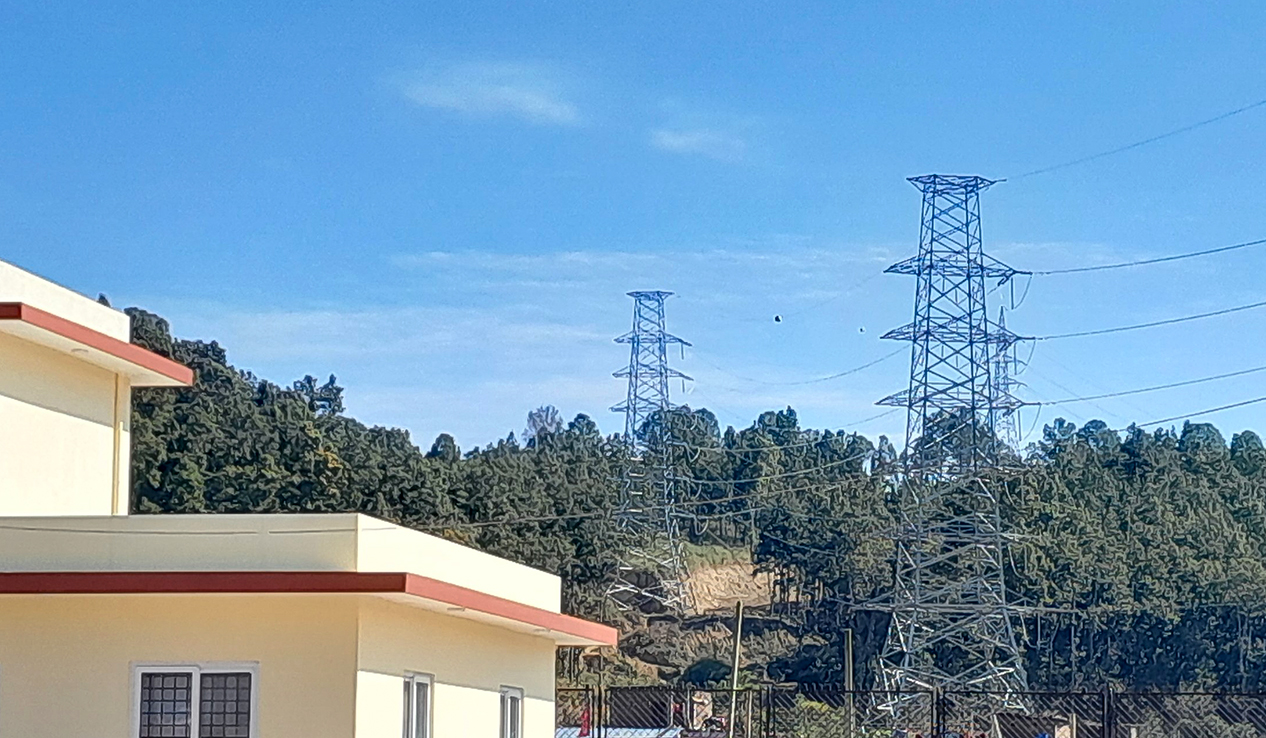
Kohalpur–Surkhet 132 kV electricity transmission line.
The Kohalpur–Surkhet 132 kVA transmission line has been constructed entirely with Nepal’s own investment, jointly funded by the Government of Nepal and the Nepal Electricity Authority. The total project cost is Rs 1.45 billion—Rs 700 million for the transmission line and Rs 750 million for the substation. This transmission line will directly benefit nine districts of Karnali Province: Surkhet, Salyan, Rukum West, Jajarkot, Dolpa, Kalikot, Jumla, Dailekh, and Mugu.
With the construction of the high-voltage line from Kohalpur to Surkhet, electricity supply will become more reliable for consumers, according to Project Chief Chaudhary. “When the 33 kVA line passed through the national park, power supply was frequently disrupted and voltage was inadequate. Due to this, electricity generated by small hydropower projects in Karnali often went to waste. Now that problem has been resolved.”
Engineer Jaiswal explains that the Surkhet substation has four-line feeders—two transmitting electricity toward Kohalpur and two toward Dailekh.
“The substation has two transformers with a capacity of 30 MVA each. Electricity will be distributed to 33 kVA substations through four feeders from this substation.”
Nepal Electricity Authority’s Managing Director Hitendra Dev Shakya expressed hope that the arrival of quality 132 kVA electricity in Surkhet would encourage industrial investment. Due to poor power quality, large industries had previously failed to develop in the province. “Some time ago, we organized a program in Surkhet to honor the highest electricity-consuming customers. At that time, only one industrialist fell into that category; the rest were community consumers,” Shakya said during his visit to Surkhet on Sunday. “Industries may not have been established due to poor power quality. Now that the 132 kVA transmission line has arrived, we expect improvements in industrial establishment and expansion.”
There is a plan to extend the 132 kVA transmission line to Dailekh within the next year. Preparatory work for the Surkhet–Dailekh 132 kVA transmission line has already begun under the Surkhet-based project office. The total estimated cost of this project is Rs 1.3 billion.
The contract for constructing the transmission line from Surkhet to Chuprā in Dailekh, worth Rs 750 million, has been awarded to Sigma Con (P) Ltd and MSPL JV. However, permission for tree felling has not yet been granted. Towers have already been constructed in areas where tree cutting is not required. “We have submitted the report to the department for tree felling approval, but permission has not yet been granted,” says Project Chief Chaudhary. “Our plan is to extend the transmission line to Dailekh within a year. Let’s see how positively the work progresses.”
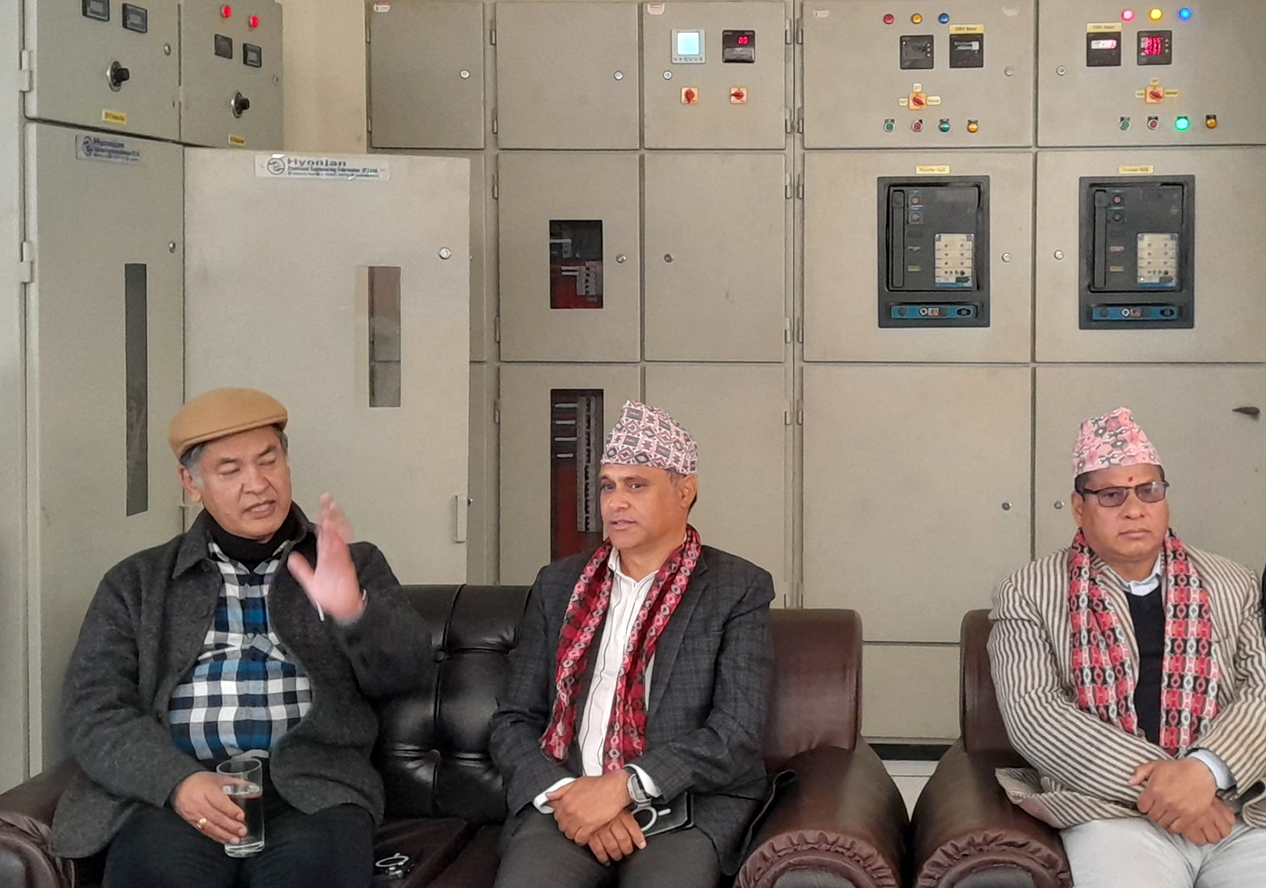
A team led by the Nepal Electricity Authority’s Managing Director Shakya (first from left) during an inspection visit after the completion of the Kohalpur–Surkhet 132 kV electricity transmission project.
Construction of the substation at Chuprā in Dailekh is also progressing rapidly. Mahavir Shree construction company has been awarded the contract, with a project cost of Rs 550 million. The under-construction Surkhet–Dailekh 132 kVA double-circuit transmission line is planned to be extended up to Jumla. According to Managing Director Shakya, the process for constructing the transmission line from Dailekh to Jumla via Kalikot has already begun through the Project Management Directorate. “A separate office will be established for the project beyond Dailekh,” he says.
While the Kohalpur–Surkhet transmission line is being built with Nepal’s own investment, making the initial phase relatively smooth, the Dailekh–Jumla project may take longer due to the need to comply with external regulations. “The work up to Dailekh will be constructed with funding from the Government of Nepal and the Nepal Electricity Authority, so there won’t be major issues with preliminary processes like environmental impact assessments,” Shakya explains. “However, the project beyond Dailekh will be built with loan assistance from the Asian Development Bank (ADB), which means additional external environmental assessment requirements must be followed.”