Kathmandu
Sunday, July 5, 2026





The regulator – the Civil Aviation Authority of Nepal – has been Ineffective, while the government has been indifferent
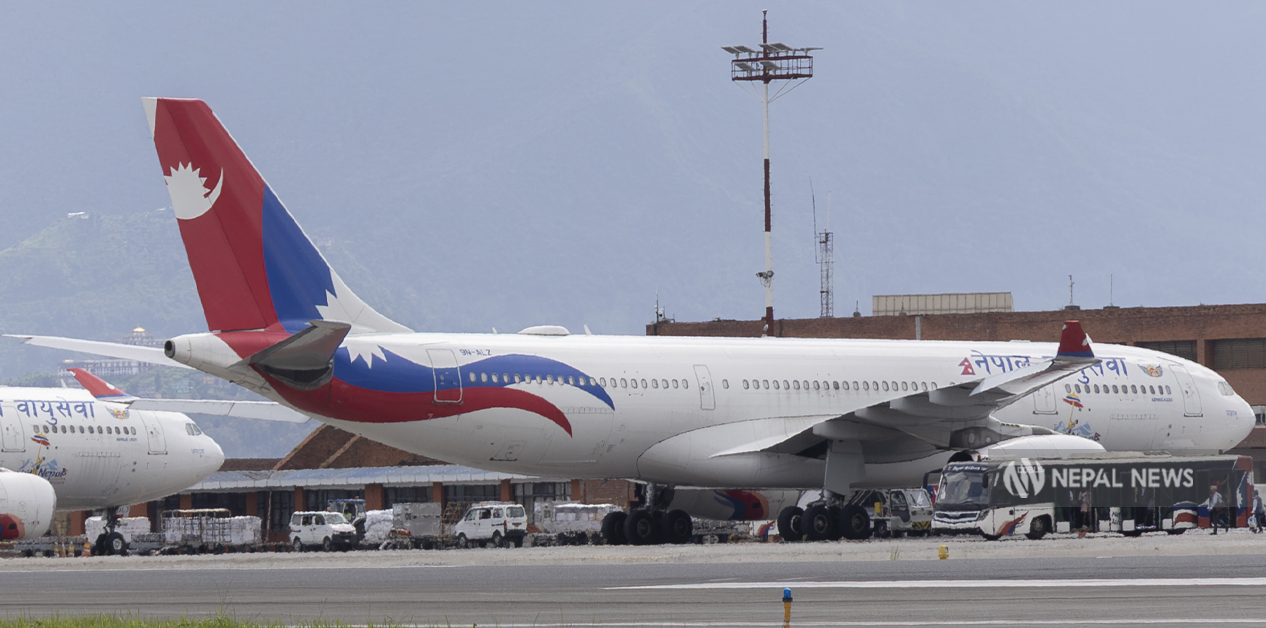
KATHMANDU: Nepal and South Korea signed an air services agreement 21 years ago, on 21 September 2004. Over the past two decades, there has been no shortage of speeches and even blueprints about launching direct flights from Nepal to Korea. Three years ago, in Falgun 2079 BS (mid-February to mid-March 2023), Nepal Airlines Corporation (NAC) even formed a safety audit subcommittee under the coordination of Deputy General Manager (Engineering) Bikram KC. Yet, to this day, no Nepali aircraft has landed on Korean soil.
According to NAC Spokesperson Archana Khadka, the corporation is still requesting government support to make the Korea flight a reality.
“It’s not that we don’t have plans to expand flights to Korea,” Khadka says. “This is not the responsibility of the corporation alone; the policy level is equally responsible. We are continuously making requests to the government.”
NAC’s wide-body A330 aircraft can technically be flown for up to 20 hours a day. Even after allocating six hours for routine maintenance and flight preparation, an A330 can still operate for up to 18 hours daily. However, the corporation is currently flying these aircraft for only seven to eight hours a day on average. According to Khadka, operating aircraft at full capacity essentially means adding new destinations. If Korea were added as a destination, she says, the wide-body aircraft could be flown for up to 15 hours a day.
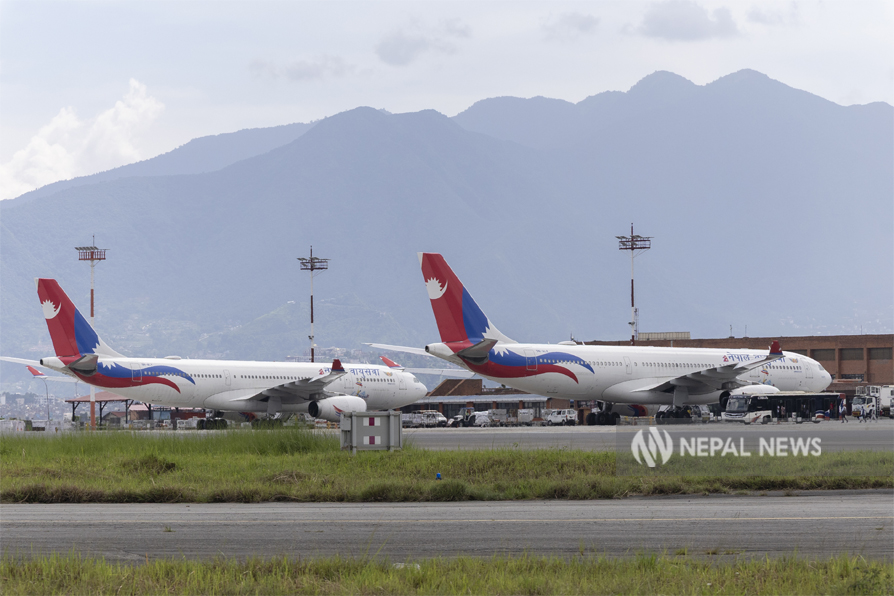
Nepal Airlines aircraft parked at Tribhuvan International Airport. Photo: Bikram Rai
Although the corporation is willing to operate flights to Korea, the process stalled after the Korean aviation regulator imposed a condition that permission would only be granted following an on-site inspection of Nepal’s aviation safety standards by the Civil Aviation Authority of Nepal (CAAN). CAAN, however, has consistently rejected this condition.
CAAN Information Officer Gyanendra Bhul says the Korean regulator is not allowed to inspect the authority.
“We have clearly informed the Korean side that no external body other than the International Civil Aviation Organization (ICAO) is permitted to audit CAAN,” he says.
In addition to inspecting CAAN, the Korean regulator also wanted to review NAC’s aircraft operations and technical aspects. Accordingly, a safety, operational capacity, and technical evaluation report of Nepal Airlines was prepared in line with ICAO standards. However, the Korean regulator refused to recognize this report as well.
At present, the longest route operated by NAC’s A330 wide-body aircraft is to Narita, Japan. Besides that, the A330 operates flights to Doha, Dubai, and New Delhi. Additionally, NAC aircraft fly to Saudi Arabia, Mumbai, Bengaluru, Guangzhou, Hong Kong, Bangkok, and Kuala Lumpur.
Flights limited to agreements
Like South Korea, Nepal has signed bilateral air service agreements with 42 countries, including several in Europe, at various points in time. However, regular air services from Nepal to these countries have never materialized.
During the tenure of executive chairman Ubaraj Adhikari (25 October 2021 24 October 20252), several flight plans were introduced, citing that they would benefit the corporation. The most ambitious among them was a plan for direct flights from Nepal to Australia. Nepal signed an air services agreement with Australia in 2019, but the plan has yet to be implemented.
A Nepal Airlines plane carrying out a rescue flight from Nepal to Australia during the COVID-19 pandemic (6 May 2020). Photo courtesy: Australian Embassy
“I brought forward the plan; it was up to the management to implement it,” says Adhikari, who retired last October. Former NAC General Manager Sugat Ratna Kansakar notes that Nepal’s A330 aircraft had flown rescue flights to Australia during the COVID-19 pandemic.
“The failure to start regular flights even now is a management weakness,” he says.
Apart from this, NAC’s narrow-body aircraft could expand flights to Qatar, Dubai, Saudi Arabia, and India. These are major labor destinations for Nepali workers, meaning there would be no shortage of passengers, Kansakar says. According to him, Nepal has air service agreements for flights to 11 Indian cities, but currently NAC operates flights only to Delhi, Mumbai, and Bengaluru.
The primary reason Nepal Airlines has been unable to fly to Europe is the European Union’s blacklist. The EU placed Nepal on the blacklist in 2013, citing weaknesses in aviation safety, regulation, oversight, and accident investigation.
“Everyone, from the Prime Minister to the Commission for the Investigation of Abuse of Authority, knows about the mismanagement within Nepal Airlines, but no one shows the will to correct it or curb corruption,” says former NAC general manager Kul Bahadur Limbu.
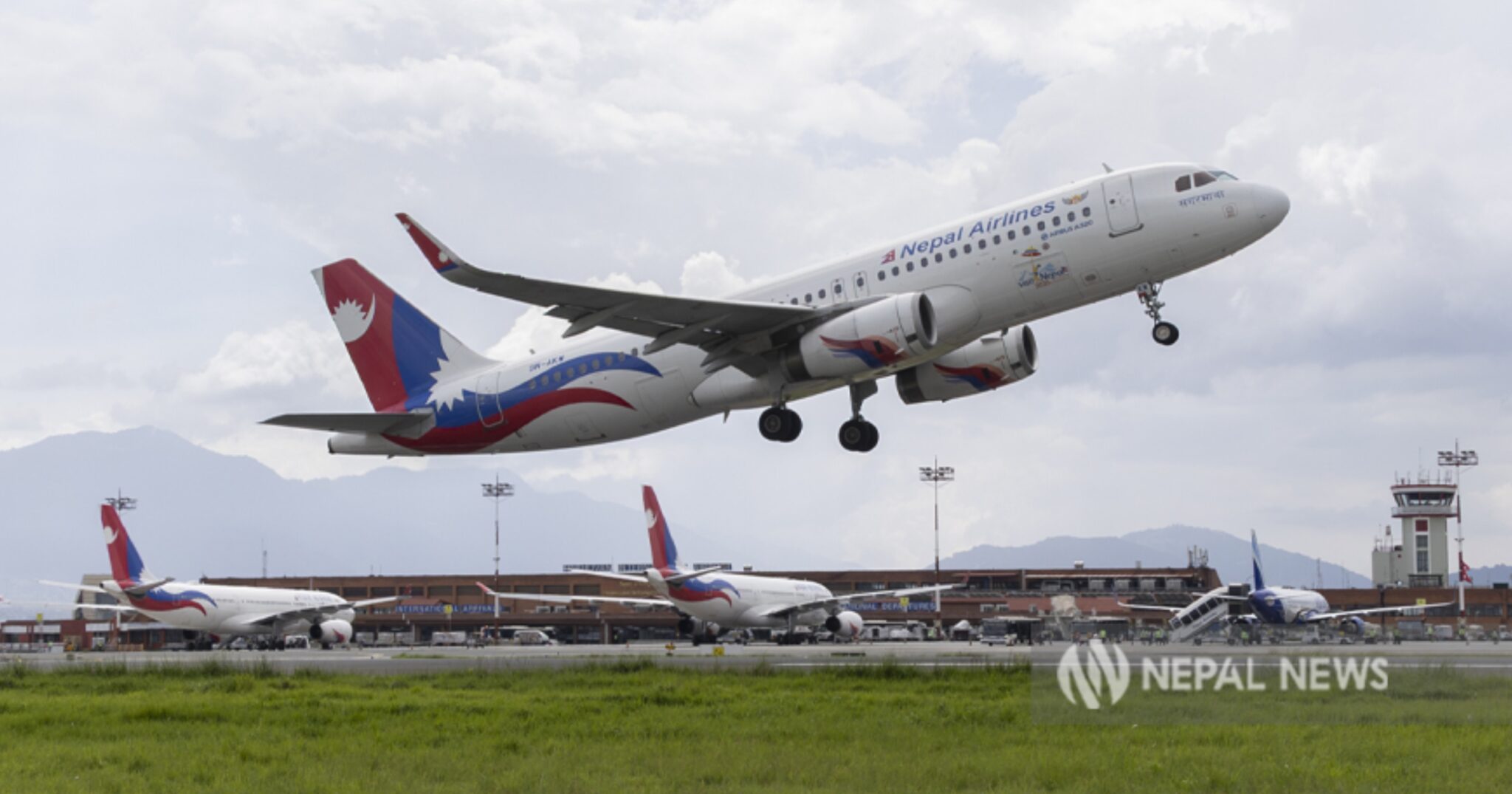
Nepal Airlines Corporation’s Everest and Makalu and Annapurna aircrafts parked at Tribhuvan International Airport taking off. Photo: Bikram Rai
The Auditor General’s Report 2079 (2021/22) has also described the failure to operate flights despite having air service agreements as a result of inactivity by both the government and the regulator.
“Although bilateral and multilateral agreements have been signed with foreign countries to operate international air transport services, the inability to establish the necessary coordination and operate air services indicates a lack of active engagement by both the Government of Nepal and the Authority (CAAN),” the report states.
Shortage of pilots
Another major reason behind the limited operation of Nepal Airlines aircraft is a shortage of pilots. According to technical spokesperson Devendra Pun, the corporation has had to reduce the number of some international flights due to a lack of pilots for its larger aircraft.
As per NAC’s internal standards, operating two wide-body A330 aircraft requires 17 pilot pairs, including pilots and co-pilots. Currently, however, the corporation has only 11 pilots and six co-pilots. A similar situation exists with the A320 aircraft: while 16 pilot pairs are required, NAC currently has only 10 pilots and 12 co-pilots.
Former general manager Madan Kharel says that even under normal circumstances, aircraft flying medium-haul international routes require at least two pilot pairs.
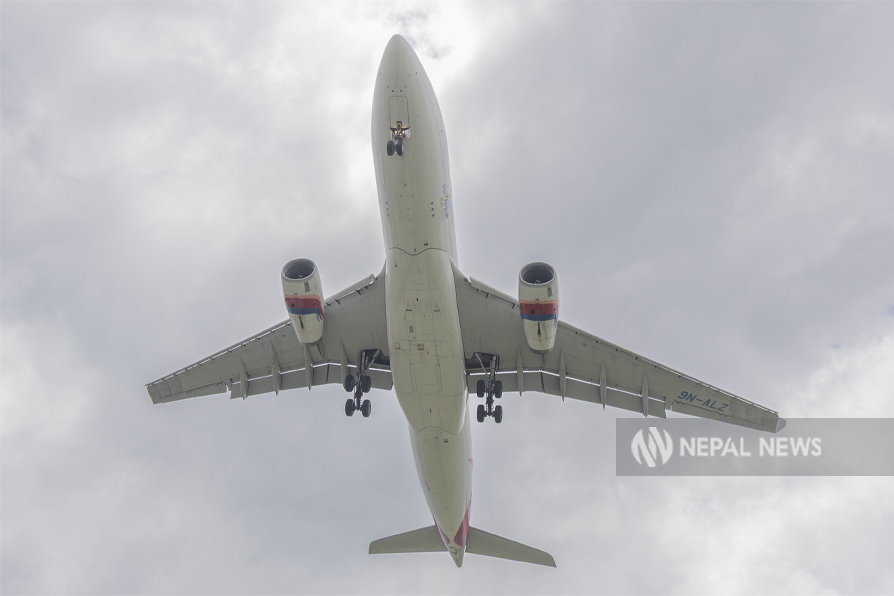
Nepal Airlines’ wide-body Makalu aircraft. Photo: Bikram Rai
“When you factor in regular leave, training, illness, or emergencies, even that becomes insufficient,” he says.
According to Kharel, pilot arrangements should be made at least two years before aircraft are purchased.
“In Nepal, even the decision on which aircraft to buy is often not finalized, and that also creates problems in pilot management,” he says.
Under international standards, a pilot is allowed to fly a maximum of 10 hours per day and 100 hours per month. This means a pilot must take mandatory rest for nearly half of the month.