Kathmandu
Monday, July 6, 2026





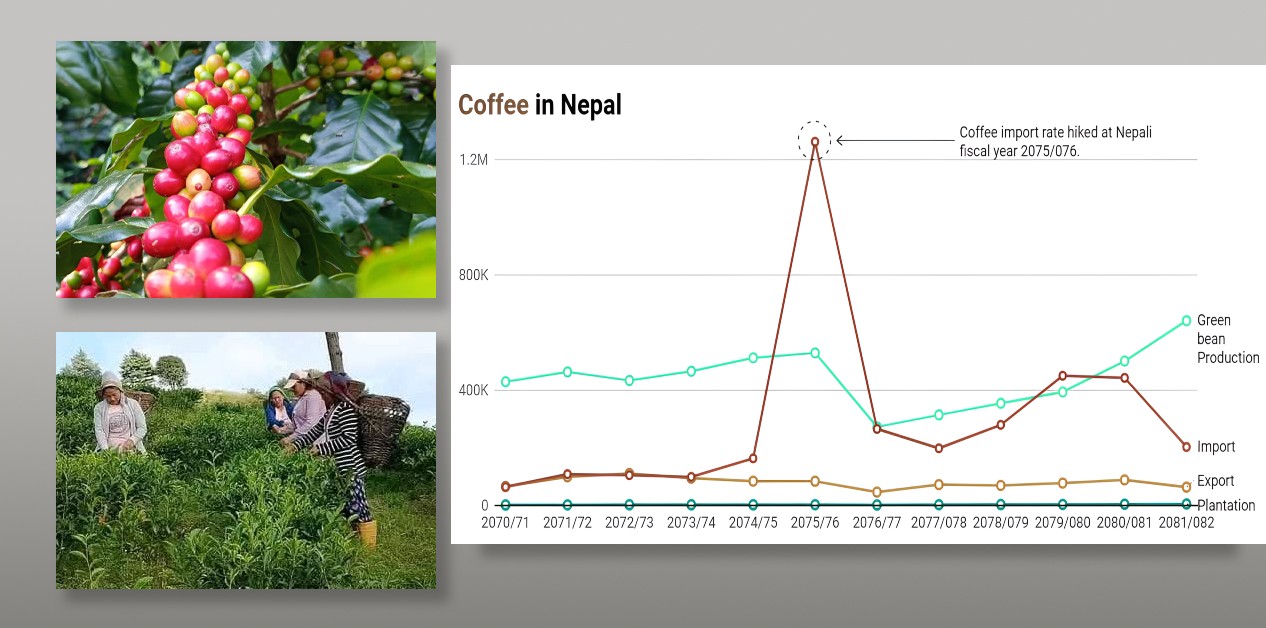
The average annual coffee demand in Nepal stands at 681,000 kg, whereas the average annual production is 441,000 kg
“Black or milk?”
Until about a decade ago, this single question summed up the Nepali urban society’s understanding of coffee. In recent years, however, coffee culture has taken such deep root in city life that enthusiasts now have distinct preferences: Americano, cappuccino, or latte. This evolving coffee culture has shaped both demand and the market.
As the number of coffee drinkers grows, domestic production has failed to meet demand, forcing Nepal to import coffee worth tens of millions of rupees every year.
In the last fiscal year 2024/25, Nepal imported 203,000 kilograms of coffee worth RS 144.1 million, according to the Department of Customs. Deepak Khanal, director of the National Tea and Coffee Development Board (NTCDB), says Nepal remains import-dependent because domestic production is low. “Coffee consumption has surged rapidly, and there is no alternative to imports to meet demand,” he says.
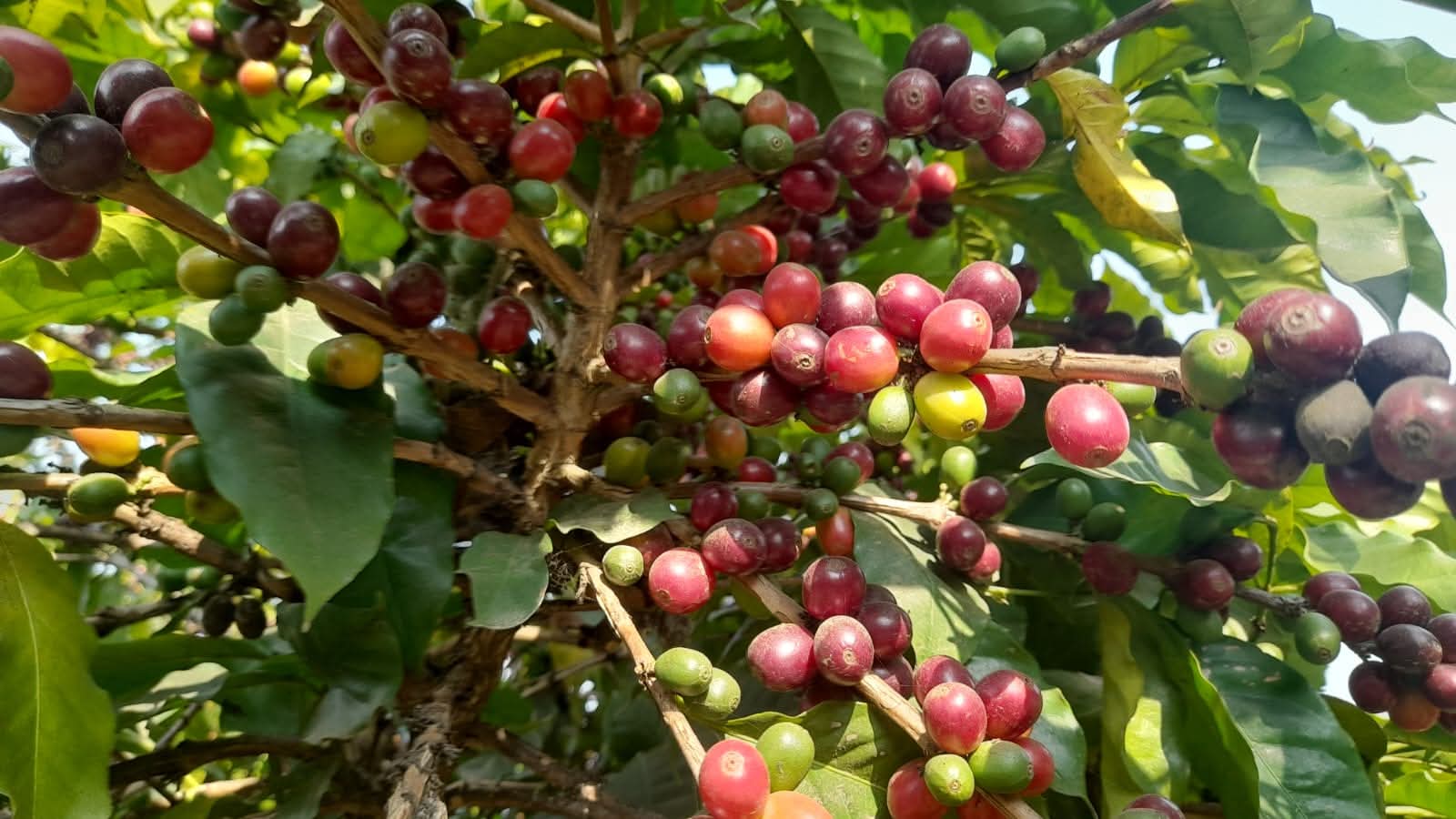
Fruity coffee. Photo: National Tea and Coffee Development Board Facebook.
The first specialized coffee shop in Nepal is considered to be Himalayan Java, which opened in Kathmandu in 1999. Taking that as a reference point, it has been more than two and a half decades since coffee became commercially integrated into everyday life. During this time, coffee shops have multiplied across Kathmandu’s streets and alleys, and coffee has become an integral item on restaurant menus. Over the past decade, coffee culture has also expanded beyond Kathmandu into other urban markets.
Globally, coffee is considered the most popular caffeinated beverage after tea. According to NTCDB Director Khanal, the properties found in coffee have driven its popularity.
“The caffeine in coffee boosts alertness, relieves mental and physical fatigue, and helps ward off laziness and sleep, which is why coffee drinkers have increased in recent times,” he says.
Compared to coffee, Nepal imports relatively little tea. Because tea is produced abundantly within the country, import volumes are small. According to customs data, Nepal imported 113,000 kilograms of tea worth Rs 90 million last year.
The extent to which domestic production meets demand depends on the area under cultivation and output volume. In Nepal, the area under tea cultivation is more than three times larger than that of coffee. Tea is cultivated on nearly 21,000 hectares nationwide, while coffee farming is limited to about 5,500 hectares. An analysis of coffee production data from the NTCDB and import-export data from the Department of Customs over the past five years shows that Nepal’s average annual coffee demand is 681,000 kilograms, while average annual production is only 441,000 kilograms.
In contrast, analysis of tea data over the past five years shows that Nepal has the capacity to export 50 percent of its total production. Of the approximately 25.88 million kilograms of tea produced annually, an average of 12.36 million kilograms is consumed domestically, and the remainder is exported.
Most of Nepal’s imported coffee comes from India. In addition, coffee is imported from Italy, Vietnam, China, the United States, Thailand, Israel, Qatar, Kuwait, Australia, and other countries.
In fiscal year 2013/14, coffee was cultivated on 1,911 hectares in Nepal. Although both the cultivation area and production have increased since then, the country has not yet become self-sufficient in coffee. As a result, annual import volumes continue to rise. Coffee producer Rajkumar Banjara says that although growing coffee consumption has created market opportunities, insufficient encouragement for farmers has prevented domestic production from increasing adequately. “Farmers have not been made sufficiently aware that coffee can generate better income than maize or millet,” he says, adding, “Coffee plants take four years to bear fruit, and during that time farmers are not taught alternative ways to sustain their livelihoods.”
Agricultural technician Kusum Bhandari from the NTCDB says Nepal remains import-dependent on coffee because coffee cultivation started and expanded much later compared to tea. “Compared to tea, coffee cultivation area and production were low from the beginning. In recent years, the rapid growth of cafés expanded coffee-drinking culture, increasing demand and making imports necessary,” she explains.
History of tea and coffee
Tea cultivation in Nepal has a history of 162 years. Coffee cultivation began only 75 years after tea. Tea farming is linked to the Rana regime, while coffee cultivation began around 1995 BS (1938/39 AD) through spontaneous efforts by farmers.
In 1920 BS (1863/64 AD), Prime Minister Jung Bahadur Rana received Chinese tea seeds as a gift from the Chinese emperor during his visit to China. Upon returning to Nepal, he ordered Gajraj Singh Thapa, the then bada hakim (governor) of Ilam and his son-in-law, to plant the seeds. According to the NTCDB’s records, tea cultivation in Nepal officially began with the establishment of the Ilam Tea Estate that same year, followed two years later by the Soktim Tea Estate in Jhapa in 1922 BS. However, tea industry development remained limited under the autocratic Rana regime.
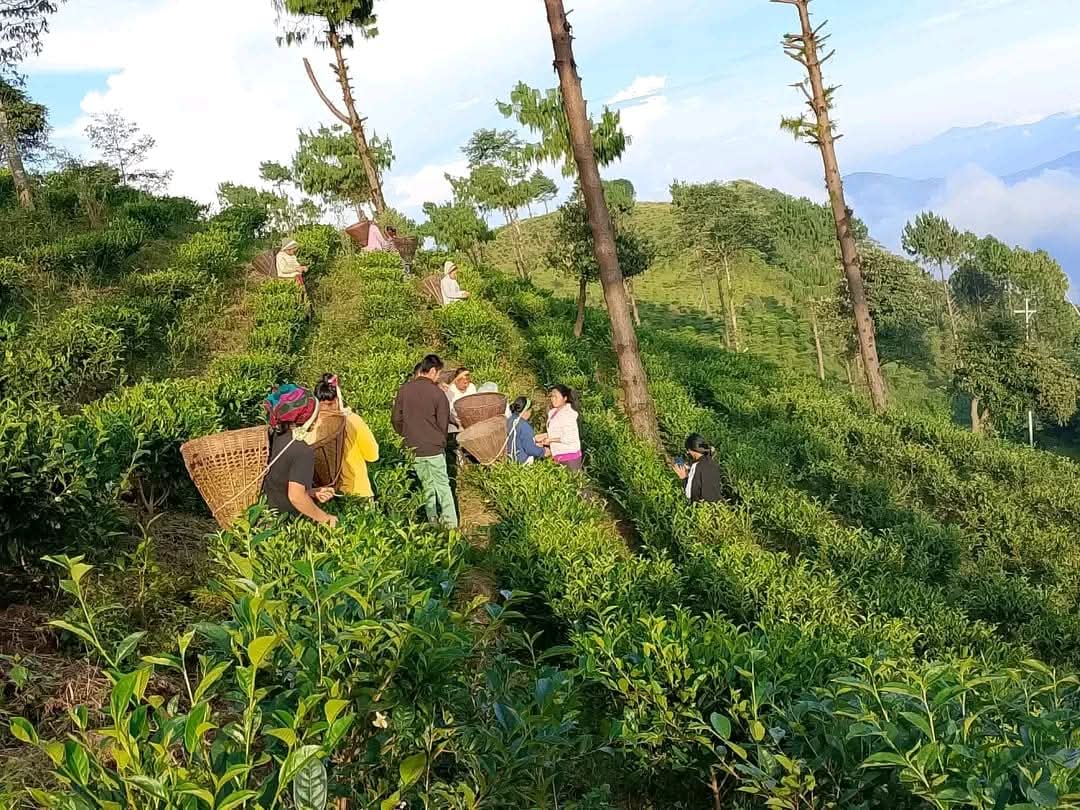
A farmer plucks tea leaves at a tea plantation in Aamchowk Rural Municipality, Bhojpur. Photo: Deepak Vantawa’s Facebook
After the restoration of democracy in 2007 BS (1951 AD), a more favorable investment environment helped revive tea cultivation. In 2016 BS (1959/60 AD), the first privately owned tea estate – Budhakaran Tea Estate – was established in Jhapa.
Gradually, tea became a profitable industry. In recognition of its contribution to economic and social development, the government, during King Birendra’s reign in 2039 BS (1982/83 AD), declared Jhapa, Dhankuta, Terhathum, Panchthar, and Ilam as tea zones.
Credit for initiating coffee cultivation in Nepal goes to Hira Giri of Aapchaur, Gulmi. Around 1995 BS, he brought coffee seeds from Burma (now Myanmar) and planted them in Gulmi.
However, coffee cultivation gained momentum only after 2020 BS (1963/64 AD), when the government imported coffee seeds from India and distributed them to farmers. In 2040/41 BS (1983/84 AD), Nepal Coffee Company was established in Manigram, Rupandehi, to promote domestic marketing.
Cultivation areas
According to agricultural technician Bhandari, Nepal’s mid-hill regions, from east to west, are suitable for coffee cultivation in terms of climate and soil. Coffee is grown at elevations between 800 and 1,600 meters above sea level in this area. Nepal produces Arabica coffee varieties, primarily Typica and Bourbon.
Because coffee grown in the mid-hill climate is of high quality, it is in demand abroad. To promote the coffee market, the government has been fixing prices since 2051 BS (1994/95 AD). In fiscal year 2081/82 (2024/25), Nepal exported 63,998 kilograms of coffee, earning Rs 114.3 million. In the same fiscal year, it imported about 200,000 kilograms worth Rs 144.1 million.
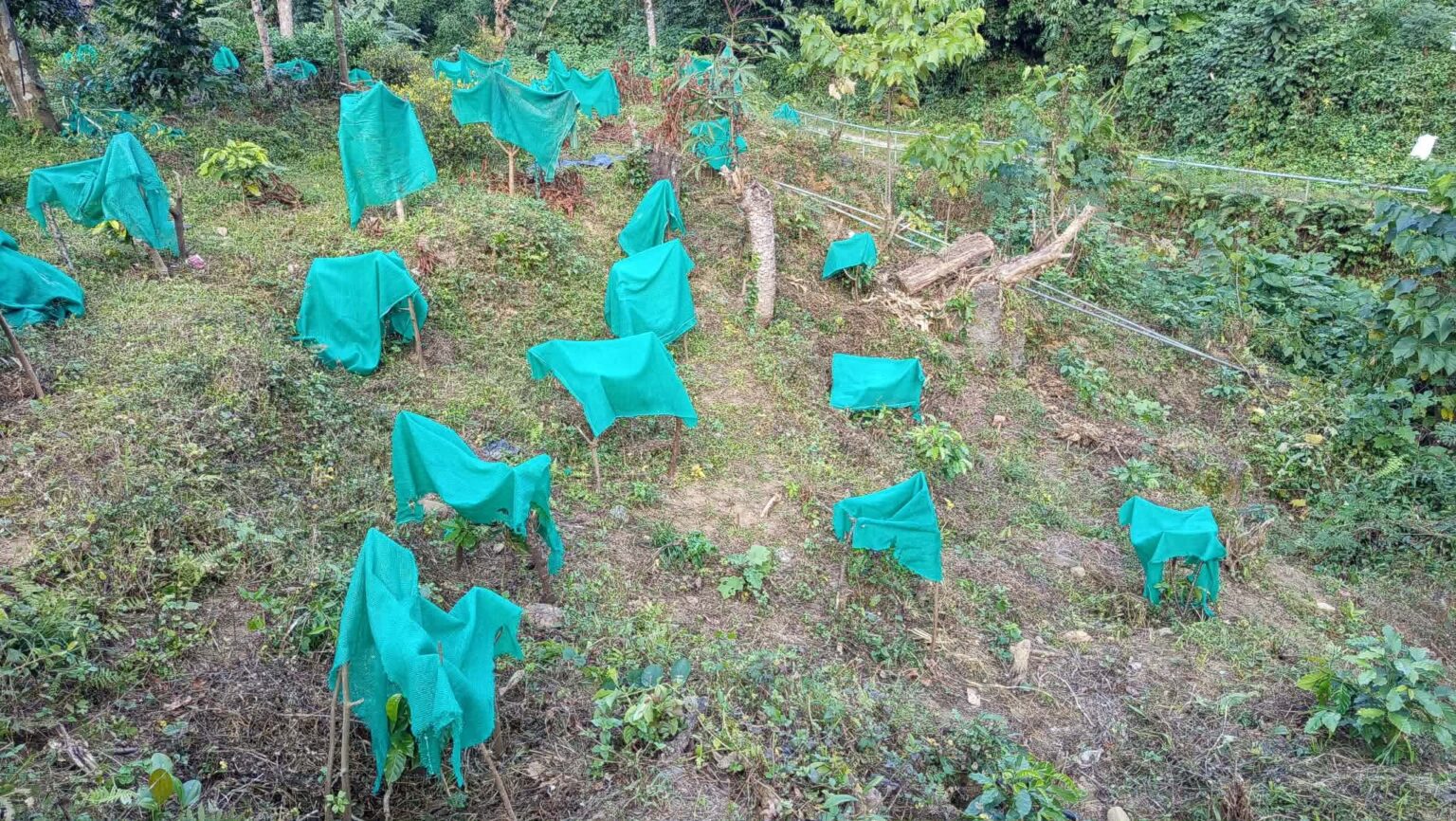
Coffee plantation in Pokhara. Shade is used to protect the plants. Photo: National Tea and Coffee Development Board Facebook
Coffee cultivation is concentrated mainly in western districts such as Gulmi, Arghakhanchi, Palpa, Syangja, Baglung, Parbat, and Lamjung. Coffee farming has now expanded to 40 districts.
Executive Director of NTCDB, Khanal, says the board encourages farmers by providing subsidies to expand coffee cultivation areas and production. Farmers cultivating coffee on 50 ropanis receive a subsidy covering 50 percent of total costs. “Coffee requires shade and continuous care, so we have started providing subsidies to help farmers develop that habit,” he says.
Tea cultivation in Nepal occurs at elevations of up to 2,600 meters. Assam, Cambodian, and Chinese varieties are grown. Assam and Cambodian varieties are used for machine-processed CTC tea, while Chinese varieties are used for high-quality orthodox tea prepared through traditional methods. In orthodox tea production, leaves are hand-rolled or machine-rolled to mimic hand processing.
Nepali CTC tea is famous for its strong flavor and is the most commonly consumed type. Orthodox tea, preferred by connoisseurs, is mostly exported.
Tea cultivation is concentrated in eastern Nepal. Tea is produced in 31 districts, including Ilam, Panchthar, Jhapa, Morang, Dhankuta, Terhathum, Taplejung, Khotang, Okhaldhunga, and Bhojpur.