Kathmandu
Thursday, June 11, 2026






KATHMANDU: Nepal News presents today’s snapshot of Nepal’s economic activities. Get quick updates on major market movements, policy shifts, and financial developments shaping the economy of Nepal. Here are the key economic highlights for today:
NEPSE Drops Slightly with Rs 8.692 Billion Turnover
On Wednesday, the Nepal Stock Exchange (NEPSE) fell by 0.04 points to 2,662.09, continuing a four-day decline. While the Sensitive Index rose 0.81 points to 455.20, total turnover reached Rs 8.692 billion from 22,282,050 shares across 329 companies. Trading across 13 groups saw five gains, including Hydropower and Development Bank, while eight groups like Hotel and Tourism declined. Out of all listed firms, 113 companies advanced, 133 declined, and 13 remained stable. This follows higher turnovers of Rs 11.659 billion, Rs 10.773 billion, and Rs 8.616 billion earlier this week.
NRB Collects Rs 50 Billion in Deposits to Manage Liquidity
The Nepal Rastra Bank (NRB) successfully collected Rs 50 billion from banks and financial institutions on Wednesday to manage excess liquidity in the banking system. The central bank used a deposit collection instrument through an online bidding process that concluded at 3:00 PM. The deposits are held for a period of 46 days, with the principal and interest set for repayment on March 29. Interest rates were determined through a multi-interest rate bidding system. Financial institutions were allowed to bid for a minimum of Rs 100 million, ensuring that the surplus cash in the market is temporarily absorbed to maintain financial stability.
Supreme Court Clears Contract Termination of National Pride Project
The Supreme Court dismissed a writ petition filed by Patel-Raman JV against the government’s decision to terminate their contract for the Sunkoshi-Marin Diversion Multipurpose Project. The joint bench of Justices Hari Prasad Phuyal and Nityananda Pandey vacated an earlier interim order, allowing the government to forfeit Rs 3.60 billion in bank guarantees. The contractor had completed less than 1% of permanent structures despite 33 months passing since the January 25 start date. The Rs 14.075 billion contract was canceled due to non-performance on this National Pride Project, intended to provide irrigation and electricity.
Government Slashes Economic Growth Forecast to 3.5%
In its mid-term budget review, the government revised the country’s economic growth projection downward to 3.5% for the Fiscal Year 2025/26, missing the initial 6% target. The decline is attributed to reduced paddy production, a slowdown in construction, and a slump in real estate. During the first quarter, the GDP grew by only 3%. While the industrial sector expanded by 5.44% due to energy projects, the agricultural sector’s value-added growth remained low at 1.36%. Despite the slow growth, average inflation for the first six months stood at a stable 1.7%, significantly lower than the 4.97% recorded in the previous year.
Insurance Authority to Penalize Six Major Companies
The Nepal Insurance Authority is preparing to penalize six insurance companies following an on-site monitoring that revealed ‘serious irregularities.’ The companies facing action include Neco Insurance, Asian Life Insurance, Nepal Re-Insurance, Prabhu Insurance, Himalayan Re-Insurance, and Sanima GIC Insurance. The Authority has already issued a ‘show cause’ notice, asking the firms to explain why they should not be punished for the documented violations. If the legal justifications provided by the companies are deemed insufficient, the Board of Directors will proceed with formal disciplinary measures. While specific details of the irregularities were not disclosed, officials categorized the findings as significant breaches of insurance regulations.
Government Cuts Equalization Grants Due to Revenue Shortfall
The Ministry of Finance has started cutting the third installment of Financial Equalization Grants to provincial and local governments due to a revenue shortfall. As only 81.75% of the revenue target was met in the first 6 months, the ministry instructed the Financial Comptroller General Office to transfer only 20.43% of the scheduled 25% third installment. This decision effectively reduces the total grants transferred by mid-quarter from 75% to 70.43%. While the federal government has transferred Rs 38.187 billion to provinces, local leaders argue that mid-year cuts severely disrupt project implementation and annual development programs.
Provincial Budget Expenditure Drops to 14% in Six Months
Budget implementation by the country’s seven provincial governments reached only 14% during the first half of fiscal year 2025/26 (July 17, 2025, to January 14, 2026). Out of a total Rs 287 billion allocation, only Rs 40.70 billion was spent by mid-January. Madhesh Province recorded the lowest expenditure at 7.71%, while Lumbini Province led with Rs 7.95 billion in spending. Bagmati Province spent 14% of its Rs 67.47 billion budget. Comparatively, spending in the previous fiscal year was higher at 16%. Officials noted that capital expenditure remains particularly weak across all provinces, hampering regional infrastructure development and economic activity.
NRB Governor Views FATF Gray List as Opportunity for Reform
Nepal Rastra Bank (NRB) Governor Biswo Nath Poudel stated on Wednesday that being placed on the Financial Action Task Force (FATF) ‘Gray List’ is a critical opportunity to strengthen anti-money laundering mechanisms. Speaking at an international conference on ‘Money Laundering and Terrorism Financing’ in Kathmandu, he emphasized making internal systems transparent and aligned with global standards. Paudel warned that criminals are increasingly using advanced technology for financial crimes, requiring the Supervision Department to be better resourced. He stressed that failure to act could divert funds away from health and education, leading to increased social inequality. He urged stakeholders to eliminate legal loopholes used for illicit activities.
Nepal-Qatar Joint Business Council Holds First Meeting
The Nepal-Qatar Joint Business Council (JBC) held its inaugural meeting in Chandragiri, Kathmandu, to institutionalize bilateral trade and investment. Established following the April 2024 visit of Qatari Emir Sheikh Tamim Bin Hamad Al Thani, the council focused on B2B (business-to-business) and G2G (government-to-government) cooperation. Federation of Nepalese Chambers of Commerce and Industries (FNCCI) President Chandra Prasad Dhakal urged Qatari investment in energy, tourism, and IT, highlighting Nepal’s simplified digital approval processes. Mohamed Bin Ahmed Al Obaidly of the Qatar Chamber emphasized that clear legal frameworks and banking facilitation would encourage long-term Qatari capital. The delegation also met with various ministers and the NRB governor.
NOC Distributes LPG from Teku Amid Market Shortage
The Nepal Oil Corporation (NOC) has started direct sales of liquefied petroleum gas (LPG) from its central office in Teku, Kathmandu, following widespread complaints of cooking gas shortages. Consumers reported that authorized dealers were out of stock, prompting the corporation to set up emergency distribution counters. NOC Spokesperson Manoj Thakur confirmed that cylinders from Nepal Gas, Everest Gas, and Sugam Gas are being provided to those with empty cylinders. Despite the shortage at retail levels, the NOC clarified that customs data show no disruption in imports and urged the public to ignore rumors of a national crisis.
Railway Freight Imports Decline at Birgunj Dry Port
Imports via railway racks at the Birgunj Dry Port decreased by 16 units during the first six months of the fiscal year 2025/26 (July 17, 2025, to January 14, 2026). According to Kamal Gyawali, Chief of the Nepal Intermodal Transport Development Board in Birgunj, at least 572 railway racks arrived compared to 588 in the same period last year. The decline is attributed to “haltage” issues within the Indian Railway system. Goods such as chemical fertilizers, coal, and iron typically arrive from Kolkata, Haldia, and Vishakhapatnam. Abhishek Mishra of Pristine Valley noted that service is now stabilizing after delays caused by elections and festivals in Bihar, India.
Multi-Year Road Projects in Sudurpashchim Face Severe Delays
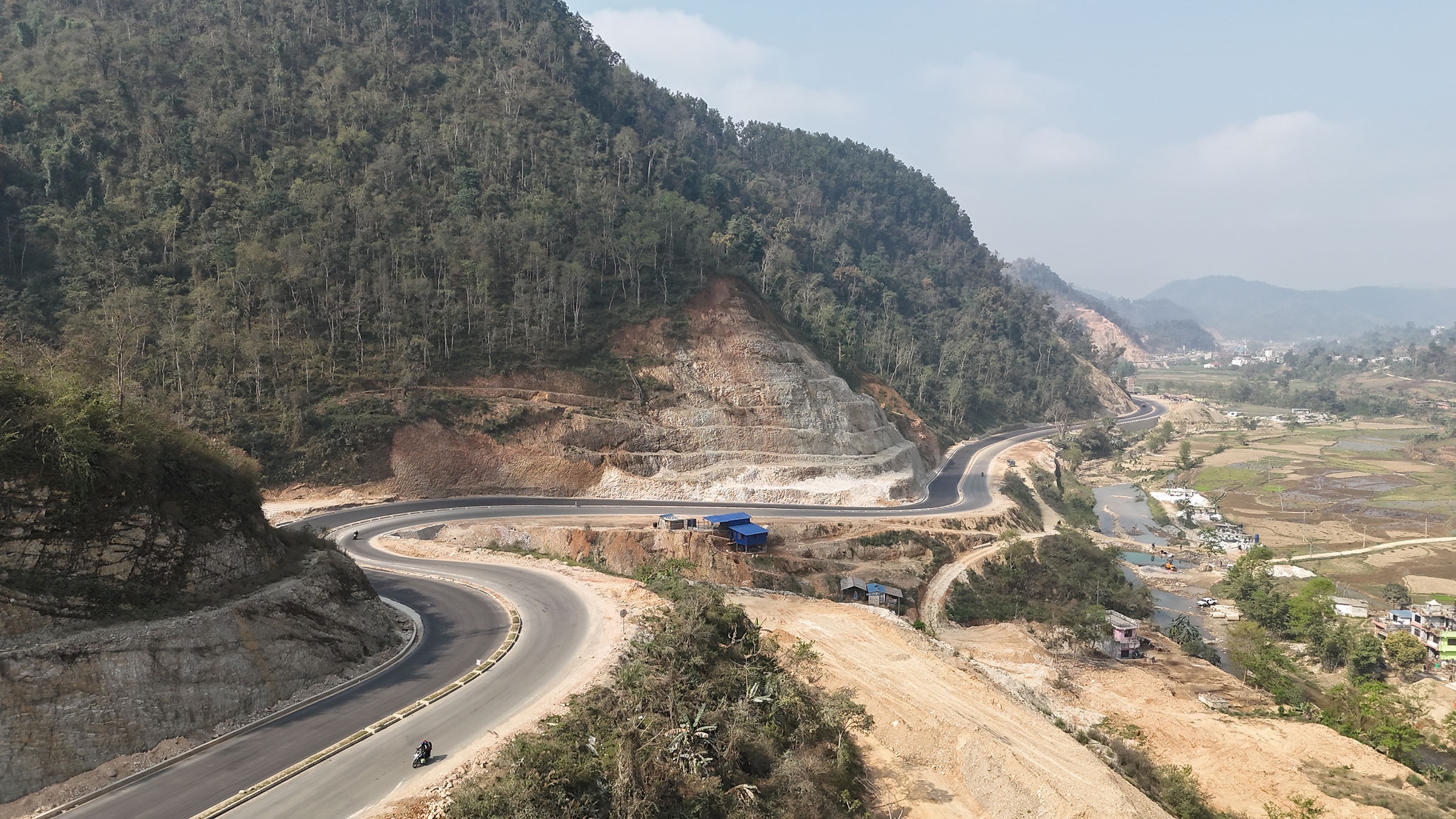
Sudurpashchim Province has 145 multi-year road and bridge projects under contract, with a total estimated cost of Rs 20.087 billion. However, 39 contracts are currently in a dilapidated state, and 28 have faced repeated deadline extensions. Projects like the Jayagadh-Ramaroshan road in Achham have reached only 43% progress after years of work by PS Banay JV. Similarly, the Martadi-Kolti road in Bajura is only 50% complete after 7 years. Spokesperson Subhik Shrestha stated that the government faces a heavy financial burden for the next fiscal year to clear old liabilities, limiting the launch of new infrastructure initiatives.
Ministry Signs AI Advisory Agreement for Digital Farming
The Ministry of Agriculture and Livestock Development and the National Agriculture Modernization Program (NAMP) signed a memorandum of understanding with Connect Kisan Private Limited on Wednesday. The agreement aims to provide AI-driven digital advice to farmers through voice and text platforms. NAMP Director Hikmat Kumar Shrestha and Connect Kisan Director Rajan Dahal finalized the deal, which will offer immediate solutions for pest management, fertilizer use, and market access. The AI system will collect data on policy challenges and crop diseases to help the government formulate long-term agricultural plans. This digital transformation mirrors successful tech-integrated farming practices recently adopted in India.
SEBON Issues New Guidelines for Margin Trading
The Securities Board of Nepal (SEBON) issued the ‘Margin Trading Facility Guidelines 2026’ on Tuesday, set to take effect on February 13. The new rules allow stockbrokers to provide loans to investors for share purchases. To qualify, companies must have at least 2.5 million shares listed on the Nepal Stock Exchange (NEPSE) and a net worth exceeding their paid-up capital. Investors must maintain a 30% initial margin and a 20% maintenance margin. If share values drop below this limit, brokers are authorized to issue a “margin call” or sell the shares to recover their investment. The daily “mark-to-market” system ensures transaction transparency.
Ridge Line Energy Limited Launches IPO for General Public
Ridge Line Energy Limited opened its Initial Public Offering (IPO) for the general public on Wednesday. Following the first phase for locals and migrant workers, the company is now offering 1,180,260 shares at a par value of Rs 100. The total public issue size is Rs 118 million. Investors can apply for a minimum of 10 shares and a maximum of 50,000 shares until February 16. Care Ratings Nepal assigned a ‘CARE-NP BB’ rating, indicating moderate risk. Prabhu Capital Limited is managing the sale, accessible via the C-ASBA system or Mero Share.
Gold Prices Surge by Rs 1,100 Per Tola in Nepal
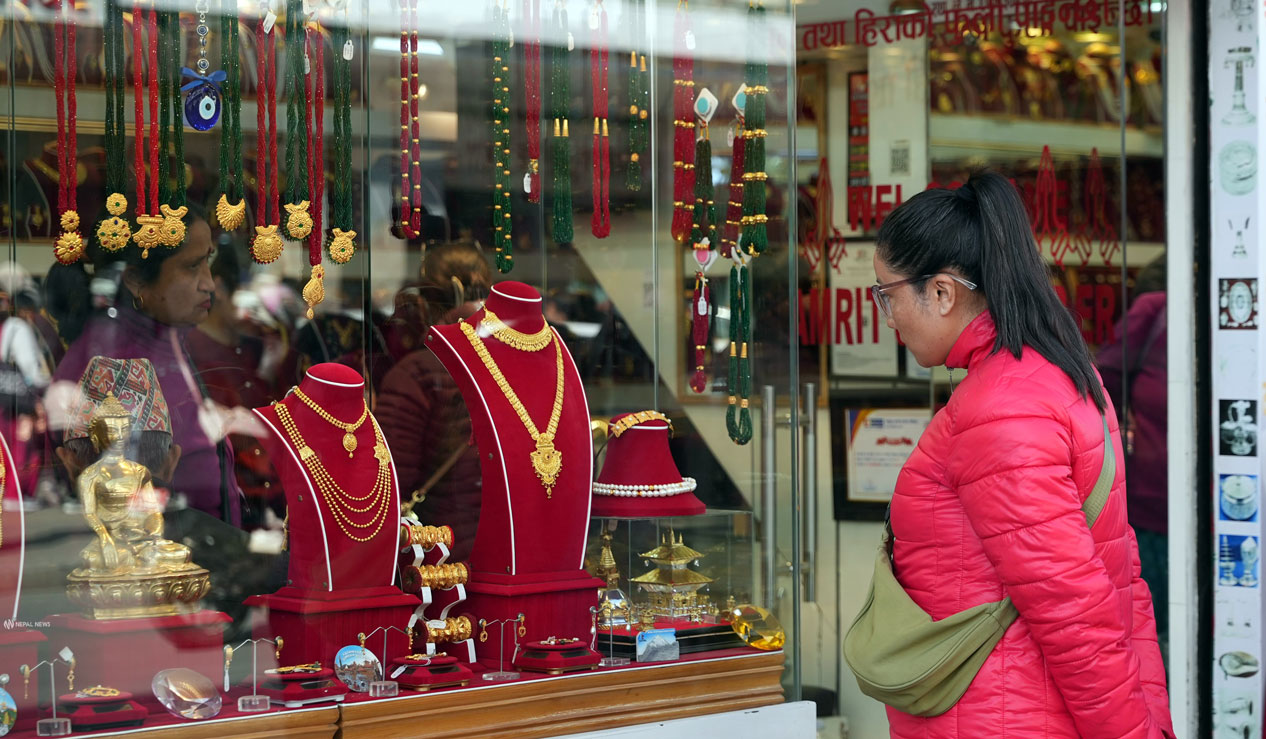
Gold and silver prices increased in the domestic market on Wednesday. According to the Federation of Nepal Gold and Silver Dealers’ Association, fine gold prices rose by Rs 1,100 per tola (11.66 grams) to reach Rs 306,600 today. On Tuesday, the price was Rs 305,500. Similarly, silver prices saw an increase of Rs 50 per tola, bringing the current market rate to Rs 5,290 per tola. Traders attribute the rise to fluctuations in international market rates and increased demand. This surge marks a significant peak in precious metal valuations for the current month.