Kathmandu
Saturday, June 6, 2026






KATHMANDU: Nepal News presents today’s snapshot of Nepal’s economic activities. Get quick updates on major market movements, policy shifts, and financial developments shaping the economy of Nepal. Here are the key economic highlights for today:
NEPSE Ends Week Higher with Rs 11.10 Billion Turnover
On Thursday, the Nepal Stock Exchange rebounded by 8.97 points, or 0.33 percent, closing at 2,671.07 after four days of decline. The Sensitive Index rose 1.51 points to 456.72. A total of 27.78 million shares changed hands across 337 companies in 106,018 transactions, generating Rs 11.102 billion in turnover. Among 13 sector groups, eight gained, including Development Banks (up 1.18%) and Hydropower (0.97%), while five declined, led by Hotels & Tourism (down 1.65%). Share prices of 139 companies rose, 115 fell, and six remained unchanged.
SEBON Allows Share Purchases on Loan Starting Tomorrow
The Securities Board of Nepal (SEBON) issued the Margin Trading Facility Directive 2026, allowing brokers to provide loans to investors for share purchases starting tomorrow. Investors must maintain an initial margin of 30%, with a minimum maintenance margin of 20%. Brokers can lend up to 4.5 times their net worth. To qualify, companies must have at least 2.5 million shares listed on NEPSE (Nepal Stock Exchange) and have been profitable for two of the last three years. This move aims to increase market liquidity and provide small and medium investors with additional capital to participate in the stock market.
World Bank Launches Nepal Fiscal Dashboard for Transparency
The World Bank launched the Nepal Fiscal Dashboard on Thursday to provide integrated data on public financial management across federal, provincial, and local levels. The digital platform allows users, including policymakers, researchers, and journalists, to analyze budgets, revenues, and expenditures. Shiv Raj Adhikari, former Vice-Chairman of the National Planning Commission, noted the dashboard’s utility for evidence-based policymaking. World Bank expert Yasuhiro Saito emphasized that the tool aims to improve transparency. Meanwhile, Hikmat Bahadur Bhandari from the Ministry of Finance revealed that the government is also developing its own fiscal dashboard, which is expected to be launched within 1 year.
ADB Appoints Sona Shrestha as South Asia Director General
The Asian Development Bank has appointed Sona Shrestha as Director General of its South Asia Department, overseeing operations in Bangladesh, Bhutan, India, the Maldives, Nepal, and Sri Lanka. Shrestha brings over 27 years of development experience, including more than 20 years at ADB, where she served as Deputy Director General for South Asia and held senior roles in evaluation, the financial sector, and country management. She holds a doctorate and master’s in economics from the University of California and a bachelor’s from Smith College. ADB, founded in 1966, is a multilateral development bank with 69 member countries supporting growth across Asia and the Pacific.
Foreign Aid Receipts Fall Short of Annual Targets
Nepal has received only 21.27% of its annual foreign aid target by the end of the second quarter. While the government aimed for Rs 287.11 billion, only Rs 61.73 billion was realized by January 14. Grant receipts were particularly low at 13.3% of the target, while loans reached 23.1%. Additionally, the Financial Comptroller General Office (FCGO) reported a chaotic situation regarding reimbursements, with Rs 14.173 billion still pending from donor agencies. Ministry of Finance officials noted that improving project implementation efficiency is critical to bridging the gap between aid commitments and actual receipts.
Deposit Rates Fall as Banks Lower Interest for February-March
Most commercial banks in Nepal have reduced interest rates for the month from February 13 to March 14. The average maximum interest rate on personal fixed deposits dropped from 4.68% in Magh to 4.56% for the upcoming month. Global IME Bank made the most significant cut, lowering its rate from 5.5% to 4.75%. Nepal Bank currently offers the highest rate at 5.1%, while banks like Standard Chartered and Everest Bank are at the lower end with 4.25%. Institutional fixed deposit rates have been capped at 4%. This downward trend reflects high liquidity in the banking system and a decrease in the cost of funds.
Commercial Banks See 34% Rise in Trading Income
Commercial banks in Nepal earned Rs 5.208 billion in net trading income during the first six months of the current fiscal year, a 34.36% increase compared to the previous year. This growth is attributed to fluctuations in the stock market and the rising value of the US dollar, which boosted foreign exchange profits. Global IME Bank led with Rs 552.4 million, followed by Nabil Bank with Rs 464.3 million. While 19 banks reported positive trading income, Agricultural Development Bank recorded a negative income of Rs 118.3 million. This income stream remains a vital non-interest revenue source for the banking sector.
DOTM Proposes 10% Fare Cut for Electric Vehicles
The Department of Transport Management (DOTM) is preparing to reduce fares for Electric Vehicles (EVs) by up to 10%. Director General Rajiv Pokharel stated that since the operating costs of EV buses are lower than diesel alternatives, the fare structure needs to be more consumer-friendly. Currently, EV fares follow diesel-based standards, but a new scientific basis is being studied. Bijay Bahadur Swar, president of the Federation of Nepalese National Transport Entrepreneurs, agreed with the need for a scientific adjustment but cautioned that the high cost of EV batteries must be considered. The final decision aims to encourage green energy usage while ensuring a fair deal for both passengers and operators.
Health Insurance Board Clarifies Rs 100K Benefit Threshold
The Health Insurance Board has clarified that the Rs 100,000 treatment benefit for insured citizens remains unchanged. Information Officer Vikesh Malla stated that the annual coverage of Rs 100,000 for a family of five based on a contribution of Rs 3,500 is still in effect. However, the board has allocated Rs 25,000 specifically for Outpatient Department (OPD) services and Rs 75,000 for hospitalization and emergency care. This restructuring aims to prevent the overutilization of OPD services, which currently consumes 70% of the budget. By capping OPD expenses at Rs 2,500 per family per year, the board intends to ensure sufficient funds remain available for serious illnesses and expensive surgeries.
Massive Natural Gas Reserves Confirmed in Dailekh
An exploration report by the China Geological Survey has confirmed a massive natural gas reserve of 80.7 billion cubic meters at Jaljale, Bhairabi Rural Municipality-1, Dailekh. This final figure significantly exceeds the preliminary estimate of 1.12 billion cubic meters. Dharmaraj Khadka, spokesperson for the Department of Mines and Geology, stated that while the volume is confirmed, actual extraction capacity will be determined after ‘well testing.’ The Rs 2.40 billion project, funded by Chinese technical assistance, identified the deposit as ‘shale’ or ‘tight gas’ trapped in rock layers. Local political parties have made the commercial extraction of this gas a primary agenda for the March 5 elections.
Provincial Performance Remains Weak in National Evaluation
The National Natural Resources and Fiscal Commission (NNRFC) reported on Thursday that all seven provinces failed to cross the 50% score in their performance evaluation. Sudurpashchim Province ranked first with 45.70 points, followed by Koshi at 44.29 and Bagmati at 42.46. Madhesh Province recorded the lowest score at 27.28. The assessment, based on 11 indicators including audit arrears, budget expenditure, and revenue mobilization, directly influences the Fiscal Equalization Grant recommendations for the fiscal year 2026/27. Higher-scoring provinces will receive larger grants. Provinces have the right to appeal these scores by providing evidence to the commission for review.
Road Department Completes 168 Kilometers of Paving in Six Months
The Ministry of Physical Infrastructure and Transport completed 168 kilometers of road blacktopping during the first half of fiscal year 2025/26. According to Joint Secretary Sushil Babu Dhakal, the projects include 8 kilometers of four-lane roads and 164 kilometers of two-lane roads. Additionally, 10 bridges were constructed during this period. The Hulaki Highway (Postal Highway) saw the highest progress with 26.5 kilometers paved, followed by the Pushpalal Highway at 11 kilometers. In the same period, 35 kilometers were graveled, 30 kilometers of new tracks were opened, and 15 kilometers of roads underwent maintenance, marking a significant increase from the 75 kilometers paved in the previous year.
Rasuwa Establishes Lab for Infrastructure Quality Control
The Infrastructure Development Office in Rasuwa has established a modern laboratory in Dhunche to test construction materials like gravel, base, and bitumen. Office Chief Rabin Maharjan stated that five skilled technicians have been deployed to ensure the quality and durability of road projects. Previously, the district relied on external labs, causing delays and transparency issues. Since its establishment in 2024, the office has completed 10.63 kilometers of blacktopping and 20.47 kilometers of graveling. The new facility includes a curing tank and advanced equipment, making it impossible for contractors or consumer committees to compromise on material standards in future infrastructure developments.
CNI to Support Government in National Economic Census
The Confederation of Nepalese Industries (CNI) has agreed to collaborate with the National Statistics Office (NSO) for the upcoming National Economic Census. A Memorandum of Understanding (MoU) was signed on Wednesday to cooperate on data collection and analysis. Dhundiraj Lamichhane, Deputy Chief of the NSO, assured that the data will remain strictly confidential and is intended for policymaking rather than taxation or punishment. Director Dr. Ved Prasad Dhakal noted that the census aims to determine the actual size of the informal economy. CNI Director General Dr. Ghanshyam Ojha stated that the private sector’s participation is vital for accurate data, which will help both industries and the government in strategic planning.
Local Unit Offers Rs 25,000 Subsidy for Livestock
Modi Rural Municipality in Parbat has announced a subsidy of Rs 25,000 per head for farmers purchasing improved breeds of cows or buffaloes. Chief Administrative Officer Baburam Puri stated that the initiative aims to make the local level self-sufficient in milk production and encourage youth to stay in agriculture. Chairperson Hira Devi Sharma confirmed that the budget for 20 animals has been allocated this year, with plans to expand based on demand. Interested farmers must apply within 15 days with a project proposal and land documents. The program targets individuals, cooperatives, and commercial farms to boost the local economy and counter youth migration.
Salt Trading Corporation Announces 10% Dividend
Salt Trading Corporation has declared a 10% dividend for its shareholders from the profits of the last fiscal year. The board of directors’ meeting held on February 11 approved a distribution comprising 9.49% bonus shares and 0.51% cash dividend for tax purposes. The decision is subject to approval from the company’s upcoming Annual General Meeting. Based on the current paid-up capital, this payout rewards investors following the corporation’s financial performance. Shareholders will receive the bonus shares once the formal process is completed, marking a stable return for the state-linked entity during this fiscal cycle.
Reliance Spinning Mills Reports 27% Drop in Profits
Reliance Spinning Mills Limited, which recently issued an IPO (Initial Public Offering) via the book-building method, reported a 27.24% decline in net profit for the second quarter ending mid-January. The company earned Rs 137.4 million, down from Rs 188.8 million in the same period last year. Consequently, the annualized Earnings Per Share (EPS) fell from Rs 22.13 to Rs 14.47. Despite a slight decrease in operating income and profit, the company’s net worth per share improved to Rs 490.54. Lower financial expenses provided some relief, but overall market conditions have weighed on the textile manufacturer’s recent performance.
Gold Dips Marginally; Silver Edges Higher Today
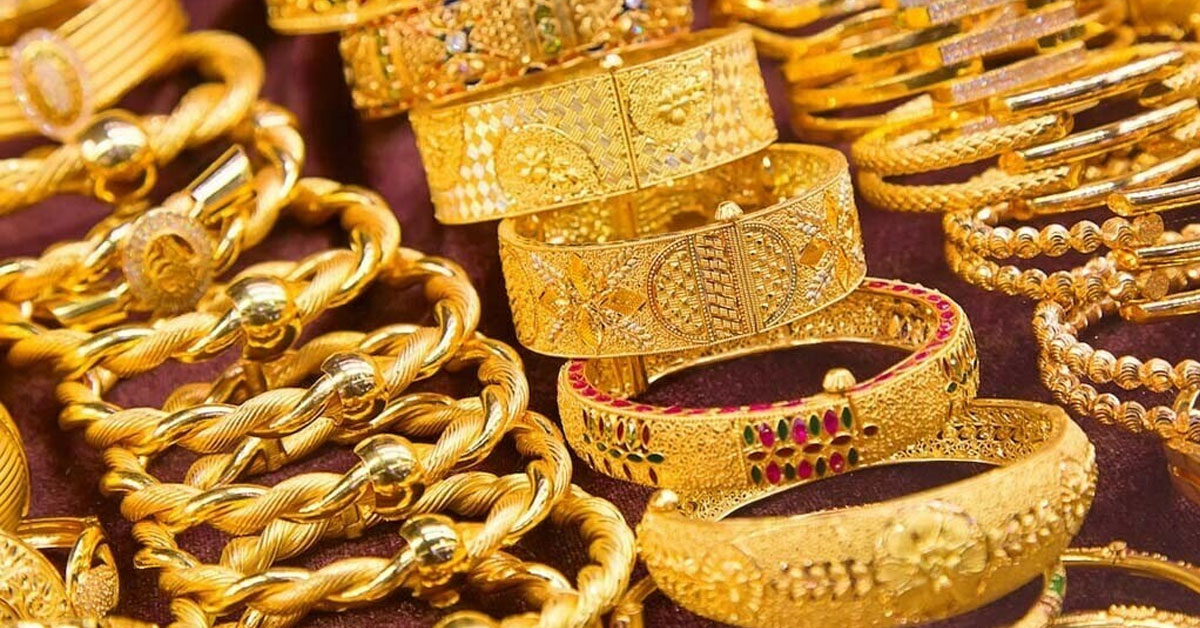
Gold prices slipped slightly in the domestic market on Thursday, while silver posted modest gains, according to the Federation of Nepal Gold and Silver Dealers’ Association. Gold declined by Rs 100, settling at Rs 306,500 per tola, equivalent to 11.66 grams. In contrast, silver rose by Rs 50 to reach Rs 5,340 per tola. In the international market, gold was trading at USD 5,083 per ounce, while silver stood at USD 83 per ounce, influencing local price adjustments.