Kathmandu
Wednesday, July 15, 2026





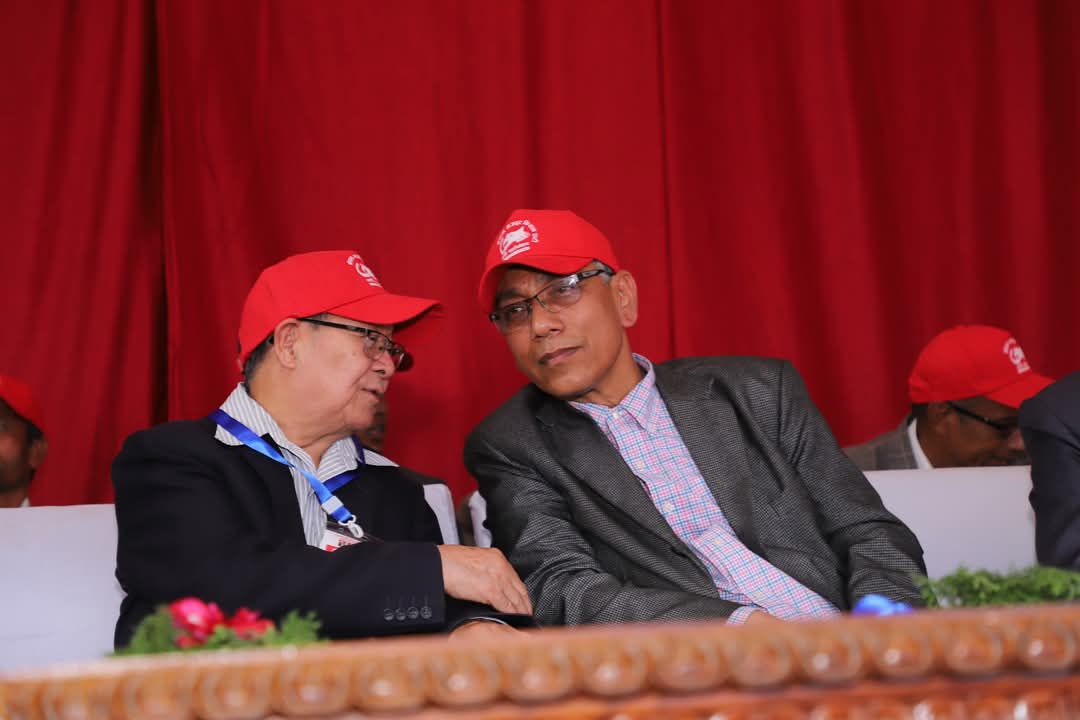
KATHMANDU: As Nepal gears up for the upcoming House of Representatives (HoR) elections, the country is once again engulfed in the familiar spectacle of political rallies, door-to-door campaigns, and public ceremonies aimed at swaying voters. Even the historic city of Bhaktapur, long considered a bastion of political continuity, is not immune to the election fever.
Bhaktapur HoR constituency no. 1 has traditionally been synonymous with the Nepal Workers’ and Peasants Party (NWPP) and its long-serving chairman, Narayan Man Bijukchhe. Since 1991, the party has maintained an unbroken streak of victories in this area, turning the constituency into a thorn in the side of rival parties. But with the March 05 elections approaching, other parties are putting up a concerted effort to breach NWPP’s fortress.
Bhaktapur-1 has a total of 107,042 registered voters, comprising 52,066 men and 54,988 women. The constituency features 37 polling sites and 119 polling stations. In the previous 2022 HoR election, NWPP secured 32,904 proportional votes, significantly outpacing other parties, whose share barely reached one-third of that number.
The 2017 adjustments by the Constituency Delimitation Commission have seemingly favored NWPP by creating a more concentrated electoral zone. For opposition parties, this has translated into a more challenging battle, with NWPP’s vote base now more concentrated and less diluted across multiple areas. In the run-up to the elections, parties like Nepali Congress, The Communist Party of Nepal (Unified Marxist–Leninist) CPN-UML, Nepali Communist Party (NCP), Rastriya Prajatantra Party (RPP) and the Rastriya Swatantra Party (RSP) have criticized NWPP for allegedly neglecting development in Bhaktapur. They argue that NWPP has historically avoided participating in government while focusing mainly on opposing whichever party is in power, thus depriving the constituency of large-scale infrastructure and development projects.
Even in neighboring Bhaktapur HoR constituency no. 2, where NWPP once enjoyed narrow victories over Congress, redistricting has shifted the balance, confining the party’s influence mostly to constituency no. 1. This geographic concentration highlights the evolving political landscape and the pressures on NWPP to maintain its legacy.
Constituency no. 1 includes Bhaktapur municipality and Changunarayan municipality. While NWPP has historically relied on Bhaktapur municipality as its electoral stronghold, critics accuse the party of ignoring the former Village Development Committees (VDCs) and the broader Changunarayan area, leaving residents’ living standards largely stagnant.
Despite nationwide discussions of new political movements and the rise of emerging parties, NWPP remains confident that its fortress in Bhaktapur will hold. This confidence is rooted in decades of political continuity: between 1991 and 2013, NWPP’s chairman Narayan Man Bijukchhe won five consecutive elections. In subsequent polls, party leader Prem Suwal continued the winning streak. In the 2022 local elections, NWPP secured all ten ward chair positions, including the mayor and deputy mayor posts, signaling enduring grassroots support.
However, in Changunarayan municipality, NWPP’s dominance is more tenuous. The party won only Ward No. 9, while other wards were captured by Nepali Congress, CPN-UML, and the Rastriya Prajatantra Party (RPP), reflecting a fragmented political scenario outside NWPP’s core stronghold.
The party has still leveraged cultural loyalty to create a sense of civic pride, making NWPP synonymous with effective local governance. Voters often associate the party with Bhaktapur’s cleanliness, orderliness, and quality of public services—an identity that national parties have struggled to challenge effectively.
NWPP’s unshakable stronghold since 1991:
Bhaktapur-1 has long remained the unbroken stronghold of the Nepal Workers’ and Peasants Party (NWPP) since the return of multiparty democracy in 1991. The party’s past electoral performance highlights the scale of its influence.
The constituency has consistently delivered decisive victories to the party, reflecting both the party’s deep-rooted local presence and the personal influence of its long-serving leader, Narayan Man Bijukchhe. Bijukchhe won the seat in the 1991, 1995, 1999, 2008, and 2013 elections, after which he designated Prem Suwal as his political successor. Suwal is now contesting the constituency for the third time, following the party’s strategy of continuity in leadership.
In the 2022 House of Representatives election, the NWPP maintained its dominant position. Prem Suwal secured 42,761 votes, representing 59.63 percent of the total, while his closest rival, Navaraj Gelal of the CPN (UML), garnered 11,968 votes or 16.69 percent. Bharat Bahadur Khadka of the Rastriya Prajatantra Party obtained 9,303 votes (12.97 percent), Sunil Goths of the Maoists 5,283 votes (7.37 percent), and other candidates collectively received 2,394 votes (3.34 percent). Even when combined, the opposition was unable to match the NWPP’s vote share.
In the preceding 2017 legislative election, Suwal had won with 33,076 votes. Babu Raja Joshi of the Nepali Congress secured 17,818 votes, the Maoist candidate Milan Suwal 15,374, Dipesh Neupane of the Bibeksheel Sajha Party 2,330, and other candidates 1,867. The 2017 results had already demonstrated the NWPP’s clear advantage in the constituency, which widened further in 2022.
Historical election data underscores the consistency of the NWPP’s dominance. In the 1991 legislative election, Narayan Man Bijukchhe won with 20,163 votes against 13,732 for Nepali Congress candidate Raghesh Man Jonche. The 1994 elections saw Bijukchhe secure 16,770 votes, while the Rastriya Prajatantra Party candidate received 9,438 votes and Jonche of the Nepali Congress 8,137. In 1999, Bijukchhe maintained his position with 16,533 votes, defeating Ganesh Man Chakradhar of the Nepali Congress, who obtained 10,030 votes, and Saraswati Bati of the CPN (UML) with 8,096 votes.
The pattern persisted through the transition to a republican system. In the 2008 Constituent Assembly election, Bijukchhe captured 19,972 votes, outperforming Debendra Shrestha of the Maoists, who obtained 11,548 votes, and Mahesh Shrestha of the Nepali Congress with 8,281 votes. In 2013, Bijukchhe again emerged victorious with 20,446 votes, while Krishna Lal Bhadel of the Nepali Congress received 12,826 votes and Sanu Suwal of the Maoists 6,296.
The succession from Bijukchhe to Suwal has not diminished the party’s stronghold. Across successive elections, the NWPP has consistently achieved vote shares that exceed 50 percent, with opposition parties—whether Nepali Congress, CPN (UML), Maoists, or RPP—unable to consolidate enough support to threaten its dominance. Bhaktapur-1 remains a clear illustration of enduring local political loyalty in Nepal, where the combination of established party presence and disciplined leadership continues to translate into repeated electoral success.
NWPP Stronghold Under Pressure
Bhaktapur-1 exemplifies the paradox of NWPP’s political life: unyielding local strength paired with limited national reach. The party’s success here is rooted in decades of ideological discipline, local governance, and cultural alignment with the electorate. Yet, the coming election will test whether these factors remain sufficient in a changing political landscape.
Despite the strong historical numbers, political dynamics are shifting. The presence of competitive candidates with established local networks, combined with the growing visibility of national parties in Changunarayan, threatens to erode NWPP’s traditional vote bank. The party’s ability to mobilize its base, appeal to younger voters, and maintain its image as a competent local governance actor will be crucial.
With strong opposition candidates, the rising influence of national parties, and evolving voter expectations, NWPP faces its most significant electoral challenge in decades. Its ability to balance ideological fidelity with practical political adaptability may determine whether Bhaktapur-1 remains an unbreakable stronghold or becomes the first major crack in a political fortress that has stood for over half a century.
For the upcoming House of Representatives elections, the Nepal Workers’ and Peasants Party (NWPP) has once again nominated Prem Suwal, seeking a third term. His principal rivals include Kiran Nyaupane of the Nepali Congress, Som Prasad Mishra of the CPN-UML, Rukesh Ranjit of the Rastriya Swatantra Party, Hariram Lawaju of the Nepali Communist Party, Bharat Bahadur Khadka of the Rastriya Prajatantra Party, and Ishwari Prasad Payani of the Rastriya Janamorcha.
This year, however, the political landscape is shifting. The Nepali Congress has fielded Advocate Kiran Nyaupane, while CPN-UML has nominated Som Prasad Mishra, former chief of Changunarayan municipality. Both candidates enjoy strong local recognition, potentially eroding NWPP’s longstanding vote base. The entry of the Rastriya Swatantra Party adds another layer of complexity to the electoral calculus for the NWPP.
Smaller parties have also thrown their hats in the ring. Ravi Khaiju represents the Progressive Democratic Party, Chandraman Koju the CPN-Maoist, Damodar Kafle the CPN-United, Deepak Pokhrel the Nepali Party for Nepal, and Devendra Thakur the Aam Janata Party. In total, the constituency will see 25 candidates, including nine independents, vying for the seat.
Legacy vs. Competition
NWPP enters the election with a dual objective: preserve its historical legacy in Bhaktapur-1 while resisting a multi-pronged assault from major national parties, including Nepali Congress, CPN-UML, Nepali Communist Party, Rastriya Swatantra Party, and RPP. With changing political dynamics, stronger opposition candidates, and emerging parties gaining traction, the elections in Bhaktapur-1 will test whether decades of entrenched political loyalty can withstand the current wave of competitive politics.
As Nepal approaches the polls, Bhaktapur serves as a microcosm of the country’s broader electoral dynamics: entrenched political legacies, evolving voter expectations, and the relentless push of new political actors challenging established order. The outcome here may not only redefine local governance but could signal the limits of historical strongholds in an era of increasing political fluidity.
Bhaktapur as a model city
NWPP’s governance philosophy blends ideological rigor with practical municipal administration. Its commitment to North Korean Juche-inspired self-reliance manifests in urban planning, social welfare, and education initiatives. Bhaktapur’s streets are well-maintained, public schools operate affordably, and social services extend to vulnerable populations. By demonstrating competence in governance, the party has translated ideological commitment into tangible political capital.
At the same time, NWPP faces criticism for its insular approach. Opponents argue that the party’s focus on Bhaktapur municipality has come at the expense of broader constituency development, particularly in Changunarayan. Moreover, NWPP’s reluctance to participate in national coalition governments has drawn accusations of obstructionism, with critics claiming the party prioritizes ideological purity over practical political influence.
Bhaktapur, under NWPP governance, has been celebrated as one of Nepal’s cleanest and most organized municipalities. The city boasts a reputation for social order, robust local governance, and better-than-average social mobility. Municipal programs prioritize education, healthcare, and urban planning. Notably, the municipality operates seven educational institutions with affordable tuition, offering opportunities for the working-class population to improve their economic prospects.
NWPP’s support base is particularly strong among the indigenous Newar community, which has historically been concentrated in Bhaktapur. The party’s policies cater to these residents, creating a perception of effective, localized governance that contrasts with the larger, more bureaucratic operations of national parties. NWPP prides itself on rejecting external assistance and foreign aid, emphasizing local autonomy and self-reliance—a practical application of Juche ideology.
Yet, outside Bhaktapur, the party’s influence remains limited. Nationally, NWPP holds only a single seat in Nepal’s 275-member House of Representatives and two in the 110-member Provincial Assemblies. Despite this, the party fields candidates across the country, signaling its ambition to expand its ideological influence and political footprint.
NWPP’s National Presence and Electoral Strategy
For the March 05 elections, NWPP has fielded candidates in 120 constituencies across 59 districts. In Bagmati Province alone, it is contesting in 12 out of 13 districts, with 67 men and 53 women nominated. In Karnali Province, it has nine candidates, including one woman; in Koshi Province, 21 candidates; Madhesh Province, 22; Lumbini Province, 14; Gandaki Province, eight; and Sudurpaschim Province, 14. This expansive strategy illustrates NWPP’s commitment to asserting itself nationally, even as its core electoral strength remains rooted in Bhaktapur.
Historically, NWPP has achieved very modest national success and always an opposition party. In maintained a limited presence, reflecting its focus on local strongholds over nationwide electoral dominance. The party’s influence is, therefore, deeply localized, but its ability to consistently mobilize support in Bhaktapur demonstrates a rare form of electoral resilience.
Bhaktapur’s Pyongyang-in-miniature
In Bhaktapur, a medieval city on the edge of Kathmandu Valley, an unlikely experiment in North Korean–inspired governance has endured for decades. Ruled for more than three decades by Narayan Man Bijukchhe, the city has been shaped by an uncompromising belief in self-reliance—and by a political party that openly admires Juche, North Korea’s state ideology.
That party, the Nepal Workers’ and Peasants Party (NWPP), was founded on January 23rd 1975 by Bijukchhe, also known as Comrade Rohit, after breaking away from the Communist Party of Nepal (Pushpa Lal). The split stemmed largely from disagreements over foreign policy, particularly Pushpa Lal Shrestha’s support for India’s 1971 intervention in East Pakistan. From the outset, the NWPP sought a distinctly Nepali Marxism rooted in workers, peasants and national independence.
A further ideological rupture in 1981 cemented Bijukchhe’s dominance. His faction retained the NWPP name, while rivals splintered off. Since then, Bijukchhe has remained the party’s undisputed leader, cultivating ideological discipline and local loyalty.
The party’s worldview sets it apart in Nepal. The NWPP openly embraces Juche, viewing North Korea as a model of socialist self-reliance. Bijukchhe has visited the Democratic People’s Republic of Korea four times on state invitation and has written extensively on Kim Il-sung’s philosophy. Party headquarters in Bhaktapur display portraits of Kim Il-sung Kim Jong-il and Kim Jong Un alongside Bijukchhe himself—an arrangement rare outside Pyongyang.
In power, Juche has translated into a fiercely localised model of development. Bhaktapur municipality runs seven educational institutions and rejects foreign aid, even for post-earthquake reconstruction. Public works are funded through local contributions and labour, which party leaders present as proof of clean governance and civic ownership.
The model has delivered results—and votes. Bhaktapur remains the NWPP’s stronghold, bolstered by its overwhelmingly Newar population. But critics point to an authoritarian governing style, suspicion of outsiders, and a selective view of democracy.
For Bijukchhe, however, Juche is not imitation but adaptation. In Bhaktapur HoR constituency- 1, a North Korean idea has been recast into a stubbornly local creed—and, for now, it continues to work.