Kathmandu
Tuesday, July 14, 2026





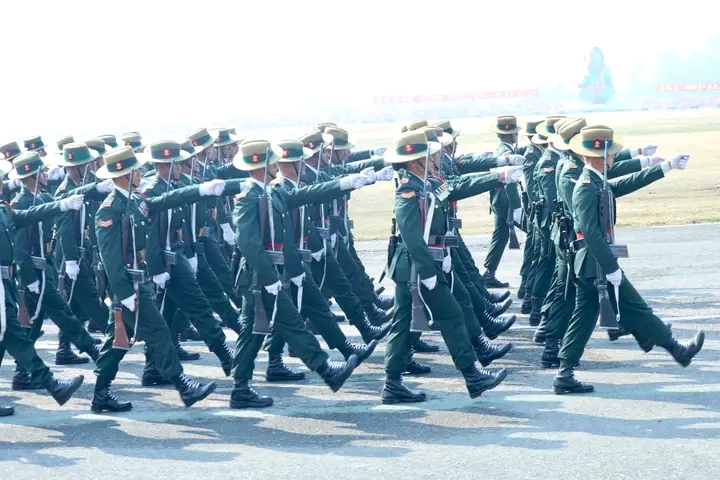
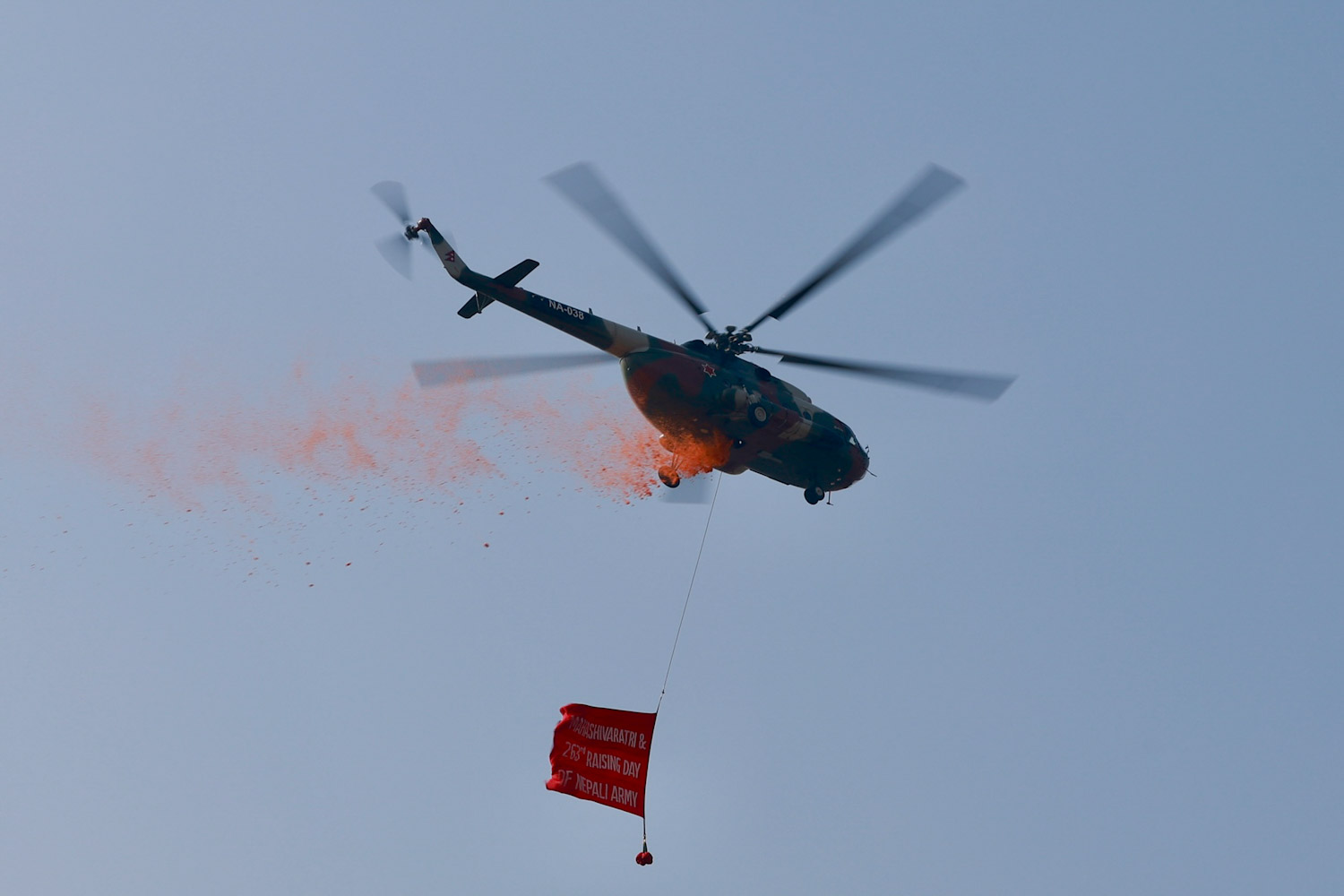
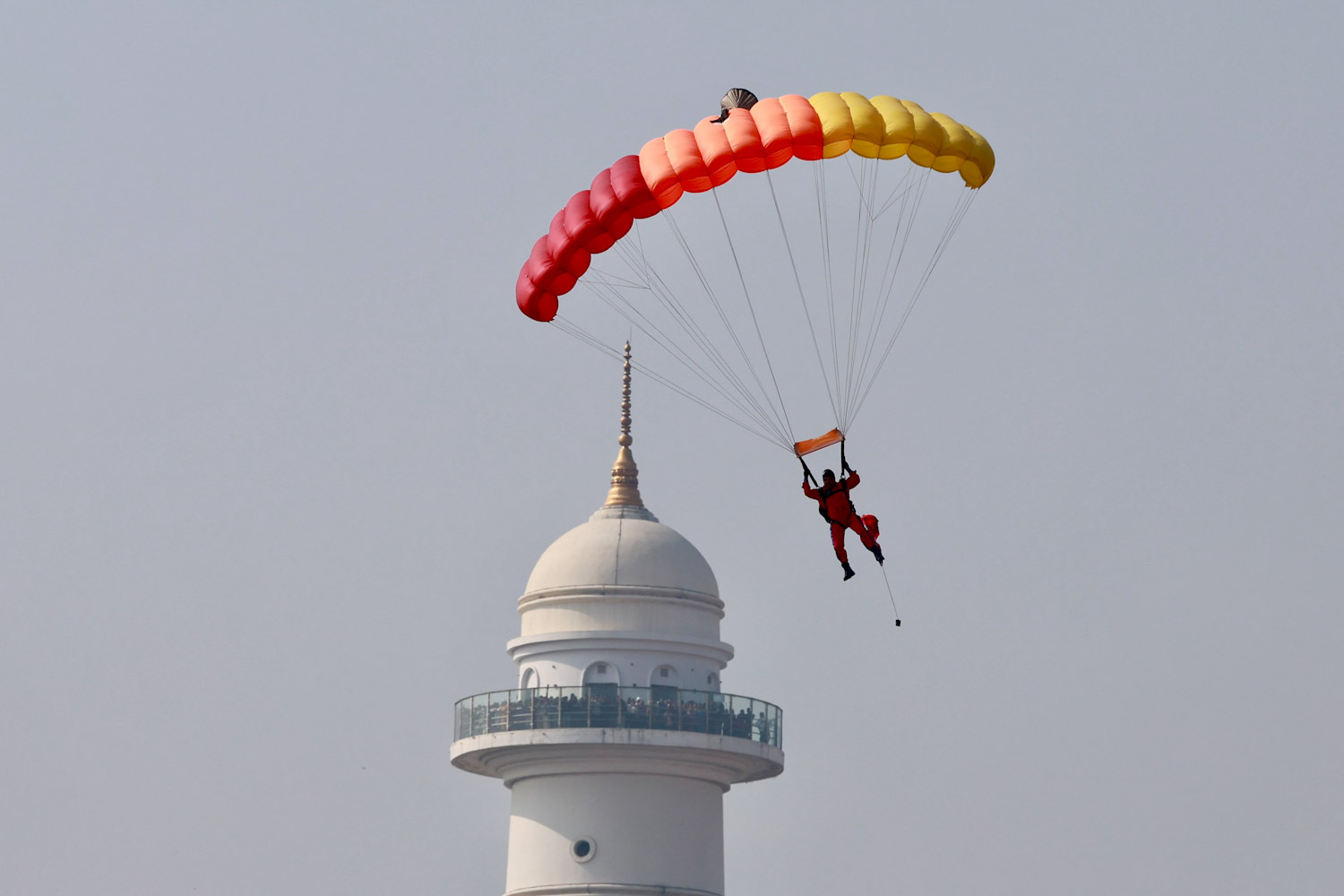
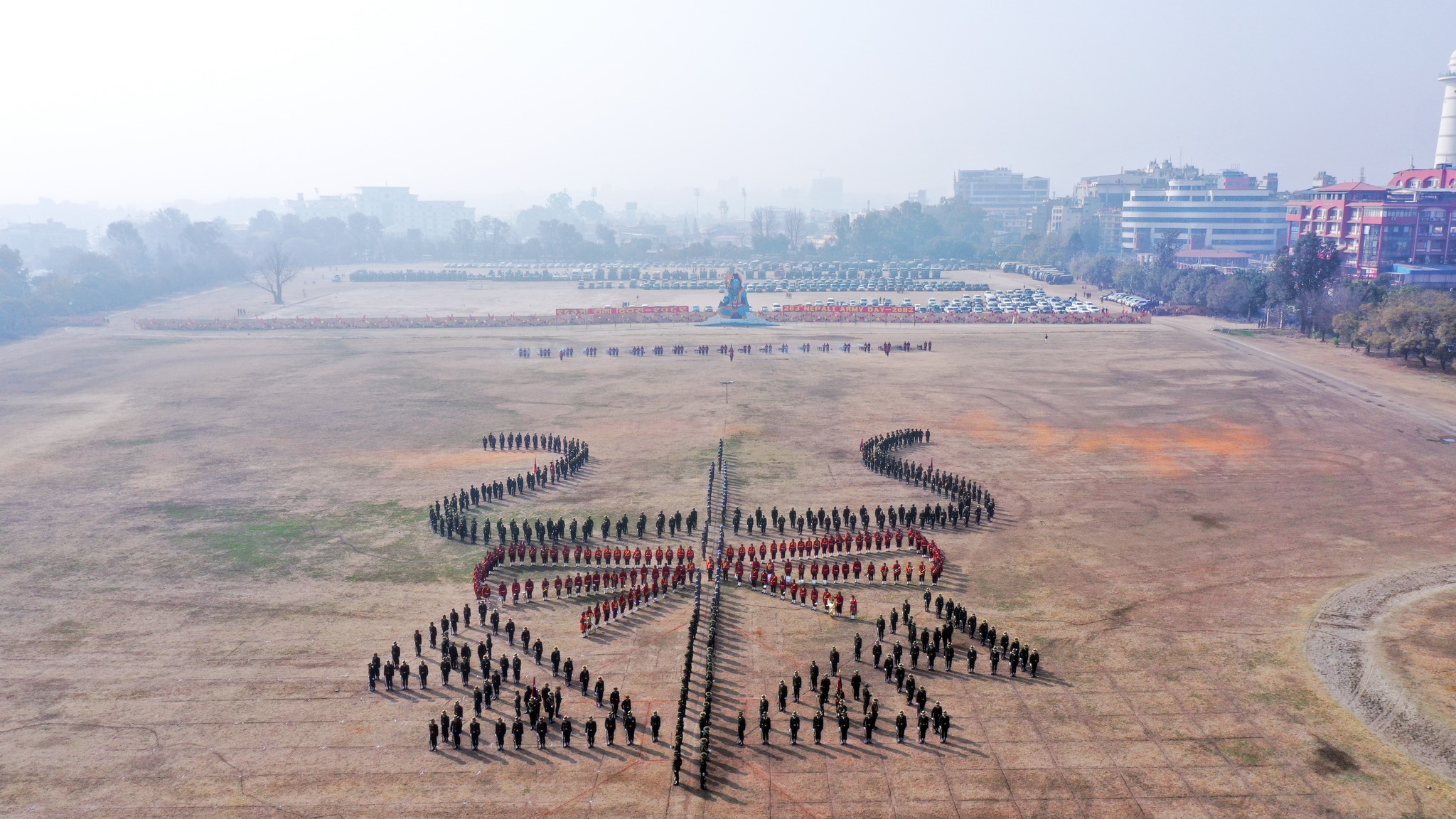
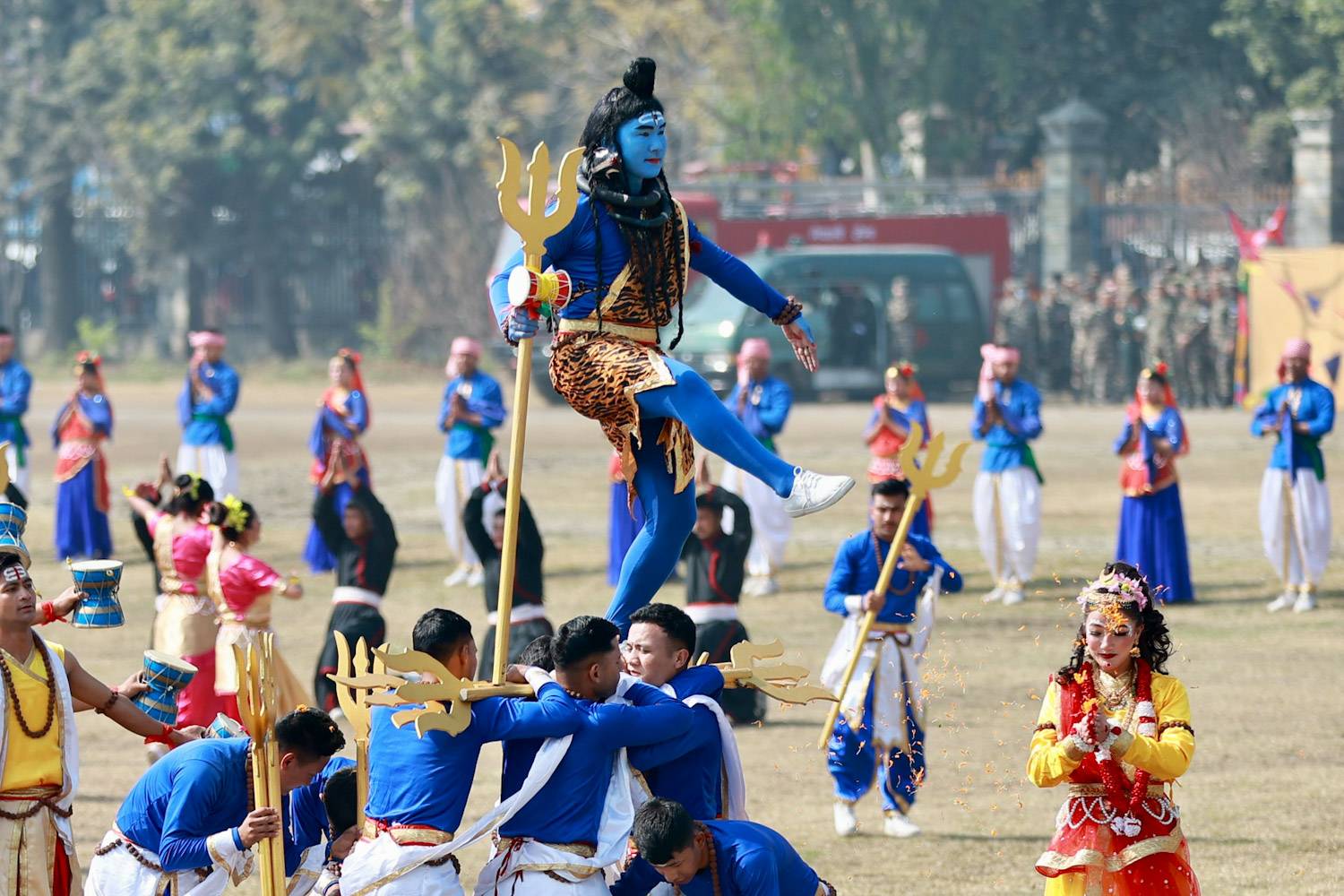
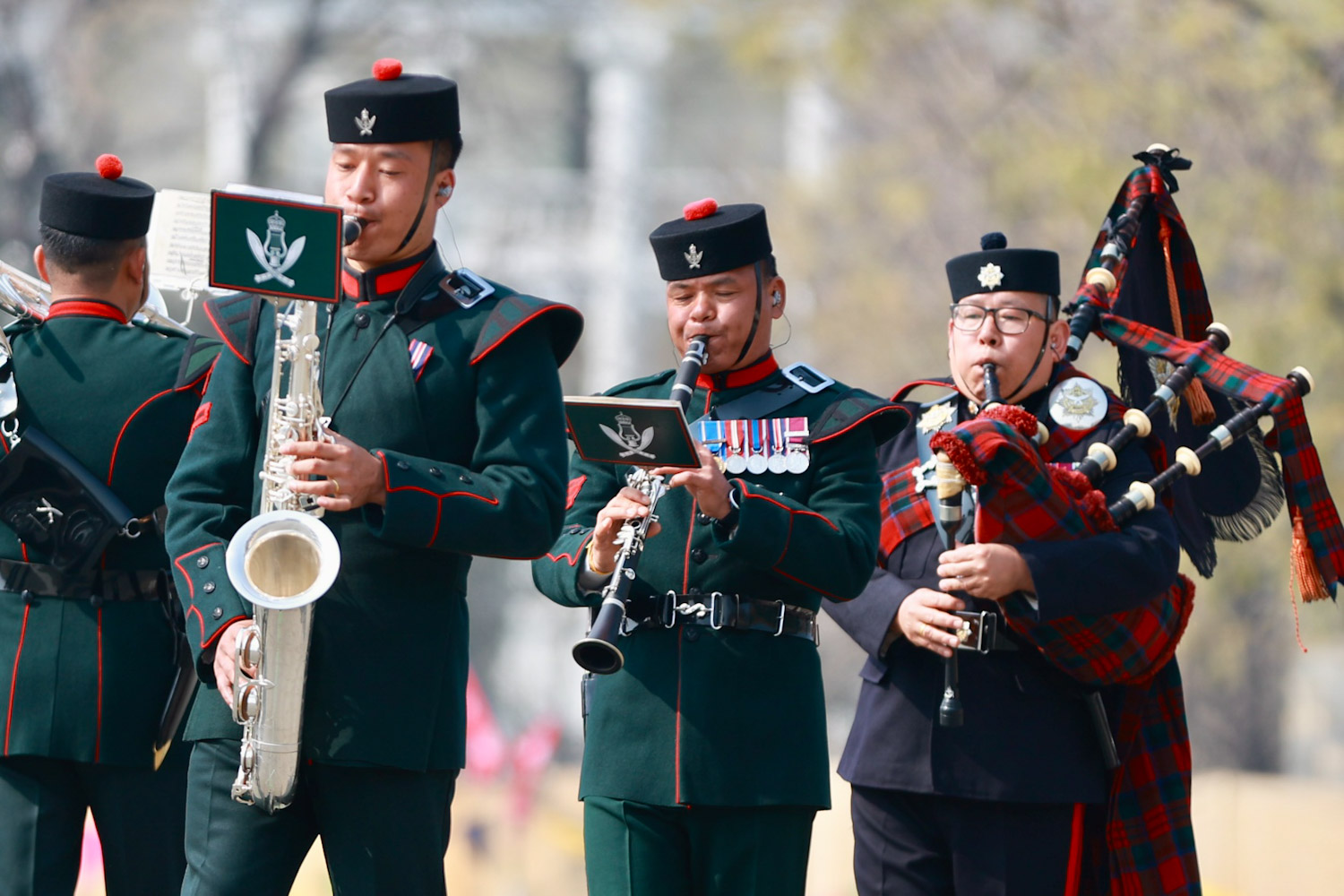
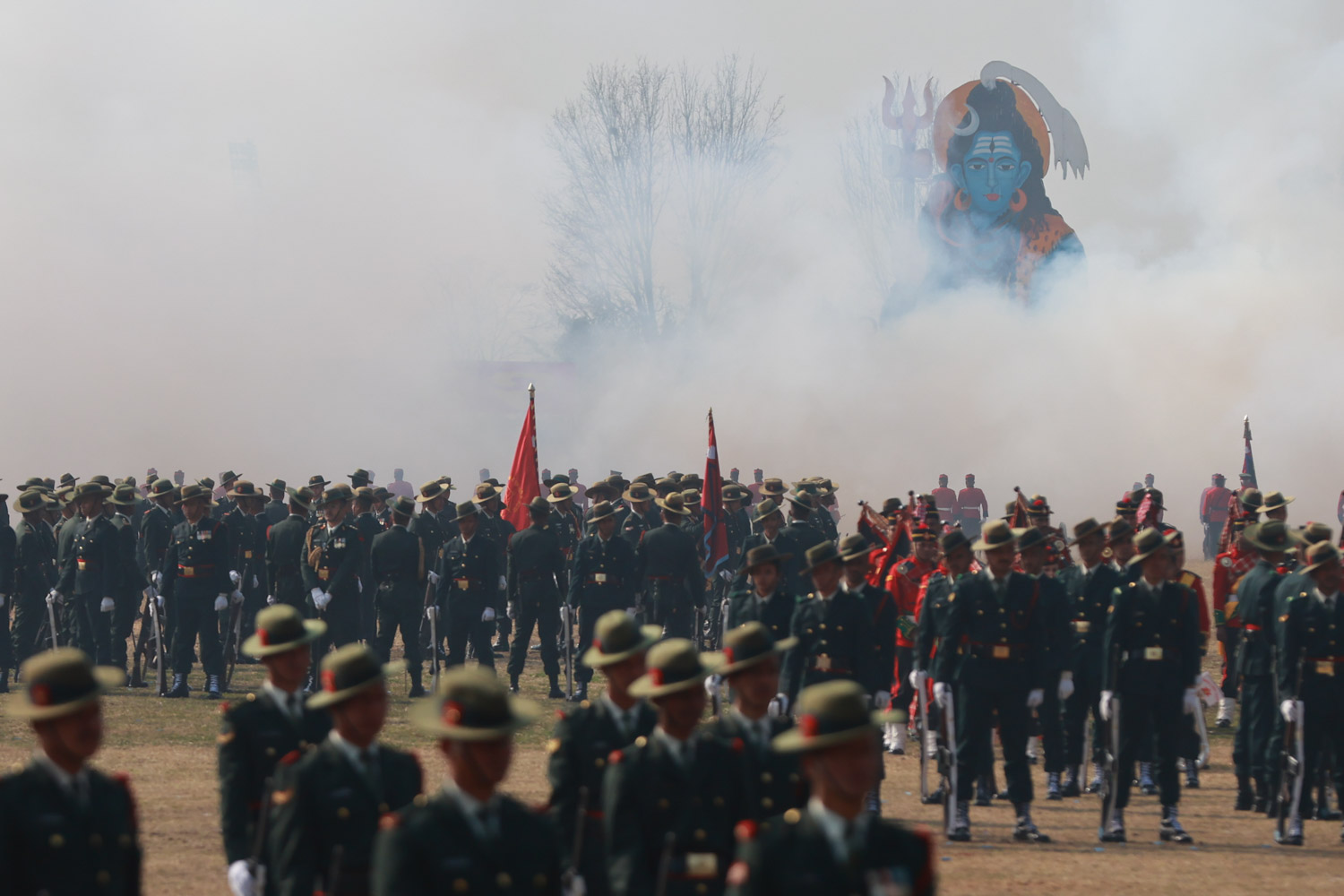
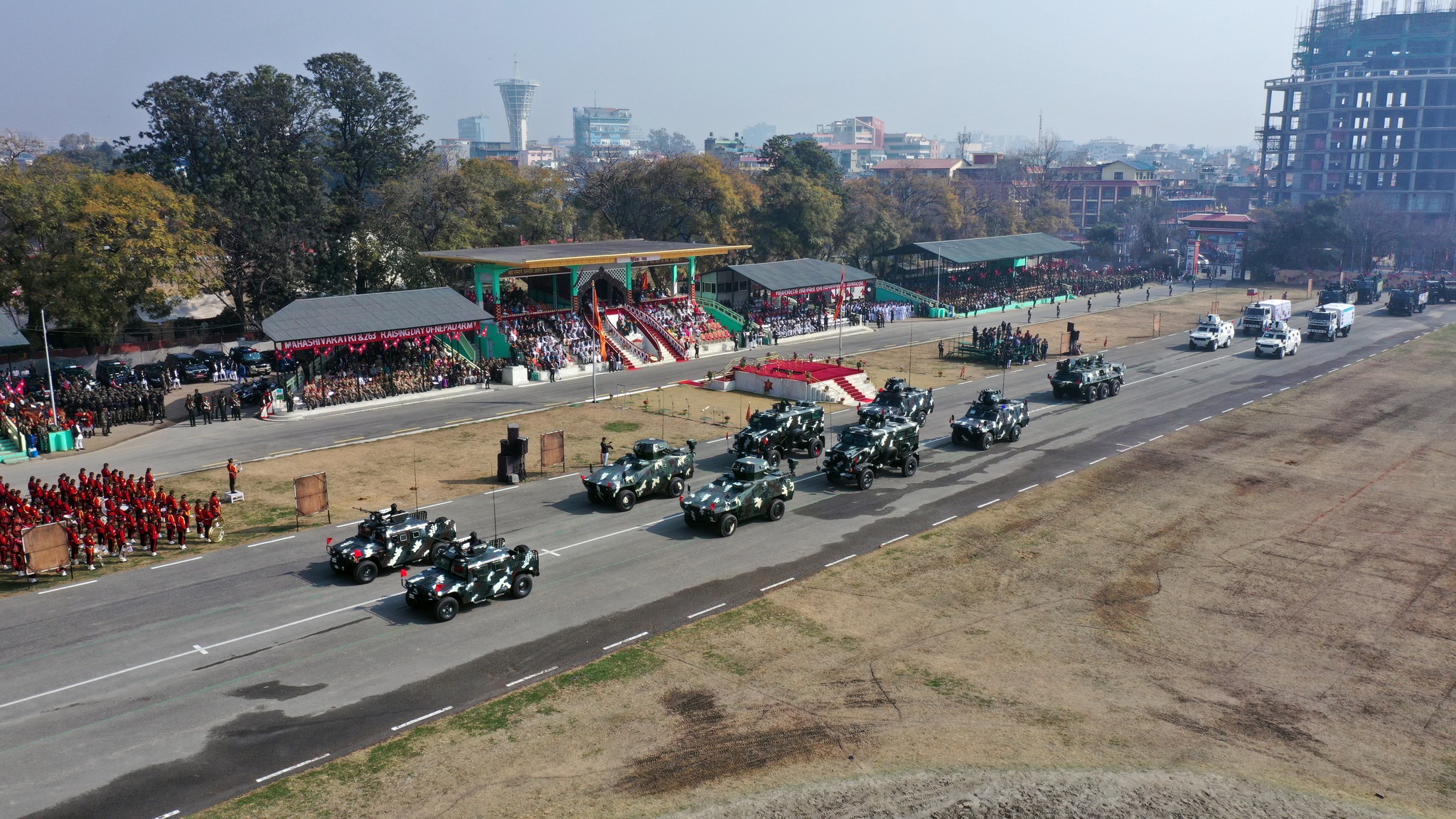
KATHMANDU: As Nepal’s oldest state institution, the Nepali Army marks its 263rd Army Day today, blending ceremony with symbolism. At Tundikhel’s Sanik Manch (Nepali Army pavilion), troops gather to celebrate not only the Army’s legacy but also Mahashivaratri, a festival the force observes as its own, reflecting both tradition and national pride.
Founded more than two and a half centuries ago during the era of national unification, the Army evolved from a Gorkhali fighting force into the backbone of the modern state. Its present organizational structure dates to 1819 BS, but its institutional memory stretches further-to campaigns that forged borders and guarded sovereignty.
The Nepali Army, a resilient and professional institution, safeguards Nepal’s sovereignty while supporting national development, welfare, and United Nations peacekeeping missions. Its disciplined planning and conservative stewardship ensure strategic foresight, uphold law, and sustain public trust. Beyond defense, the Nepali Army engages in nation-building, welfare initiatives, and legally regulated investment through the Army Welfare Fund, ensuring the well-being of serving and retired personnel and their families without compromising professional integrity. Its enduring presence reflects adaptability, national service, and an indispensable role in maintaining stability in a democratic Nepal.
Through wars, transitions and peace, the force has positioned itself as a custodian of independence and territorial integrity, cultivating a reputation built on discipline, patriotism and public trust. Here is everything you need to know about the Nepali Army:
Why is the Nepali Army considered a key institution in Nepal?
The Nepali Army is widely regarded as one of the most powerful and indispensable institutions in Nepal, serving as a pillar of national power and a critical instrument of the state. Unlike other national institutions that have struggled or become dysfunctional under the pressures of change, the Army has demonstrated an unparalleled ability to adapt to shifting political landscapes while maintaining its professional character and apolitical nature. It operates under the direction of elected representatives, safeguarding national interests and serving the people, and its stability and reliability over centuries make it an essential element of the country’s governance and security.
Public confidence in the Nepali Army remains remarkably high. A 2022 survey conducted by Kathmandu University and interdisciplinary analysts found that 91 percent of respondents considered the Army the most trusted national institution. This trust reflects the Army’s centuries-long record of professionalism, dedication, and service to the nation, and underscores the enduring importance of the Army in Nepal’s national life.
Throughout its history, the Nepali Army has successfully navigated sweeping political transformations-from monarchy to constitutional monarchy, insurgency to a federal republic to Gen-Z revolution. This adaptability is rooted in its institutional culture, which emphasizes discipline, professionalism, and loyalty to the state rather than to any particular political regime. By consistently following government directives and responding to societal needs, the Army has preserved its operational effectiveness and professional integrity. The ability to anticipate change, absorb new responsibilities, and maintain stability during periods of upheaval has been a defining trait of the institution.
Beyond territorial unification, the Nepali Army has been a central actor in internal restructuring and cultural integration. Its recruitment practices, which draw personnel from across the nation, help cultivate a sense of belonging and shared identity among diverse ethnic and regional groups. Through training and rehabilitation programs for retired personnel, the Army embeds notions of nationalism and civic responsibility within the broader society. Additionally, the Army has contributed to the integration of local folk cultures into a shared national culture. Symbols such as the national anthem, festivals, rituals, and sports, along with the Army’s involvement in ceremonial and state functions, serve to strengthen national cohesion and promote a collective Nepali identity.
How has the Nepal Army changed since the Maoist insurgency and what is its current strength?
Since the Maoist insurgency began in 1996, the Nepal Army has undergone major transformations. At that time, the army had around 46,000 personnel, but it expanded to over 96,000 to address the growing security challenges. The creation of the Armed Police Force in 2001 further strengthened Nepal’s security framework. After the signing of the Comprehensive Peace Agreement (CPA) in 2006, the focus shifted to restructuring and rightsizing the army for a post-conflict era. Today, the army has a sanctioned strength of 96,477 positions, with about 81,000 active personnel, including about 7,000 women.
How is the Nepal Army divided regionally?
The Nepal Army is structured into eight regional divisions to ensure operational readiness, internal security, border management, and disaster response across the country. Each division is commanded by a Major General and is responsible for a specific geographic area.
The Eastern Division, headquartered in Itahari, was established on January 29, 2003, and covers 16 districts across the former Sagarmatha, Koshi, and Mechi zones, with an area of 28,456 sq. km.
The Western Division, based in Pokhara, was established on February 13, 2003 (initially as Central Division) and later renamed in 2004. It covers 16 districts with an area of 29,398 sq. km.
The Mid Division, established on November 16, 2004, is headquartered in Hetauda and oversees central operational responsibilities.
The Valley Division, originally formed as the Valley Command Office on May 19, 2003, was later renamed and relocated to Narayanhiti in Kathmandu, focusing on the strategic security of the Kathmandu Valley.
The North Western Division, currently headquartered at Tribhuvan Sainik Shivir in Surkhet, was initially established in Nepalgunj in 2001 and later shifted and renamed.
The Mid-Western Division, also headquartered in Surkhet, was established on December 29, 2001, and covers 15 districts with an area of 42,378 sq. km.
The Far Western Division, based in Dipayal, was established on July 5, 2004. It covers 9 districts with an area of 19,539 sq. km and operates under the motto “Bhakti Nai Sakti Ho.”
The newest formation, the Mid-Eastern Division, was established on May 12, 2017. Initially located in Dharapani, Dhanusha, it was later relocated to Bardibas Sainik Shivir in Mahottari in 2020, strengthening security coverage in Madesh Province.
Together, these eight divisions provide nationwide military coverage and form the core regional command structure of the Nepal Army.
What is military culture, and why is it important?
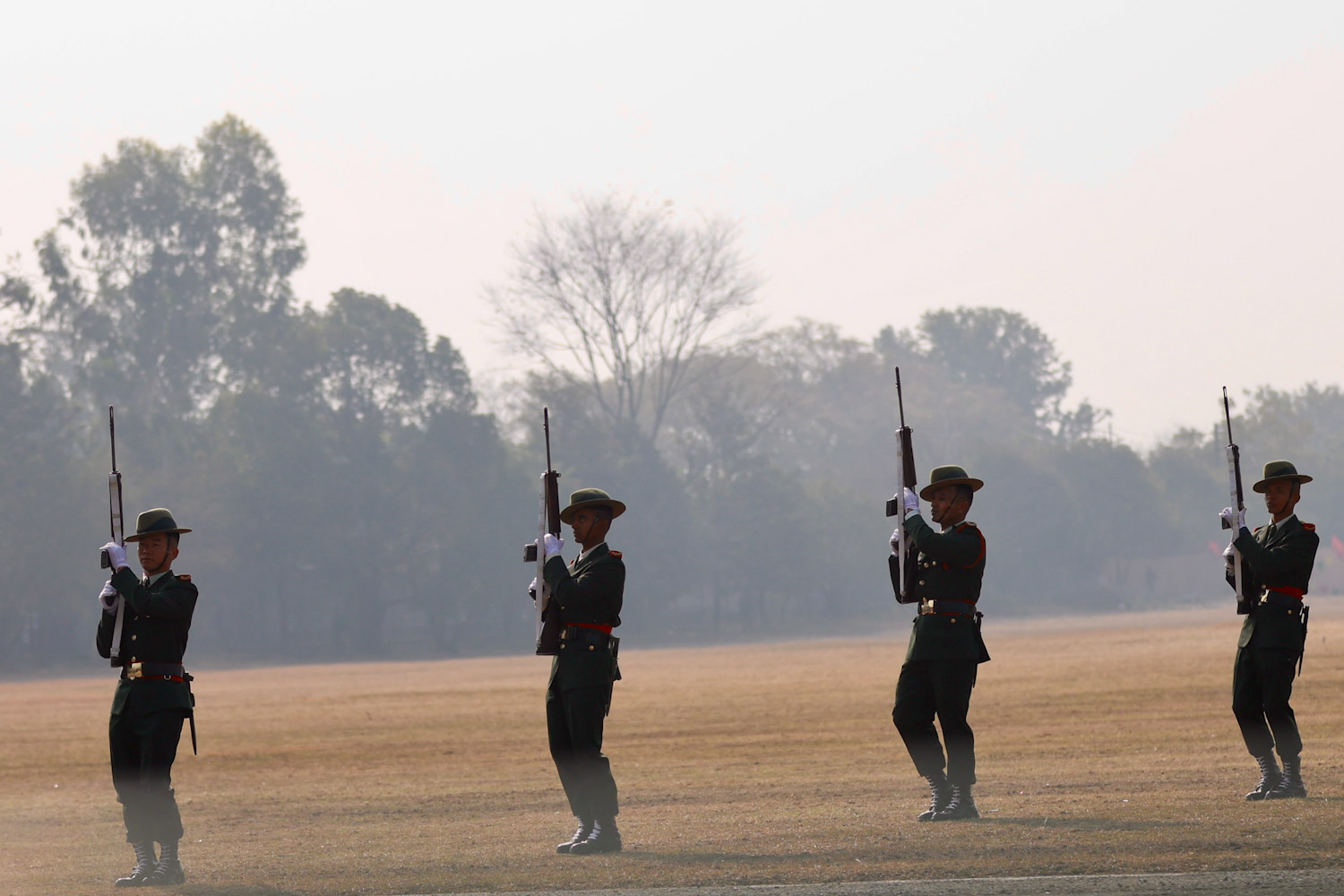
Military culture within the Nepali Army is the sum of its traditions, norms, and accumulated institutional knowledge, passed down from one generation to the next. It informs every aspect of Army life, from recruitment and training to administration and combat operations. This culture creates an environment where personnel act in accordance with established principles, often reflexively, ensuring continuity and consistency in performance. Among the most critical of these principles is understanding the political environment without being drawn into it. This cultural foundation enables the Army to execute its duties professionally, even amidst political or social turbulence, preserving both the institution’s effectiveness and the trust of the public.
What is the structure of the military rank system in Nepal?
The military rank structure of Nepal is used by the Nepali Army, which is the only military component of the country’s armed forces. As a landlocked nation, Nepal does not maintain a navy, and therefore its ranking system is designed specifically for land-based military organization. The rank system reflects a blend of the Indian subcontinent military tradition along with Nepal’s own historical and institutional practices.
The hierarchy begins with the lowest rank, Followers, followed by Private, Lance Corporal, Corporal, and Sergeant, which form the core of the enlisted force. Above them are the senior non-commissioned and junior commissioned ranks, including Warrant Officer Second Class, Warrant Officer First Class, and Subedar Major.
The commissioned officer ranks start with Officer Cadet, progressing to Second Lieutenant, Honorable Lieutenant, Lieutenant, Honorable Captain, and Captain. Mid-level leadership positions include Major, Lieutenant Colonel, and Colonel.
At the senior command level, the ranks include Brigadier General, Major General, and Lieutenant General. The highest position in the Nepal Army is General, held by the Chief of Army Staff (COAS), who serves as the head of the entire military institution.
This structured hierarchy ensures command clarity, operational discipline, and administrative organization throughout the Nepal Army.
What role did the Nepal Army play during the Gen Z protests on September 8–9, 2025?
The Gen-Z protests of September 2025 were a defining moment in Nepal’s recent political history. Public anger had been simmering for months, fueled by widespread corruption, unemployment, and elite privilege, and intensified dramatically when the government banned 26 major social media platforms on September 4, 2025. Social media trends like #NepoBaby had already brought national attention to these issues, and the ban served as a spark that ignited a nationwide movement led by young students, coordinated digitally, and largely leaderless.
On September 8, clashes between protesters and security forces at the parliament building resulted in the deaths of at least 75 civilians, most from gunshot wounds by the Nepal Police, and injuries to over 2,000 others. The protests escalated rapidly, and on September 9, enraged protesters and mobs had torched iconic government buildings, including government headquarters Singha Durbar, the Parliament, the President’s Office, the Supreme Court, and several other state institutions. Amid this chaos, the question of the Nepal Army’s role loomed large.
Constitutionally, the Army could only be deployed under formal authorization from the President and Cabinet, as stipulated by Article 267(6), requiring recommendations from the National Security Council. At the height of the crisis, such approval was nearly impossible to obtain due to political paralysis and the caretaker status of the government. Understanding both the legal constraints and the grave risk of escalation, the Nepal Army chose a posture of strategic restraint. Rather than confronting unarmed youth directly, after vacuum, the Nepali Army focused on patrolling streets, enforcing curfews, protecting key state installations, and maintaining public order while avoiding excessive force that could have escalated into full-scale civil conflict.
At the same time, the Army actively engaged with the movement. Following the resignation of former Prime Minister Oli on September 9, Chief of Army Staff General Ashok Raj Sigdel called for dialogues with Gen Z representatives and other stakeholders at the direction of President Ramchandra Poudel. These discussions aimed to facilitate a smooth political transition, helping identify leadership that could uphold the movement’s spirit while stabilizing the country. Part of this process included the consideration of appointing Sushila Karki, a former Chief Justice, as interim Prime Minister, to lead until new elections could be held.
Throughout these events, the Army’s approach was guided by a careful balance of legality, strategic foresight, and commitment to democratic norms. By avoiding direct confrontation with protesters, it preserved public trust, protected the sovereignty of the state, and minimized the risk of foreign intervention or international condemnation. The Nepal Army’s conduct during the Gen Z protests demonstrates that sometimes restraint and facilitation-rather than immediate force-can be the most effective way to protect both citizens and institutions, ensuring that political crises are resolved through negotiation and constitutional processes rather than violence.
In what ways did the Nepali Army contribute to territorial unification?
The Army’s contribution to territorial unification was foundational to Nepal’s nation-building process. Under King Prithvi Narayan Shah and his successors, the Army was instrumental in consolidating a fragmented set of principalities into a unified state. This process involved military campaigns that extended Nepal’s external boundaries, laying the groundwork for a cohesive national identity. Strategic victories, such as the integration of Naya Muluk-Banke, Bardia, Kailali, and Kanchanpur-demonstrated the Army’s capacity not only to secure borders but also to assert central authority over diverse regions. The unification campaigns were complemented by administrative consolidation, adoption of Nepali as the official language, and the reinforcement of legal and governance structures. In these ways, the Army acted as both a unifying and stabilizing force, providing the structural basis for a modern Nepal.
Nationalism, the psychological and emotional bond citizens feel toward their country, has been central to Nepal’s nation-building efforts. The Nepali Army has historically acted as a “school for the nation,” cultivating patriotism and reinforcing a shared sense of identity. Through inclusive recruitment policies and the integration of personnel from diverse racial and cultural backgrounds, the Army has mirrored the broader national fabric more closely than many other state institutions. Its involvement in state ceremonies, cultural promotions, and peacekeeping operations further consolidates national pride and unity. The Army’s active engagement in building infrastructure, facilitating access, and participating in community welfare has strengthened civic trust and promoted cohesion, ensuring that nationalism is not confined to a small elite but spread across the country.
How many major wars did the Nepal Army fight against external forces beyond the Unification Campaign?
Beyond the Nepal’s Unification Campaign initiated by Prithvi Narayan Shah in the mid-18th century, the Nepal Army fought three major external wars that fundamentally shaped the country’s borders, diplomacy, and military identity. These conflicts — the Nepal–Tibet–China War (1791–1792), the Anglo–Nepal War (1814–1816), and the Nepal–Tibet War (1855–1856) — were defining chapters in Nepal’s struggle to protect its sovereignty in a turbulent regional landscape dominated by expanding empires.
The first great external confrontation erupted in the high Himalayas in 1791. Trade between Nepal and Tibet had flourished for centuries, particularly through the circulation of Nepali silver coins in Tibetan markets. However, disputes over currency purity, trade imbalances, and political tensions escalated into open conflict during the regency of Bahadur Shah. Nepali forces advanced northward into Tibetan territory in 1791, initially gaining ground. But the situation changed dramatically in March 1792 when Qing China intervened militarily in support of Tibet.
A large Chinese force advanced southward, pushing toward Nuwakot and the Betrawati region, dangerously close to Kathmandu. Facing overwhelming numbers and logistical strain, Nepal negotiated peace. The 1792 treaty required Nepal to send quinquennial missions to China, establishing a tributary diplomatic relationship. Though pressured by imperial power, Nepal preserved its territorial integrity and sovereignty. It was a sobering lesson in regional geopolitics — one that underscored both Nepal’s ambition and its vulnerability.
Two decades later, Nepal faced a far more formidable adversary: the British East India Company. By the early 19th century, Nepal’s territorial expansion had stretched westward to the Sutlej River and southward into the fertile Terai plains. Border disputes and rising tensions with British India culminated in war on 22 October 1814. The Anglo–Nepal War unfolded across multiple fronts, from Dehradun in the west to Makawanpur in the east. Among its most legendary episodes was the Battle of Nalapani (October–November 1814), where Captain Balbhadra Kunwar commanded roughly 600 defenders at Khalanga fort against more than 3,500 British troops under General Gillespie. Despite superior British artillery and manpower, the Nepali defenders resisted fiercely. Gillespie himself was killed during the assault. Only after the British cut off the fort’s water supply did the defenders withdraw on 30 November 1814, marching out with honor rather than surrender. The British later erected a memorial praising their “brave enemy,” a rare tribute in colonial warfare.
Fighting continued through 1815 in western strongholds such as Jaithak, Almoda, and Malaun. Veteran commanders including Amar Singh Thapa and Bhakti Thapa became symbols of resistance, even as the material imbalance between the two armies proved decisive. The war concluded with the Treaty of Sugauli, signed on 4 March 1816. Nepal ceded approximately 40,000 square kilometers of territory, including Kumaon, Garhwal, and parts of the Terai. The Mechi and Mahakali rivers were established as Nepal’s eastern and western boundaries.
Though territorially diminished, Nepal retained its independence — a crucial distinction in an era when much of South Asia succumbed to colonial rule. The British, impressed by Gurkha valor, soon began recruiting Nepali soldiers into their ranks, turning former adversaries into celebrated warriors on global battlefields.
Nearly forty years later, Nepal again looked north. Under the leadership of Prime Minister Jung Bahadur Rana, tensions with Tibet resurfaced over trade disputes, border issues, and compensation claims related to Nepali merchants. In March 1855, Nepal declared war. Approximately 12,000 troops were mobilized, advancing through high-altitude passes such as Kerung, Kuti, Mustang, and Walungchungola. The campaign was waged in brutal winter conditions where snow, cold, and thin air proved as deadly as combat. Nepali forces captured key positions, and after months of fighting, Tibet sought peace. The conflict ended with the Treaty of Thapathali in 1856, which granted Nepal annual compensation and reinforced trade privileges. Unlike the painful outcome of Sugauli, this war enhanced Nepal’s diplomatic standing in the Himalayan region.
Taken together, these three wars represent the major external military conflicts fought by the Nepal Army beyond unification. The Nepal–Tibet–China War tested Nepal against imperial China; the Anglo–Nepal War fixed the boundaries of the modern state while preserving independence; and the Nepal–Tibet War of 1855–56 reaffirmed Nepal’s regional influence. They were fought across river valleys, mountain ridges, frozen passes, and fortified hilltops. They involved muskets and cannons, siege tactics and diplomacy, endurance and sacrifice.
Most importantly, they ensured that Nepal — despite territorial losses and immense pressure — remained sovereign in a century defined by imperial expansion. The Nepal Army emerged from these trials with a reputation for courage and resilience that transcended borders. In the sweep of history, it fought three decisive external wars beyond unification — and in doing so, secured the independence that continues to define the nation today.
How does the Nepali Army ensure inclusiveness and representation across ethnic, regional, and gender groups?
The Nepali Army has long upheld the principles of national inclusiveness, reflecting Nepal’s multi-ethnic, multilingual, multi-religious, and multicultural identity while fostering allegiance to national unity, independence, and prosperity. Unlike some foreign Gurkha regiments that recruit from specific ethnic groups, the Nepali Army has consistently sought to maintain a national character by providing opportunities across all castes, ethnic communities, genders, regions, and religions. This commitment predates state-mandated inclusion policies and has been formalized through institutional practices such as ethnic-based battalions for Magar, Gurung, Kiranti/Limbu, and Madhesi communities, while other units operate on open competition ensuring equal opportunity for all groups.
In alignment with Nepalese law requiring that 45% of vacant government positions be reserved for excluded groups, the Nepali Army amended its Army Act in 2006 to codify inclusion. Of these reserved positions, 20% are allocated to women, 32% to Janajati communities, 28% to Madheshi communities, 15% to Dalits, and 5% to individuals from remote regions. Recruitment remains entirely voluntary and competitive, ensuring that no citizen is compelled to join against their will, while still providing fair opportunities to those qualified and eager to serve.
Over time, the Nepali Army has continued to make conscious efforts to strengthen inclusivity, particularly in promoting minority participation and advancing gender representation. While the racial and cultural composition of the Army does not perfectly mirror the national population, it represents a closer approximation than most other state institutions. Through decades of deliberate policy and practice, the Nepali Army has established itself as a model of inclusive national service, balancing voluntary enlistment with structured opportunities for historically marginalized and underrepresented groups.
How has the Nepali Army contributed to United Nations peacekeeping operations over the years?
Since Nepal became a member of the United Nations in 1955, the Nepali Army has played a significant and enduring role in global peacekeeping, establishing itself as one of the most reliable and committed troop-contributing countries in the world. Its engagement began modestly in 1958 with the deployment of five military observers to the United Nations Observer Group in Lebanon (UNOGIL), and later expanded in 1974 when the Purano Gorakh Battalion became the first full Nepali contingent deployed to Egypt. Over more than half a century, the Army has participated in 44 UN missions, involving over 162,496 personnel in a variety of roles, from military observers and staff officers to full battalion deployments. Beyond routine deployments, Nepali officers have held senior positions at UNDPKO and Force Headquarters, shaping strategic decision-making and contributing expertise in planning and operations.
The Nepali Army has also provided specialized capabilities in critical areas such as engineering, medical support, and Special Forces contingents, often operating under challenging and high-risk conditions. This dedication has earned widespread international acclaim for professionalism, efficiency, and discipline. The human cost of these operations has been significant: to date, 74 personnel have made the ultimate sacrifice in service of world peace, and 77 more have been permanently disabled, underscoring both the bravery and commitment of the force.
As of December 26, 2025, Nepal maintains an active presence in ten UN missions worldwide, deploying 4,302 soldiers, including 391 female personnel, and continues to hold the distinction of being the leading troop-contributing country. Demonstrating its ongoing commitment, Nepal has pledged to provide up to ten thousand peacekeepers if requested by the United Nations. Through decades of sustained participation, the Nepali Army has not only advanced Nepal’s standing on the global stage but has also exemplified how a relatively small nation can make a profound and lasting impact on international peace and security, while reinforcing its own tradition of discipline, professionalism, and service to humanity.
How has the Nepali Army addressed human rights and international humanitarian law in its operations?
The Nepali Army has taken significant steps to institutionalize respect for human rights and international humanitarian law (IHL), particularly following the counter-insurgency operations triggered by the sudden attack on the Dang Barrack on November 23, 2001. During those operations, while the Army made efforts to operate within domestic laws, some human rights violations occurred, either as unintended errors in the fog of battle or as the criminal actions of individuals. Recognizing that such violations were unacceptable, the Nepali Army identified the need for a dedicated Human Rights organization within the force to ensure accountability, oversight, and awareness.
In response, a team comprising the Adjutant General and the Judge Advocate General visited the United Kingdom in May 2002 to study the Human Rights organization of the British Army and gather insights from other armed forces through defense attachés. Following these observations, recommendations, and guidance from legal experts and academics, the Nepali Army formally established a Human Rights Cell under the Adjutant General branch on July 8, 2002. This Cell was later upgraded to the Directorate of Human Rights (DHR) in 2063 BS (2006 CE). Since its inception, the Directorate has focused on implementing and promoting both International Human Rights Law (IHRL) and IHL within the organization.
The Directorate operates through specialized desks, including national, international, investigation, training, and military personnel desks, and has been instrumental in issuing directives and policies to ensure compliance with human rights standards. Notable directives include COAS Directives No. 02/060 (March 12, 2004), No. 01/061 (January 10, 2005), and special instructions on September 14, 2006, all emphasizing respect for IHRL and IHL during operations and judicial proceedings. Allegations of violations are systematically addressed through a structured procedure: the complaint is reviewed by the Directorate, referred to the concerned unit for a court of inquiry, passed to the Judge Advocate General for further investigation if needed, and may ultimately lead to a court-martial. Verdicts are formally published in Army Orders and communicated to relevant parties.
Training and awareness form a core component of the Directorate’s mandate. IHRL and IHL are integrated into all Army career courses, with the Directorate running six-day basic courses and five-day advanced courses in cooperation with the International Committee of the Red Cross (ICRC). To date, more than 42,000 army personnel have received training on these topics. Gender equality and United Nations Security Council Resolutions 1325 and 1820 are also emphasized through two-day basic and six-day “Training of Trainers” programs, with over 2,800 personnel trained. To facilitate learning and operational compliance, the Directorate has published resources such as the Soldier’s Card, Rules of Engagement (ROE) Card, Human Rights Booklet, Human Rights Yearbook, and the “Commander’s Handbook on LOAC.” In addition, multimedia tools including documentaries and docu-dramas, like “Tara,” highlight principles of gender equality and women-friendly environments within the Army.
The Nepali Army has demonstrated a strong commitment to accountability. Personnel found guilty of violating human rights or humanitarian laws face disciplinary and punitive actions, including imprisonment, demotions, and prohibitions from participating in UN peacekeeping missions. Through these initiatives, the Nepali Army has institutionalized respect for human rights, integrated IHL into its operations, and established mechanisms to both educate personnel and enforce accountability, ensuring that its actions align with domestic and international legal and ethical standards.
How is the Nepali Army involved in the protection and conservation of Nepal’s forests and wildlife?
Nepal, though small in land area, is blessed with extraordinary geographic diversity, which gives rise to an equally rich variety of flora and fauna. Preserving this natural wealth has long been a challenge, particularly in the face of deforestation and other environmental pressures. Recognizing this, the Nepali Army was entrusted in 1975 with the mission to protect endangered species, maintain biodiversity, and safeguard Nepal’s natural heritage. Since that time, the Army has played a central role in the conservation of twelve of Nepal’s twenty-two protected areas, deploying twelve battalions and independent companies totaling around 6,778 personnel across forested and park regions spanning nearly 9,767 square kilometers.
The Army’s contribution goes beyond mere patrolling of parks and reserves; it actively works to prevent illegal poaching, encroachment, and deforestation while supporting wildlife research, census operations, and the rehabilitation of wild species. It also engages with local communities to foster awareness of conservation and promote environmental stewardship. This outreach includes afforestation initiatives, assistance with the repair and renovation of schools and shrines, provision of health services, the development of water supply systems, and support for infrastructure such as bridges and roads that improve access to remote areas. The Army’s organizational capacity enables rapid deployment during natural disasters, further reinforcing its role as a key guardian of Nepal’s environment.
The Army is currently deployed in vital protected areas across the country, including Kosi Tappu Wildlife Reserve in Kushaha, Sagarmatha National Park in Namche, Chitwan National Park in Kasara and its Western Sector in Nawalparasi, Parsa Wildlife Reserve in Adhabhar, Langtang National Park in Dhunche, Rara National Park in Mugu, She-Phoksundo National Park in Dolpa, Bardiya National Park in Bardiya, Khaptad National Park in Bajura, Suklaphanta Wildlife Reserve in Kanchanpur, and the Nagarjun and Shivapuri sectors of Shivapuri-Nagarjun National Park.
The effectiveness of the Army’s efforts is visible in species recovery programs, such as the rhinoceros population in Chitwan National Park, which grew from fewer than one hundred individuals in the late 1960s to over 440 in recent counts due to the Army’s sustained anti-poaching operations. By combining protection, research support, disaster response, and community engagement, the Nepali Army has not only preserved Nepal’s natural heritage but also strengthened local connections to conservation efforts, making environmental protection an integral part of its broader service to the nation.
What role has the Nepali Army played in Nepal’s developmental work, particularly in infrastructure?
The Nepali Army has played a pivotal role in the nation’s developmental journey, particularly in connecting remote areas to economic and administrative centers. From its early days, the Army constructed roads, forts, and trails to facilitate military logistics, which over time evolved into essential infrastructure supporting national integration and economic development. These projects have not only improved physical connectivity but have also fostered a sense of inclusion and belonging among historically isolated communities. Beyond road building, the Army has been actively involved in constructing micro-hydro projects, providing drinking water, veterinary services, agricultural education, health services, and sanitation facilities in rural regions, demonstrating its holistic approach to nation-building.
Infrastructure development has been a key focus of the Army’s contribution. Over the decades, it has completed more than a thousand roads across the country, opening remote and rugged terrains and linking north-south corridors. Significant projects include the Karnali Corridor, connected to the national road network through the installation of a Bailey bridge at Chuwa Khola in Humla, and the Kathmandu–Terai Madhesh Fast Track, which is set to provide a shorter and more efficient route between the Kathmandu Valley and the mid-Terai, with dozens of bridges and tunnels under construction. In addition, the Army has constructed or upgraded strategic roads such as Hile–Ldguwaghat, Katari–Okhaldhunga, Trishuli–Somdang, Baglung–Beni–Jomsom, and Kathmandu–Terai Fast Track, among many others, while several additional projects are ongoing, demonstrating a sustained commitment to national connectivity.
The Army’s involvement in these projects reflects not only its engineering and organizational expertise but also a broader vision of national development, where infrastructure serves as a bridge between remote communities and the central administration, promoting social inclusion, economic growth, and national unity. By leveraging its disciplined manpower, institutional integrity, and ability to operate in challenging terrain, the Nepali Army has become one of Nepal’s most effective and dedicated forces supporting the country’s development agenda, particularly in regions where civilian capacity is limited.
How has the Army managed disaster response and emergency services?
The Nepali Army has consistently served as the primary responder to natural disasters and emergencies, reinforcing its nation-building role by protecting life and property. Following catastrophic earthquakes, such as the 7.6 Richter scale earthquake in Barpak, Gorkha, and the 6.8 Richter scale earthquake in Kodari, Dolakha, the Army led search, rescue, and relief operations. These interventions saved countless lives, provided medical care, and helped rebuild infrastructure. Through coordinated disaster management, the Army strengthens state legitimacy, fosters public trust, and ensures that even the most remote populations remain connected and supported, further promoting the sense of belonging that underpins nation-building.
How does the Nepali Army ensure the professionalism and preparedness of its personnel through training?
Training is the cornerstone of professionalism in any army, and the Nepali Army places the highest priority on ensuring that its personnel are adequately prepared for the diverse challenges they may face. Following the advice of King Prithivi Narayan Shah, who famously emphasized that “the abilities of the soldiers need to be polished at all times,” the Nepali Army has institutionalized a robust system of professional, specialist, and vocational training for both its soldiers and officers.
The foundation of modern military training in Nepal was laid with the establishment of the Nepali Army School in Chhauni in 1953. Since then, the Army has expanded its training infrastructure under the Directorate General of Military Training, creating multiple specialized academies and schools that cover every aspect of military professionalism. These include the NA Command and Staff College in Shivapuri, the NA School in Nagarkot, the Nepali Military Academy in Kharipati, the NA Recruit Training Center in Trishuli, the Jungle Warfare School in Amlekhgunj, the High Altitude (Mountain Warfare) School in Mustang, the Intelligence School in Kharipati, the Logistics School in Chhauni, the Birendra Peace Operations Training Center in Panchkhal, the Para Training School in Maharajgunj, and various arms- and service-specific schools.
In addition to formal academies, daily professional training is conducted within all units, from independent companies to divisions, following a structured cycle that lasts several months each year. The Army has a policy requiring personnel at every rank, from Private to General, to complete specific mandatory training as a prerequisite for promotion. Beyond these compulsory courses, soldiers and officers can acquire optional specialized training to enhance their skills, and those who excel are often sent abroad for advanced international training programs.
To remain current with advances in military technology and tactics, the Nepali Army continuously updates its training programs. Modern courses integrate instruction on the latest equipment, operational practices, and conduct. Importantly, in line with the Army’s longstanding commitment to uphold human rights, all training programs include components on Human Rights, Laws of Armed Conflict, and International Humanitarian Law, ensuring that professionalism is paired with ethical and legal responsibility.
Through this comprehensive training framework, the Nepali Army maintains a highly skilled, versatile, and disciplined force capable of responding effectively to national and international challenges while preserving its unblemished reputation.
What role does the Nepali Army play in safeguarding Nepal’s sovereignty and supporting the nation today?
The Nepali Army is a central pillar of Nepal’s security and resilience. Unlike larger neighbors such as India and China, whose massive forces focus on border defense and strategic rivalry, Nepal relies on a smaller, highly trained, and versatile military to deter threats, maintain internal stability, and safeguard sovereignty. Its effectiveness stems from specialized capabilities, rigorous training, and strategic deployment rather than sheer size. Globally, small nations demonstrate that a compact army can achieve strategic deterrence. Singapore’s “Poison Shrimp” doctrine, Israel’s emphasis on decisive, concentrated force, and Switzerland and Finland’s Total Defense models show that a small force can impose significant costs on adversaries. The Nepali Army applies these lessons, adapting them to Nepal’s terrain, demographics, and security context. Nepali army maintains operational readiness across multiple domains. It identifies and counters tangible and intangible threats while coordinating with other security agencies. Its personnel are highly trained in combat, peacekeeping, disaster response, and environmental protection.
How is military effectiveness measured?
Military effectiveness is assessed through a combination of vertical and horizontal dimensions. The vertical dimension considers strategic, operational, and tactical preparedness, while the horizontal dimension evaluates tasks such as training, manning, equipping, sustaining, and maintaining the force. Effective militaries convert available resources into operational capability while maintaining professionalism, discipline, and readiness. The Nepali Army’s long-standing record of performance demonstrates its ability to function efficiently across these dimensions, maintaining public trust and fulfilling its mandate under diverse circumstances.
What is perspective planning in the Army, and why does it matter?
Perspective planning is a specialized competency within the Nepali Army that allows it to anticipate the nature of future conflicts, emerging threats, and the requirements of future battlefields. This process guides decisions about force structuring, force generation, and strategic development, ensuring that the Army remains capable, flexible, and aligned with government policies. Perspective planning transforms abstract ideas about size and shape into concrete operational structures and capabilities. It ensures that the Army can respond effectively to contemporary challenges while preserving its professional character and the trust of civilian authorities.
How has the Nepali Army been involved in the nation-building process?
The Nepali Army has played a strategic role in the nation-building process of Nepal since its establishment. Nation-building itself involves multiple dimensions, including democratization, promotion of nationalism, unification, internal restructuring, and developmental activities aimed at fostering loyalty to the central state. While the Army’s role has often been underexplored, its contributions are substantial. From territorial unification campaigns to internal administrative consolidation, the Army has been a central instrument in shaping a unified Nepali identity. Through its operations, the Army has fostered cultural cohesion, promoted national symbols, and facilitated infrastructure projects that connect remote regions with the capital, thereby strengthening the bond between the periphery and the center.
Can the Nepali Army be considered a factor of national unity?
The evidence overwhelmingly supports the view that the Nepali Army is a critical factor in national unity. Its contributions span territorial unification, cultural integration, community development, disaster response, and infrastructure construction. Recruitment policies that draw from all regions and communities, coupled with training and welfare programs, promote inclusivity and shared identity. By linking the periphery to the center, reinforcing national symbols, and providing reliable state services, the Army strengthens the social and political cohesion necessary for a stable nation-state. In essence, the Nepali Army has functioned as a unifying institution, binding diverse populations under a shared national identity and contributing decisively to the nation-building process.
How does the Nepal Army Welfare Fund operate, and what role does it play in supporting personnel?
The Nepal Army Welfare Fund, established in 1975, has been launching programs in health, education, economic relief, insurance, family housing, and skill training. With an initial capital of Rs. 124 million contributed by Nepali peacekeepers serving in United Nations missions, the Nepal Army Welfare Fund has grown into one of the country’s most significant institutional resources, now totaling around Rs. 80 billion.
Its creation marked a visionary approach to military welfare: not merely providing stipends or benefits for serving and retired personnel, but also generating sustainable resources to support long-term health, education, economic relief, family housing, skill training, and insurance programs. Over the years, the Fund has expanded its reach beyond army personnel, with military-run schools and colleges offering quality education to the general public and skill development initiatives benefiting communities across Nepal.
Revenue for the Fund comes from multiple sources, reflecting both prudence and strategic foresight. Contributions from army personnel deployed in UN peacekeeping operations remain a major pillar, supplemented by interest from banks, returns from commercial operations, income from foreign currency exchange, and proceeds from army-run academic, medical, and oxygen supply institutions.
In its early days, the Fund’s leaders recognized that conventional approaches would not suffice to meet the growing welfare needs of personnel. As a result, innovative mechanisms were introduced: forward booking of foreign currency to minimize cost leakages, strategic investment of Letter of Credit (L/C) funds during holding periods, and operational improvements in clearing and fund transfer processes. These strategies allowed the Fund to expand exponentially while maintaining financial integrity.
By the early 2000s, the Fund’s reserves had reached approximately Rs. 7 billion, and efforts were underway to transform it into an active investor capable of contributing to national economic development. Over time, this vision has expanded to include medium-scale hydropower projects, banking and microfinance services, consumer supply chains to support subsidized stores for army families, insurance and pension products, medical and health services, and vocational and educational enterprises. Each initiative balances financial return with social impact, ensuring that the Fund not only safeguards personnel welfare but also contributes positively to the country’s development.
The Welfare Fund’s growth and activities occasionally attract scrutiny, particularly concerning transparency and its role in generating profit. While the Fund has steadily added to its reserves-currently around Rs. 80 billion, with an annual increment of roughly NPR 1.5 billion-its operations are guided by clear regulations and a commitment to supporting the army’s mission, welfare, and morale. As Brigadier General Adhikary explained in a recent press briefing, the Fund’s purpose is not profit-making for its own sake, but to provide sustainable welfare programs that enhance the quality of life for both serving and retired personnel and their families.
Beyond financial stewardship, the Welfare Fund exemplifies the broader philosophy of the Nepal Army: disciplined, professional, and strategically adaptive. Its resources enable the Army to support its personnel while also contributing to national priorities such as education, health, and infrastructure. By combining prudent financial management with a socially responsible investment approach, the Fund ensures that the Army’s welfare programs remain resilient, forward-looking, and deeply integrated with the institution’s core mission of service to the nation. With its guiding motto-“welfare and happiness to all”-the Nepal Army Welfare Fund stands as a testament to institutional foresight, blending military discipline with a commitment to social progress, development, and the well-being of both soldiers and society at large.
How has the Nepali Army adapted to changing geopolitical and internal dynamics?
Nation-building in Nepal has always occurred within a complex matrix of internal and external forces. The Nepali Army has consistently adapted to shifting geopolitical realities, such as pressures from neighboring powers, colonial influences in the region, and modern challenges of democratization and secularism. Its strategic deployments during territorial disputes, internal security operations, and counterinsurgency campaigns demonstrate the Army’s capacity to safeguard sovereignty while supporting political stability. By aligning its operations with national priorities, the Army ensures that nation-building remains resilient in the face of external threats and internal socio-political challenges.
How does historical theory inform the Army’s nation-building strategies?
The Nepali Army’s nation-building strategies align with theoretical frameworks such as those proposed by Stein Rokkan and John Galtung, which emphasize the role of territorial consolidation, internal integration, and cultural assimilation in constructing national identity. Historical parallels, such as the French Revolution, illustrate how militaries can be used to unify diverse populations, establish central authority, and foster civic cohesion. In Nepal, the Army’s campaigns, recruitment from rural areas, promotion of national language and symbols, and infrastructure development reflect these theoretical principles in practice. By applying these approaches, the Army not only consolidates state power but also nurtures a cohesive national consciousness that endures across generations.