Kathmandu
Saturday, June 6, 2026





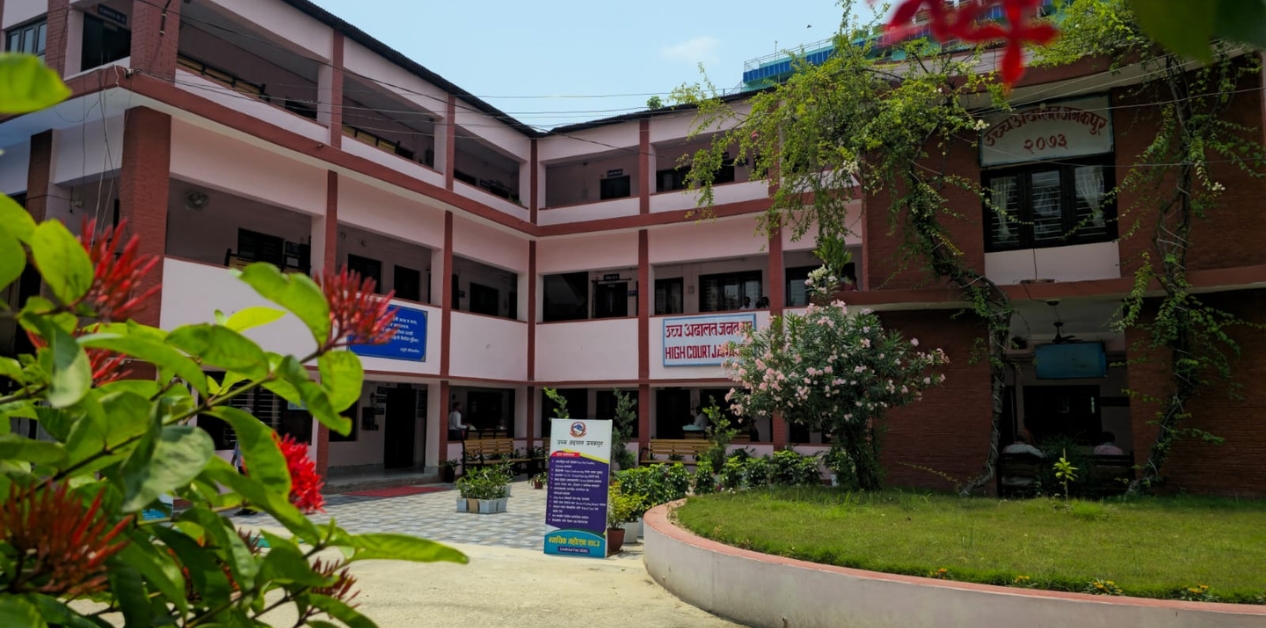
In the September 9 Gen Z protest, the Kaski District Court decided to send a 16-year-old boy from Pokhara to the Sarangkot Juvenile Reform Home for recognizance on charges of looting a weapon from the Ward Police Office, Bagar, Kaski. On November 9, 2025, the police recovered a looted Chinese Pistol Type 54 from the accused, who was staying in a rented room in Pokhara Metropolitan City-4.
Previously, on March 19, 2025, a 14-year-old boy was arrested on charges of raping a seven-year-old girl who studied at the same school in Tikapur Municipality-4, Kailali. According to Deputy Superintendent of Police (DSP) Prakash Dangi, the accused boy was sent to a juvenile reform home on April 11, 2025, per the order of the Kailali District Court.
On January 22, 2025, a 12-year-old boy from Barekot Rural Municipality-6, Tansi, in Jajarkot, killed a three-year-old relative girl from Ward No. 7, Syala Rural Municipality, Doti. Police investigation revealed that while playing in a grass-storage hut near the house, the boy attempted rape, and when the girl resisted, he killed her using a sharp weapon. The girl’s body was found covered with grass. According to Dharma Bahadur Budha, Information Officer of the Jajarkot District Court, the boy has already been held responsible for the murder. The court delivered its verdict last August. However, Ward Chairman Damber Bahadur Mahatara confirmed that since the accused boy was very young, he was handed over to the custody of his parents.
These are merely representative incidents. The National Child Rights Council, under the Ministry of Women, Children, and Senior Citizens, has confirmed that the number of children standing in the legal dock for juvenile delinquency has been increasing in an unimaginable way recently. At an age meant for playing freely, enjoying, studying, and developing personality, such terrifying facts made public about children reveal where our society is heading lately.
In the ‘National Status of Children’ report made public by the National Child Rights Council on November 20, 2025, children between 14 and under 18 years of age are most involved in legal disputes due to juvenile delinquency. They are linked to serious crimes such as homicide, rape, theft-robbery, and narcotics. Speaking of juvenile courts and benches, in the fiscal year 2024/25 alone, a total of 3,379 criminal cases were registered across the country, in which it is mentioned that 91 percent of the children involved are between 14 and under 18 years of age.
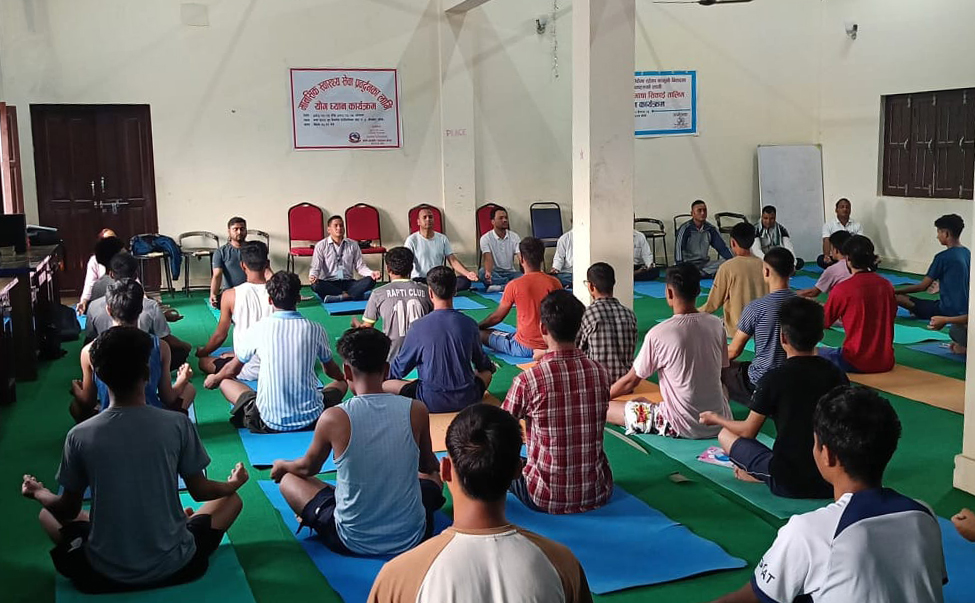
A yoga class being conducted for boys residing at the Naubasta Juvenile Reform Home. Photo Courtesy: Naubasta Juvenile Reform Home
Statistics of boys and girls involved in juvenile delinquency are higher than the previous fiscal year, 2023/24. According to the ‘National Report on Children 2024,’ only 908 cases involving children in delinquency were registered in court in 2023/24.
According to psychiatrist Dr Ritesh Thapa, there has been an improvement in the trend of filing complaints against violence, abuse, and illegal activities due to increased awareness among the general public lately. As a result, offenses of juvenile delinquency are beginning to be exposed. Regarding the involvement of children in delinquency, he says, “I see more responsibility of the family and school in children becoming prone to violence. We are failing in our responsibility to teach children to distinguish between right and wrong and to make them good citizens.”
He alleges that even people considered reputable and knowledgeable in society are leading child psychology toward negativity by posting chaotic, unruly, and obscene content on social media. “Leaders post on social media saying they will burn things down or finish someone off if things don’t go their way. From this, children also learn that they should do the same if things do not happen as they wish,” Thapa further added.
According to the ‘National Report on Children 2024,’ only 908 cases involving children in delinquency were registered in court in 2023/24.
Children keep things they learn, see, and experience at a young age in their minds for the long term. Later, that begins to reflect in their conduct and behavior. For example, if children see their father beating, abusing, and committing violence against their mother at home from a young age, they try to do the same when they grow up a bit. To a child raised seeing quarrels, violence, terror, and destruction, that seems normal. After reaching a certain age, they also start engaging in vandalism and chaotic activities. Creative learning in schools is supposed to play a role in leading children raised in such a family environment onto the right path.
However, Dr Thapa says that the weakening of education regarding discipline, conduct, and morality in schools is having a negative impact on children. “Due to the rapid development of technology and easy access for everyone, content that spreads quickly through online mediums is also prompting children toward wrong actions,” he says.
The Constitution of Nepal states that families and the state must provide children under 18 years of age with full opportunities for proper education, health, upbringing, care, sports, and entertainment, and that the all-round personality development of children is possible through this. However, leaders, activists, psychologists, and educationists argue that society is heading toward chaos after families and schools failed in building a good image for children. “Civic sense and values are weakening starting from the family itself; it is school education that makes even families responsible, and that has disappeared from the curriculum,” says Ramesh Prasad Gautam, an activist for civic education. Because of this, children are losing the opportunity to learn habits, conduct, and discipline.
Since the government modified the National Curriculum Framework of school education in 2019, claiming to implement an education system based on the federal state structure, the teaching of civic and moral education has become weak. In the curriculum implemented since 2020, the subject of civic and moral education, which was taught from grade six to eight according to the previous curriculum, has been removed. “For the sake of saying it, it is said that moral education has been integrated into social studies, value education, and human value and that this subject is taught until grade 12, but it contains only superficial content that does not sustain today’s needs,” Gautam says.
“Civic sense and values are weakening starting from the family itself; it is school education that makes even families responsible, and that has disappeared from the curriculum,” says Ramesh Prasad Gautam, an activist for civic education.
A research paper titled ‘Moral Education in Nepal’s School Level Curriculum’ published in the Haimaprabha Journal of Nepal Sanskrit University on November 22, 2023, mentions that after the teaching of moral education in schools declined, it hindered the attainment of the national objective of education to prepare principled and characterful citizens.
Similarly, Shiv Kumar Sapkota, Joint Secretary and Spokesperson of the Planning and Monitoring Division at the Ministry of Education, says that the rapid development of the internet/online and the increasing access to social media have disturbed the habits, behavior, and conduct of children.
Pramod Bhatta, an educationist, says there is a need for civic and moral education that addresses the environment outside of school, which hinders the development of good character. “Children do not read books; they learn quickly from what they see on social media, so we must teach them how to use the network correctly, what the potential effects and challenges could be, and how to stay safe from them,” he adds.
Anil Raghuvanshi, president of ChildSafeNet, who agrees with Bhatta’s view, says that children need appropriate parenting and guardianship. Advocating for the safety of children online, he says, “The online world is only a medium. Parents and schools must teach what to do, what not to do, and how to use it properly.”