Kathmandu
Tuesday, July 21, 2026





Although all political parties appear to agree on the issue of constitutional amendment, they have not made it an electoral agenda
When Nepal’s two oldest parties, the Nepali Congress and CPN (UML), formed a coalition government in July 2024, their main agenda was to amend the Constitution.
A two-thirds majority in the Federal Parliament is required for constitutional amendment. Therefore, when the first-largest party in Parliament, Nepali Congress, and the second-largest party, UML, formed a coalition government, that was their primary justification.
However, after the two major parties had already formed the government, the then Prime Minister and UML Chair KP Sharma Oli informed a party central committee meeting that due to the composition of the National Assembly, the constitutional amendment proposal would not move forward before the year 2087 BS (2030/31).
While the issue of constitutional amendment remained unresolved, the Gen Z revolt erupted on September 8 and 9 last year, which ultimately forced Oli to step down as Prime Minister.
Even during the Gen Z movement, the issue of constitutional amendment was not entirely sidelined. It was strongly raised on the streets. Protesters demanded the provision of a directly elected Prime Minister to ensure political stability.
The protesters called for such a system to be implemented even before the election.
The government led by former Chief Justice Sushila Karki, formed on the strength of the movement, has already announced elections for March 5. Now only 15 days remain before voting. Yet, constitutional amendment has not become an election issue.
“Political parties should create an electoral agenda stating what specific improvements they will make in the Constitution. They should seek approval from the people through elections, but that has not happened,” says constitutional law expert and senior advocate Purnaman Shakya.
Had parties taken the issue of constitutional amendment to the people before the election, it would have carried the meaning of public endorsement. Ironically, no political party has made constitutional amendment an electoral issue.
Shakya agrees with this assessment. He says, “Even if a party has the numbers necessary for amendment, taking the matter into public discussion and seeking a mandate would make the process more mature.”
Political parties have previously raised issues such as the electoral system, governance system, distribution of state resources, and restructuring of constitutional commissions in relation to constitutional amendment. Similarly, the Rastriya Prajatantra Party has demanded constitutional amendment to make Nepal a constitutional Hindu kingdom. They advocate for a unitary state system. Meanwhile, older parties like Nepali Congress and UML appear united on secularism, federalism, and republicanism.
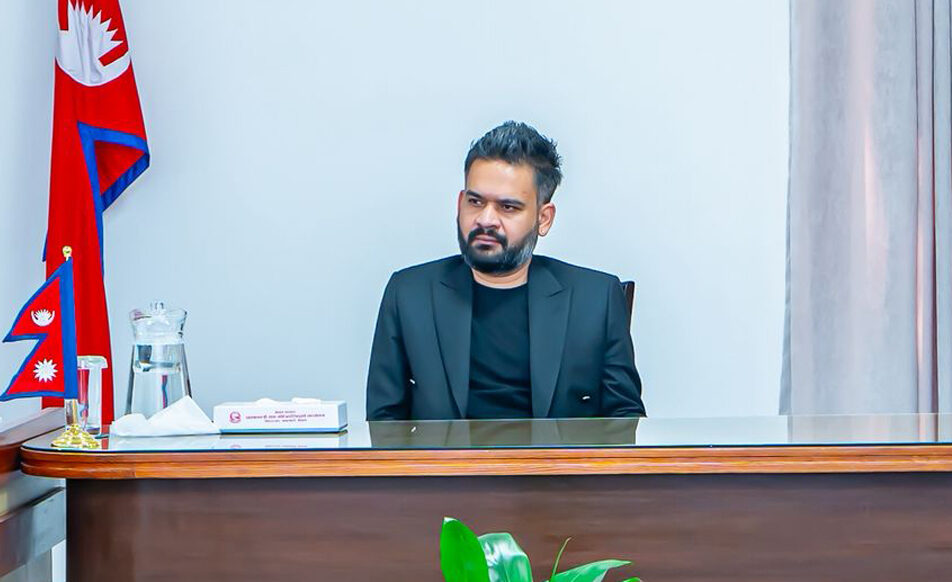
The Rastriya Swatantra Party (RSP) had earlier shown ambiguity regarding federalism. However, senior party leader and prime ministerial candidate Balen Shah clarified the issue in a speech delivered in Janakpur on January 19 this year. He stated that he wants provinces to be more empowered and said, “There should be such a system that people go to Kathmandu only for tourism, not to demand authority. One should go to Kathmandu only to visit Pashupatinath and Swayambhunath, not to seek rights.”
Although good governance has gained priority in this election, everyone appears to be silent regarding constitutional amendment. The election campaign is increasingly being limited to personality clashes, personal criticism, and verbal attacks rather than substantive constitutional reform.
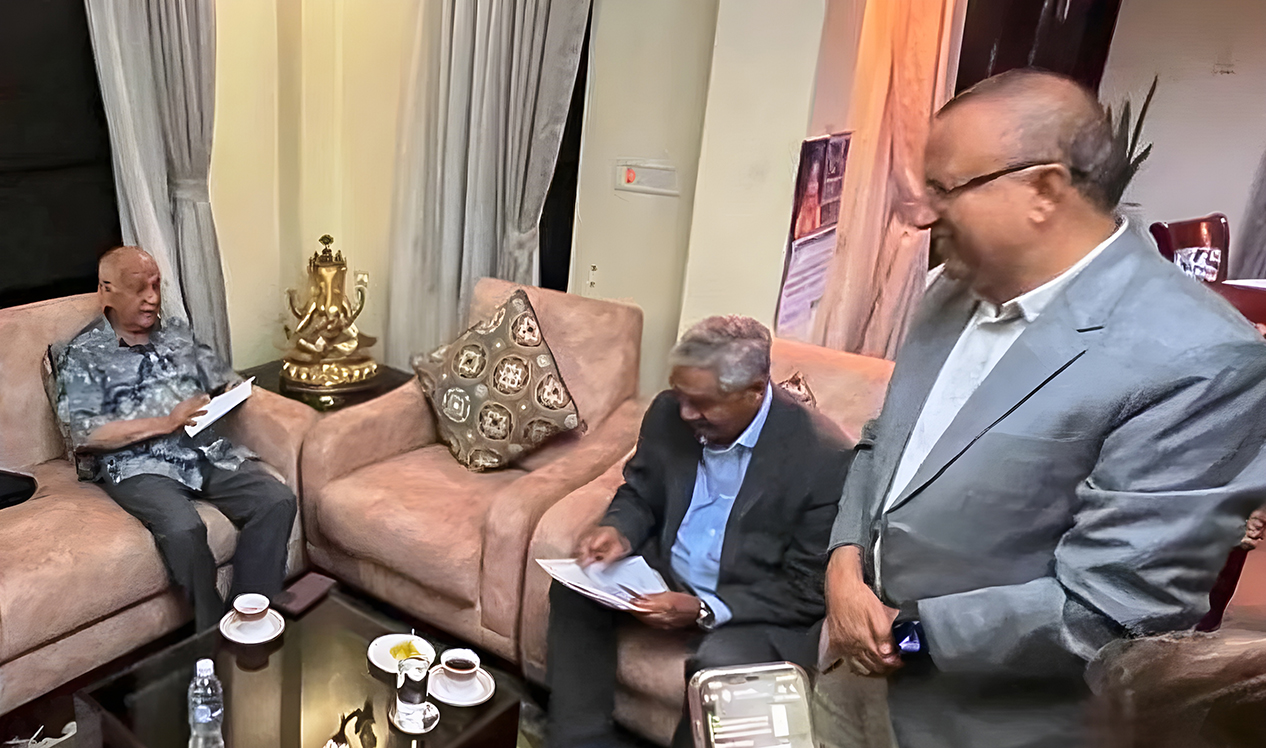
In July 2024, during the signing of an agreement to form a national consensus government with a constitutional amendment agenda, UML Chair KP Sharma Oli (left) and then Nepali Congress President Sher Bahadur Deuba (center), along with UML General Secretary Shankar Pokharel, were present
“In advanced democratic countries, constitutional amendment is treated as an important political agenda and is endorsed by the people through elections,” says former Law Minister and UML leader Agni Prasad Kharel.
He adds that amendment is also necessary to keep the Constitution alive. “Our Constitution is flexible in matters of amendment. Amendments are necessary to preserve it,” he says.
As he suggests, ten years of constitutional practice have also indicated the need for amendments.
However, after registering their candidacies on January 20, political leaders appear to have prioritized election campaigns over constitutional amendment. Although major parties have not yet released their political agendas, the likelihood of constitutional amendment being included seems low.
Major political parties including the Nepali Congress, CPN (UML), and RSP have not yet made their election manifestos public. Only the Nepali Communist Party (NCP), Rastriya Prajatantra Party (RPP), and Janata Samajbadi Party have released theirs. The Election Commission had permitted formal campaign activities starting from February 15.
Meanwhile, Nepali Congress President Gagan Kumar Thapa has tried to clarify that elections alone cannot promote good governance. For that, structural and complex problems require minimum national consensus.
Thapa argues that just as the reinstated Parliament on 18 May 2006 declared secularism and curtailed the king’s powers with the consensus of major political parties, similar consensus is now required on issues of good governance. However, Nepali Congress has not succeeded in making this an electoral issue either.
“The services, conditions, facilities, and good governance that citizens receive are connected to law and the Constitution. The government amends laws, but matters connected to the Constitution require consensus from all. The Nepali Congress will lead that,” says the party’s Spokesperson Devaraj Chalise. “We have spoken publicly about this, and it will also be included in the manifesto.”