Kathmandu
Wednesday, June 17, 2026





KATHMANDU: As U.S. military assets flow into the Middle East, rising tensions with Iran have revived a stark question: war-or a deal struck under pressure?
Decades of rivalry- rooted in the 1979 Islamic Revolution and shaped by sanctions, proxy wars, nuclear disputes, and periodic clashes-have brought the U.S. and Iran to a pivotal moment. Following nationwide protests in late December 2025 amid economic turmoil, Iran responded with a brutal crackdown and an internet blackout, heightening instability and U.S. concern.
The U.S. sees a rare opportunity to either secure a diplomatic settlement or prepare for a military campaign to regime change. Washington aims for a comprehensive package deal: halting Iran’s nuclear ambitions, dismantling its missile capabilities, curbing the IRGC and proxy networks, and ending the regime’s regional interference by proxy-forces. U.S. views this is time to disrupt the China-Russia-Iran axis, secure global energy flows, and strengthen U.S. leverage ahead of potential global conflicts. Yet past cycles of pressure and limited engagement have entrenched deep mistrust, making any outcome uncertain and fraught with risk.
What is happening between the United States and Iran right now?
The United States and Iran are engaged in high-stakes nuclear negotiations that began earlier this month in Muscat, the capital of Oman. But these talks are unfolding against the backdrop of one of the most significant U.S. military buildups in the region in recent years — creating a tense dual-track strategy of diplomacy backed by force.
President Donald Trump has repeatedly threatened military action, initially over Iran’s deadly crackdown on protesters and more recently over Tehran’s expanding nuclear program. As negotiators met for a second round of talks, open-source flight tracking data showed that more than 50 U.S. fighter jets — including F-22s, F-35s, and F-16s — were moved into the Middle East within 24 hours. A U.S. official confirmed the deployment, and refueling aircraft were also repositioned, signaling preparation for sustained air operations if necessary.
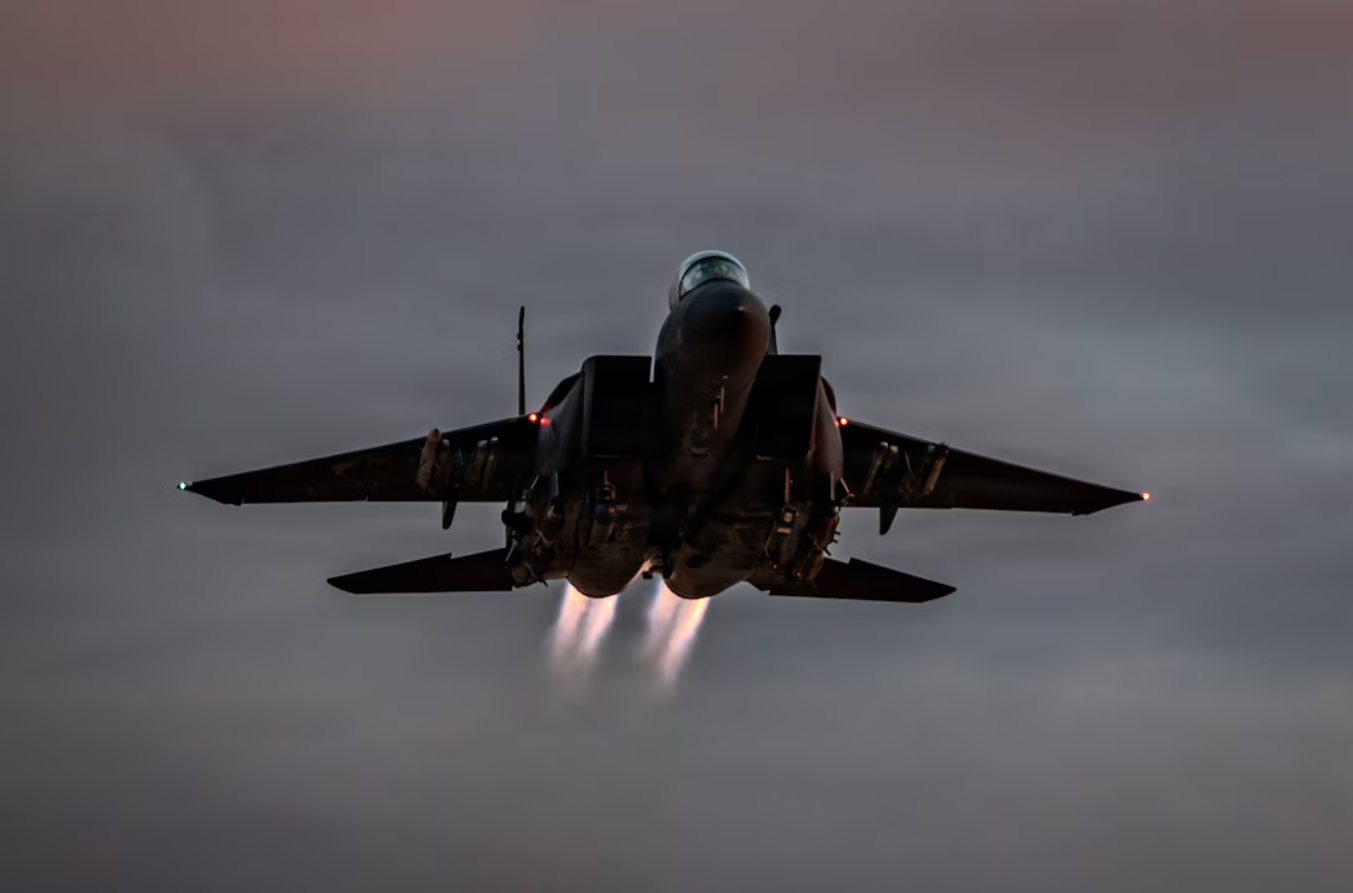
A U.S. Air Force F-15E Strike Eagle takes off from a base in the Middle East in this file photo released by U.S. Central Command.
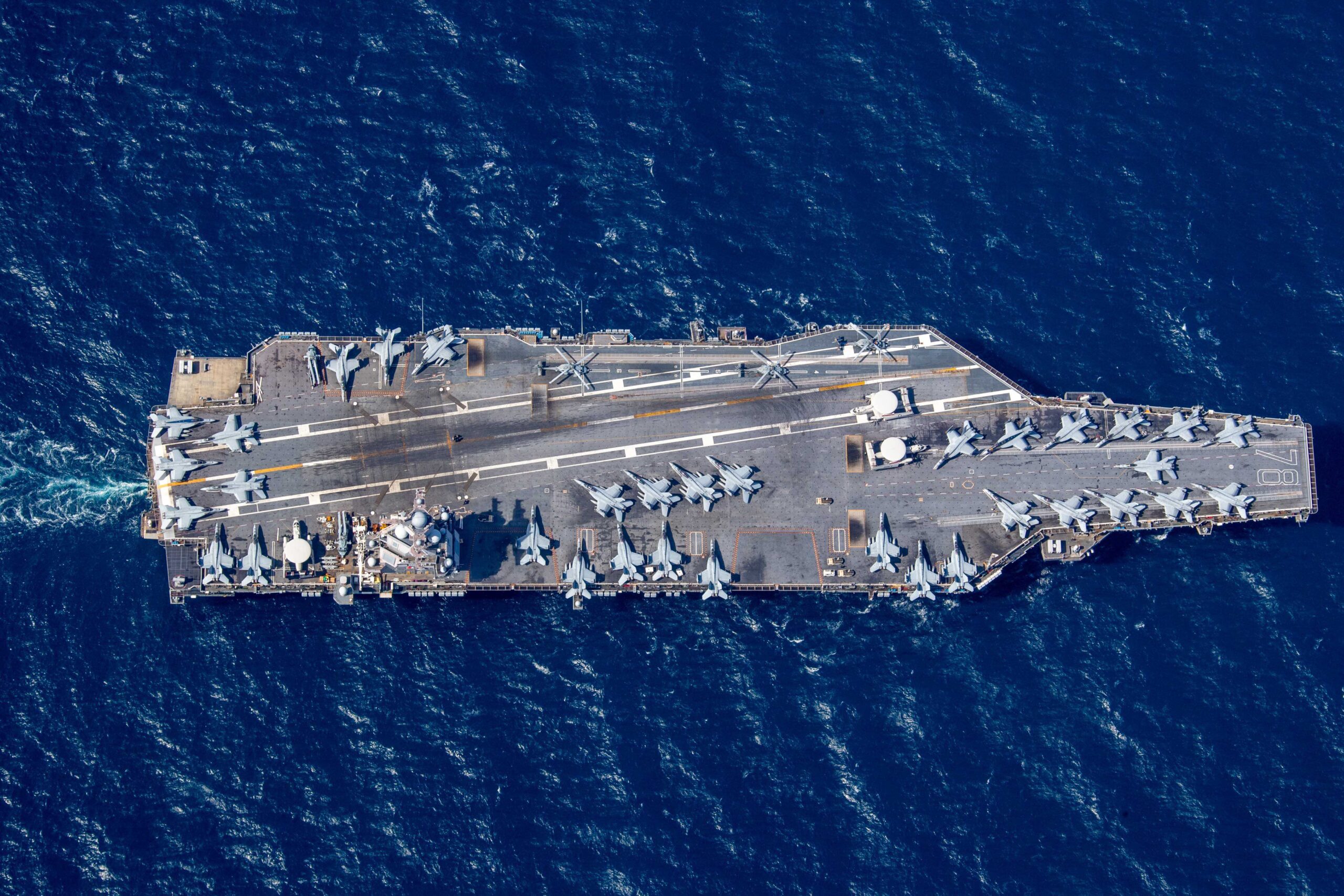
This buildup is not limited to fighter jets. The U.S. has deployed the aircraft carrier USS Abraham Lincoln to the Arabian Sea and sent a second carrier to the region. Additional assets include F-15 jets, MQ-9 Reaper drones, A-10 ground attack aircraft in Jordan, surveillance aircraft like the P-8 Poseidon and E-3G Sentry, and the guided-missile destroyer USS Delbert D. Black, which transited the Suez Canal into the Red Sea. In short, Washington is positioning a broad mix of air, naval, surveillance, and strike capabilities within range of Iran.
At the heart of the dispute is uranium enrichment. Washington demands that Iran halt enrichment activities and give up its stockpile enriched to 60% purity — a level just short of the 90% considered weapons-grade. The Trump administration argues that allowing Iran to reach nuclear weapons capability would trigger a dangerous regional arms race. Vice President JD Vance has warned that a nuclear-armed Iran would destabilize not just the Middle East but global security.
Iranian officials insist their program is peaceful. President Masoud Pezeshkian says Tehran is open to verification mechanisms proving it does not seek atomic weapons, pointing to Supreme Leader Ali Khamenei’s long-standing religious ruling forbidding nuclear weapons. But critics argue Iran’s enrichment levels have no civilian application, and Tehran has limited international inspections while expanding ballistic missile capabilities.
Trump has openly floated the possibility of regime change, saying it “would be the best thing that could happen,” and has framed military deployments as leverage: carriers are in place “in case we don’t make a deal.” Meanwhile, Khamenei has responded with sharp rhetoric of his own, warning that while warships are dangerous, so too are the weapons capable of sinking them-a thinly veiled reminder of Iran’s missile and naval strike capabilities.
So what does this all mean? It means the U.S. is pursuing negotiations while simultaneously preparing for potential military operations if diplomacy fails. This strategy is designed to pressure Iran into concessions by demonstrating credible force. But it also raises the risk of miscalculation. With advanced aircraft, drones, warships, and surveillance systems operating in close proximity-and both sides issuing public warnings-even a small incident could escalate quickly.
For now, Iran has agreed to return with detailed proposals within two weeks. Whether those proposals satisfy Washington’s red lines will determine whether this moment becomes a breakthrough-or the prelude to a wider confrontation.
Is the US–Iran nuclear talks making real progress, or are they headed toward collapse?
According to U.S. Vice President JD Vance, the second round of nuclear talks with Iran in Geneva showed “some progress,” but major gaps remain. Speaking after the talks, Vance said the discussions “went well” in the sense that both sides agreed to keep negotiating. However, he emphasized that President Donald Trump has set firm red lines — particularly that Iran must never obtain a nuclear weapon — and that Iranian negotiators have not yet accepted or worked through those demands.
From Washington’s perspective, progress appears procedural rather than substantive. A U.S. official said Iran agreed to return within two weeks with detailed proposals to bridge outstanding differences. That suggests talks are still alive, but it also underscores that critical technical and political disputes remain unresolved. The American position frames the negotiations as an attempt to exhaust diplomatic options before considering alternatives.
Iran’s Foreign Minister Abbas Araghchi, meanwhile, described the talks as “constructive” and said both sides had reached an understanding on “guiding principles.” His more optimistic tone suggests Tehran wants to portray diplomacy as moving forward and avoid being seen as the spoiler. But Israeli officials, speaking through local media, cast doubt on that optimism, describing Iran’s public messaging as a potential “smokescreen” and assessing that the chances of a final deal remain low.
In short, there is movement-meetings continue, proposals are expected, and both sides are still talking-but the core dispute remains unchanged. The U.S. insists Iran must permanently forgo any pathway to a nuclear weapon. Iran maintains that its nuclear program is peaceful and resists constraints it sees as excessive or humiliating. Whether the next round produces concrete compromises or merely prolongs the process will determine whether this diplomacy stabilizes tensions or merely delays confrontation.
A U.S. Air Force F-15E Strike Eagle takes off from a base in the Middle East in this file photo released by U.S. Central Command.
What does Iran claim about the recent nuclear talks with the United States?
Iranian Foreign Minister Abbas Araghchi reported “good progress” in indirect talks with the U.S., reaching broad agreement on guiding principles for a potential deal. Talks were mediated by Oman amid heightened Gulf tensions, with the U.S. keeping military options open and Iran conducting IRGC war games in the Strait of Hormuz. Key issues include uranium enrichment, sanctions relief, and Iran’s missile program, with both sides signaling cautious willingness to continue negotiations.
Is the U.S. really preparing for a weeks-long war with Iran?
According to a February 14 report by Reuters, the U.S. military is preparing for the possibility of sustained, weeks-long operations against Iran if President Donald Trump orders an attack — and that’s a much bigger deal than it may first sound. Militaries always draw up contingency plans, especially in tense geopolitical moments, so planning alone does not mean war is imminent. But what makes this report notable is the scale and duration under consideration: not a single retaliatory strike, not a brief exchange, but operations that could stretch for weeks. That signals the Pentagon is thinking through what a broader, more sustained conflict would look like — including Iranian retaliation, regional escalation, and the economic consequences that would follow.
The timing matters. The disclosure comes amid fragile diplomacy between Washington and Tehran, raising the stakes for ongoing talks. At the same time, Trump has publicly escalated his rhetoric. Speaking after a military event at Fort Bragg, he floated the idea that changing Iran’s government “would be the best thing that could happen,” though he did not outline a specific plan. That kind of language adds political pressure and fuels speculation about regime-change ambitions, even if no formal order has been given. Still, Trump has long expressed skepticism about deploying ground troops, saying “the last thing you want to do is ground forces,” suggesting that any potential campaign would likely rely on airpower, naval assets, and possibly special operations rather than a large-scale invasion.
The real significance isn’t that war has started — it hasn’t. It’s that U.S. military planners are preparing for a scenario in which tensions spiral beyond symbolic strikes into something more sustained and unpredictable. A weeks-long campaign would mean repeated exchanges, possible attacks on U.S. forces or allies, risks to global energy markets, and the potential for the conflict to widen across the Middle East. In short, the Reuters report doesn’t signal an immediate war, but it does show that Washington is preparing for one that could be far more serious than previous confrontations if diplomacy collapses.
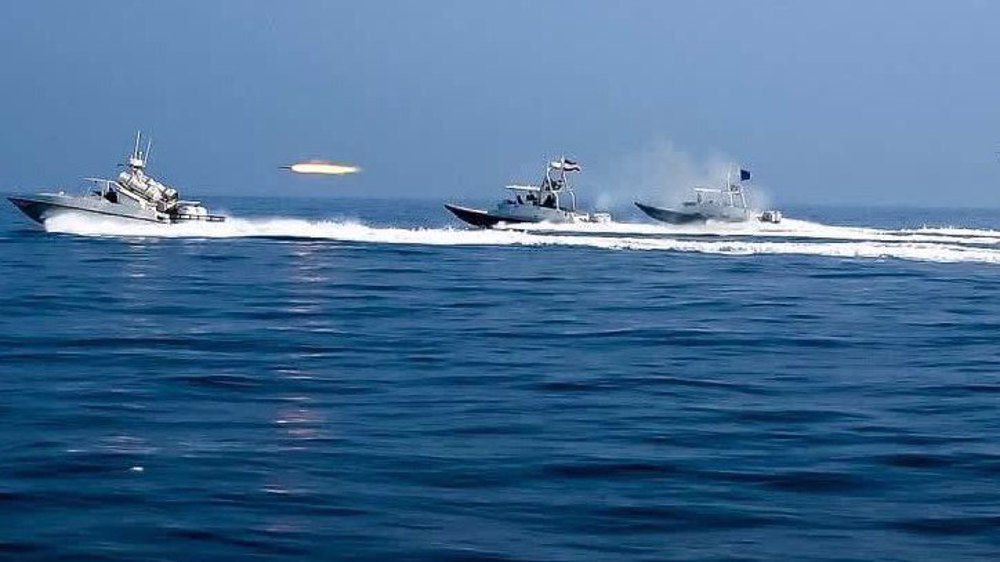
File photo of Iran’s Islamic Revolutionary Guard Corps conducts naval drills near the Strait of Hormuz on Feb. 16,2026.
What are the possible outcomes of a US-Iran conflict?
The potential outcomes vary widely, reflecting different levels of military action, political consequences, and regional risk. In the most optimistic scenario, precision US air and naval strikes target Iran’s IRGC, Basij units, missile sites, and nuclear facilities, potentially toppling the regime and allowing a transition to democracy, though historical interventions in Iraq and Libya suggest this could lead to instability rather than a smooth transition. Another possibility is that the regime survives but is forced to moderate its policies, limiting support for regional militias, curbing nuclear and missile programs, and easing domestic repression—a scenario considered unlikely due to the regime’s long-standing resistance to change. A more probable outcome is regime collapse followed by military rule, where IRGC leaders or other military figures fill the power vacuum to maintain control. Iran could also retaliate against US forces and regional allies through missile or drone strikes, targeting bases in the Gulf or critical infrastructure in countries perceived as complicit, echoing past attacks like the 2019 assault on Saudi Aramco facilities. Another risk is Iran laying mines in the Strait of Hormuz, threatening global shipping and oil exports. Though considered less likely, Iran could attempt a “swarm attack” to sink a US warship using drones and fast boats, leveraging asymmetric naval tactics. Finally, the most dangerous scenario is that regime collapse plunges Iran into chaos, potentially sparking civil war, ethnic conflicts, and a humanitarian crisis, with repercussions across the Middle East. Each outcome carries significant uncertainty, with potential regional and global consequences, making any US action highly risky.
What happened during the latest tensions-and how serious is the risk of escalation?
Iran conducted a military exercise dubbed “Smart Control of the Strait of Hormuz,” warning mariners of planned live surface firing. The semiofficial Tasnim news agency reported missile launches from inside Iran and along its coastline that struck targets in the strait. Iranian officials said parts of the passage were temporarily closed for several hours during the drill.
The move comes amid heightened tensions with the United States. Earlier this month, a U.S. Navy fighter jet shot down an Iranian drone approaching the aircraft carrier USS Abraham Lincoln in the Arabian Sea. Iran has also reportedly harassed a U.S.-flagged merchant vessel transiting Hormuz. Meanwhile, the U.S. has significantly increased its military presence in the region, deploying additional fighter jets, surveillance aircraft, warships, and a second carrier.
U.S. Central Command (CENTCOM), which oversees the Bahrain-based Fifth Fleet, has warned Iran against “unsafe and unprofessional behavior” near American warships or commercial vessels. While acknowledging Iran’s right to operate in international waters, CENTCOM has made clear it would not tolerate actions that threaten U.S. forces or disrupt shipping.
Historically, Iran has harassed vessels in Hormuz during periods of tension. During the 1980s Iran–Iraq war, both sides attacked oil tankers and laid naval mines, at times severely disrupting traffic. However, Iran has not fully closed the strait for an extended period since then — not even during last year’s intense 12-day conflict when Israeli and U.S. forces targeted Iranian nuclear and military sites.
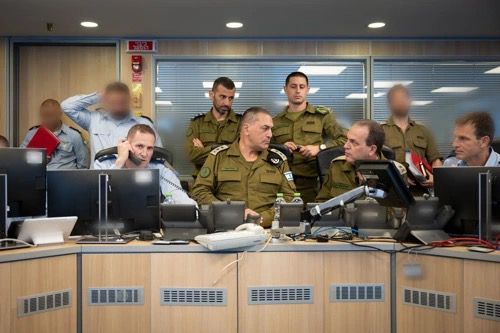
Israeli Defense Forces Chief of Staff Lt. Gen. Eyal Zamir announces the launch of Operation “Rising Lion” against Iran on June 13, 2025.
The current closure appears limited and temporary, but it carries symbolic weight. It signals that if the U.S. proceeds with military action, Iran could respond asymmetrically — not necessarily by direct confrontation, but by targeting the global economic chokepoint that runs along its coast. Because so much of the world’s energy supply depends on Hormuz, even short-term disruptions raise the risk of rapid escalation, miscalculation at sea, and wider regional instability.
In short, the Strait of Hormuz is more than a narrow waterway — it is a geopolitical pressure valve. And every time tensions rise between Washington and Tehran, the world watches that narrow strip of water with concern.
Why is the Strait of Hormuz so important-and why does a temporary closure matter?
The Strait of Hormuz is one of the most strategically vital shipping lanes in the world. It is the narrow maritime passage connecting the Persian Gulf to the Arabian Sea, and roughly 20% of the world’s oil supply passes through it daily. Energy exports from Saudi Arabia, Kuwait, Iraq, Qatar, Bahrain, the United Arab Emirates, and Iran all transit through this narrow corridor. Most of that oil heads to Asian markets — including China, which remains Iran’s primary oil buyer.
Historically, the strait has been crucial for trade. For centuries, goods such as silk, ceramics, ivory, and textiles passed through the region. In the modern era, it is supertankers and liquefied natural gas carriers that dominate the route. While Saudi Arabia and the UAE have some pipeline alternatives that bypass the strait, the U.S. Energy Information Administration notes that most of the volumes transiting Hormuz have no viable alternative route. In other words, if Hormuz is blocked, global energy markets feel it immediately.
That’s why Iran’s announcement that it temporarily closed parts of the strait during live-fire military drills is so significant. Even a short disruption can send oil prices spiking and rattle global markets. During previous tensions — including last year’s Israel–Iran conflict — threats to the strait alone were enough to shake energy markets. A confirmed closure, even for “safety and maritime concerns,” signals that Iran is willing to use its geographic leverage as a strategic pressure tool.
What is the Strait of Hormuz, and why is it so critical to the world economy?
The Strait of Hormuz is one of the most strategically important maritime chokepoints on Earth. At its narrowest point, it is just about 33 kilometers (21 miles) wide. The strait links the Persian Gulf to the Gulf of Oman and, from there, to the Arabian Sea and the open ocean. That narrow stretch of water is the only sea route for oil exports from much of the Gulf.
Geographically, both Iran and Oman control territorial waters along the strait. However, under international maritime law, it is considered an international transit passage — meaning commercial and military vessels from all countries can legally pass through it. Nearby sits the United Arab Emirates, home to Dubai, whose economy is deeply tied to maritime trade and regional stability.
Historically, the strait has been vital for trade. For centuries, silk, ceramics, ivory, and textiles traveled from China and South Asia through these waters toward the Middle East and Europe. In the modern era, its importance is even greater: roughly 20% of the world’s oil supply moves through the strait daily. Supertankers carry crude oil and liquefied natural gas from Saudi Arabia, Kuwait, Iraq, Qatar, Bahrain, the UAE, and Iran to global markets — especially Asia. China, notably, remains Iran’s key oil customer.
While Saudi Arabia and the UAE operate pipelines that can bypass the strait, the U.S. Energy Information Administration has repeatedly stated that most of the oil and gas flowing through Hormuz has no alternative route. That means any disruption-even temporary-can push global energy prices higher. Past tensions, including the Israel-Iran conflict in June, triggered spikes in oil markets simply due to threats to the strait. In short, the Strait of Hormuz is not just a regional waterway-it is a global economic pressure point.
What happened during Iran’s latest military drill, and could it escalate tensions further?
Iran recently announced it temporarily closed parts of the strait during a live-fire military exercise. State-linked media reported missile launches as part of the drill, dubbed “Smart Control of the Strait of Hormuz.” Mariners were warned via radio about “live surface firing,” and Iranian outlets described the closure as lasting several hours for “safety and maritime concerns.”
This is highly unusual. While Iran has frequently conducted naval drills in the Persian Gulf and occasionally harassed shipping during times of tension, it has not repeatedly attempted to close the strait outright since the 1980s Iran–Iraq War, when both sides attacked oil tankers and laid naval mines that severely disrupted traffic.
The current drill comes amid heightened tensions with the United States. Earlier this month, a U.S. Navy jet shot down an Iranian drone approaching the aircraft carrier USS Abraham Lincoln in the Arabian Sea. The U.S. military also reported Iranian harassment of a U.S.-flagged merchant vessel transiting the strait.
Although Iran says the closure was temporary and precautionary, the symbolism is powerful. By demonstrating that it can disrupt the world’s most critical energy corridor, Tehran signals that any U.S. military strike could carry global economic consequences. It is a form of strategic deterrence — reminding Washington and its allies that escalation would not be contained.
The U.S. Central Command (CENTCOM), which oversees naval operations in the region, has previously warned that unsafe behavior near American warships or commercial vessels increases the risk of miscalculation and escalation. With advanced naval vessels, drones, and aircraft operating in close proximity, even a small incident could spiral quickly.
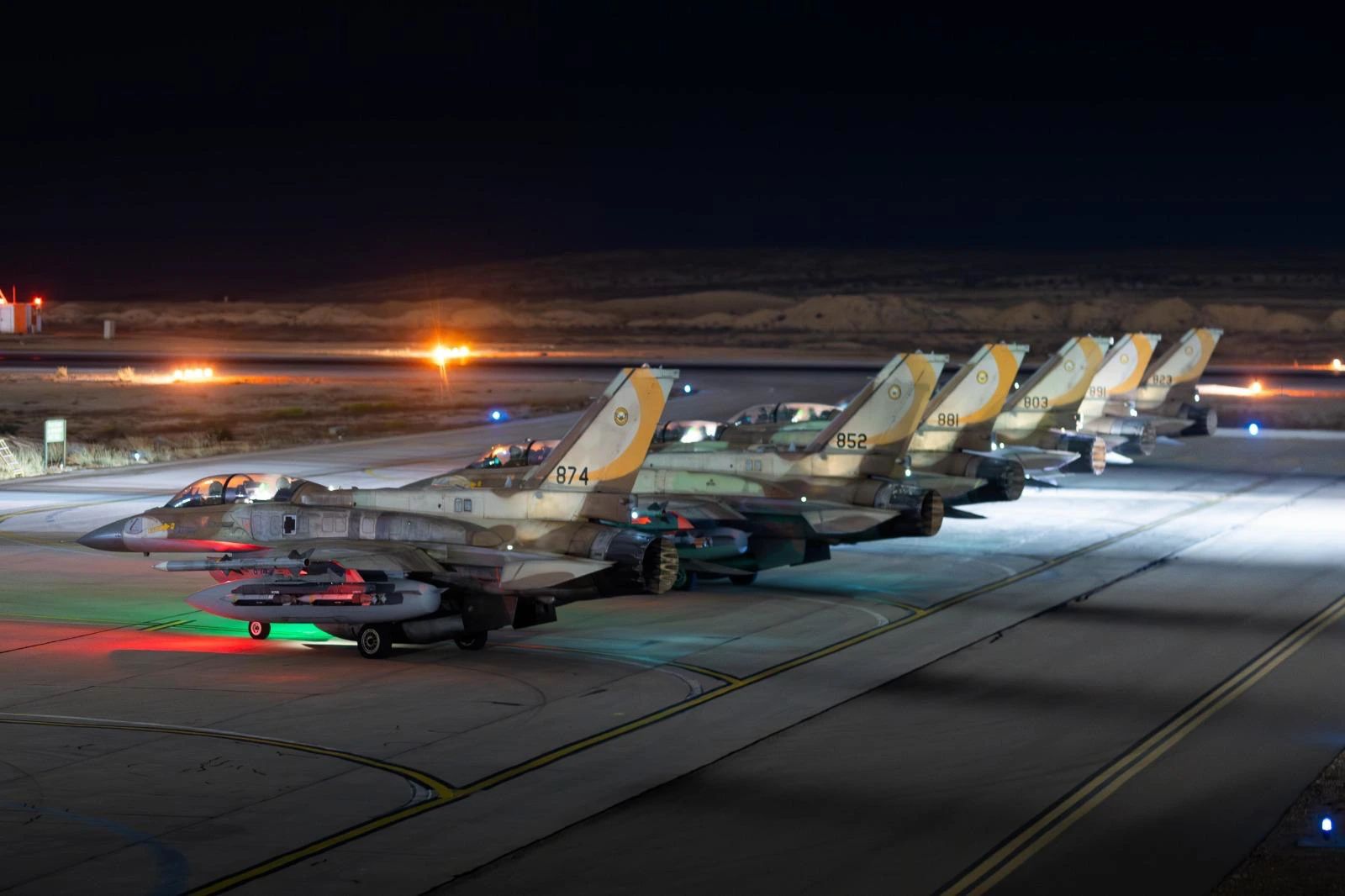
Israeli Air Force conducts strikes as part of Operation “Rising Lion” during the Twelve-Day War (June 13–24, 2025), targeting Iranian military sites and reportedly killing number of leaders of the Islamic Revolutionary Guard Corps (IRGC) and top nuclear scientists.
For now, the extent of the closure’s impact remains unclear. But the message is unmistakable: the Strait of Hormuz remains a flashpoint where geopolitics, energy security, and military power intersect — and where even a few hours of disruption can reverberate across the global economy.
Why have the United States and Iran been hostile since 1979?
Hostility began with the 1979 Islamic Revolution, when Ayatollah Khomeini overthrew the U.S.-backed Shah. The 1979 embassy hostage crisis led the U.S. to cut diplomatic ties and impose sanctions. Tensions deepened as the U.S. supported Iraq in the 1980–88 war, designated Iran a state sponsor of terrorism in 1984, and imposed tighter sanctions in 1995 over nuclear ambitions and backing of groups like Hezbollah and Hamas. Post-9/11, Iran was labeled part of the “Axis of Evil,” despite prior cooperation against the Taliban and al-Qaeda, fueling decades of mistrust and sanctions.
What has been the history of U.S.-Iran engagement?
U.S.-Iran relations have seen intermittent attempts at diplomacy, from the 1981 Carter-era Algiers Accord securing the release of hostages, to Reagan’s 1986 secret arms deal (Iran-Contra), George H.W. Bush’s efforts to free hostages in Lebanon, Clinton’s outreach to reformist President Mohammad Khatami in the late 1990s, George W. Bush’s 2001 cooperation to topple the Taliban, and Obama’s 2013 secret talks in Oman that paved the way for the JCPOA. Yet, deep mutual mistrust, entrenched institutional enmity, and pushback from U.S. Middle East allies repeatedly closed these windows of opportunity.
What is the Trump administration’s policy toward Iran?
From the start, the Trump administration put Iran “on notice,” viewing it as a source of regional instability. In his first tenure, In May 2018, President Trump withdrew from the JCPOA and launched a “maximum pressure” campaign, imposing comprehensive unilateral sanctions. While Iran’s economy was hit, the policy failed to achieve its goals: Tehran rejected negotiations on Trump’s terms and expanded its nuclear program amid rising U.S.-Iran and regional tensions.
Upon returning to office in 2025, President Trump revived a maximum pressure strategy, imposing tougher unilateral sanctions aimed at crippling Iran’s oil exports and financial networks, and targeting entities linked to its missile program and regional proxies. By January 2025, Iran’s regional influence had weakened due to setbacks suffered by Hamas and Hezbollah, and the December 2024 collapse of Bashar Al-Assad’s regime. Despite these setbacks, Iran’s nuclear program remained a major concern with Washington, with growing near–weapons-grade uranium stockpiles and limited access for international monitors. Here is the details timelines of U.S.-Iran crisis during President Trump’s first and second term.
May 8, 2018: The President Trump announces United States withdrawal from the Joint Comprehensive Plan of Action (JCPOA), also known as the Iran nuclear deal.
April 8, 2019: Trump designates Iran’s Islamic Revolutionary Guard Corps (IRGC) as a foreign terrorist organization.
April 22, 2019: US ends waivers for Iranian oil sanctions, fully enforcing the “maximum pressure” campaign.
May 5, 2019: US deploys aircraft carrier and bomber task force to the Middle East after intelligence of potential Iranian attacks.
May 8, 2019: US sanctions Iran’s metal industries; Iran warns it may reduce compliance with the nuclear deal.
May 10, 2019: Pentagon sends Patriot anti-missile battery to the Middle East.
May 12, 2019: Explosive charges damage four ships near UAE; US attributes the attack to Iran or its proxies.
May 24, 2019: Additional 1,500 US troops deployed to the Middle East to deter Iranian threats.
June 2, 2019: Iranian Foreign Minister Zarif calls US sanctions “economic terrorism.”
June 13, 2019: Two oil tankers attacked in the Gulf of Oman; Iran rejects Trump’s offer to talk.
June 17, 2019: Iran warns it will exceed uranium stockpile limits; US sends 1,000 more troops.
June 20, 2019: Iran shoots down a US drone; Trump cancels planned military retaliation.
June 24, 2019: Trump announces new sanctions on Ayatollah Khamenei and IRGC commanders.
July 31, 2019: US sanctions Iranian Foreign Minister Zarif; Rouhani calls it “childish behavior.”
September 6, 2019: Iran breaches nuclear deal limits, advancing centrifuge program.
September 23, 2019: Trump proposes a new Iran deal; Iran demands sanctions relief first.
November 5, 2019: Iran injects uranium gas into Fordo centrifuges, further reducing nuclear deal compliance.
December 13, 2019: Secretary Pompeo warns Iran of decisive US response to attacks on Americans or allies.
December 27, 2019: Rocket attack in Iraq kills US contractor, wounds service members.
December 29, 2019: US airstrikes hit Iranian-backed Kata’ib Hezbollah in Iraq and Syria.
December 31, 2019: Protesters attack US Embassy in Baghdad; 82nd Airborne deployed.
January 2, 2020: US kills Quds Force commander Gen. Qassem Soleimani in Baghdad; Iran vows revenge.
January 7, 2020: Iran fires missiles at US military bases in Iraq; no casualties reported.
January 8, 2020: Trump signals de-escalation, imposes new sanctions; US and Iran communicate via Switzerland and Oman.
IN TRUMP SECOND TERM:
March 7, 2025: President Trump announces he wrote a letter to Ayatollah Ali Khamenei, proposing new nuclear negotiations to replace the 2015 JCPOA.
March 15, 2025: The U.S. conducts airstrikes on Iran’s regional key proxy Houthi targets in Yemen to protect Red Sea shipping; Trump says the strikes aim to ensure freedom of navigation and deter further attacks.
March 26, 2025: Iran responds via Oman, rejecting direct talks under pressure but leaving the door open to indirect negotiations.
October 13, 2025: Trump states that the United States is ready to reach a new agreement with Iran.
April 25, 2025: Trump says he will not let Netanyahu drag the U.S. into war with Iran, expresses interest in meeting Khamenei, but warns of joint Israeli-U.S. military action if diplomacy fails.
June 13, 2025: Israel launches airstrikes on Iran, killing senior IRGC commanders and nuclear scientists, and targeting military and nuclear facilities.
June 13, 2025: Trump praises Israeli strikes on Iran as “excellent” and “very successful,” marking the start of the Iran–Israel war.
June 22, 2025: The U.S. launches direct strikes on Iranian nuclear sites-the only American offensive in the Iran–Israel conflict. the United States strikes Iranian nuclear sites using B-2 bombers and Tomahawk missiles.
June 2025: Iran retaliates with missiles and drones;
June 23, 2025: A “complete and total” ceasefire between Israel and Iran is announced by the United States.
July–August 2025: Diplomatic tensions rise as the United States warns Iran, Israel emphasizes halting Tehran’s nuclear program, and Iran criticizes external political and economic pressure.
September 29, 2025: The European Union reimposes nuclear sanctions on Iran through the JCPOA snapback mechanism, targeting banking, energy, shipping, and trade.
November 20, 2025: The IAEA demands full access to Iranian nuclear sites and clarification of uranium stockpiles; Iran threatens reciprocal measures.
December 28, 2025: Economic protests begin in Tehran due to currency collapse, expanding into nationwide anti-government demonstrations.
January 2, 2026: Trump warns the U.S. is “locked and loaded” if Iran harms protesters; Iran accuses the U.S. and Israel of interference.
January 9–10,2026: Reports emerge that Trump reviewed military strike options; Iran calls protests a national security threat.
January 12,2026: U.S. issues travel advisory and announces 25% tariff on countries trading with Iran; Iran signals readiness for fair negotiations.
January 13, 2026: President Donald Trump encourages Iranian protests; the United States strengthens its military presence in the Middle East.
January 15,2026: U.S. sanctions 11 individuals and 13 entities, deploys additional carrier and missile defense assets; Iran temporarily closes airspace and seeks UN intervention.
January 16,2026: Trump decides against military strikes; Iran arrests thousands of protesters and suspected militants.
January 21,2026: Trump warns of harsher consequences if executions or nuclear activities continue; Iran reiterates readiness for fair talks.
January 25–27,2026: USS Abraham Lincoln Carrier Strike Group arrives; Iran enters full alert and conducts three days of live-fire drills near the Strait of Hormuz; U.S. launches air force exercises and announces second naval force heading to the region.
January 28,2026: Trump declares the U.S. fleet ready for rapid action; Iran warns of immediate retaliation to any attack.
January 29, 2026: The European Union designates the IRGC as a terrorist organization; Iran passes reciprocal legislation against EU armed forces.
January 30, 2026: U.S. imposes sanctions targeting IRGC-linked cryptocurrency exchange; Iran vows decisive response but maintains it does not seek war.
January 31: Trump notes serious engagement in talks but warns larger fleet is en route; Iran enters full combat readiness while advancing negotiation framework.
February 2, 2026: Iran’s Foreign Minister Abbas Araghchi emphasizes diplomacy on equal terms; Pentagon warns Iran cannot obtain nuclear weapons.
February 3, 2026: CENTCOM downs an Iranian drone approaching USS Abraham Lincoln; Iranian vessels threaten a U.S.-flagged tanker, but the situation is de-escalated.
February 4, 2026: Secretary of State Marco Rubio stresses that meaningful talks must cover missiles, nuclear program, regional proxies, and human rights; President Trump warns against new Iranian nuclear sites.
February 4, 2026: White House issues Executive Order reaffirming Iran-related national emergency and establishing tariffs on countries dealing with Iran.
February 6, 2026: U.S. sanctions Iranian petroleum and petrochemical shipping networks; U.S. and Iranian delegations hold serious talks in Muscat focused solely on nuclear issues; Trump stresses deal must be “good, no nukes, no missiles”.
February 10, 2026: U.S. sanctions Hezbollah financial networks in Lebanon; Trump signals additional naval deployments; Israel-Iran tensions highlighted in public statements.
February 11, 2026: Trump and VP JD Vance reaffirm nuclear non-proliferation focus; Trump meets Netanyahu to coordinate on Iran negotiations.
February 12, 2026: Trump warns Iran of traumatic consequences if a deal is not reached, anticipates agreement within a month.
February 13, 2026: Trump comments on potential success of negotiations and possibility of regime change; stresses talks with Iran are ongoing but historically inconsistent.
February 17, 2026: U.S. and Iranian negotiators meet in Geneva; Oman’s Foreign Minister reports progress on guiding principles, with Iran agreeing to return in two weeks with detailed proposals.