Kathmandu
Sunday, June 7, 2026





KATHMANDU: With the March 5 House of Representatives election approaching, both the Nepali Congress (NC) and the Communist Party of Nepal (Unified Marxist–Leninist), abbreviated CPN (UML), have unveiled their manifestos, outlining contrasting yet overlapping priorities centered on employment, governance, and national development.
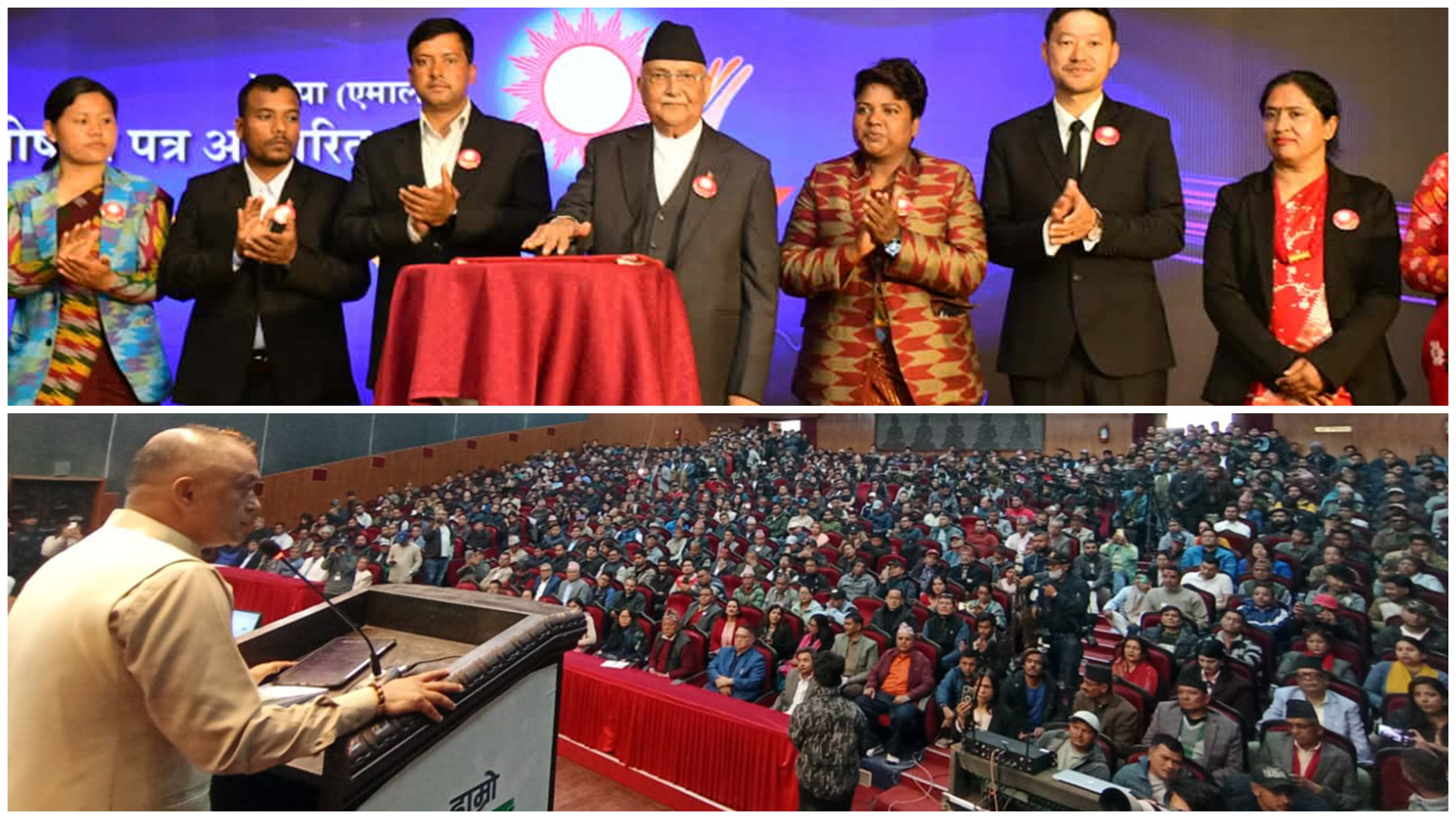
NC President Gagan Kumar Thapa announced a plan to generate 1.5 million jobs for youth over the next five years, building on the party’s Mission Employment initiative and linking job creation to constitutional rights. Speaking at the manifesto unveiling in Kathmandu, he said the party has detailed sector-wise strategies covering agriculture, tourism, infrastructure, and information technology. The plan includes provisions for collateral-free youth loans, support for digital creativity, and measures to address both brain drain and brain gain by creating institutional opportunities within Nepal. The party has also proposed restructuring state mechanisms, including reducing ministries while strengthening support systems for Nepali workers abroad.
Meanwhile, KP Sharma Oli released CPN (UML)’s manifesto under the Desh Pahila program, emphasizing political stability, good governance, development, and social justice. Reaffirming the slogan “Prosperous Nepal” Happy Nepali National Aspiration Our Destination, the party, stated that a decisive mandate is necessary to complete initiatives left unfinished during its previous tenure.
The CPN (UML) manifesto outlines 11 immediate tasks, five foundational priorities, and 25 broader resolutions. It sets long-term economic and income targets while proposing targeted support programs for youth, workers, students, women, and low-income groups. Infrastructure expansion, digital governance reforms, anti-corruption measures, improved public services, and universal access to clean drinking water form key components of its agenda. The party also reiterates its commitment to a nonaligned foreign policy and stronger engagement with the Nepali diaspora.
Both parties have placed employment generation and institutional reform at the center of their campaigns as voters prepare to head to the polls on March 5.