Kathmandu
Saturday, June 6, 2026






The first part of this piece presented and discussed some global best practices in terms of SME financing and regulation that Nepal could emulate. The first part discussed how global leaders in running efficient and well-functioning SME ecosystems wisely use various financing tools and smart regulation, not rigid restriction. Now, in this second and concluding part of the article, some other crucial aspects of a solid SME ecosystem, as exemplified by countries like the USA, Canada, Germany, Australia, the Nordics, and neighboring India are discussed.
Digital identity and single-window services
Firms spend time seeking many IDs and licenses. According to the report titled “Nordic Digital (eID) (Nordic Council of Ministers Publication 2016:508),” dated 10 February 2016, the Nordics and much of the EU have made significant investments in the delivery of e-IDs. This enables a business to be registered, taxed, and licensed through unified digital portals that enable seamless registration. According to the report, the registration success rates are very high.
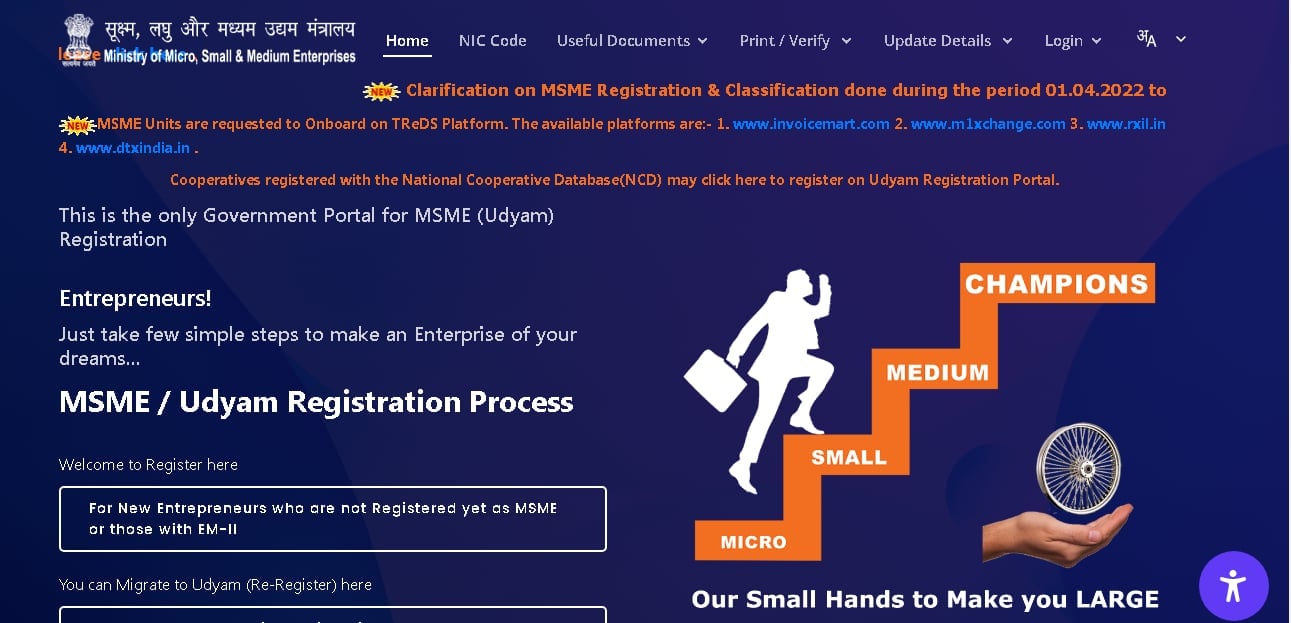
In India today, based on the Udyam Registration Portal, the digital surge – the story of Aadhaar, UPI and Udyam – illustrates how the development of digital infrastructure and the collective drive to register can formalize the unorganized micro-enterprises. According to reports, the registration portal has enabled the formalization of hundreds of thousands of unorganized micro-enterprises.
In Nepal, “while the government has made progress in improving e-services, currently ‘functions remain scattered among federal, provincial, and local systems’, and a unique business identifier to link registration, taxes, and program eligibility does not exist,” as identified in the diagnostic concerning access to finance for SMEs.
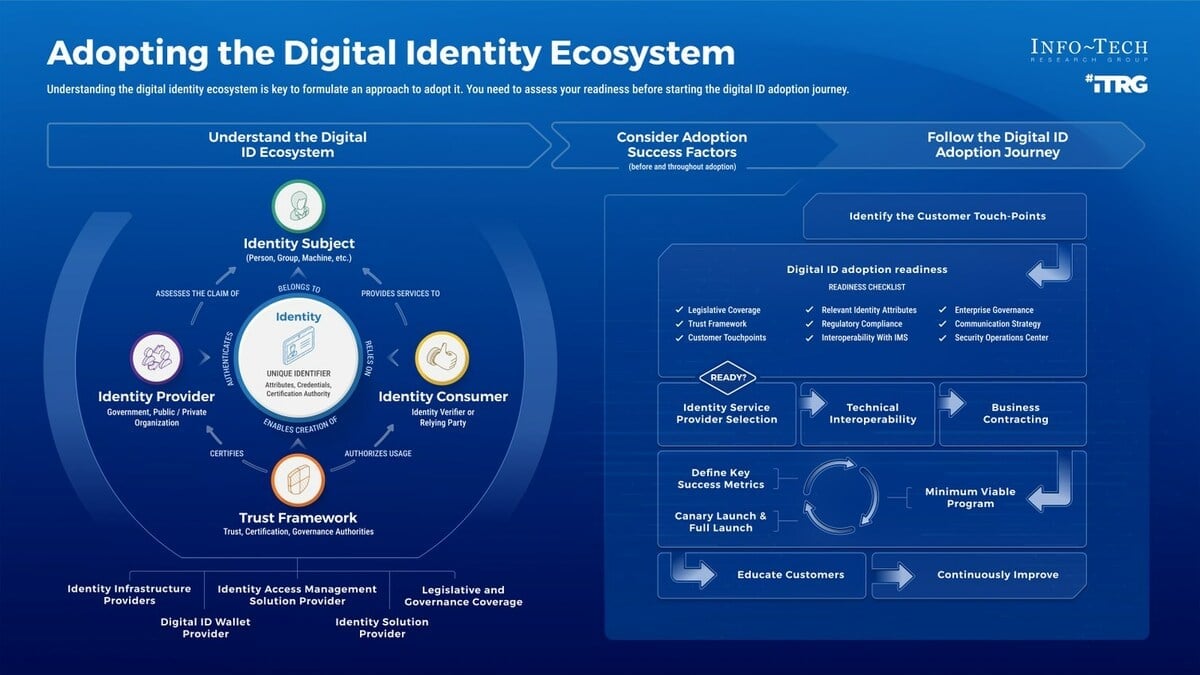
Behind each effective SME policy, there lies a secret digital infrastructure. In countries that can integrate data, identity, and services, the process of being an entrepreneur becomes easier and faster. According to comparative studies, the Nordic countries lead the pack: their digital identity solutions can integrate taxes, business information, and banking information. This makes approval nearly instantaneous and enables supervisors to concentrate on risk-based oversight.
According to the Innovation Science and Economic Development Canada website, Canada, and as per the official ‘Business.gov.au Grants Portal’, Australia, have developed integrated grant portals and real-time monitoring systems for the performance of SME programs. This makes the lives of entrepreneurs easier and the government smarter. The collective insight: information asymmetry, not access to capital, is the true barrier to the growth of the SMEs. The digital world can overcome this barrier.
Leveraging public procurement as a driver of growth
Among the many small businesses that can survive, only a limited few can grow. Ensuring access to stable markets is one area where it is very important to grow. In this context, the role of public purchasing comes into play.
According to US government data, the federal government sets contracting goals for small and disadvantaged businesses and publishes scorecards so that public spending builds both infrastructure and the entrepreneurial base. In Australia and Canada, as per the purchase strategy reviews in Australia and purchase policy reviews in the case of Canada, the centralized websites for purchase and the purchase assistance schemes for SMEs ensure that purchase activities become a basis for development rather than rent-seeking.
In India, the Government e‑Marketplace (GeM) demonstrates how government buying can be made accessible to MSMEs as easily and transparently as possible through an e-procurement marketplace. According to government announcements, GeM is complemented by invoice-discounting platforms (such as Trade Receivables Discounting System – TReDS) to reduce payment lag. Thousands of MSMEs are now competing with large players for government contracts on an equal footing.
The same principle drives the European model: SMEs are not peripheral suppliers but strategic ones. By buying locally on fair terms, governments create a stable demand base that allows SMEs to invest, innovate and offer jobs. In Nepal, although the procurement system is being modernized, policy reports indicate that SMEs still complain about payment delays, multi-level fragmentation and complicated bidding that favor larger providers. These reports recommend that Nepal introduce a streamlined micro-tender route for small providers, institute binding on-time-payment clauses and publicize small-supplier contract targets to build stable domestic demand.
People over enterprises
Finance and regulatory support promote entrepreneurship, but skills sustain the process. The most successful economies for SMEs develop their human resources as thoroughly as their businesses. In the German context, based on studies conducted on vocational training, the dual vocational training system links vocational educational institutions and the world of small and medium-sized enterprises. This enables the rotation of students between the classroom and the workshop of the small and medium-sized enterprises. According to KfW studies, clusters and skills drive high productivity in the sectors led by SMEs.
In the Nordic states, under the guidelines for lifelong-learning policy briefs, employer-based training and lifelong learning are considered a civic right because the government supports ongoing training for both the employed and the entrepreneurs at a subsided rate. In Australia and Canada, under the description of the business-related government advisory programs, business advice links businesses to management and technological upgrades because such human capital resources essentially form the infrastructure because they increase the output of each dollar credited. Business advice in Australia and incubators in India perform the same function because they improve technology, improve products, and improve the management.
Equally strong are industrial clusters, geographic concentrations of SMEs in the same industry sectors that share resources such as training and innovation. Examples from Germany’s engineering clusters to the Indian textile cities demonstrate how clusters can increase competitiveness through cooperation. By marrying money and advice, as well as training and technology, countries can interlink disparate entrepreneurs. In the case of Nepal, training and incubation activities are quite strong (NGO, donor, and government involvement), but policy studies suggest that enhancing accredited apprenticeship programs and tying investment in clusters to the needs of locally-owned businesses would be a good starting point, focusing on sectors driven through exports or the tourism industry.
Innovation and R&D incentives
Usually, the transition from a small business to a world leader depends on innovation. In the case of high-income countries, tax incentives, innovation grants, and venture capital investments have been included in the policy structure for SMEs. Australia, Canada, and the US apply R&D tax credits, refundable small business credits, and the use of public seed funds as per their descriptions of their country’s innovation policy. For instance, the SR&ED program administered by the Government of Canada has been identified as one of the most lucrative schemes for rewarding innovation.
Germany and the Nordic states, based on the form of the policy documents concerned with mixed financing schemes, have both developed grants for proof-of-concept studies, soft development loans, and co-financing schemes for the purposes of technology transfer. While innovation can now become economically viable for smaller businesses. This stands in contrast to donor-agency documents showing that innovation subsidies in Nepal remain in their infancy, with limited tax-financed R&D assistance, a lack of formalized innovation grants for business purposes, and underdeveloped private sources of venture capital financing.
Bringing the margins to the center
Inclusion has moved from the back burner of the social realm to the forefront of the economic world. The best smaller-enterprise regimes understand that their systems for expansion must include geographies and demographics. US schemes, as per Small Business Administration (SBA) figures, and Canadian development schemes, as per federal policy descriptions, specifically aim to include minorities and less-developed areas through niche ladder programs.
Indian regional guarantee programs and programs for female entrepreneurs, according to MSME Ministry statements, aim to include the under-banked; female-owned, craft-based, and rural business start-ups through guarantee funds and subsidized borrowing rates are the most ambitious inclusion activities in the world.
The Scandinavian countries, as rural-entrepreneurship studies reveal, mix welfare and rural-entrepreneurship programs to make inclusion pragmatic rather than gestural.
In Nepal, despite the existence of specific programs and the engagement of civil society organizations in reaching the female population and rural entrepreneurs, the reality of scale, monitoring, and formal linkages to finance is very limited. In the ADB fintech challenge brief, the percentage of female-owned businesses among the total businesses registered stands at only 13 %, and 40 % of the total SMEs identified access to finance as a constraint.
Equity, venture, and blended finance
Debt financing proves inefficient for those companies that have immense scopes of growth and require equity capital. Public venture capital funds like Vækstfonden in the Nordic countries (as per the Nordic financial policies), or High-Tech Gründerfonds in Germany (as per the German innovation policies), also function in the same manner as the private venture capital companies. In the US scenario, the private venture capital market functions efficaciously, simultaneously incorporating the government’s guarantee schemes.
Here, the role of the government acts as a catalyst that forms the environment. The risk falls under the purview of the private sectors. In Europe and India, blending techniques involving the usage of the additional financial assistance of the government as equity for the social or green businesses are gaining prominence.
Measurement, feedback and iteration
One of the most vivid differences between advanced and less-advanced SME ecosystems is not so much a specific policy, but a culture: governments that publish regular SME diagnostics and program reviews use data to improve. According to German KfW SME-Panel publications, the KfW SME Panel and Canada’s Key Small Business Statistics are concrete examples of how continuous measurement feeds into policy development. The US, Canada and Germany publish annual reports on SME performance, lending volumes and policy impacts; Australia’s Productivity Commission routinely reviews regulatory obligations and recommends streamlining. These feedback loops enable policymakers to learn, adapt and pivot – amplifying what works and discontinuing what doesn’t.
The point is measurement fuels momentum. An open system of tracking and transparency can translate rhetoric about supporting SMEs into actual deeds. In the case of Nepal, reviews of policies point to serious gaps in the data set: the survival rates of enterprises, the usage rates of financing options, and the transition rates from the informal to formal sectors. Priorities include national surveys and the integration of tax, registration, and social safety nets.
Final word
When small business is thriving, so is society. Germany’s family firms retain craftsmanship; Canada’s start-ups encourage innovation; Scandinavia’s local firms retain rural well-being; Australia’s SMEs drive exports; and India’s micro-enterprises give huge employment and cultural identity.
The history of SME promotion internationally is not one of state generosity but one of state intelligence. It is one of establishing mechanisms that understand how real entrepreneurs operate and live – mechanisms that replace labyrinths with ladders.
It is these systems that create the difference between subsistence and success. The best practices globally make it clear that with finances flowing freely, regulation minimized, and constant learning, small fires can turn into bonfires that illuminate entire economies.
The essential distinction between countries that transform large numbers of micro enterprises into long-term firms and those which collapse is never ever a solitary flagship program. It is architecture: risk-sharing finance, one-window services and digital identity, scale-generating procurement, skills linked to firms, innovation ladders, targeted inclusion and measured care.
One constant pattern throughout America, Germany, Canada, the Nordics, Australia and India is: policy that reads the day of the entrepreneur and reduces friction succeeds. Concluded.