Kathmandu
Monday, February 23, 2026





KANCHANPUR: As election fervor has gained momentum in the country, voters have prioritized their agenda to be internalized by the election candidates. Voting for the House of Representatives (HoR) is taking place on March 5.
The voters have varied needs and concerns, and they want the political parties and candidates pay heed to them with their readiness to make policy interventions and other initiatives to address the demands.
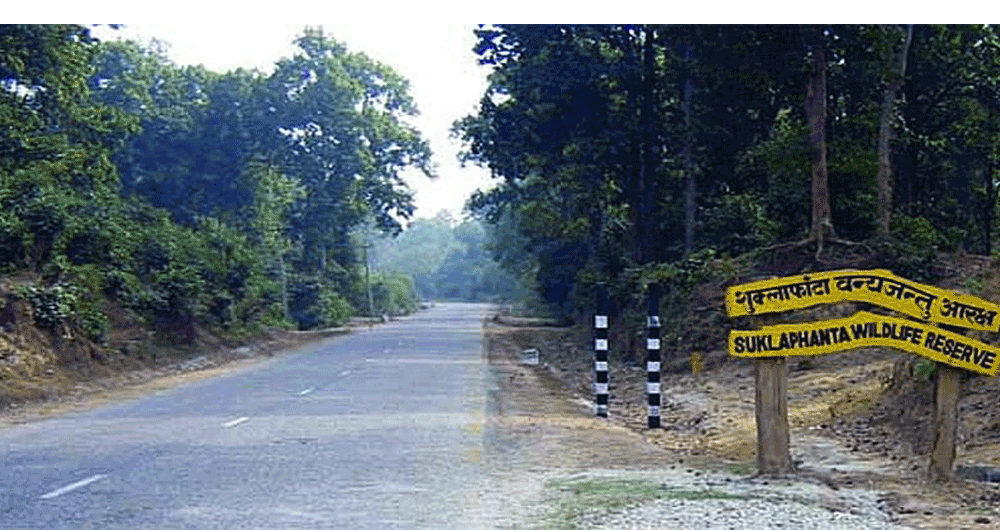
Voters residing along the buffer zone of Shuklaphanta National Park have identified human-wildlife conflict as their pressing issue to be addressed this time. Various wild animals such as boar, blue bull, spotted deer, elephants, tigers, and leopards continue to cause massive agricultural losses. This has repeated for years. Herbivorous animals encroach on farms, causing significant crop damage, while carnivorous animals pull livestock away from sheds and devour them, locals complained.
Ganga Ram Dagaura, 65, of Pipladi, said that strengthened farming structures, electric mesh wire, solar lamps, and flashlights are necessary to minimize unwanted encroachment by wild animals. “But our voices have been overlooked for years. We want and favor those candidates who are genuinely ready to hear and respond to us.”
Kide Dhanuk, 60, of Khajuwa, said that a mesh wire fixed earlier was damaged by attacks from wild animals and by rains. “A strengthened electric fence, the construction of an embankment along the local Syali River, the blacktopping of roadways, and access to irrigation facilities are our priorities,” he said. Over 60 families reside in the Khajuwa area.
Mahesh Mahara of Jonapur articulated similar concerns. “I will vote for a candidate who seems committed to our agenda,” he said. He went on to say that a neighbour of the Mahara family suffered significant economic loss when a tiger preyed two hybrid cows. “The animals were purchased on loans, and that family has been eagerly waiting for compensation,” he said.
“We are helpless to see our grown crops such as paddy, wheat, and sugarcane being damaged by wild animals within our farms,” he lamented.
The park’s buffer zone stretches over an area of 243.5 kilometers. Forty-eight wards of five municipalities and two rural municipalities are part of it. A total of 38 local consumers’ committees have been formed there, and such committees are working to provide relief to locals and address their other needs.
Locals said that such initiatives at the local level are, however, not sufficient to address the severity of the issues. They want election candidates to come up with long-term and sustainable plans to address these problems with strong commitments and a clear vision for basic infrastructure development.