Kathmandu
Sunday, July 19, 2026





After a dramatic special convention sidelined the old guard and elevated Gagan Kumar Thapa to the post of Nepali Congress president, the party heads into the March 5 polls with fresh candidates, fewer rebels, and a reformist pitch - hoping renewal, not legacy, will win back disillusioned voters
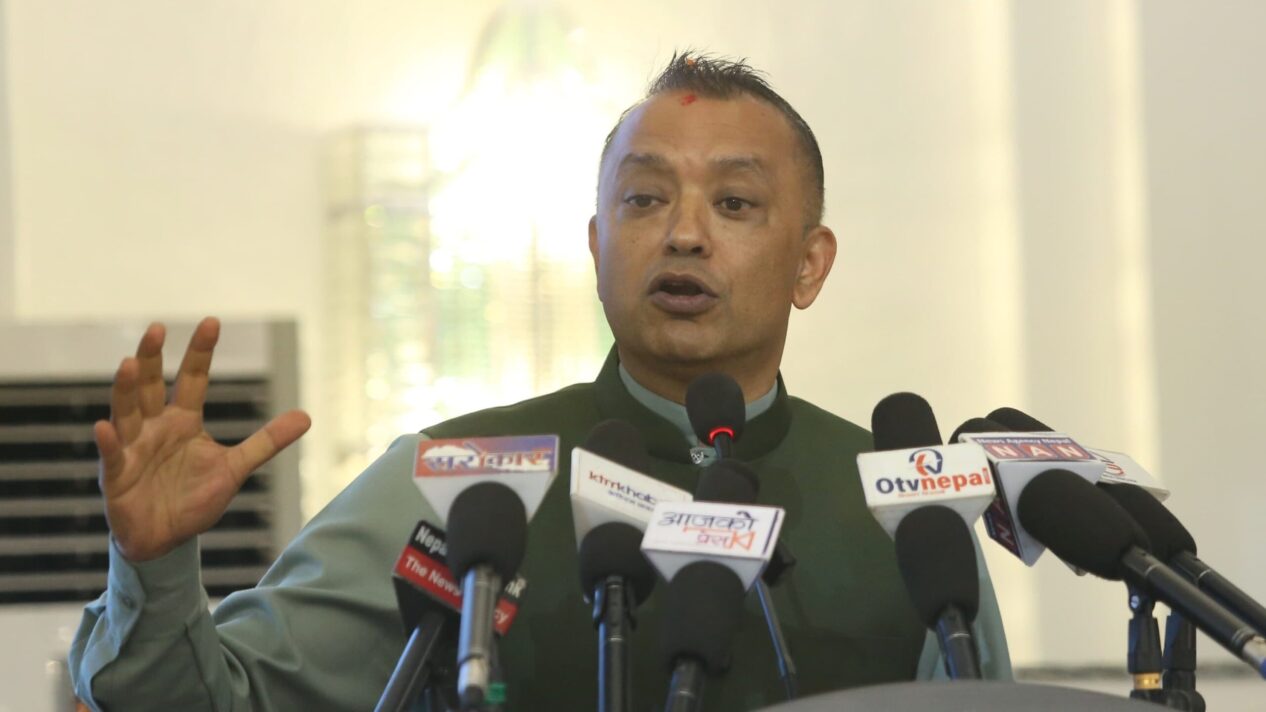
KATHMANDU: “If the Nepali Congress had gone into the election with the old leadership, the people would have rejected it outright,” said Ujjwal Baral, the Nepali Congress candidate from Sindhuli Constituency No. 1, at a gathering of Sindhuli journalists in Battisputali, Kathmandu, on February 14. Baral had come to the capital after conducting door-to-door programs with voters in Sindhuli, and his recent experience reflected the public and voters’ frustration with the old leadership of the Nepali Congress (NC).
However, the NC has gone into the March 5 elections carrying the message of new leadership. This has somewhat appeased the voters who were angry with the NC. Baral said, “Voters have become somewhat hopeful with the changed Nepali Congress. It is the responsibility of the new leadership to maintain that hope.”
In the special convention of the NC held on January 11-15 this year, the then party president and a majority of office-bearers and central members did not participate. Despite the absence of much of the leadership, the special convention, attended by a majority of representatives, elected a new central working committee under the leadership of then General Secretary Gagan Kumar Thapa, and the Election Commission also recognized this committee.
It is this new leadership, formed after the special convention, under which the NC is now contesting the elections. From ticket distribution to the election manifesto and all other election-related activities, everything is being conducted under Thapa’s leadership. According to Baral, this has made it easier for NC candidates to campaign and reach out to the public for votes. Baral, the NC candidate from Sindhuli Constituency No. 1, is himself a central member elected through the party’s special convention and also a signatory representative of that convention.
The special convention of the NC was held against the backdrop of the Gen Z uprising of last year’s September 8 and 9. It was also on the foundation of this uprising that the House of Representatives elections were announced for March 5 this year, and the dissolution of the House of Representatives was carried out. The special convention of the NC, under the leadership of Thapa, elected mostly new faces as office-bearers and members of the central committee. This has freed the NC from the dominance of senior leaders, including former party president Sher Bahadur Deuba, and injected new enthusiasm into party circles. Political analyst Mumaram Khanal says, “After the Nepali Congress’ special convention, there seems to be a growing belief that the party can be renewed. The changed Nepali Congress has attracted voters, and it appears to have made it easier for candidates to reach out to voters.”
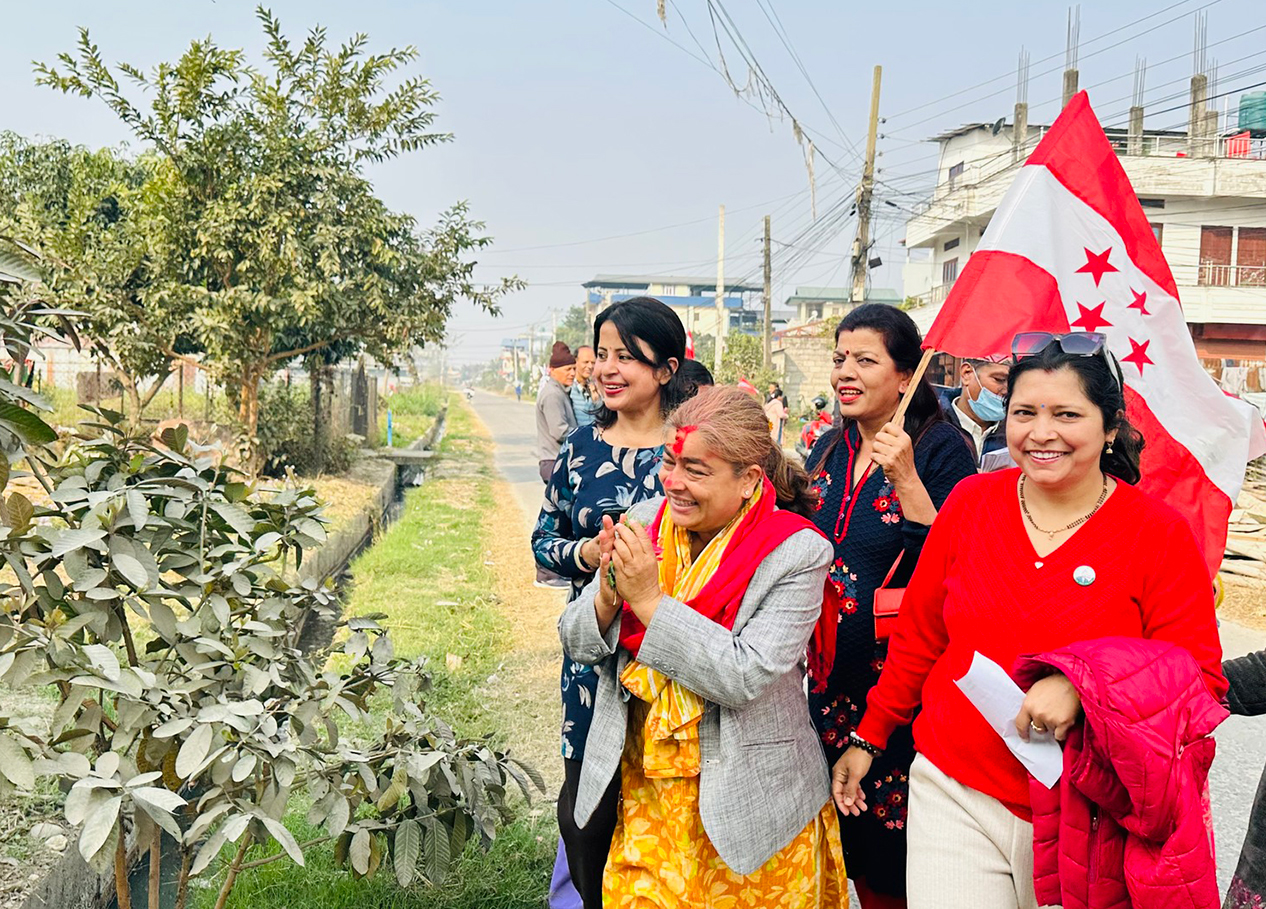
Nepali Congress candidate for Chitwan Constituency 2 Meena Kumari Kharel during the election campaign. Photo: Kharel’s Facebook page
Through the special convention, the NC conducted a self-review and acknowledged past weaknesses, while the new leadership committed to improving the functioning of the party and government. “Gen Z protesters sought changes in the situation, not in the system. They demanded changes in certain policies, personnel, and working styles,” says Pratap Paudel, political advisor to NC President Thapa. “It is on the foundation of that movement that the Nepali Congress held its special convention, which has brought newness to the party. Even though there were shortcomings in the past, the changed Nepali Congress will not repeat them.”
The special convention has left Sher Bahadur Deuba and then acting president Purna Bahadur Khadka out of the election campaign. Khadka has filed a case in the Supreme Court challenging the Election Commission’s decision to recognize the Nepali Congress under the leadership of President Thapa.
According to Paudel, the party reforms announced by the new leadership have made it easier for NC candidates to reach out to voters. Political analyst Puranjan Acharya also notes that the leadership change in the NC has brought positive developments at the local level. “In this election, there are very few rebel candidates from the Nepali Congress. It appears that everyone has accepted the new leadership,” says Acharya, adding, “This time, candidates and party workers have conducted the election campaign in a unified manner.”
The special convention has left Sher Bahadur Deuba and then acting president Purna Bahadur Khadka out of the election campaign. Khadka has filed a case in the Supreme Court challenging the Election Commission’s decision to recognize the Nepali Congress under the leadership of President Thapa. The case is currently under review at the apex court. However, apart from Khadka, Nepali Congress leaders who had previously supported Deuba are also contesting the elections using tickets signed by President Thapa.
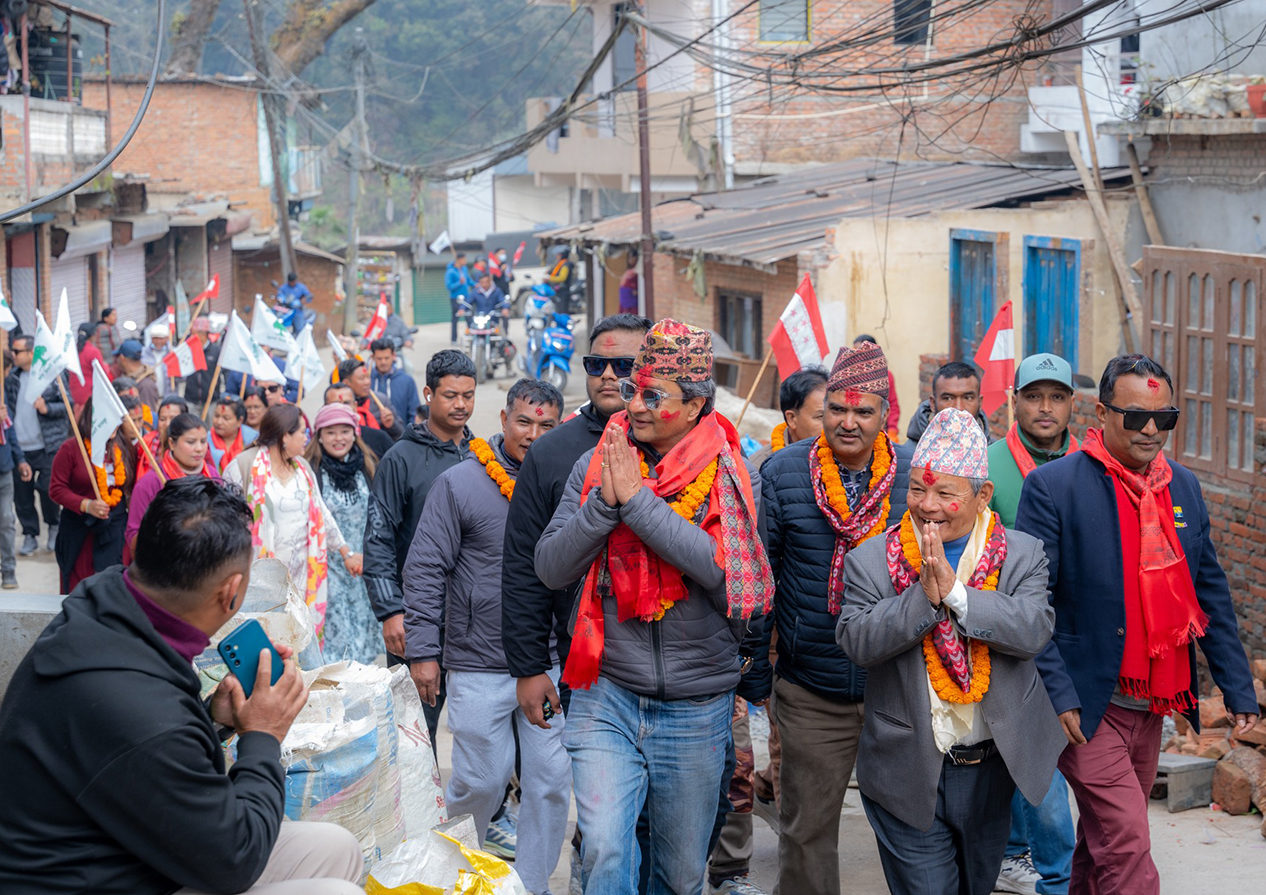
Udaya Shumsher JBR, Nepali Congress candidate for Lalitpur Constituency No. 1. Photo: JBR’s Facebook page
In the direct elections, the NC has fielded candidates in all 165 constituencies, with rebel candidates appearing in only three constituencies. Ashish Sharma in Kapilvastu-1, Sitaram Sah in Saptari-4, and Ramlakhan Mahato in Parsa-4 are the rebel candidates. Sharma is the son of former minister and ex-central member of NC, Deep Kumar Upadhyay, while Sah and Mahato are regional party presidents. Bhupendra Jung Shahi in Kalikot, and Baburam Acharya in Kathmandu-1 have withdrawn their candidacies
Changed style
In the past, the Nepali Congress, UML, and Maoist parties, which have alternated in power, have been accused of sacrificing principles in pursuit of government. “Voters were frustrated with the perception that the Nepali Congress compromises its principles for power. Efforts have been made to address that,” says Paudel.
Through its special convention, the Nepali Congress passed a proposal to contest elections on its own, freeing its voters from the need to vote under another party’s symbol.
In the 2017 parliamentary elections, the NC had formed an electoral alliance with the Madhes-centered parties, and in 2022 it had allied with the Maoists, the Unified Socialist Party, and three other parties. Similarly, in the 2017 local elections, the NC allied with the Maoists, and in the 2022 local elections, it formed an alliance with the Maoists and four other parties. Because the NC frequently shifted alliances, its supporters often faced confusion at the time of voting. Through its special convention, the Nepali Congress passed a proposal to contest elections on its own, freeing its voters from the need to vote under another party’s symbol. Among the NC candidates contesting direct elections nationwide, 108 (about two-thirds) are new faces. For them, this is their first time standing as candidates for the House of Representatives.
Former NC president Deuba rarely held open discussions on the party’s policies and programs. However, the new NC President Thapa, elected through the special convention, has started direct dialogue with voters. On 19 February, Thapa even organized a program in the capital to hold an open discussion on the NC’s electoral pledge. It is difficult to predict right now whether Thapa, through the changed NC, can break the anti-establishment electoral wave. However, he has consistently argued that “the good of the past must be preserved, and the bad must be discarded.”
“Today, this is exactly what we aim to build in the Nepali Congress,” Thapa said at an election rally in Sarlahi-4 on January 29. “This is not yesterday’s Nepali Congress; we are the changed Nepali Congress. The changed Nepali Congress is determined to change the country.”