Kathmandu
Thursday, July 9, 2026





According to a survey, some 360,000 Nepalis are addicted to vapes
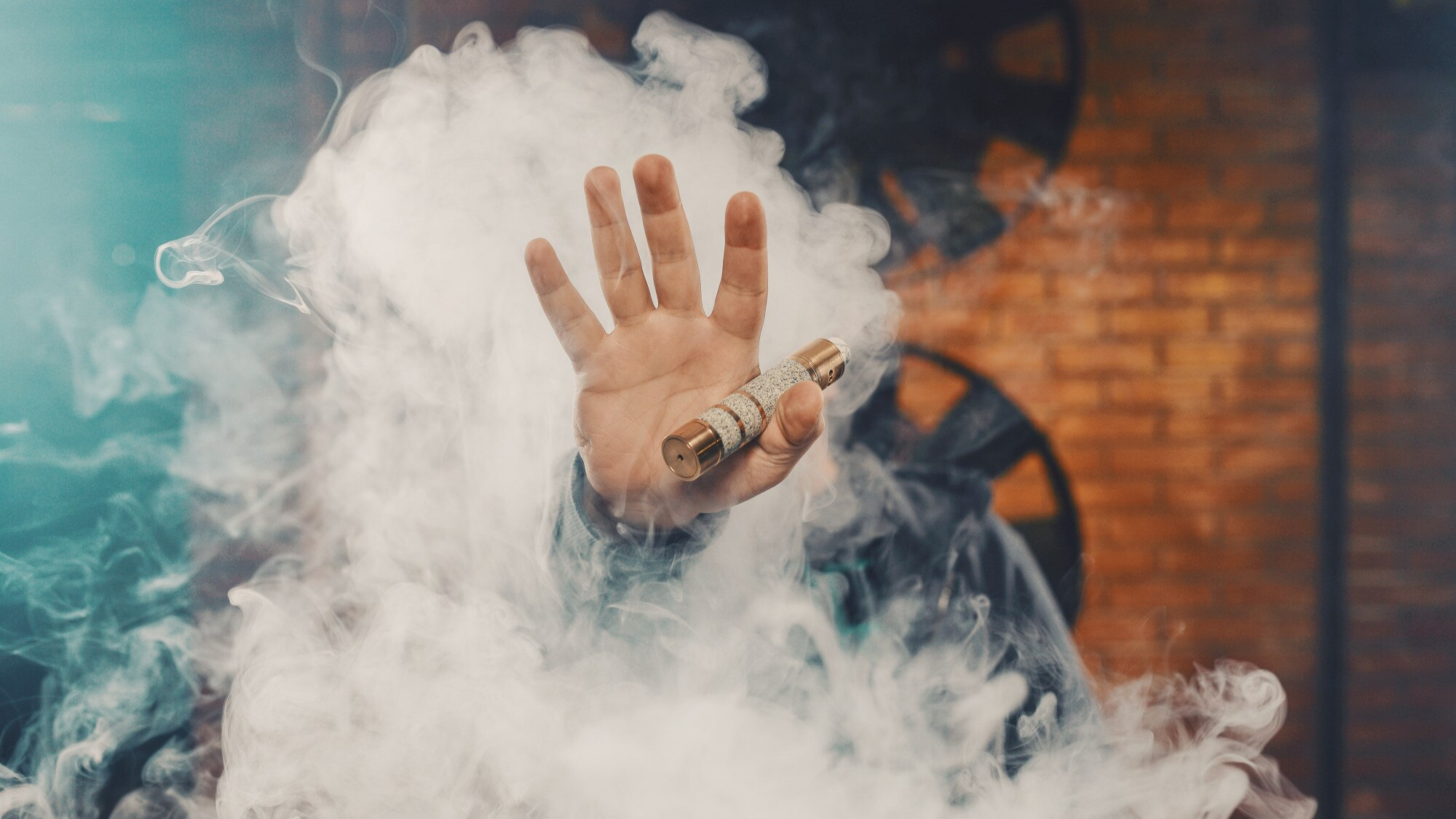
KATHMANDU: One recent morning, a group of teenagers arrived at a tea shop in Shankhamul, Kathmandu. Dressed in college uniforms, they ordered black tea from the shopkeeper and sat around a nearby table. One of them pulled out a small bottle resembling perfume from his bag. It was a vape — an electronic cigarette. He opened the cap and they took turns inhaling from it. Slightly lifting their heads, they exhaled thick, fragrant white vapor into the air.
Today, it has become common to see young people vaping at tea shops, cafés, restaurants, and clubs in Kathmandu. Vaping appears to have become a fashion trend among teenagers and youth. Since it does not produce the smell and smoke of traditional cigarettes, it is being used openly at home, in offices, and even in public places. However, behind the momentary pleasure provided by this nicotine addiction lie serious health risks and financial burdens.
Public health expert Sharad Onta says that vaping addiction destroys both health and money. “You spend money buying vapes to satisfy the addiction, and since it harms your health, you spend money again on treatment.”
According to one addict’s experience, vaping is expensive. He developed the habit a year ago after trying a friend’s vape, and now he cannot go long without taking a puff. He says, “I spend around 5,000 rupees a month on vaping.”
Globally, vaping has emerged as a new epidemic of nicotine consumption, and detailed research on its long-term health effects is still ongoing. So far, studies increasingly show that vaping can affect the heart and lungs.
In Nepal, research is yet to be conducted on the economic burden added by vape-related health risks. However, millions of rupees are spent annually on vape imports. In fiscal year 2022/23, vapes worth Rs 213.9 million were imported. Although the government banned the import and sale of vapes from mid-March 2025, smuggling continues. Due to illegal imports and unrestricted sales, vape addiction is spreading at an alarming rate and severely affecting public health.
From misconception to addiction
The modern form of vaping, or electronic cigarettes, was developed in China in 2003. It was invented as an attempt to find a less harmful alternative to traditional cigarettes by vaporizing nicotine for inhalation.
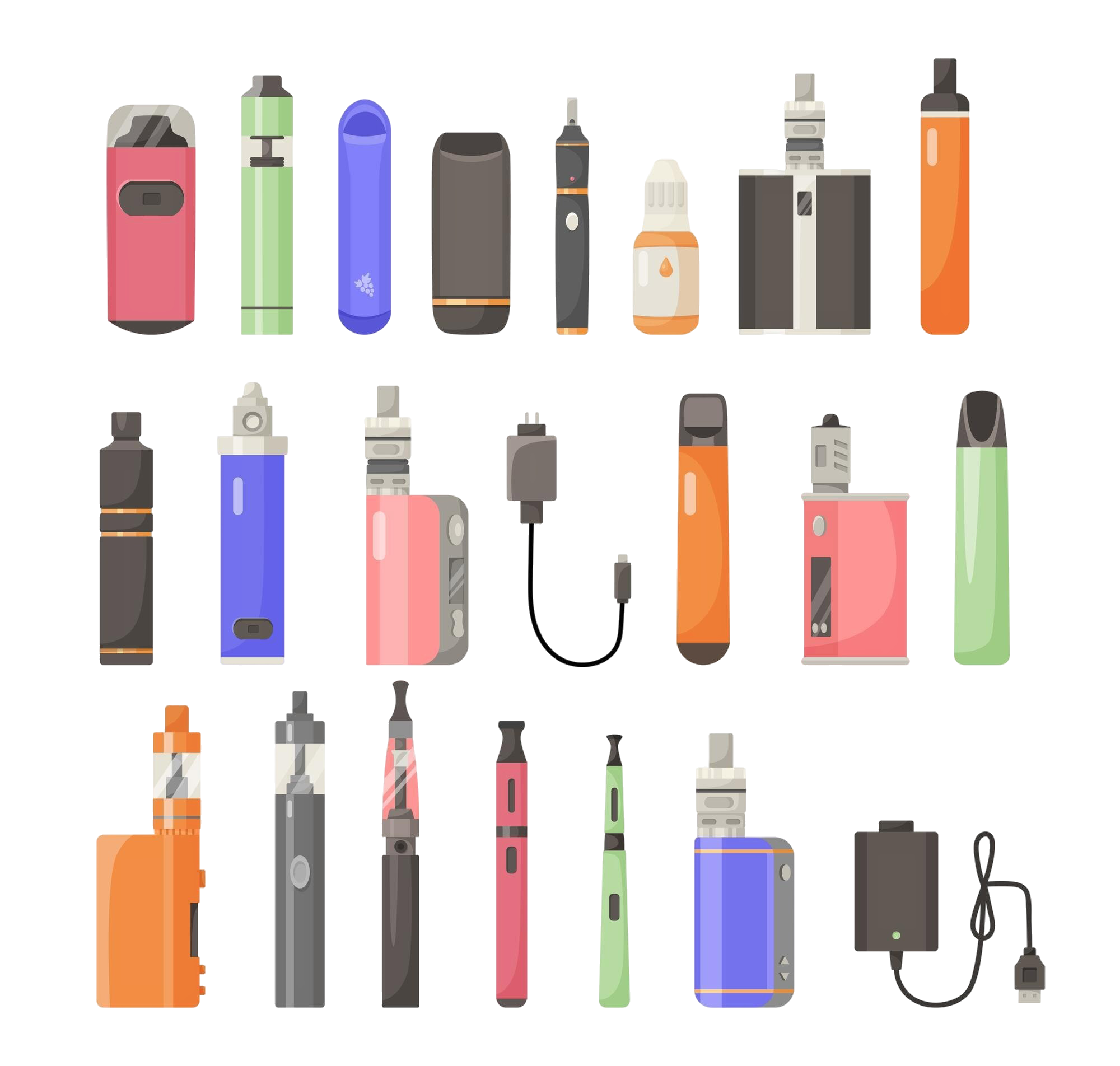
Various types of vapes. Image source: Freepik
A vape is an electronic device designed to mimic the experience of smoking a cigarette. It is also called an e-cigarette. It contains a heating element (atomizer), a battery, and a tank-like container. The heater warms the liquid to create vapor. Because it produces vapor instead of smoke, many consider it safer. However, this vapor contains nicotine along with flavoring and aromatic substances. Nicotine — an addictive substance — is also found in cigarettes and other tobacco products.
Although vape manufacturers do not classify their products as tobacco, they use nicotine derived from tobacco. Moreover, they promote vaping as a tool to help quit smoking. As a result, many believe it is less harmful than cigarettes or nicotine-free. Due to such misconceptions, some people use vapes as an alternative to cigarettes or as a method to quit smoking. However, since vapes also contain nicotine, doctors say they still harm health.
Both nicotine-containing and so-called nicotine-free vapes are available in the market. However, studies have found nicotine even in products labeled as nicotine-free. Since nicotine consumption affects cognitive performance and concentration, vaping is especially risky for adolescents and young adults whose brains are still developing.
According to the World Health Organization (WHO), existing studies show that nicotine intake through vaping increases chest, lung, and heart problems. In a study published on 25 June 2025, WHO reported that vaping during pregnancy can harm the fetus and damage brain development. WHO also states that toxic chemicals added for flavor and aroma in vapes are causing health complications.
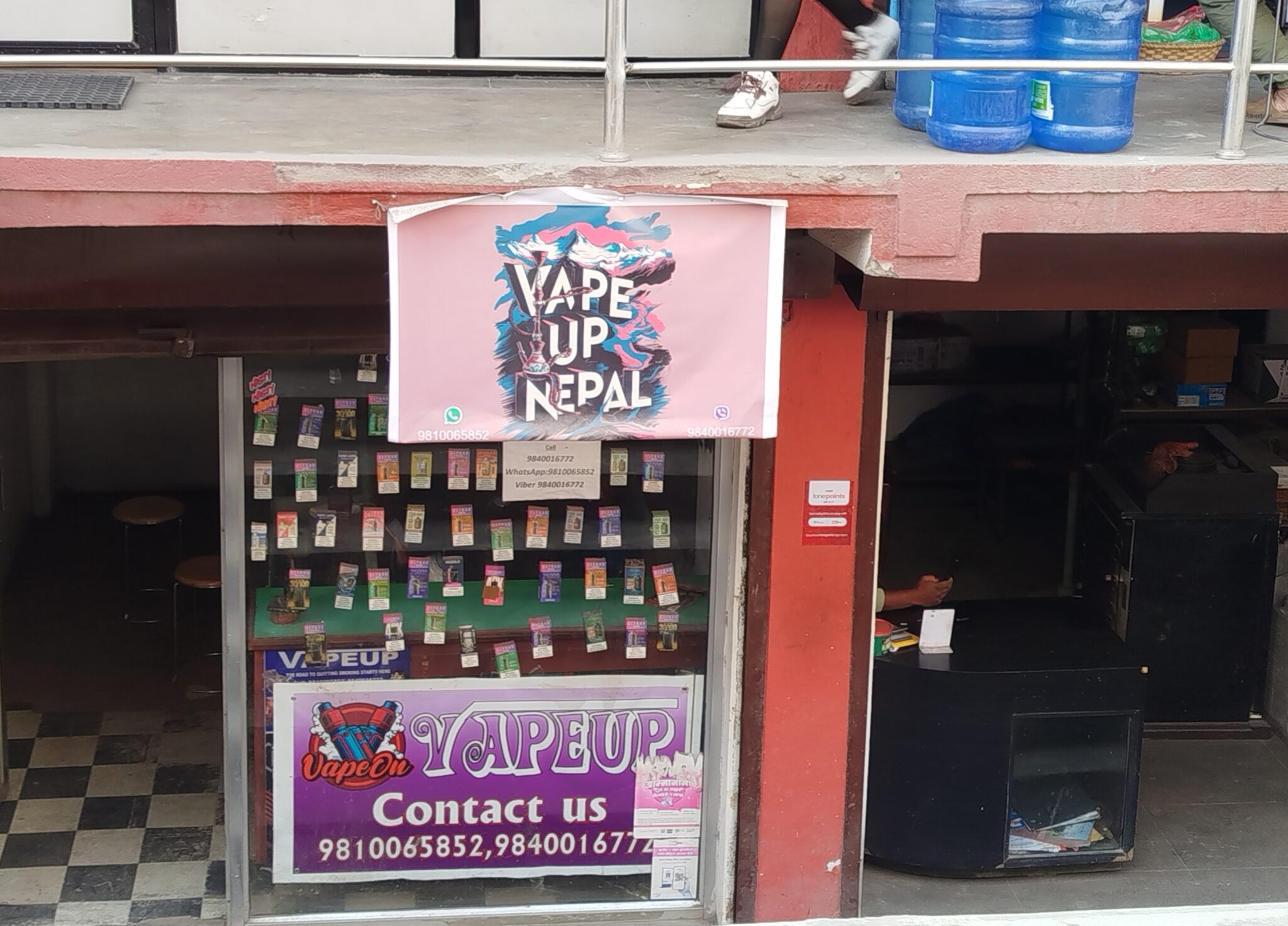
Vapes displayed for sale at a shop in Anamnagar, Kathmandu. Photo: Bidhya Rai
Chest specialist Dr Rakshya Pandey says long-term vaping can cause lung and respiratory problems. It can increase heart rate and blood pressure, and the chemicals and flavorings used may cause allergies. She says, “If adolescents and young people, who are in critical stages of physical and mental development, continue excessive vaping, the future public health situation will certainly become severe.”
Public health expert Onta says the claim that vaping helps people quit smoking is merely a misconception. “Vaping cannot be a treatment for smoking. Using vapes to quit cigarettes is like moving from one addiction to another,” he says.
Psychiatrist Dr Rishav Koirala says that when families and society easily accept vaping as a method to quit smoking, the risk increases. “Nicotine reaches the brain within six seconds of consumption and creates a pleasurable sensation. Once addicted to this feeling, it leads to long-term problems.” He adds that nicotine harms health whether delivered through smoke or vapor.
According to Upendra Dhungana, Senior Public Health Administrator at the National Health Education, Information and Communication Center under the Ministry of Health and Population, the commercialization and use of vapes in Nepal have increased over the past five years. He says more people are becoming addicted under the pretext that it helps them quit smoking. “The habit of consuming more because it is believed to cause less harm has actually increased the harm,” he says.
Rising users, illegal imports
Vapes have become especially popular among young people because they do not require a lighter, can be used many times after a single charge, and are available in various flavors. As a result, they have become a common item found in the pockets of many youths in urban areas. The taste, appearance, and design of vapes themselves appear to target young consumers.
Dr Prakash Budhathoki, spokesperson for the Ministry of Health and Population, says manufacturers intentionally introduce fruit-flavored and aromatic vapes to cultivate consumption habits by understanding youth psychology. Teenagers and young adults often try vapes for the first time in the company of friends, and gradually become addicted after being attracted by the flavors. “Once they try vaping, they feel like using it again. Because of nicotine, addiction develops. This is exactly what is happening among today’s youth,” says Dr Budhathoki.
According to a study published by the WHO on 19 January 2024, at least 16,000 vape flavors are available in the global market to attract adolescents and young people.
A study titled “Prevalence, Correlates and Perception of E-Cigarettes Among Undergraduate Students of Kathmandu Metropolitan City, Nepal: A Cross-Sectional Study,” published on 17 November 2023 in the Journal of Smoking Cessation by the American publishing house Maximum Academic Press, states that youth are attracted to vaping due to peer influence, the appeal of various flavors, and the perception that it causes less harm to health.
Among the 405 students surveyed in that study, 27.1 percent reported having used vapes at least once. Of the users, six percent said they used vapes regularly. The study also noted that 64.7 percent of undergraduate or equivalent-level students believed that vaping is less harmful to health.
The number of vape users in Nepal is increasing. According to a 2019 survey, there were 312,371 Nepalis aged 15 to 69 who used electronic cigarettes.
This figure was obtained from a joint survey on non-communicable disease risk factors conducted by the WHO and the Government of Nepal between February and May 2019. Five years later, by 2024, the number of vape users in Nepal had risen to 359,986, according to the Global State of Tobacco Harm Reduction portal. The portal’s estimated data published in 2025 indicates that the number of vape users is increasing by an average of 10,000 per year.
Globally as well, the number of vape users is high. According to a WHO study released on 6 October 2025, there are approximately 100 million vape users worldwide. Among them, 1.5 million users are in the 13–15 age group.
Meanwhile, millions of rupees are flowing out of the country due to vape imports, despite their adverse health effects. According to data from the Department of Customs, from fiscal year 2021/22 up to the period mid-January 2026 in the current fiscal year 2025/26, vapes worth Rs 287.437 million were imported. During this period, 3.993 million units of vapes and related equipment, along with 400 kilograms of vape materials, were imported. The highest imports came from China, followed by the United States, Britain, Hong Kong, India, South Korea, Malaysia, the UAE, Germany, the Netherlands, Uzbekistan, and Vanuatu.
The government banned the import and sale/distribution of vapes starting 25 March 2025. However, customs data show that imports have not completely stopped since then. Police seizures indicate that large quantities of vapes are being illegally smuggled into the country.
On 31 August 2025, police confiscated 3,805 vape units worth Rs 3.805 million from a warehouse in Ward No. 15, Chamatī, Kathmandu Metropolitan City. Earlier, within two weeks in Poush 2081 (mid-December 2024 to mid-January 2025), the Department of Revenue Investigation and police seized approximately 124,000 vape units worth more than Rs 250 million from locations including Imadol in Lalitpur, Mustang, Pathlaiya, and Butwal.
Open sale despite the ban
With the objective of reducing and controlling the import, production, and sale/distribution of tobacco products, the Ministry of Health and Population issued the Tobacco Product Control and Regulation Directive, 2014 (2071 BS).
Rule 28, Sub-rule 3 of the directive states: “No one shall produce, import, sell or distribute electronic cigarettes, nor consume them in public places or public transport, nor promote or advertise them through mass media.”
However, the import and sale of electronic cigarettes have not been effectively stopped. Despite the ban, they continue to be imported secretly, and illegal sales are openly taking place. In Kathmandu, dedicated vape shops can be seen operating in various locations. Similarly, vapes are being freely bought and sold through stores, shopping malls, and online platforms. As a result, people of all age groups are using them without restriction.
Considering the health impacts of vaping particularly among youth and adolescents, the National Health Education, Information and Communication Center under the Ministry of Health and Population initiated efforts about a year ago to enforce a ban on import and sales, based on the 2014 directive.
Citing Rule 28, Sub-rule 3, the Ministry wrote to the Ministry of Finance, the Ministry of Communication and Information Technology, the Ministry of Industry, Commerce and Supplies, the Department of Customs, and the Department of Commerce, Supplies and Consumer Protection on 25 March 2025, requesting a prohibition on the production, import, sale, distribution, public consumption, promotion, and advertisement of vapes. Following this correspondence, the import and sale of vapes were officially banned.
However, opposing this decision, Vapemandu Traders and its proprietor Nabin Khadka filed a writ petition at the Patan High Court on 23 May 2025. On 4 June 2025, a joint bench of Judges Kabi Prasad Neupane and Hemant Rawal issued an interim order stating that those who had obtained legal permits to import should not be restricted. Later, on 12 November 2025, a joint bench of Judges Rishiram Niraula and Ramesh Prasad Gyawali delivered a final verdict dismissing the writ petition. The full text of the judgment is yet to be released.
A growing public health burden
According to the US Centers for Disease Control and Prevention (CDC), as of February 18, 2020, a total of 2,807 patients with lung injuries linked to vaping had been identified. Although comprehensive data on the health impacts and risks of vaping are still emerging, evidence of its harmful effects continues to grow. Etienne Krug, Director of the Department of Health Promotion and Prevention at WHO, has described vaping as a new wave promoting nicotine addiction.
He stated: “Electronic cigarettes introduced as less harmful alternatives have enticed children toward nicotine consumption, posing a risk of undermining decades of progress achieved in public health.”
Public health expert Onta says Nepal, already at high risk of chronic respiratory diseases, heart disease, and respiratory infections, is being pushed toward even greater health and economic risks due to the growing use of vapes. “If the family’s breadwinner falls ill due to vaping, it becomes difficult even to meet basic household needs,” he says. “The social cost that must be paid because of vaping can also become very expensive.”
He suggests that the government should conduct a nationwide study in time to raise awareness about the looming health crisis caused by vaping. Upendra Dhungana, Senior Public Health Administrator at the National Health Education, Information and Communication Center, says it will take time to determine the full impact of vaping. “It took nearly a decade of research after studies began to conclusively establish that cigarettes cause cancer. To determine the real impact of vaping may take another 20–30 years,” he says.
The government is preparing to amend the Tobacco Products (Control and Regulation) Act, 2011 (2068 BS) to regulate the use and sale/distribution of vapes. Regarding this, Ministry spokesperson Dr Budhathoki says: “Since the main Act does not clearly address vaping, regulatory efforts so far have not been fully effective. Once it is incorporated into the Act, we plan to mobilize law enforcement and implement packaging and labeling requirements to strengthen regulation and control.”