Kathmandu
Tuesday, July 21, 2026





While the government seems to be active to arrest Prasai, the courts appear active to release him
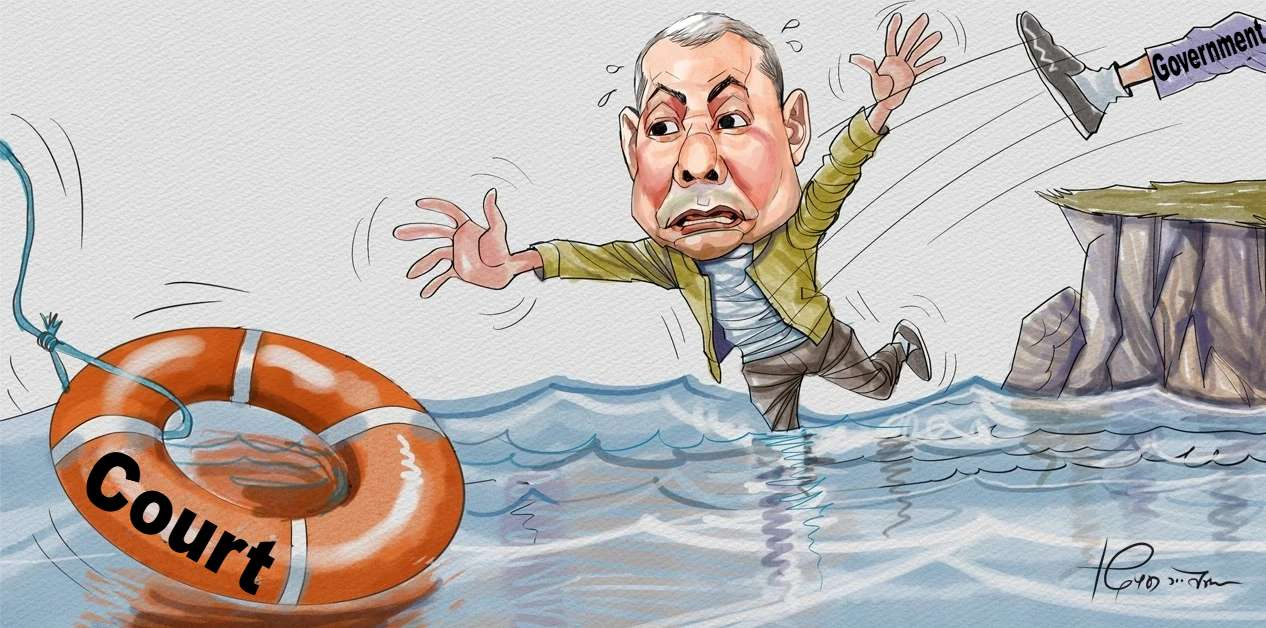
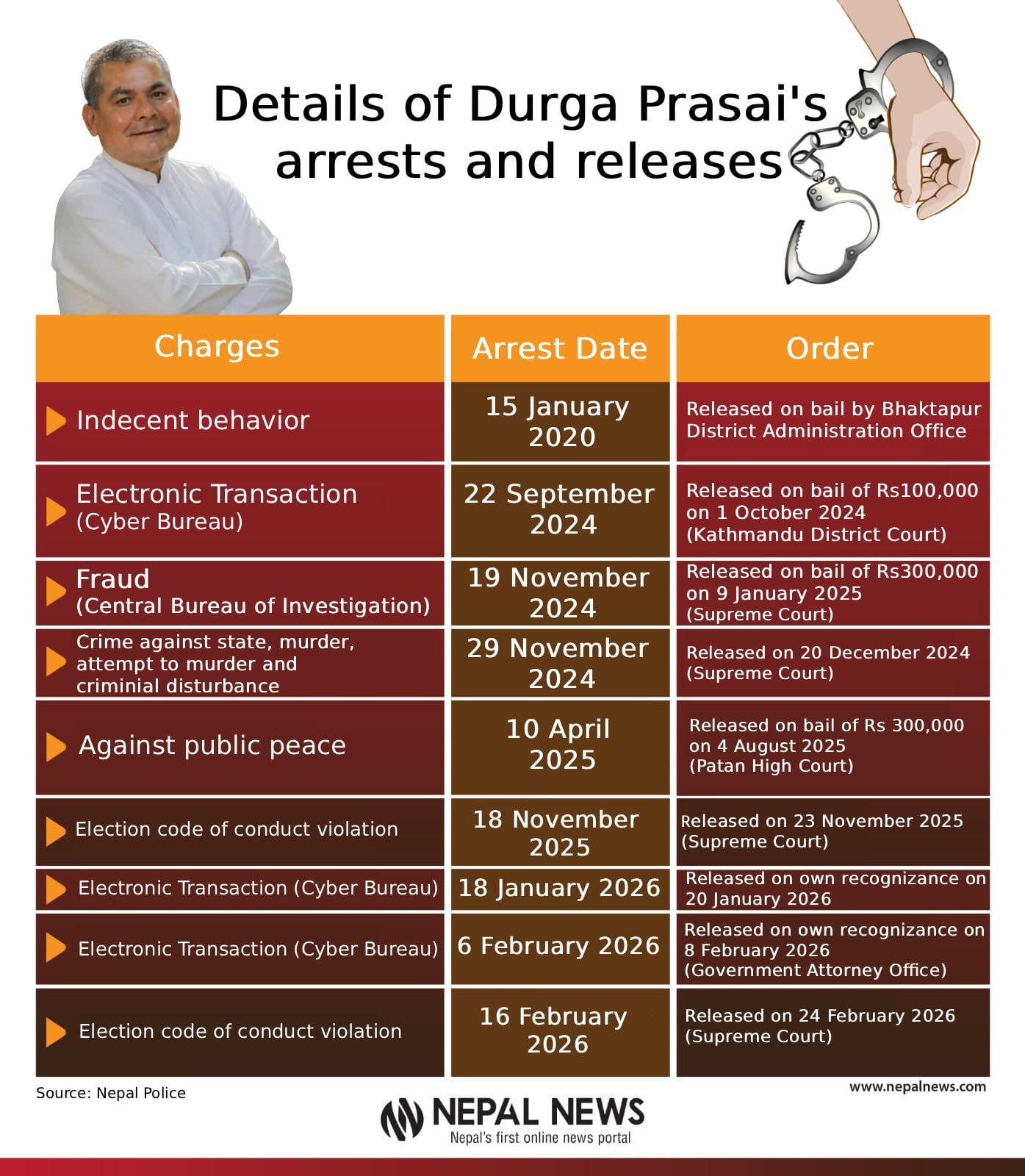
KATHMANDU: The government has arrested Durga Prasai, chairperson of the “Nation, Nationality, Religion, Culture and Citizen Protection Mega Campaign Nepal,” 10 times since 2019 (2076 BS) based on his controversial statements. Ironically, the court has ordered his release all 10 times. The Supreme Court itself has repeatedly thwarted the government’s plan to keep Prasai in jail. Even the government formed under the leadership of Sushila Karki after the Gen Z movement of September 8 and 9 last year attempted four times to detain him. However, on the strength of court orders, government attempts to imprison him were halted.
After each arrest, Prasai has been released based on writs of habeas corpus. Immediately after his arrest, a habeas corpus petition is always filed at the Supreme Court on his behalf claiming unlawful detention. The law allows such petitions to be filed in court claiming that someone has been detained illegally and with malicious intent. Since such petitions are linked to fundamental rights, courts treat them with importance. Therefore, in habeas corpus petitions filed on Prasai’s behalf, the court has repeatedly declared his arrest unlawful and ordered his release. Being a cancer patient, he has also received special consideration from the court.
The pattern of Prasai’s arrests and releases appears interesting. He was most recently arrested on 16 February and released on 24 February by court order. On 15 February, he had issued a public statement announcing a “Nepal Bandh” (nationwide shutdown) and urging the public not to participate in the election scheduled for March 5. Claiming that this would disrupt elections and disturb law and order, the Election Commission wrote to the Kathmandu District Police Office requesting his arrest. Based on that, police arrested him and obtained a five-day extension from the Kathmandu District Administration Office on 15 February to keep him in custody.
According to Superintendent of Police (SP) Pawan Kumar Bhattarai, spokesperson for the Kathmandu District Police Range, 12 cases have been registered against Prasai since 2076 BS (2019), and he had been arrested 10 times up to February 16. Despite being arrested 10 times in the past six years, he has not had to remain in detention for long due to court orders. Cases registered against him include indecent behavior, electronic transaction offenses, fraud, criminal mischief, organized crime, homicide-related offenses, banking offenses, and offenses against public peace. All cases against Prasai are currently under judicial consideration.
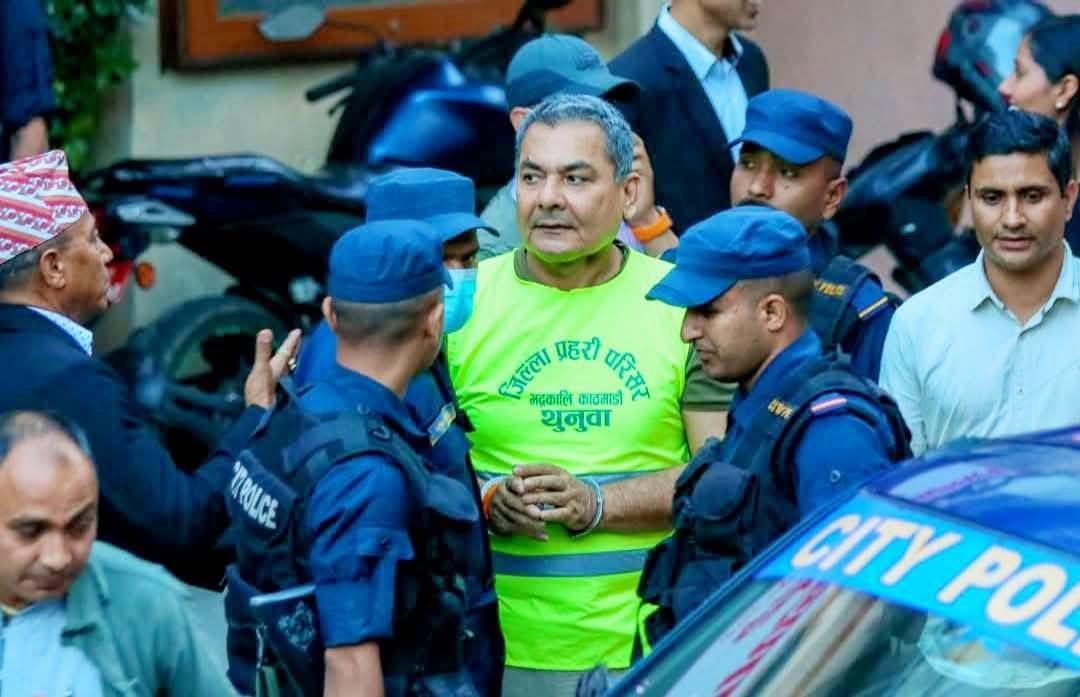
Durga Prasai, arrested over the Tinkune incident on 28 March 2025, is being taken to Kathmandu District Court for a remand extension. Photo Courtesy: Prasai/Facebook page.
Although released on bail for trial proceedings, Prasai has already reached an agreement with the current government to initiate the process of withdrawing cases filed against him. Clause 2 of the agreement between the government and Prasai states that the organized crime case being heard at Kathmandu District Court, as well as criminal cases filed against activists including Bhim Tumbapo in Jhapa Prison and Ashish Samba Limbu in Ilam Prison, will be withdrawn immediately through due legal process and implemented through a Cabinet meeting. The agreement signed on 16 January 2026 between then Minister for Communications and Information Technology Jagadish Kharel and Prasai also mentions withdrawal of other cases.
The Tinkune incident
During the royalist protest held in Tinkune, Kathmandu on 28 March 2025, Durga Prasai served as the “Commander of the Joint People’s Movement Mobilization Committee.” During the protest, two people including a journalist were killed. After the incident, Prasai fled to India. Police arrested him from Assam, India, and brought him to Kathmandu on 10 April 2025. After arrest, he was kept in pre-trial detention for four months.
Charges
In the Tinkune case, Prasai was charged with offenses against the state, culpable homicide, attempted murder, and criminal disturbance.
Court order
On 12 June 2025, Kathmandu District Court ordered Prasai to be sent to judicial custody for trial in connection with the Tinkune incident. He remained in jail for four months. Claiming that he was ill and unable to receive proper treatment, Prasai filed a habeas corpus petition at the High Court against the district court’s detention order. On 4 August 2025, the Patan High Court ordered his release on bail of Rs 300,000. The bench of Judges Tanka Prasad Gurung and Dilli Ratna Shrestha issued the order. The court stated that credible evidence proving his direct involvement in the alleged criminal disturbance had not been presented. The order noted: “Considering the fact that personal and public property was damaged during the program and that he is a cancer patient as shown by medical examination, it is ordered that he be released upon posting bail of Rs 300,000.”
On the same day, Patan High Court ordered his release on bail of Rs 2.5 million in a separate banking offense case. The commercial bench of Judges Sudarshan Dev Bhatta and Munendra Prasad Awasthi issued the order. In a complaint filed by the Nepal Rastra Bank Supervision Department, a case had been registered seeking recovery of Rs 184.4 million, imprisonment, and fines. The court order stated: “It cannot be concluded at this stage that Prasai is innocent; however, as documents submitted show that he suffers from cancer, he shall be released upon posting bail or bank guarantee of Rs 2.5 million, subject to further evidence as proceedings continue.”
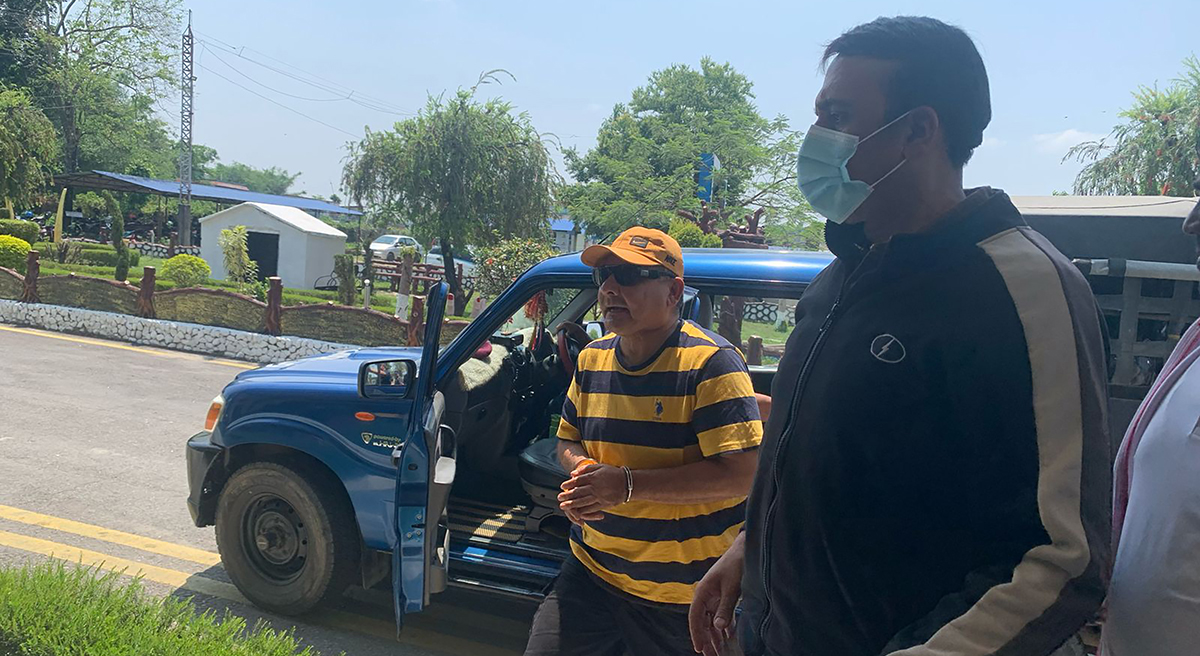
Durga Prasai, who was arrested in India for the Tinkune incident on 28 March 2025, is being brought to Kathmandu from Bhadrapur Airport. Photo: RSS
Electronic transaction-related charge
Prasai was arrested on 19 November 2024 under charges related to electronic transactions. After his arrest, his son Nirajan Prasai filed a habeas corpus petition at the Supreme Court claiming unlawful detention.
Court order
The Supreme Court ruled that it could not be said that he was unlawfully detained for purposes of criminal investigation. However, since Prasai is a cancer patient, the court ordered that necessary treatment be arranged by a relevant specialist. The joint bench stated: “Considering that an application has been made seeking arrangement for life-saving medical treatment, and given the seriousness of a sensitive disease like cancer, a directive order is issued to ensure appropriate treatment.” The order was issued on 27 November 2024 by the bench of Justices Mahesh Sharma Paudel and Nityananda Pandey.
Cybercrime charges
Prasai was arrested on 19 November 2024 on charges of cybercrime and document forgery. Police arrested him for allegedly publishing “misleading” documents claiming that then Prime Minister KP Sharma Oli had investments in Cambodia.
Court order
In this case, the Kathmandu District Court ordered his release on bail of Rs 300,000. District Judge Thakur Prasad Kharel issued the order on 9 January 2025.
Fraud charges
The Central Investigation Bureau (CIB) of Nepal Police arrested Prasai on 29 November 2024 on charges of “organized criminal benefit,” alleging that he had extorted businessmen for financial gain. On 12 November 2024, the Office of the Governor of Nepal Rastra Bank initiated an investigation, and businessmen Pawan Kumar Golyan and Dipendra Agrawal filed formal complaints against Prasai for extortion. Based on these complaints, the CIB informed the court in writing that his arrest was necessary. A case was registered against him at the Kathmandu District Court.
Court order
Prasai, who had been arrested on fraud-related charges, was ordered released on 20 December 2024 by a joint bench of Justices Nahakul Subedi and Sharanga Subedi. Claiming unlawful detention, Prasai had filed a habeas corpus petition at the Supreme Court. The court ruled that “the act of re-arresting him did not comply with due legal procedure” and ordered his release. The Supreme Court order stated: “Detaining a person merely out of impulsive intent cannot be regarded as lawful detention; as it appears to have caused serious harm to the constitutional right to personal liberty, a writ of habeas corpus is hereby issued ordering the immediate release of Durga Prasai.” The order also stated that if further investigation was necessary, authorities could take bail and conduct the investigation while keeping him on scheduled appearances.
Offense against public peace
After the Gen-Z movement, a government was formed under the leadership of Sushila Karki. On 18 November 2025, Prasai organized a citizens’ assembly program. That same night, police arrested him from his home while he was asleep, claiming he was attempting to disturb public order and security.
Court order
Following his arrest, his son Nirajan Prasai filed a habeas corpus petition at the Supreme Court. On 23 November 2025, a joint bench of Justices Nahakul Subedi and Shrikant Paudel ruled that the detention was unlawful and ordered his release. The Court order interpreted that “the Constitution grants every citizen the right to freedom of thought and expression, peaceful assembly without arms, and the freedom to form political parties as part of personal liberty.” The order further stated that there was no document showing that Prasai had committed any act that undermined sovereignty, territorial integrity, nationality, and independence, or that encouraged caste discrimination, untouchability, or criminal activity.
On 22 November 2025, an agreement had been reached between Prasai’s representatives and advisors to Prime Minister Sushila Karki to conduct the campaign peacefully. The court interpreted that due to this agreement, there was no justification to keep him in custody for investigation. The Supreme Court order stated: “It is determined that a writ of habeas corpus shall be issued ordering the immediate release of Prasai from unlawful detention.”
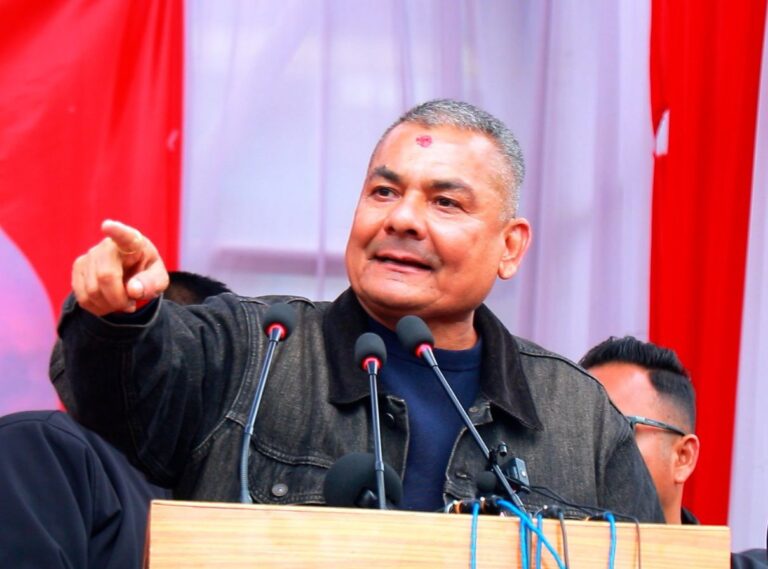
Durga Prasai at a gathering held in Sunsari on 25 December 2025. Photo Courtesy: Prasai/Facebook
Allegation of violating election code of conduct
Despite repeatedly reaching agreements with the government led by Prime Minister Sushila Karki, Prasai had become dissatisfied, claiming his demands were not fulfilled. Police arrested him near Pokhara Airport on 6 February 2026 on charges of violating the election code of conduct. After his arrest, he was brought to Kathmandu.
Court order
Just two days after his arrest, on 8 February, the District Government Attorney’s Office in Kathmandu ordered his release on a personal recognizance bond. After the special general convention elected Gagan Kumar Thapa as president of the Nepali Congress, and the Election Commission granted legal recognition to his leadership, Prasai publicly alleged that the Commission had legitimized Thapa’s leadership after taking money from him. Following this statement, Prasai was arrested.
Arrest with weapons incident
On 18 March 2024, while entering the Supreme Court premises, Prasai’s personal security guards Deepak Khadka and Ram Kumar Dhimal were arrested with firearms. They were detained within the court premises carrying a German sport gun.
Court order
After the arrest of his two security guards, a habeas corpus petition was filed at the Supreme Court. On 26 March 2024, a joint bench of Justices Nahakul Subedi and Sunil Kumar Pokharel ordered the release of Khadka and Dhimal. The Court also questioned how Prasai’s firearm license had been renewed by the District Administration Office in Jhapa on 22 December 2022, and ordered the Ministry of Home Affairs to conduct a necessary investigation. Subsequently, a committee was formed under the leadership of Joint Secretary Rajendra Dev Pandey to investigate the matter. The committee submitted its report to then Home Minister Rabi Lamichhane.
Allegation of violating election code of conduct
On 16 February 2026, police arrested Prasai from his home on charges of violating the election code of conduct. He had announced that if the government did not implement the agreement made with him by February 19, he would launch an indefinite nationwide Nepal Bandh (shutdown) starting from February 20. He was arrested immediately after making this announcement.
Court order
In the habeas corpus petition filed against his arrest, the Court ordered his release on February 24. The Court order stated: “None of the sections of criminal law are fake ornaments to cause pain to the nose and ears. The provisions of criminal law must be applied strictly in accordance with the meaning and intent for which they were enacted.”
The court further interpreted that there was no sufficient reason to arrest him. The order stated that “even though the Chief District Officer had granted permission, there was no written statement establishing clear grounds for detention.” It concluded that “Prasai’s press statement alone did not constitute an offense warranting detention. Since it appeared that serious harm had been caused to his constitutionally guaranteed right to personal liberty, a writ of habeas corpus ordering his immediate release has been issued.”