Kathmandu
Tuesday, July 28, 2026





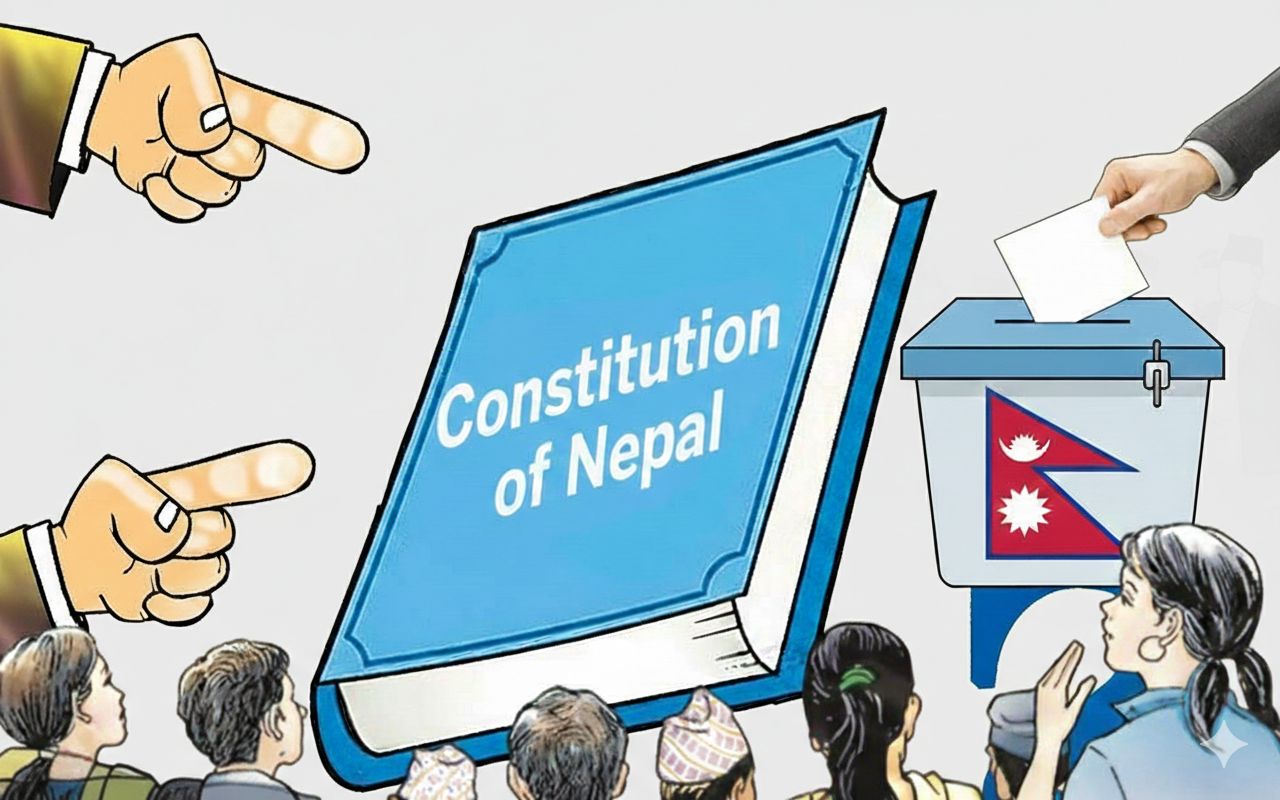
KATHMANDU: As Nepal gears up for the March 5 House of Representatives elections, debate is heating up over whether any party can win a majority. Debate rages over Nepal’s mixed electoral system, enshrined in the 2015 constitution. Of the 275 House seats, 165 are directly elected, while 110 are allocated proportionally, a design that makes single-party dominance difficult. Countries with similar systems have sometimes produced stable majorities—but in Nepal, public trust in any party securing lasting control remains uncertain.
Nepal’s frequent government changes have undermined institutional continuity and policy implementation, while coalition politics often favors bargaining over governance. Constitutional ambiguities, intra-party disputes, and public frustration—most recently seen in the Gen-Z protests—highlight the urgent need for electoral, constitutional, and institutional reforms. Here’s everything you need to know ahead of the elections.
What is Nepal’s current electoral system and why was it adopted?
Nepal’s shift to a federal democratic republic after the 2006 Comprehensive Peace Agreement and the 2015 constitution reshaped its electoral governance. Nepal currently uses a mixed electoral system combining First-Past-The-Post (FPTP) and Proportional Representation (PR). Initially, the Interim Constitution of 2007 allocated 40% of seats to FPTP and 60% to PR in the 601-member Constituent Assembly. After the 2015 Constitution, these proportions were reversed—60% FPTP and 40% PR—alongside the establishment of a bicameral federal legislature.
Nepal has experienced chronic political instability for decades, having witnessed 32 governments in the period since 1990 (exact counts vary depending on whether caretaker and interim administrations are included). The abolition of the 240-year-old monarchy in 2008, which ended the unitary system and established a federal democratic republic, did not resolve this instability.
Has the electoral system ensured political stability in Nepal?
Since 2015, no party has won a clear electoral majority. Even after the merger of CPN (Maoist Center) and CPN-UML, which temporarily created a single-party majority, governance issues persisted because intra-party conflicts and factionalism undermined stability. Coalition governments have become the norm, leading to frequent leadership changes. Some party leaders advocate switching to full FPTP elections to create single-party majorities, but inclusion is a core constitutional principle, making such changes politically difficult. Historical experience shows that even single-party governments often fail to complete their terms, suggesting that political stability depends on broader institutional reforms, not just electoral system changes.
How does mixed electoral system work, and how does it compare internationally?
A mixed electoral system combines different methods to fill legislative seats—most commonly, First-Past-the-Post (FPTP) for some seats and proportional representation (PR) for others. The goal is to balance local representation with overall proportionality. Several countries around the world have adopted such systems for political inclusiveness and stability.
In practice, however, the impact of a mixed system depends heavily on the political culture and voter trust. In Nepal, despite having a mixed electoral system, public confidence in parties and leaders is low. The public has little faith in political parties and leaders today, and most citizens show little trust in institutions. This contrasts sharply with countries like New Zealand, where the system has sometimes produced single-party majorities, reinforcing public trust. For example, in the 2020 general election, voters awarded Prime Minister Jacinda Ardern’s Labour Party 65 out of 120 parliamentary seats. In New Zealand, 72 MPs are elected directly from constituencies and 48 through proportional representation, with a 5 percent threshold for eligibility. Nepal’s threshold for PR seats is 3 percent.
Japan offers another model of mixed electoral system: of the 465 seats in its House of Representatives, 289 are filled via direct elections and 176 through proportional representation. For PR, Japan is divided into 11 regions, and seats are allocated using the D’Hondt method, a mathematical formula that ensures proportionality within each region.
Other examples include Germany, Bolivia, Hungary, South Korea, and Taiwan, each combining FPTP and PR in different ways. These systems show that mixed models can deliver both representation and stability.
How has Nepal’s government structure affected political stability and finances?
The 2015 Constitution created a large federal setup: a central government, seven provincial governments, and 753 local units, employing 36,105 representatives across federal, provincial, and local levels. This oversized structure has proved financially burdensome and politically unwieldy. While parties often cite the electoral system as a source of instability, inefficiency, patronage politics, and intra-party disputes have also prevented single-party majorities from governing effectively, even when possible.
What were the costs and outcomes of constitution-making in Nepal?
Nepal held two Constituent Assembly elections to draft a new constitution. The first Constituent Assembly (elected April 2008, 601 members) operated from May 2008 to May 2012 but failed to produce any constitution due to party disagreements and was dissolved without success. Election and operational costs for this period were substantial (e.g., around Rs 7.6 billion for the 2008 election alone, plus member allowances). The second Constituent Assembly (elected November 2013) successfully drafted and promulgated the current 2015 Constitution on September 20, 2015. Analysts argue that a smaller, expert-led drafting process could have been more efficient and cost-effective. The 2015 Constitution institutionalised a large federal system with 334 federal MPs, 550 provincial legislators, and 35,221 local representatives—36,105 paid positions in total—placing a significant financial and administrative burden on the state.
Why is political instability a major concern in Nepal, and what reforms are being proposed?
Nepal has faced protracted political instability for years, driven by hung parliaments, fragile coalition governments, and constitutional ambiguities. Frequent dissolutions of parliament, no-confidence motions, and coalition bargaining have undermined executive stability, eroding public confidence in the democratic system.
What government changes have occurred in Nepal since 2008, and who led the 15 successive governments during this period?
Nepal ranks among the world’s most politically unstable countries. Since 2008, 14 governments have formed up to K.P. Sharma Oli’s resignation in September 2025, none completing a full five-year term, reflecting frequent coalition breakdowns, hung parliaments, and constitutional ambiguities. Interim or caretaker governments, often led by senior judges, have repeatedly been required to maintain continuity and conduct elections. Sushila Karki was appointed interim prime minister on September 12, 2025, following Gen-Z-led protests on September 8–9, 2025, bringing the broad count to 15 when including caretakers.
Even when a single party (after UML-Maoist merged and formed the Nepal Communist Party) held a clear parliamentary majority, or when a Nepali Congress–CPN-UML coalition commanded almost two-thirds of the House, governments failed to endure. Frequent coalition realignments, intra-party disputes, and constitutional ambiguities have resulted in short-lived governments, repeated reshuffles, and persistent political instability.
Here is the timeline of Nepal’s governments since 2008 to 2026, February:
• Pushpa Kamal Dahal “Prachanda” (1st Term): August 18, 2008 – May 25, 2009 (280 days). Resigned after conflict with the President over Army Chief dismissal.
• Madhav Kumar Nepal: May 25, 2009 – February 6, 2011 (622 days). Resigned amid pressure over stalled constitution drafting.
• Jhala Nath Khanal: February 6, 2011 – August 29, 2011 (204 days). Coalition with Maoists and Madhesi groups collapsed before constitution completion.
• Baburam Bhattarai: August 29, 2011 – March 14, 2013 (563 days). Oversaw transition, dissolved Constituent Assembly in 2012.
• Khil Raj Regmi (Caretaker): March 14, 2013 – February 11, 2014 (334 days). Chief Justice-led interim government to conduct elections.
• Sushil Koirala: February 11, 2014 – October 12, 2015 (610 days). Oversaw promulgation of the 2015 Constitution.
• K.P. Sharma Oli (1st Term): October 12, 2015 – August 4, 2016 (297 days). Resigned after Maoist withdrawal of support.
• Pushpa Kamal Dahal “Prachanda” (2nd Term): August 4, 2016 – June 7, 2017 (307 days). Power-sharing agreement with Nepali Congress.
• Sher Bahadur Deuba (4th Term): June 7, 2017 – February 15, 2018 (253 days). Oversaw first elections under the 2015 Constitution.
• K.P. Sharma Oli (2nd Term): February 15, 2018 – May 14, 2021 (1,183 days). Minority government following vote of confidence loss.
• K.P. Sharma Oli (3rd/Minority Term): May 14, 2021 – July 13, 2021 (60 days). Ended by Supreme Court order reinstating Deuba.
• Sher Bahadur Deuba (5th Term): July 13, 2021 – December 26, 2022 (531 days).
• Pushpa Kamal Dahal “Prachanda” (3rd Term): December 26, 2022 – July 12, 2024. Switched alliances from CPN-UML to Nepali Congress; second vote of confidence in March 2023 counted as continuous tenure.
• K.P. Sharma Oli (4th Term): July 15, 2024 – September 9, 2025 (422 days). Formed a grand coalition between CPN-UML and Nepali Congress.
• Sushila Karki (Interim PM): September 12, 2025–. Appointed following Gen Z-led protests on September 8–9, 2025, to conduct elections after Oli stepped down.
How does Nepal’s political representation compare with other South Asian countries?
Nepal’s political representation is unusually large relative to its population and economic capacity. The country has 334 federal MPs and 550 provincial legislators for a population of 29 million and a GDP of just US$ 40.83 billion. By comparison, India, with over 1.46 billion people and a GDP of US$ 3.4 trillion, has an 800-member bicameral parliament. Pakistan, with 255 million people, has 436 federal parliamentarians, while Bangladesh, with a population of 175 million and a GDP of US$ 460 billion, manages a 350-member unicameral legislature. These contrasts reveal that Nepal’s governance architecture is disproportionately large, creating duplication, inefficiency, and unnecessary fiscal strain.
What is the fiscal cost of Nepal’s current governance structure?
The financial burden of Nepal’s oversized political system is reflected in the federal budget for FY 2023/24. Rs 1.22 billion has been allocated to the federal parliament, Rs 210.9 million to provincial governors, Rs 69.51 billion to provincial governments, and Rs 103.14 billion to local units, totaling Rs 174.09 billion, which is almost 10% of the national budget. In comparison, the budget for education, science, and technology—the sectors that are key to Nepal’s long-term development—is only 11.26%. This imbalance highlights how the current political and administrative setup diverts resources away from crucial development priorities.
Why is Nepal considering constitutional amendments, and how do they relate to the electoral system and political stability?
Ten years after the promulgation of the 2015 Constitution, Nepal is at a critical point for evaluating its provisions. The last UML–Congress coalition government agreed on constitutional amendments aimed at political stability, especially following the Gen-Z protests of September 2025. Central to this debate is the constitutional amendments and electoral system, including proposals for direct election of the Prime Minister and Chief Ministers, reforming the federal structure, and reducing the number of Members of Parliament.
Currently, the House of Representatives has 275 seats, with 165 elected directly (FPTP) and 110 through proportional representation, while provincial assemblies total 550 members. Critics argue that the large number of representatives and the mixed system increase costs and complicate governance. Proposed reforms include reducing MPs overall, shifting more focus to direct elections, and reserving seats for women, Dalits, and marginalized communities through designated constituencies.
Amending the constitution, however, requires a two-thirds majority in both the House of Representatives and the National Assembly. While the previous Congress-UML coalition committed to forming a recommendation commission but did not do so. Experts caution that amendment alone cannot ensure political stability. Real change also depends on competent leadership, political culture, and effective implementation. Overall reforms including judicial, security and administrative reforms are considered crucial to reinforce constitutional authority, ensure provincial powers, and make governance more accountable and sustainable. Its success depends on a holistic approach that combines legal reform, electoral restructuring, and a commitment to responsible political leadership.
What are the implications for Nepal’s governance and development?
Nepal’s large and complex political structure imposes both financial and administrative burdens, limiting the government’s ability to respond efficiently to national needs. Experts argue that adopting a leaner, more streamlined governance system would help align political representation with the country’s demographic and economic realities. A smarter, more efficient structure could reduce duplication, improve accountability, and free resources for development priorities, ultimately strengthening governance and promoting long-term prosperity.
What are the key solutions to improve governance and stability?
Nepal’s political instability is structural, rooted in frequent leadership changes, patronage networks, weak institutions, and a system that rewards short-term promises over long-term credibility. Political stability requires leaders who are courageous, accountable, and committed to public welfare, faithfully executing the constitution while delivering basic needs, fostering social and economic development, and maintaining freedom, order, and peace. Strong, independent institutions with clear separation of powers, reduced factional politics, and an engaged citizenry capable of demanding accountability are essential to sustain continuity and support reforms that are cumulative rather than episodic. The emerging Gen Z movement has added a rare moral clarity, showing that public pressure shapes coalition behavior and elevates the stakes of the election: voters must focus on long-term outcomes—how projects are completed on time, institutions strengthened, and governance secured beyond a single term. Nepal’s path to prosperity depends on choosing stability as the foundation for enduring political, economic, and constitutional progress.