Kathmandu
Saturday, February 28, 2026





KATHMANDU: The United States and Israel have launched a coordinated assault across Iran, including strikes on Tehran, in what President Donald Trump called “major combat operations.” The attacks mark a dramatic escalation amid fragile nuclear and missile negotiations, coming eight months after a 12-day conflict and weeks of rising threats from Washington. Iran has retaliated with missiles targeting northern Israel, though details of casualties and damage on both sides remain scarce.
The strikes appear to be the opening phase of a broader campaign aimed at toppling the Iranian regime. Here is what is known so far.
How did the attacks begin?
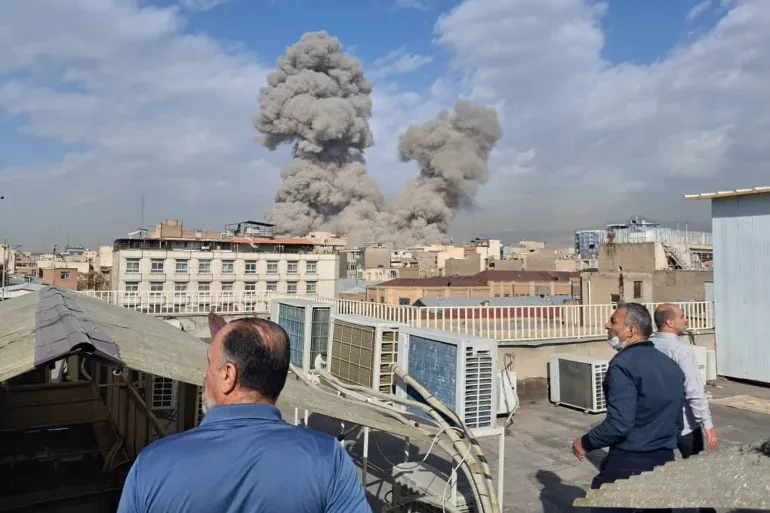
At around 9:27 a.m. local time (06:27 GMT), Iran’s Fars News Agency reported a series of explosions in the capital. Multiple blasts, and videos circulating on social media showed smoke rising from several areas of the city.
Israel initially announced missile strikes on targets inside Iran, which a US official later confirmed were part of a joint military operation with the United States.
In recent weeks, Washington deployed a significant military presence in the region, including fighter jets and warships-its largest buildup since the Iraq War-aimed at countering Iran’s military capabilities.
The US Department of Defense named the mission “Operation Epic Fury”, marking its first public statement since the start of the joint US-Israeli assault.
Footage from Iran showed smoke rising over Tehran, and unconfirmed reports from opposition media suggested that the homes and offices of top Iranian leaders were targeted. The strikes were carried out jointly by US and Israeli forces, with operations launched by air and sea, marking a significant escalation in the region despite ongoing diplomatic negotiations.
What is the goal of the latest US-Israeli attacks on Iran?
The latest US-Israeli strikes were primarily aimed at decapitating Iran’s political and military leadership, targeting the regime’s command structure, missile sites, and naval assets. In remarks following the attacks, President Donald Trump pledged to “annihilate” Iran’s navy and missile facilities, urging Iranians to seize control of their government, calling it “probably your only chance for generations.” Israeli Prime Minister Benjamin Netanyahu echoed this, saying the operation was intended to “create the conditions for the courageous Iranian people to take their destiny into their own hands.” While the full effectiveness of the operation remains unclear, both Washington and Jerusalem have framed it as a mission to remove the Iranian regime-a goal the US has pursued in the region before, with past attempts often producing destabilizing consequences.
Where were the US-Israeli strikes in Iran carried out?
Several missiles hit multiple locations across Iran, with the capital, Tehran, among the hardest affected. According to Fars News Agency, explosions were reported near University Street, the Jomhouri area, and close to the Islamic Revolutionary Guard Corps headquarters. The Associated Press reported strikes near the offices of Supreme Leader Ayatollah Ali Khamenei, while Tasnim News Agency noted blasts in northern Tehran’s Seyyed Khandan area.
Beyond the capital, explosions were reported in other major cities, including Kermanshah, Qom, Tabriz, Isfahan, Ilam, and Karaj, as well as in Lorestan province, according to local media, reflecting the widespread nature of the attacks.
What happened in the US-Israeli strike on Iran and its immediate fallout?
Despite Washington and Tehran having ostensibly agreed on Thursday to continue nuclear negotiations next week, Israel and the United States launched a coordinated strike on Iran on Saturday, targeting military, government, and intelligence sites across the country. Israel named its operation “Lion’s Roar”, while the US referred to the campaign as “Epic Fury”. The assault came amid a growing US military presence in the region, including fighter jets and warships, aimed at pressuring Iran over its nuclear program.
Sirens sounded across Israel at 8:13 a.m., warning civilians to stay near shelters ahead of anticipated Iranian retaliation. Defense Minister Israel Katz said Israel had launched a preemptive strike to eliminate threats to the country and declared a state of emergency nationwide. The IDF’s Home Front Command instructed civilians to remain in shelters, suspended non-essential work and schooling, and closed Israeli airspace to civilian flights.
What triggered the attack?
After weeks of escalating regional tensions and threats of conflict, Israel and the United States launched a major joint military operation against Iran on Saturday, striking sites across the country in what officials described as a decisive campaign.
Who and what were targeted?
According to an Israeli official, the strikes targeted Iran’s top leadership, including Supreme Leader Ali Khamenei and President Masoud Pezeshkian, as well as senior regime and military commanders. Other targets included military infrastructure, intelligence facilities, and symbols of state power. The full extent of the damage remains unclear.
How will the current US-Israeli military intervention in Iran impact Nepal’s economic stability and its vast migrant workforce across the Middle East?
The escalation is expected to trigger a significant economic shock in Nepal, primarily through fuel inflation and remittance instability. As Nepal imports most of its petroleum products from India, any spike in global crude prices directly raises the cost of transportation, construction materials, and daily essentials in the domestic market. On Saturday, February 28, 2026, Brent Crude surged to over $72 per barrel, a nearly 3 percent single-day increase, with analysts warning that a potential blockade of the Strait of Hormuz could push prices toward $120. Beyond rising fuel costs, the safety of approximately 1.9 million Nepali migrant workers in the Gulf remains a critical concern.
The Ministry of Foreign Affairs in Kathmandu issued an urgent advisory today urging citizens in Israel and Iran to remain sheltered. Economists caution that if the conflict expands to involve major employers such as Saudi Arabia, Qatar, or the UAE, disruption to remittance inflows—which exceeded Rs 1.4 trillion last fiscal year—could destabilize Nepal’s foreign exchange reserves and drive national inflation into double digits.
What are the specific global market reactions to the conflict, and how is China interpreting these events?
In response to the instability, global markets have shifted toward safe-haven assets, pushing gold prices in the Kathmandu market to a record Rs 314,900 per tola as of February 28, 2026. This volatility coincides with sharpening geopolitical divisions among major powers. China expressed “grave concern” over the violation of Iranian sovereignty, and Beijing’s state media highlighted risks to global energy security. As the primary buyer of OPEC crude, China has called for an immediate ceasefire to safeguard the Strait of Hormuz, the maritime artery through which roughly one-fifth of global oil consumption passes.
What is at stake in the Middle East amid the current conflict?
The Middle East, particularly the Gulf region, is a vital hub for global energy, trade, and finance. About 20 percent of the world’s energy supplies move through the Strait of Hormuz, alongside substantial international commercial traffic centered in Gulf cities. These densely populated economic centers rely heavily on expatriate workers. Amid the attacks, several major oil and trading companies have suspended shipments through the Strait, with executives indicating vessels may remain idle for days. Around 20 million barrels of crude oil and other fuels transit this waterway daily, and any disruption threatens significant turbulence in global energy markets. The conflict therefore endangers regional stability and the broader global economy, with potential long-term consequences for trade, investment, and geopolitical balance.
What did the United States say about the operation?
In an eight-minute video statement, US President Donald Trump said the US had begun “major combat operations in Iran,” describing the campaign as massive and ongoing.
He said the objective was to destroy Iran’s missile capabilities, dismantle its naval forces, and neutralize regional proxy groups, indicating that the broader aim was to topple the Iranian regime and urging Iranians to seize the opportunity to take over their government.
Trump also addressed members of Iran’s Islamic Revolutionary Guard Corps, the armed forces, and police, urging them to lay down their weapons and promising complete immunity if they complied, warning that refusal would result in “certain death.” Trump also spoke directly to Iranian civilians, urging them to stay sheltered as “bombs will be dropping everywhere” and describing the moment as an unprecedented opportunity for the people of Iran to take control of their government once the campaign concludes. He characterized the operation as a once-in-a-generation chance for Iranians to secure their freedom and participate in overthrowing the regime.
How is Israel responding to the US-Israeli strike on Iran, and what are its stated objectives?
The Israeli military said it has called up around 20,000 additional reservists—mainly from the Air Force, Intelligence Directorate, Home Front Command, and Navy-adding to the 50,000 already on duty, in response to the joint US-Israeli operation against Iran. According to the Israel Defense Forces, strikes targeted “dozens of military sites” as part of a broad, coordinated offensive with the United States aimed at the Iranian regime. The military described the campaign as a “joint, broad, and powerful operation” designed to deliver a thorough strike against Iran, eliminate existential threats to Israel, and prevent Iran from continuing its nuclear and missile programs. Israeli officials noted that despite setbacks during the June 2025 conflict, Iran has continued efforts to fortify and conceal its nuclear capabilities and revive missile production, underscoring the operation’s long-term strategic goals.
Who is Iran’s Supreme Leader Ayatollah Khamenei, and why is he targeted by the US and Israel?
Ayatollah Ali Khamenei, 86, has been Iran’s Supreme Leader since 1989, succeeding the Islamic Republic’s founder, Ruhollah Khomeini, after the 1979 revolution that overthrew the US-aligned shah, Mohammad Reza Pahlavi. Khamenei holds ultimate authority over Iran’s government, military, and judiciary while also serving as its spiritual leader. His rule has withstood international sanctions, domestic protests over economy and rights, and a consistently adversarial relationship with the West. He has repeatedly labelled the US as Iran’s “number one enemy” and Israel close behind.
Central to his power is the loyalty of Iran’s Islamic Revolutionary Guard Corps and Basij, with hundreds of thousands of volunteers. Khamenei has maintained that Iran’s nuclear programme is purely civilian, a claim supported by US intelligence and the UN nuclear watchdog, though Israel and some US officials have pushed a narrative of potential weaponisation.
Both the US and Israel have previously threatened Khamenei. In June 2025, following the 12-day US-Israeli strikes on Iran, Israel’s Defence Minister Israel Katz said Khamenei “cannot continue to exist,” while Prime Minister Benjamin Netanyahu suggested assassination could end the conflict. In the US, President Donald Trump has called for regime change and described Khamenei as an “easy target” if the US opted to act against him, though he added that the leader was “safe… at least not for now.”
This context underscores why Saturday’s joint US-Israeli strikes in Tehran targeted areas linked to Khamenei and Iran’s security apparatus, as part of a broader campaign aimed at the country’s leadership and military capabilities.
What was Israel’s position?
Israeli Prime Minister Benjamin Netanyahu said the operation was launched to remove what he called an existential threat posed by Iran and to create conditions for Iranians to “change their destiny,” calling on the population to end what he described as tyranny.
How did Iran respond?
Iran vowed a crushing response and launched repeated missile barrages toward Israel beginning around 10 a.m., sending millions of Israelis into shelters. In northern Israel, a man in his 50s was lightly injured after falling into a hole caused by missile fragments.
Were there regional repercussions?
Preliminary reports indicated missile activity and explosions across the region, with blasts heard in Qatar, Bahrain, and the United Arab Emirates. Iran also experienced a near-total internet blackout, according to NetBlocks, mirroring restrictions imposed during past conflicts.
Have there been any casualties from Iran’s missile attacks in the Gulf region?
Yes. At least one person has been killed in Abu Dhabi, United Arab Emirates, after debris from intercepted Iranian missiles fell on a residential area, causing additional material damage. The UAE’s Defense Ministry confirmed that several missiles targeting the country were successfully intercepted following what it described as a “blatant attack” by Iranian ballistic missiles. Missile defenses were also activated in Qatar, Kuwait, and Jordan, preventing further casualties, though reports indicate the attacks heightened regional tensions and triggered emergency responses across multiple US-allied states.
The United Arab Emirates has strongly condemned the Iranian missile strikes that killed a Pakistani civilian, warning of “grave consequences” if such violations continue. The UAE’s Defence Ministry confirmed the death occurred after falling debris struck a residential area. Its Foreign Ministry described any attack on Gulf nations as “an attack on the security and stability of the entire region,” calling for restraint and urging all parties to pursue a diplomatic solution to de-escalate tensions.
Where are Iran’s leaders amid the strikes?
It is unclear where Supreme Leader Ayatollah Ali Khamenei, 86, is currently located, as he has not appeared in public for several days amid rising tensions with the United States. Authorities reportedly closed roads leading to his compound in downtown Tehran as explosions shook the capital. Meanwhile, Iran’s state-run IRNA quoted a source in the presidential office confirming that President Masoud Pezeshkian was unharmed.
What happened in Iran’s attack on US sites in the region?
Iran confirmed it launched missile and drone attacks on US military facilities across the Middle East and fired barrages of ballistic missiles toward Israel, escalating tensions after US and Israeli strikes on Iranian targets. Iran’s Islamic Revolutionary Guard Corps said it targeted Al-Udeid Air Base in Qatar, Al-Salem Air Base in Kuwait, Al-Dhafra Air Base in the UAE, a US naval base in Bahrain, Muwaffaq Al-Salti Air Base in Jordan, and a US base in northern Iraq, while Nour News reported “dozens” of missiles launched toward Israel. Air defenses were activated across the region, with interceptions reported by Qatar, Kuwait, Jordan, and the UAE; one civilian was killed in the UAE after missile debris fell in a residential area. In Bahrain, a missile struck a US Navy facility linked to the United States Fifth Fleet, with no casualties reported. The IRGC said the attacks were retaliation for US and Israeli strikes and added that operations were ongoing.
Which airlines have cancelled flights to the region?
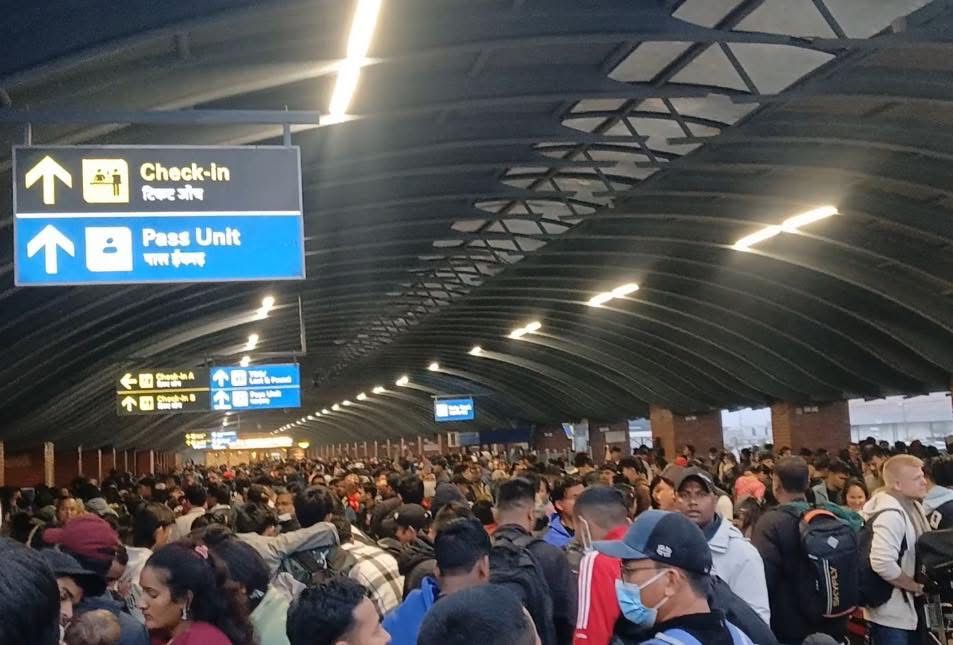
A wide range of international carriers have suspended or cancelled flights to parts of the Middle East amid heightened security concerns. The airlines include Air France, Air India, British Airways, Iberia Express, IndiGo, Japan Airlines, LOT Polish Airlines, Lufthansa, Norwegian Air, Turkish Airlines, Virgin Atlantic, Qatar Airways, Air Algérie, Scandinavian Airlines, Wizz Air, Pegasus Airlines, and ITA Airways.
Most carriers cited regional airspace closures, security risks, and operational safety concerns, with several suspensions expected to remain in place until the situation stabilises.
What is Russia’s response to US and Israeli attacks on Iran?
Russia has called for an immediate halt to US and Israeli strikes on Iran, urging that the crisis be returned to a political and diplomatic path, and warning that what it described as irresponsible actions risk further destabilising the region. In a statement, Russia’s Ministry of Foreign Affairs of Russia said the international community should deliver an objective assessment of the situation and added that Moscow remains ready to assist in finding peaceful solutions based on international law, mutual respect and a balance of interests.
What is France’s position on the US-Israel-Iran conflict?
French President Emmanuel Macron has warned that the outbreak of hostilities between the US, Israel, and Iran “has grave consequences for international peace and security.” He described the current escalation as “dangerous for everyone” and called for it to stop. Macron added that France is taking all measures to safeguard its territory, citizens, and assets in the Middle East, and remains ready to deploy “the necessary resources to protect its closest partners” if requested, signalling support for allied countries in the region while urging de-escalation.
How has Oman responded to the US-Israel strikes on Iran?
Oman’s Foreign Minister Badr Albusaidi expressed dismay over the attacks, calling them a setback to ongoing indirect negotiations between the US and Iran. He said the strikes undermine both American interests and global peace, and expressed concern for civilians who could suffer as a result. Albusaidi urged the United States to avoid deeper involvement, warning that “this is not your war,” highlighting Oman’s continued role as a regional mediator seeking diplomatic solutions.
What did the son of Iran’s last shah say after the US and Israeli strikes?
The son of Iran’s last shah, Reza Pahlavi, said “final victory” against the Islamic Republic was near, releasing a video message shortly after the US and Israeli attacks in which he expressed confidence in regime change and said he hoped to return to Iran to help “take back and rebuild” the country.
Speaking from the Washington area, he called the intervention “humanitarian” and said it targets Iran’s apparatus of repression. Pahlavi urged Iranians to remain in their homes for safety but stay vigilant, promising that he will announce when it is time to take to the streets for “the final action” to reclaim the country. He emphasized that decisive moments lie ahead and framed the strikes as a crucial step toward his long-standing goal of a secular democracy in Iran, though he does not enjoy universal support among the regime’s critics.
How has Saudi Arabia responded to Iran’s missile strikes?
Saudi Arabia has condemned Iran’s attacks on its regional allies, including the United Arab Emirates, Bahrain, Qatar, Kuwait, and Jordan, pledging to “provide all its resources to assist them in any measures they take,” according to a statement from the Saudi Foreign Ministry. The statement did not address reports of an explosion in Riyadh amid the ongoing Iranian strikes on US-aligned Arab states.
What is Norway’s position on the US-Israeli strikes on Iran?
Norway’s Foreign Minister Espen Barth Eide said the strikes on Iran violate international law, calling instead for a diplomatic resolution. He argued that while Israel describes the attacks as pre-emptive, international law requires an imminent threat for such action to be justified. Eide emphasized the need for dialogue to de-escalate the situation and resolve the crisis peacefully.
What happened during the June 2025 Israel-US-Iran conflict?
In June 2025, a 12-day conflict broke out between Iran, Israel, and the United States. The hostilities began on June 13, 2025, when Israel launched major airstrikes on Iranian nuclear and military sites, prompting Iran to retaliate with missiles and drones targeting Israeli cities. On June 22, 2025, the United States joined the campaign, striking Iran’s nuclear facilities at Natanz, Fordow, and Isfahan, claiming to have degraded Tehran’s nuclear programme. Iran responded on June 23 by firing missiles toward Al Udeid Air Base in Qatar, which were intercepted without casualties. The conflict ended with a US-brokered ceasefire on June 24, 2025, leaving over 600 reported deaths in Iran and 28 in Israel.