Kathmandu
Wednesday, June 17, 2026





At one point in history, the income generated from smuggling Nepali cannabis was used in booth capturing during elections in Bihar, India. How?
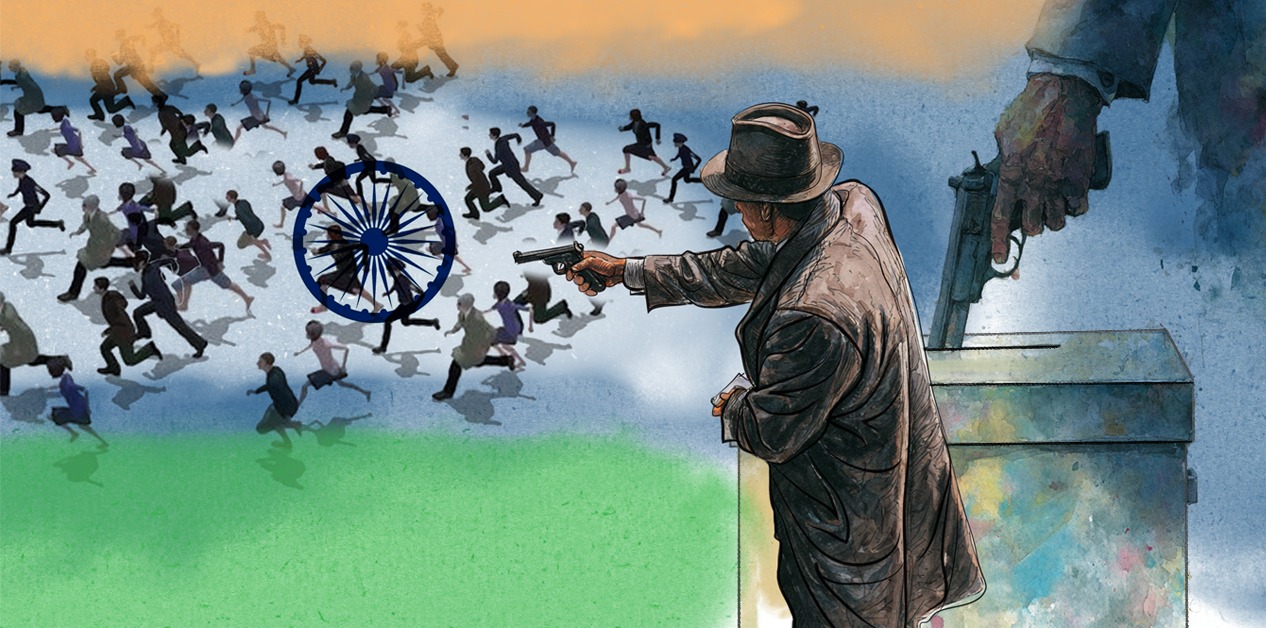
One issue closely associated with election fairness is “booth capture,” meaning the takeover of polling stations. After the restoration of multi-party democracy in Nepal, some elections witnessed incidents in certain rural areas such as booth capturing, riots, and ballot box looting.
The source of this electoral malpractice in Nepal is often traced to the Indian state of Bihar. Interestingly, when examining the history of booth capturing in Bihar’s politics, its connection appears linked to Nepal, specifically to the smuggling of Nepali cannabis.
In India’s 1957 Lok Sabha election, booth capturing occurred in Rachiyari village of Begusarai district in Bihar. According to the Election Commission of India, this was the first recorded instance of booth capturing in the country. The act was carried out by Kamdev Singh, a local bandit active in Bihar’s villages, on behalf of Sarayu Prasad Singh, the candidate of the ruling Indian National Congress. Begusarai district was Kamdev’s stronghold.
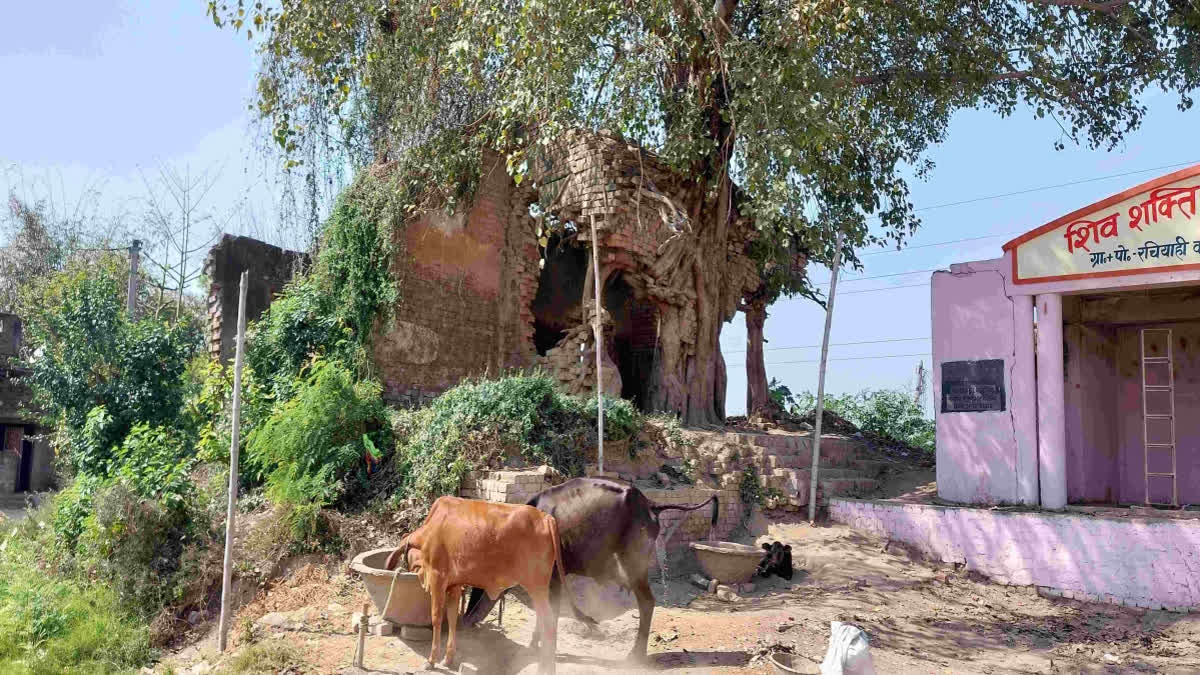
Rachiyari village in Begusarai district of Bihar, where Kamdev Singh first captured a booth in 1957. Photo source: ETV India
However, despite the booth capturing, Sarayu could not win. Chandrashekhar Singh of the Communist Party of India (CPI) emerged victorious.
According to the book When Crime Pays (2017) by Milan Vaishnav, which discusses the use of money and muscle power in Indian politics, the incident was not only the first instance of booth capturing in Indian elections but also marked the beginning of criminalization in Indian politics. Through this act, Kamdev gained notoriety as the pioneer of booth capturing in Indian elections.
In subsequent elections after 1957, booth capturing continued under his leadership. Over time, leveraging this practice, he expanded his criminal empire with growing political access and protection. The operations of this criminal network were directly linked to the trade in cannabis produced in Nepal.
Vaishnav’s book notes that during the 1960s and 1970s, Kamdev was a prominent figure in Bihar’s political circles. “He was among the most notorious hired criminals and served as a feared gang leader for the Indian Congress Party. He was used for booth capturing,” the book states.
Former Indian journalist Harivansh Narayan Singh, now Deputy Chairman of the Rajya Sabha, the upper house of Indian parliament, wrote in Ravivar magazine that Kamdev was the individual who initiated mafia-style rule in Bihar.
Initially, booth capturing was limited to using intimidation and violence at polling stations to force votes in one’s favor. Over time, its form evolved. It later included stamping ballots directly, preventing voters from reaching polling stations, and influencing officials to set up polling centers only in areas under their control.
In subsequent elections after 1957, booth capturing continued under his leadership. Over time, leveraging this practice, he expanded his criminal empire with growing political access and protection.
According to When Crime Pays, by the 1971 election, booth capturing had spread beyond Bihar. The Election Commission reported that booth capturing occurred that year in Haryana, Jammu and Kashmir, Nagaland, Odisha, and Uttar Pradesh. According to a report published by Aaj Tak, in the 1969 and 1971 Bihar Assembly election, Kamdev captured 34 booths in Begusarai and ensured victory for Indian Congress candidate Shyam Nandan Mishra.
The practice of booth capturing initiated by Kamdev became even more widespread after his time. In the 1989 Lok Sabha election, re-polling was conducted in 1,670 booths due to capture incidents. In Bihar alone, re-polling occurred in 1,046 booths in 1991 and 1,273 booths in 1996.
Muscle power in Bihar elections was so rampant that a popular saying went: “To contest elections in Bihar, you need at least a hundred armed men.” People like Kamdev Singh were responsible for assembling such armed groups for candidates. In Bihar, which shares a border with Nepal, he frequently carried out booth captures.
The strength behind Kamdev’s booth capturing operations came from the gang he built for smuggling cannabis from Nepal. The financial backbone of that network was the enormous income generated from cannabis smuggling.
The Nepali cannabis connection
Known as the “Cannabis Emperor,” Kamdev was often called the “Pablo Escobar of Bihar.” Pablo Escobar of Colombia was one of the world’s most notorious drug traffickers during the 1980s and early 1990s.
Anil Kumar Anal (75), a veteran journalist from Rajbiraj, Saptari, still vividly remembers Kamdev’s activities from five decades ago. According to him, around 2028–2030 BS (early 1970s), buses traveling from Birgunj to Rajbiraj would arrive with roofs loaded full of steel utensils. At the time, India did not allow easy import of foreign goods, so items like stainless steel utensils, nylon clothes, and ropes were smuggled. The person involved in this smuggling was Kamdev. To smuggle these goods from Nepal into India, Kamdev operated from Inarwa in Rajbiraj. The materials were collected in Inarwa and then transported across the border.
At that time, the now commonly used Rupani Road to Rajbiraj had not yet been built; all vehicles traveled via Hanumannagar. The utensils transported by bus were unloaded in Inarwa, a few kilometers from Hanumannagar. “It wasn’t just utensils,” Anal says. “Smuggled goods including cannabis were collected in Inarwa. Cannabis was brought from Siraha—some carried it by hand, others transported it by truck or jeep. From there, it was ferried across the Koshi River by boat into India.”
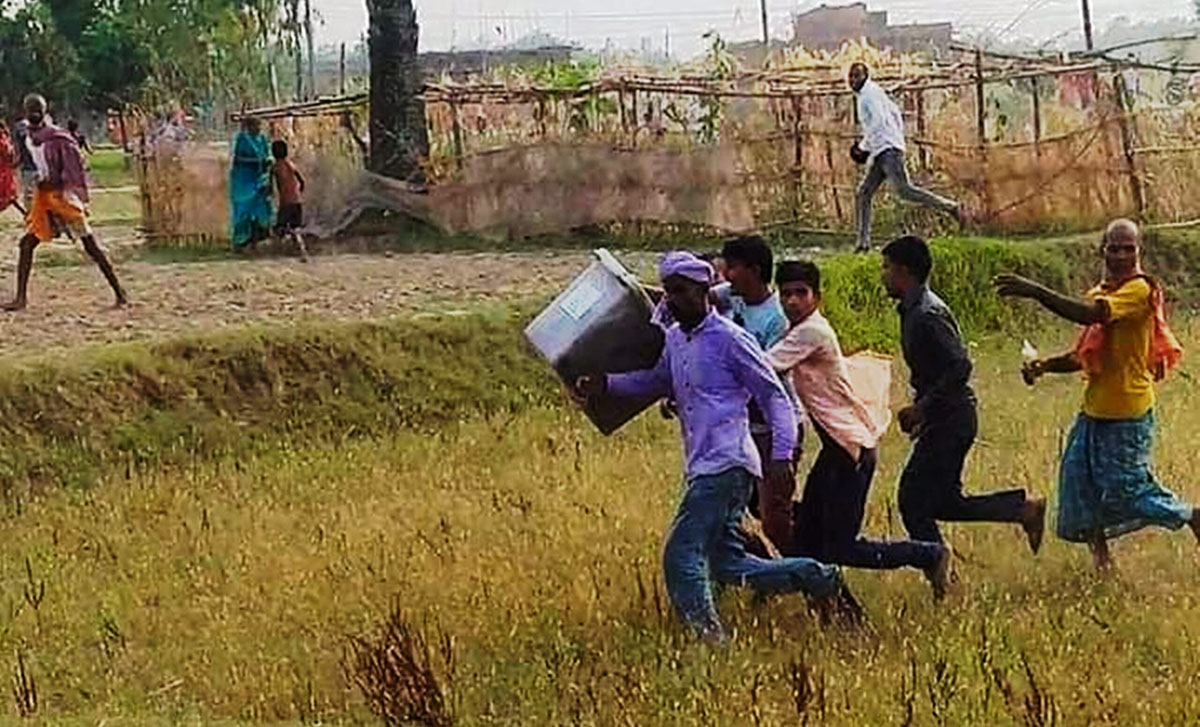
Locals of Yamunamai Rural Municipality Ward 2 of Rautahat running away with ballot boxes in the local level elections held on 13 May 2022. Photo: Sanjay Kumar Mishra
According to Anal, Kamdev had deployed around 200 people in and around Inarwa for this operation. He maintained large warehouses and numerous vehicles in Hanumannagar and Bhimnagar (India). “Inarwa was like his headquarters; I met him there once,” he recalls. “Kamdev was built like a wrestler, very large and imposing.”
After being accused in a murder case in 1972, Kamdev spent most of his time hiding around the Rajbiraj area.
“Around 2030 BS (1973), he was arrested in Rajbiraj with a truck full of cannabis,” Anal says. “That truck remained parked in the courtyard of the zonal administrator’s office for a long time.” In that case, Kamdev was imprisoned and had to pay a fine of Rs 1.8 million.
Before Nepal enforced a strict legal policy against narcotics, Kamdev had cultivated cannabis in Nepal itself. According to reports in Indian media citing his family members, he had obtained a license in Nepal and cultivated cannabis on 200 bighas of land. The Narcotics Control Act of 2033 BS (1976 AD) categorized cannabis as a hard drug.
Parallel power along the border
From the 1960s until he was killed on May 15, 1980, Kamdev ran a parallel authority in the Nepal–India border region. He built a large army of young men who were ready to kill and die for him.
Kamdev himself stayed in Nepal while operating the cannabis smuggling business. At that time, no smuggling across the border was possible without his involvement or support. Cross-border smuggling between Nepal and India was under his control. Indian journalist and author Santosh Singh described Kamdev as the “Smuggling King” of northern India during his time. In the book Kamdev Singh: The Original Godfather of Indian Politics, Santosh writes: “The biggest proof that Kamdev Singh was the king of smuggling in northern India was his network, which extended along the Nepal–India border from Pithoragarh in Uttar Pradesh (now Uttarakhand) to Siliguri in West Bengal. No organized smuggler could operate along the Nepal–India border without Kamdev’s permission.”
While based in Nepal, he smuggled cannabis and other goods from Nepal into India. The contraband he transported, including cannabis, was stockpiled in his own village of Lawa. From this village, located on the banks of the Ganges River and beyond the effective reach of police administration, smuggled goods were dispatched as far west as Kolkata and Mumbai. Santosh writes, “He initially built his smuggling network through cannabis trafficking, and then expanded into other areas of smuggling.”
Kamdev cultivated an image among local people as a helpful and generous man. Economically struggling villagers looked to him for financial support. He would assist people from birth to death in his village and surrounding areas, which earned him their loyalty. Many were willing to kill or die for him. Using that loyalty, he expanded his operations.
For cannabis smuggling, Kamdev organized a large group of young men from his village and nearby areas. The book describes: “The youths he recruited for smuggling would travel by bus from Begusarai to the Nepal border, enter Nepal posing as laborers doing small jobs, collect cannabis from traders, and then walk overnight back to Lawa village.” For this operation alone, he built a group of 300 youths.
According to Santosh’s book, by 1965 Kamdev had provided employment to 6,000 people across 40 villages. His workforce was spread from Begusarai to towns along the India–Nepal border and as far as Kolkata and Mumbai. “At a time when an ordinary government employee in India earned INR 600 a month, those working for him earned up to INR 6,000 monthly,” the book notes.
On May 15, 1980, Kamdev was killed in a police encounter in Lawa village. His family members, however, have claimed it was an extrajudicial killing. In Begusarai district alone, 74 criminal cases had been registered against him.
Kamdev had 100 sharpshooters, some of whom were former members of Indian security forces. They were deployed to protect shipments, capture polling booths, and provide personal security.
He paid fixed monthly sums to police and administrative officials, allowing his smuggling operations to run uninterrupted. He did not hesitate to eliminate those who obstructed his work.
Just before Nepal’s 1990 People’s Movement (2046 BS), former Nepal Police DIG Hemant Malla was transferred to Siraha. By then, nearly a decade had passed since Kamdev’s death, but Malla heard many stories about him from police and the public. “It was said that even if police merely placed their cap along a cannabis smuggling route, the money that had to be paid would be left behind,” Malla recalls.
Because of his role in booth capturing during elections, Kamdev had deep connections with political leaders. “Kamdev believed nothing could happen to him because then–Indian Prime Minister Indira Gandhi was like a daughter to him,” says Anal.
On May 15, 1980, Kamdev was killed in a police encounter in Lawa village. His family members, however, have claimed it was an extrajudicial killing. In Begusarai district alone, 74 criminal cases had been registered against him.
Born in 1930, Kamdev initially engaged in petty banditry. In 1959, while imprisoned in Munger jail in Bihar, he met several cannabis smugglers and learned the trade from them. After his release, he used that knowledge to quickly become powerful.
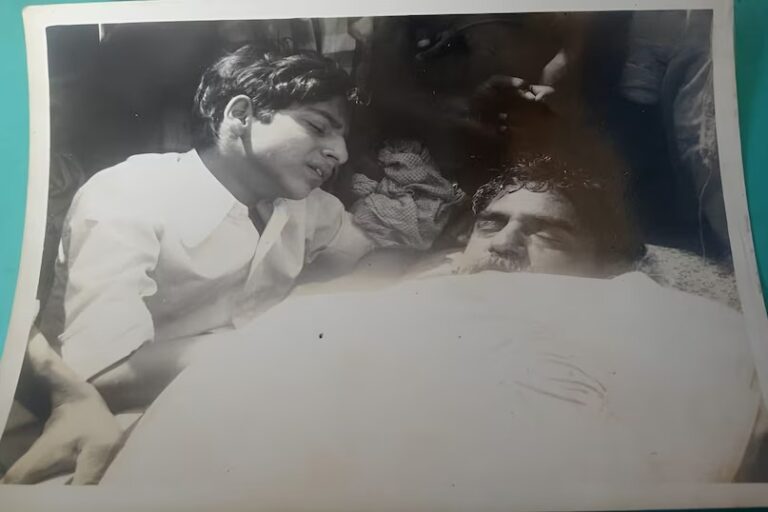
Kamdev Singh, who was killed in a police operation, with his son.
Although Kamdev was killed, the smuggling legacy he built continues to influence Bihar’s politics. According to DIG Malla, even today smuggling activities involving Nepal operate on the foundation he established. “Like in other businesses, there is generational transfer. Even if not to one’s own children, close relatives and associates carry it forward,” he says. According to him, large quantities of cannabis seized in Nepal are mostly found in areas bordering the Indian state of Bihar.
Just as opium shaped Asian geopolitics in the 19th century, Nepali cannabis played a similar role in Bihar’s politics. The illegal opium trade tied to colonial commerce and finance even triggered wars. After China’s defeat in the Opium Wars nearly 200 years ago, the once-powerful nation declined, while the British grew dominant in Asia.
In Bihar, the illegal economy linked to Nepali cannabis transformed crime, smuggling networks, and local political structures during the 1960s and 1970s. The nexus between smugglers and politicians did not only affect Bihar’s politics; as the trend spread into Nepal, it became infamous as “Bihari politics.” The use of muscle power in elections—considered the beauty of democracy—has weakened people’s faith in the democratic system.