Kathmandu
Monday, July 27, 2026





Thirty-one years after Kathmandu last delivered a clean sweep to a single party, the Rastriya Swatantra Party has rewritten the capital’s political history, toppling long-standing party strongholds, dynasties, and ideological loyalties
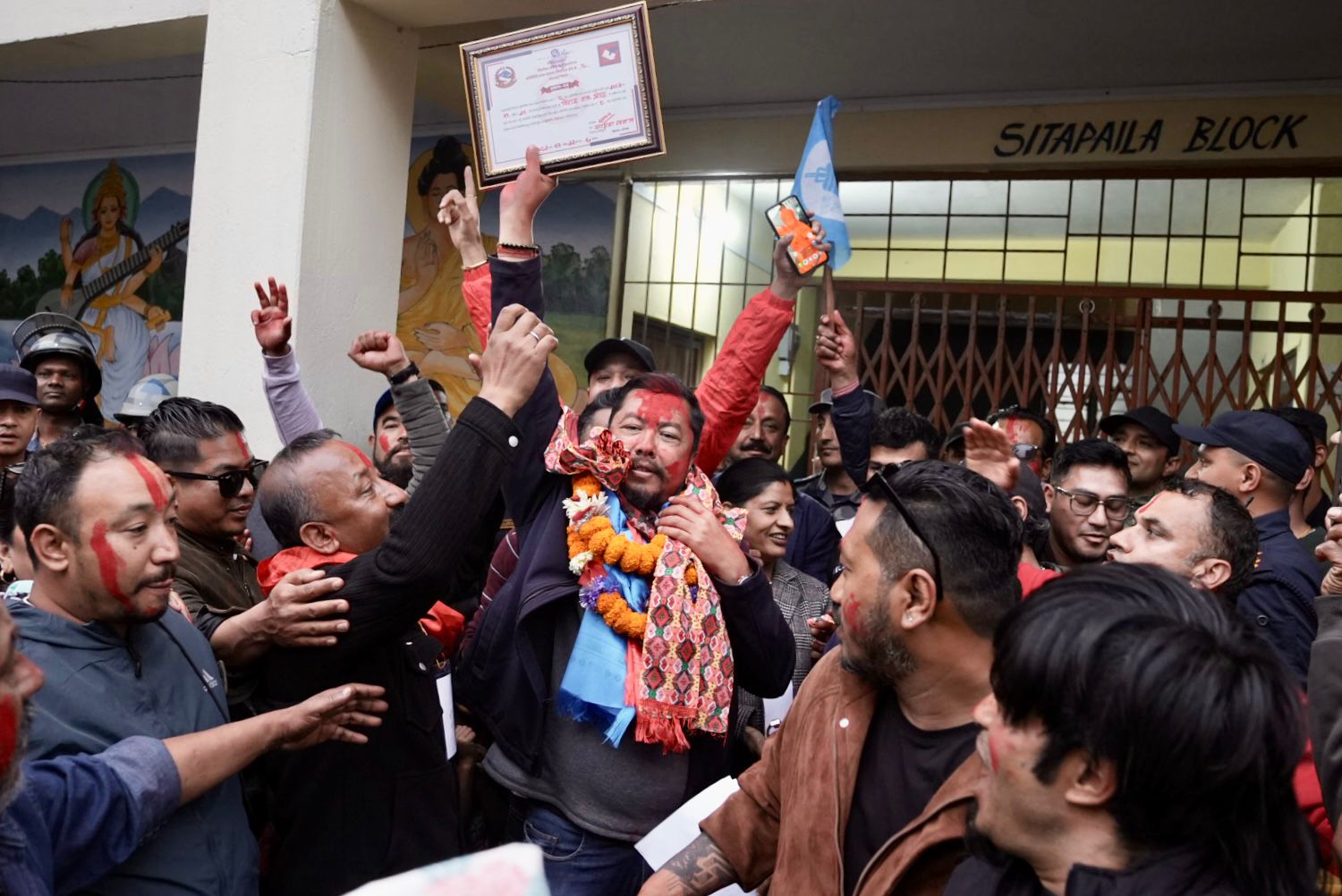
KATHMANDU: The House of Representatives election held on March 5 did not just produce unexpected results; it also shattered many long-standing political narratives. This time, the public mandate overturned traditional assumptions of the past that linked electoral victories with factors such as strongholds of particular political parties, ethnic bases, family legacies, and powerful party organizations.
In this context, the picture in Kathmandu district appeared even more striking. Once considered a “communist stronghold,” Kathmandu has now become completely devoid of communist representation in the House of Representatives. In the 1994 mid-term elections, the CPN (UML) won all constituencies in Kathmandu, turning the district into a communist fortress. Various leftist parties had preserved that legacy for decades.
In the history of parliamentary elections, 31 years later, Kathmandu has once again witnessed a single party winning across the district. This time, the Rastriya Swatantra Party (RSP) accomplished that feat. The RSP wave swept away not only the communist parties but also the Nepali Congress, the country’s oldest political party, from Kathmandu.
Nepal held its first parliamentary election in 1959. Excluding the 30-year Panchayat period, traditional political forces had dominated the elections since then. This time, however, the RSP displaced those forces by winning all 10 constituencies in Kathmandu.
Interestingly, in nine out of the ten constituencies, leftist parties did not even emerge as the nearest competitors.
In Kathmandu Constituency No. 1, once considered a stronghold of the Nepali Congress, RSP’s Ranju Neupane (Darshana) defeated the party’s candidate Prabal Thapa Chhetri. Since the 2008 Constituent Assembly election, Nepali Congress leader Prakash Man Singh had consistently won from this constituency, becoming a member of parliament four times. This time, however, the party fielded Prabal instead.
In Kathmandu-2, RSP’s Sunil KC emerged victorious. In the 2022 general election, RSP’s Sobita Gautam had won from this constituency. But after she chose to contest from Chitwan-3, Sunil KC got the opportunity and defeated Kabir Sharma of the Nepali Congress.
Similarly, in Kathmandu-3, RSP candidate Raju Nath Pandey, the former chief of the Kathmandu Metropolitan Police, defeated Kulman Ghising of the Ujyalo Nepal Party.
In Kathmandu-4, widely known as the electoral base of Nepali Congress leader Gagan Thapa, the RSP triumphed. RSP’s Pukar Bam defeated Nepali Congress candidate Sachin Timilsena. In the 2022 election, Bam had lost from Kathmandu-1. Since Gagan Thapa contested from Sarlahi-4 this time, the Nepali Congress fielded the 33-year-old Sachin in Kathmandu-4.
In Kathmandu-5, considered the most “heavyweight” contest, the RSP raised its flag. The constituency featured prominent candidates such as former Deputy Prime Minister and UML leader Ishwar Pokhrel, former Health Minister and Nepali Congress General Secretary Pradeep Paudel, and Rastriya Prajatantra Party leader Kamal Thapa. Yet 29-year-old RSP candidate Sasmita Pokhrel emerged victorious, defeating Paudel by 21,578 votes. Pokhrel finished third and Kamal Thapa fourth.
Shishir Khanal, who had already secured public support in Kathmandu in the 2022 general election, again won Kathmandu-6 by a large margin, defeating Nepali Congress candidate Krishna Baniya Chhetri. Likewise, in Kathmandu-7, the RSP’s Ganesh Parajuli defeated Nepali Congress candidate Pramod Hari Guragain.
Biraj Bhakta Shrestha, who had helped the RSP win in Kathmandu in the previous election, continued his victory in Kathmandu-8. He defeated his long-time rival Suman Sayami of the Nepali Communist Party by 21,375 votes.
In Kathmandu-9, RSP’s vice-chairperson and former labor minister Dol Prasad Aryal won by 29,633 votes, defeating Nanu Maya Bastola of the Nepali Congress. Similarly, in Kathmandu-10, the RSP’s Pradeep Bista defeated Nepali Congress candidate Himal Karki.
Young leaders of the RSP consider the party’s popularity in Kathmandu natural. Asim Shah, a close associate of Balendra Shah (Balen), RSP’s prime ministerial candidate, said,
“The RSP’s current success is not limited to the capital. The entire country has turned into a land of the bell symbol.”
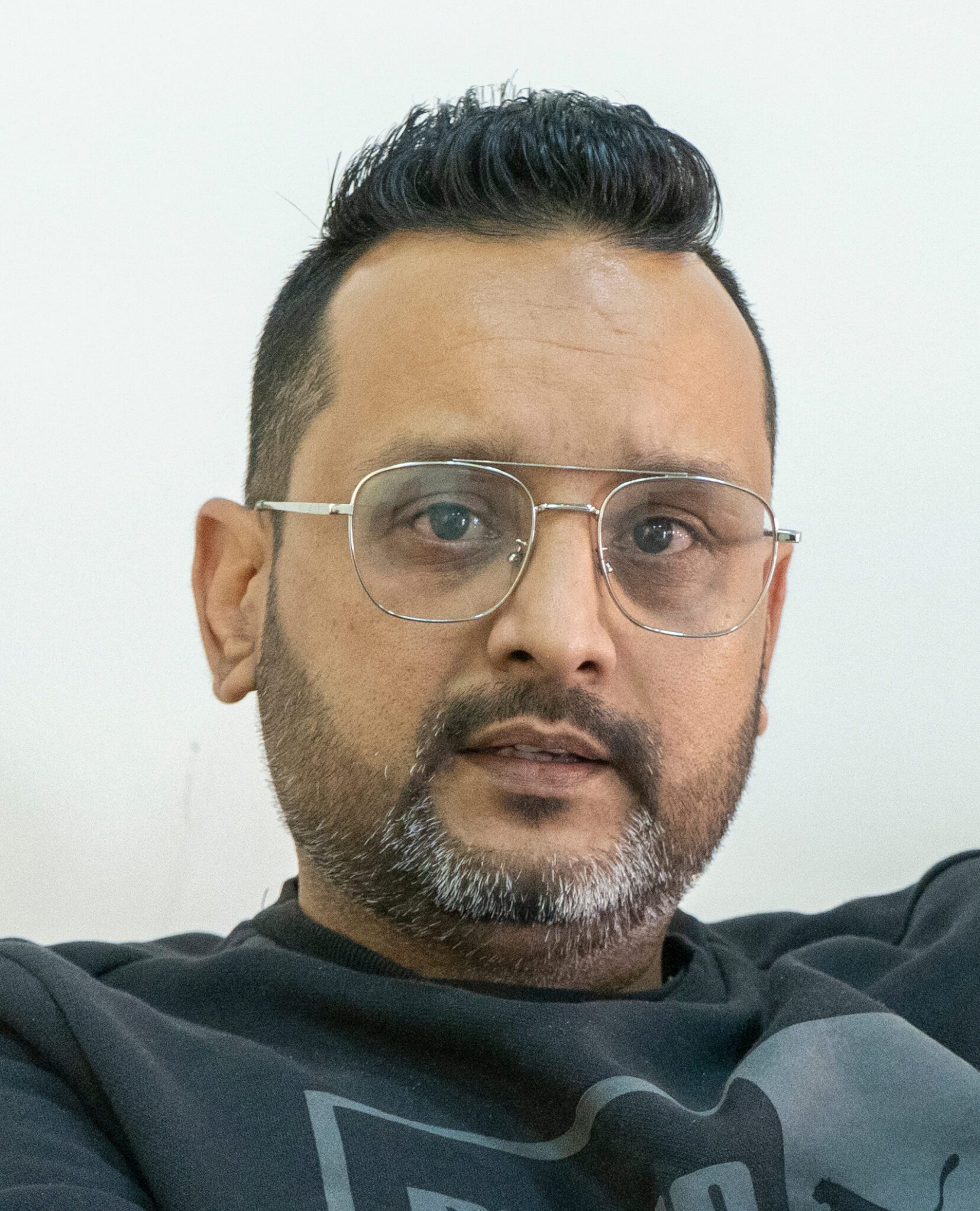
Asim Shah
Indeed, the RSP wave and the decline of leftist parties were so strong that even Bhaktapur-1, which had been a fortress of the Nepal Workers and Peasants Party (NWPP) since 1991, fell this time. The RSP’s Rukesh Ranjit defeated Prem Suwal of NWPP there. Bhaktapur-1 had been such a secure stronghold that even the 2008 Constituent Assembly election wave in favor of the Maoists could not shake it.
102-year-old Lila Prasad Lohani, who contested in the 1959 parliamentary election, says he had never seen such a powerful electoral victory in Nepal’s parliamentary history. He said, “I have never witnessed results like this, not only in Kathmandu but anywhere in Nepal.”
In the 1959 parliamentary election, Lohani had contested from Pokhara South-East constituency No. 103 representing the Nepal Democratic Assembly led by Ranganath Sharma, but he lost to Shribhadra Sharma of the Nepali Congress.
In Kathmandu’s parliamentary history, a similar moment had occurred only in 1994, when the city became entirely dominated by communists. Since then, no single party had been able to win across the district, until now, when the RSP achieved that success.
During the 1994 mid-term election, Kathmandu had seven constituencies, all of which were won by the CPN (UML). The winners included Narayan Dhakal (Constituency 1), Bidya Devi Bhandari (2), Manmohan Adhikari (3), Padma Ratna Tuladhar (4), Rajendra Prasad Shrestha (5), Sahana Pradhan (6), and Krishna Gopal Shrestha (7).
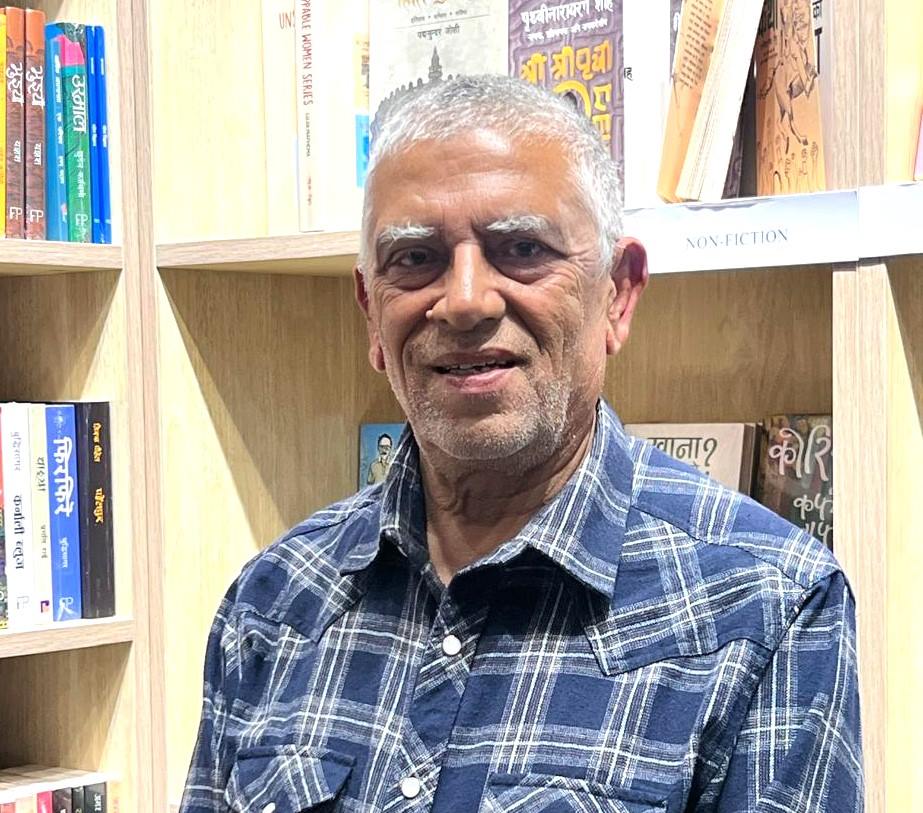
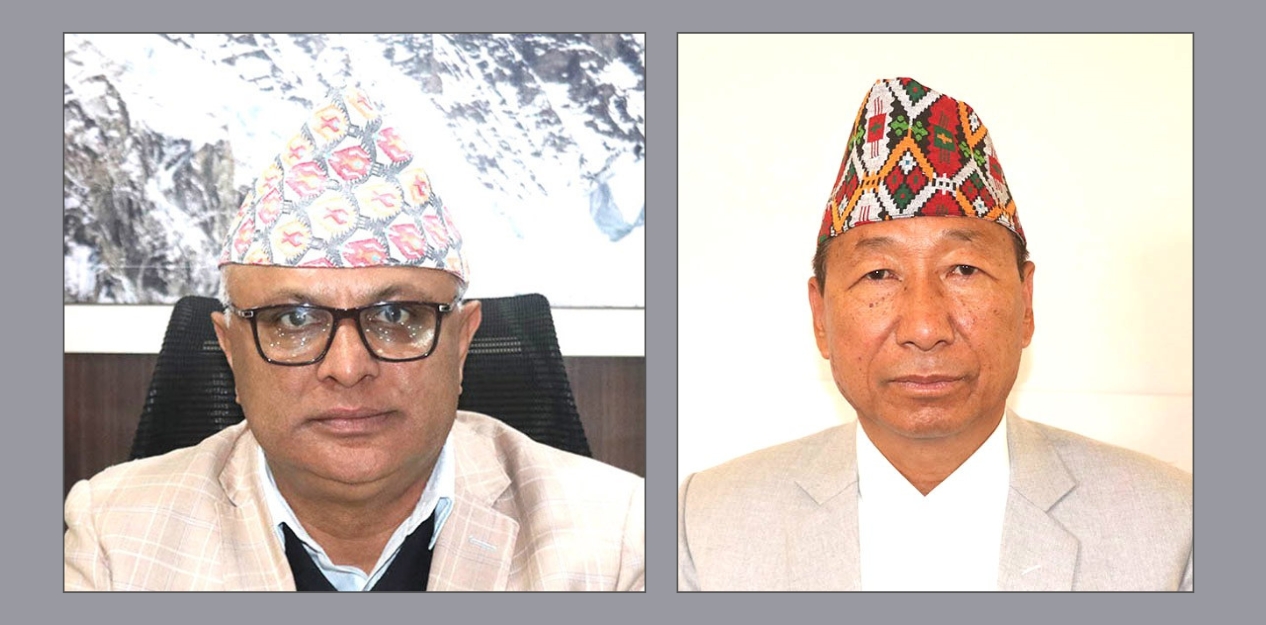
Narayan Dhakal.
Dhakal, who had been elected from Constituency No. 1 at that time, says, “I consider RSP’s current victory natural. Kathmandu, which was once under the dominance of the left, could not see us implement our declared policies properly. The Nepali Congress also lost its direction. Therefore, there was no alternative to a new force.”
In the first parliamentary election of 1959, Kathmandu was divided into three constituencies. From the Kantipur constituency, Ganesh Man Singh of the Nepali Congress won. From the Kathmandu Valley Western constituency, Nar Bahadur Thapa Chhetri of the Nepal Nationalist Gorkha Parishad won, while Lochan Shamsher Thapa of the United Democratic Party won from the Kathmandu Valley North-Eastern constituency.
After the Panchayat system was introduced in 1960, political parties were banned. Following the restoration of multi-party democracy in 1990, Kathmandu district was divided into five constituencies during the 1991 election. Among them, Daman Nath Dhungana of the Nepali Congress won from Constituency No. 2, while CPN (UML) candidates won the other four constituencies. UML’s then General Secretary Madan Bhandari won from Kathmandu-1, Padma Ratna Tuladhar from Kathmandu-3, Sahana Pradhan from Kathmandu-4, and Krishna Gopal Shrestha from Kathmandu-5.
Bhandari defeated the then Prime Minister and Nepali Congress candidate Krishna Prasad Bhattarai.
Dhakal says, “We had left Constituency No. 2 for Jana Morcha. Damanji won there. Had the UML fielded its own candidate, perhaps another history would have been made in 1991. However, the role Damanji later played as Speaker was commendable.”
After Madan Bhandari died in a vehicle accident in 1993, a by-election was held in Kathmandu-1, where Bidya Devi Bhandari of UML was elected. She also defeated Nepali Congress leader Krishna Prasad Bhattarai.
In the 1999 House of Representatives election, Kathmandu had seven constituencies. Among them, Prem Lal Singh of the Nepali Congress won Constituency No. 4, while UML candidates won the remaining six constituencies.
The winners included Pradeep Nepal (1), Bidya Devi Bhandari (2), Ishwar Pokhrel (3), Mangal Siddhi Manandhar (5), Ashta Laxmi Shakya (6), and Tirtha Ram Dangol (7).
In the 2008 election to the first Constituent Assembly, Kathmandu was divided into 10 constituencies. Among them, six seats were won by the Nepali Congress. The winners were Prakash Man Singh (1), Chakra Bahadur Thakuri (3), Suprabha Ghimire (4), Narhari Acharya (5), Nabindra Raj Joshi (8), and Dhyan Govinda Ranjit (9).
The remaining four constituencies were won by Maoist candidates: Jhakku Prasad Subedi (2), Hitman Shakya (6), Hisila Yami (7), and Pushpa Kamal Dahal (10).
In the 2013 Constituent Assembly election, among Kathmandu’s 10 constituencies, the Nepali Congress won seven and the UML won three. Nepali Congress winners were Prakash Man Singh (1), Gagan Thapa (4), Narhari Acharya (5), Bhimsen Das Pradhan (6), Nabindra Raj Joshi (8), Dhyan Govinda Ranjit (9), and Rajan KC (10).
UML candidates Madhav Kumar Nepal (2), Rameshwar Phuyal (3), and Ram Bir Manandhar (7) were also elected.
UML leader Madhav Kumar Nepal had won from both Kathmandu-2 and Rautahat-1, but according to the rule allowing a candidate to retain only one seat, he vacated Kathmandu-2. In the 2014 by-election, Deepak Prasad Kuinkel of the Nepali Congress was elected there.
In the 2017 House of Representatives election, the Nepali Congress won four constituencies in Kathmandu, while the UML won six. From the Nepali Congress, Prakash Man Singh (1), Gagan Thapa (4), Bhimsen Das Pradhan (6), and Rajan KC (10) were elected.
From the UML, Madhav Kumar Nepal (2), Krishna Rai (3), Ishwar Pokhrel (5), Ram Bir Manandhar (7), Jeevan Ram Shrestha (8), and Krishna Gopal Shrestha (9) won.
The Rastriya Swatantra Party (RSP) entered national politics through the 2022 parliamentary election. In its first election, it succeeded in winning four constituencies in Kathmandu district: Sobita Gautam (2), Shishir Khanal (6), Ganesh Parajuli (7), and Biraj Bhakta Shrestha (8). At that time, in Kathmandu, once considered a communist stronghold, the leftist parties were reduced to just one seat, with Krishna Gopal Shrestha of the UML retaining the communist presence by winning Kathmandu-9.
The remaining five constituencies were won by the Nepali Congress: Prakash Man Singh (1), Santosh Chalise (3), Gagan Thapa (4), Pradeep Paudel (5), and Rajendra KC (10).
However, while the leftist forces had managed to preserve at least a single foothold in Kathmandu in the previous election, they have become completely absent this time. In this election, the RSP has halted the parliamentary journey of both the leftist parties and Nepali Congress in Kathmandu.