Kathmandu
Tuesday, July 28, 2026





For several years, a single sentence had been repeated in public debate almost as an undisputed truth: that no single party in Nepal could ever secure a clear majority again. This assertion gradually became less an analytical conclusion and more a narrative of political convenience. From media discussions to political columns, it was presented with such confidence that it seemed as if Nepali political society were permanently destined for fragmented mandates.
However, the election of March 5 has brought this narrative under serious scrutiny. The outcome is not merely a shift in the balance of power; it also represents the collapse of a political certainty constructed over the past three decades. More strikingly, this change does not appear to have come from parties with long-established ideological and institutional strength. Instead, it has emerged from a relatively new political force that has not yet fully developed a comprehensive theoretical framework but has nonetheless gained widespread public support.
To understand this development, it is necessary to recall Nepal’s political journey that began after 1991. With the restoration of multiparty parliamentary democracy, the country entered a new era of political competition. At the time, there was hope that democracy would strengthen institutional transparency, ensure accountability, and improve the culture of governance. Yet, after more than three decades of practice, much of that hope appears to have gradually turned into disappointment.
During this period, Nepal’s political history has also witnessed several significant achievements: the establishment of a republic, the adoption of a federal structure, and constitutional provisions for inclusive representation, among others. However, alongside these achievements, another trend developed. Over time, the credibility of political leadership began to weaken. Many of the political structures that dominated governance after 1991 normalized certain tendencies through their own practices, ultimately contributing to the emergence of a distorted political culture in society.
Governments changed frequently, but meaningful improvements in governance culture failed to materialize. Persistent issues such as deeply rooted corruption, administrative inefficiency, unethical partisan power-sharing, and intrusive institutional interference continued to reappear. As a result, a troubling message gradually spread across society: that success in politics depended less on competence or principles and more on power management, access, and opportunism.
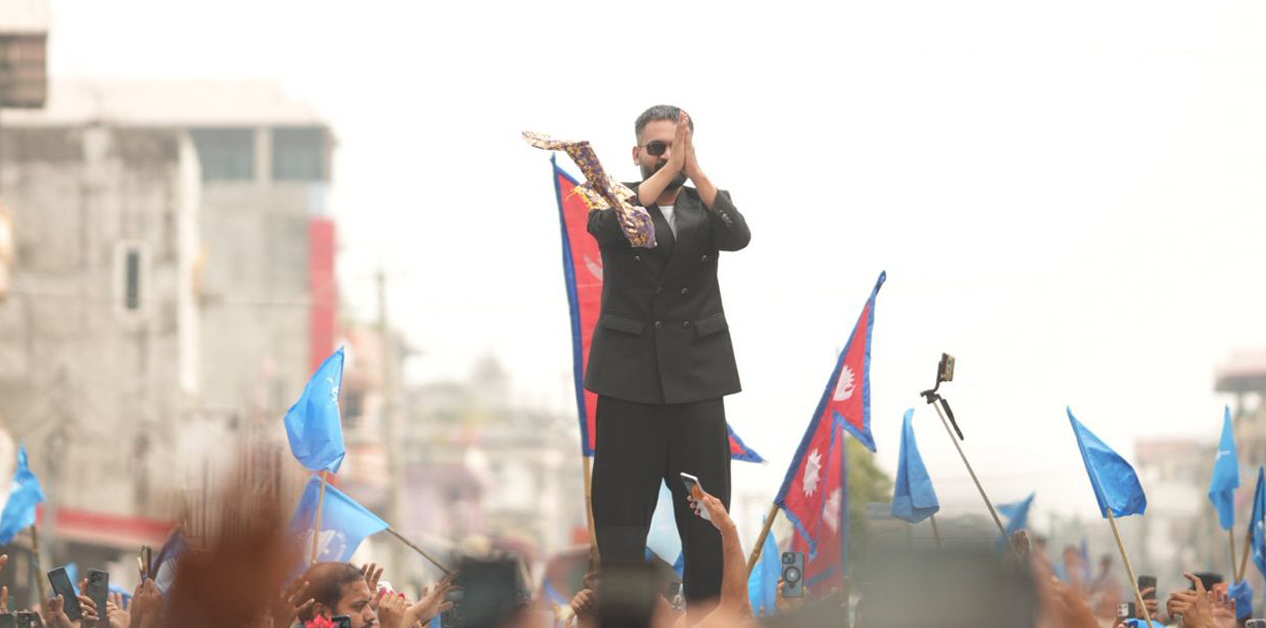
Balendra Shah (Balen) addressing an election rally in Jhapa on March 1. Photo courtesy: Aakash Paudel/Nepal Photo Library
Over time, this perception became embedded within political culture itself. Citizens increasingly began to experience politics as a sphere of frustration rather than hope. Many came to believe that the possibility of meaningful change was minimal, that the system would remain largely unchanged, and that periodic elections were little more than a ‘musical chairs’ contest among actors with similar mindsets.
Waning of values
From a sociological perspective, no political culture emerges suddenly. It develops through long-term practice, institutional behavior, and public discourse. In Nepal as well, the incompetence, opportunism, and moral deviations repeatedly displayed by governments, political parties, and their leadership after 1991 gradually weakened the standards by which political leadership was evaluated. As a result, an environment emerged in which the very list of qualities expected of a leader was effectively inverted. Cunning, power-centered behavior, and partisan loyalty began to receive greater importance than competence, vision, morality, or accountability.
In political theory, this process is described as ‘normative erosion,’ the gradual decay of standards. When institutional and moral norms steadily weaken, societies begin to accept new and often distorted standards of political behavior. A similar pattern was evident in Nepal. For a long period, incompetence and unethical conduct were no longer seen as exceptions in political practice but increasingly appeared as normal tendencies. The political establishment promoted this culture, either directly or indirectly, and over time sections of society came to accept it as an unavoidable reality, or even as fate.
Politics, fundamentally, is a process through which society is guided. When leadership consistently demonstrates a particular pattern of behavior over a long period, the likelihood increases that society itself will begin to regard that behavior as normal. This is why a pessimistic perception gradually took root in Nepal that politics is essentially a contest for power, where morality and principles occupy only a limited space. Some observers have described this outlook as a form of fatalism or political determinism.
Shifts in generation and tech
Society is never completely static. Even when political structures promote a particular perception or culture, certain independent processes always remain active within society. Such processes sometimes develop outside the direct influence of the state or political institutions and gradually begin to challenge prevailing trends. In modern social theory, this phenomenon is understood as ‘autonomous social dynamics.’ In Nepal’s context, two such powerful processes are clearly visible: demographic change and technological transformation.
The first change is demographic. Nepal is currently a youth-majority society. Analysis of data from the latest national census shows that citizens aged 18 to 40 constitute roughly 40 to 45 percent of the total population. This means that a significant share of the power to shape the country’s social, economic, and political future is increasingly concentrated in the new generation. In development studies, a large youth population represents the potential for a ‘demographic dividend.’ However, its impact is not limited to the economic sphere; it can also transform political, cultural, and social expectations in profound ways.
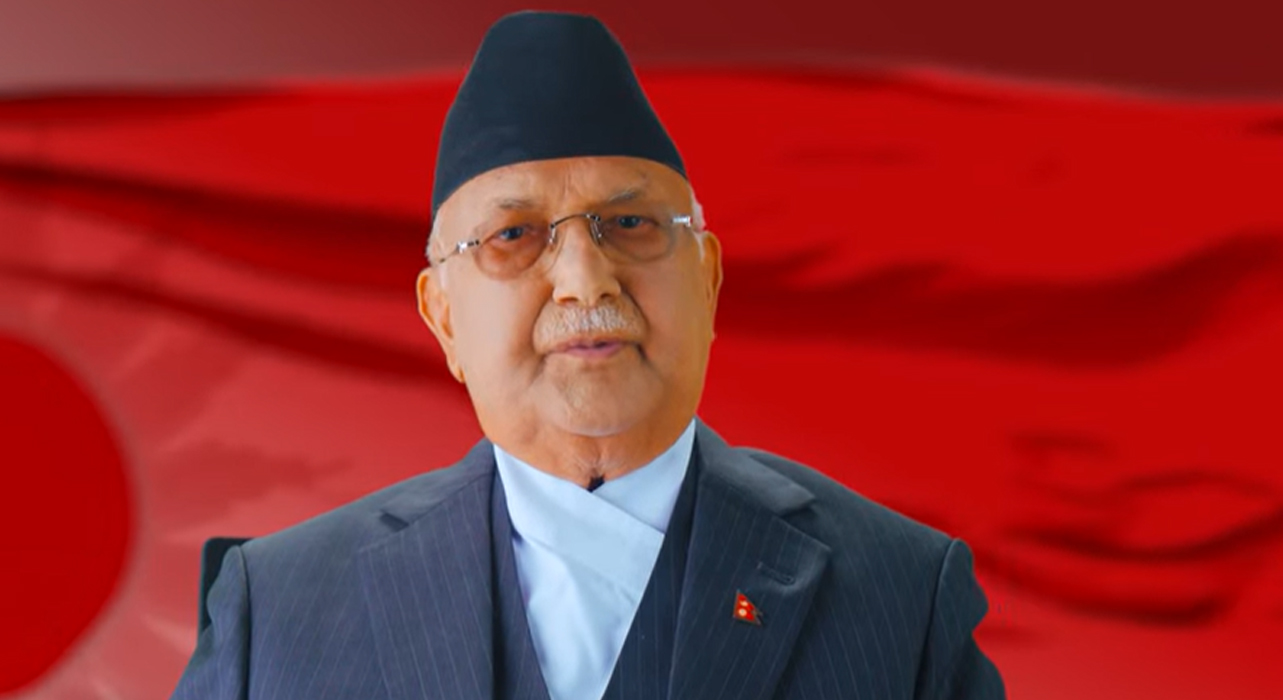
CPN (UML) Chairman KP Sharma Oli
Young people are generally more inclined to question traditional power structures, embrace new ideas, and demand greater institutional transparency. The active participation of youth in political debates, social movements, and public discourse in recent years reflects this trend. The political psychology of the younger generation tends to focus more on results and performance than on traditional loyalties. They are less inclined to automatically accept long-standing partisan identities. The Gen Z protest of September 8 and 9, 2025, symbolically expressed this emerging mindset.
That campaign, which began across various digital platforms during August and September, was not a formal political movement. It had no permanent organization, leadership, or manifesto. Yet it conveyed an important message: the new generation does not silently accept political despair. Even though they were not widely visible in direct street protests, they expressed their dissatisfaction and aspirations intensely within the digital public sphere. To dismiss this simply as a temporary impulse of social media would be to overlook its deeper social meaning. The Gen Z protest represented a clear generational signal that the new generation is unwilling to accept the old political narrative without questioning it.
The second change is technological. Rapid advances in information technology have transformed the communication structure of society, and with it the nature of political communication. Until about two decades ago, the flow of information in Nepal was dominated by traditional media such as newspapers, radio, and television. Today, however, the internet, social media, mobile communication, and digital platforms have fundamentally reshaped the landscape of public discourse.
According to data from the Nepal Telecommunications Authority, the number of internet users in the country has increased rapidly in recent years, while mobile internet access has spread to almost the entire population. As a result, the processes of producing, distributing, and consuming information have become significantly more decentralized. Political information now flows not only through formal institutions but also through citizens themselves, social media networks, and alternative media platforms.
Manuel Castells Oliván, a Spanish sociologist, has described modern society as a ‘network society,’ in which networks of information flow reshape structures of social power. In Nepal as well, the expansion of information technology has introduced a new dimension to political discourse. Citizens now operate in an environment where they can immediately evaluate political leadership, criticize its actions, and circulate alternative ideas.
For this reason, certain independent processes within society remain continuously active. Metaphorically, they can be described as ‘autonomous bots.’ These processes operate beyond the control of any single political party, institution, or leadership. Rather, they arise from the natural evolution of social structures. The growing youth population and the expansion of information technology are two important examples of such processes.
Two decades ago, the main instruments of election campaigns were mass gatherings, rallies, and direct political speeches. Leaders addressed crowds of thousands, and such gatherings were often treated as visible indicators of public support. Today, however, the center of political communication has shifted rapidly toward digital platforms. Mobile phones, the internet, social media, video platforms, and digital media have fundamentally changed the structure of information flow. Large mass meetings are no longer essential for delivering political messages. In this election, the influence of those who traveled widely and reached voters directly appeared greater than that of parties that primarily organized large public gatherings. In that sense, the election may also have planted the seeds of a new approach to voter outreach.
Indeed, the March 5 election demonstrated an interesting experiment. It showed that voters can be influenced through the multidimensional use of digital space even with relatively few direct addresses at mass meetings. Repeated messages on digital platforms, short videos, social media campaigns, and algorithmic dissemination combined to focus voters’ attention on a particular symbol. Put differently, a symbol repeatedly appearing on a mobile screen can sometimes have more influence than a speech delivered before thousands gathered in a field.
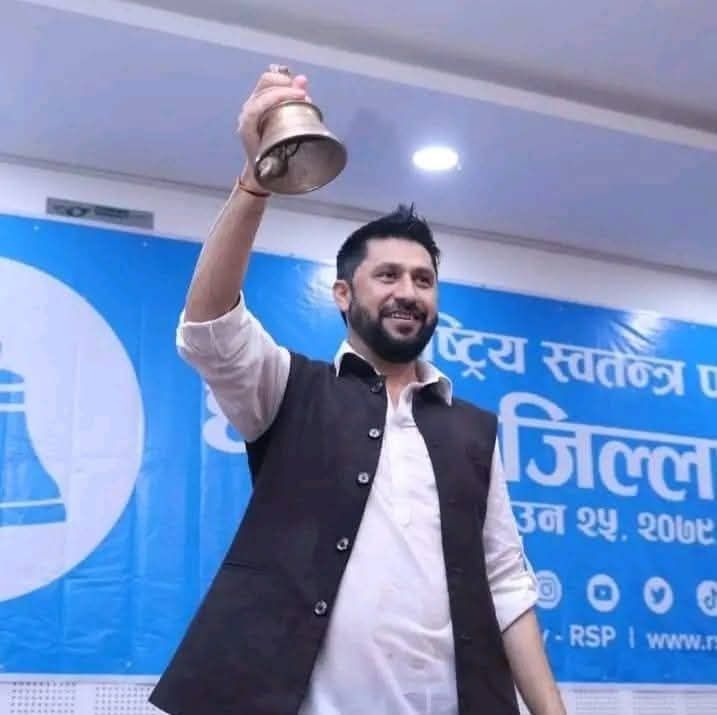
RSP Chairman Rabi Lamichhane
In this sense, the March 5 election was not merely a political contest. It also illustrated how changes in communication technology can redefine electoral strategy. The rise of the Rashtriya Swatantra Party (RSP) must be understood within this evolving social and communicative environment. In the traditional sense, the party does not possess a long-standing ideological tradition, and its organizational structure is still in a developmental stage. Yet its appeal lies elsewhere: it sought to transform long-accumulated public dissatisfaction into political expression, an effort that ultimately translated into remarkable electoral success.
Factors behind the RSP’s victory
The unprecedented success of RSP seen in the election is not just a result of electoral strategy. It is also the joint expression of the aspirations of a youth-led society, the influence of digital communication, and the political despair accumulated over the past three decades.
At this point, the established narrative that ‘now no party’s majority will come’ has not only been interestingly shattered, but it has also rendered irrelevant some established and self-established experts, intellectuals, or political commentators who used to make general voters memorize the fatalist theory that change is not possible. Perhaps opportunities will no longer be sought for this narrative in media debates.
Now let’s also look at the factor behind the rise of the class that constructed such a narrative. If an individual or class had not used partisan pressure, personal access, or other unethical means to obtain personal gain, positions, or opportunities in the political system after 1991, they would neither be involved in establishing such a narrative nor would they be searching for reasons why the current election results are as difficult to accept as if the sky had fallen. Because many political structures active in the governance system after 1991 had normalized such tendencies through their own practice, which ultimately created a distorted political culture in society. In fact, that narrative was also a kind of political consolation. When no party receives a clear mandate, the power equation continuously depends on negotiations, agreements, and alliances.
When voters begin to give more support than expected to a new force, it becomes an uncomfortable moment for the system. This is because it creates the possibility of changing established equations. In the current political landscape of Nepal, the rise of RSP is like a sign of that uncomfortable moment. It has not only challenged the dominance of traditional parties but has also forced a reconsideration of established conclusions in political analysis.
Veil of illusion
Certainly, history has shown that the rise of a new political force alone does not automatically guarantee good governance. Public expectations may be high, but building institutional capacity takes time. For this reason, the present moment should be viewed not only through the lens of enthusiasm or fear but also with critical reflection. If this change is limited merely to the replacement of individuals, it may fail to produce lasting results. However, if it succeeds in establishing new standards of transparency, accountability, and competence within political culture, it could become an important turning point in Nepal’s democratic journey.

Nepali Congress President Gagan Kumar Thapa. Photo courtesy: Nepal Photo Library
This is the strength of democracy: it periodically gives society the opportunity to reassess its own leadership. From this perspective, the March 5 election should be understood not simply as a political event but as an expression of deeper, long-term social change. Election outcomes are often shaped by immediate political strategies or alliances, but they also reflect broader processes unfolding within society.
If the political establishment over past decades had not attempted to normalize incompetence or opportunism, the emergence of new social forces, particularly the younger generation and the digital public sphere, might not have moved in the direction of challenging those trends, or society might have evolved along a different path.
At the same time, caution is necessary. Neither technological advancement nor the growth of a youthful population automatically guarantees an improvement in democratic quality. The risks of misinformation, polarization, and emotionally driven political discourse on social media are equally real. Technology, therefore, is not a solution in itself. It is simply a tool, and its impact ultimately depends on the institutional structure of society and the level of civic awareness. The effects of these processes may not become visible immediately, but over the long term they hold the potential to reshape political culture.
For this reason, the role of intellectuals, researchers, and policymakers becomes even more important in a transitional democracy like Nepal. If they approach the political process not only with critical distance but also with a commitment to institutional reform and the strengthening of public discourse, the consolidation of democratic culture becomes more achievable.
Ultimately, since 1991, Nepal’s political journey has witnessed both significant achievements and notable shortcomings. Yet society itself is not static. A new generation, evolving technologies, and shifting social expectations are gradually reshaping political culture. Any election result, therefore, should not be interpreted solely through the lens of despair or excitement but in the context of the deeper historical and structural processes at work within society.
In democracy, the greatest danger is not the result itself, but the illusion surrounding it. And sometimes a single election can bring an end to illusions that have persisted for many years. The March 5 election may well represent the moment when that long-standing illusion was finally torn apart.
![NSU protests closure of public library, demands immediate reopening [Photo Feature]](https://english.nepalnews.com/wp-content/uploads/2026/07/1-6.jpeg)