Kathmandu
Wednesday, July 15, 2026





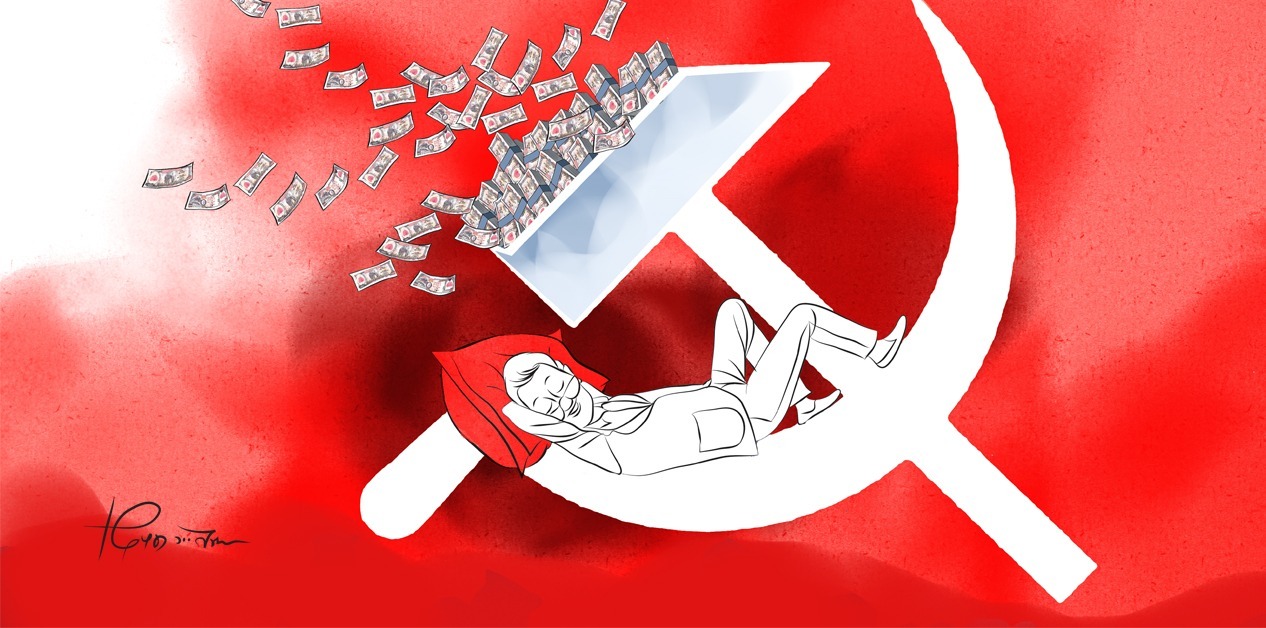
KATHMANDU: For much of Nepal’s modern political history, the communist movement has been defined by a paradox: simultaneous fragmentation and dominance. Few political forces in South Asia have endured as many splits, ideological battles, reunifications, and dramatic comebacks-yet remained central to the political system.
Since the 2006 democratic movement, Nepal’s communists dominated parliament. In the 2017 elections, the CPN-UML and CPN-Maoist Centre secured nearly two-thirds of the seats, merged to form the Nepal Communist Party, and appeared untouchable.
Over seven and a half decades, Nepali communists have produced ten times prime ministers for six leaders. Their history is a mix of dramatic reunions, bitter splits, and bloody uprisings. In the first general election after the 2015 constitution, in 2017, the UML and Maoist parties formed an alliance that won nearly a two-thirds majority. Once resurgent, the communists now face a crushing electoral setback.
Yet the March 2026 elections delivered a humiliating blow. Once dominant, the left is now marginalised, reduced to a fraction of its former strength, and stripped of its ability to form a government outright.
From winning a mere four seats in Nepal’s first parliamentary election to commanding near two-thirds majorities decades later, the communist movement has left an indelible mark on Nepal’s democratic evolution-but its supremacy is no longer assured.
Nepal’s communist movement, long divided into dozens of factions, has historically been dominated by two major parties for nearly two decades. Communsit forces commanded parliamentary majorities and shaped national politics. This elections delivered a humiliating blow: once-resilient and dominant, the left has been reduced to a marginal force. From kingmakers to political also-rans, Nepal’s communists now face an unprecedented crisis of relevance.
March 5, 2026: The left in freefall
Nepal’s left parties suffered a historic humiliation in the March 05, 2026 House of Representatives elections. Out of 165 directly contested seats, they managed to secure only 17, representing a mere 10.3 percent. The CPN-UML captured 9 seats, while the Nepali Communist Party took 8.
In the proportional representation vote, communist parties fared slightly better but remained marginal. They collectively garnered 21 percent of the vote, with the CPN-UML receiving over 1.4 million votes (13.6 percent) and the Nepali Communist Party 7.6 percent. Overall, the combined vote share for communist parties amounted to just 15.3 percent. In the House of Representatives, this translated to UML holding 25 seats and the Maoists 17 seats, out of a total of 175.
By contrast, the Rastriya Swatantra Party achieved a decisive victory. It won 125 of 165 seats in the “first-past-the-post” system and an additional 57 of 110 proportional representation seats. Voter turnout was substantial: of the 18,903,869 registered voters, 11,168,032 cast ballots in the direct election and 11,280,617 in the proportional vote. The Election Commission reported that 94.55 percent of direct votes and 96.05 percent of proportional votes had been counted at the time of reporting.
For Nepal’s communists, the results mark a dramatic reversal. Over the seven decades since their founding, they have dominated national politics, producing six prime ministers. Yet, this election underscores the erosion of their appeal in a landscape increasingly defined by younger, independent political forces.
The scale of the defeat is not merely numerical. It signals a potential crisis of legitimacy for a movement that has historically oscillated between revolutionary fervour and pragmatic governance. Even the CPN-UML, once the bedrock of leftist politics, now finds itself reduced to a fraction of its former strength.
With 15.3 percent of the overall vote and just 42 seats between the two major communist parties, the left faces an existential question: whether it can adapt to a political environment where populist, centrist, and issue-based parties dominate, or whether it will continue to be a relic of Nepal’s partisan past.
2022: Waning mandate
In 2022, the CPN-UML won 44 of 165 direct seats and topped the proportional representation vote with 2,845,641 votes (26.95%), remaining the country’s most popular party. The Communist Party of Nepal (Maoist Centre) secured 18 direct seats and 14 proportional seats, gathering 1,175,684 votes (11.13%). Another communist party Socialist managed 10 direct seats and 298,391 proportional votes (2.83%), narrowly missing the threshold for recognition as a national party. Smaller communist factions, including the Nepal Workers Peasants Party and Rastriya Janamorcha, won one seat each.
Since the 2022 election, Nepal has seen two communist prime ministers: Pushpa Kamal Dahal of the Maoist Centre from 26 December 2022 to 15 July 2024, followed by KP Sharma Oli of the CPN-UML from 15 July to 9 September 2024.
2017: Peak alliance and merger
In 2017 Hosue of Representative election the Communsit movement had entered the modern era. In direct elections, 386 Communsit candidates won 118 of 165 seats with 4,787,020 votes (47.65%), while proportional representation delivered 4,618,889 votes (48.6%) and 58 of 110 seats, allowing the CPN-UML and CPN-Maoist Centre to merge into the Nepal Communist Party, commanding a near two-thirds parliamentary majority. For decades, the left dominated Nepalese politics, shaping policy and governance with an almost unassailable electoral grip. KP Sharma Oli of the CPN-UML, backed by nearly a two-thirds majority, led Nepal from 15 February 2018 to 13 July 2021, until his party split.
2013: Retained parliamentary control
The 2013 Constituent Assembly reflected a slight decline, but communists remained dominant. All together communist forces have 823 candidates in Direct (FPTP) captured 4,355,472 votes (48.15%), winning 118 of 240 seats and in Proportional Representation (PR): 4,093,560 votes (43.25%) secured 152 of 335 seats. Despite minor losses, they retained legislative control, proving their resilience in Nepal’s complex political landscape. Another communist, KP Sharma Oli, headed the CPN-UML from 12 October 2015 to 4 August 2016, before the Congress backed premiership to Pushpa Kamal Dahal ‘Prachanda’ of the Maoist Centre, who stayed in office until 7 June 2017.
2008: Post-insurgency dominance
The 2008 Constituent Assembly election marked a watershed moment. With both first-past-the-post (FPTP) and proportional representation (PR) systems, the communists achieved unprecedented dominance: Direct (FPTP): 1,281 Communsit candidates ran, receiving 5,943,026 votes (57.67%), winning 158 of 240 seats. In Proportional Representation (PR) communist forces garnered 6,170,003 votes (57.45%), winning 195 of 335 seats. This election, conducted after the Maoist insurgency and the 2006 peace process, transformed the communist movement from a historic opposition force into the central pillar of Nepali politics.
Following the 2008 Constituent Assembly election, Nepal entered a period of rapid political turnover, producing four communist prime ministers in little over three years. Pushpa Kamal Dahal ‘Prachanda’ was elected Prime Minister on 15 August 2008 and sworn in on 18 August 2008, four months after his Communist Party of Nepal (Maoist) emerged as the largest party. He headed the first government of the Federal Democratic Republic of Nepal following the monarchy’s abolition. Prachanda quit on May 4, 2009, after a standoff with the army. His attempt to dismiss Chief of The Army Staff (CoAS) Rookmangud Katawal was overturned by President Ram Baran Yadav, leaving the prime minister little choice but to resign.
Prachanda’s departure paved the way for Congress-backed CPN-UML leader Madhav Kumar Nepal, who served from 25 May 2009 to 6 February 2011, a tenure of 21 months. He was followed by another UML chairman who assumed the premiership with Maoist support.
After seven months of political gridlock, during which no candidate could secure a majority, Jhala Nath Khanal was elected Prime Minister by the Constituent Assembly on 3 February 2011. Later that year, Baburam Bhattarai of the UCPN (Maoist) formed a coalition government on 29 August 2011, supported by the United Democratic Madhesi Front and minor parties in the Assembly. His cabinet was subsequently expanded on 4 September, 15 September, and 8 November 2011, illustrating the complexity and volatility of Nepal’s post-monarchy political landscape, where coalition-building became essential to maintain governance.
1999: Fragmented and divided
In the 1999 parliamentary elections, Nepal’s communist movement remained influential but fragmented. In the direct contest, the Nepal Communist Party (UML) fielded 195 candidates, of whom 71 were elected. The Rastriya Janamorcha ran 53 candidates, winning 5 seats, while the Sanyukta Janamorcha Nepal and the Nepal Majdoor Kisan Party each secured 1 seat from 40 and 41 candidates, respectively. Several smaller communist parties fielded candidates but failed to win any seats. Even the UML splinter group, the Marxist-Leninist, captured 6.38 percent of the popular vote yet could not convert this support into parliamentary representation.
Despite the complexity, the UML maintained its position as the dominant communist force, securing 71 seats, but the overall results reflected the left’s fragmented nature and the limits of popular support translating into legislative power as Nepali Congress won majority number. In 1999 elections the Communsit movement popular vote share expanded further: 576 candidates secured 3,560,510 votes (41.16%), translating into 78 seats. These elections reflected a growing electoral base despite deep factions and the communists’ ability to compete with more established parties.
1994: First communist government
The 1994 midterm elections marked a turning point in Nepalese politics. The Nepali Congress lost its parliamentary majority, while the Communist Party of Nepal (Unified Marxist-Leninist) emerged as the largest faction in the House of Representatives. No party, however, commanded the 103 seats needed for a clear majority.
In the midterm elections of 1994, the CPN-UML expanded its hold to 88 seats, becoming Nepal’s largest party, while the Workers and Peasants Party secured four. reflecting the left’s enduring but fragmented presence in Nepalese politics. In 1994 elections, total 399 communist candidates received 2,623,215 votes (35.52%), securing 92 seats.
In the aftermath, the UML elected Man Mohan Adhikari as parliamentary leader, who successfully formed a minority communist government. On 30 November 1994, Adhikari was sworn in as Nepal’s Prime Minister, leading the first elected communist government under a constitutional monarchy anywhere in the world-a historic milestone that showcased the growing influence of Nepal’s left in a previously centrist-dominated political landscape.
1991: Rising left influence
Three decades later, the left surged. After the fall of the partyless Panchayat system, Nepal’s fragmented communist factions began emerging as serious challengers to the Nepali Congress. In the 1991 parliamentary elections, out of 205 seats, the CPN-UML won 69, the United People’s Front captured 9, and the Nepal Workers and Peasants Party secured 2, signaling the left’s growing influence in a newly competitive political landscape. Out of 1,345 candidates, 416 were communist, who collectively captured 2,683,726 votes (38.51%). Of 205 seats, they won 82, signaling the emergence of the communists as a formidable political force after years of political upheaval and the restoration of multiparty democracy.
1959: First communist foothold
In 1959, the movement was still nascent. In Nepal’s first parliamentary election, communists were a minor force. Out of 786 candidates, only 47 were communist, securing 129,142 votes, or 7.21% of the total. Of 109 available seats, they won 4, establishing the movement’s modest foothold in national politics.
Why the communist bloc faces historic collapse
The communist movement in Nepal emerged in the late 1940s, inspired by the global wave of communist revolutions, from the Russian upheaval of 1917 to the Chinese Communist triumph in 1949. The Communist Party of Nepal was officially founded on April 22, 1949, in Calcutta (now Kolkata) by Pushpa Lal Shrestha, with founding members were Nar Bahadur Karmacharya, Niranjan Govinda Vaidya, Narayan Bilash Joshi and Moti Devi Shrestha. Shrestha’s translations of Marxist texts into Nepali helped make communist ideology accessible to the broader population.
Nepal’s communist movement has suffered a shock of historic proportions. In the House of Representatives election held on March 5, the combined mandate of leftist parties-once the dominant force in Nepali politics-halved overnight. While no party is ever permanently vanquished by a single election, the path to recovery for Nepal’s fractured communists is fraught with difficulty. Factionalism, the rise of new political entrants, and a disenchanted electorate now cast doubt on the movement’s future. If current trends persist, the communist bloc may face near-eradication by the third electoral cycle; immediate course correction is imperative for survival.
Nepal’s left faces mounting pressure from a public whose aspirations and hopes it has repeatedly failed to meet. Poor governance, weak service delivery, high unemployment, and visible gaps between leaders’ lifestyles and ordinary citizens’ lives have fueled frustration and anger. Voters, particularly from the middle and lower-income brackets, are increasingly turning to new parties that promise better management and accountability. Social media amplifies these shifts, giving voice to disillusionment, while diaspora influence increasingly shapes family voting decisions. The result is a generational revolt against entrenched ideologies and traditional power structures, reshaping Nepali politics in real time.
For more than three decades, Nepali politics revolved around the two parliamentary leftist pillars: the CPN-UML and the Maoist Centre. Together, they defined governance and ideology in the post-monarchy era. Yet public frustration has mounted. Despite holding power for 18 of the last 20 years, these parties failed to deliver on promises of good governance, social justice, and prosperity. The Gen Z-led protest of September 8–9, 2025-an expression of youthful dissent against corruption and state irregularities-was met with violent suppression by the K.P. Sharma Oli-led UML-Congress coalition government. The ballot box, not the barricade, became the instrument of rebellion.
The mechanics of voting, once deeply entrenched at the local level, have crumbled. Traditionally, voters adhered to “bloc” voting systems orchestrated by local party leaders, activists, and family heads-an apparatus that intertwined political allegiance with social and professional life. These leaders acted as intermediaries between the electorate and central power, leveraging influence over development projects and administrative favors. But the local vote machine began to falter in 2022, with mayoral elections in Dharan, Kathmandu, and Dhangadhi exposing cracks. The rise of the Rastriya Swatantra Party further disrupted these patterns. Increasingly, voters—especially from low- and middle-income brackets-cast ballots independently, signaling a generational shift in political agency.
Nepali communists are particularly vulnerable because of their own history and actions. Once insurgents, they oscillated between clandestine operations and mass mobilization, navigating between revolutionary purity and pragmatic adaptation. Internal contradictions between Leninist democratic centralism and oligarchic leadership often stifled genuine internal debate. Oli and Pushpa Kamal Dahal’s attempt at unifying the UML and Maoist Centre into the Nepal Communist Party in 2018 initially seemed to consolidate power. But personal ambition, arrogance, and strategic missteps led to fragmentation, leaving the left more fractured than ever.
Ideology has also faltered. The post-conflict shift to competitive multiparty democracy forced communist parties to dilute class-based agendas in favor of electoral pragmatism and developmental policies. Meanwhile, social media has eroded the authority of household heads and local leaders, empowering individual voters-even abroad-based family members-to influence outcomes. The collapse of coercive and hierarchical voting practices, while destabilizing for traditional parties, represents a positive step for democratic maturation in Nepal.
The electoral trajectory of Nepal’s communists underscores their volatility. Following the 2006 peoples movement that overthrow of the monarchy, leftist parties commanded 62 percent of the first Constituent Assembly in 2008, only to see this drop to 48 percent in 2014. The 2017 electoral alliance briefly revived their fortunes to 64 percent, yet by 2022 the mandate had shrunk again to 45 percent. The March 2026 results now signal the steepest decline in their history.
The communists’ current dilemma is thus both structural and generational. Organizational rigidity, ideological ambiguity, and a legacy of state suppression have alienated younger voters. The party now faces a stark choice: internal renewal through more democratization, youthful practical approach, coherent ideology, and social relevance, or continued decline marked by fragmentation and loss of transformative legitimacy.
From the anti-Rana mobilizations of the mid-twentieth century to the Maoist insurgency and republican transition of the twenty-first, Nepal’s communists once shaped the nation’s political, social, and ideological landscape. Today, their red fortifications lie in ruins at the ballot box, a cautionary tale of revolutionary movements struggling to adapt from insurgency to institutional governance in an era of empowered, digitally connected citizens.