Kathmandu
Tuesday, July 28, 2026





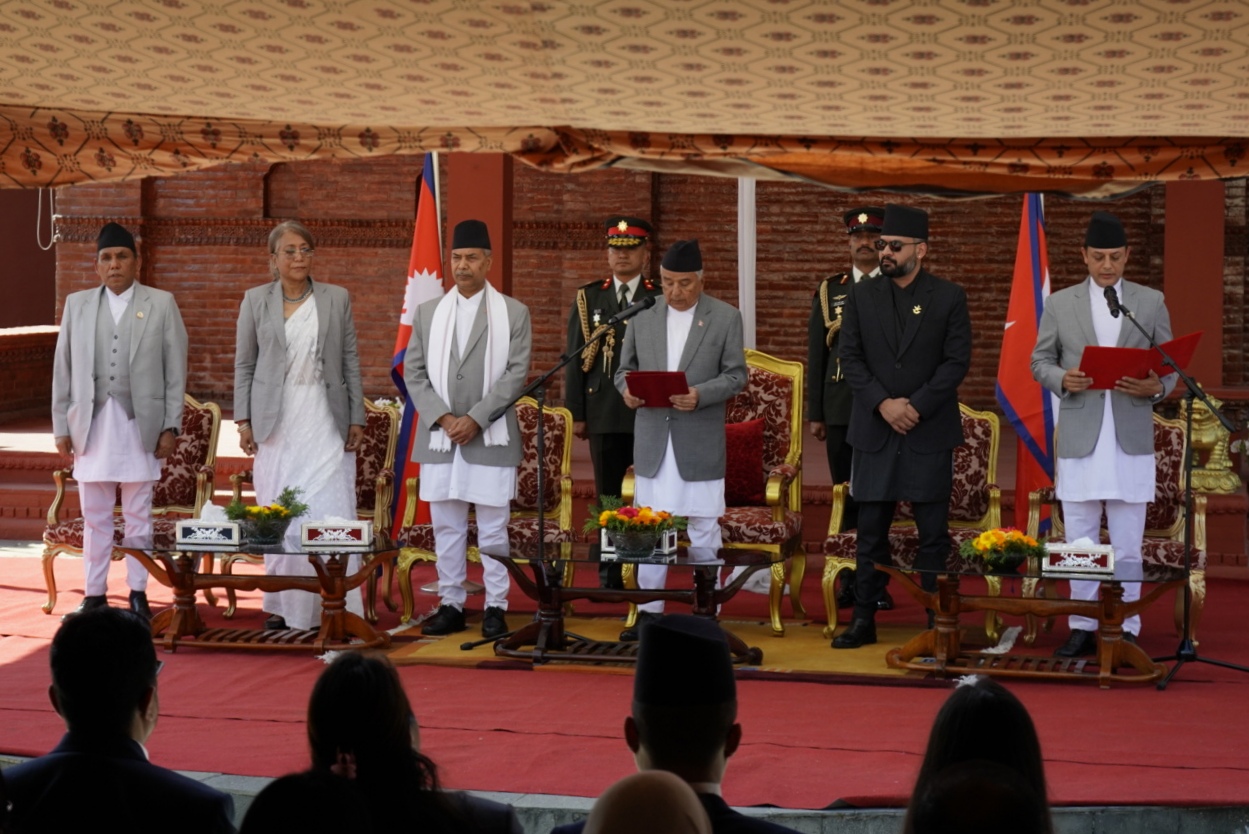
KATHMANDU: On April 5, 2026, Nepal’s parliamentary landscape underwent a historic shift with the unopposed election of Dol Prasad (DP) Aryal as the Speaker of the House of Representatives (HoR).
Representing the Rastriya Swatantra Party (RSP), Aryal’s ascent comes at a moment of unprecedented political consolidation.
With the RSP currently wielding a dominant super-majority in the House, the role of the Speaker transitions from a position of constant mediation between fractured blocks to one of immense responsibility in maintaining democratic checks and balances against a powerful executive.
In a federal democratic republic, the Speaker is the guardian of the Constitution within the halls of Parliament. The position is designed to be a bridge between the ruling majority and the opposition, ensuring that while the government has the mandate to govern, the opposition has the protected right to scrutinize.
Historically, the seat has been a lightning rod for controversy. From the resignation of Krishna Bahadur Mahara over personal scandals to the heated tenure of Agni Prasad Sapkota during the 2020-2021 constitutional crises, the office has often struggled to shed its partisan image.
DP Aryal now steps into this role with the dual challenge of managing a “super-majority” while upholding the sacred neutrality the office demands.
What is the Speaker of the House of Representatives in Nepal?
The Speaker is the presiding officer and the highest authority of the House of Representatives, the lower house of Nepal’s Federal Parliament. Established under Article 91 of the Constitution of Nepal 2015, the Speaker acts as the “mouthpiece” of the House, representing its collective will and protecting its institutional dignity.
Beyond simply moderating debates, the Speaker is the administrative head of the Parliament Secretariat and holds the power to interpret the “House of Representatives Regulations.” The Speaker represents the House in international forums and serves as the primary link between the legislature, the executive branch, and the President.
In essence, the Speaker ensures that the legislative process follows the rule of law rather than the whims of the political majority, making the office the ultimate protector of parliamentary democracy.
Who is DP Aryal, and what is his background leading to the Speakership?
Dol Prasad Aryal, popularly known as DP Aryal, is a founding member and former Vice-Chair of the Rastriya Swatantra Party (RSP). Before being elected Speaker on April 5, 2026, he had held the significant portfolio of Minister for Labour, Employment, and Social Security under the premiership of Pushpa Kamal Dahal “Prachanda” in 2023.
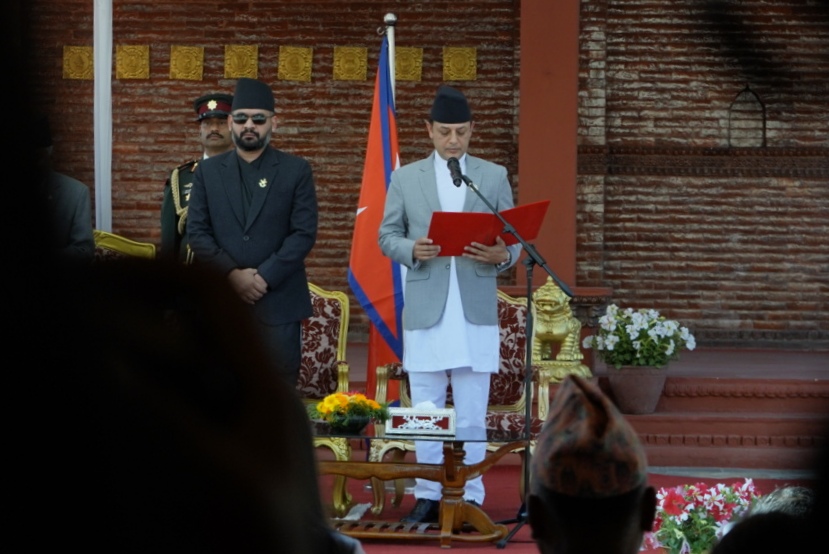
His rise within the RSP was meteoric, characterized by his organizational skills and his role as a key strategist during the party’s expansion. Aryal’s election as Speaker was notably unopposed, a rare occurrence in Nepal’s historically contentious parliamentary sessions. This was largely due to the RSP’s massive 182-seat presence, which effectively deterred opposition parties from fielding a symbolic candidate. As a leader who transitioned directly from a high-profile cabinet position to the neutral chair of the Speaker, he faces immediate public scrutiny regarding his ability to pivot from a partisan executive role to that of an impartial legislative referee.
Who were Nepal’s pioneering Speakers, and what role did they play in the country’s first democratic experiments?
Nepal’s parliamentary history traces back to the 1959 general elections under the short-lived 1959 Constitution. Krishna Prasad Bhattarai (Nepali Congress), at just 36 years old, became the first Speaker of the Pratinidhi Sabha on 3 July 1959.
Though not an elected MP himself, he was unanimously chosen to lead the House during Nepal’s inaugural democratic parliament under Prime Minister B.P. Koirala. His tenure lasted only until the royal dissolution on 15 December 1960, when King Mahendra imposed the Panchayat system.
Bhattarai’s speakership symbolized the fragile birth of multiparty democracy; decades later, as Prime Minister in 1990 and 1999, he helped restore and consolidate it. These early experiences laid the foundation for the Speaker as a custodian of constitutional order against monarchical overreach.
How did Daman Nath Dhungana shape parliamentary traditions after the 1990 restoration of democracy?
Daman Nath Dhungana (Nepali Congress) served as Speaker from 23 June 1991 to 1 October 1994 — the first Speaker of the restored multiparty parliament following the 1990 People’s Movement (Jana Andolan I).
Elected from Kathmandu-2, he set enduring precedents, such as allowing the Leader of the Opposition to address the House before the Prime Minister, aligning Nepal with global parliamentary norms.
Widely respected as a human rights defender and senior advocate, Dhungana’s tenure emphasized impartiality and institutional dignity during the turbulent transition from Panchayat rule.
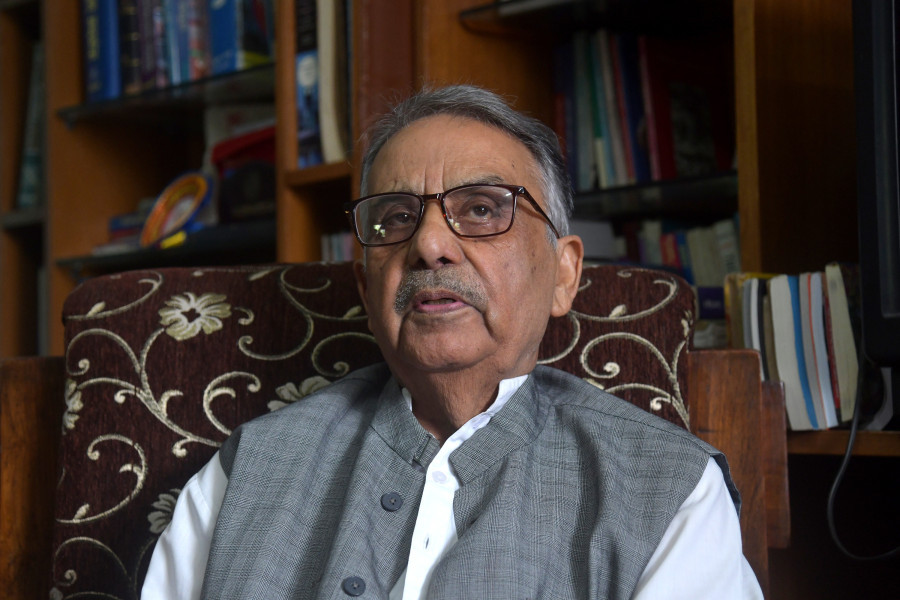
Former Speaker Daman Nath Dhungana
He passed away in November 2024, remembered as a champion of civil rights who helped legitimize the post-1990 democratic framework.
What was Subhash Chandra Nembang’s historic contribution as Speaker and Constituent Assembly Chair?
Subhash Chandra Nembang (CPN-UML) held the Speakership multiple times, notably from 13 May 2006 in the reinstated House of Representatives after the 2006 People’s Movement II. He later served as Chairman of the first and second Constituent Assemblies (2008–2015), steering the body that promulgated Nepal’s 2015 Constitution — transforming the country from a monarchy to a federal democratic republic.
Nembang’s calm, consensus-driven leadership was instrumental in bridging ideological divides during the peace process and constitution-drafting.
His death in September 2023 was mourned across parties as the loss of a “gentleman of Nepali politics” who prioritized institutional stability.
How has the Speakership evolved through major political eras in Nepal?
The Speakership has mirrored Nepal’s political upheavals: from the monarchical dissolution of the 1959 parliament (Bhattarai era), through the Panchayat suppression, to the 1990s democratic restoration (Dhungana and Ram Chandra Paudel), the 2006–2015 transition to republic (Nembang and Onsari Gharti Magar — Nepal’s first female Speaker in 2015, elected unopposed from the Maoist party), and the post-2015 federal republic crises ( Krishna Bahadur Mahara, Agni Sapkota, Dev Raj Ghimire).
Each era reinforced the Speaker’s role as guardian of legislative continuity — whether against royal coups, party splits, or executive overreach — while exposing vulnerabilities to partisan capture.
The 2026 RSP super-majority era under Aryal tests whether a dominant party can sustain this impartial legacy.
What lessons from past Speakers should DP Aryal apply in 2026?
Past Speakers offer clear guidance: Bhattarai and Dhungana showed that early, principled neutrality builds public trust in fledgling democracy;
Nembang proved consensus-building can deliver landmark constitutional change; Gharti Magar demonstrated inclusive leadership; while Mahara and Sapkota warned of the reputational damage from perceived partisanship or unresolved personal allegations.
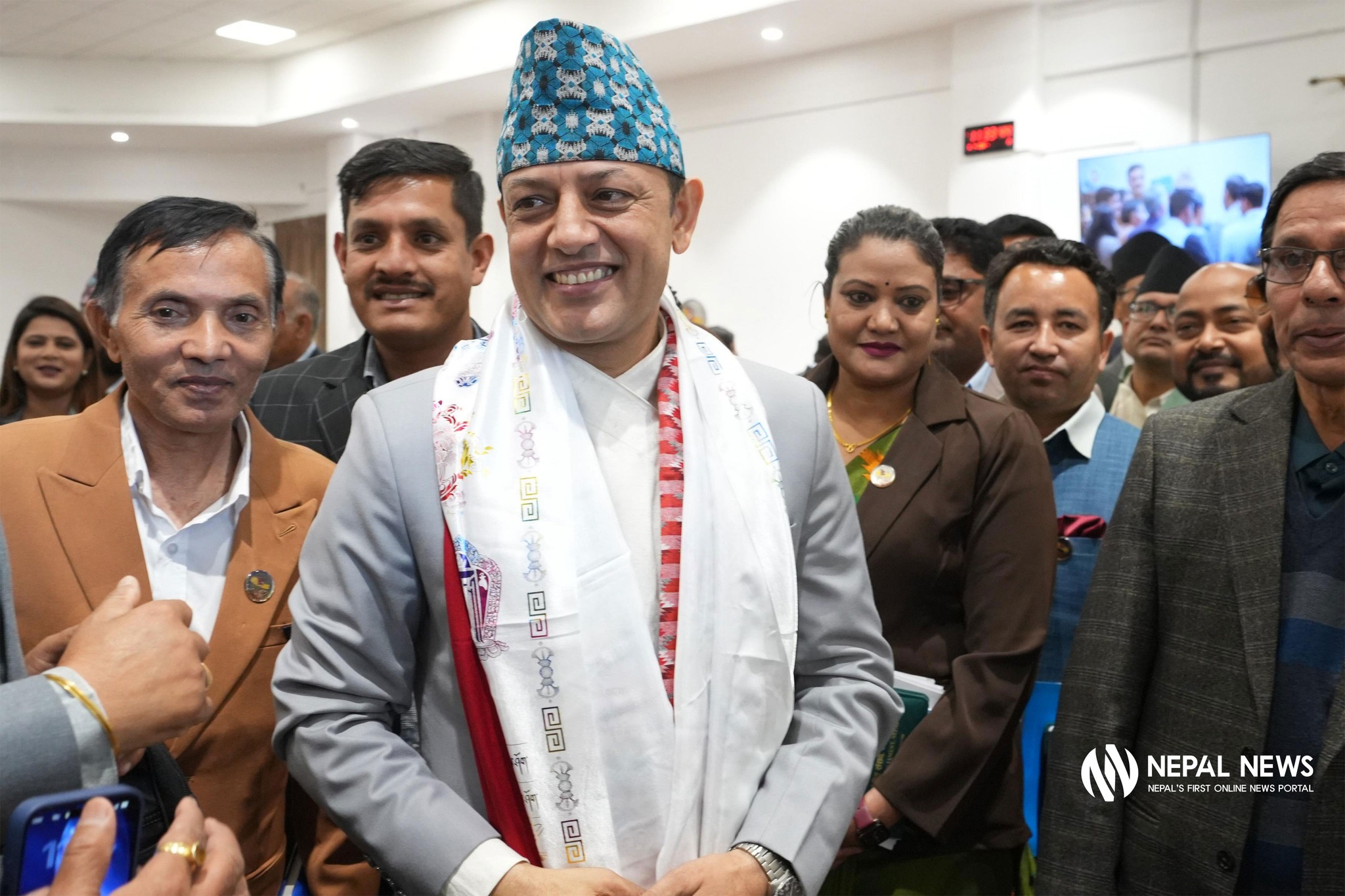
Newly elected speaker of HoR DP Aryal
Aryal must prioritize procedural fairness, transparent agenda-setting, and digital reforms to counter skepticism in an era of one-party dominance, ensuring the office remains a bulwark of democracy rather than an extension of executive power.
What were the specific controversies surrounding previous Speakers like Mahara and Sapkota?
The office of the Speaker has frequently been embroiled in controversies that tested the integrity of Nepal’s legislative branch. Krishna Bahadur Mahara was forced to resign in October 2019 following a high-profile allegation of attempted rape by a female employee of the Parliament Secretariat.
Although the court eventually acquitted him, the scandal caused an institutional crisis that left the House leaderless for months. His successor, Agni Prasad Sapkota, faced a different kind of storm; he was accused by the CPN-UML of acting as a “Prachanda henchman” when he refused to process the expulsion of 14 lawmakers who had split from the party. This led to the longest-running house obstruction in Nepal’s history.
These events highlight a recurring theme where the Speaker is perceived not as a neutral arbiter, but as a shield for their parent political party, a legacy that DP Aryal must now work to dismantle through his rulings.
How does the Constitution of Nepal ensure the neutrality of the Speaker?
Neutrality is the cornerstone of the Speaker’s office, reinforced by constitutional mandates and long-standing parliamentary traditions. Upon election, it is a customary and expected practice for the Speaker to resign or suspend their party membership to demonstrate they are no longer bound by party whips or ideologies.
Article 91 and the House Regulations mandate that the Speaker must act impartially, ensuring that every member—from the Prime Minister to a backbencher from a minority party—receives fair time to speak. To further insulate the office from bias, the Speaker does not have an initial vote on bills or motions.
They are only permitted to cast a “casting vote” in the rare event of a perfect tie. This ensures the Speaker remains an observer of the democratic contest rather than an active participant, only stepping in to prevent a legislative deadlock.
What are the specific constitutional powers and duties of the Speaker?
The Speaker holds a vast array of procedural and administrative powers that dictate the pace and quality of governance.
According to the Constitution and House Rules, the Speaker is responsible for scheduling sessions and setting the daily “Order of Business” in consultation with the Business Advisory Committee. They possess the authority to certify bills; no bill passed by the House can move to the National Assembly or the President without the Speaker’s signature.
Furthermore, the Speaker is a vital member of the Constitutional Council, which recommends appointments for the Chief Justice and heads of constitutional bodies like the CIAA.
Within the chamber, the Speaker has the final word on points of order, the admissibility of motions, and the conduct of members, making them the ultimate judge of parliamentary decorum and procedure.
What role does the Speaker play in the complex lawmaking process?
The Speaker functions as the “traffic controller” for all legislation entering the House. When a bill is introduced, the Speaker must first determine its admissibility and then decide whether it should be discussed in the full House or referred to a thematic committee for detailed scrutiny.
During the debate phase, the Speaker allocates time to various political parties and ensures that the discussion remains germane to the bill at hand. Their role in certifying “Money Bills” is particularly significant; the Speaker has the sole authority to designate a bill as a finance-related matter, which grants it an expedited path through the legislature.
By managing the flow of amendments and deciding when a bill is ready for a final vote, the Speaker directly influences the speed and efficiency with which national policies are enacted.
How is the Speaker elected in Nepal, and what are the current dynamics?
Under Article 91 of the Constitution, the members of the House must elect a Speaker within 15 days of the first meeting following a general election. The process is governed by a simple majority vote among the members present.
A crucial constitutional safeguard for inclusivity is the requirement that either the Speaker or the Deputy Speaker must be a woman, and they must belong to different political parties.
In the case of DP Aryal’s election on April 5, 2026, the process was streamlined because the RSP-led coalition commanded a “super-majority.”
Because the opposition realized they lacked the numbers to mount a challenge, Aryal was elected unopposed. While this provided a smooth transition, it also raised concerns among political analysts about the lack of a competitive check on the selection of such a vital constitutional officer.
Under what conditions can the Speaker be removed from office?
The Constitution provides a rigorous mechanism for the removal of a Speaker to prevent arbitrary dismissal while ensuring accountability. A Speaker’s term can end if they cease to be a member of the House, resign voluntarily, or are removed via a resolution of no confidence. Such a resolution must be passed by a two-thirds majority of the total membership of the House, a high bar intended to protect the Speaker from being removed for simply making unpopular but fair rulings.
During the debate on such a resolution, the Speaker cannot preside over the session; instead, the Deputy Speaker or a member of the panel of chairpersons takes the chair. This removal process is a vital democratic safety valve, ensuring that if a Speaker becomes overtly partisan or incompetent, the House has the legal means to restore its dignity.
What is the relationship between the Speaker and the Prime Minister?
The relationship between the Speaker and the Prime Minister is one of the most delicate balances in a parliamentary system. While the Prime Minister is the leader of the executive and the “Leader of the House,” the Speaker is the master of the House’s procedures.
For a government to function, the Speaker must facilitate the government’s legislative agenda. However, as the head of a separate branch of government, the Speaker must also act as a check on the Prime Minister.
If the executive attempts to rush through controversial laws without sufficient debate, or tries to avoid answering difficult questions during “Question Hour,” the Speaker must step in to protect the rights of the legislature.
In the current 2026 context, with both the PM and Speaker DP Aryal coming from the same party, the challenge lies in maintaining an “arm’s length” relationship to avoid the appearance of a legislative-executive collusion.
What role does the Speaker play in the high-level Constitutional Council?
The Speaker’s influence extends far beyond the floor of the House through their membership in the Constitutional Council. This council, chaired by the Prime Minister, includes the Chief Justice, the Speaker, the Deputy Speaker, the Chairperson of the National Assembly, and the Leader of the Opposition.
Constitutional Council is responsible for recommending individuals for the most powerful “watchdog” positions in the country, including the Chief Justice, heads of the Election Commission, the CIAA, and the National Human Rights Commission.
The Speaker’s role here is to ensure that these appointments are not merely political rewards but are based on merit and integrity.
Because these constitutional bodies are meant to hold the government accountable, the Speaker’s independent voice in the Council is a critical component of the national “checks and balances” system, preventing the executive from packing oversight agencies with loyalists.
How does the Speaker coordinate with and manage parliamentary committees?
Parliamentary committees are often described as “mini-parliaments” where the real, detailed work of lawmaking and government oversight happens. The Speaker plays a central role in forming these committees and ensuring they are properly resourced.
While committees have their own elected chairpersons, the Speaker provides overarching guidance and has the authority to issue directives if a committee is failing to meet its deadlines or is overstepping its mandate.
The Speaker also ensures that committee assignments are balanced, reflecting the proportional strength of parties in the House.
If a committee uncovers a major government scandal, the Speaker is the one who ensures the committee’s report is tabled in the full House for public debate, thereby ensuring that the work of the committees leads to actual executive accountability.
How does the Speaker handle a “tie” during a vote?
In keeping with the principle of “The Speaker never votes unless the House is equal,” the Speaker remains silent during the initial voting process. However, Article 100 of the Constitution and the House Regulations grant the Speaker a casting vote in the event of an exact tie. This is a rare but powerful tool.
Parliamentary tradition, particularly the “Denison’s Rule” from the UK, suggests that a Speaker should use their casting vote to allow for further discussion rather than to create a final, binding decision on a controversial matter.
For instance, if a vote on an amendment is tied, the Speaker might vote “No” to keep the bill in its original form, leaving the door open for future changes. This practice reinforces the idea that the Speaker is there to facilitate the House’s will, not to impose their own.
What authority does the Speaker have to discipline disorderly members?
The Speaker is the ultimate “enforcer” of decorum within the House. If a member uses “unparliamentary” language, makes personal attacks, or physically disrupts the proceedings, the Speaker has a tiered system of disciplinary actions.
First, they may issue a verbal warning or order the offensive remarks to be expunged from the official record. If the disruption continues, the Speaker can “name” the member, which is a formal disciplinary step. Once named, a member can be ordered to leave the chamber for the remainder of the day.
In cases of grave misconduct or persistent obstruction, the Speaker has the power to suspend a member for a specific period. These powers are essential because, without them, the legislature could descend into chaos, preventing the government from passing budgets or laws that the country urgently needs.
What is the Speaker’s role during a Constitutional Crisis?
In times of constitutional turmoil, such as the illegal dissolution of the House or a contested transfer of power, the Speaker becomes the symbol of legislative continuity. During the 2020-2021 crises in Nepal, the Speaker’s office was a focal point for those arguing that the executive could not unilaterally end the life of the parliament.
The Speaker has the responsibility to protect the Parliament Secretariat and its assets and to represent the House in the Supreme Court if its existence is threatened.
Furthermore, if a Prime Minister loses their majority, the Speaker must ensure that a “Motion of No Confidence” is handled fairly and transparently. In a crisis, the Speaker is often the only official with the standing to tell the executive that it must return to the floor of the House to prove its legitimacy.
What administrative powers does the Speaker hold over the Parliament Secretariat?
The Speaker serves as the supreme administrative head of the Federal Parliament Secretariat, an institution with hundreds of employees and a substantial budget.
In coordination with the Chairperson of the National Assembly, the Speaker oversees the hiring, promotion, and management of the parliamentary staff who provide technical and legal support to MPs. This administrative control is crucial; it ensures that the “Hansard” (the official record of proceedings) is accurate and that the library and research services remain non-partisan.
If the Secretariat is perceived as biased, it can undermine the entire legislative branch. Therefore, the Speaker must manage these resources in a way that provides every MP, regardless of party, with the tools they need to perform their duties effectively, from drafting bills to researching complex policy issues.
How does Nepal’s Speaker compare with the “Westminster” and other international models?
Nepal’s Speakership is a hybrid of the British Westminster model and local political realities. In the UK, the Speaker traditionally “breaks” all ties with their former party and is often re-elected unopposed in their constituency, ensuring total independence.
In contrast, Nepal’s Speakers, like those in India, often retain a “latent” connection to their parties. While they suspend their membership, they typically return to their party’s high command after their term ends. This creates a constant tension where the opposition often doubts the Speaker’s neutrality.
However, Nepal’s Constitution provides more explicit written rules for the Speaker than the UK’s unwritten conventions, giving the Nepali Speaker a more “legalistic” role.
DP Aryal’s challenge is to lean closer to the Westminster ideal of total impartiality to build trust in a highly polarized political environment.
Why is the Speaker’s role in agenda-setting often a point of conflict?
Agenda-setting—the power to decide which bills and motions are discussed—is perhaps the Speaker’s most political tool. While the government provides the bulk of the legislative business, the Speaker decides the timing and priority.
A Speaker who favors the government might “pigeonhole” or delay an opposition’s motion of “Urgent Public Importance” or a critical “Adjournment Motion” that seeks to grill a minister. Conversely, an independent Speaker will ensure that the opposition’s grievances are given prime time in the schedule.
The controversy usually arises when the Speaker uses their procedural discretion to shield the government from difficult debates. Managing the “Order of Business” requires a delicate touch to ensure that the House remains a forum for national grievances and not just a factory for government-sponsored laws.
What are the legal qualifications and practical skills required to be the Speaker?
Legally, any member of the House of Representatives who is a citizen of Nepal and at least 25 years old is eligible for the position. However, the practical requirements are far more demanding.
A successful Speaker needs an encyclopedic knowledge of the Constitution and the “House of Representatives Regulations.” They must possess the patience of a diplomat to handle high-decibel shouting matches and the decisiveness of a judge to make split-second rulings on complex points of order.
Prior political experience, like DP Aryal’s ministerial stint, is helpful for understanding the “mechanics” of government, but it must be balanced with a temperament that values the minority’s right to dissent. Without this balance, even a highly qualified individual will struggle to command the respect of the entire House.
How does the Speaker interact with the President of Nepal in a formal capacity?
The Speaker acts as the vital conduit between the people’s representatives and the Head of State. All bills passed by the House are formally submitted by the Speaker to the President for authentication (Assent).
Furthermore, when the President delivers the annual “Policy and Programme” of the government to a joint session of Parliament, the Speaker presides over the event alongside the National Assembly Chair.
The Speaker also has a duty to keep the President informed about major legislative developments. In a constitutional republic, this relationship ensures that the executive, legislative, and symbolic heads of state are in constant communication, preventing the “siloing” of power and ensuring that the formal processes of the state—like the signing of laws—proceed without administrative delay.
What major challenges and reforms face DP Aryal as the new Speaker in 2026?
DP Aryal inherits an office that is powerful but viewed with skepticism by the public. His first challenge is to prove that the RSP’s “new politics” includes a commitment to institutional neutrality, despite their overwhelming majority.
Secondly, he must address the “legislative backlog”—hundreds of civil service and federalism-related bills have languished for years.
Third, there is a push for parliamentary reform, such as the introduction of electronic voting for all motions (not just major bills) and the “live-streaming” of all committee meetings to increase transparency.
As a representative of a party that campaigned on technology and modernization, Aryal is expected to transform the Parliament from a traditional, paper-heavy institution into a modern, transparent, and high-tech “Digital Parliament” that is truly accountable to the Nepali citizens.
Summary Table: Recent Evolution of the Speakership
| Year | Speaker | Context | Impact on the Office |
| 1959 | Krishna Prasad Bhattarai | First elected parliament | Symbol of Nepal’s inaugural democratic experiment; ended by royal dissolution |
| 1991–1994 | Daman Nath Dhungana | Post-1990 Jana Andolan restoration | Set precedents for opposition rights and impartiality |
| 2006–2015 | Subhash Chandra Nembang | Peace process & Constituent Assemblies | Key role in promulgating 2015 Constitution; bridged monarchy-to-republic transition |
| 2015 | Onsari Gharti Magar | Post-constitution federal setup | First female Speaker; unopposed election |
| 2018–2019 | Krishna B. Mahara | Federal era initiation | Resignation over scandal created integrity crisis |
| 2020–2022 | Agni Prasad Sapkota | Constitutional crisis | Office became battleground for House survival and conflict-era accountability |
| 2023–2026 | Dev Raj Ghimire | Coalition politics | Maintained order in fragmented House |
| 2026– | DP Aryal | RSP Super-Majority | Current: Tasked with balancing power and neutrality in dominant-party era |