Kathmandu
Tuesday, July 28, 2026





From capital adequacy ratio (CAR) and non-performing loans (NPLs) to return on equity (ROE), net interest margin (NIM), and liquidity ratios, these key metrics offer critical insights into the health and stability of banks and financial institutions, helping investors make informed decisions
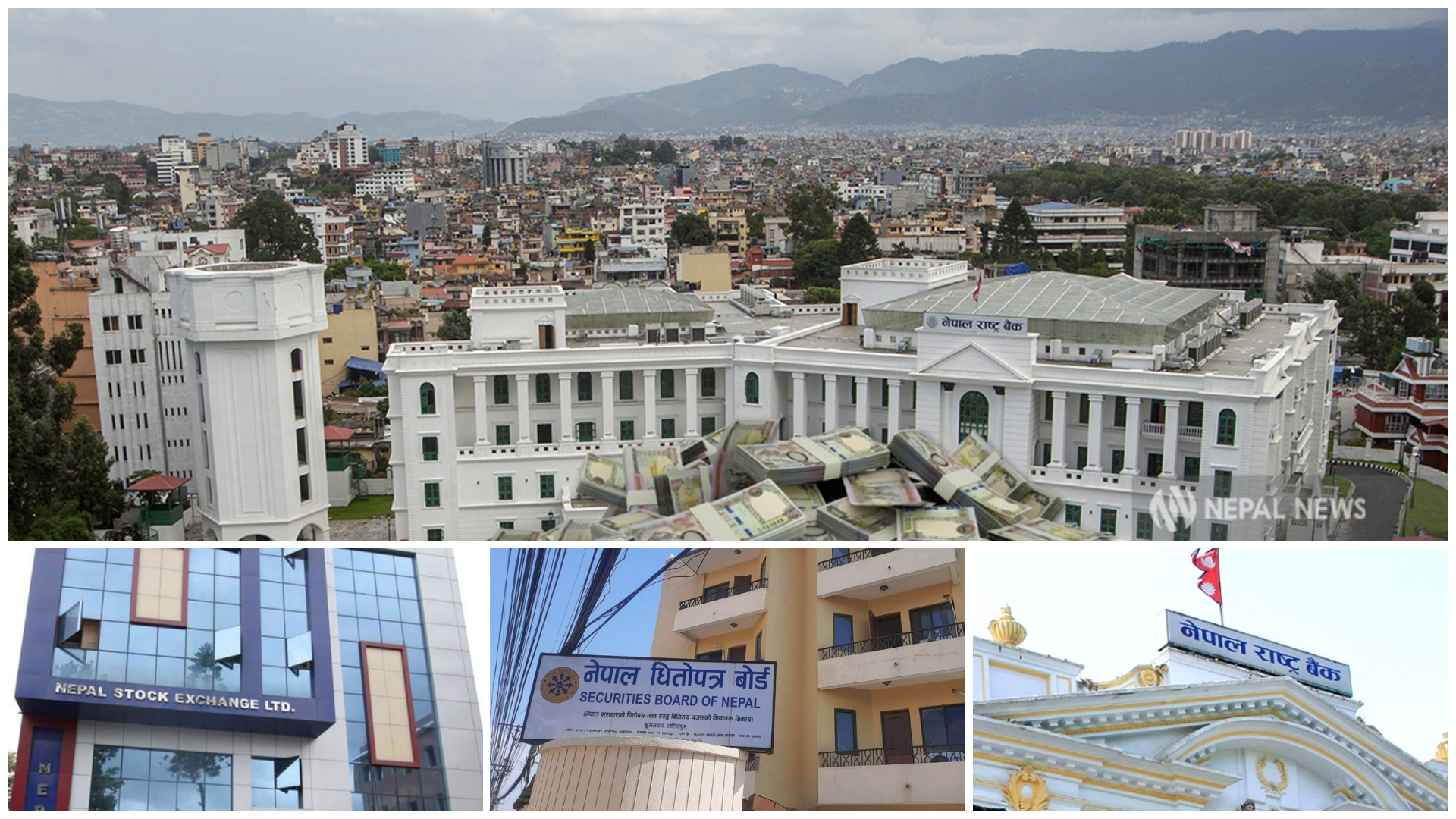
KATHMANDU: Listed companies on Nepal Stock Exchange (NEPSE), particularly banks and financial institutions supervised by Nepal Rastra Bank (NRB), release unaudited quarterly financial statements every three months and audited annual reports.
Prepared under Nepal Financial Reporting Standards (NFRS), which align closely with IFRS but incorporate NRB prudential adjustments, these disclosures provide a transparent view of profitability, asset quality, liquidity, and capital strength.
For retail investors, they distinguish genuine core performance from short-term boosts like loan recoveries or one-off gains. Tracking metrics such as net interest income, provisions, non-performing loans, distributable profits, and key ratios enables informed assessments of sustainability amid Nepal’s interest-rate cycles, regulatory changes, and economic fluctuations.
This empowers better stock selection and risk management in the banking-heavy NEPSE market.
What are financial statements, and what are their three main components for Nepali listed companies?
Financial statements are formal records summarizing a company’s financial activities, position, and cash movements over a defined period: quarterly or annually for NEPSE-listed entities. NRB and the Securities Board of Nepal (SEBON) mandate timely publication to promote market transparency and protect investors.
The three core components are the Balance Sheet (Statement of Financial Position), Income Statement (Statement of Profit or Loss), and Cash Flow Statement.
The balance sheet offers a point-in-time snapshot of assets (e.g., loans and cash for banks), liabilities (deposits and borrowings), and shareholders’ equity, revealing overall financial stability, leverage, and net worth.
The income statement details revenues (primarily interest from lending), operating expenses, and the resulting profit or loss, helping gauge operational efficiency and earnings trends.
The cash flow statement tracks actual cash generated or used in operating, investing, and financing activities, showing whether accounting profits convert into real liquidity for dividends, debt servicing, or expansion.
In the banking sector, where deposit mobilization and credit extension dominate, these statements together allow investors to evaluate not only historical results but also liquidity risks and future viability.
Cross-referencing them avoids over-reliance on headline profits that may not reflect cash realities, facilitating peer comparisons and sound portfolio decisions.
Why are financial statements important for management, shareholders, lenders, and government/regulatory bodies in Nepal?
Financial statements deliver critical, standardized insights that drive decision-making across Nepal’s corporate and banking landscape.
For management, they supply up-to-date data on operational efficiency, cost structures, and competitive positioning, enabling timely adjustments to loan portfolios, liquidity management, or expense controls during economic shifts. This supports strategic planning, resource allocation, and performance benchmarking against peers.
Shareholders who typically do not engage in daily operations use the reports, presented at annual general meetings, to assess current health, forecast earnings potential, and evaluate dividend capacity. They reveal whether profits signal sustainable growth or conceal issues like rising provisions.

Nepal Rastra Bank,Thapathali. File photo
Lenders and creditors scrutinize metrics on liquidity, debt levels, and repayment ability to set loan terms and gauge credit risk, particularly vital in a sector prone to non-performing loans. For the government and regulators like NRB and SEBON, these documents underpin tax collection, compliance oversight, capital adequacy enforcement, and macroeconomic policy formulation.
In Nepal, where banks represent a large share of NEPSE market capitalization, transparent reporting fosters accountability, deters mismanagement, and bolsters investor confidence. Without reliable statements, informed capital-market participation would be severely limited, highlighting their foundational role in a stable, trustworthy financial ecosystem.
What is Net Interest Income (NII) for Nepali banks, and why is it a fundamental indicator for investors?
Net interest income is the primary earnings driver for Nepali banks, derived by subtracting interest paid on deposits and borrowings from interest earned on loans and advances.
It captures the core spread between lending yields and deposit costs—the essence of traditional banking. Under NFRS, quarterly reports highlight NII trends, where consistent growth reflects robust loan expansion, favorable deposit mixes, or effective margin management within NRB’s policy-rate framework.
Investors prioritize NII because it isolates sustainable profitability from volatile non-core sources like fees or trading gains. If net profit rises but NII falls while other income surges, it may flag dependence on temporary factors rather than enduring lending strength—a warning for long-term viability.
In Nepal’s competitive environment, where margin compression occurs due to regulatory caps and economic cycles, comparing NII across peers reveals operational superiority. Steady NII expansion often signals strong asset quality and resilience to downturns.
By monitoring multi-quarter trends alongside yield on advances and cost of funds, ordinary shareholders can differentiate high-quality institutions from those masking weaknesses.
This focus aids identification of undervalued NEPSE banking stocks with reliable earnings power, supporting prudent investment amid interest-rate volatility and sectoral stresses.
How does impairment (provisions and reversals) appear in bank financial statements, and what does it indicate about loan quality?
Impairment, reported as a net line item under NFRS 9’s Expected Credit Loss model (adopted in Nepal), combines new provisions for anticipated loan losses with reversals when previously impaired credits recover.
Previously shown separately, this unified presentation reflects forward-looking risk assessments incorporating economic forecasts, borrower profiles, and collateral values.

A net positive charge (higher provisions) lowers operating income, indicating weakening portfolios often linked to Nepal’s exposures in hydropower, real estate, or SMEs.
Reversals, conversely, boost income during quality improvements. Investors view impairment as a prudence gauge: conservative provisioning builds shock absorbers, while heavy reversals can temporarily inflate profits without proving repeatable recovery.
Tracking impairment alongside total advances detects whether profit growth is organic or accounting-driven. NRB oversight promotes conservatism, yet variations persist.
Declining net impairment paired with falling NPL ratios typically signals credit-quality gains and operational robustness, bolstering sustainable dividends.
Dominant reversals, however, warrant caution. Thorough quarterly analysis prevents misplaced optimism, enabling risk-adjusted choices in volatile banking stocks and distinguishing banks with genuine asset-health progress.
What is net operating income after impairment, and why should investors pay close attention to it?
Net operating income, calculated post-impairment in the profit-and-loss statement, measures core banking profitability from routine activities after accounting for expected credit losses. It aggregates net interest and fee income minus operating expenses and impairment charges (or plus reversals).
This metric filters out non-recurring items, delivering a purer view of day-to-day performance. While NRB stresses prudent provisioning, rising net operating income denotes efficient cost control, healthy credit growth, and successful recoveries.
Investors value it highly because headline net profit can be distorted by write-backs or one-offs; sustained expansion here confirms durable earnings capacity. For instance, growth alongside lower impairment suggests genuine portfolio improvement rather than cosmetic adjustments. Peer comparisons in Nepal’s saturated banking market uncover competitive advantages.
Stagnant or declining net operating income, despite reported profit gains, may highlight hidden pressures from compliance costs or aggressive lending.
Ordinary investors focusing here can determine a bank’s ability to generate consistent cash for dividends and expansion without volatile crutches—essential for long-term NEPSE holdings during uncertain economic phases. This indicator ultimately refines valuation accuracy and portfolio construction.
Why are Non-Performing Loans (NPLs) gross and net critical indicators in Nepali bank reports?
Non-performing loans cover advances where borrowers have missed payments for over 90 days, per NRB classification into sub-standard, doubtful, or loss categories. Reports separately disclose gross NPL (total before provisions) and net NPL (after specific provisions).
Downward trends in both signals, effective recoveries, improved underwriting, and broader economic stabilization are key positives for investor sentiment. Recent sector data shows commercial-bank NPL ratios averaging around 4-5%, with individual bank variations tied to sectoral exposures.
Elevated gross NPL warns of asset-quality erosion that could necessitate higher future provisioning and erode profitability. Net NPL quantifies unreserved exposure; lower levels indicate stronger buffers. Investors employ these metrics to assess risk exposure: sustained high NPLs may invite regulatory curbs on dividends or lending. When combined with provision coverage ratios, they forecast resilience.
Quarterly movements help ordinary shareholders anticipate EPS stability and stock-price impacts, as rising NPLs frequently precede profit squeezes. In Nepal’s regulated setting, improving NPLs alongside credit growth validates sustainable expansion.
Monitoring them equips investors to decide on holding or acquiring banking shares across market cycles, prioritizing institutions with disciplined credit risk management.
What is distributable profit for banks, and why can it differ significantly from reported net profit?
Distributable Profit represents the portion of earnings truly available for dividend distribution after mandatory NRB-directed adjustments. Starting from net profit, it deducts statutory reserves (often 20% of certain profits), accrued but unrealized interest, deferred tax assets, and other prudential buffers to safeguard capital adequacy.
Recent NRB procedures require explicit disclosure via reconciliation tables, preventing over-distribution that might compromise stability. Consequently, a bank posting robust net profit can still report negative or sharply lower distributable profit when adjustments expose cash-flow weaknesses or past losses.
This directly influences shareholder returns through cash dividends or bonus shares while ensuring compliance with minimum capital ratios. Investors should scrutinize the gap: wide disparities often stem from conservative accounting or legacy issues.
Persistent positive and growing distributable profit signals strong payout readiness, enhancing stock attractiveness. Negative figures despite profits flag underlying vulnerabilities like elevated NPLs.
By reviewing the detailed table, shareholders gain clarity on payout realism—crucial in NEPSE, where dividend yields heavily sway valuations. This disciplined lens avoids chasing inflated profits and aligns strategies with verifiable shareholder-value creation.
Why should investors closely examine retained earnings (or accumulated profits/losses) in bank financials?
Retained earnings accumulate undistributed net profits or losses and appear in the equity section of the balance sheet. Negative balances in Nepali bank reports indicate prior losses still offsetting current earnings, constraining dividend capacity until fully reversed.
Investors monitor this closely because it chronicles historical performance and a bank’s shock-absorption ability without capital erosion. Robust positive growth, matched with rising net profit, points to reinvestment potential for expansion or buffers against downturns.

Nepali banks have carried forward losses from earlier periods; tracking the trajectory forecasts when sustainable dividends can resume. Comparing retained earnings growth to current profits illuminates payout conservatism—high retention may finance growth but disappoint income-focused investors.
NRB capital rules further tie it to adequacy requirements, making it a reliable long-term stability proxy. For shareholders, pairing it with distributable profit clarifies whether profits genuinely strengthen equity or merely offset historical shortfalls.
Consistent positive shifts signal improving fundamentals and support premium valuations. Neglecting this risks overvaluing banks dependent on transient recoveries, while careful review sharpens intrinsic-value assessment in Nepal’s competitive banking segment.
How should investors interpret Earnings Per Share (EPS) in Nepali bank reports beyond the headline number?
Earnings per share divides net profit attributable to ordinary shareholders by the weighted average shares outstanding, serving as a popular per-share profitability measure. While elevated EPS attracts attention, sustainability matters more than peak levels in Nepal’s banking context.
Sudden surges may arise from impairment reversals, asset sales, or non-recurring income rather than core operations—details clarified in notes. Steady year-on-year improvement, especially alongside rising net interest income and declining NPLs, confirms solid fundamentals and future dividend potential.
Diluted EPS incorporates possible share increases from convertibles. In NEPSE disclosures, trend analysis across peers and quarters is essential; banks maintaining stable or improving EPS amid regulatory tightening often command valuation premiums. However, high EPS paired with negative retained earnings signals payout limitations.
Cross-checking against return metrics and cash flows verifies quality. Nepal’s market weights EPS heavily in pricing, so emphasizing trajectory over isolated highs helps sidestep traps from temporary windfalls.
This methodical approach enables ordinary investors to pinpoint banks with authentic earning power, refining risk-reward evaluations in a sector sensitive to policy rates and macroeconomic conditions.
What does the Price-to-Earnings (P/E) Ratio reveal about Nepali bank stocks, and how should investors use it?
The Price-to-Earnings Ratio is calculated by dividing current market price per share by EPS, illustrating how much investors pay for each rupee of reported earnings.
It facilitates relative valuation: lower P/E ratios (commonly 10-15 times for many commercial banks) may indicate undervaluation versus peers, whereas higher multiples (above 20 times) could reflect market expectations of superior growth or quality.
Investors should benchmark against sector medians and historical norms rather than rigid thresholds, given Nepal’s emerging-market sensitivities to regulatory shifts and economic variables.
A modest P/E combined with strong fundamentals—low NPLs, healthy ROE, positive distributable profit—often signals attractive entry points. Conversely, elevated P/E with flat EPS may suggest overvaluation. Contextualizing with price-to-book, growth outlook, and asset quality prevents misinterpretation during earnings volatility.
In NEPSE practice, undervalued banks showing ratio improvements frequently deliver superior long-term returns. Regular comparison to comparable institutions and quarterly updates helps time entries and exits effectively, steering clear of sentiment-driven bubbles while capitalizing on fundamentally attractive opportunities in the dominant banking space.
What is the Capital Adequacy Ratio (CAR), and why is it a vital metric for Nepali bank investors?
The capital adequacy ratio measures a bank’s capital relative to its risk-weighted assets, split into Core (Tier 1) CAR and Total CAR. NRB sets minimum thresholds—typically around 11-13% depending on supervisory reviews—to ensure institutions can absorb losses from credit, market, or operational risks without endangering depositors.
In quarterly and annual reports, higher CAR levels signal stronger buffers against shocks, supporting continued lending and dividend payouts even during downturns. Investors view CAR as a cornerstone of financial resilience: banks consistently exceeding requirements demonstrate prudent risk management and regulatory compliance, reducing the likelihood of forced capital raises that dilute shareholders.
Recent NRB data shows most commercial banks maintaining comfortable margins above minima, but variations highlight differing risk appetites. A declining CAR amid loan growth may foreshadow future provisioning pressures or restrictions.
Comparing peer ratios alongside NPL trends and profitability reveals institutions best positioned for sustainable expansion. For ordinary NEPSE investors, strong CAR combined with improving earnings often correlates with premium valuations and lower volatility.
Monitoring this metric quarterly equips shareholders to gauge long-term stability, avoid banks skirting regulatory edges, and prioritize those capable of weathering Nepal’s economic cycles while delivering reliable returns.
How does Return on Equity (ROE) help evaluate a Nepali bank’s efficiency in using shareholder capital?
Return on Equity calculates net profit divided by average shareholders’ equity, quantifying how effectively a bank generates earnings from owners’ funds. In Nepal, ROE benchmarks of 12-18% are generally considered healthy for commercial banks, reflecting efficient capital deployment amid regulated margins and competitive pressures.
Higher ROE indicates superior profitability relative to the equity base, often driven by strong net interest income, controlled costs, and quality lending. Investors rely on ROE to assess management stewardship: consistent or improving figures signal operational excellence and value creation for shareholders.

However, inflated ROE from excessive leverage or one-off gains warrants scrutiny when paired with weak asset quality or high NPLs. Recent analyses of Nepali banks show top performers achieving robust ROE through disciplined credit growth and cost management.
Quarterly trends, especially alongside ROA and retention ratios, reveal whether profits are reinvested productively or eroded by provisions. For retail investors in NEPSE banking stocks, a sustainable ROE above sector averages—supported by positive distributable profit and declining impairment—points to banks likely to reward shareholders via dividends or capital appreciation.
This metric complements EPS by focusing on capital efficiency, helping differentiate leaders capable of compounding value over economic cycles from underperformers.
What does the Credit to Deposit Ratio (CD Ratio) indicate about a bank’s liquidity and lending strategy in Nepal?
The Credit to Deposit Ratio (also called LDR or CD Ratio) divides total loans and advances by total deposits (with NRB-specified adjustments), capped at 90% to maintain liquidity buffers.
In Nepali bank reports, a higher ratio approaching the limit signals aggressive lending and efficient deposit utilization for income generation, but it also implies thinner liquidity cushions against sudden withdrawals.
Conversely, a lower ratio indicates conservative strategies with excess cash or liquid assets, enhancing stability yet potentially capping interest income. NRB monitors this closely to prevent systemic liquidity risks, especially during economic stress.
Investors analyze CD ratio trends alongside net liquidity and statutory liquidity ratios: balanced levels near 70-85% often reflect optimal growth without compromising safety. Recent sector figures show variations, with some banks pushing higher amid strong credit demand.
For shareholders, an expanding CD ratio paired with stable or declining NPLs suggests successful loan deployment and revenue potential; sharp rises without asset-quality backing may foreshadow future impairments.
Quarterly monitoring helps ordinary investors evaluate risk appetite—aggressive banks may offer higher returns but greater volatility, while conservative ones prioritize safety.
Integrating CD Ratio with NII and CAR provides a holistic view of liquidity management and lending discipline, guiding choices toward institutions aligned with individual risk tolerance in a regulated banking environment.