Kathmandu
Friday, June 12, 2026






KATHMANDU: Nepal News presents today’s snapshot of Nepal’s economic activities. Get quick updates on major market movements, policy shifts, and financial developments shaping the economy of Nepal. Here are the key economic highlights for today:
Govt. Collects Rs 8.17 Billion in Share Market Capital Gains Tax
The government collected a total of Rs 8.176 billion in capital gains tax from the stock market during the first nine months of the current fiscal year. Data from CDSC shows a significant surge from March 15 to April 13, with collections reaching Rs 1.735 billion, compared to Rs 551.5 million from February 13 to March 14. The March 15 to April 13 figures include Rs 1.105 billion from short-term individual investors, Rs 358.2 million from long-term individual investors, and Rs 272.4 million from corporate entities. Individual investors pay 5% for holdings over one year and 7.5% for short-term trades, while institutions are taxed at 10%.
NEPSE Extends Losing Streak, Drops 17 Points
On Thursday, the Nepal Stock Exchange extended its losing streak for a fourth straight day, dropping 17.01 points or 0.60 percent to close at 2,787.15. The Sensitive Index fell 0.62 percent to 468.27, while float and sensitive float indices also declined. A total of 11.37 million shares of 348 companies were traded in 93,907 transactions, generating Rs 5.09 billion in turnover, down from earlier this week. Only 46 stocks gained while 216 declined. Of 13 sectors, 10 fell, led by hotels, hydropower, finance, and non-life insurance, while manufacturing, mutual funds, and trading posted modest gains.
Dairy Farmers Owed Rs 2.6 Billion in Outstanding Payments
Farmers across the country are facing financial hardship as the Dairy Development Corporation (DDC) and private dairies owe them Rs 2.6 billion for milk supplied over the last three months. While payments are traditionally made every 15 days, DDC accounts for Rs 600 million of the arrears from January 15 to April 13 of this year, and private associations owe over Rs 1 billion. Industry representatives attribute the delay to a massive stock of 2,500 metric tons of unsold powdered milk and butter. The government’s new 100-point reform plan mandates payments for agricultural products within 25 days, with interest required for delays, though this has yet to be fully realized for dairy producers.
Diesel Consumption Drops by 19 Percent Following Bi-Weekly Holidays
Diesel consumption in the country decreased by 19.17% over the last two weeks following the government’s decision to implement a two days weekend for offices and educational institutions. The policy, effective since April 5, was introduced to reduce fuel consumption amid rising international oil prices caused by conflicts involving Israel, the US, and Iran. According to the Nepal Rastra Bank and Nepal Oil Corporation, diesel sales fell from 96,566 kiloliters to 56,227 kiloliters. Conversely, petrol consumption saw a slight increase of 3.51%, rising to 29,249 kiloliters, as supply remained unrestricted to meet consumer demand.
Real Estate Revenue Surpasses Rs 37 Billion Despite Market Slump
Revenue from real estate transactions reached Rs 37.289 billion in the first nine months of the current fiscal year, with an average monthly collection of Rs 4.143 billion. The period from March 15 to April 13 recorded the highest monthly revenue at Rs 6.165 billion. Officials attribute the revenue growth to a slight increase in land valuation and more realistic reporting of transaction prices. While revenue is up, industry representatives from the Nepal Land and Housing Developers’ Federation note that many investors remain capital-locked due to the post-pandemic market slowdown. However, there has been a recent increase in potential buyers and field visits following the formation of the new government, raising hopes for a market recovery.
Karnali Province Arrears Rise to Rs 4.12 Billion
The total arrears in Karnali Province have reached Rs 4.12 billion, according to the Office of the Auditor General’s seventh report. For the fiscal year 2023/24 alone, Rs 459.4 million was added to the total. The Ministry of Physical Infrastructure and Urban Development recorded the highest arrears at Rs 182.1 million, followed by the Ministry of Social Development at Rs 124 million. Despite 203 directives from the Public Accounts Committee, the government has struggled to maintain financial discipline. The chief minister has recently introduced a project bank and selection procedures to improve economic transparency and control the rising rate of financial irregularities.
Labor Permits for Foreign Employment Increase by 9,000 in a Month
The number of Nepalis seeking foreign employment increased significantly, with 61,819 individuals receiving labor permits between March 15 and April 13. This is an increase of 8,875 compared to the previous month. Among them, 20,545 were new migrants, while 41,274 received re-entry permits. Malaysia remained the top destination with 18,649 workers, followed by the UAE with 11,463. Notably, Dhanusha district saw the highest number of departures at 3,829. In terms of skills, 42,021 were categorized as skilled, while 13,366 were unskilled.
New International Airports Record Minimal Foreign Trade
The two newest international airports of the country have seen negligible foreign trade activity in the first nine months of the fiscal year 2025/26. Data from the Department of Customs shows that Gautam Buddha International Airport in Bhairahawa recorded only Rs 4.6 million in imports and zero exports. Meanwhile, Pokhara International Airport recorded no foreign trade at all. In contrast, Tribhuvan International Airport in Kathmandu handled imports worth Rs 157 billion and exports worth Rs 26.58 billion, accounting for over 10% of the nation’s total trade volume. Overall, Birgunj Customs remains the primary trade point, handling 46.57% of total imports and 35.69% of total exports during this period.
Lawmakers Pledge Priority for Children in Upcoming Budget
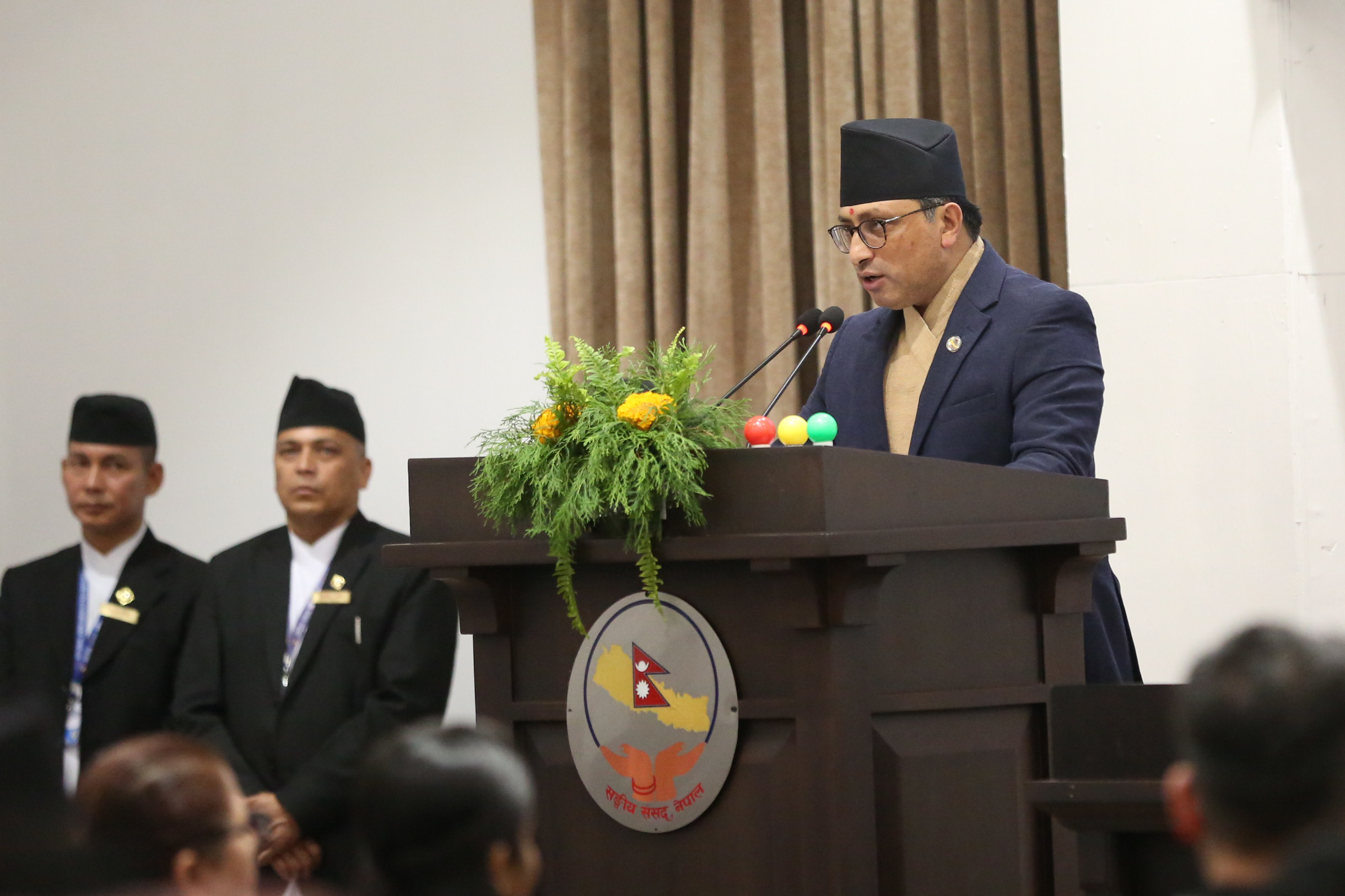
Members of the Federal Parliament and Provincial Assemblies have committed to prioritizing children’s rights and protection in the upcoming national policies and budget. During a discussion organized by the National Campaign for Children as Zones of Peace on Thursday, at least 36 lawmakers from various parties advocated for an “adult-child budget” ratio and the expansion of child nutrition allowances nationwide. Key areas of focus include implementing plans to end child marriage, promoting child-friendly local governance, and increasing funding for school meal programs. Lawmakers also stressed the need for national pride projects dedicated to the welfare of children, who represent 33.84% of the total population.
Birgunj Export Value Reaches Rs 79.54 Billion in 9 Months
Exports through the Birgunj customs point totaled Rs 79.54 billion during the first nine months (July 17, 2025, to April 13, 2026) of the fiscal year 2025/26. According to the Birgunj Customs Office, this represents a 15% increase compared to the same period last fiscal year, when exports were valued at Rs 69.35 billion. Processed soybean oil remained the top export item, accounting for Rs 43.61 billion, up from Rs 36.62 billion previously. Other significant exports included fruit juice worth Rs 5.84 billion, processed palm oil at Rs 5.24 billion, and processed sunflower oil valued at Rs 5.05 billion. Additionally, the office recorded exports of various textiles worth Rs 2.69 billion and synthetic yarn worth Rs 1.94 billion.
Stricter Customs Enforcement Boosts Revenue at Jamunaha Border
The Nepalgunj Customs Office has reported a significant increase in daily revenue collection at the Jamunaha border point following the strict implementation of customs duties on goods exceeding Rs 100. Since April 17, daily revenue has risen from an average of Rs 200,000 to Rs 275,000 to Rs 360,000. Authorities stated the move aims to discourage cross-border shopping and support local businesses in Nepalgunj and Kohalpur. While local trade associations have welcomed the increased market activity, consumers have expressed dissatisfaction, arguing that the Rs 100 limit is outdated and should be increased to at least Rs 5,000 to reflect current economic realities.
Gaddachauki Customs Achieves 25% of Monthly Target in 8 Days
Revenue collection at the Gaddachauki customs point in Kanchanpur has surged, reaching Rs 15.2 million within the first eight days starting from April 14. This amount represents 25% of the monthly target of Rs 68 million. Officials attribute the growth to stricter monitoring of travelers carrying goods valued over Rs 100 and a reduction in smuggling. In comparison, the office collected Rs 54.1 million from March 15 to April 13, achieving only 92% of that month’s target. Despite the revenue growth, customs officials noted that the primary X-ray machine has remained non-functional for a decade due to a lack of technical manpower, complicating the inspection of illegal goods.
Tamghas Generates Revenue from Waste Sales to Palpa Bank
The Urban Development and Environment Sanitation Committee in Tamghas, Gulmi, has begun generating income by selling non-biodegradable waste to the Nepalese Waste Bank in Palpa. Under the agreement, plastic and water bottles are sold at Rs 10 per kg, iron at Rs 15 per kg, and tin at Rs 5 per kg, while Red Bull cans fetch Rs 80 per kg. The committee, which collects waste from 1,765 households, earned Rs 20,000 in one month from selling four truckloads of waste. To support this systematic management, Resunga Municipality invested Rs 1.38 million for land leveling and provides an annual grant of Rs 1 million. Plans are also underway to invest Rs 1.4 million to produce compost manure from biodegradable waste.
Local Govt. Invited to Manage Land Revenue and Survey Services
The Ministry of Land Management, Cooperatives and Poverty Alleviation issued a notice on Thursday, inviting local levels to manage land revenue and survey services. Interested rural municipalities and municipalities must submit their applications within seven days. Under this decentralization plan, local governments wishing to provide these services from their own offices must independently manage all necessary human resources and infrastructure. The move aims to bring land administration services closer to citizens in accordance with constitutional provisions. This initiative shifts the responsibility of operational costs and staffing entirely to the participating local units while maintaining the central government’s regulatory oversight.
Jumla Capital Expenditure Limited to 29% in 9 Months
Jumla district has spent only Rs 568.5 million, or 29.28%, of its Rs 1.941 billion capital budget in the first nine months (July 17, 2025, to April 13, 2026) of the fiscal year 2025/26. Heavy reliance from mid-June to mid-July, 2025, for development activities, combined with geographical challenges, winter snow, and festive holidays, has led to this poor performance. Two major federal offices, the Intensive Urban and Building Construction Project and the Road Division Office, reported expenditures of only 23.55% and 24.73%, respectively. In contrast, current expenditure is significantly higher at 65.87%. Contractors have urged the government to allow construction and payments during the early months of the fiscal year to avoid the end-of-year rush.
Strategic Darbang-Muna-Dhorpatan Road Project Faces Delays
Construction of the Darbang-Muna-Dhorpatan road, a strategic project linking Myagdi to Rukum Purba, has slowed significantly over the past month. Despite a total estimated cost of Rs 670 million and a contract value of Rs 528 million signed on June 25, physical progress stands at only 10%. For the current fiscal year 2025/26, at least Rs 232.2 million was allocated, but only Rs 50-60 million worth of work has been completed. The contractor has reduced manpower and equipment, citing the rising costs of fuel and construction materials. If the 27-month project is not completed by next year, federal funding may cease, potentially leaving the 50-kilometer shorter alternative route to Pokhara and Kathmandu incomplete.
Germany Invests $60 Million in Lekhnath-Damauli Transmission Line
The Nepal Electricity Authority (NEA), in partnership with the German government, is accelerating the Lekhnath-Damauli 220 kV transmission line project. Funded by a USD 60 million loan from KfW Development Bank, the project includes a 45-kilometer double-circuit line and modern gas-insulated substations. The line is designed to transmit 1,000 MW, ensuring efficient power flow from the Tanahu Hydropower Project and other regional sources. During recent discussions in Vyas Municipality and Myagde Rural Municipality, authorities assured affected residents of fair compensation for land and structures based on current market rates. The project aims to strengthen the regional grid and support the transition to electric vehicles and low-carbon technologies.
Non-Life Insurers Collect Rs 36.582 Billion in 9 Months
At least 14 non-life insurance companies in Nepal collected a total of Rs 36.582 billion in premiums during the first nine months of the current fiscal year. This marks a 13.86% increase compared to the Rs 32.129 billion collected during the same period last year. Shikhar Insurance led the market with Rs 4.801 billion in premiums, while NLG Insurance saw the highest growth rate at 41.04%. Other top performers included Sagarmatha Lumbini Insurance with Rs 3.832 billion and Himalayan Everest Insurance with Rs 3.743 billion. A total of 2,209,986 insurance policies were issued during this period.
Kapilvastu Inmates Face Market Shortage for Handmade Goods
Inmates at Kapilvastu Prison are producing high-quality furniture, carpets, and statues, but the products are piling up due to a lack of market access. The 386 prisoners currently produce approximately 600 handmade stools per month along with hand-knitted carpets. Prison officials have noted that while vocational training is provided, there is a critical need for branding and partnerships with the private sector to sell these items outside the prison walls. The Office of Cottage and Small Industries has emphasized the importance of exhibitions and digital platforms to connect inmate craftsmanship with potential buyers, ensuring that their skills lead to sustainable income during and after their incarceration.
NTC Launches Summer Offer 2083 with 30-Day Packages
Nepal Telecom introduced its ‘Summer Offer 2026’ effective from tomorrow (April 24), featuring revised voice and data bundles. A key update includes extending the validity of prepaid mobile packages from 28 days to 30 days, with all voice packs now featuring “all-net” calling capabilities. The ‘Sajilo Unlimited Pack’ has been upgraded, offering unlimited all-net voice, 300 GB of data, and 300 SMS for Rs 999. Another tier provides 150 GB of data and 250 SMS for Rs 799. New data-only options include 100 GB for Rs 999 and 40 GB for Rs 549.
Banana Prices Surge to Rs 350 Following Import Ban
The price of bananas in the retail market has reached an unusual high of Rs 350 per dozen due to a severe supply shortage. This price hike followed the government’s decision to stop the import of bananas from India. Wholesale traders at the Kuleshwor Fruit Market report that local production is insufficient to meet market demand, leading to the closure of several wholesale shops. Consumers and retailers alike are facing difficulties as the market struggles to adjust to the absence of imported stock. Business owners have noted that the lack of supply has made it difficult to cover operational expenses, emphasizing that local production currently cannot sustain the national consumption requirements without supplementary imports.
Gold and Silver Prices Drop on Thursday
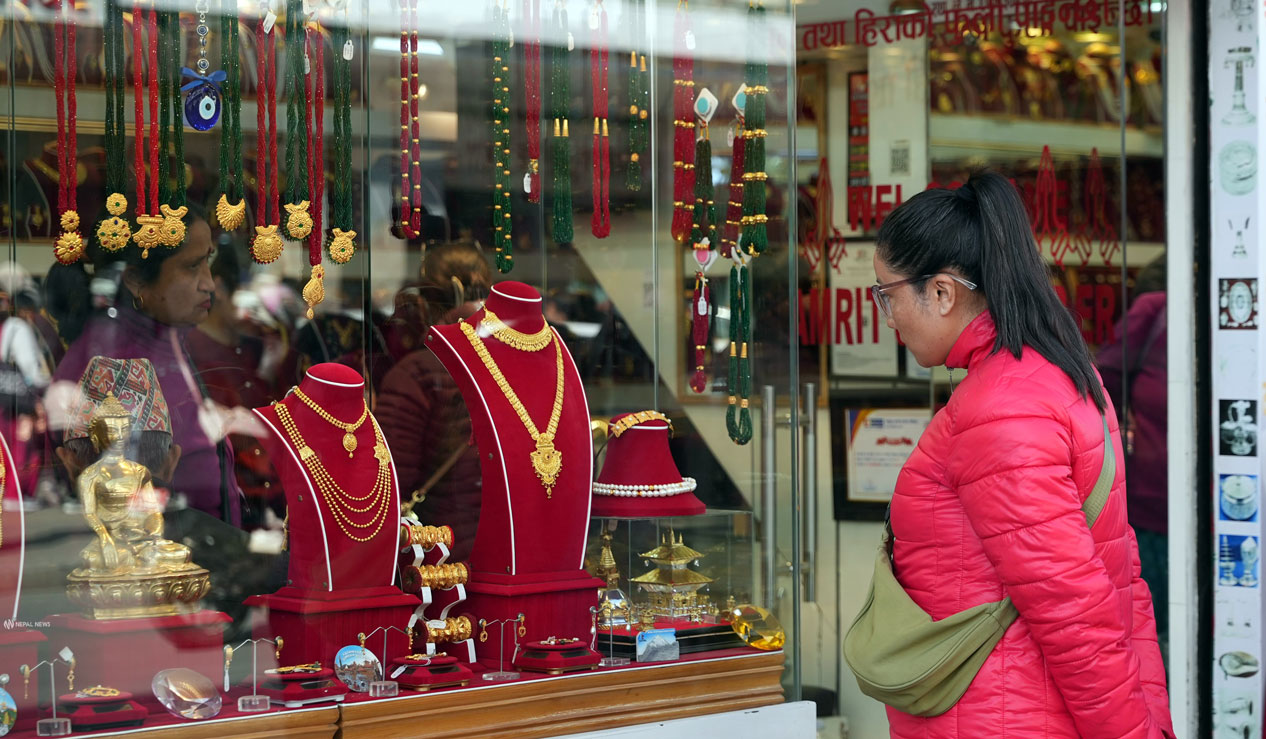
The prices of both gold and silver have declined in the market today. According to the Federation of Nepal Gold and Silver Dealers’ Association, the price of gold has decreased by Rs 1,800 per tola (11.66 grams) today. According to the Federation, the price of fine gold has been set at Rs 298,700 per tola today. On Wednesday, gold was traded at Rs 300,500 per tola. Along with gold, the price of silver has also decreased today. Today, silver is being traded at Rs 5,020, a decrease of 110 rupees per tola. Yesterday, the price of silver was Rs 5,130 per tola.
ADB Pledges $29.3 Billion Investment for Asia-Pacific in 2025
The Asian Development Bank (ADB) committed USD 29.3 billion from its own resources to the Asia-Pacific region in 2025, marking a 20% increase from 2024. According to the ADB Annual Report 2025, this investment is projected to create over 3.3 million jobs and benefit more than 180 million people. The funding includes loans, grants, equity investments, and technical assistance aimed at addressing regional challenges. South Asia received a commitment of USD 9.7 billion, while Southeast Asia and Central-West Asia were allocated USD 9 billion and USD 8.03 billion, respectively. An additional USD 14.7 billion was contributed by partner organizations to support these initiatives.