Kathmandu
Tuesday, July 28, 2026





A $22 million project in eastern Nepal has triggered protests, court battles, and international scrutiny, as indigenous Yakthung communities challenge the transformation of a sacred landscape into a tourism hub
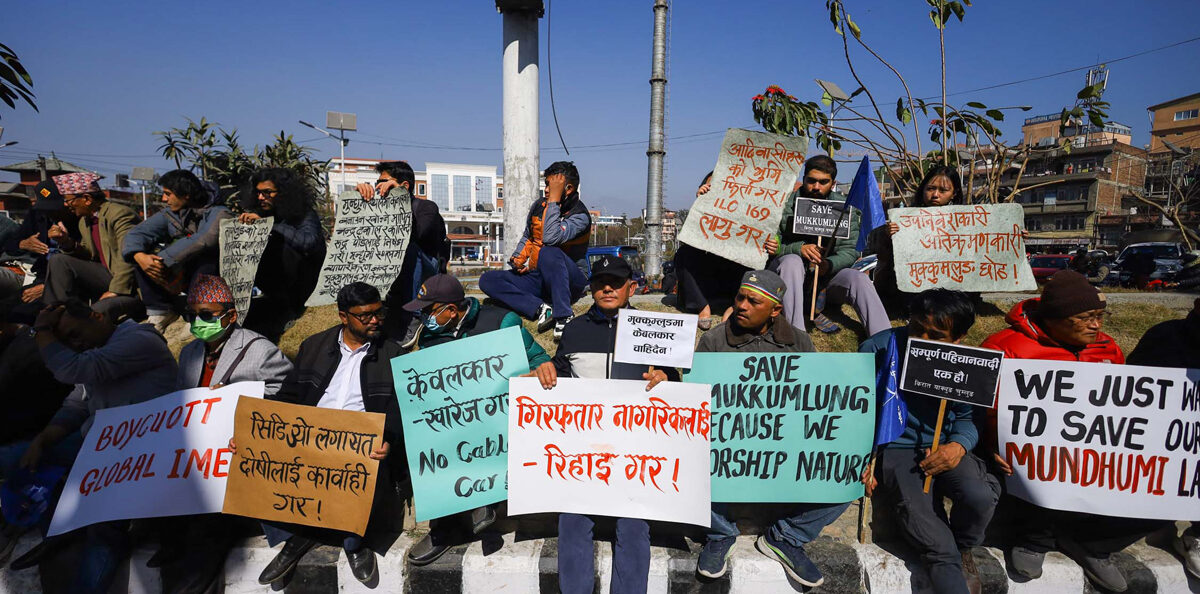
KATHMANDU: Deep in the hills of Taplejung in eastern Nepal, a mountaintop at 3,794 meters above sea level has become the most contested piece of land in the country.
Known as Mukkumlung to the indigenous Yakthung (Limbu) people and as Pathibhara to Nepal’s Hindu majority, this site draws roughly 300,000 pilgrims a year.
A cable car project backed by powerful business interests has put this sacred landscape at the heart of a fight involving gunfire, court orders, international human rights bodies, and one of the oldest questions in Nepal: whose land is it, and who gets to decide what happens to it?
Now, in a dramatic turn, Prime Minister and Home Minister Balendra Shah has ordered an immediate halt to construction, a move that has shaken the political and business establishment and raised the prospect of a broader official review of the project’s financial, environmental, and legal foundations.
What just happened: why has PM Balendra Shah ordered a halt to construction?
In the most significant government action since the cable car controversy began, Prime Minister and Home Minister Balendra Shah issued a directive ordering an immediate suspension of all construction activity at the Pathibhara (Mukkumlung) site in Taplejung.
Following the prime minister’s order, Home Secretary Rajkumar Shrestha instructed Nepal Police Inspector General Dan Bahadur Karki, Armed Police Force Inspector General Raju Aryal, and local authorities to stop construction and withdraw security personnel from the project site. Sources told Nepal News that construction activities were halted from Friday evening onward.
However, the withdrawal has not been complete. Despite the directive, Armed Police Force personnel stationed to protect the construction area remained deployed as of the time of reporting. The situation on the ground thus remains in a state of partial compliance with the prime minister’s order.
The halt also comes against a backdrop of an earlier attempt by then-Home Minister Sudan Gurung to instruct APF Inspector General Raju Aryal to remove security personnel from the site, an order that was not implemented, underlining the resistance within the security apparatus to pulling back from the project.
High-level sources at the Prime Minister’s Office indicated that the new government under Shah is now considering a broader review of the project. This review is reported to include alleged irregularities in land transactions, the flawed environmental assessment process, financial management decisions linked to previous political leadership, and potential banking-related fraud connected to the project.
The move is widely interpreted as a significant political signal: that the new government regards the cable car project as deeply problematic in its current form and is not prepared to simply enforce its continuation through security deployments.
What exactly is the Pathibhara cable car project and who is behind it?
The project involves building a roughly 2.7-kilometer cable car from Kaflepati in Ward 10 of Phungling Municipality in Taplejung District up to the Pathibhara Devi temple at the summit.
The cable car would connect the roadhead to the temple, replacing the hours-long uphill trek that pilgrims currently undertake. The project is being developed by Pathibhara Devi Darshan Cable Car Pvt. Ltd., which is part of the IME Group led by Chandra Prasad Dhakal, one of Nepal’s most prominent business tycoons.
Dhakal also chairs Global IME Bank and serves as president of the Federation of Nepalese Chambers of Commerce and Industry, giving him enormous political and financial reach.
The total investment for the project stands at approximately Rs 3 billion, which is roughly USD 22 million. The government formally approved the project in 2018 and has declared it a project of national pride, arguing it will boost tourism, create around 1,000 jobs, and improve access for elderly and differently abled pilgrims.
The company’s original ownership passed through Yeti Group before being acquired by the IME Group. Construction began in earnest in 2022, though protests had been building for years before.
What is Mukkumlung, and why is it different from Pathibhara?
These are two names for the same physical place, but they carry entirely different histories, meanings, and identities.
Mukkumlung is the original name in the Yakthung language, used by the Limbu indigenous people who have inhabited the hills of Taplejung for generations. The name itself points to a living sacred landscape, not merely a temple structure.
Pathibhara, on the other hand, is a Khas Nepali name that came into wide use following Nepal’s unification and the subsequent process of cultural assimilation that folded many indigenous traditions into the dominant Hindu framework.
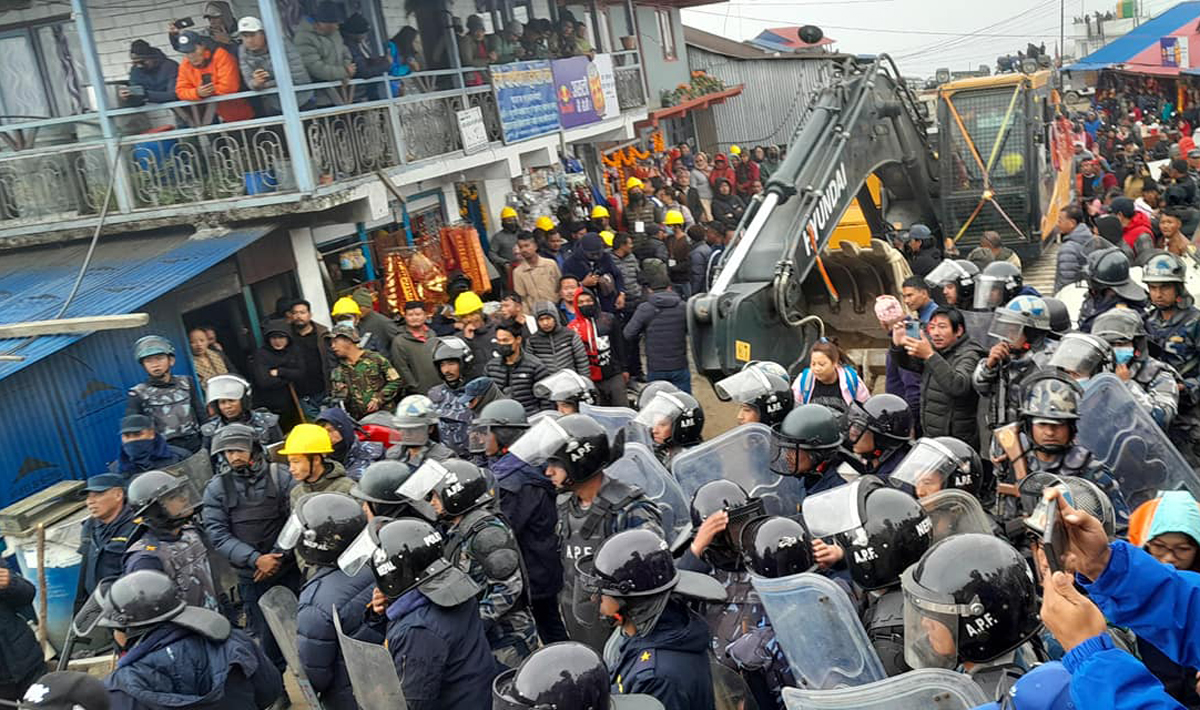
Security personnel deployed in the Pathibhara area to control clashes with local protestors. File photo
For the Limbu people, the renaming is not just a linguistic matter but a symbol of deeper historical erasure. The Pathibhara Devi temple was established at the summit and a statue of Goddess Durga was installed in 2001 under the Pathibhara Area Development Committee, further cementing the Hindu identity of a place the Limbu had always regarded as their own ancestral ground.
The demand to restore the name Mukkumlung runs through virtually every protest statement made by indigenous groups because for them, the name carries the full weight of their cultural identity, their oral traditions, and their spiritual relationship with the mountain.
Why is Mukkumlung so sacred to the Yakthung (Limbu) people?
The sacredness of Mukkumlung cannot be understood in isolation from Mundhum, the ancient oral scripture and philosophical worldview of the Yakthung people.
Mundhum is not a written text but a living tradition that governs the community’s spiritual life, social customs, agricultural practices, and relationship with the natural world. Within Mundhum, Mukkumlung is described as the dwelling place of Yuma Sammang, the supreme goddess of the Yakthung, often referred to as “Grandmother” or “Mother Earth.”
According to Limbu tradition, the mountain was a resting place for Yuma Sammang on her journeys, and it has been revered on that basis for generations. Critically, the Yakthung do not build temples because, for them, forests, rivers, hills, and mountains are themselves the living homes of deities.
The mountain is the deity, not merely a place where a deity resides. Mountains like Mukkumlung, Phaktlung (Kumbhakarna), and Chamchamlung (Kanchenjunga) are all considered sacred in this cosmology. The Mundhum also contains a specific story about pilgrims carrying a sacred thread from the base to the top of Mukkumlung, symbolizing the unbroken thread of life.
When construction threatens to break and uproot the forest, it is experienced by the Limbu not as an inconvenience but as a direct act of spiritual violence against their most fundamental beliefs.
How did the idea of a cable car to Pathibhara first emerge, and how did it progress?
The idea of a cable car to the Pathibhara temple is not a recent invention. As far back as 1994, former Biratnagar mayor Dhruba Narayan Shrestha first proposed such a project.
The idea gained renewed momentum in 2013 when the government invited expressions of interest for developing a cable car under a public-private partnership model to promote pilgrimage tourism. However, the formal approval of the current project came in May 2018, when the executive committee of Phungling Municipality gave permission to a private company to begin work under the Local Government Operation Act of 2017.
Yeti Group initially held ownership of the project before selling it to Chandra Dhakal’s IME Group. Although the government had approved the project, actual ground-level construction kept getting delayed due to sustained resistance from local indigenous communities and activists.
The real flashpoint came in May 2024, when contract workers arrived under armed police escort at night and began felling thousands of trees in the sacred forest. That act of nocturnal deforestation broke something open in the community and triggered a new and more intense phase of protests that has continued ever since.
Dhakal himself has said he was unaware of the depth of past protests when he took over the project, though critics find that claim difficult to accept given the project’s long and contentious history.
What does the forest around Mukkumlung contain, and what is the environmental concern?
The forest at Mukkumlung is not an ordinary patch of trees. It sits on the edge of the Kanchenjunga Conservation Area and is home to significant biodiversity, including threatened species such as the red panda.

Endangered Red Panda. File photo
The area contains the endangered Himalayan yew, known scientifically as Taxus wallichiana, whose extract is used in cancer treatment drugs. Botanists who have visited the site say the trees being cleared include rhododendrons, Nepal’s national flower, and numerous other species.
The environmental assessment prepared for the project, known as an Initial Environmental Examination or IEE, has been severely criticized as riddled with errors.
Botanists have pointed out that out of 112 tree species found in the area, only four were identified in the document. The IEE also understated the project’s land requirement; since the cable car actually needs 6.22 hectares of forest rather than the 4.97 hectares officially allocated, the project should legally have undergone a full environmental impact assessment, which is a more rigorous and transparent process.
Critics allege that more than 40,000 trees may ultimately be cut, far exceeding the figures stated in the environmental report. The construction that began in May 2024 reportedly destroyed around 12,000 trees in a single night, many of them rhododendrons.
A separate report noted that activists in 2025 alleged over 10,200 trees had been or were planned to be removed.
What were the earliest protests against this project, and how did they escalate?
Resistance to the cable car project goes back to 2018, when the government first approved it. Indigenous and ethnic groups, particularly from the Yakthung community, held sit-ins and organized local opposition from the very beginning.
In 2020, community groups formally demanded that the site’s original name, Mukkumlung, be restored and that the project be halted. The first years of protest were largely peaceful demonstrations, press conferences, and legal filings.
In May 2024, however, the situation escalated sharply when construction workers arrived at night with armed police and began felling trees. Local protesters chased them away from the site, but not before thousands of trees had been cut down.
This incident triggered a banda, a total shutdown of transportation and commercial activity, that began in Phungling and spread to other parts of the region.
By November 2024, two individuals, Chandramaden and Arjun Limbu, were reportedly assaulted at the construction site and a writ petition was filed at the Ilam Bench of the Biratnagar High Court.
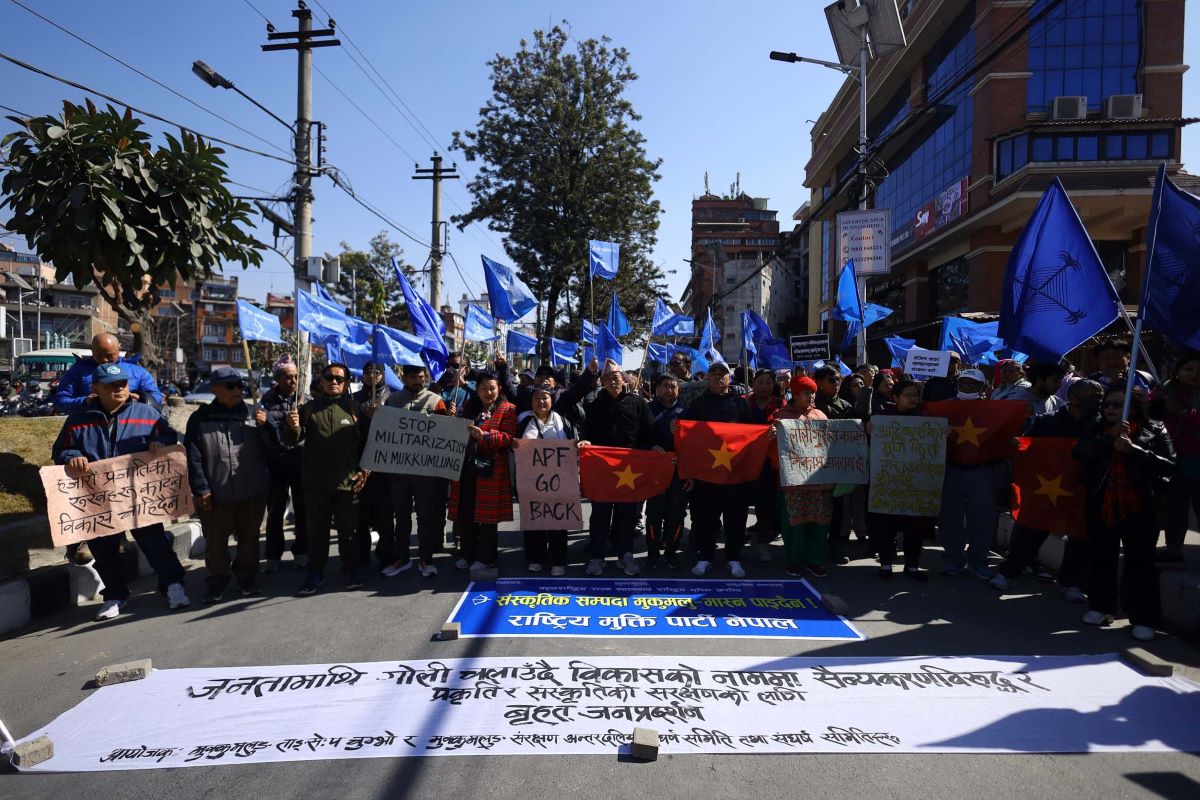
Mukkumlung protest. Photo courtesy: Nepal Photo Library/File photo
The crucial turning point came on January 25, 2025, when clashes broke out between the No Cable Car group and security forces at Baludanda in Phungling Municipality. Police opened fire, wounding several protesters including Yam Bahadur Limbu from Terhathum and Sagun Lawati from Panchthar, both of whom sustained gunshot wounds and were airlifted to Kathmandu.
A wave of shutdowns across nine districts of eastern Nepal followed that incident.
What happened on January 25, 2025, and what was the immediate aftermath?
January 25, 2025, is the date that turned the Pathibhara cable car dispute from a local issue into a national crisis. Protesters from the No Cable Car group attempted to march toward the construction site in Phungling.
Security forces, including Nepal Police and the Armed Police Force, intervened and opened fire. At least four activists were wounded by gunfire and a number of police personnel were also injured.
Three of the most seriously wounded protesters were airlifted to Kathmandu for emergency treatment. The injured included Yam Bahadur Limbu, who sustained a gunshot wound, and Sagun Lawati, who was similarly shot.
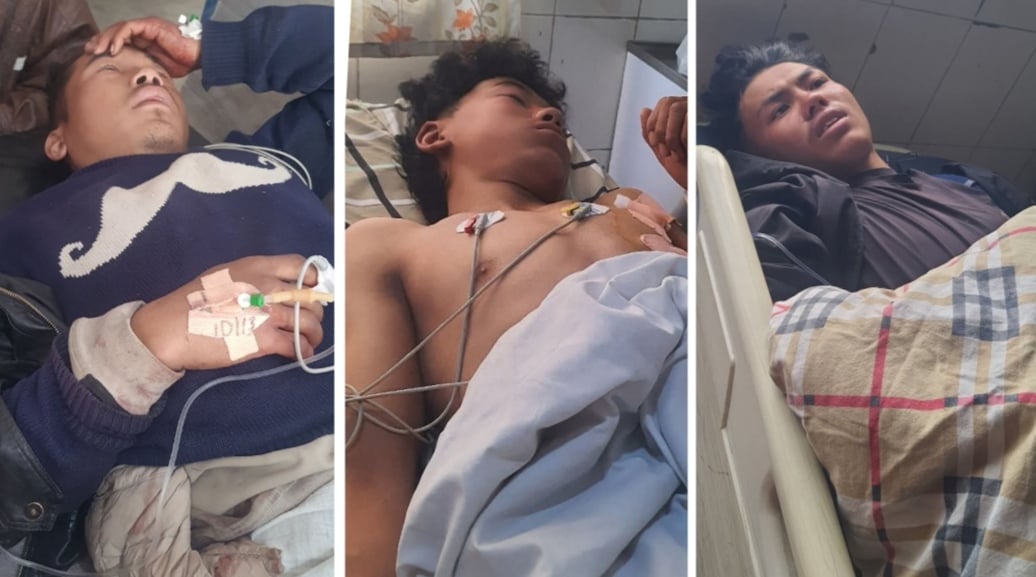
Three injured protesters from the ‘No Cable Car’ group receive treatment at Teaching Hospital in Kathmandu after sustaining gunshot wounds during a police intervention near the Baludada area, close to Pathibhara, amid protests against the cable car construction on January 25, 2025. File photo
The incident triggered immediate and widespread outrage. Protesters announced a highway shutdown across multiple districts in eastern Nepal. They called for the cancellation of the cable car project, the dismissal of the Pathibhara Area Development Committee, public apologies from the Chief District Officer and the Armed Police Force chief, and a ban on project representatives entering Taplejung.
They also called for the closure of Global IME Bank branches in several districts as a signal that they understood the financial connections behind the project. Two days of intense dialogue between the government and protest groups eventually produced a six-point agreement on February 4, 2025, which temporarily suspended both construction and the protests until February 9.
Who are the main groups leading the protest movement?
The protest movement against the Pathibhara cable car is not a single organization but a coalition of groups bound together by shared demands. The primary bodies include the Mukkumlung Struggle Committee, the Cable Car Cancellation Joint Struggle Committee, the Kirat Yakthung Chumlung, and the Mukkumlung Tangsel Chumbo.
These organizations are dominated by Yakthung and Limbu community members who regard the issue as one of cultural survival, not just politics. The movement has also attracted support from political parties advocating for identity rights, including the Rastriya Janamukti Party and the Loktantrik Rastriya Manch.
National-level figures have joined protest marches to express solidarity, including Rajendra Mahato, former deputy prime minister and chairman of the Rastriya Mukti Party Nepal, former Minister Rakam Chemjong, and former Constituent Assembly member Raj Kumar Nalbo.
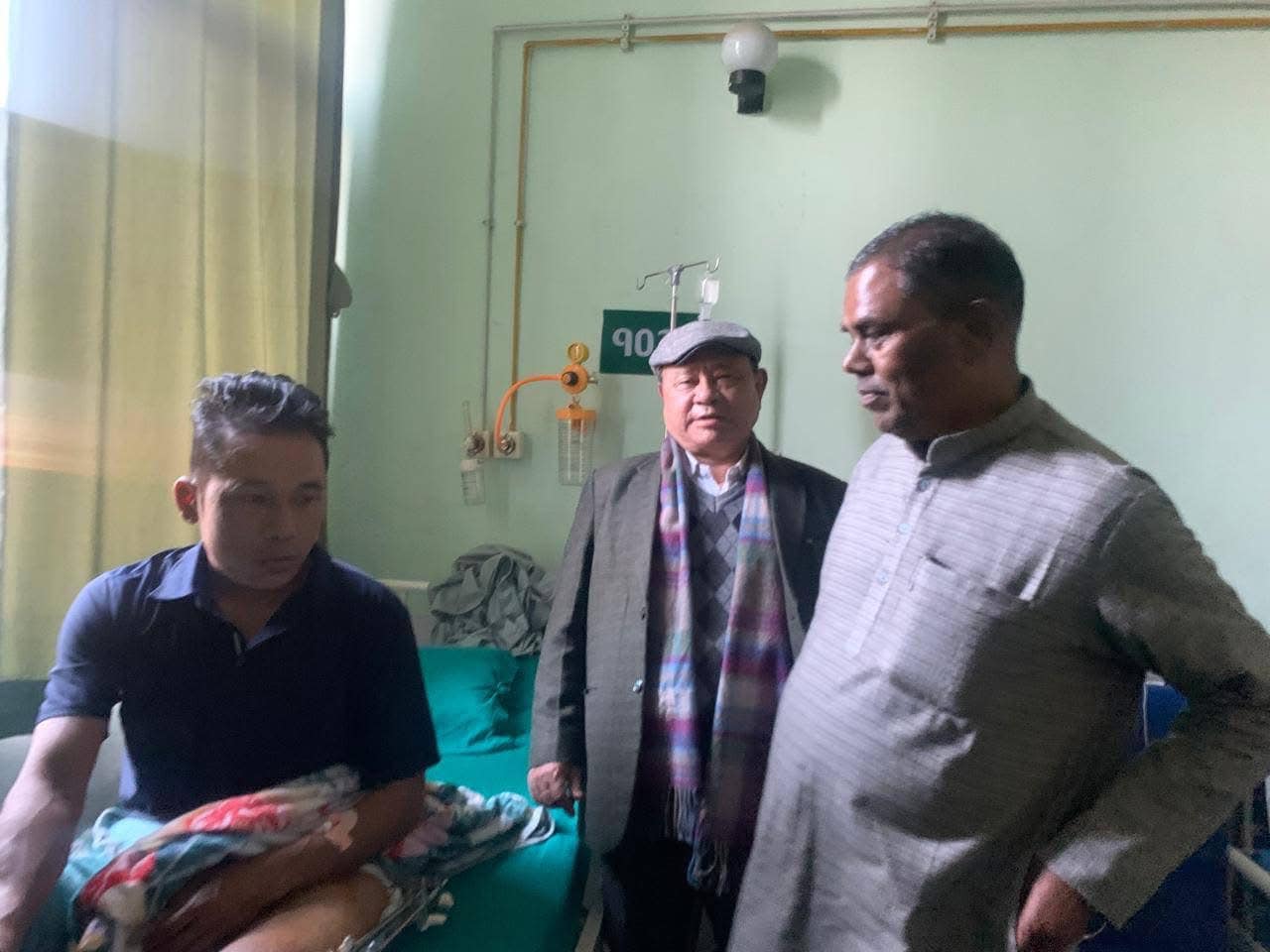
Janata Samajbadi Party-Nepal Chairman Upendra Yadav and leader Rakam Chemjong visit a hospital to meet the ‘No Cable Car’ protesters injured during the demonstration to protect the Mukkumlung religious site in Taplejung. File photo
A woman named Saru Singhak has been particularly prominent as a negotiator and public spokesperson for the No Cable Car group during government talks.
The movement has also extended into the arts. A theatrical production titled “Mukkumlung: Cho:t-lung of Yakthung” ran at the Mandala Theatre in Kathmandu for a month, performing to audiences who used the event as a venue for solidarity and protest.
The phrase repeated throughout that play, “No matter what, one cannot step on the head,” became something of a slogan for the movement as a whole.
What is the six-point agreement reached in February 2025, and was it honored?
After the violent clashes of January 25 and the subsequent shutdown of nine districts in eastern Nepal, two days of government-facilitated dialogue produced a six-point agreement on February 4, 2025.
The agreement called for a temporary suspension of both the cable car construction and the protests until February 9 and promised that high-level talks would follow to address the community’s concerns.
A negotiation team was formed on the protesters’ side, led by Saru Singhak. However, the government consistently failed to constitute its own dialogue team despite multiple commitments to do so.
When talks were planned for March 19, the government side simply did not show up with a designated team, causing the negotiations to collapse before they could begin.
Construction reportedly continued even as the agreement was nominally in force. Clashes broke out again on February 20, 2025, with protest marchers confronting security forces in Taplejung.
The breakdown of the February agreement is central to understanding why protests resumed and why the No Cable Car group eventually decided to internationalize the issue, announcing plans to take their case to international courts and human rights bodies.
What did the Supreme Court order, and what has happened since?
The Supreme Court has played a complicated and contested role in this dispute. On March 30, 2025, after a writ petition was filed by Yam Bahadur Limbu and seven others naming Pathibhara Devi Darshan Cable Car Pvt. Ltd. and thirteen other respondents, a single-judge bench led by Justice Saranga Subedi issued a short-term interim order halting all construction work and directing that the project remain in its current state until further notice.
The court reasoned that the nature and seriousness of the issues raised in the petition warranted a hearing from both sides before a decision on a longer order.
Both parties were called for discussions on April 8. Shortly after, on April 14, the Supreme Court issued a separate interim order on a related writ petition filed by the Kanchenjunga Conservation Area Management Council, ordering a status quo on all matters related to cable car construction.
However, in May 2025, a joint bench of Justices Nahakul Subedi and Abdul Aziz Musalman declined to extend the initial stay order, citing earlier decisions not to issue stays on two related writ petitions.
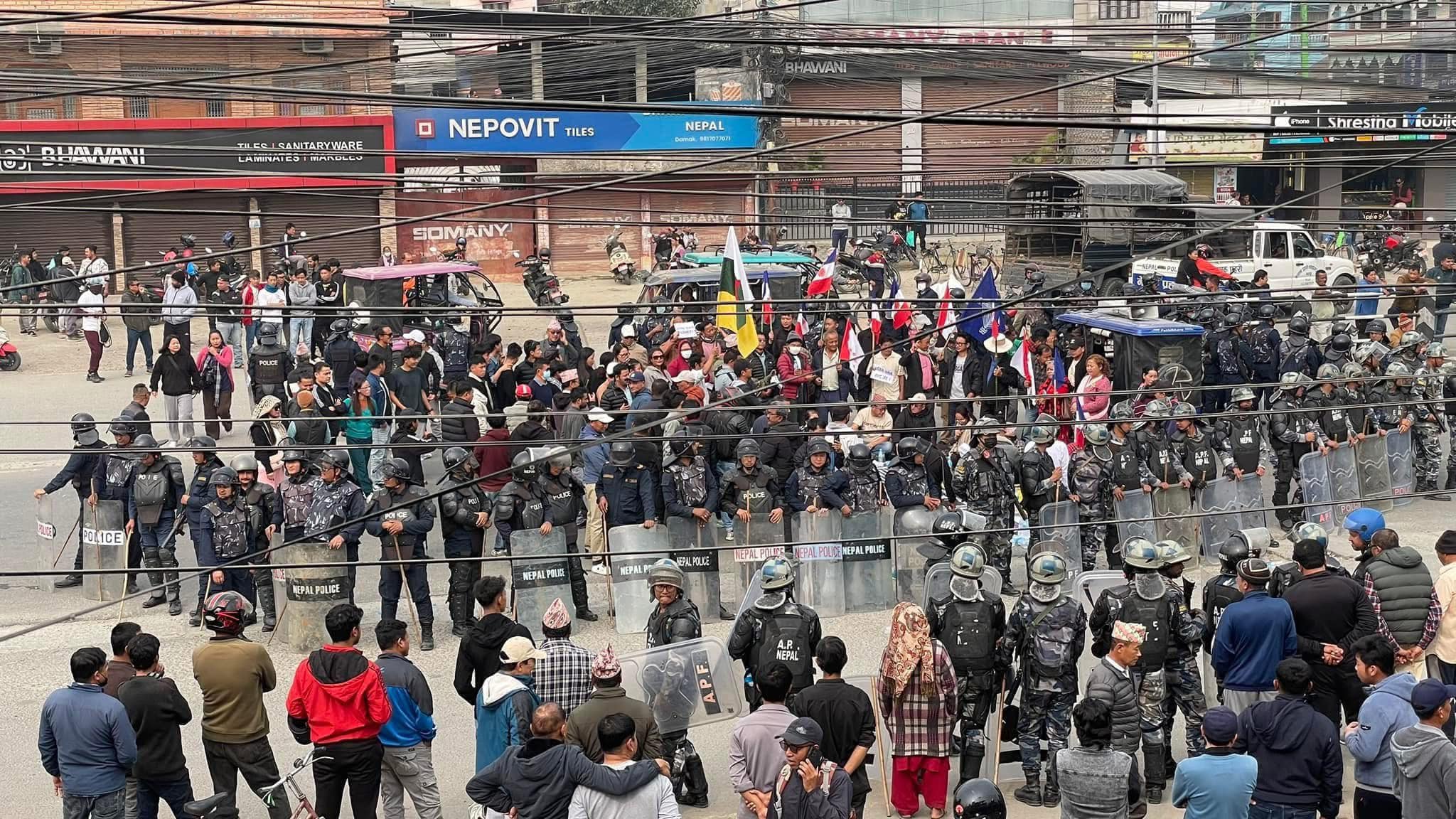
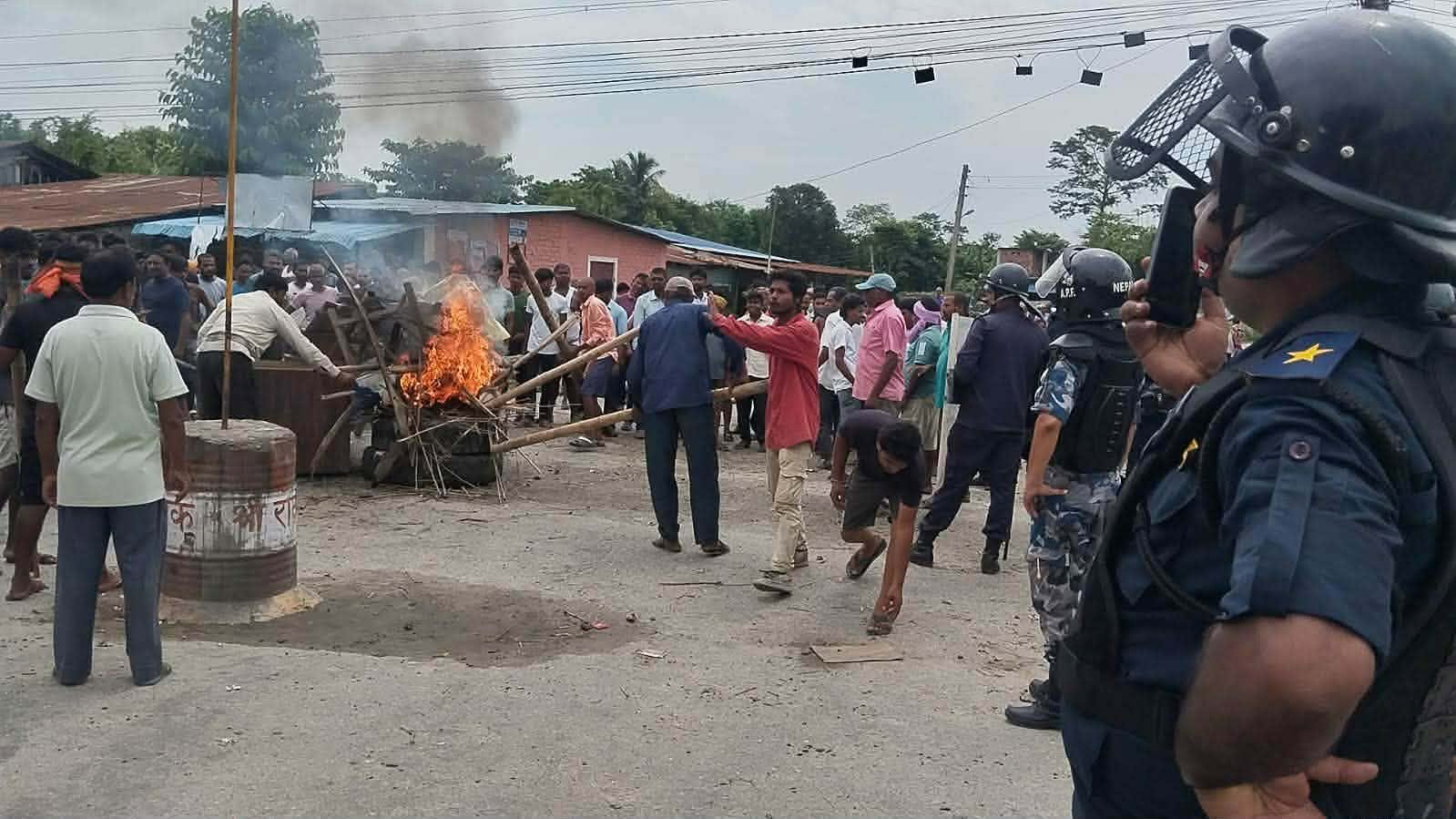
Protesters from the ‘No Cable Car’ movement, organizing a shutdown, block roads in Damak, Jhapa, on the second day of their protest. File photo
The company declared this meant it could resume construction immediately. The protesters’ lawyer, Prem Chandra Rai, countered that the court’s final judgment, which would determine the legal status of the project permanently, had not yet been delivered. The case remains sub judice as of April 25, 2026.
What is the FPIC principle, and why does it matter here?
Free, Prior, and Informed Consent, commonly known by its initials FPIC, is a specific right under international law that requires governments and developers to consult meaningfully with indigenous communities before proceeding with any project that affects their lands, resources, and ways of life.
It is not enough to simply inform communities of a decision already made; the consent must come before the project begins, must be based on full and accurate information, and must be genuinely free from coercion.
FPIC is enshrined in ILO Convention No. 169, to which Nepal is a signatory, and in the United Nations Declaration on the Rights of Indigenous Peoples.
It is also protected under Articles 26 and 32 of Nepal’s own constitution. Critics of the Pathibhara cable car project argue that the government and developer violated this principle from the very beginning, proceeding with approvals, environmental studies, and construction contracts without any meaningful consultation with the Yakthung community.
The International Network for Economic, Social and Cultural Rights, ESCR-Net, which represents a global coalition of over 300 organizations, specifically raised the FPIC violation in its appeal to the then Prime Minister KP Sharma Oli and Home Minister Ramesh Lekhak.
The absence of FPIC is not a procedural technicality; it goes to the heart of whether this project was ever legally and ethically authorized in the first place.
How has the international community responded to the Pathibhara dispute?
The response from the international community has been substantial and growing.
By early 2025, 286 organizations from around the world had expressed formal solidarity with the opposition to the cable car project.
ESCR-Net sent an urgent appeal to the Nepali government calling for an immediate halt to construction, an independent investigation into the January 25 shootings, the release of individuals unlawfully detained in connection with the protests, and the withdrawal of heavy security deployment in the area.
In August 2025, the Yakthung community filed a complaint with the World Bank Group’s Compliance Advisor and Ombudsman targeting the International Finance Corporation, the private sector arm of the World Bank, for its undisclosed advisory support to IME Group.
Although the IFC says it exited its advisory role early and did not directly finance the Pathibhara project, complainants argue that its support was not publicly disclosed until July 2024, nearly two years after construction began in September 2022.
The complaint was formally registered by the CAO in December 2025 and it has already undergone a 90-day assessment period to determine whether it proceeds to dispute resolution or a full compliance review.
The No Cable Car group has also announced plans to take the issue to international courts, signaling that this dispute has moved well beyond Nepal’s borders.
What are the economic arguments for the cable car, and how do opponents counter them?
The developer and the government have consistently framed the cable car as a development project that will bring prosperity to one of Nepal’s most remote and economically marginalized regions.
Chandra Dhakal claims the project will generate approximately 1,000 jobs and make the temple accessible to elderly pilgrims, people with mobility challenges, and the growing number of tourists who might otherwise avoid the strenuous trek.
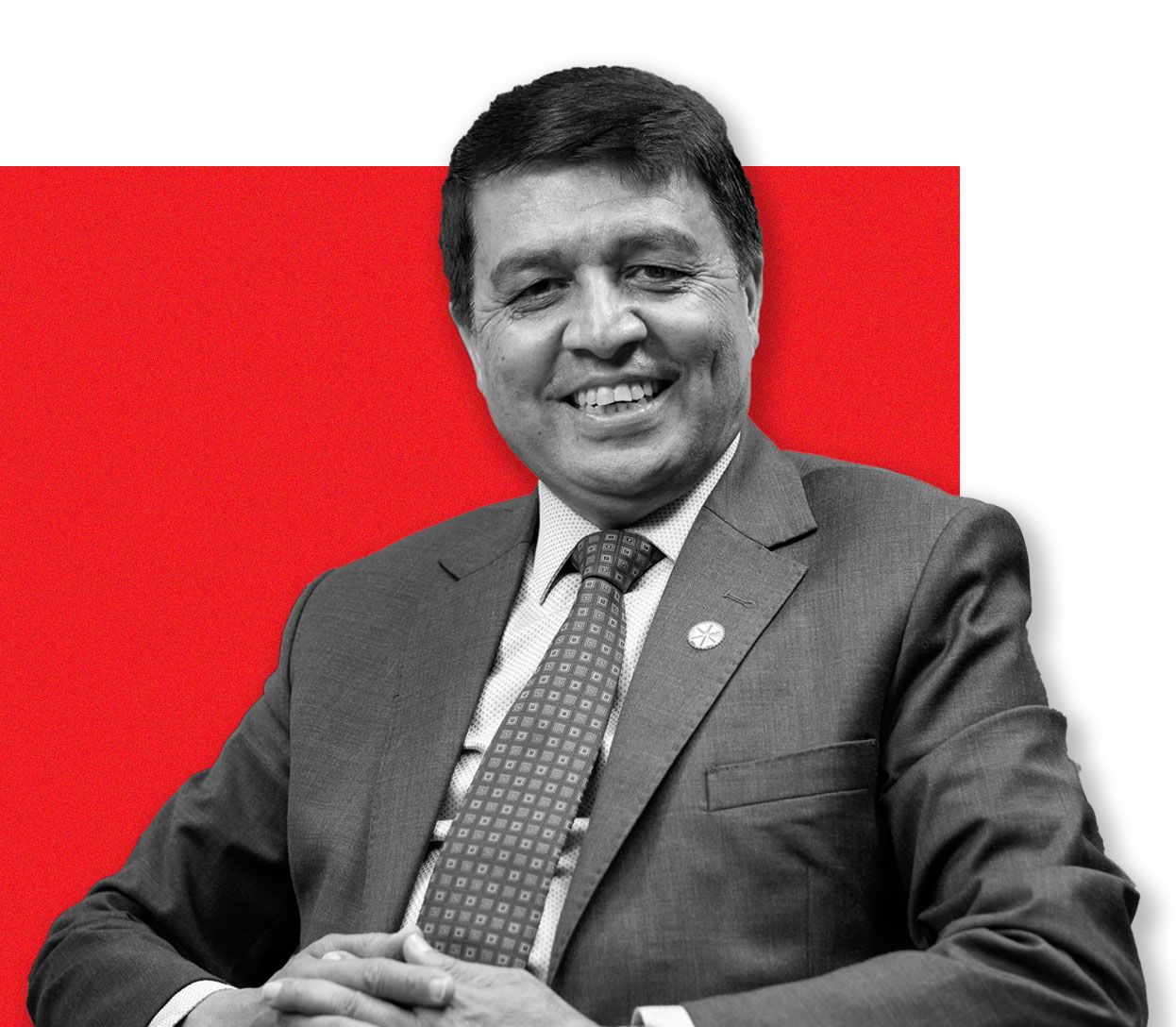
FNCCI President Chandra Dhakal, central to the Pathibhara cable car controversy, faces criticism over the project’s impact on the sacred Mukkumlung site.
The government sees it as part of a broader strategy to monetize Nepal’s natural and religious landscape for tourism revenue in a country where GDP per capita sits at roughly 1,377 US dollars and unemployment hovers around 10 percent.
Dhakal dismissed environmental concerns with the question of why a cable car is objectionable when helicopters already fly to the summit.
Supporters within the local community argue the project will modernize the area and encourage more visitors.
Opponents, however, point to the hundreds of porters, dozens of tea stall workers, and small businesses that have sustained their livelihoods along the existing trekking route for generations.
A cable car that flies pilgrims over their heads means the end of those livelihoods. Activists also argue that the jobs the company promises will go to contractors from Kathmandu, not local residents.
Research on similar cable car projects across Nepal suggests that the economic benefits tend to flow to investors and urban operators rather than local communities.
How has the controversy exposed larger tensions about identity, province naming, and historical discrimination?
The Pathibhara cable car dispute cannot be understood without the broader political context of the Limbu and Yakthung people’s long struggle for recognition.
For decades, the indigenous communities of eastern Nepal have fought to have their ancestral region recognized as Kirat-Limbuwan Province rather than the generic name Province No. 1, which was then renamed Koshi Province in 2023, a decision widely seen as a rejection of that long-standing demand.
The cable car controversy erupted against this backdrop of unresolved historical grievance. Researchers have been describing the cable car project as the continuation of historical discrimination in a modern form.
The renaming of Mukkumlung to Pathibhara during the process of national unification and Hinduization is itself part of a pattern in which indigenous names, deities, and sacred sites were absorbed into the dominant Hindu tradition without consent or acknowledgement.
The imposition of a commercial cable car on top of that history feels, to many Limbu people, like the final chapter in a long story of erasure. This is why the movement insists on using the name Mukkumlung in all its communications, why it frames the issue as one of indigenous rights and self-determination, and why it has drawn support from other marginalized communities across Nepal who see in this fight a reflection of their own experiences.
What role has the flawed environmental assessment played in the legal and political battle?
The Initial Environmental Examination, or IEE, produced for the Pathibhara cable car project has become a central piece of evidence for those opposing the project, and its shortcomings are serious enough to constitute possible regulatory violations.
The IEE identified only four of the 112 tree species found in the project area, leaving out legally protected species including the endangered Himalayan yew.
The report also contained internal contradictions about the number of trees to be cut; the summary section mentioned around 112 trees affected during construction, but the body of the report described an additional 10,119 seedlings, saplings, and pole-sized trees to be removed, a figure that changes the environmental calculation entirely.
Perhaps most critically, the IEE overstated the land available to the project. Because the cable car actually requires 6.22 hectares of forest but only 4.97 hectares were officially allocated, the project should legally have undergone a full Environmental Impact Assessment rather than the lighter IEE process.
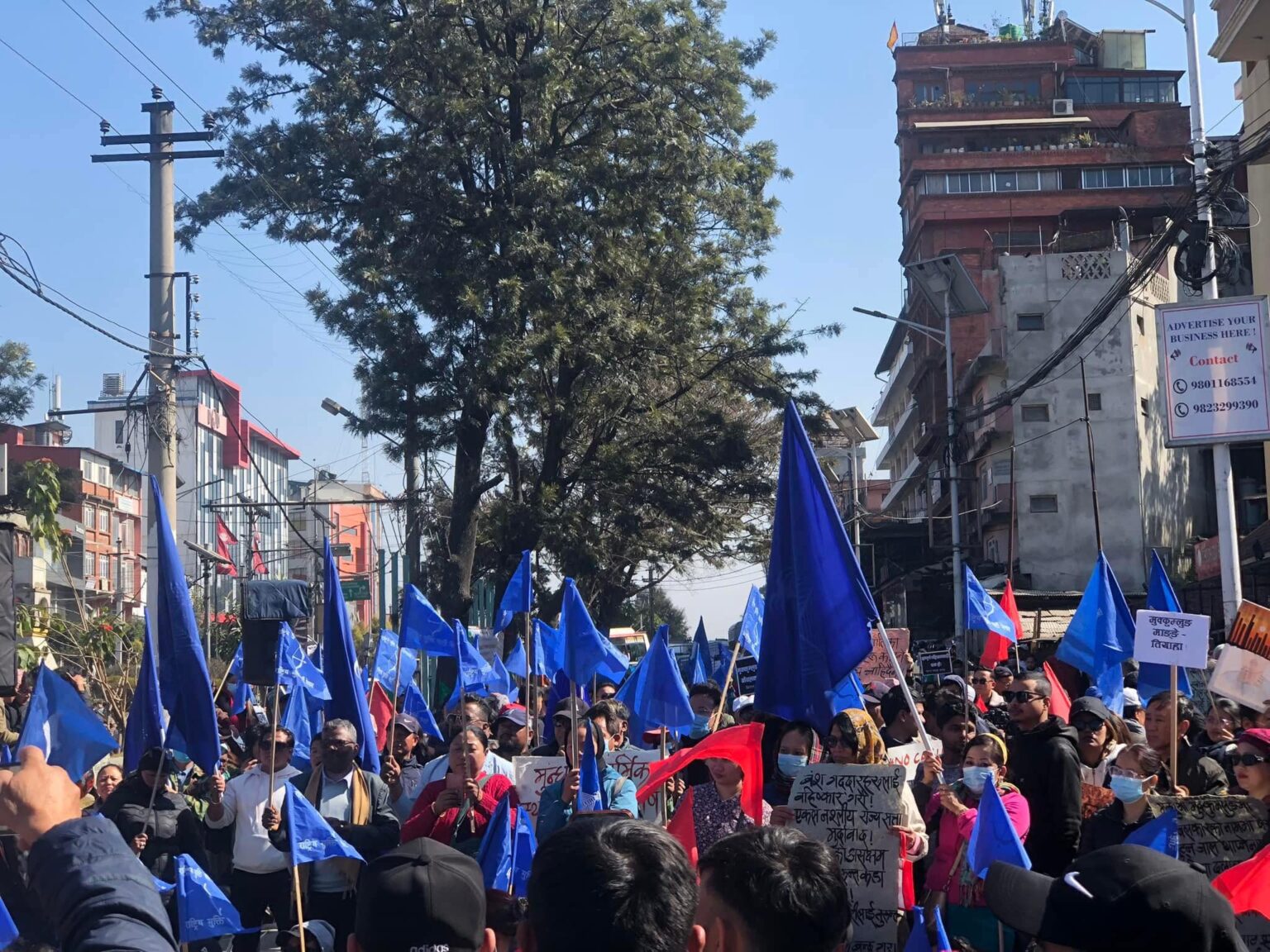
Protesters from the ‘No Cable Car’ movement demonstrate at Maitighar in the capital, Kathmandu. File photo
The EIA is a far more extensive and public process that involves broader community consultation. By using the IEE, critics argue, the company avoided the scrutiny that would have exposed these problems far earlier.
A lawyer involved in the court case described the report’s inadequacies as regulatory violations that warrant independent investigation, and conservationists have continued to call for a full ecological audit before any further construction takes place.
Where does the dispute stand as of April 2026, and what are the possible outcomes?
As of April 2026, the situation has entered a potentially decisive new phase following PM Balendra Shah’s halt order. The Supreme Court’s final verdict in the case filed by Yam Bahadur Limbu and others has not yet been delivered.
The company, IME Group, had declared its intention to resume and complete construction, stating it planned to finish the project by late 2026, but that timeline now appears in serious jeopardy given the prime minister’s direct intervention.
The Mukkumlung Protection and Struggle Committee has said it will continue its resistance through peaceful means, including tree-planting drives in the affected area, appeals to the United Nations, and sustained pressure through international human rights channels.
The World Bank’s compliance watchdog has prepared its 90-day assessment of the IFC complaint. The No Cable Car group has announced plans to internationalize the dispute further and pursue legal options beyond Nepal’s borders.
The new government under Shah has signaled it will examine alleged irregularities in land transactions, environmental assessments, financial management, and potential banking fraud. Whether this review produces a formal cancellation of the project, a renegotiation of its terms, or simply delays while legal battles continue remains to be seen.
The community itself remains divided. Local journalists have put it plainly: the project has turned fathers and sons against each other, with some seeing it as progress and others as destruction.
What is clear is that neither side is close to backing down. The Limbu community has stated repeatedly that for them this is not about convenience or tourism economics; it is about whether their sacred land, their identity, and their right to determine the future of their own ancestral ground will be respected.
That question does not have a quick or comfortable answer, and with the prime minister himself now in the fray, the pressure on all sides has never been greater.
![NSU protests closure of public library, demands immediate reopening [Photo Feature]](https://english.nepalnews.com/wp-content/uploads/2026/07/1-6.jpeg)