Kathmandu
Monday, June 22, 2026





Decades of cross-border shopping and "Roti-Beti" social ties face disruption as authorities crack down on daily essentials and wedding gifts.
JANAKPUR: Sunita Jha, 35, a resident of Jatahi in Nagrain Municipality-1, Dhanusha, lives just three kilometers away from Harine Bazaar in Madhubani district, Bihar, India. Whenever she needed household supplies, she would hop on a tempo for Rs 20 rupees and head to the market, bringing back rations to last a month.
It’s not that her village lacks grocery stores, but they don’t stock everything she needs. Similarly, Nagrain Bazaar is located within her own region, only 1.5 kilometers from Jatahi. However, she finds it more convenient to cross the border to Harine Bazaar because goods are significantly cheaper there. Sunita is not alone; most residents of the nearly 300 households in Jatahi traditionally sourced their daily essentials from Indian markets.
However, Sunita and other residents of the border region are now in distress after the Nepal government tightened regulations requiring customs duties on any goods valued at over Rs 100 rupees brought in through Nepal-India border points. Although the government introduced this rule for land travelers starting May 29 last year—per Section 13 (3) of the Customs Act, 2024—it was not strictly enforced in practice. Consequently, Nepalis in border areas continued to visit Indian markets for daily necessities like salt, oil, and sugar, citing lower prices.
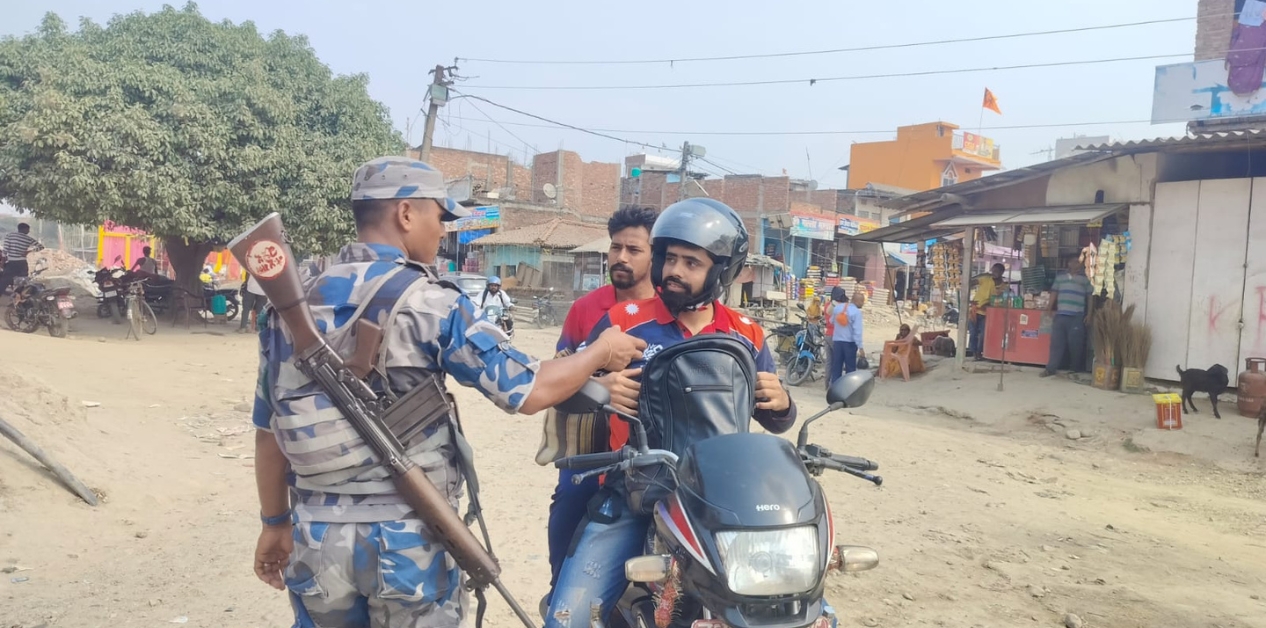
Following the formation of the new government led by the Rastriya Swatantra Party, enforcement at border crossings was ramped up from mid-April, and passengers carrying goods worth more than Rs 100 are now being charged customs. Armed Police Force personnel stationed at the borders are searching bags and belongings. Any goods for which customs have not been paid are being seized and sent to the customs office. Local residents have been protesting and expressing dissatisfaction with the sudden strictness.
For the residents of Nagrain, Ghodghans, Lagmagadha Guthi, Debadiha, and Phulgama in Nagrain Municipality, the Indian market is like a neighborhood tap. Whether it’s buying household items or grabbing an evening tea, they cross the border because it’s as close as their own courtyard. For them, there is virtually no distance between their homes and the neighboring Indian markets.
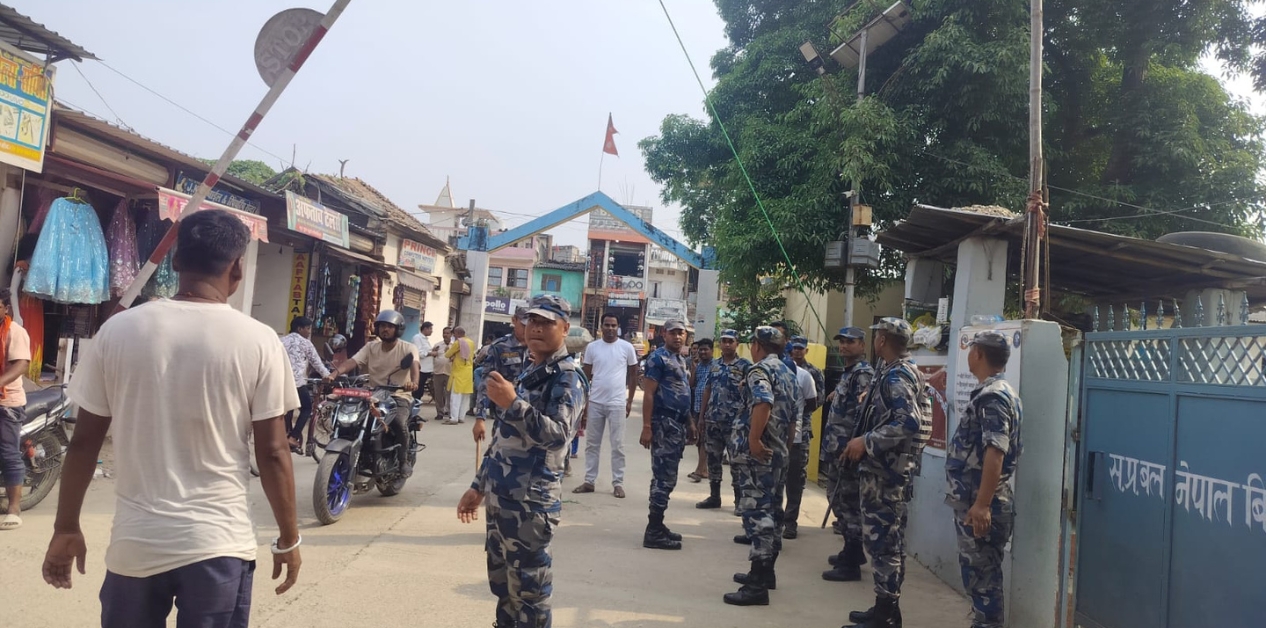
Armed Police Force personnel deployed at the Matihani border in Mahottari.
Shyam Kumari Das of Thadi Jhija in Bideha Municipality-1, Dhanusha, grew up across the border in Umgaon, India. Since she was married into a home just one kilometer away, she never felt like a stranger in Thadi. She always went to Umgaon to shop; for her, Umgaon is close, while Janakpurdham is far. Residents of Bideha Municipality, particularly Ward No. 1 (Thadi Jhija) and Ward No. 9 (Itaharwa), have long frequented Umgaon and Harlakhi for shopping, where transactions are often conducted in Nepali rupees.
Previously, police stationed at the border did not obstruct civilians bringing back purchases. As a result, Indian markets were often crowded with Nepali consumers, who were the primary buyers, while local Nepali markets remained quiet. Recently, since the new government tightened the border, the situation has reversed. The frequency of border crossings for shopping has decreased, and Indian border markets have begun to look deserted.
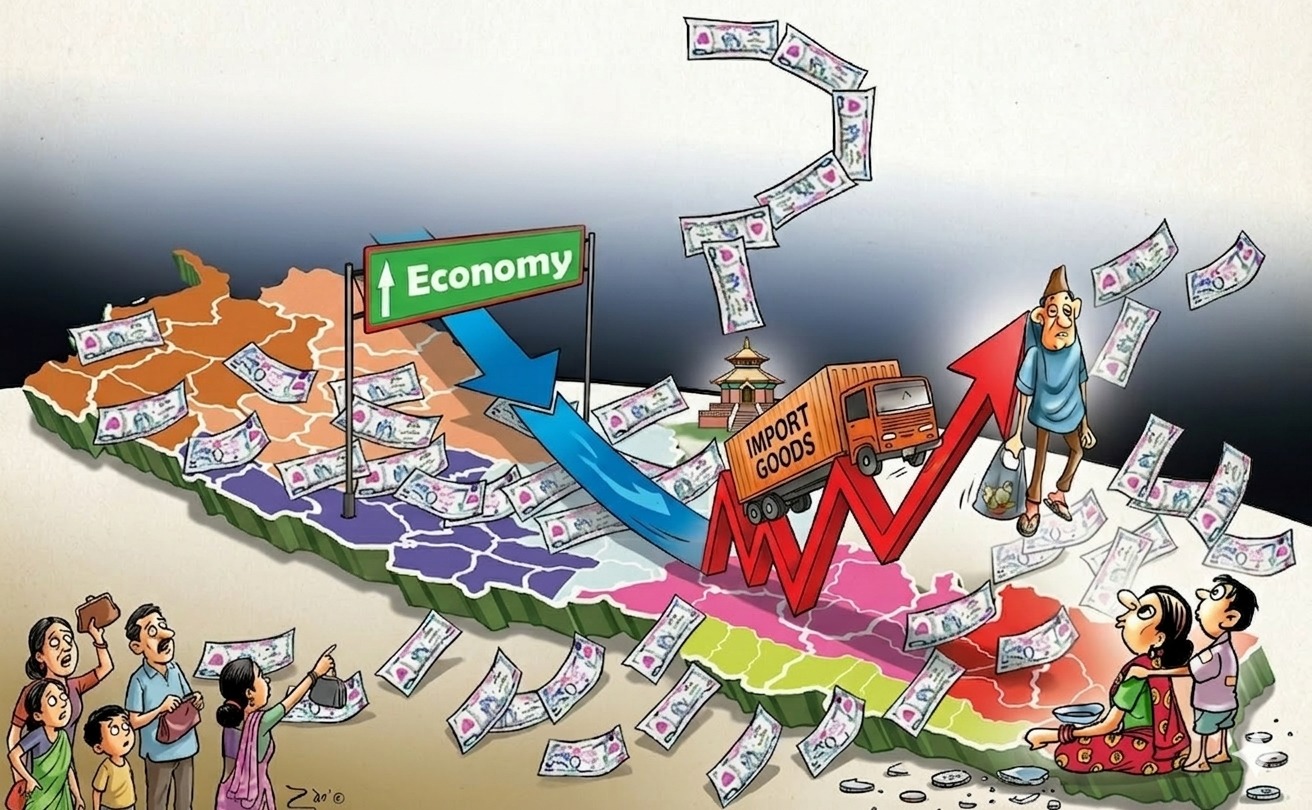
While the government aims to discourage the habit of shopping in Indian markets to stimulate internal economic activity, border residents complain that their decades-old way of life has been upended. Furthermore, they state that the enforcement is causing significant financial strain, especially at a time when prices are rising due to the conflict in Iran.
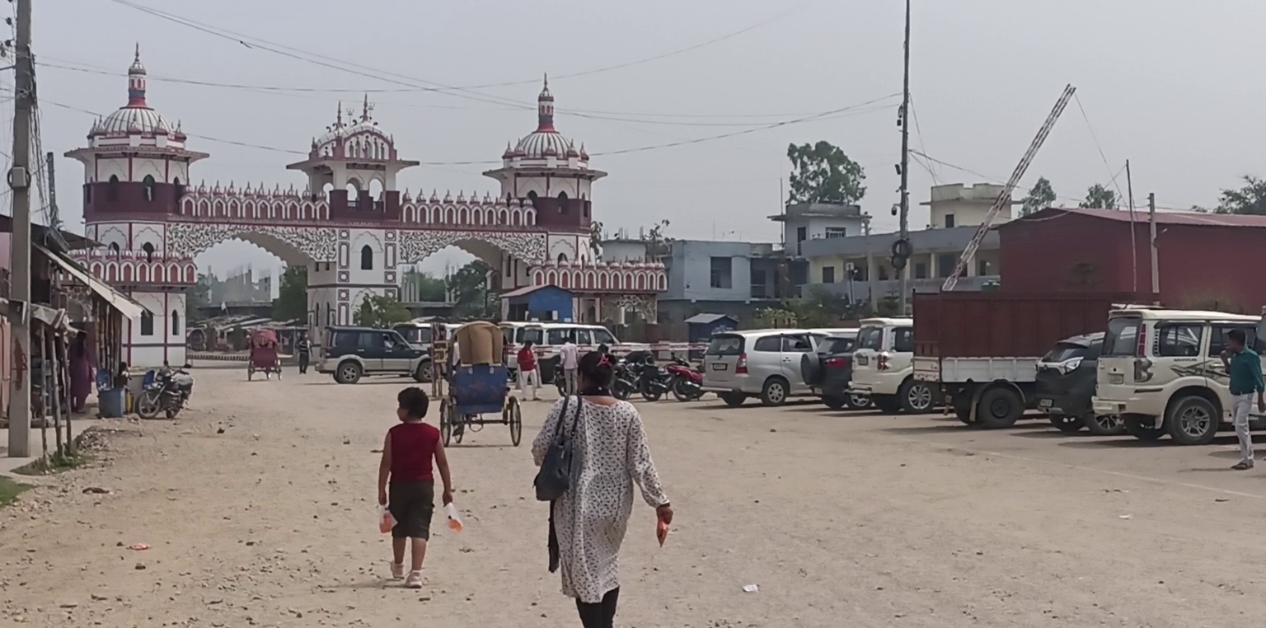
Bhittamod border point in Mahottari.
Sakir Khan of Janakpurdham Sub-metropolitan City-5 says that ordinary citizens are suffering because the border was suddenly tightened under the guise of controlling smuggling. “If the government wants to control it, they should surround the professional smugglers. Now, during the wedding and bratabandha (sacred thread ceremony) season, the border crackdown is making it difficult for the common man,” he says.
As the presence of Nepalis in Indian border markets has dwindled, the vibrancy of those markets has faded. Shops that used to open from 7 AM to 9 PM now open late and close early. Ram Paltan Sah, who has run a grocery store in Umgaon for 10 years, says business has plummeted since Nepali customers decreased. “We have been affected by the customs rules in Nepal,” he says. “Previously, even on a slow day, I’d sell Rs 5,000 to 6,000 worth of goods. Now, I barely sell Rs 1,000 worth.”
Most families in Madhesh Province depend on Indian markets for daily consumables, clothing, and festival supplies. Consumers argue they are forced to go across the border because such items are expensive and not easily available within Nepal. Daily wage earners and low-income groups are the most affected by the restrictions on shopping in affordable border markets.
Out of the eight districts in Madhesh Province, all except Bara have customs offices, including Janakpur, Jaleshwor, Sarlahi, Gaur, Birgunj, Rajbiraj, and Madar. Several smaller sub-customs offices that were operational in the past are now closed.
The Customs Act, 2024, allows for exemptions on private-use items up to Rs 100 for those traveling by land. However, because this rule wasn’t strictly enforced before, border residents were effectively allowed to bring back household goods worth up to Rs 3,000 without interference. That practice has now been completely halted. Residents of the border areas are demanding that the process of bringing goods be made easy again, as it was before.
An “impractical” rule
While border residents are struggling, Nepali traders have expressed happiness over the Rs 100 limit. They expect that Nepali products will now find a market and internal economic activity will gain momentum. Conversely, border residents and some businessmen argue that the Rs 100 limit is impractical, claiming the government’s rule is simply harassing citizens.
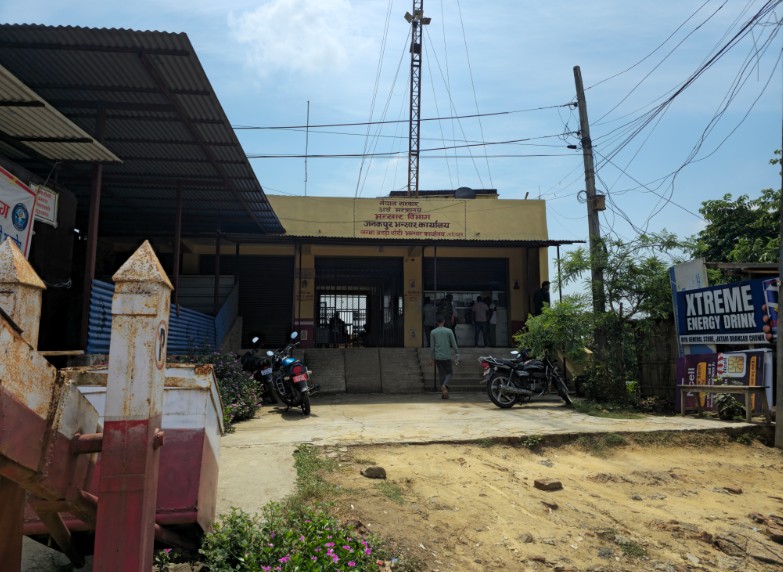
Jatahi Customs Office.
Surendra Bhandari, President of the Janakpurdham Chamber of Commerce and Industry, calls the government’s move impractical. He says that while stopping smuggling is good, it is wrong to trouble the general public in its name.
Jitendra Prasad Sah, a trader from Janakpurdham-10, believes that while the policy is positive, it won’t stop the smuggling that occurs across the border. He argues that smuggling will continue until there is price uniformity between Nepali and Indian border markets.
Sogarth Pandit, who runs a shop in Ram Chowk, Janakpurdham, agrees. “Even if we sell goods with a profit of just a few rupees, it ends up being expensive for the customer. But because the same goods are available cheaper in Indian markets, people go there or items are smuggled in,” he explains. “Currently, we are selling sugar at Rs 110 per kilo, while in the Indian market, it is available for Rs 67 per kilo.”
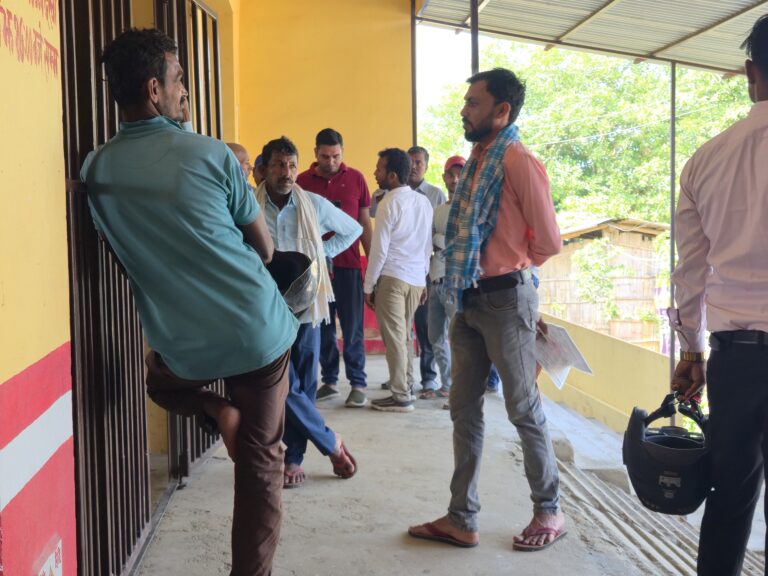
General public at Jatahi Customs.
Pandit notes that even though sugar is produced in Nepal, the failure to set a price competitive with the Indian market leads to cross-border shopping and smuggling.
Rajkumar Gyawa, Non-Gazetted First Class Officer and Information Officer of the Janakpurdham Customs Office, clarifies that the new government is simply strictly implementing the existing rule that requires customs on items over Rs 100. He argues that if the government makes it easy for border residents to shop across the border, revenue collection will be affected. “If we grant exemptions for daily essentials from Indian markets, customs revenue won’t be collected at all. The government sets targets for every customs office; without these duties, revenue collection will suffer,” he says.
DIG Gobinda Thapaliya, Chief of Police for Madhesh Province, claims the Nepal Police have tightened the border to control smuggling but are not stopping household goods. “When someone brings items from the border, we check them, keep a record, and let them go. However, if someone crosses back and forth repeatedly to bring goods, we take strict action,” he states.
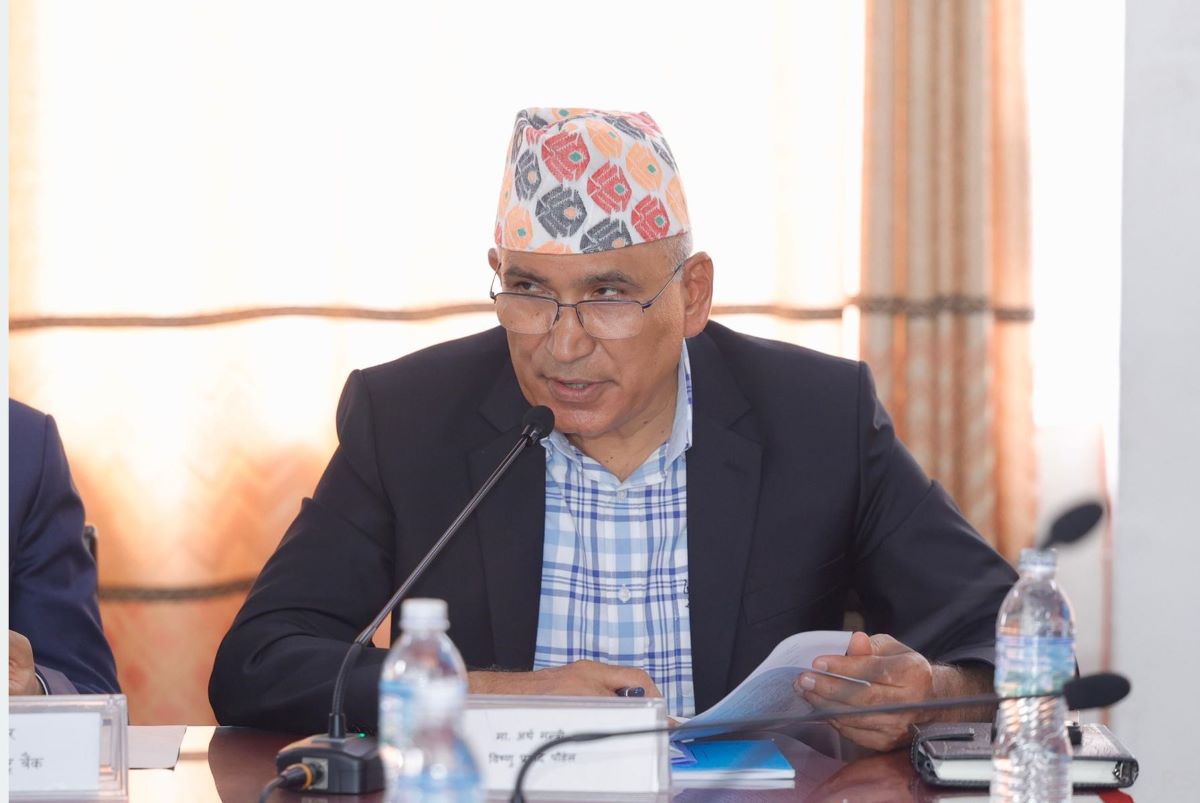
Meanwhile, Mahesh Prasad Yadav, Finance Minister of Madhesh Province, has stated that the customs duties on goods from India have affected the livelihoods of border residents. He issued a public statement noting that the border crackdown is even impacting the long-standing social and cultural relations between Nepal and India.

Grocery stores in Pipraun Bazaar, India, waiting for Nepali customers.
The open border shared with India in Madhesh Province spans 464 kilometers. All eight districts of the province border the Indian state of Bihar to the south. There are numerous main and auxiliary crossing points for movement between the two countries.
Trouble for the “Roti-Beti” relationship
Nepal and India share an open border, geographical proximity, and centuries of cultural, familial, and marital ties. People in border areas have married across the border for generations—a bond famously known as the “Roti-Beti” (a metaphor for a bond forged through economic interdependence) relationship.
The strict customs policy is now casting a shadow over these ties. With customs duties being levied even on wedding gifts, the long-term impact may affect marriage choices. Currently, duties are being charged on everything from wedding presents to supplies for feasts, which some fear may limit Indians to marrying their daughters only within their own regions.
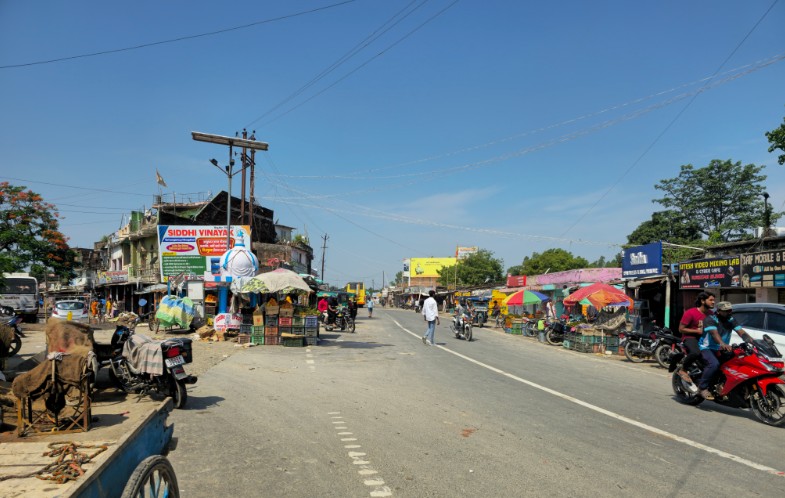
The deserted Indian border market of Umgaon.
On April 26, Ranjit Kumar Mandal, son of Ram Ashish Mandal from Kamala Municipality-2, Dhanusha, married Pushpa Kumari from Hatha Parsa in Madhubani, Bihar. When they returned with the bride, the police stopped the wedding gifts at the Jatahi Customs Office, demanding customs duties. After valuation, the bride’s family had to pay Rs 57,000. Ram Ashish says that previously, police never collected duties on wedding gifts.
Similarly, on the same day, Ram Kumar, son of Jibachh Sah from Janakpurdham-16, married Ranju Kumari from Darbhanga, Bihar. When they brought back furniture and other gifts, they were also forced to pay Rs 57,000 in customs. Expressing his dissatisfaction, Jibach says, “In the past, police would let us go just by looking at the wedding card and the gifts. Now, they make us pay. If customs are charged even on wedding gifts, it will certainly affect the cultural relationship between the two countries.”
Bibha Thakur, a leader of the JSP-Nepal, says the strict customs collection will impact the long-standing marital traditions. “In Mithila, there is a tradition of giving gifts to the daughter and son-in-law. When the hassle of customs and fees is added, the marital relationship between the residents of the two countries could be disrupted in the future,” she warns.