Kathmandu
Tuesday, June 23, 2026





Predictions suggest below-average rainfall and rising temperatures across Nepal this year due to 'El Niño' and 'Indian Ocean Dipole' effects.
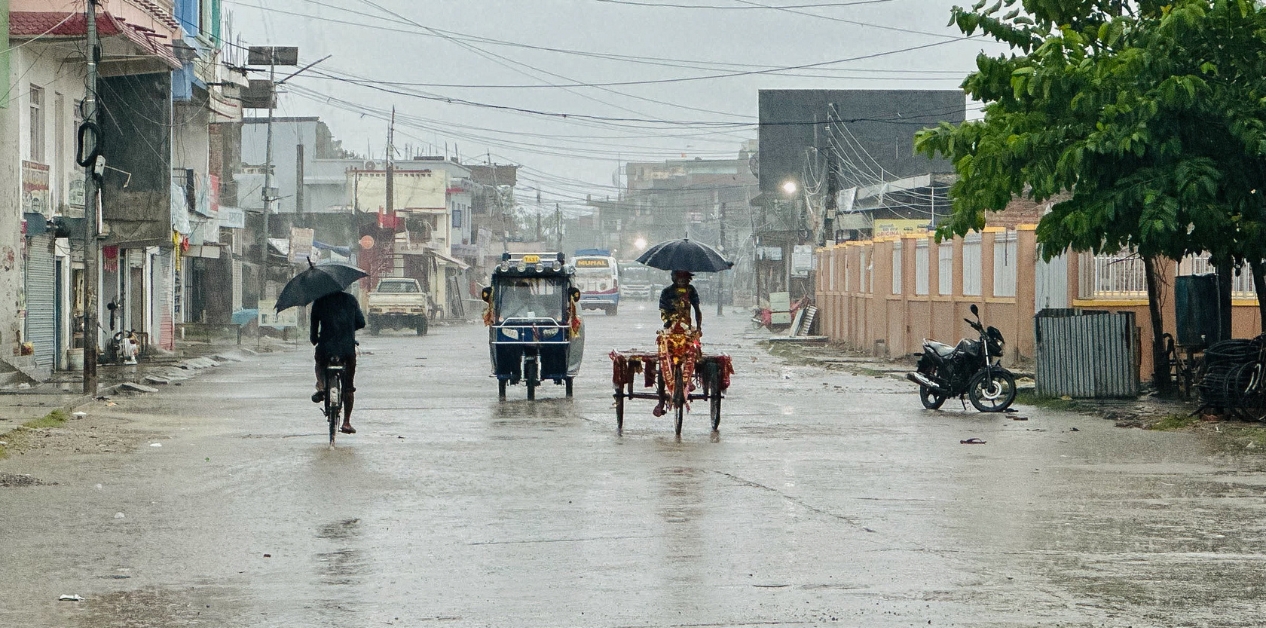
KATHMANDU: It is predicted that Nepal will experience below-average rainfall and increased heat during this year’s monsoon period. Madan Sigdel, Associate Professor at the Central Department of Hydrology and Meteorology, Tribhuvan University, states that the monsoon system is likely to be weak with a high probability of low rainfall due to the development of ‘El Niño’ in the Pacific Ocean and the neutrality of the ‘Indian Ocean Dipole’ in the Indian Ocean.
“The monsoon in countries like Nepal and throughout South Asia is driven by the seasonal influence of moisture-laden winds carried from the Bay of Bengal,” he says. “However, this time, ‘El Niño’ developing in the Pacific Ocean will obstruct the water vapor formed in the Bay of Bengal, making below-average rainfall highly probable.”
Sigdel explains that based on the projections of the South Asian Climate Outlook Forum (SASCOF)—in which Nepal participates under the World Meteorological Organization (WMO)—and global weather changes, below-average rainfall is predicted for Nepal this year. The SASCOF meeting held in the Maldives on April 28 and 29 predicted that South Asia would receive less than normal rain and experience increased heat from June to September. If temperatures rise, there is also a risk of heatwaves.
The climate condition where the sea surface temperature in the Pacific Ocean becomes higher than average or unusually warm is called ‘El Niño.’ When ‘El Niño’ is active, the rainfall systems in South Asia, including Nepal, tend to weaken. This results in below-average rain, a late start to the monsoon, or a decrease in rainfall midway through the season.

The unequal change in the sea surface temperature of the Indian Ocean is called the ‘Indian Ocean Dipole.’ When the ‘Indian Ocean Dipole’ in the Western Indian Ocean is in a positive state, the chances of a strong monsoon in South Asia increase. When the ‘Indian Ocean Dipole’ in the Eastern Indian Ocean is in a negative state, the monsoon weakens in Nepal and South Asia. Since the ‘Dipole’ is in a neutral state this time, it is projected that the ‘El Niño’ developing in the Pacific will have a dominant influence. “This means that a state of dryness or drought will occur during the monsoon period,” explains Associate Professor Sigdel.
In Nepal, the period from June to September is considered the monsoon period. Approximately 80 percent of the annual rainfall occurs during this time. Nepal’s agricultural system is based on monsoon rain. Good farming is expected when it rains. However, meteorologist Binod Pokharel, who is also an Associate Professor at Tribhuvan University, states that the projection of weak rainfall and subsequent drought has increased the possibility of a direct impact on agricultural production.
According to him, it is estimated that Nepal will receive 8 to 15 percent less rain than average this year. This could make it difficult for farmers to plant rice. Pokharel even posted about this on Facebook. He writes, “This year too, it seems it will be dry from late May to late July and only 30 to 40 percent of rice planting might be possible.” In such a case, Associate Professor Sigdel suggests that priority should be given to producing alternative crops that can withstand drought.
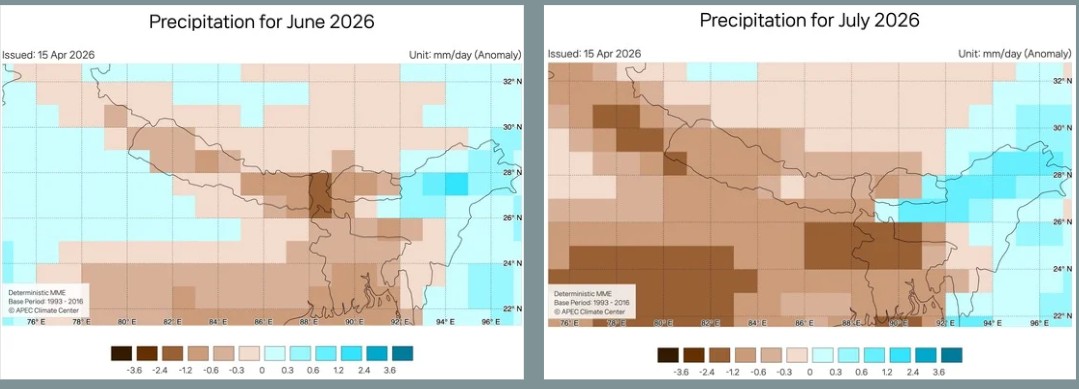
Bibhuti Pokharel, spokesperson for the Department of Hydrology and Meteorology, also says that the development of ‘El Niño’ shows signs of dryness. She informs, “The department is preparing to release an analytical report on May 8 regarding how this year’s monsoon will be province-wise and what the impact of the drought will be.” The department issues the official ‘Seasonal Forecast’ of Nepal.
The risk of monsoon-related disasters is equally high in Nepal during the monsoon period. Associate Professor Sigdel says that one should not assume the risk of disaster is gone just because below-average rainfall is predicted. “Even last year, Nepal had to face a drought during the monsoon period. Heavy rain occurred towards the end of the monsoon, which caused great human and physical loss in the eastern hills,” he says. “Therefore, the government, citizens, and stakeholders must pay attention to monsoon disaster preparedness, search, rescue, and relief in time.”
He says that although it will be dry from late May to late July, the rate of rainfall will increase after that. He notes that due to the impact of climate change, unpredictable weather systems, and changes in rainfall patterns, the timing of rainfall during the monsoon period has started to shift later in recent years.