Kathmandu
Tuesday, July 28, 2026





Delving into the layers of 'Sentimental Value,' director Joachim Trier captures an abstract persona that merges the identities of Gustav Borg and Ingmar Bergman, transforming the film into a profound psychological experience
KATHMANDU: Sentimental Value is not a film in itself. But then again, it is! This is not a review of Sentimental Value. But then again, it is.
Perhaps I am becoming a bit ‘sentimental’ myself! If you know Ingmar Bergman, then after watching Sentimental Value, it might make you feel a bit sentimental, just like it did to me.
After all, it certainly didn’t win ‘Best International Feature’ at the 98th Oscar Awards.
Ah, as I was saying, it is a film, but more than a film, it is Bergman’s ‘Persona’! And this article, too, is a review, but more than a review, it is an experience, which is the experience of encountering Bergman’s soul within the world of Sentimental Value. Come, let us search for that very Swedish filmmaker, Ingmar Bergman, within this film.
There is certainly something in a name!
In Sentimental Value, directed by Joachim Trier, one of the main characters is a Swedish filmmaker named Gustav Borg. How much did the ‘Borg’ in Gustav Borg remind you of Bergman? In fact, Borg itself sounds like the ‘Berg’ of Bergman. More than that, Bergman himself gave this name to many characters in his films. For example, there is Isak Borg in Wild Strawberries (1957). In Hour of the Wolf (1968), one encounters two Borgs; one is Alma Borg and another is Johan Borg.

Swedish filmmaker, Ingmar Bergman
Now, let us turn to Gustav. If you have seen Bergman’s films, or even if you haven’t seen any others but have seen Persona, then the ‘Gustav’ before ‘Borg’ will also remind you of Bergman. Those who watch this film can easily guess how much influence the psychologist Carl Gustav Jung had on Bergman.
There is something in the other names as well. For instance, the name of Gustav’s mother and the name of Bergman’s mother are the same, which is Karin. Bergman, who mostly made films based on his own life, gave this name to characters in several of his films. For example, there is Karin in Through a Glass Darkly (1961) and Karin in Waiting Women (1952). The character Karin can also be found in The Touch (1971), Cries and Whispers (1972), Saraband (2003), and The Virgin Spring (1960).
Furthermore, Trier, who seems to have immersed himself in the memory of Bergman, borrowed the name for Gustav Borg’s daughter from Bergman’s own character in Cries and Whispers, which is Agnes! Trier named the other daughter ‘Nora.’ And Nora is not found in Bergman’s life or films. However, she is found in the prestigious play ‘A Doll’s House’ by another Norwegian playwright, Henrik Ibsen.
Now a question arises: How are Ibsen and Bergman related? Henrik Ibsen, born in Norway, had already left this earth 12 years before Bergman was born in Sweden. However, Bergman met Ibsen through his works. Bergman directed and staged Ibsen’s plays such as Ghosts and Hedda Gabler in Sweden. By creating a radio adaptation of Ibsen’s play John Gabriel Borkman, Bergman gave Swedish drama lovers a taste of Ibsen’s theatrical literature. Ibsen had already given birth to a character named ‘Borkman’ in his play before Bergman was even born. And Bergman also borrowed Ibsen’s first name, ‘Henrik,’ for a character in his film, The Best Intentions (1992). That film was written by Bergman based on the lives of his parents. The character ‘Henrik’ portrays the character of Bergman’s father, ‘Erik.’
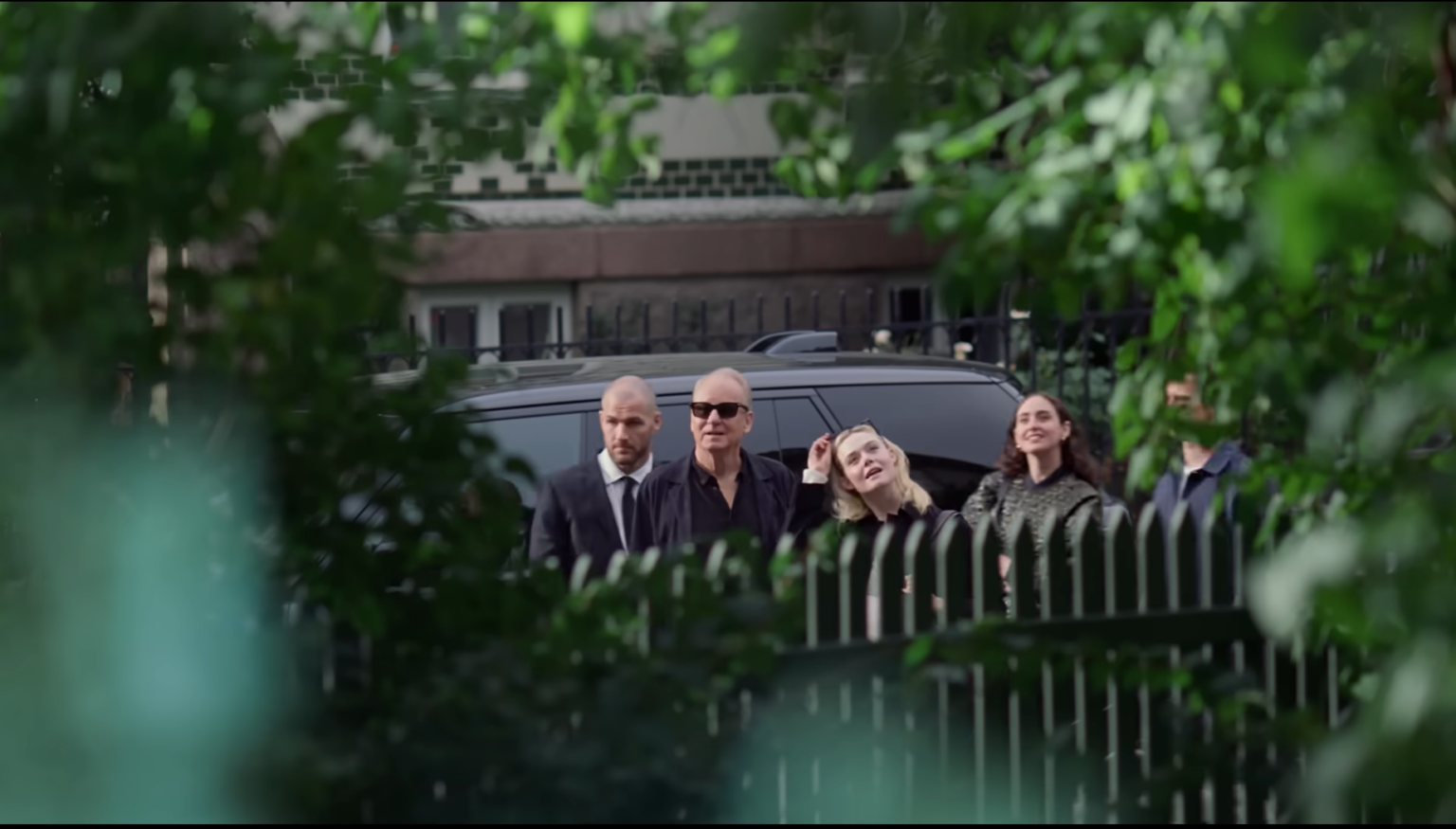
A scene from the film ‘Sentimental Value’
Just as ‘Borkman’ in Ibsen’s play John Gabriel Borkman portrayed Ibsen’s own father, ‘Knud Altenburg Ibsen.’ Both Bergman’s character ‘Henrik’ and Ibsen’s character ‘Borkman’ are father figures of the same nature, men who, in the race to become ideal figures for their families and children, become detached from their intimate, or rather emotional, relationships with them. Isn’t that interesting? Oh! I almost missed another subtle but important point: Trier’s decision to borrow the name of Bergman’s father, ‘Erik,’ and give it to Gustav’s grandson also seems like a deliberate act. It is as if something is being handed down from one generation to another.
Metaphor and medicine
Why is it significant that Trier gave the name Erik to Gustav’s grandson? The first thing to remember is that here, Gustav is a symbolic character for Bergman. And Erik is the name of the real Bergman’s father. I mentioned above that something might be being handed down. Yes, looking from the surface, the name has been handed down. But if we look below the surface, could it be that ‘generational trauma’ and ’emotional unavailability’ are being handed down?
Near the beginning of the film, people are crying while watching one of Gustav’s films. In that film-within-the-film, a little girl named ‘Anna’ boards a train, but her brother (or older brother) cannot board the train; he is left behind and becomes isolated. The role of that little girl ‘Anna’ was played at the time by Gustav’s daughter, ‘Agnes.’ At this point, Gustav wants his grandson to also play a character in his new film. However, the daughter, Agnes, flatly rejects her father’s proposal.
She says to her father, “You come, you get close this way, you get involved, and then once the work is done, you disappear. It feels like after that, you have no concern for us at all. We, however, spend our lives trying to fill the space left empty by you. I will not let my son face that same fate. Erik will not act in any film!”
Bergman has a similar film called Autumn Sonata (1978). There is a daughter, Eva, who is filled with emptiness just like Agnes. There is a mother, Charlotte, who is as absorbed in her profession as Gustav. And just as Agnes tries to save Erik from feeling that emptiness, in Autumn Sonata, Eva is also trying to save her sister, Helena. To prevent Helena from feeling the lack of a mother’s affection, Eva loves, cherishes, and cares for her just as a mother would.
There is probably no need to speak about the use of metaphors in Bergman’s films. Whether it is playing chess with Death in The Seventh Seal, or the sisters trying to touch each other in Cries and Whispers, or even the spider in Through a Glass Darkly, Bergman played with metaphors extensively in his films. However, film itself was medicine for him. He used films to apply balm to his internal wounds, ranging from the emotional to the spiritual.

Stellan Skarsgård and Elle Fanning in the infamous interview meltdown scene from Sentimental Value
In a 1971 conversation with Charles Thomas Samuels, speaking about his film The Seventh Seal, he said: “This film banished my fear of death.”
In 1978, while speaking with Melvyn Bragg for British television, he said something similar. In that conversation, speaking about his other film from 1953, Sawdust and Tinsel, he said: “I am always looking for solutions to my problems. In that process, I wrote this film to work on my ‘jealousy’.”
Yes, Bergman wrote and worked on films to find answers or medicine for his problems, the wounds of his heart, or his spiritual hunger. To heal the wounds of his childhood, he made Fanny and Alexander. To work on the bitterness with his parents, he made films like Autumn Sonata and The Best Intentions. And to understand his own complexities, he made Persona. Like a therapist, in every film, he sought a way out by engaging in deep dialogue regarding one problem or another. He never let film be limited to just metaphor or entertainment; rather, he also made it medicine or psychotherapy.
In Sentimental Value, Bergman’s symbolic character, Gustav, has done the same. Through the medium of film, he has treated the problematic relationship with his daughters.
After hearing that her father is going to make a film about her mother, the younger daughter, Agnes, begins to search for information about her grandmother, Karin. How was she affected by the war? In what state of mind did she give birth to and raise his father? And in what psychological state did she take her own life? And while understanding all of that, she saw her father whom she considered an oppressor as a victim just like herself.
On the other hand, the elder daughter, Nora, only found a fulfillment for the void she was feeling after reading the script her father had written for her. Director Trier has shown this through a beautiful metaphor. A house is seen at the very beginning of the film. This house is different from ordinary white houses it is red and liver-colored! When she was in the grade six, Nora had to write an essay considering herself as an object. She immediately wrote an essay considering herself as her house.
She wrote everything: how the belly of the house would shake when she ran down the stairs and how she and her sister sneaking out the back door wouldn’t be hidden from the eyes of the house. The sisters are worried that the father, who has returned after many years, might sell the house. Nora does not live in the house, but she still has an attachment to it. Before the father arrives at the house, Agnes and Nora spend some time with the items inside. Nora also takes a liver-colored vase with her.
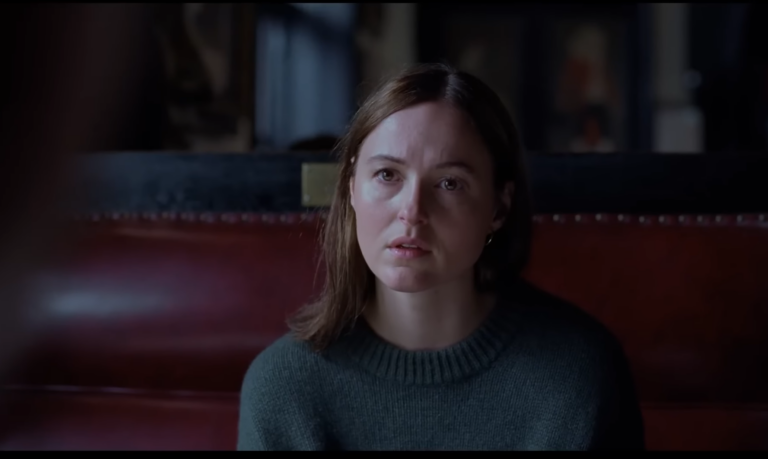
Actress Rerenate Reinsve as Nora Borg in the ‘Sentimental Value’
Near the end of the film, there is a scene where Nora reads a dialogue her father wrote for his symbolic character. She read something like this:
“I could do nothing but sprawl on the floor in helplessness. I am not a religious person. But I remember I was screaming for someone to help me. Whom did I call by screaming ‘Help me’? To whom did I pray? When a person becomes so lonely that they start to fear being alone, they seemingly ask for the company of some unknown entity without even realizing it. Perhaps that is what prayer is? Yes, I did not have the strength to survive any further in isolation. Let there be someone who is mine. I desperately wanted to feel a sense of belonging. I wanted someone to say to me, ‘You are mine.’ I also wanted to have a home. Yes, I needed a home!”
After crying while lying on the floor just like a wound that has had its scab peeled off and salt rubbed in all night, Nora, exhausted, becomes calm and light after reading such dialogues the next morning. It is as if she, too, has found the medicine for her injury. The film, which the father said must be shot at the house, is ultimately not shot there. Instead, they build a set that gives a glimpse of the house. Both father and daughter have achieved liberation from the house. Both have found a cure for the ‘disease’ of the house.
Making and styling
Just because the names of the characters match and the purpose of making the film matches, how can one believe that Gustav is Bergman? In a feature conversation with the British Film Institute, actress and director Liv Ullmann, remembering the shooting days of Cries and Whispers, said, “It is such a depressed and heavy film. But the atmosphere was full of laughter. Because on Ingmar Bergman’s set, laughter and jokes were going on all the time.” On RogerEbert.com, citing the words of another Bergman actress, Harriet Andersson, Quinn Hough also wrote an interesting anecdote about Bergman: Bergman used to tell small lies to his cast! He would occasionally do such eccentric things to make it easier for them to get into their characters.
Bergman himself, at the age of 60, said in a conversation with Melvyn Bragg that although he appeared mature on the outside, he was still a child inside. He preferred doing work as if he were playing a game rather than treating it as a job.
After crying while lying on the floor just like a wound that has had its scab peeled off and salt rubbed in all night, Nora, exhausted, becomes calm and light after reading such dialogues the next morning.
In Sentimental Value, pointing to the stool Rachel is sitting on, Gustav says to her, “My mother committed suicide by standing on this very stool. Your character will also use this same stool to hang herself.” As soon as she hears this, Rachel, who was becoming immersed in the character, gets up from the stool in shock. But it turns out to be some random stool. In reality, Gustav had lied. Seeing the effect of his lie on Rachel, Gustav proudly tells his daughter Agnes about it, overjoyed. It is as if Gustav is truly Bergman.
And truly, Gustav is talking with Rachel about how he wants to shoot a sequence of his film. Where Rachel’s character enters the living room through the door, feels dejected, and enters her room but returns and reaches the door again and finally arrives back in the room. Gustav wants to shoot all of this as if the camera were flowing right along with the character without leaving her for a single second.
At this point, I remembered what his cinematographer, Sven Nykvist, said about Bergman. According to Nykvist, he was exactly like that, just like Trier’s character Gustav. Nykvist told the American Society of Cinematographers: “Before shooting a film, he would tell me why he wanted to make that film and how he wanted it to look. After that, we would discuss how to shoot it so it would look exactly as he had imagined.” In this sense, Trier has tried to capture Bergman’s shadow in Gustav. Or, it could also be said that while Trier was making this film, Bergman’s soul might have entered him.
Layers of ‘Persona’
Those who know Bergman have seen Persona. Or, those who have seen Persona know Bergman. This means that the importance of this film for understanding Bergman is to that extent.
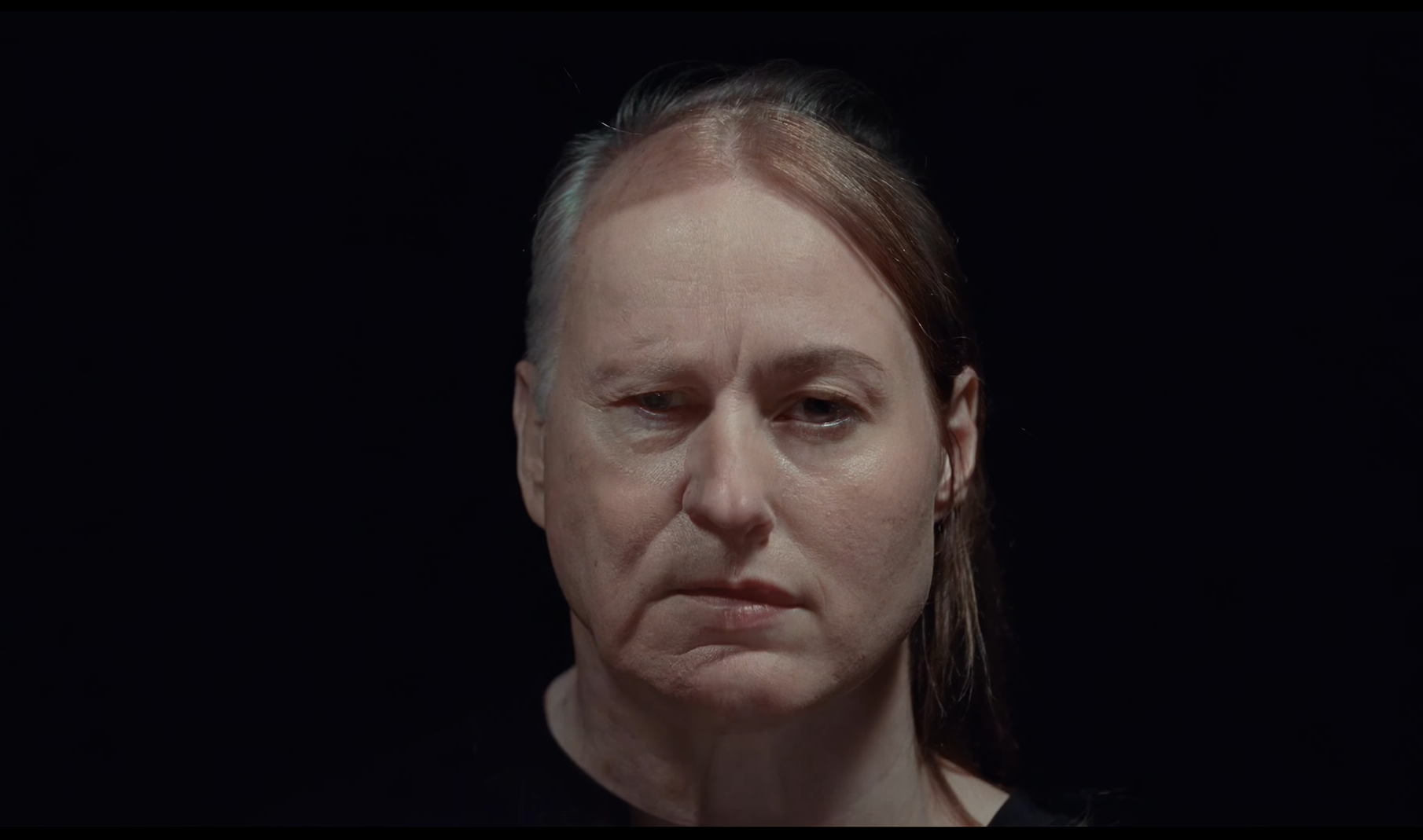
There are two main characters in Persona one is Alma and another is Elisabet. This film is based on a well-known concept by psychologist Carl Gustav Jung, ‘Persona and the Self.’ Where Alma and Elisabet, despite being two characters, are like one. But both are trying to wear each other’s masks. Where both have not been able to meet each other inside the masks, nor have they been able to meet themselves inside their own masks. In the film, Bergman has taken close-ups of both characters and blended them into each other, joined them in such a way that it is difficult for the audience to distinguish whose face belongs to whom. Similar close-ups and merge-ups are seen in Trier’s Sentimental Value which is between Gustav and Nora. It is as if Sentimental Value is Trier’s Persona.
Since she is a character written with Nora in mind, Gustav asks Rachel to dye her hair just like Nora’s. However, after that incident, Rachel becomes so attracted to Nora that she stops thinking about her own character and instead starts thinking about Nora. She stalks her on Instagram, starts dressing like her, and even starts speaking with a Norwegian accent when speaking English. Looking at it this way, there is another layer of Persona within Sentimental Value where the close-ups of Rachel and Nora are merging.
There are two main characters in Persona one is Alma and another is Elisabet. This film is based on a well-known concept by psychologist Carl Gustav Jung, ‘Persona and the Self.’
In the next layer after that, there is also an ‘abstract persona’ where the close-up and merge-up of the two filmmakers, Gustav Borg and Bergman, can be seen. And even deeper than that, there is another layer where this film itself is a ‘persona.’ And there, it is not Gustav or Nora, but Trier himself who is found merging his close-up with Bergman’s.
And truly, Gustav had lied about that random stool, saying it was the one his mother stood on when she hanged herself! Reaching that point, I remembered another fragment of a Bergman interview. Where he was explaining the magic of theater or cinema to Melvyn Bragg: “You pick up an ordinary chair. You could pick up that one. And just say that this is an extremely valuable chair. It is a diamond-studded chair. It is a special chair. They will believe it. They will believe it even while seeing that it is ordinary. But you must have said that either on stage or inside a film screen.”
Rachel did not believe Gustav’s lie just like that. Because she believed it, she got up, so startled. Was she scared out of her wits at that time? Well, whether she was scared or not, for whatever reason, she didn’t act in the film, and that role fell into Nora’s lap. And when Nora does that same scene, a chair is used to hang from instead of the stool.
Trier’s stool and Bergman’s chair merge into each other and, as it were, are becoming a “persona” of another layer. Or it could be that Trier is not trying to make another ‘Persona’ at all. He just wants to give a tribute to Ingmar Bergman, whether through a stool or a chair, and that’s all!