Kathmandu
Monday, July 27, 2026





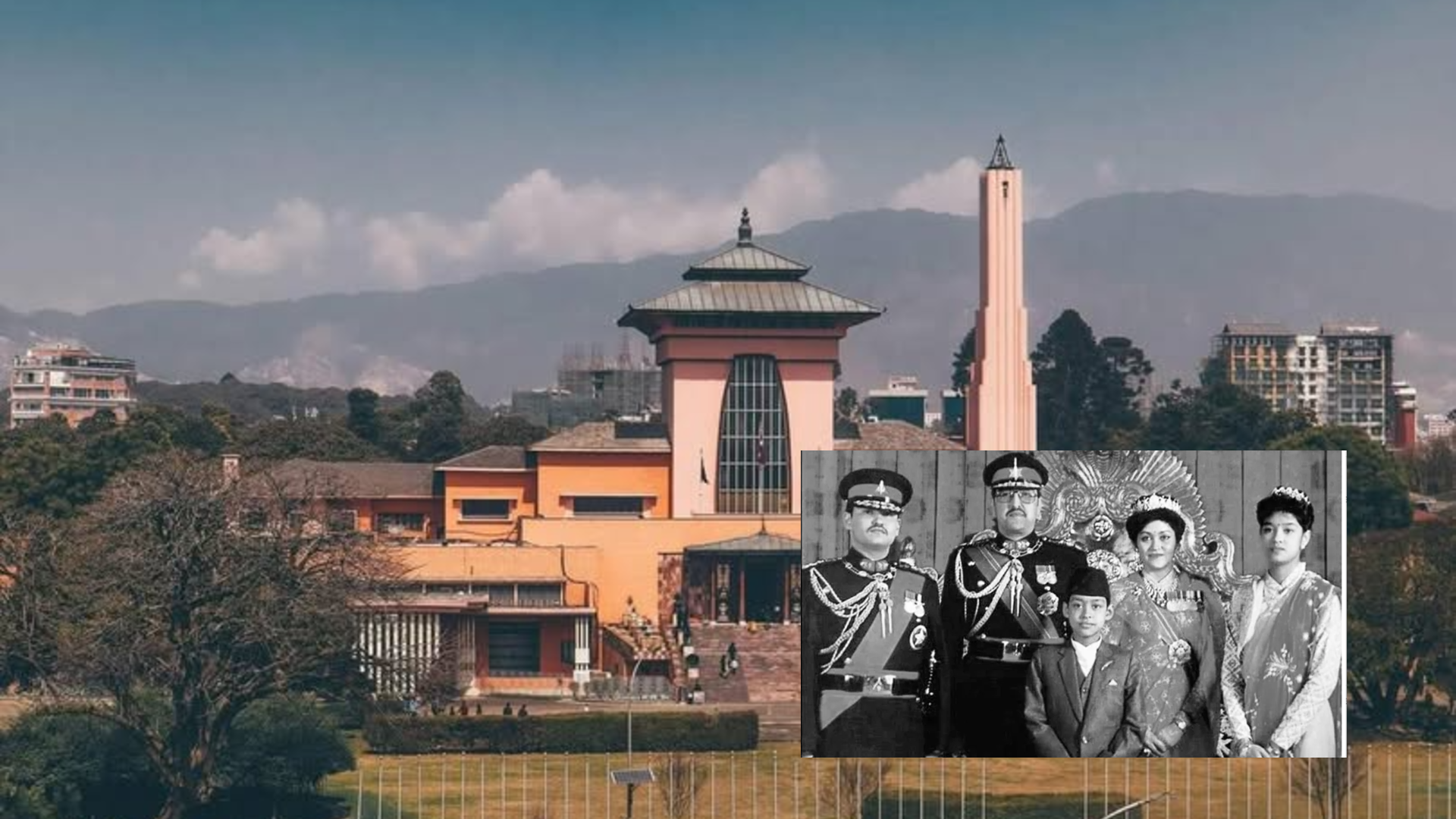
KATHMANDU: Just after the clock struck nine on the night of June 1, 2001, gunshots were heard in the Narayanhiti Royal Palace in Kathmandu. When they stopped, 10 members of Nepal’s ruling Shah dynasty, including King Birendra, Queen Aishwarya, and four other royals, lay dead or dying. According to the official story, Crown Prince Dipendra had come to a regular gathering of his family members and close relatives under the influence of alcohol and drugs, started shooting on them, and eventually shot himself.
In a matter of days, the palace was sealed off, the bodies cremated, and the verdict was announced: Dipendra was the culprit. The parliament of Nepal agreed with the verdict. The world moved on.
But Nepal never quite did.
Some two and a half decades later, the 2001 Narayanhiti massacre remains the most contested event in modern Nepali history. It is a wound that has never fully closed. It is a story whose official version has never been convincingly accepted by a significant portion of the Nepali public. Academics, ex-insiders, royalist commentators, and political scientists have continued to poke holes in the official story, posing questions that no government or parliamentary committee has ever satisfactorily addressed.
What follows is not a definitive alternative narrative. Rather, it is an explanation of why, even after 25 years, so many people in Nepal still do not believe what they have been told.
Dipendra did not do it
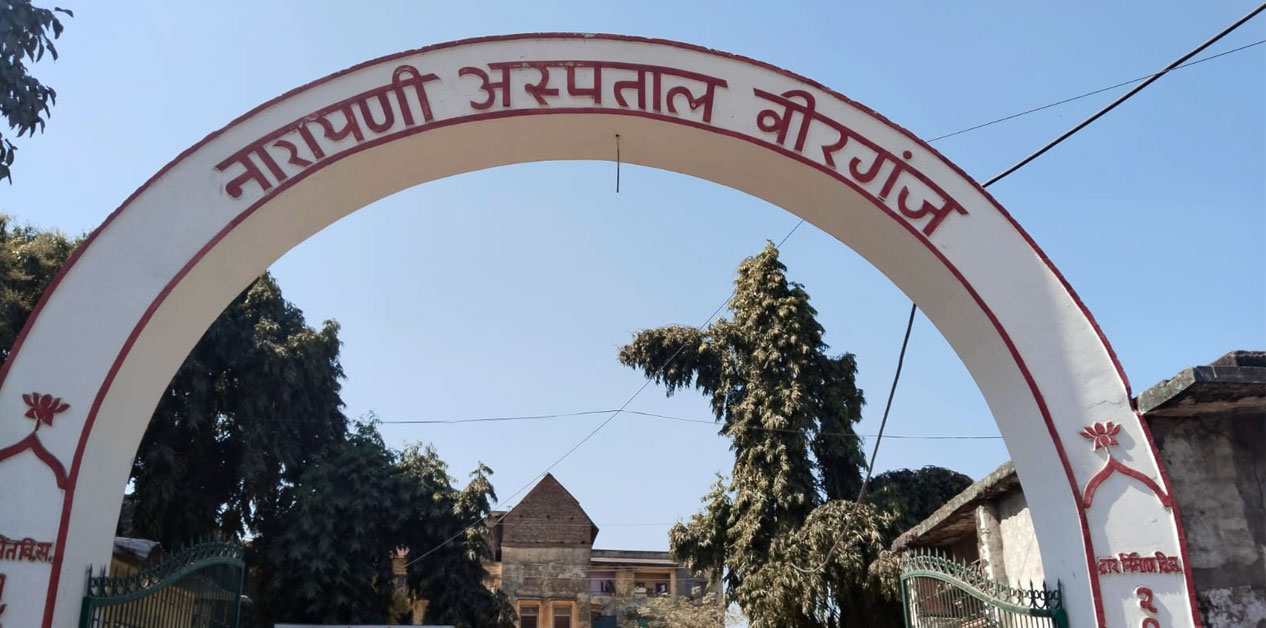
At the center of the official account of the royal palace massacre story was placed a man who never said a word in his own defense. Crown Prince Dipendra was found “unconscious” with a gunshot wound to the head. He was placed in intensive care. In what appears to be an unusual constitutional maneuver, he was declared King of Nepal while in a coma. His “rule” lasted exactly three days. He died in the army hospital’s ICU on June 4, 2001, without regaining consciousness.
This is the foundational problem with the Dipendra-did-it narrative: the accused never spoke. No confession was recorded. No forensic reconstruction was independently verified. Although the survivors held Dipendra responsible, people continue to discredit these “eyewitness accounts” as fabricated. The country received a parliamentary committee’s conclusions, assembled in haste, built largely on testimony from palace staff and surviving members of the royal family. These were people who were themselves, depending on one’s reading of events, either victims, witnesses, or interested parties.

Dipendra Bir Bikram Shah Dev
The pace at which this investigation took place was surprising. Almost immediately after the massacre, while the country was reeling under the shock, while all basic facts about the event were yet to be established, before any independent foreign experts could be contacted for investigation, the story was finalized: there had been an argument between Dipendra and his parents regarding his choice of bride, Devyani Rana, whom his mother apparently did not like.
It was said that was a tidy motive for a messy crime. Perhaps too tidy!
The man who wasn’t there
Former King Gyanendra, who was a Prince back then and a younger brother of King Birendra, was in Pokhara the night the massacre took place. This is an established fact. It is also, for many analysts and observers, the most politically loaded fact of the entire episode.
Of the senior adult males of the Shah dynasty, Prince Gyanendra alone was absent from the palace gathering on the night of June 1. However, members of his immediate family, his wife Queen Komal and his son prince Paras escaped the tragedy and survived, although the former was seriously injured but fortunately managed to survive, which is repeatedly mentioned as a proof that Gyanendra himself was not personally guilty of the tragedy.
The royal massacre killed the monarch King Birendra and his entire immediate family: King Birendra himself, Queen Aishwarya, heir-apparent Crown Prince Dipendra, who died three days later of injuries sustained during the massacre, his younger brother Prince Nirajan and the King’s daughter Princess Shruti. However, besides causing many casualties among the Nepali nobility, the royal massacre removed any possible candidates for the throne from King Birendra’s immediate bloodline and made room for the next king, Gyanendra. This Gyanendra-benefited-from-the-massacre argument is often used to point the accusing finger at him.

Former King Gyanendra addresses a press meet before leaving the Narayanhiti Royal Palace. Photo credit: Rajesh Gurung
However, it is important to note that while Gyanendra was travelling back from Pokhara to Kathmandu via the road after receiving news about the tragedy, he was delayed, thus preventing him from reaching the Capital in a timely manner. This detail may be considered quite revealing in the context of alternative interpretations of the royal massacre. It turns out, according to such analysts as geopolitical commentator Arjun Gyawali, who has extensively studied the royal massacre, Gyanendra’s return was actually hindered.
This is something also accepted by the then Royal Nepalese Army Chief General Prajwal Shumsher Junga Bahadur Rana. In one of his television interviews last year, the former army chief said when it was not possible to bring Prince Gyanendra to Kathmandu by air due to bad weather and he was coming to the Capital by road, he was stopped at an army barracks in Dhading.
According to a source, Gyanendra’s bodyguard sought permission to shoot the soldier blocking their way in Dhading and move ahead but he was not granted the permission. Instead, he was told to oblige to the army’s instructions and wait in the barracks for hours before being allowed to continue their journey to Kathmandu. “At that moment, I saw a very worried and concerned expression on Prince Gyanendra’s face, as if something very ill-ominous could happen,” the source quotes Gyanendra’s bodyguard as saying.
This claim has been discussed in Nepali political commentary and online discourse, though it has not been independently verified through official records. If true, it raises some obvious questions. Who ordered the delay? Why? What was happening in Kathmandu during those hours that required Gyanendra to be kept at a distance?
These questions have never been publicly answered.
The fire that consumed the evidence
In Nepal, Hindu funeral rites move quickly. Cremation typically occurs within 24 hours of death. No one, strictly speaking, violated religious custom by cremating the royal dead rapidly. But speed and religious convention, in this case, converged in a manner that made comprehensive forensic investigation essentially impossible.
The bodies of King Birendra, Queen Aishwarya, and other victims were cremated without being seen by any independent forensic expert. Forensic information on ballistics, the kind of evidence which would help in determining which type of ammunition was used, the location of the shooter(s), etc., was not available to anyone independently investigating the murders.
The murder at the royal palace in Nepal, committed on June 1, 2001, killed an entire royal family, and there is nothing comparable to this incident in modern history. In case of such a huge crime, forensic silence looks quite unusual. First of all, this crime took place in the royal palace in the capital city that was presumably the safest and most secure place in the country. Still, the process of putting together facts of what happened was performed according to testimonies of surviving guests, palace workers, and a parliamentary investigative body.
The army that did not move
Almost four thousand troops guarded the Narayanhiti Royal Palace on the night of June 1, 2001. Allow yourself to digest this number for a moment. Four thousand armed individuals stationed around the most heavily fortified compound in the nation, not a single soldier making their way into the Billiards Room where the royals were being gunned down. The shooting continued for several minutes. There was screaming going on inside the rooms as well. The royals were being murdered. And the Royal Nepalese Army, in full force around the palace, remained outside and waited.
When this horrific neglect was mentioned later on, the then Commander-in-Chief of the Army offered a reply which has left the memory of the massacre forever haunted: the Nepali Army did not have the responsibility to provide safety within the palace grounds, but rather outside them. This is the response given by the then head of the army as to why four thousand troops could hear the massacre and do nothing about it.
The name Rana appears more than once when you map the power structure around Narayanhiti that night, and analysts including Arjun Gyawali have been explicit about what they believe that pattern reveals. The Army Chief was a Rana. The Police Chief was a Rana. And in Mahendra Manjil, a residence situated within the very premises of Narayanhiti Palace, where she lives to this day, resided the Queen Mother Ratna, herself the daughter of a Rana family. Gyawali and others who have studied the massacre describe this constellation of power as a “Rana Center”, an informal network of influence that, they argue, was effectively in control of the key institutions surrounding the palace in the critical hours before, during, and after the killings.
It is this same Rana Center, Gyawali claims, that ensured the most basic tool of criminal investigation – a post-mortem examination of the dead – was never conducted. The bodies of a king, a queen, and several members of the royal family were cremated without autopsies. In any serious criminal investigation, anywhere in the world, that would be considered the destruction of primary evidence. In Nepal in June 2001, it was presented as religious observance.
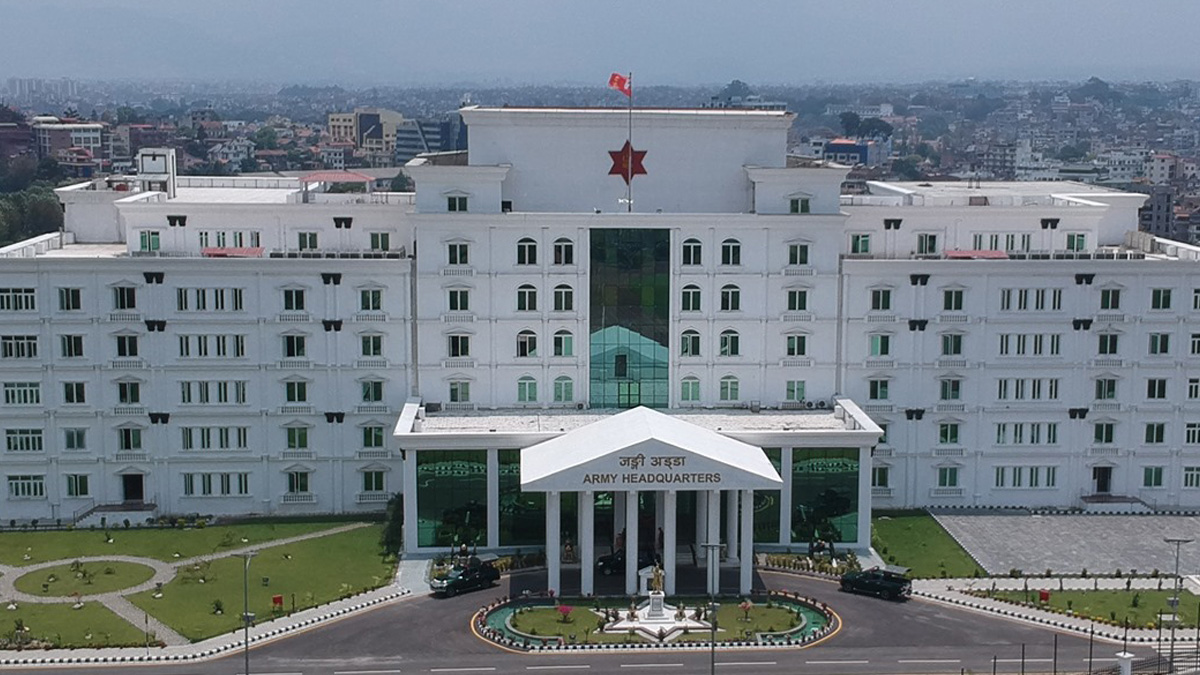
It would be difficult to identify the most shocking assertion made by Gyawali on record since he seems to have plenty of evidence and witness accounts to support his claims. However, perhaps the most explosive statement would involve live witnesses rather than documents and other evidentiaries. There is one video of Gyawali where he has shown two people who are none other than Chhabi Lal Niraula, once a leader of the Nepali Congress (Subarna), which split away from Nepali Congress in 1978, and Prahlad Humagai, another prominent political figure, saying they have met with Army Chief Rana at the Army headquarters.
Both of them stated that during their conversation, Rana made some statement that would completely negate the official version: “Gyanendra had been spared so that at least someone from his father’s line would remain.” It should be noted here that they did not state that Gyanendra happened to survive. That Gyanendra was spared means something very different indeed.
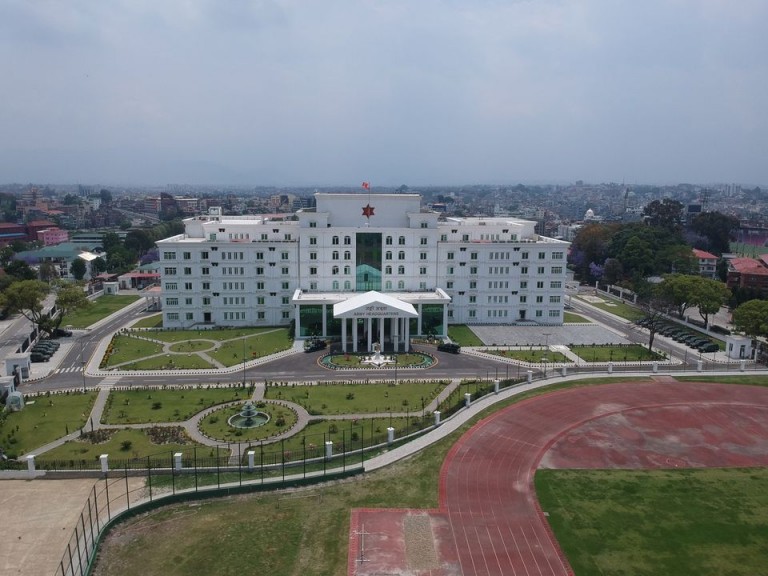
Jangi Adda, Bhadrakali, Kathmandu. File photo
Niraula and Humagai have both stated publicly that they are prepared to confront the then Army Chief Rana directly on this claim. Gyawali’s point is blunt: all three men – Niraula, Humagai, and Rana himself – are alive. The claim is specific, the witnesses are named, and a confrontation could be arranged. “Things could be verified if there is a will,” Gyawali says. The question is whose will, and why it has been absent for twenty-five years.
And then there is the matter of the doors. Former Narayanhiti Royal Palace employee Rishi Kumar Pandey who worked at the palace for 20 years has written in his book titled “Rajdurbar: Rahsya, shadyantra ra chakrbyuha” (Royal Palace: Screts, Conspiracy and Labyrinth) that the security systems of Narayanhiti Royal Palace were designed so that in the event of gunshots or a violent incident, the palace doors would lock automatically. This was a failsafe intended to contain a threat and prevent escape.
On the night of June 1, 2001, this system did not activate. The doors did not lock. Whether through technical failure, deliberate disabling, or some other explanation, the automatic security response that should have sealed the palace the moment the first shot was fired simply did not happen. This is not a minor footnote. It is a direct question about the integrity of the palace’s security infrastructure on the most consequential night in the modern history of the Nepali state.
The man best positioned to answer that question is Bibek Shah, who served as the Royal Palace’s Military Secretary at the time. He knows the security protocols. He knows what was operational and what was not. He presumably knows why the doors stayed open. But in twenty-five years, no official body appears to have pressed him publicly for an answer. Nobody, it seems, has asked. And in that silence, as in so many of the silences surrounding June 1, 2001, the questions accumulate, unanswered and unretired, waiting for a Nepal that finally decides it wants the truth.
Foreign hand?
However, since the incident occurred, several alternative works of literature and criticism have emerged in Nepal, penned by authors, former government officials, and political analysts who declined to believe in the official narrative of the incident. These include the work of political analyst Arjun Gyawali, who has written books on the subject matter and has produced videos about the massacre and the politics around it.
According to Gyawali and others, there is a connection between two incidents that have been separated from each another by official historians; those two being the massacre and the Maoist insurgency that occurred in the period between 1996 and 2006, the latter year being that in which the monarchy was effectively sidelined and later abolished altogether.
The Maoist rebels fought against the government in the late 1990s and early 2000s. The Indian intelligence agency RAW has long been accused – by Gyawali and others, though never conclusively proven – of having cultivated links with Nepal’s Maoists during this period. Gyawali has argued that revelations about the nature of those links shed considerable light on the massacre and its aftermath.
His book, Narayanhiti Hatyakanda: Nepali Communist Ra CIA, frames the massacre within a broader geopolitical contest, one in which Nepal’s identity as the world’s only Hindu kingdom, and its strategic location between India and China, made its internal politics an object of intense external interest.
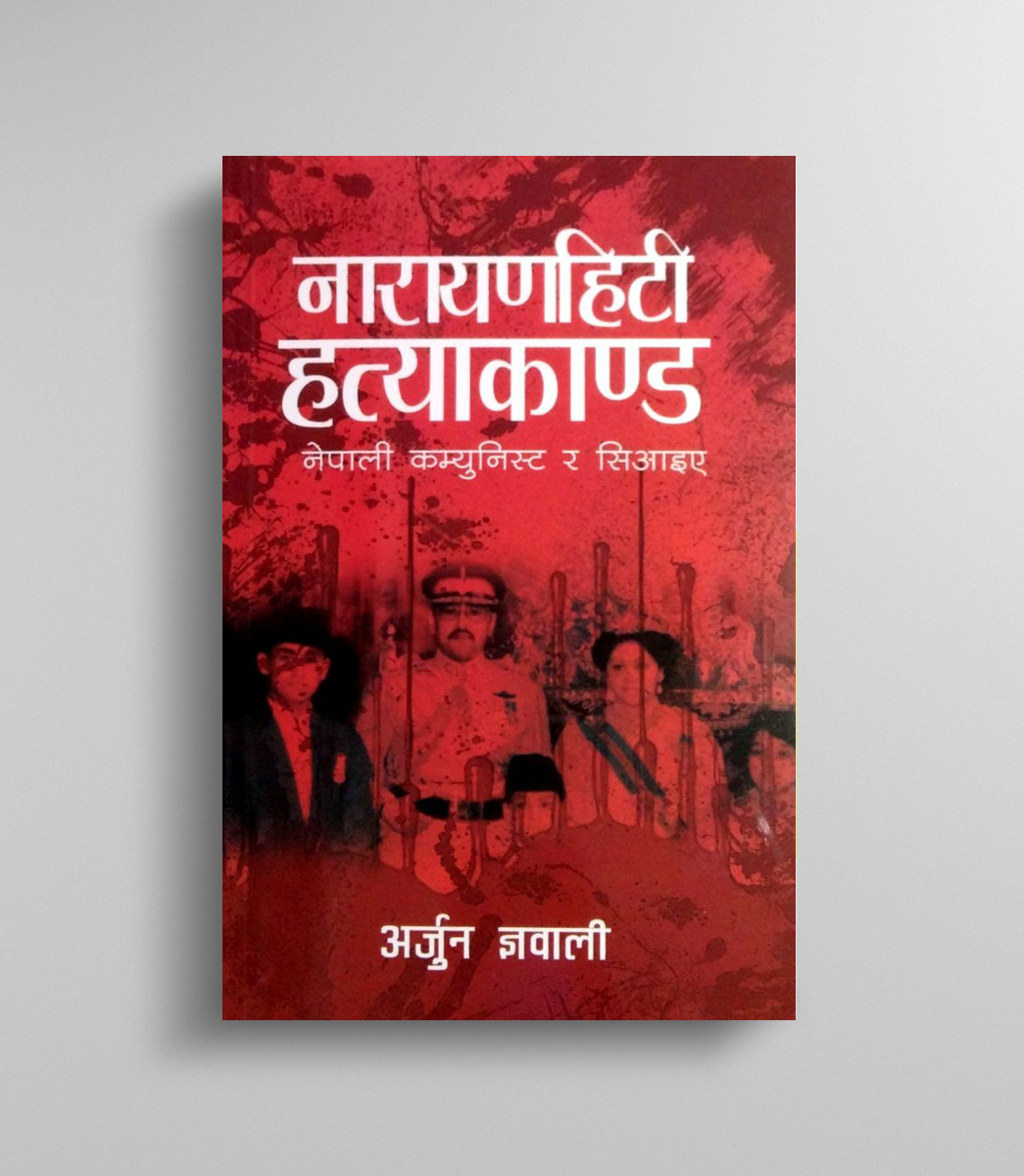
Cover of the book ‘Narayanhiti Hatyakanda: Nepali Communist Ra CIA’ by Arjun Gyawali
These claims have been dismissed by some as conspiracy theorizing. But the political outcome of the period in question is not in dispute: Nepal went from a Hindu monarchy to a secular federal republic between 2001 and 2008, a transformation of constitutional character so complete that it is difficult to find a modern parallel. A country’s entire civilizational identity – religious, political, structural – was rewritten within a single decade.
The political dividend
Here is what is not contested: the massacre devastated the institutional legitimacy of the monarchy at a stroke. King Birendra had been a popular figure, associated with Nepal’s democratic transition of the early 1990s. His death removed the dynasty’s most credible human face.
What followed was, to put it mildly, a sequence of events that benefited those who had long sought the monarchy’s end.
Gyanendra ascended the throne in what was perhaps one of the most difficult times in Nepal’s history. Although his critics say as a King, Gyanendra proved a far less politically adroit figure than his brother because in 2002 he dismissed the elected government, and declared a direct royal rule in 2005, things have to be seen in the light of his perspective as well.
These were the times when the Maoists were violently and brutally attacking the Nepali state from the jungle, killing civilians, party cadres and security personnel and destroying private and public property. Today we know very well about the foreign connections of the Maoists, thanks to some crucial revelations by important people, including Indian politicians and analysts and former RAW officials. The political parties, too, were staging street protests, although without the much-needed support from the general public. Prime ministers, one after another, had failed to hold elections. What was then King Gyanendra supposed to do in such a situation? There was no question of surrendering to the foreign-backed Maoist rebels. There was no question of handing over power to the discredited political parties before elections.
This gave birth to the February 1, 2005 royal takeover. Soon after the royal takeover, the security forces appeared much stronger against the Maoist rebels who started suffering huge casualties in the battlefield. Maoist attacks on security installations started failing and it became evident that if that continued, the rebels’ grip and influence would soon be wiped out or rendered ineffective.
That seemingly worried the foreign powers behind the Maoist movement and the political parties’ street protests. It is this worry that gave birth to the 12-point understanding in New Delhi that drove the political parties, which had previously regarded the Maoists as adversaries, into a tactical alliance with them. The rest is history.
Thus, the arc from 2001 to 2008 looks less like a series of coincidences than a sequence. The massacre eliminated the popular King. His replacement was a man who was deliberately accused of having a hand in the massacre. This accusation, without a shred of doubt, played a very important role in the abolition of the institution of monarchy. It was not without a reason or without a purpose that then Maoist leader Baburam Bhattarai, who is allegedly very close to India, wrote an opinion piece titled Naya Kotparba lai manyata dinu hudaina in Kantipur daily only a few days after the massacre, holding Gyanendra responsible for the massacre. It is no secret either that the Kantipur Media Group, the country’s most influential media house back then, played an active role in building public opinion against the institution of monarchy in Nepal.
All this raises some questions. Were Gyanendra and his immediate family spared in the massacre so that it would be easy to point the accusing finger at them later? Was Gyanendra simply used to manage the political vacuum that was created after the royal palace massacre? Was he simply used to manage Nepal’s transition from the world’s only Hindu kingdom to a secular republic?
The man who stayed
Here is one point that is not often paid attention to in a discussion of King Gyanendra’s reign: He didn’t leave the country! After the declaration of the republic in 2008, when former King Gyanendra Shah left the Narayanhiti Palace, he did not take refuge in London or Dubai or even Delhi, Washington or Beijing. He remained in Nepal and stayed in Kathmandu, attended public events, gave press conferences, and continued, right up until today, being seen in the country he once ruled.
This is not the behavior of a man who fears what a government investigation might unearth. Any administration in Kathmandu, at any point in the last seventeen years, has had both the legal authority and the political incentive to reopen the massacre case. If Gyanendra carried guilt – if there were conspirators who could talk, evidence that could surface, witnesses who knew too much – his continued residence in Nepal would be an act of extraordinary recklessness.
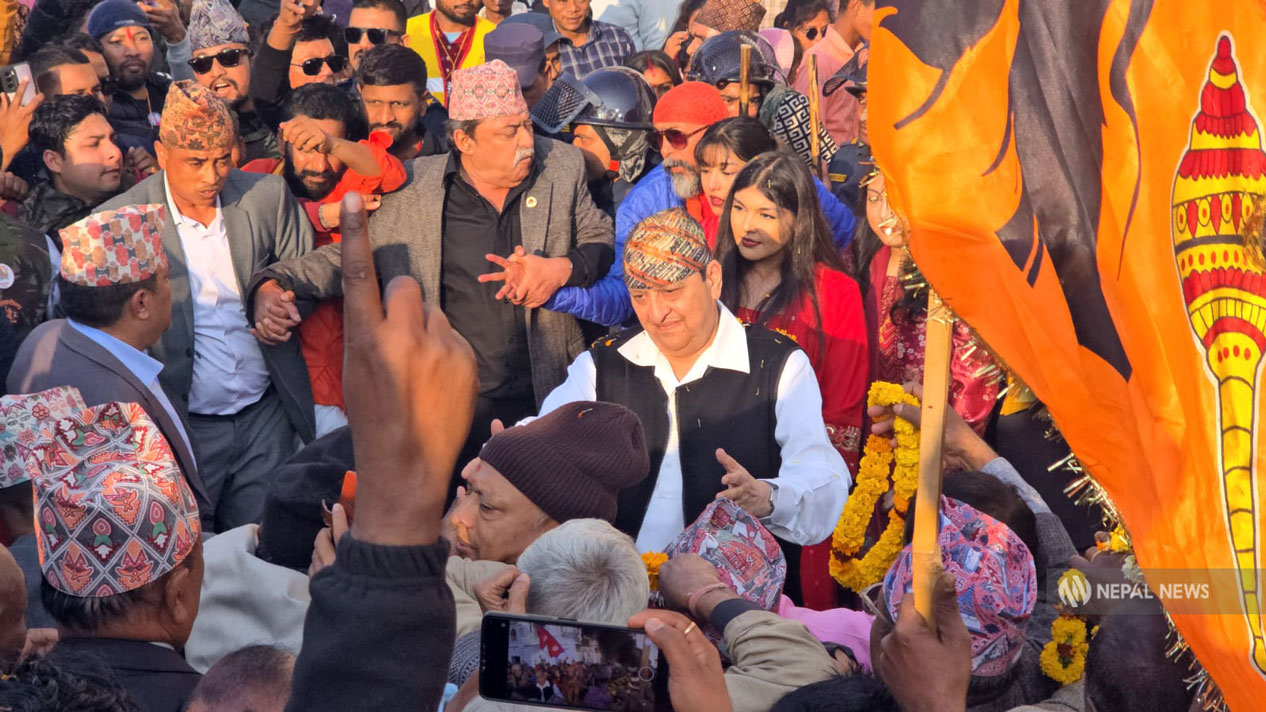
Former King Gyanendra Shah and family with supporters in Janakpur. Photos: Birendra Raman/Nepal News
Needless to say, those who design the murder of kings do not linger within easy reach of the successor state. They do not attend temple ceremonies in Kathmandu and across the country. Former King Gyanendra’s decision to stay, and to stay openly, appears to be the supreme confidence of a man who has nothing to hide. Given what is at stake, this reading sounds considerably plausible.
Then there is the arithmetic of the 2006 Jana Andolan, and it does not add up against the suspicion of former King Gyanendra. The mass uprising of 2006 lasted for nineteen days, and there were deaths ranging from nineteen to twenty-three. This is what made him yield: some twenty people dead, street demonstrations, and international pressure. But it now looks plausible that he perhaps yielded and handed back power to the political parties to avoid violently suppressing the movement and avoid hundreds or maybe even thousands of deaths such suppression could result in.
Now consider the logic of the accusation against him. We are being asked to believe that this is the same man who allegedly engineered or enabled the cold-blooded elimination of his own elder brother, his sister-in-law, his nephews, his nieces, and several other relatives in a single night all for the prize of a throne.
A man who could stomach that calculus, who could absorb the murder of his own blood as the acceptable cost of power, would not be undone by nineteen days of protest and a casualty count that any serious authoritarian government would regard as negligible. The ruthlessness required to carry out what Gyanendra is darkly accused of, and the near-immediate capitulation of 2006, belong to two entirely different political personalities. They do not fit the same man.
A nation that never got closure
What is perhaps most telling about the state of public opinion in Nepal is not the persistence of suspicion (suspicion in the aftermath of violent political events is universal) but its durability. More than two decades on, the massacre continues to generate heated debate, serious books, and viral YouTube videos. Arjun Gyawali’s channel, which regularly discusses the massacre and its unresolved dimensions, commands a substantial audience.
The Nepali public’s refusal to close the book on June 1, 2001 is not the behavior of a population that has been convinced. It is the behavior of a population that was never persuaded in the first place.
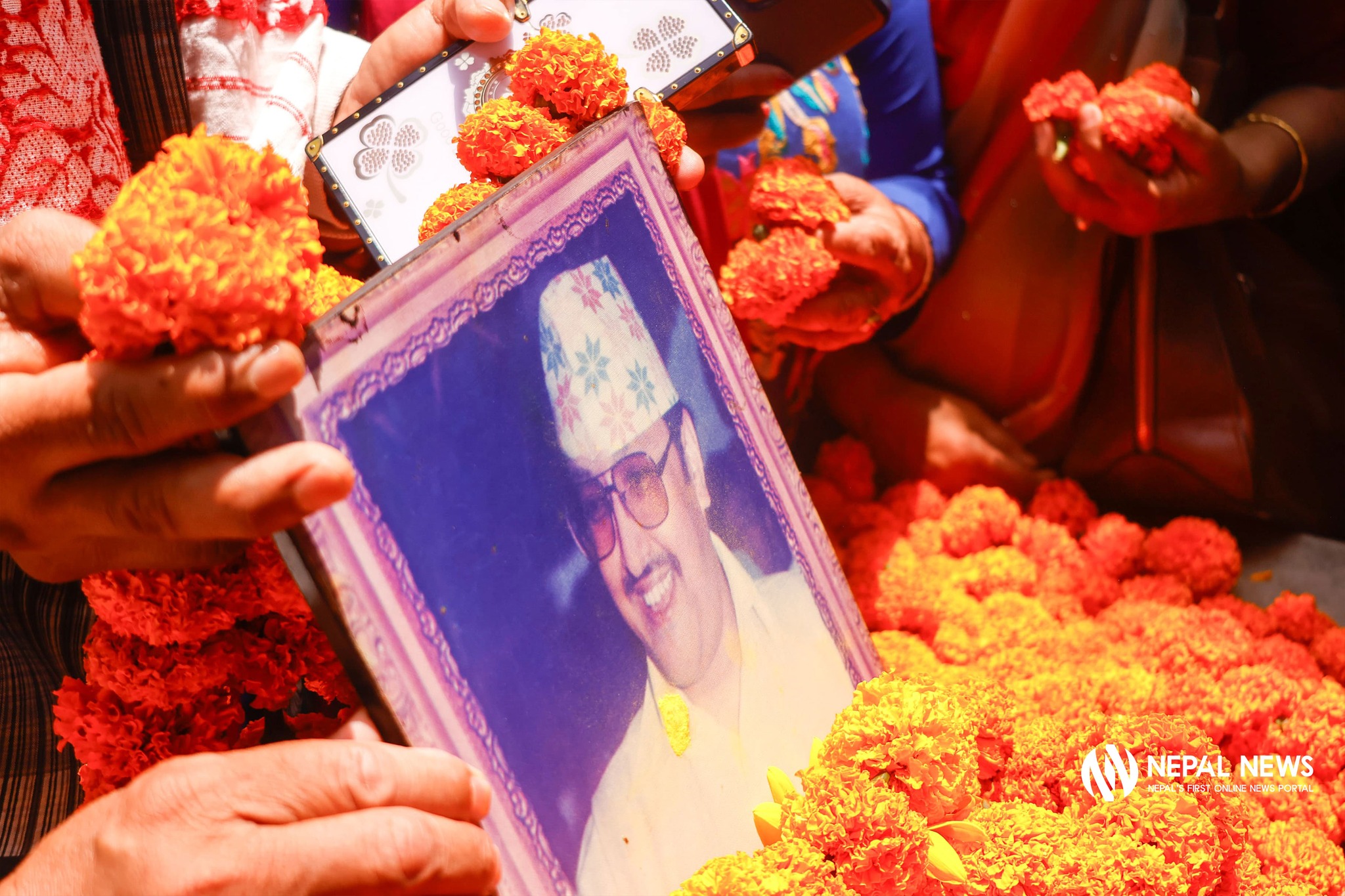
Followers of the late king Birendra Bir Bikram Shah Dev mark his death anniversary across the country today
For many Nepalis, the official account of the royal palace massacre presents a series of coincidences too convenient to be coincidental. That the one adult male of the senior Shah line absent from the palace that night happened to be the man who subsequently became King to manage the transition phase. That the bodies were cremated before independent forensic scrutiny was possible. That the accused died without speaking. That the official investigation moved with a speed that precluded genuine inquiry. It is significant, then, that a decade after the mass murders, Nepal had become completely transformed from a Hindu kingdom to a secular republic.
None of these remarks can be taken as evidence for another theory. But absence of proof is not proof of absence. Indeed, it may theoretically be the case that the official version is the correct one: that Dipendra, while in a state of inebriation and emotional upheaval, acted on his own, and the results of the event were purely coincidental.
But historical accountability demands more than possibility. It demands a standard of transparency and investigative rigor that the official process around the 2001 massacre conspicuously failed to meet.
Until Nepal gets an independent, internationally credible, forensically rigorous re-examination of the events of June 1, 2001—something no government has seriously attempted—the questions will not go away. Nor should they.
Some wounds do not heal. Some questions do not deserve to remain unanswered simply because those in power find the asking inconvenient.
![NSU protests closure of public library, demands immediate reopening [Photo Feature]](https://english.nepalnews.com/wp-content/uploads/2026/07/1-6.jpeg)