Kathmandu
Monday, July 27, 2026





Business leaders appointed to government boards are now required to disclose their assets under Nepal's sweeping new corruption investigation framework, raising sharp questions about where the state's jurisdiction over private individuals begins and ends.
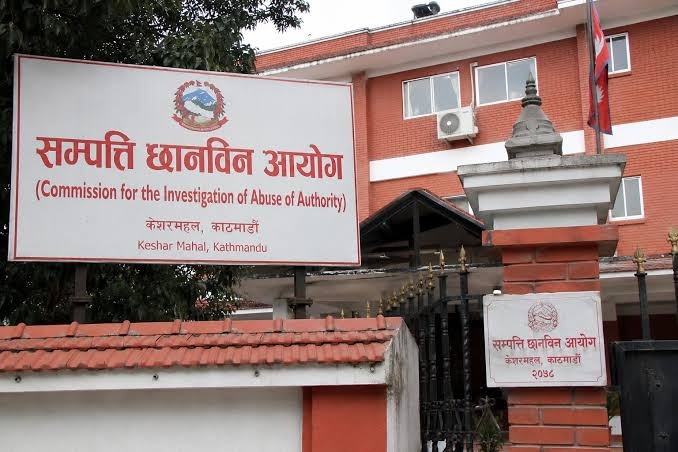
KATHMANDU: When Prime Minister Balendra Shah’s government formed the Asset Investigation Commission in April 2026, it was conceived primarily as a tool to hold politicians and bureaucrats accountable for decades of suspected financial misconduct. But the legal definition of “public official” in Nepal’s existing framework casts a wider net than many anticipated.
Business leaders who hold seats on government-linked bodies such as the Securities Board of Nepal, Nepal Telecom, and the Kathmandu Valley Water Supply Limited are now discovering that their mandated representation on these boards has inadvertently drawn them into the same accountability regime as elected officials and civil servants.
What is Nepal’s Asset Investigation Commission and why was it formed?
The Balen Shah government announced the commission within days of taking office in late March 2026, naming it as point 43 in its 100-point governance reform agenda. The cabinet formally constituted it on April 15, 2026, under the chairmanship of former Supreme Court Justice Rajendra Kumar Bhandari.
The five-member body also includes two retired appellate court judges, a former Deputy Inspector General of Nepal Police, and a chartered accountant, giving it a mix of legal, investigative, and forensic financial competence.
Its central purpose is to collect, verify, and examine asset declarations of individuals who held public office from 2005/06 onward, with a second phase intended to cover the period going back to 1990/91.
The government framed it as a decisive response to decades of corruption and unexplained wealth accumulation by those entrusted with state authority, and it carries the political weight of the Gen Z protests of 2025 that fundamentally reshaped Nepal’s electoral landscape.
What political context gave rise to this commission?
The commission is a direct product of Nepal’s most significant political transformation since the abolition of the monarchy. The Rastriya Swatantra Party, which swept to power in the March 2026 elections with an overwhelming mandate, built its entire campaign around breaking the old patronage system that had enriched a political class while ordinary Nepalis watched public institutions decay.
The Gen Z protests of September 2025, which left dozens dead in a crackdown ordered by the then-government and led to the ouster of the KP Sharma Oli administration, had made anti-corruption accountability the defining electoral issue.

Youth protesting in front of the Parliament building on the first day of the Gen Z protest on September 8, 2025. Photo: Bikram Rai/NepalNews
Former prime ministers including Oli and Sher Bahadur Deuba were already facing legal proceedings by the time the commission was announced. The government wanted a systematic, institutional mechanism rather than case-by-case prosecutions, and the commission was designed to serve that structural purpose across the entire post-1990 political period.
Who does the commission have jurisdiction over, and how does that include business leaders?
The commission’s mandate covers anyone who qualifies as a public official under Nepal’s existing legal framework, specifically those who received state benefits or exercised authority over public resources.
The critical issue for the private sector is that Nepal’s laws governing bodies like the Securities Board of Nepal, Nepal Telecom, and the Kathmandu Valley Water Supply Limited require mandatory private sector representation on their boards of directors. FNCCI, the Nepal Chamber of Commerce, and the Institute of Chartered Accountants of Nepal all hold designated seats on SEBON’s board, for example, and private chambers collectively hold shares in KUKL.
When business representatives occupy these positions, they are legally classified as directors of government-controlled or government-linked institutions, which puts them squarely within the definition of public official under the relevant gazette notifications.
The commission did not specifically target businesspeople but the legal framework pulled them in automatically once their board memberships were identified.
Which specific business leaders and organizations are directly affected?
Among those directed to submit asset details are FNCCI President Anjan Shrestha and Senior Vice President Surkrishna Vaidya, both of whom hold or have held seats on SEBON’s board. Former FNCCI President Chandra Dhakal and Vice President Hemraj Dhakal are also named.
Nepal Chamber of Commerce President Kamlesh Kumar Agrawal has received the directive, as have Ambika Prasad Poudel, who served as a director at both Nepal Telecom and the Kathmandu Valley Water Supply Development Authority, and current Nepal Telecom director Manish Jung Joshi.
Nil Bahadur Saru Magar, who represented the Institute of Chartered Accountants of Nepal on SEBON’s board, is also among those notified. The commission has made clear that no separate tally of private sector representatives has been drawn up and that the requirement flows uniformly from the legal definition published in the Nepal Gazette, meaning many more business figures across other government-linked bodies could receive similar notices as the process expands.
How many business leaders could ultimately be required to disclose their assets?
FNCCI President Anjan Shrestha has publicly estimated that close to one thousand business figures could fall within the commission’s scope. This number reflects the breadth of Nepal’s public-private board structure across dozens of government institutions, regulatory bodies, development authorities, and state enterprises where law mandates private sector participation.

FNCCI President Anjan Shrestha
These range from national-level regulators like SEBON down to provincial and local-level development boards. Each businessperson who sat on any such body during the investigation window spanning fiscal years 2005/06 through 2025/26 is potentially covered.
For the second phase reaching back to 1990/91, the number of potentially affected individuals grows further still. The commission has confirmed it will not maintain a separate count of private sector representatives and that the requirement applies across the board, which effectively means any prominent business figure who has been active in Nepal’s public-policy interface over the past two decades should anticipate scrutiny.
What exactly must these business leaders disclose, and what are the timelines?
The commission has the authority to issue notices requiring full asset disclosures, after which the recipient has 15 days to submit a response. The disclosure obligation covers not just wealth accumulated during the period of board membership but the individual’s complete asset picture, including property, cash, shares, vehicles, jewelry, business interests, and assets held by family members.
Ancestral property and income from legitimate sources must also be accounted for to establish a baseline against which any unexplained accumulation can be measured. Critically, the obligation extends to assets held abroad.
Where foreign holdings are suspected, the commission has stated it will coordinate with Nepali diplomatic missions, Interpol, and bilateral legal assistance frameworks to track down those assets.
Short-term appointees and former officials who have since left their board positions are not exempted. The commission has also arranged channels for anonymous complaints via written, phone, and electronic submissions, meaning information about any individual’s undisclosed assets could reach the body through third parties.
Why is the private sector pushing back against these requirements?
Business leaders argue that they participate on government boards in a technical advisory capacity, not as political appointees deriving financial benefits from state power. They have pointed out that entrepreneurs already submit detailed financial records to the Inland Revenue Department and that requiring a separate disclosure to the Asset Investigation Commission duplicates administrative burdens without producing any new accountability benefit.
FNCCI and the Confederation of Nepalese Industries have both argued that the legal framework conflates fundamentally different types of actors. A politician who steers public contracts toward personal business interests and a chamber president who sits on a regulatory board as a mandatory statutory requirement are not the same in terms of their relationship to state resources, they contend.
The requirement, they warn, will deter qualified professionals from accepting board positions, weakening institutional governance at precisely the moment when Nepal is trying to attract foreign investment and build regulatory credibility.
Have the business federations taken any formal action against this directive?
Yes, and the response has been coordinated and escalating. FNCCI formally submitted a letter to Finance Minister Swarnim Wagle urging the government to revise the provision. Senior Vice President Surkrishna Vaidya confirmed the submission and characterized the requirement as an unnecessary burden that could damage investor confidence.
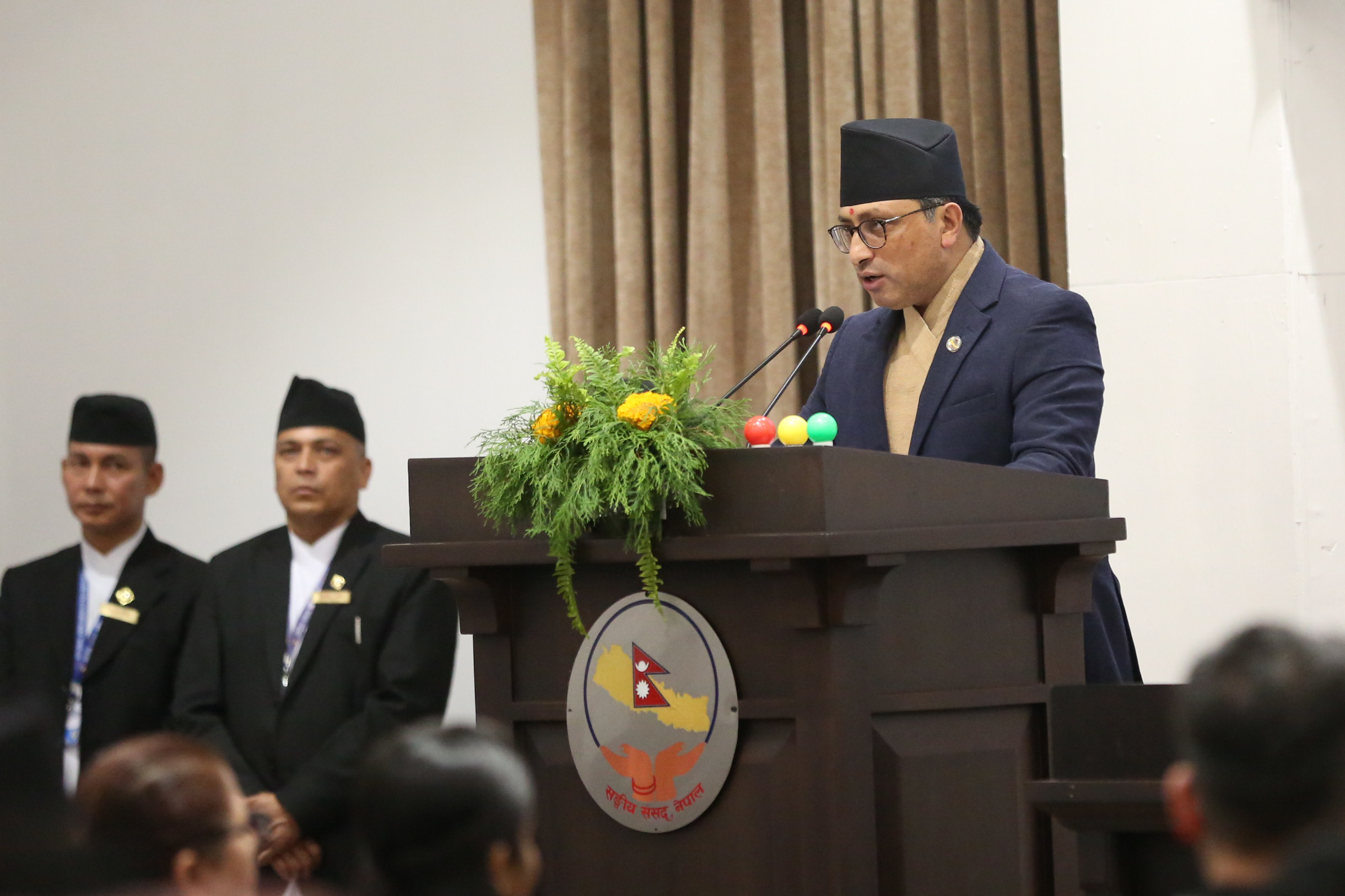
Finance Minister Swarnim Wagle
By late April 2026, FNCCI, the Confederation of Nepalese Industries, and the Nepal Chamber of Commerce had issued a rare joint statement to the government, drawing attention to a broader pattern of regulatory pressure on the private sector that they felt was creating fear rather than accountability.
The Confederation of Nepalese Industries and NCC separately announced they were preparing formal submissions opposing the asset disclosure requirement as it applies to private sector board members.
The joint statement pointed out that the private sector contributes roughly 81 percent of economic output and 86 percent of employment, and warned that treating entrepreneurs as suspects before any evidence of wrongdoing has been established sends a damaging signal to both domestic and foreign investors.
How has the commission responded to these objections?
Commission Chairman Rajendra Kumar Bhandari has firmly defended the policy on both legal and philosophical grounds. His central argument is that the disclosure requirement is not punitive but constitutive of good governance.
Anyone who exercised authority over public resources or held a position in a government-linked institution, he has said, carries a corresponding obligation of transparency toward the public that funded those institutions.
He has offered assurances that asset disclosures will be handled confidentially and will not be shared publicly or used for purposes beyond the investigation. He has also stressed that finding disclosures clean is equally a valid outcome and that the commission is not operating from an assumption of guilt.
Commission officials have reinforced that the directive is not aimed at any particular individual or sector and is simply the application of existing legal provisions published in the Nepal Gazette. The commission’s position is that if the law defines these board members as public officials, it lacks the authority to unilaterally exempt them, and any change to the scope would have to come through legislative action.
Is there a historical precedent for this kind of broad asset investigation in Nepal?
Nepal has a long and largely unsuccessful record with asset investigation commissions. The most significant earlier effort was the Judicial Commission on Property Inquiry formed in February 2002 under then Supreme Court Justice Bhairav Prasad Lamsal, established during Sher Bahadur Deuba’s government. That commission sought asset declarations from nearly 42,000 individuals who had received state benefits between 1990 and 2002, ultimately examining the assets of around 30,000 people.
It submitted its report to then King Gyanendra in March 2003, but the report was never made public. Some of its findings were forwarded to the Commission for Investigation of Abuse of Authority, leading to corruption charges against a handful of politicians, but the broader accountability the commission was meant to deliver never materialized.
A subsequent royal commission formed under King Gyanendra’s direct rule in 2005 was later struck down by the Supreme Court as unconstitutional. Critics have noted that the word “commission” in Nepal has come to be associated with delay and evasion rather than accountability, and the Bhandari Commission faces skepticism on those historical grounds.
What are the legal limitations and concerns about whether this commission can actually deliver results?
The commission operates under the Inquiry Commission Act of 1969, which gives it investigative authority but not enforcement power. This is the same structural weakness that undermined earlier commissions.
The government is legally required only to consider the commission’s recommendations, not to implement them, and there is no automatic prosecutorial trigger built into the framework.
For constitutional bodies and the judiciary, additional procedural safeguards apply, meaning the commission must route its findings through the Judicial Council rather than directly to prosecutors.
The current government’s Terms of Reference notably exclude the serving cabinet itself, as well as the President, Vice President, and the king. Supreme Court judges and members of constitutional bodies are also outside the commission’s direct scope.
Critics and legal observers have raised the question of whether an investigation body lacking direct enforcement authority can ever compel genuine accountability, or whether its findings will again be selectively acted upon or quietly shelved once the political atmosphere changes, as happened repeatedly in the past.
What broader implications does this controversy carry for Nepal’s investment climate and governance?
The tension between the commission’s mandate and private sector objections cuts to a fundamental question about how Nepal defines the boundary between the public and private spheres. Nepal has long used mandatory private sector representation on government-linked boards as a governance tool intended to bring technical expertise and market-oriented thinking into state institutions.
If that participation now carries the administrative burden of full personal asset disclosure, many qualified individuals will reasonably calculate that the reputational risk and compliance cost outweigh the public service contribution.
The broader investment environment is already under scrutiny following Nepal’s placement on the Financial Action Task Force’s grey list in 2025, and the government faces a deadline to demonstrate credible financial crime enforcement.
Against that backdrop, the Balen Shah administration must balance two competing imperatives: demonstrating that anti-corruption accountability is genuinely broad and not just politically selective, while simultaneously protecting the investment climate that Nepal’s economic growth targets depend on.
How it navigates this tension will say a great deal about whether the new political order can move beyond the symbolic politics of accountability commissions toward durable institutional reform.