Kathmandu
Tuesday, June 23, 2026






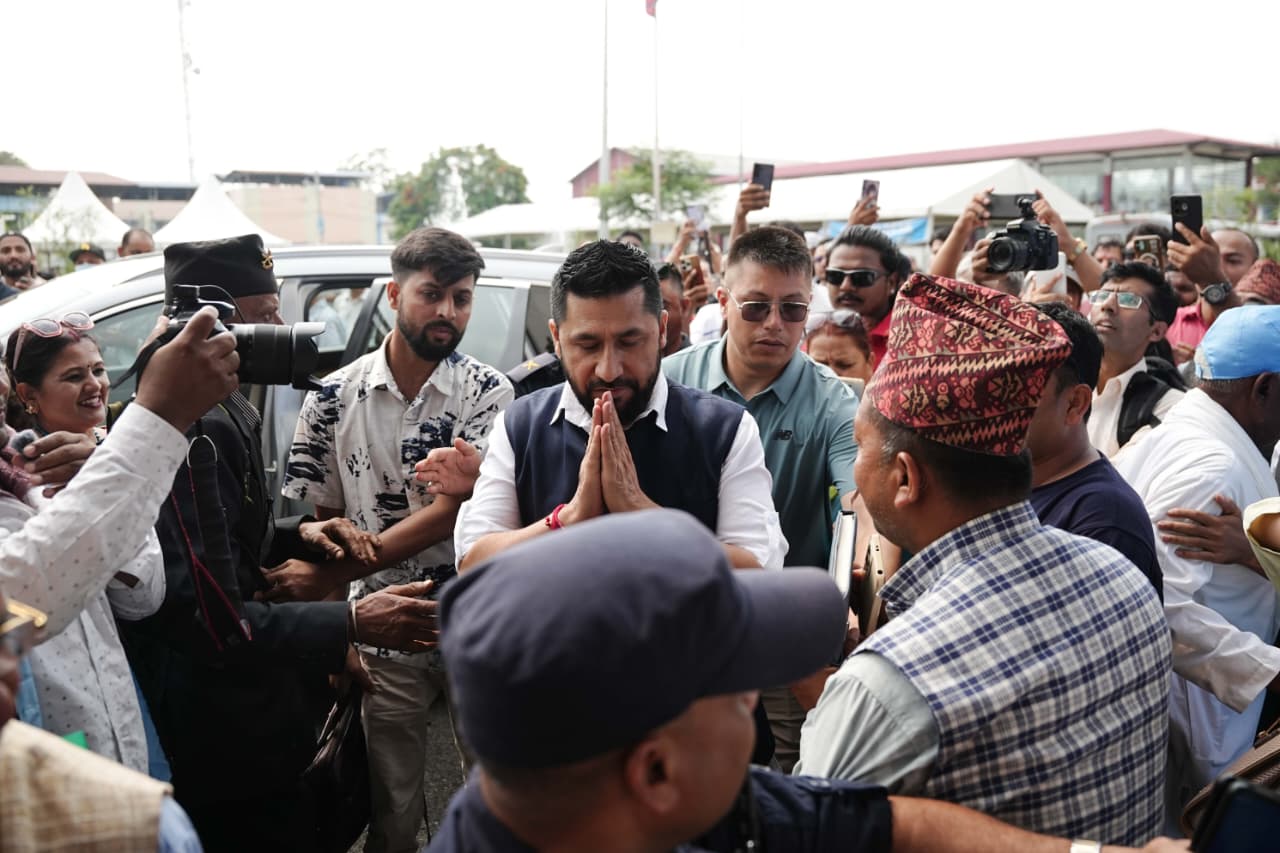
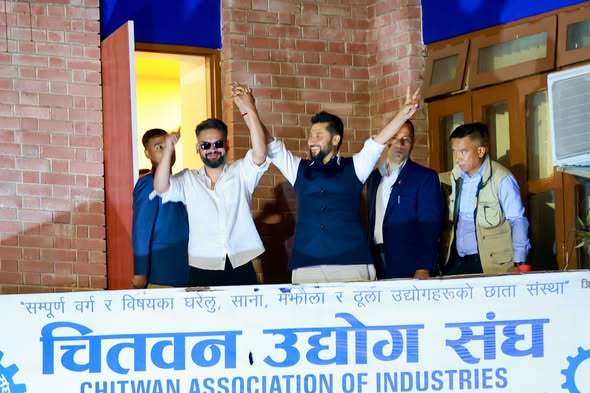
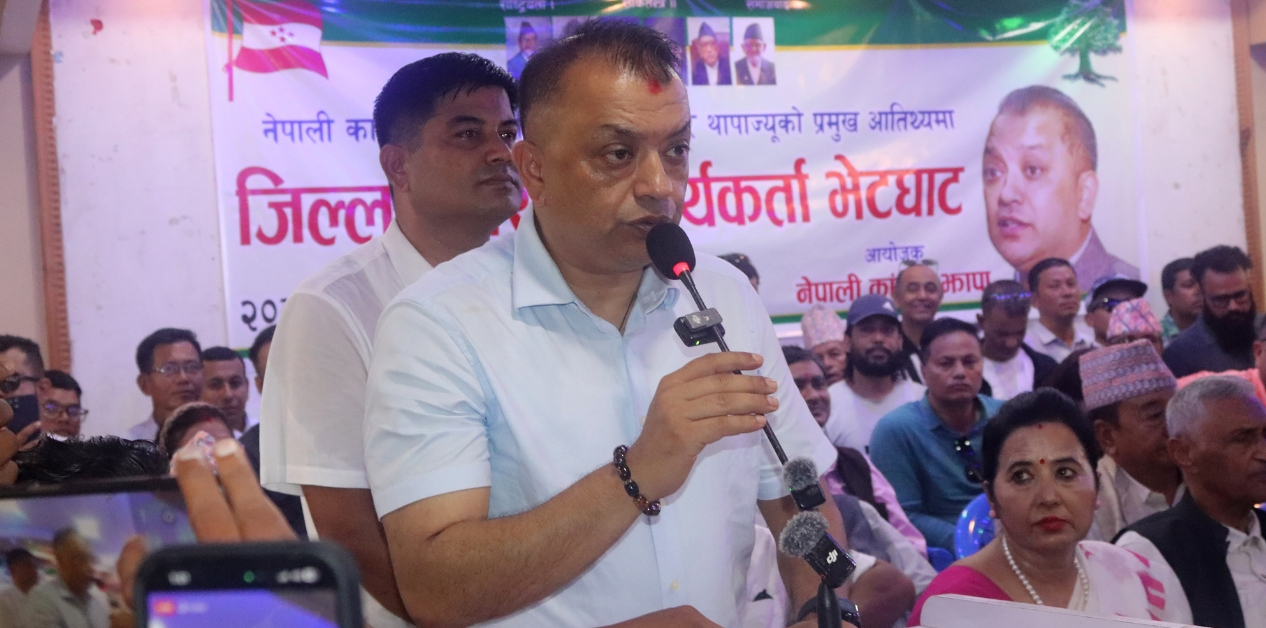
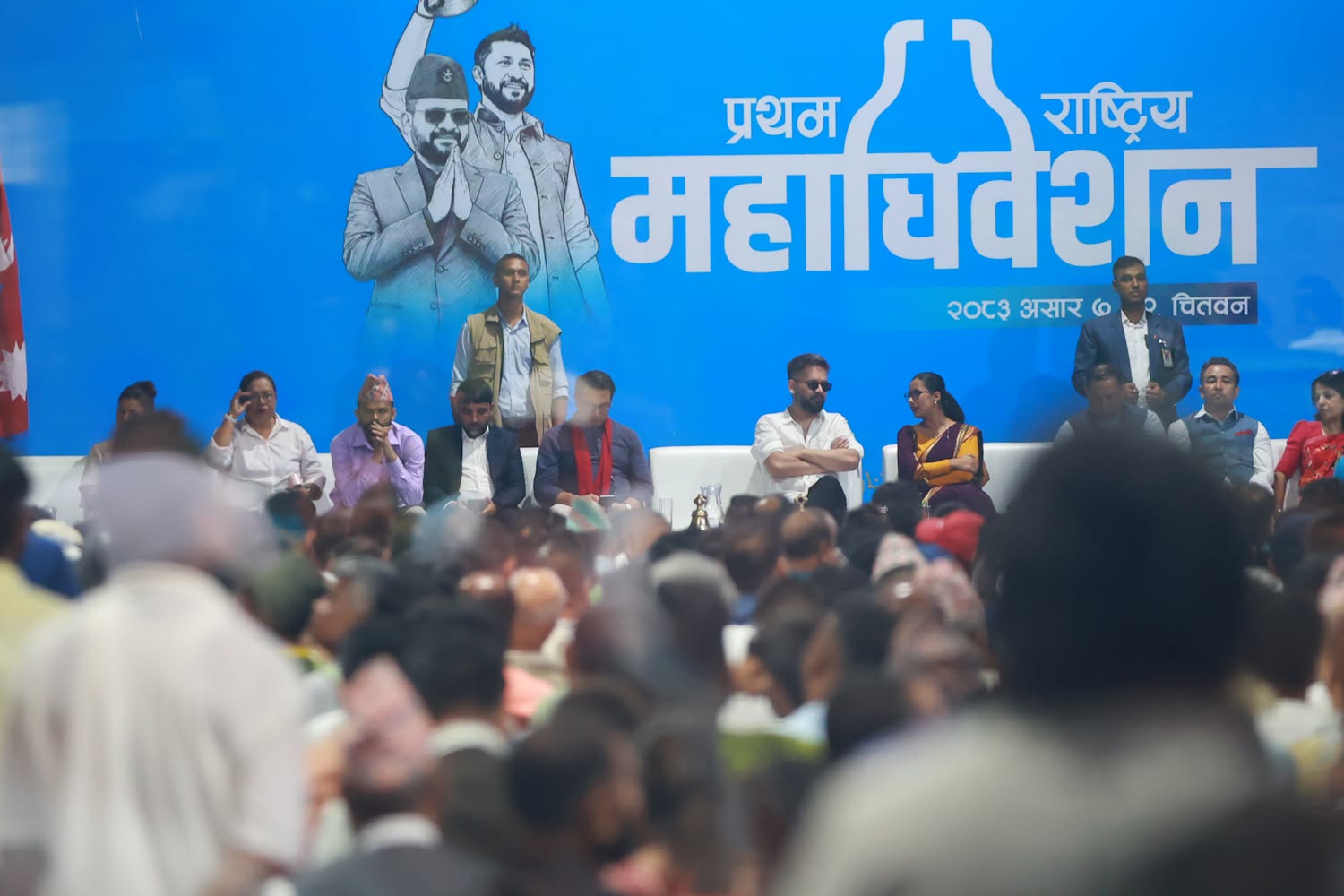
KATHMANDU: The Rastriya Swatantra Party (RSP) has presented its political report during the closed session of its ongoing general convention, outlining its ideological stance and future direction.
Party President Rabi Lamichhane presented the report, in which RSP defines its core ideology as social democracy while emphasizing a balanced and pragmatic approach to politics, economy, and governance.
The report states that the party respects all historic democratic movements and sacrifices, including those of 1950, 1989, and 2005/06, and highlights that the awareness and energy of the “Gen Z uprising” will serve as a guiding inspiration for the party’s future journey.
Responding to criticism that the party lacks a clear ideological foundation, Lamichhane argued that RSP does not fall within traditional left-wing or right-wing political polarization. Instead, it positions itself beyond rigid ideological boundaries.
“We believe the state, society, and economy should not be shaped by a single ideological framework, but through a mixed, balanced, and context-based approach. We say glasses should be made according to the eyes, not eyes adjusted to fit the glasses,” the report states.
The document further emphasizes RSP’s commitment to a competitive liberal economy, rule of law, accountable governance, a welfare state, and an equitable and inclusive society. Here is a basic English translation of the political report presented by Rabi Lamichhane:
Rastriya Swatantra Party
Historic First General Convention (Asar 7-9, Chitwan)
Political Report and Proposal by Chairman Rabi Lamichhane
Dear representative friends participating from the party’s Central Committee, commissions, departments, provinces, districts, constituencies, local bodies, and the diaspora,
A warm welcome to you all to Chitwan, the political capital of the Blue Revolution. The strategic and emotional role played by this district in the emergence and expansion of the RSP is written not just in our documents, but in the history of Nepal itself. The popular support and public trust received from Chitwan gave legitimacy, energy, and direction to our alternative politics yesterday. Today, from this very soil, we are writing a new chapter of good governance, transparency, and result-oriented politics.
• Grateful for Sacrifices and Confident in the Future
We are bound by the sacrifices of history. Even today, I wish to look back at the immortal chapters of Nepal’s nation-building and democratic history, and remember all the known and unknown martyrs without whose sacrifice we would not be who we are, and we would not be here. The Rastriya Swatantra Party honors all those sacrifices and expresses its gratitude to all those martyrs and activists who dedicated any part of their lives to the nation.
We have arrived here by exposing the irregularities and corruptions of the old political parties, but there will be no place in the RSP for the ingratitude that erases, distorts, or insults history for political self-interest. This will not be a party that plays politics over sacrifices or divides martyrs into factions. The Revolution of 2007 BS, which raised its voice against more than a century of autocratic rule, is no less sacred to us, regardless of who receives the credit. We respect and take pride in the Movement of 2046 BS, no matter who claimed its achievements. While protecting the Movement of 2062/063 BS and its meaningful achievements, we will not allow those sacrifices to be undervalued.
The sacrifices of the movements led by women, Dalits, Madheshis, Janajatis, and Indigenous groups, and their historic contributions to inclusion, are not ancient history. We are the grateful heirs of this history. The consciousness and energy of the historic Gen-Z rebellion, sparked just a few months ago by the call of the youth, will also guide our journey ahead. Paying the highest respect to the past sacrifices, struggles, and contributions that laid the foundation for today’s achievements, consciousness, and transformation, we pledge that no sacrifice shall go to waste. The future awaits justice, good governance, inclusion, and prosperity. We will lead the country there.
• From Zero to Singha Durbar in Four Years
In this historic document, I want to record the fact of why we entered politics. The answer to this will never let us deviate from our goal.
Almost none of the founding members of the RSP came from a traditional political background. We were active in various professional fields, including media, and in different strata of society, from where we believed we could question the state, shake it up, and create pressure for reform. But over time, we realized that the state structure was neither willing nor able to listen. It was characterized by power-centered politics, corruption, a lack of accountability, blatant opportunism, unstable coalitions, and a dominance of middlemen. Democracy was being chewed up by Netatantra (leader-rule), and Netatantra was being manipulated by middlemen. We thought that transformation should not be attempted from the outside, but made possible by entering from within. Therefore, we resolved to enter the system to reform, restructure, and systematically clean it up.
Though short-lived, the efforts of the ‘Naya Shakti’ and the citizen-centric interventions of the ‘Bibeksheel’ movement created ripples in politics, but they could not change it. However, defeating the supposedly invincible syndicate of traditional parties, Balendra Shah’s victory as the Mayor of Kathmandu Metropolitan City demonstrated that the public was ready to rebel against traditional parties.
Yet, it was not easy. Like the founders of any political movement, we faced immense skepticism, criticism, and ridicule. Forget about becoming members, no one was even ready to become a leader. People compared established political parties and the old political structure to a mountain. They advised us not to clash our elbows against the mountain, but rather to become a part of it. We tried to explain that these were no longer mountains; they had turned into piles of garbage, and if they remained, this country would not survive. But influential figures of society, intellectuals, media personnel, and celebrities were not even ready to listen, let alone agree. The public was ready, but those considered ‘knowledgeable’ were not.
There was an institutional reason for this skepticism. Since 2006 BS, no party founded by even the most prominent non-political figure had managed to gain representation in Nepal’s parliament. However, through our hard work and resolve, within just five months of our establishment, we became the fourth-largest party in the country with nearly 1.2 million popular votes.
• Good Governance from the Government, Vigilance from the Parliament
We participated in the government led by Pushpa Kamal Dahal, taking responsibility for four ministries. Even during that very short period, we attempted to make positive interventions from within the government, render public service delivery effective, control corruption, and strengthen the rule of law.
Whether we succeeded in instilling trust in the public or not, the traditional political parties were already terrified of us. They had never anticipated that the RSP could emerge as a major political force with nearly 1.2 million votes and become a decisive part of the coalition. State institutions were weaponized to halt the political expansion of the RSP and to paralyze its leadership. I was rendered a non-citizen.
The conspirators believed that the RSP would weaken in the by-elections, but the public backed us with even greater support, making us a party with 21 seats. This was not just a numerical increase; it was a reaffirmation of public trust. Following that, we rejoined the government and attempted to establish new standards of good governance, the likes of which had never been seen before in Nepalese political practice.
Efforts were made to introduce preliminary practices of transparency, accountability, and institutional reform. Though it happened twice, we remained in government for only about five months in total. Yet, even in that brief period, we did not focus on enjoying power, but rather on making positive interventions. We prioritized the campaign to put good governance into practice, make the state apparatus accountable to citizens, and establish the rule of law.
A courageous effort was made to bring those who had been considered ‘above the law’ for years within the ambit of the law. We sought to practically prove the principle that the law applies equally to all, no matter how powerful, well-connected, or influential they may be. We advanced a campaign to establish the belief that the state should run on systems and laws, not on the whims of individuals. The demand for good governance, transparency, and accountability began to challenge established centers of power. The panic created in the old power structures by the agenda of good governance we initiated became so immense that when ‘big’ and influential figures were dragged into the investigation of the Bhutanese refugee scam, the first and second largest parties in the country came together overnight to form a government.
• Those Blue Scarves That Parliamentary History Will Never Forget
None of the RSP MPs came from professional politics. Arriving from business, media, civil society, and various professions, we attempted to foster a new political culture in parliament. Along with regular attendance, we emphasized pressuring for good governance and engaging in policy debates. We gave voice to the expectations and frustrations of the youth generation in parliament. We attempted to use the parliament as a platform to speak for the public, hold the government accountable, and create pressure in favor of good governance. It was an effort to establish debates on the hopes of the new generation, aspirations for change, and political purification.
Despite our small number, we put up historic resistance against the arrogance of a two-thirds majority, malgovernance, hubris, and political vendetta. Though small in numbers, we stood above a two-thirds majority in terms of ideology, courage, and public support. Those MPs with blue scarves tied around their necks will always be remembered in Nepal’s parliamentary history as representatives who stood firmly in favor of democracy, good governance, and the voice of citizens.
We did not allow the parliament to become a mere venue for formal debates; we turned it into a front for public awareness. We amplified the voices, pain, hopes, and expectations of the people inside the parliament. We continuously raised questions against the abuse of state power, corruption, irregularities, and political retaliation. Our presence inside parliament was not limited to an opposition role; rather, it became a campaign to awaken civic consciousness, hold the government accountable, and protect democratic values.
• Decisive Conspiracy Against RSP: Misuse of All Three Organs of the State to Crush the Leadership
Following the formation of the government by the CPN (UML) and the Nepali Congress in Shrawan 2081 BS, a naked political vendetta was launched against the RSP and myself, utilizing institutional mechanisms for that purpose. Contrary to the findings of the Parliamentary Special Inquiry Committee, unjust allegations such as cooperative fraud, organized crime, and money laundering were leveled against us. The prosecution was expanded by adding new cases one after another. Jail transfers were conducted overnight, and I was even asked for my ‘last wish.’
All three organs of the state were misused against us. In the legislature, the decisions of the parliamentary inquiry committee were turned into political tools. The executive became a factory of tyranny, and even the judiciary was misused. Selective justice was served.
Our party and leadership were entangled in such a cunning and complex legal, political, and institutional trap that the conspirators concluded the RSP was finished. When all doors were closed, we went to the court of the people. More than four million citizens signed to express solidarity against this political vendetta. The entire country recognized that it was a conspiracy, a political vendetta, and the largest organized political crime against us in the country, because almost none of those who participated in that conspiracy managed to get re-elected to the current parliament.
• Gen-Z Rebellion: Youth Rage in a Decade-Long Stagnant Dirty Pond
The Gen-Z rebellion of Bhadra 23 and 24 was not just ordinary dissatisfaction; it was an explosion of the people into a stagnant pond of inequality, corruption, impunity, and mistrust that had accumulated for years. It was a collective expression of public anger, discontent, and aspirations for change that had been suppressed for a long time. The immediate trigger point that caused this long-standing discontent to explode was the ban imposed by the Oli government on social media. Following the killing of youth during the demonstration on the 23rd, the anger of the people manifested in a destruction never before seen in history.
The political structure had long failed to build stability, good governance, and public trust. Decades of systemic governance weaknesses, corruption, inequality, and a lack of opportunities were bound to demand an organized response sooner or later. However, no one had anticipated such massive destruction.
As political parties consistently failed to provide transparency, accountability, and result-oriented governance, the distance between the state and its citizens grew. Corruption was no longer individual; it had become a structural problem. A shortage of opportunities, an imbalance between education and labor, unemployment, and foreign migration had led the youth to develop a psychology that there was no future within the country. On one hand stood political instability and a power-centered culture, while on the other lay the information age and the expansion of consciousness—a conflict between the two was inevitable. A digital generation that had begun comparing itself to the world demanded transparent governance, accountable leadership, equal access to opportunities, a corruption-free state structure, policy stability, and result-oriented development. Yet, KP Oli’s government had no concern for this reality.
The coalition government of the CPN (UML) and the Nepali Congress held a near two-thirds majority in parliament. The government used this power not for confidence, but for arrogance. Instead of understanding the sentiments of the people, the aspirations of the youth generation, and the new political consciousness developing in society, it sought to humiliate and control them. The misgovernance of the Oli government accelerated the public anger—piled up due to decades of lacking stable policies, accountable leadership, administrative incompetence, corruption, and impunity—at a geometric rate.
More than four million Nepalis signed against the political vendetta unleashed upon us. The government chose to ignore the signs and messages of those signatures as well. Ultimately, the rulers fled in helicopters. The parliament was dissolved, and an interim government was formed under the leadership of Sushila Karki for the elections.
• We United and Made History
Faced with the crossroads of choosing whether to run a small-scale ‘shop’ within a narrow circle in the name of politics, or to step forward to lead the country with a broad vision, inclusive behavior, and long-term thinking, we chose the second option. I was in prison at that time, but I remained in dialogue with all alternative political forces desiring change in Nepal. My conclusion was that if we remained divided, the old established powers would once again create illusions, propaganda, and structural hurdles, and would not even allow elections to take place.
After I came out of prison, the initiative to bring together various alternative currents, proponents of good governance, equality, and change intensified. A detailed dialogue for a shared political future began with friends from the Bibeksheel movement who held a historic legacy, groups connected with the alternative political movement, leaders active in local governance, friends from social justice movements, representatives of the Tharuhat movement, and friends from the Dalit movement.
The Rastriya Swatantra Party was guided onto a path of unity and integration, which expanded not only the party’s reach but also its ideological depth and social foundation.
The legacy of the alternative political movement initiated under the leadership of the late pioneer Ujwal Thapa became the asset of the RSP. The integration of a group from the Ujalo Nepal Party, some founding leaders of Naya Shakti, an influential group from Nagarik Unmukti, and various factions of Hamro Party Nepal and the Tharuhat Tharuwan movement further expanded the size of the RSP.
A massive wave was created by the integration of Balen Shah and his associated independent friends—who had become a symbol of defiance and rebellion, shown the courage to fight misgovernance alone, played a decisive role in development through the leadership of Kathmandu Metropolitan City, and maintained a high moral standard by even rejecting the proposal for Prime Minister during the Gen-Z movement.
This integration of various alternative currents, movements, and leaders was not merely a political alliance; rather, it was a shared vision for good governance, a collective struggle against corruption, representation of the youth generation, and a mutual commitment to systemic change.
As a result of this unified effort, the public extended unprecedented support in the elections, granting an historic mandate of nearly a two-thirds majority. Examples of a political force achieving this level of success in less than four years are rare even in global politics. This is not just an electoral victory; it is the public’s faith in change, a rejection of the old system, and the announcement of a new political era. Had we remained separate, this would not have been possible. Now, we hold the historic responsibility to transform this mandate not just into a political victory, but into the actual practice of governance rooted in good governance, transparency, and systemic reform.
• A Government Planting Trust and Inspiring Hope
It has not been long since the formation of the RSP government under the leadership of senior leader Balendra Shah, but the government’s policy and administrative initiatives are moving towards good governance, transparency, accountability, and a development-focused state structure. Recent reforms in budgets, policies, and programs will contribute to the state’s institutional capacity, civic trust, and the strengthening of the democratic system in the long run.
Strengthening Good Governance and Improving Service Delivery: The government has initiated various administrative and digital reforms to make public service delivery effective, swift, and transparent. Prioritizing service delivery reform aims to reduce delays, procedural complexities, and unnecessary middleman intervention in the government service system. This has laid the foundation for a more direct, accessible, and responsive citizen-state relationship.
Ending Impunity and Establishing the Rule of Law: The process of bringing individuals involved in incidents during the Gen-Z movement within the ambit of the law has been advanced. This step by the government to end the existing culture of impunity and apply the principle that the law is equal for everyone has addressed public expectations for justice.
Asset Investigation of High-Ranking Officials: A high-level commission has been formed to investigate the assets of former and current high-ranking officials. This will institutionalize transparency and accountability in state operations. In the long run, it will lay the groundwork for controlling corruption and restoring public trust.
Constitutional Amendment and Policy Consultation: A task force has been formed to collect suggestions for constitutional amendment, and the consultation process with stakeholders has been advanced. We are committed to preparing the foundation for long-term constitutional reform by incorporating diverse political, social, and civic perspectives to make the Constitution contemporary, practical, and inclusive.
Reforming Political Appointments and Institutional Efficiency: Controversial political appointments made in the past have been revoked, and a merit-based competitive appointment process has been initiated. This will be a crucial step toward making public institutions professional, impartial, and efficiency-oriented, thereby improving institutional trust and administrative capacity.
Relief to Cooperative Victims and Financial Reforms: The process of returning funds to small depositors who saved in cooperatives has begun. This provides direct relief to victimized citizens while restoring trust in the financial system. It is an important policy initiative towards ensuring financial discipline and the security of depositors.
Protection of Public Property: The reports of relevant commissions for the protection of government and public land have been brought into implementation. This aims to prevent the encroachment of public property, control the misuse of state resources, and improve long-term asset management.
Controlling Middlemen and Ensuring Transparency: Legal action has been initiated against the practice of middlemen exerting influence through political access or power. This sends a stern message towards making the state apparatus transparent, fair, and accountable.
Management of Unmanaged Settlers: Preparations have begun for the rehabilitation of unmanaged settlers and the land-ownership certificate (Lalpurja) distribution process. This will provide a long-term solution for landless and homeless citizens.
Accelerating Development Projects: Development projects that had been stalled for years have been given momentum. This will expand economic activity, create employment, and deliver the direct benefits of development to the grassroots level.
• RSP’s Ideology: Social Democracy
There is a segment of critics who, without ever looking at our documents, constantly claim that the RSP lacks an ideology. Yes, we are not traditional ‘leftists’ or ‘rightists,’ and we deliberately do not limit ourselves to that political polarization. Instead of any rigid ideological dogma, we prioritize a practical, rational view based on necessity and reality. We respect the historic contributions, experiences, and positive practices that old ideological frameworks have offered to human society, but we weigh them on the scales of practical utility and social justice.
By encouraging the private sector, an investment-friendly environment, and competition, we might appear ‘right-wing’ to some. When we state that the state must ensure basic healthcare and education for all citizens, we might look ‘left-wing.’ Our promotion of startups, private enterprise, and market freedom might hide the ‘leftist’ label that our guarantees of workers’ rights, minimum wage, and social security expose.
We believe that the state, society, and economy should be guided not by a single ideological blueprint, but by a mixed, balanced, and context-adaptable approach. We say that glasses should be crafted based on an examination of the eyes, rather than forcing the eyes to fit the glasses.
Dear representative friends,
Now I will briefly discuss our proposed policy-ideology:
When declaring our establishment, we resolved to adopt constitutional socialism as the party’s principle. And our manifesto stated:
“Establishing a society as envisioned by the Constitution of Nepal through the rule of law is constitutional socialism.”
The preamble passed by the Jaleshwar meeting states: ‘Explaining constitutional socialism as the determination to operate the state based on national policies and programs by specifying the primary goals of socialism in the Constitution through peaceful means, emphasis will be placed on the judicial distribution, access, and utilization of opportunities to decisively address all forms of structural discrimination—including gender, caste, class, and region—that exist as unpleasant historical legacies.’
Whatever documents the RSP has produced so far did not explicitly define constitutional socialism; it was merely accepted as a principle.
However, there were some valid questions regarding this:
* Is constitutionalism merely about accepting the constitution and operating within it, or does it possess its own distinct policy, plan, and program?
* Can we reach socialism from within this system simply because ‘socialism’ is written in the constitution? If yes, how? If not, why?
* The constitution is a document of compromise among the political forces of that time. Demands for sufficient amendments are continuously rising against it. In other words, from the perspective of public aspiration, a constitution always requires perfection.
Possibilities for amendment manifest every 5 to 10 years. By accepting a document that requires periodic amendments as an ‘ism’ itself, how can we reach our goal?
While seeking clear answers to these valid questions, we have reached the conclusion today that it is inappropriate to adopt the constitution itself as an ‘ism’ or core philosophy. This by no means implies a rejection of the constitution. What it actually means is that a country’s constitution and a party’s policy, ideology, and principles are two separate matters. Based on the stability and consolidation of achievements gained politically so far, Nepal’s current socio-economic conditions, and an analysis of the fundamental character of the state that citizens hope for, we have concluded that we will adopt *Social Democracy* as the core political ideology of the party.
Dear representative friends,
We view democratic values, a competitive economy, strong institutions, accountable governance, and an inclusive society as complementary to one another. Our goal is not merely to form a government, but to change the character of the state. It is not just to attain power, but to restore the trust of the citizens. It is to build a capable, prosperous, and just Nepal for future generations. Remaining within the theoretical concept of the social democracy ideology proposed above, our political philosophy is based on *five core pillars* to ensure freedom, prosperity, good governance, and social justice:
1. Competitive Liberal Economy
A nation becomes wealthy not through the distribution of poverty, but through the creation of prosperity. The primary source of economic development is not the state, but the creativity, labor, capital, knowledge, and entrepreneurship of the citizens.
The RSP wants to build an economy where the state formulates fair rules, ensures competition, and opens doors of opportunity, but trade and production are carried out by citizens and the private sector. We want to build an economic system that honors entrepreneurship, secures investment, encourages innovation, and gives dignity to labor. In our view, economic freedom is not just a matter of trade; it is also a vital dimension of civic freedom.
Overall, a competitive liberal economy attempts to advance market dynamism and the goal of social equality simultaneously. In a competitive liberal economy:
* Pricing, production, and distribution are determined by market forces, which enhances efficiency and innovation. Taxes, subsidies, and social security programs are operated by the state to reduce inequalities arising from economic activities.
* Recognition of private ownership: Entrepreneurship, investment, and the right to private property are encouraged. Legal and institutional regulations are put in place to prevent monopolies, cartels, and market abuse.
* A minimum wage, a safe working environment, and labor rights are ensured. Focus is placed on economic stability and sustainable development, including inflation control, employment growth, and long-term economic balance.
* Development projects and service delivery are advanced through collaboration between the state and the private sector. The focus is centered on improving the quality of human life, not just on economic growth.
2. Rule of Law (and Institutionalized Order)
A nation moves forward through the stability of institutions, not by the goodwill of individuals. History has shown that in societies with weak institutions, corruption, chaos, and frustration ultimately thrive.
In Nepal, the failure to free institutions from the influence of political parties, factions, or individuals has weakened public trust in democracy. The RSP believes that the law must be equal for everyone. Justice, administration, security agencies, and constitutional bodies must be able to function above political influence. We view the rule of law not merely as a legal concept, but as the moral foundation of a civilized society. Only when a citizen believes they will receive justice does democracy become strong. This includes:
* The Constitution of Nepal guarantees fundamental rights and human rights. Fundamental rights and human rights, which stand as pillars of democracy, will be ensured and protected. A guarantee is made that if these rights are violated, remedies will be provided by law.
* No one, from individuals occupying the highest positions of the state to ordinary citizens, is greater than or above the law. The bodies of the state will be made fully capable to ensure independent investigation and prosecution.
* Empowered individuals or institutions shall not conduct selective investigations or prosecutions. Under the concept of equal punishment for equal crimes, the law ensures the essence that ‘whoever commits a mistake will not be spared, and whoever does not commit a mistake need not fear.’ This establishes a condition where no one can think “I am the state.”
* A criminal has neither a party nor a caste. The law will not discriminate based on any religion, gender, class, community, position, or prestige. All organs and individuals of the state must exercise their authority strictly within the boundaries prescribed by law.
* The judiciary must always remain independent and impartial. It will be kept free from pressure and interference, allowing no shadow of any power to fall upon it.
3. Citizen-Centric Accountable Government
The essence of democracy is not just elections, but the continuous oversight and participation of the people even after elections. In Nepal, the state apparatus often appeared as a ruler rather than a servant. Our concept is that the government must be accountable, transparent, and measurable to its citizens.
Every public expenditure, every policy, and every decision must be open for the public to view, understand, and evaluate. Digital governance, open information, performance evaluation, and public accountability must be an inseparable part of our political culture. The baseline of citizen-centric accountable governance is the recognition that citizens are not just taxpayers, but the true owners of the state. This includes:
* Providing realistic answers and solutions to questions raised in the public sphere from the grassroots level is the true identity of an accountable government. The government must justify its decisions through results, thereby proving their merit.
* An effective mechanism to listen to public grievances is mandatory. Accountable government is defined by transparent structures capable of serving as a strong bridge between government policies and citizens’ problems. Furthermore, the right of citizens to access information must always be guaranteed. Transparency must be a mandatory condition in all these actions.
* An accountable government always respects constructive questions. It respectfully welcomes constructive criticism and questions received from the mass media, opposition parties, and civil society.
* Individuals in public office shall not abuse their positions. They must take responsibility for shortcomings that occur while they hold office, and if their actions are illegal, they must be subject to punishment according to the law.
* An accountable government conducts healthy, rigging-free elections within the timeframes prescribed by the constitution. In elections held this way, it respects and protects the sovereign right of the people to fearlessly choose their preferred party or representative.
4. A Just Welfare State
We believe neither in unregulated market commercialism nor in a state-controlled economy. Along with economic freedom, the guarantee of social security and equal opportunity is essential.
The future of a child should not be determined by their birthplace, caste, gender, or family income. Education, health, security, and a minimum dignified life are the rights of a citizen. The RSP does not view a welfare state as a matter of charity or mercy. It is the foundation of social justice. The role of the state should not be to make citizens dependent, but to make them capable. Therefore, our welfare concept will be linked to production, skills, employment, and self-reliance.
The core premise of a welfare state is that the state is not merely an entity to maintain peace and security, but also a responsible structure to ensure the education, health, employment, social security, and minimum standard of living for its citizens. To achieve this, the government collects taxes and operates various social security programs, such as unemployment benefits, old-age pensions, free or subsidized healthcare, and education.
This concept emphasizes social justice and equal opportunity alongside economic development. The protection of vulnerable, impoverished, and at-risk groups is its priority. Today, many developed countries in the world implement the welfare state in various forms. However, its successful execution requires a balanced tax system, transparent governance, and sustainable management of economic resources. Overall, a welfare state aims to build an inclusive and just society while ensuring the dignity, security, and opportunity of its citizens. In a welfare state:
* The state plays an active role in fulfilling basic needs such as education, health, housing, and food security. Vulnerable citizens are protected through programs like unemployment allowances, elderly pensions, disability assistance, and other pension schemes.
* Policies are adopted to bridge the gap of opportunities between the rich and the poor, urban and rural areas, or different classes. Through the tax system, higher taxes are collected from the wealthy to expand social services for the impoverished.
* The state invests heavily in providing quality and accessible public services. A minimum wage, a safe working environment, and workers’ rights are guaranteed.
* The primary objective of the state is not merely security, but improving the standard of living of its citizens. Various classes, regions, genders, and communities are included in the development process.
* The state intervenes directly in areas facing market failure. Citizens are treated not merely as economic units, but as dignified human beings.
5. Equitable and Inclusive Society
Nepal is a shared nation of multiple identities. Our diversity is not a basis for division, but a source of shared prosperity. The RSP advocates for the creation of an equitable and inclusive society based on equal opportunity. We oppose both the special privileges of any community and the exclusion of any community. Our goal is not just representation, but actual empowerment.
We believe that social justice does not mean fragmenting society; it means bringing historically marginalized communities forward to provide a level playing field for everyone. It gives equal importance to the voices of groups that have been historically left behind (women, Dalits, Janajatis, Madheshis, Tharus, Muslims, persons with disabilities, and marginalized communities).
The core foundation of an inclusive democracy is the guarantee of equal opportunity, social justice, and representation. Mere legal provisions are not enough; access, participation, and dignity must be ensured in practice as well. When diverse representation exists across all organs of the state, policy-making becomes more realistic and citizen-friendly.
Ultimately, the concept of an equitable and inclusive society builds a community on the basis of unity rather than division, participation rather than exclusion, and equality rather than inequality. Only when every citizen feels that they are a part of the state does democracy become strong and sustainable. In the equitable and inclusive society we envision:
* The just participation of different castes, genders, regions, and communities in all levels and organs of the state is ensured. Equal opportunities are provided to all citizens in education, health, employment, and political access.
* Historically marginalized communities are empowered through special provisions. Meaningful participation of all classes is maintained from policy formulation to implementation.
* Emphasis is placed on building a just society by eradicating discrimination, inequality, and injustice. The protection and respect of all languages, cultures, religions, and traditions are maintained.
* The governance system remains open, accountable, and citizen-oriented. All citizens are equal in the eyes of the law, and the law is applied impartially.
* Policies are formulated by incorporating the needs and realities of diverse communities. Coexistence, harmony, and cooperation amid diversity are promoted.
With these detailed explanations, I am confident that the claim regarding ambiguity in the RSP’s ideology will be completely dismissed. Following this general convention, the core political ideology of the Rastriya Swatantra Party shall be Social Democracy. I inform the representative friends that this core political ideology will be incorporated into all documents of the party.
• Our Economic Perspective: Liberal Democratic Prosperity with Social Justice
The Rastriya Swatantra Party is committed to restructuring the Nepalese state and society on the foundations of pluralistic democracy, the rule of law, civic freedom, and social justice, leading it toward equitable prosperity. Our political philosophy is based on a balance between individual freedom and social responsibility, and between competition and equal access to opportunities. A liberal economy with social justice and a social market economy serves as our economic guiding principle.
For us, democracy is not merely a matter of political rights; it is also the guarantee of economic opportunity, social mobility, and a dignified living. The role of the state should not be the expansion of control over citizens, but the development of citizens’ capacities, the creation of opportunities, and the guarantee of social security. Regarding the creativity, innovation, and investment of the private sector as the primary engines of economic growth, the RSP believes in building a competitive, open, and enterprise-friendly economy. However, such an economy will not be detached from social responsibility. The equitable distribution of the fruits of economic growth across all sections of society remains the responsibility of the state.
The social market economy promoted by the RSP will bridge market efficiency with the objectives of social justice. Under this concept, the state will not operate production and trade; rather, it will play the role of formulating fair rules, ensuring fair competition, and uplifting the living standards of citizens through equal access to public education, healthcare, social security, housing, infrastructure, and opportunities. The purpose of the welfare state thus constructed is to ensure equal opportunities, not identical outcomes.
We hold that economic growth is an indispensable foundation for social transformation. Poverty alleviation, employment expansion, human development, and the sustainability of social security are impossible without economic prosperity. Therefore, increasing productivity, capital formation, technology transfer, innovation, and the expansion of entrepreneurship must be established as national priorities. The economic energy generated through risk-taking private investments and capable public facilitation serves as the core source of long-term prosperity.
Nepal’s current economy has failed to become competitive due to high production costs, weak institutional capacity, complex regulatory structures, and limited international reach. The RSP stands in favor of comprehensive structural reforms to alter this situation. Our goal is to make Nepal an attractive investment destination in South Asia through the elimination of administrative hassles, policy stability, digital governance, simplification of the tax system, investment protection, and the strengthening of judicial credibility.
We believe in an interdependent relationship with the open global economy. Nepal must develop competitive capabilities in its areas of relative advantage, such as clean energy, green industrialization, agriculture, tourism, information technology, and digital services. Providing equal opportunities to both foreign and domestic investments, it is necessary to make the legal and institutional reforms required for expanding production, exports, and employment. We believe that green development, technology-friendly industries, and a knowledge-based economy will form the foundation of 21st-century Nepalese prosperity.
We view the Nepalese diaspora spread across the globe as crucial partners in Nepal’s economic and social transformation. It is our clear belief that to link the knowledge, skills, capital, and international networks of Non-Resident Nepalis with national development, they must be granted full economic, social, and investment-related rights.
The ultimate goal of the RSP’s economic vision is not merely Gross Domestic Product (GDP) growth, but the creation of independent, capable, secure, and dignified citizens. Economic prosperity and social justice are not mutually exclusive; rather, they complement each other. Connecting the prosperity generated through entrepreneurship, innovation, and competition with social responsibility and a just distribution of opportunities to build a prosperous, inclusive, and modern Nepal is the economic resolve of the Rastriya Swatantra Party.
• Our Foreign Policy: Development Diplomacy and a Vibrant Presence on the Global Stage
For the Rastriya Swatantra Party, foreign policy is a strategic tool to promote national sovereignty, economic prosperity, citizen interests, and international prestige. Regarding the national interests defined by the Constitution of Nepal—independence, sovereignty, territorial integrity, national dignity, defense of borders, welfare of citizens, and economic prosperity—as the fundamental guides of foreign policy, the RSP is committed to an independent, balanced, and national interest-centered foreign policy.
Remaining committed to the UN Charter, the principles of Panchsheel, the spirit of the Non-Aligned Movement, international law, and the universal values of world peace, we will also embrace the realities of the changing world order. In our view, foreign policy is not just a matter of managing diplomatic relations; rather, it is a medium for national development, economic transformation, attracting investment, expanding trade, technology transfer, and international partnership. Therefore, the RSP aims to establish ‘Development Diplomacy’ at the center of foreign policy, moving away from traditional power-centered diplomacy.
Geopolitically, Nepal is situated between two emerging economic and strategic powers of the world, India and China. The RSP is confident that this geographical location should be utilized as an opportunity, not a weakness. We hold a long-term vision to develop Nepal not as a passive arena for competitive spheres of influence, but as a ‘vibrant bridge’ for economic, cultural, commercial, and human connectivity linking South Asia and the Himalayan region.
Our relations with neighboring nations will be based on mutual respect, equality, trust, and shared interests. Maintaining balanced, stable, and practical relations with both India and China, expanding cooperation in the areas of trade, infrastructure, energy, tourism, education, technology, and regional connectivity is our priority. We are committed to seeking solutions to matters of border management, border disputes, and historical treaties and agreements through facts, evidence, international practices, and institutional dialogue, rather than through emotional debates.
The RSP stands in favor of expanding relations with all friendly nations of the world based on national interest, mutual benefit, and sovereign equality. Our belief is that Nepal’s international role must be strengthened through diverse partnerships, strategic balance, and autonomous decision-making capacity, rather than through unnecessary inclination toward or dependence on any single power center. In a changing global environment, we are committed to establishing Nepal as an active and effective voice on new international issues such as climate change, energy security, supply chains, technology governance, cyber security, and migration.
Nepalis spread across the world are the most significant source of Nepal’s Soft Power. The RSP views the Nepalese diaspora not merely as a source of remittances, but as carriers of knowledge, skills, innovation, investment, international experience, and global networks. Building special diplomatic and policy mechanisms to link the intellectual, economic, and social capital of Nepalis residing abroad with national development will be our priority. To further strengthen the connection of Non-Resident Nepalis with Nepal, the RSP will act as a bridge to mobilize their knowledge, technology, investment, and experience in the campaign for national prosperity.
We believe that a successful foreign policy in the 21st century is not just a policy to defend borders; it is a policy to seek opportunities, build partnerships, and expand the nation’s respect and influence on the world stage. Therefore, the RSP’s foreign policy will be based on a combination of national dignity and economic realism, where sovereignty will be protected, national interests will be promoted, and Nepal will stand in the global community with a confident, active, and vibrant presence. My recent visit to India and the Foreign Minister’s visits to India and China have already demonstrated our thinking and priorities on the global stage.
• Constitutional Amendment: Our Distinct Perspective
When our constitution was written in 2015, the door for reviewing and refining its implementation after a decade was intentionally left open.
Today, we have arrived at that natural phase of review. During this period, the RSP stands in favor of an open, honest, and responsible debate regarding the achievements and shortcomings of the constitution, as well as the reforms desired by citizens.
We hold certain distinct perspectives on the constitution which we have maintained since the inception of the party. We favor a directly elected executive with stable leadership and clear responsibilities. Instead of the current highly expensive electoral system, we advocate for a fully proportional electoral system that ensures the representation of all communities. We stand for turning the current National Assembly into a non-partisan assembly of experts and making the Vice President the chairperson of the assembly. Similarly, we are in favor of restructuring the provincial assemblies and provincial governments.
A constitution is a shared document of the nation, not the manifesto of any single party. Therefore, we want its amendment to be guided not by narrow political interests, but by the long-term needs of the nation, the experiences of the people, and democratic practices.
The constitution is neither an unchangeable document nor an unstable one to be replaced with every political shift. The future basis for constitutional amendment must be good governance, stability, representation, and the welfare of citizens. We stand in favor of broad national dialogue, expert recommendations, citizen participation, and, as far as possible, all-party consensus.
• RSP’s Parliamentary Policy: Broad Consensus on Long-Term Matters
The RSP wishes to change Nepal’s political culture. For decades, politics was viewed through the lens of “Who is the friend, who is the enemy?” But in the politics of nation-building, parties are not enemies of each other; at most, they are competitors with differing ideologies, programs, and priorities. In a democracy, electoral competition does not imply disagreement on the fundamental questions of the nation.
Our true shared enemies are poverty, unemployment, corruption, misgovernance, illiteracy, and poor healthcare. The enemies of this country are the exodus of youth, economic dependence, an unproductive economy, declining trust in the state, and social division and intolerance.
Until today, all-party consensus has become notorious due to the distribution of power shares. We want to restore its dignity by applying that consensus toward nation-building. Take education, for example. What kind of citizens do we need? What kind of education system do we require? This question belongs not just to the government, but to the future of society. Therefore, education policy is a matter of national consensus.
Citizens’ basic rights to health, health infrastructure, health insurance, and quality service are not the concerns of any specific party alone. We will take the initiative to form a shared perspective on projects like roads, railways, hydropower, irrigation, drinking water, digital infrastructure, and national pride projects. There is no reason why the entire country cannot agree on production and employment, good governance, constitutional and electoral system reforms, foreign policy and national interest, the climate crisis, and the utilization of natural resources. We want the direction of the state, basic policies, and national goals to remain unchanged even when the government changes.
• Trend-Based Problems of Organizational Life: Factionalism, Groupism, and Individualism
Despite completing four years since its establishment, the Rastriya Swatantra Party, due to various reasons, is still in a transitional phase of transforming from a political movement into an institutional political party. Our splendid parliamentary size has been determined by public mandate, but popularity alone cannot form the foundation of a long-term political force. For that, ideological clarity, system-based leadership development, and an effective organizational structure are indispensable. However, we must admit that various challenges have emerged in building an organization based on responsibility, accountability, and discipline from the central to the local levels.
The tendency to play within the party in the name of ‘new’ and ‘old’ for personal gain, group mentalities, the pursuit of expanding individual influence, and person-centered thinking are challenging organizational unity and trust. A weakness has also been observed in developing a culture of cooperation and respect under the sentiment that regardless of the source, we are parts of the same river. There are complaints that group protectionism has discouraged qualified and committed members. There is also a tendency to seek special privileges based on initial contributions and to block good people from joining the party out of fear that they might pose a challenge to oneself. There is also a risk of increasing frustration and passivity among members due to a lack of regular contact, dialogue, and capacity development. Concerns have also grown that the organization might depend on individuals rather than systems.
Following this general convention, the practice of referring to former factions and searching for origins for personal interest must stop forever, and in the days ahead, leadership selection must be open, competitive, transparent, and merit-based. It is necessary to make training, guidance, and the cultivation of political culture a central task of the organization. Organizational expansion, consolidation, and purification must now be advanced with equal priority.
• Party Members Connected to Production and Enterprise, Not Sycophancy
The member that the Rastriya Swatantra Party seeks to build is not an individual limited only to political activities, but a citizen who creates value in society, increases production, and practices entrepreneurship. We believe that politics is not just the exercise of state power, but also a medium for the positive transformation of society and the economy. Therefore, a special campaign must be conducted to connect party members with production, enterprise, innovation, and self-reliance.
Just as a member’s political contribution is important, their involvement in productive and entrepreneurial sectors must be equally significant. While a member’s contribution to organization building, public relations, training, or social campaigns is evaluated within the party, a system must be developed to record and evaluate their contribution to production and enterprise as well. This will inspire members to shift from an unproductive political culture toward a creative and self-reliant culture.
The party will also provide the necessary facilitation to connect members with entrepreneurship and production. Efforts will be made to empower members through programs such as skill development, training, counseling, collective enterprise opportunities, market access, connection with investors, and the exchange of successful practices. The party itself is not an entity to run businesses, but it will become a campaigning force that provides necessary information, coordination, and facilitation to members wishing to engage in enterprise.
We want to develop a political culture where a member’s identity and progress are determined not through the window of their access and influence, but through the main door of the production they have created, the enterprise they have established, the employment they have provided, and the contribution they have made to society. The public should be able to view a party member not merely as a person who delivers speeches, but as someone who brings change to society through their own labor and creation.
We believe in ending the culture of sycophancy and developing a productive culture. Our member will not be a person who trades in opportunities, but one who creates opportunities. The party will identify, encourage, and provide the necessary facilitation to such members.
A political member connected to production, enterprise, and labor will become the strong foundation for building a self-reliant Nepal.
• Leadership Academy: An Institution for a New Political Culture
The success of a democratic system is ensured not just by a good constitution or constitutional institutions, but by the capacity, ethics, vision, and working culture of the leadership that operates them. Despite numerous achievements in changing systems in Nepal, expected progress could not be made in building capable, accountable, and result-oriented political leadership. Recognizing this bitter reality, the Rastriya Swatantra Party adopted a policy to establish a Leadership Academy as early as the Jaleshwar meeting in Mangsir 2023.
The Leadership Academy will be an institutional center within the party to enhance leadership development, political education, managerial efficiency, and knowledge and skills regarding good governance. Its purpose is not merely to produce candidates, but to prepare ethical, capable, and citizen-centric leadership that can function responsibly in public life.
The Leadership Academy will operate on the basis of a separate procedure and curriculum. Regular training will be provided on good governance, public administration, policy formulation, leadership development, economics, law, and citizen services. Individuals interested in becoming electoral candidates will be involved in training, evaluation, and capacity development processes through candidate clubs and the academy.
Practical and theoretical studies will be arranged with the participation of subject experts, experienced administrators, academicians, and professional leaders. Regular evaluation, performance testing, and documentation of leadership capacities of the participants will be conducted. Ethics, transparency, accountability, and the culture of public service will be made an integral part of the training. Depending on necessity, the academy can be expanded to provincial and local levels. Its goal is not only to build a long-term pipeline of leadership development from the local to the federal level, but also to further enrich the party’s policies, programs, and ideological debates through research and study. We believe this academy will be remembered long into the future as a school for a new political culture, qualified leadership, and result-oriented governance.
I want to remind you again: the Leadership Academy is an academy to read less and learn more. And it is also an Unlearning Academy to completely forget the bad political behaviors and cultures learned in the past.
Dear representative friends,
We have to prove that the RSP is not a force of fleeting popularity as our critics claim, but a long-term, institutional, and transformative political force. The public mandate we received is not the final achievement, but only the initial foundation of a grand journey. To transform it into long-term public trust, systems, transparency, discipline, and dedication are required. Genuine reform in the party becomes possible only when a culture develops that places ‘system’ above ‘individual,’ ‘we’ above ‘I,’ and ‘shared purpose’ above ‘self-interest.’
As we mature and refine ourselves, the size of public support is also continuously expanding. We are nurturing this party through our own diligence, turning it into a massive tree. Our firm resolve, continuous efforts, and unbreakable bond with the people are our greatest strengths. Therefore, there is no reason to panic or feel despondent. We must view criticism and condemnation as results of the growth of our strength.
Instead, the time has come to move forward with even greater energy than before. To make the dream we have seen, the hope placed by citizens, and this campaign for change meaningful, we must stand united. Now we will have a clear vision, capable leadership to implement it, and most importantly, the immense support of the people is with us. If we can move forward by integrating all of these, a new dimension will be added to Nepal’s politics, and the RSP will be established as a massive mainline leading force of the country in the long run.
Dear representative friends,
I express my heartfelt gratitude to all the leaders who have contributed incomparably to bringing the Rastriya Swatantra Party to the forefront of Nepalese politics in a short span of time, the hardworking members dedicated to the organization, the well-wishers within the country and abroad who continuously extend their support, and all the individuals who have proactively participated in various campaigns conducted by the party from time to time, providing their invaluable time and energy. Without your tireless efforts, firm resolve, and selfless cooperation, this journey up to this point would not have been possible. It is through your companionship, support, and activeness that the RSP has transitioned from a new alternative political force to an established mainline political force.
And it advances representing public sentiments on the agendas of good governance, transparency, and development. Correcting limited shortcomings, I expect positive responses and cooperation from all sides in our determination to project the RSP not as an alternative, but as an irreplaceable political force.
In conclusion, I expect broad and intense discussions among you to make this report a significant ‘turning point’ in the political history of the RSP, rendering it even more citizen-centric and practical. Furthermore, I await comments and suggestions, including constructive criticism, regarding the decisions I have taken and the actions I have performed as the Party Chairman. With the expectation that this first historic general convention will be fully successful in providing clear guidance to the party, and that we will return with further enthusiasm rather than the pains of internal competition, I present this report before the floor of the general convention.
Thank you. Hail the Bell!
Rabi Lamichhane
President, First National General Convention
June 23, 2026 Asar 9, 2083 (Chitwan)