Kathmandu
Thursday, July 2, 2026





High operating costs linked to the lack of direct air routes continue to deter airlines, while Nepal's parliamentary committee focuses on reports rather than diplomatic engagement.
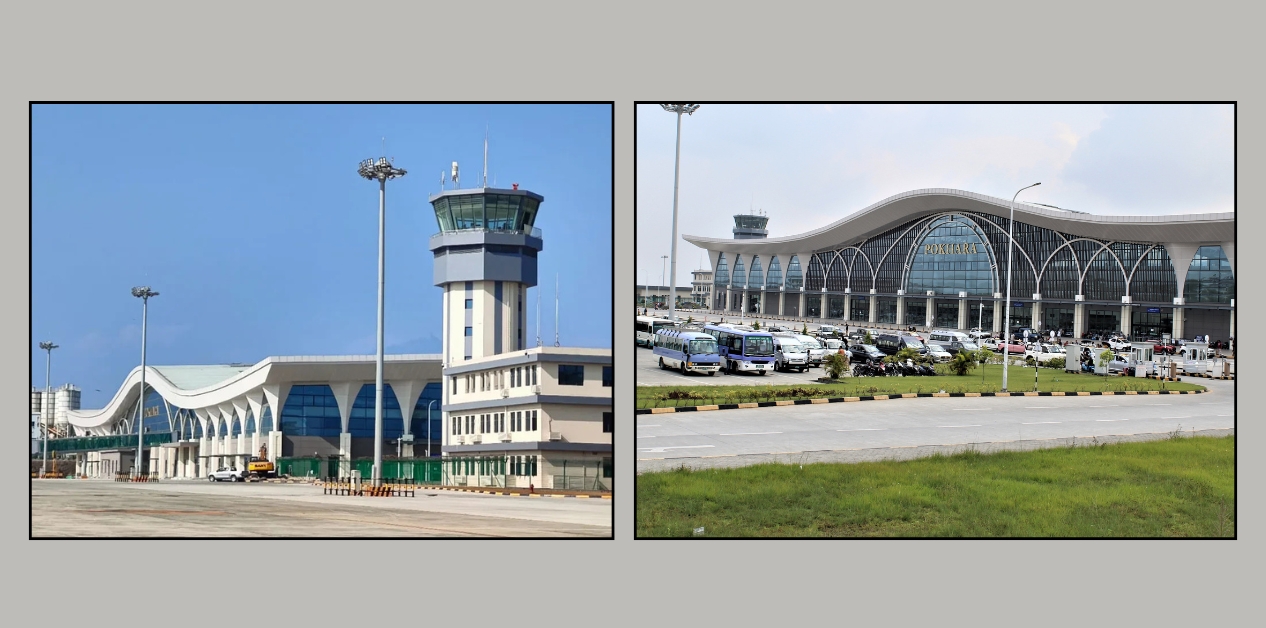
KATHMANDU: Discussion on the operation of Pokhara and Gautam Buddha International Airport in Bhairahawa was held on June 12 in the International Relations and Tourism Committee of the House of Representatives. In the discussion, the committee directed the Civil Aviation Authority of Nepal (CAAN) to submit a written report regarding the economic viability and sustainable operational strategy of Pokhara and Bhairahawa airports within 10 days.
Even though the committee directed by specifying the days, the authority has not submitted the report even after two weeks. According to CAAN Information Officer Gyanendra Bhul, it is taking time to submit the report as the respective airports are still preparing it.
Bhul says that the government has made numerous efforts to fully operate the Pokhara and Gautam Buddha airports. “Many efforts have been made since the past to operate the airports, but airlines simply do not want to fly to Pokhara and Bhairahawa,” he says. The main reason why airlines are not attracted to these airports is becoming the operational cost.
The government had prepared an action plan in 2022 for the operation of both international airports. The authority stated that this action plan will remain active until mid-September. International flights had started at Gautam Buddha Airport from May 16, 2022. Initially, some international airlines like Flydubai, Himalaya Airlines, Nepal Airlines, Jazeera Airways, Thai AirAsia, and Qatar Airways operated partial flights. Thai AirAsia was flying until the end of last March. However, all companies gradually stopped flights, stating that the number of passengers was low and operational costs were high.
International flights started at Pokhara Airport on March 31, 2025. Himalaya Airlines was flying to Pokhara until the end of March. Sichuan, Himalaya, and Flydubai were operating flights in Pokhara. Flydubai is preparing to resume flights to Pokhara from September. The common complaint of the companies flying to both Pokhara and Bhairahawa airports is the lack of passengers and high flight expenses.
Among the people traveling through Pokhara and Bhairahawa airports, 50 percent are individuals going for foreign employment. Those going for studies make up 30 percent, and 20 percent are individuals traveling for tourism.
Similarly, to address the complaints of the airlines, the government brought various concession arrangements through the action plan. The authority also decided to review the tax imposed on air tickets and determine the fuel price at the ‘break-even point’. To attract international flights, the government also planned concession targetings and service expansions for airline companies. Addressing the complaints raised by airlines regarding costs, lack of passengers, and services, a multi-agency action plan is currently being implemented by dividing responsibilities among various ministries and agencies. There is already an arrangement for a 75 percent discount on ground handling and a 25 percent discount on fuel fees for airlines.
Arrangements have been made for international transit facilities, establishment of a quarantine office, establishment of a visa center, visa application arrangements targeted at individuals going to major destination countries for foreign employment, labor permits, and services of recognized institutions for health check-ups. The action plan includes pre-departure training-orientation for migrant workers, social security fund, insurance, a Rs 3,000 discount on air tickets, parking, landing, and navigation fee waivers, and a waiver of the Rs 1,000 tourism fee imposed on air tickets. The action plan also includes policy arrangements for code-sharing and preparing new air routes.
In the said action plan, the Ministry of Finance, Ministry of Commerce and Supplies, Ministry of Foreign Affairs, Ministry of Culture, Tourism and Civil Aviation, Ministry of Home Affairs, Ministry of Agriculture and Livestock Development, Ministry of Labour, Employment and Social Security, Department of Foreign Employment, and Civil Aviation Authority of Nepal are working. Almost all facilities, from immigration office, labor, visa, to customs facilities, have already reached the airports. “Whatever facilities are necessary for passengers are all available,” says Jagannath Niroula, chief of Pokhara International Airport, “but airlines say there are no passengers.”
According to the authority, the main reason behind the failure to operate Pokhara and Gautam Buddha airports is the air route problem. This is a matter that airlines have been raising since the beginning. The government constructed the airports for international flights but failed to acquire air route permissions. Most aircraft enter Nepal via India. Aircraft coming via India currently face a two-way route problem.
There are currently three routes for international flights to enter Nepal. There are one-way routes coming from China via Tumlingtar and from Bangladesh-Bhutan via Jhapa. There is only one two-way route coming from India via the skies of Simara. Most aircraft come to Nepal using this very route.
Aircraft land in Kathmandu within eight minutes from the skies above Simara. On the other hand, it takes 30 minutes to Bhairahawa and 40 minutes to Pokhara. This means fuel expenses increase. “An estimate shows that it costs an additional three thousand dollars for a narrow-body aircraft to come and go from Simara to Pokhara-Bhairahawa,” says CAAN Information Officer Bhul, “Therefore, airlines fly to Kathmandu Airport, which is closer by eight minutes.”
Nepal has been asking India for air routes through the skies over Mahendranagar, Lumbini, Bhairahawa, and Janakpur. Even though Nepal has repeatedly requested air routes during Prime Minister’s visits since 2010, India has not given permission. Bhul states that India has not allowed the use of those routes citing security reasons. “India hasn’t said no, but it hasn’t given it either,” Bhul says.
India has proposed to allow aircraft to fly above 17-18 thousand feet on those routes. However, when aircraft enter Nepal that way, they have to hold in the sky for an extra half an hour just for landing. “Aircraft holding means additional fuel expenditure,” Bhul says, “For this reason, calculating the losses, aircraft use the skies above Simara.”
Pokhara, Annapurna, and Muktinath are considered the largest and most established tourism corridors in Nepal. A strong infrastructure of hotels, resorts, trekking agencies, transport, restaurants, adventure sports, and local tourism businesses has developed in this region, which sees a significant flow of both domestic and international tourists. As Pokhara International Airport is not in regular operation, foreign tourists still reach Pokhara from Kathmandu via land or domestic flights.
Lumbini is a holy pilgrimage site for Buddhists worldwide. Since it is the birthplace of Gautam Buddha, religious, cultural, and spiritual tourism is centered here. The Mayadevi Temple, Ashoka Pillar, and Buddhist monasteries built by various countries are the main attractions. Tourism was the primary basis for the construction of both international airports. The government incurred a debt of Rs 22 billion when constructing Pokhara airport and Rs 32 billion when constructing Gautam Buddha airport.