Kathmandu
Monday, July 6, 2026





The government says it is only restoring legal certainty, but critics see the bill as another step toward concentrating power in the Prime Minister's Office
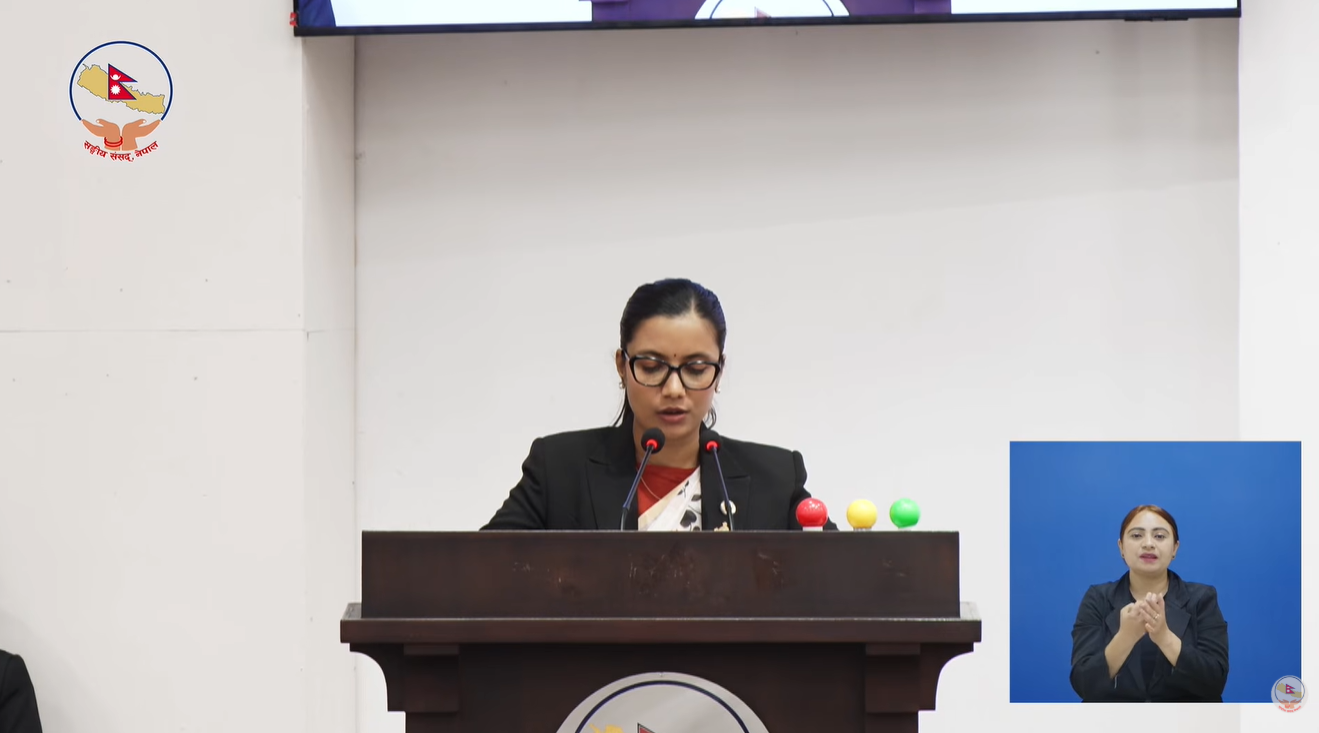
KATHMANDU: On July 6, 2026, Law, Justice and Parliamentary Affairs Minister Sobita Gautam stood up in the House of Representatives on behalf of Prime Minister Balendra Shah (Balen) and tabled a bill with an unusually candid title: a bill to revive the prior provision of the Nepal Special Service Act, 1985.
Stripped of its legislative language, what the bill does is simple. It writes into permanent law something the Shah government had already done through an administrative rule two months earlier, placing the National Investigation Department, Nepal’s principal intelligence agency, back under the direct authority of the Prime Minister and Council of Ministers’ Office. On its face, this looks like a technical housekeeping measure, two sections long, carrying no new budget line and no new powers.
Underneath, it is the fourth chapter in an eight-year tug-of-war over who controls Nepal’s most sensitive information-gathering body, and it arrives at a moment when the government tabling it is already under sustained criticism for governing style that critics call increasingly centralised.
The immediate trigger for the bill is a piece of legislative housekeeping that sounds obscure but matters enormously for how Nepali law actually works. When Prime Minister Sushila Karki’s interim government issued the Nepal Special Service (Second Amendment) Ordinance in November 2025, it amended Section 4(1) of the Special Service Act to move the intelligence department’s statutory home from the Prime Minister’s Office back to the Home Ministry, undoing a change KP Sharma Oli had made in 2018.

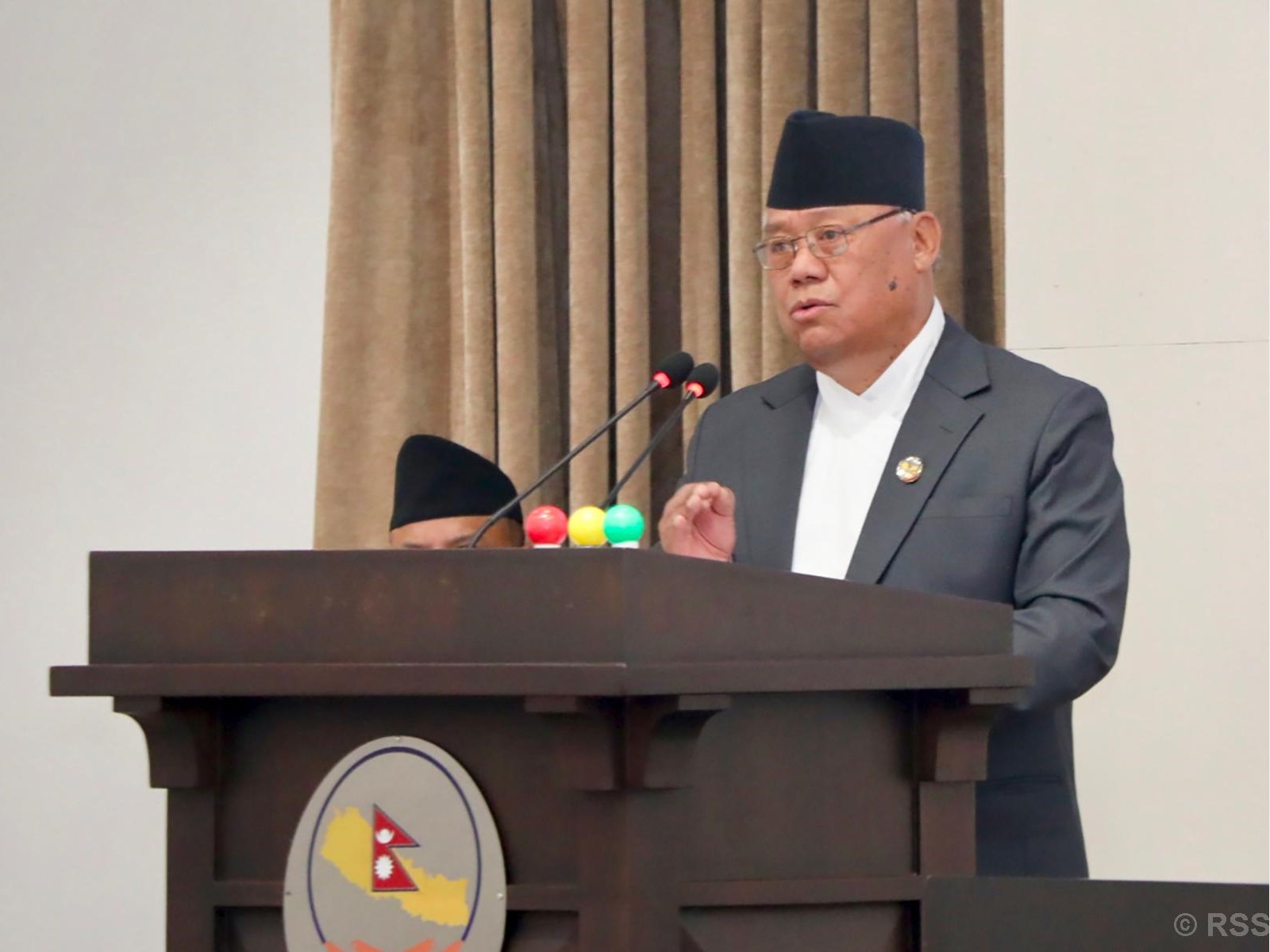
Former PM and CPN (UML) Chairman KP Sharma Oli. File photo
An ordinance of this kind, issued under Article 114 of the Constitution while parliament was dissolved, is only ever a stopgap. It has the force of law from the moment it is issued, but it must be confirmed by both houses of a sitting parliament through a replacement bill within a set period, or it automatically lapses.
When the March 2026 election produced a new House of Representatives and Balen Shah’s government took office, the clock on that confirmation requirement started running. But by then, the new government had already decided, through its Good Governance Roadmap published within days of taking office, that it wanted the department back under the PMO, and it followed through on that intention on May 13, 2026, when it approved new Allocation of Business Rules restructuring the entire federal ministry system and placing the department under the Prime Minister’s Office once again.
Presenting a replacement bill that would have permanently written the Home Ministry into the Special Service Act would have directly contradicted the government’s own administrative rules issued weeks earlier. Rather than untangle that contradiction through the ordinary route of amending the Act to match its new preference, the government simply let the Karki-era ordinance lapse by declining to bring a replacement bill forward, and is now using a separate, freestanding bill to declare that the pre-ordinance legal position, the Oli-era wording naming the PMO, has automatically revived.
It is a legally tidy solution to a problem the government created for itself, and it is difficult to read as anything other than a deliberate choice to avoid a parliamentary debate over the substance of where the department should sit, a debate the government would rather settle through the more clinical language of statutory continuity than through an up-or-down vote on institutional design.
What will actually change on the ground is, in one sense, very little, because the operational shift already happened in May. Since the Allocation of Business Rules, 2026, came into force, the National Investigation Department has been reporting to the Prime Minister’s Office as one of forty-eight designated areas of its work, specifically at serial number 28. Cabinet-level oversight, appointment of the department’s chief, budgetary control, and coordination with other security agencies already run through the PMO’s structures rather than the Home Ministry’s.
What this bill changes is the department’s legal footing rather than its daily chain of command. Until this bill passes, the department has been operating under an administrative rule that arguably conflicts with the plain text of the governing Act, a state of legal limbo that leaves the department’s core statutory basis open to challenge in court by anyone with standing to argue that the Home Ministry, not the PMO, remains the department’s lawful overseer under the still-unrevived Act.
Passing this bill removes that vulnerability. It closes the gap between administrative practice and statutory text, and in doing so, forecloses any legal challenge grounded in the argument that the department has, since May 2026, been operating under the wrong ministry as a matter of law.

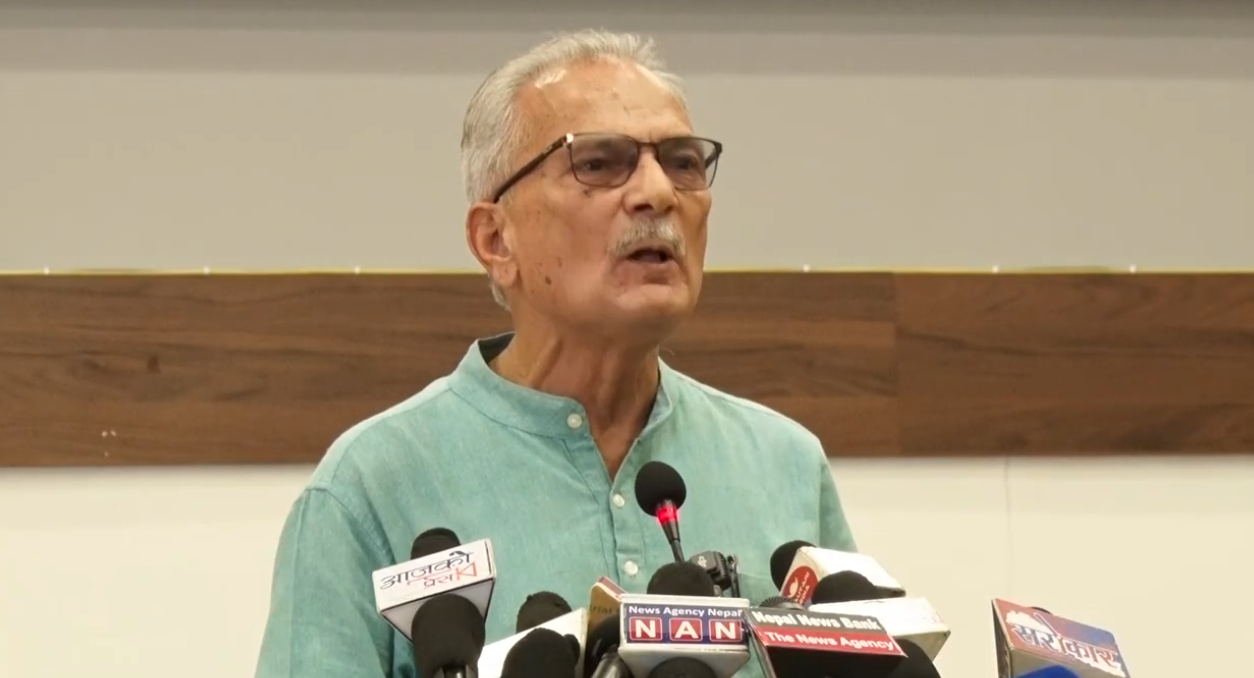
PM Balen (left) and Home Minister Gurung (right). File photo
For an agency whose intelligence products, personnel decisions, and operational authorisations could all, in theory, be challenged retroactively if its underlying legal basis were successfully contested, this closure of legal risk is not a minor technicality. It is the difference between an arrangement resting on cabinet discretion and one resting on an Act of Parliament, and Nepali governments have historically preferred to move sensitive security arrangements from the former category to the latter as soon as they have the votes to do so.
The precedent this bill draws on, and revives, is instructive. When KP Sharma Oli first moved the department to the Prime Minister’s Office in 2018, he justified it, as governments doing this kind of reshuffling typically do, in the language of efficiency and coordination, the argument that a leaner, more centralised chain of command would let the country’s security and financial intelligence apparatus respond faster and answer more directly to the country’s chief executive.
Opposition lawmakers at the time, and again years later during a 2022 parliamentary committee review, pushed back on functional grounds, arguing that the Prime Minister’s Office is fundamentally a coordinating secretariat rather than a security ministry, and that pulling the department out from the rest of the security establishment, away from Nepal Police, the Armed Police Force, and the district administration machinery it needs to coordinate with, undermined rather than improved its effectiveness.
Notably, the government that followed Oli, led by Sher Bahadur Deuba from 2022, chose not to reverse the arrangement despite these criticisms, illustrating that once a security agency is folded into the Prime Minister’s Office, subsequent governments, even ones critical of the original move, often find it politically convenient to leave the arrangement in place rather than surrender the direct line of authority it gives them.
That the Karki government did reverse it, only for the next elected government to reverse it back within seven months, suggests the choice of institutional home has become less a settled question of administrative design and more a marker of political posture, adopted or discarded depending on whether the incoming leadership prefers to signal a break from concentrated executive power or prefers to hold onto that power itself.

Former Prime minister Sushila Karki. File photo
This is precisely why the timing of the bill matters as much as its content. It arrives against the backdrop of a government whose first hundred days, completed on July 4, 2026, just two days before this bill was tabled, have already generated a substantial catalogue of criticism over centralisation and bypassing of institutional process.
In early May 2026, a group of twenty-eight prominent citizens, including respected editors, academics, and former officials, issued a public statement warning of what they explicitly called an authoritarian drift under the Shah government.
Their appeal cited several specific grievances: forced evictions of informal settlers carried out with armed security forces and without adequate rehabilitation plans, described as having contributed to at least two suicides; the removal of hundreds of officials through ordinance rather than through ordinary due process; and what the signatories characterised as a broader pattern of interference in the judiciary, in universities, and in the constitutionally guaranteed autonomy of provincial and local governments.
Commentators have gone further, explicitly likening Shah’s governing style to that of KP Sharma Oli, the very leader whose 2018 centralization of the intelligence department is now being restored, arguing that both leaders share a tendency toward bypassing due process, working through ordinance and unilateral directive rather than deliberative parliamentary process, and concentrating decision-making authority in their own hands rather than distributing it through institutional channels.
Separately, reporting on the government’s handling of the Home Ministry during its first hundred days has described a pattern critics call detain first, investigate later, with high-profile arrests of former officials, including former prime minister KP Sharma Oli himself over the Gen Z protest crackdown, subsequently overturned by the courts for lack of evidence.

A gathering of youth at New Baneshwor in the midst of the Gen Z protest (September 8, 2025) Photo. Bikram Rai/Nepal News
Set against this backdrop, a bill that restores direct, unmediated executive control over the country’s intelligence-gathering apparatus, an apparatus explicitly tasked with monitoring domestic activities and organisations the government finds concerning, reads to critics not as an isolated administrative tidy-up but as one more data point in an accumulating pattern.
The opposition’s suspicion, then, rests on three overlapping arguments, each worth examining on its own terms.
The first is structural: that an intelligence agency answerable to a coordinating office with no independent statutory mandate of its own, rather than to a line ministry with established budgetary oversight, parliamentary committee scrutiny, and a permanent bureaucratic structure built for exactly this kind of supervision, is inherently less accountable, regardless of who occupies the prime minister’s chair. This is not a new argument invented for Shah; it is the same argument Nepali Congress and CPN (UML) lawmakers made against Oli in 2018 and again in 2022, and its persistence across changes of government suggests it reflects a genuine institutional concern rather than partisan opportunism directed at any one leader.
The second argument is more immediately political: that this particular prime minister has, in his first hundred days, already shown a documented pattern of governing through ordinance, executive directive, and unilateral decision rather than through the deliberative processes that normally accompany decisions of this consequence, from the ministry restructuring itself to the handling of squatter evictions to the treatment of the Karki Commission’s findings. Against that pattern, restoring direct control over the intelligence agency looks, to critics, less like coincidence and more like consolidation.
The third argument concerns precedent for the future: even though this specific bill does not expand the department’s powers, it restores the identical chain of command that a separate, long-stalled Special Service Bill, one that would grant the department expanded powers to intercept private communications and conduct search operations with reduced judicial oversight, would then plug directly into.
If that broader bill, which has been debated in various forms since 2019 and has drawn sustained criticism from rights organisations over its implications for privacy and press freedom, were to advance under a government that already controls the department’s institutional chain of command through its own office rather than through a ministry, critics argue the safeguards that might otherwise come from Home Ministry-level bureaucratic friction, coordination requirements, and a more conventional accountability structure would simply not exist.
It is worth being precise about what this analysis does not claim. This bill itself introduces no new surveillance authority, no new budget, and no new personnel structure; its own financial memorandum states plainly that it imposes no additional cost on the state, because it only formalises an administrative arrangement already in force since May. It would be inaccurate to describe this measure as, in itself, an expansion of the intelligence agency’s reach into citizens’ lives.
The concern it generates is institutional rather than immediate: about where authority sits, about the precedent of settling a contested question of security-sector design through a two-section bill timed to avoid a substantive floor debate, and about what this restored chain of command might enable if paired, in the future, with the broader powers contemplated in Nepal’s long-pending, more expansive intelligence legislation.
Given the government’s near two-thirds majority in the House of Representatives, the bill’s passage through the lower house is not in serious doubt; the more consequential outcome will be whether the floor debate, and any amendments proposed in the National Assembly, manage to extract from the government a clearer account of why this particular institutional arrangement was chosen, and whether future governments will feel any more bound by it than Karki’s felt bound by Oli’s, or Shah’s by Karki’s.
On the evidence of the last eight years, the honest answer is that Nepal’s intelligence agency’s institutional address has become a proxy battlefield for a larger, unresolved argument about how much power any single office, however popular its occupant, should be allowed to hold at once, and this bill, brief as it is, is unlikely to be the last word in that argument.
![Auction for third edition of NPL begins [Photo Feature]](https://english.nepalnews.com/wp-content/uploads/2026/07/NPL-3-auction_NPL-5.jpeg)